Philokalia Ministries
Philokalia Ministries is the fruit of 30 years spent at the feet of the Fathers of the Church. Led by Father David Abernethy, Philokalia (Philo: Love of the Kalia: Beautiful) Ministries exists to re-form hearts and minds according to the mold of the Desert Fathers through the ascetic life, the example of the early Saints, the way of stillness, prayer, and purity of heart, the practice of the Jesus Prayer, and spiritual reading. Those who are involved in Philokalia Ministries - the podcasts, videos, social media posts, spiritual direction and online groups - are exposed to writings that make up the ancient, shared spiritual heritage of East and West: The Ladder of Divine Ascent, Saint Augustine, the Philokalia, the Conferences of Saint John Cassian, the Ascetical Homilies of Saint Isaac the Syrian, and the Evergetinos. In addition to these, more recent authors and writings, which draw deeply from the well of the desert, are read and discussed: Lorenzo Scupoli, Saint Theophan the Recluse, anonymous writings from Mount Athos, the Cloud of Unknowing, Saint John of the Cross, Thomas a Kempis, and many more. Philokalia Ministries is offered to all, free of charge. However, there are real and immediate needs associated with it. You can support Philokalia Ministries with one-time, or recurring monthly donations, which are most appreciated. Your support truly makes this ministry possible. May Almighty God, who created you and fashioned you in His own Divine Image, restore you through His grace and make of you a true icon of our Lord and Savior Jesus Christ.
Listen on:



Episodes
53 minutes ago
53 minutes ago
The Desert Fathers knew something that many of us have forgotten.
The greatest danger to the spiritual life is not always the obvious sins we can name. Often it is the secret satisfaction we feel when we discover the weakness of another.
There is something in the fallen heart that delights in comparison. The moment another stumbles, we instinctively move ourselves a little higher. We become observers, commentators, judges, analysts. We speak about “discernment” while quietly nourishing condemnation. We discuss another’s failures while remaining remarkably blind to our own.
Abba Poimen cuts through all of this with terrifying simplicity:
“Who am I? And judge no one.”
That is the beginning of monasticism. It is also the beginning of Christianity.
Notice how often the Fathers return to the same theme. A brother falls. Another brother is tempted. Someone has a concubine. Someone frequents the baths. Someone neglects his duties.
Yet the holy elders are almost never interested in discussing the sin itself.
They are interested in the response of those who witness it.
The real question is not, “What did he do?”
The real question is, “What happened in your heart when you saw it?”
The Presbyter of Pelousion stripped eleven brothers of the schema because of their failures. Later his conscience tormented him. Why? Because he discovered something humiliating: the same old man lived in him. The same fallen nature. The same capacity for sin.
The Fathers never deny the existence of sin.
They deny our right to stand above sinners.
That is an entirely different thing.
Again and again the Fathers teach that when we expose another’s wound, we expose our own. When we delight in uncovering another’s failure, God permits us to see the sickness hidden within ourselves. Timothy advised that a tempted brother be expelled, and shortly afterward the very temptation he condemned descended upon him.
Why?
Because God wanted to punish him?
No.
Because God wanted to heal him.
Nothing teaches compassion like discovering that the line between saint and sinner runs directly through one’s own heart.
The most moving story in this collection may be the one about the brother abandoned in the ravine.
The anchorite’s solution was simple:
“Expel him.”
Abba Poimen’s solution was different.
He sought him.
He called him.
He embraced him.
He fed him.
He restored hope to him.
The brother had already condemned himself. He did not need another judge. He needed a father.
The Church has never lacked judges.
What she continually lacks are fathers.
A father sees the wound beneath the sin.
A father sees the despair beneath the failure.
A father sees the battle that nobody else sees.
And because he sees it, he goes after the lost sheep.
The Fathers teach us something even more demanding than refusing to judge. They teach us to actively support the struggling brother.
One brother tells Abba Poimen that he enjoys the company of virtuous men but avoids those with bad reputations.
The Elder’s answer is astonishing:
“If you do a little good to the good one, you ought to do twice as much good to the one about whose sin you have heard.”
Twice as much.
Not less.
Not avoidance.
Not suspicion.
Not gossip disguised as concern.
Twice as much.
Because he is sick.
When someone is physically ill, we do not withdraw our care until they recover. We increase it. We visit them. We pray for them. We encourage them. We sit beside them.
Why then do we often do the opposite when a brother becomes spiritually ill?
The Fathers understood that perseverance is often sustained by hidden acts of mercy.
A word of encouragement.
A meal.
A visit.
A refusal to repeat a rumor.
A willingness to believe that grace is still at work.
A determination to remember the brother’s dignity even while he struggles.
Many vocations have been saved by such acts.
Many have also been lost through their absence.
St. Ephraim says elsewhere that we must never become the occasion for another’s withdrawal from the brotherhood. Those words should terrify every monastery, every parish, every Christian community.
Whenever someone leaves wounded, discouraged, or broken, the question should not merely be what happened to them.
The question should also be what happened to us.
Did we strengthen them?
Did we encourage them?
Did we bear their burden?
Did we pray for them?
Did we conceal their weakness and protect their dignity?
Did we seek them when they wandered?
Or did we stand at a safe distance discussing their failures?
The saints are not those who never see sin.
They are those who see it and respond with tears rather than judgment.
They see a fallen brother and remember their own weakness.
They see a wound and cover it.
They see a sinner and move closer rather than farther away.
In the end, this is exactly how Christ has treated us.
Every one of us has been the brother in the ravine.
Every one of us has been the sinner whose shame was visible to Heaven.
And Christ did not expose us.
He sought us.
He embraced us.
He fed us.
He covered us.
The closer a man comes to God, the less interested he becomes in revealing the wounds of others and the more eager he becomes to bind them up.
That is the way of the Desert Fathers.
It is also the way of Christ.
---
Text of chat during the group:
00:14:24 Anna: My daughter is asking for an understanding on judging based on Desert Fathers
00:36:42 Maureen Cunningham: What if the person is abusive to you ?
00:37:01 Maureen Cunningham: Like an alcholic
00:39:41 Julie: Like instead of assuming the sleeping monk is lazy or spiritually weak, but really is he exhausted from spiritual struggles, fasts, etc…
00:42:40 forrest: Sorry for a late comment for #15: the Greek word for "cover up" is the same used in the Septuagint Exodus 12:13 for the Angel of God "passing by" the houses marked with blood.
01:04:05 Julie: The wanting to be loved and needed by others.Our passions are hard to cut
01:10:57 una: Wait, what about the baby?
01:17:03 Rebecca Thérèse: Thank you☺️
01:17:19 Janine: Thank you
55 minutes ago
55 minutes ago
There are moments in the writings of St. Isaac the Syrian where one realizes that what he is speaking about is not “religion” as we commonly understand it at all.
He is not concerned with external religiosity, spiritual image, theological sophistication, emotional experiences, or moral performance. He speaks instead about the transformation of the human being into a living place of divine communion. The entire struggle of the ascetic life is directed toward one thing: purity of heart. Not moralism. Not perfectionism. Purity.
And purity for Isaac is not primarily about behavior. It is about vision.
“The pure in heart shall see God.”
The Fathers understood this literally.
The heart darkened by distraction, anger, judgment, vanity, endless speech, lust, resentment, self-construction, and immersion in the noise of the world loses the capacity to perceive reality as it truly is. Man ceases to remember God because he has become filled with himself. The tragedy is not simply that we sin. The tragedy is that the heart becomes opaque. Heavy. Fragmented. Unable to behold the Kingdom already present within it.
Isaac speaks with terrifying clarity here:“He who restrains his mouth from speech guards his heart from the passions.”
Modern man speaks endlessly because he cannot bear silence. We drown ourselves in commentary, analysis, outrage, explanations, arguments, entertainment, notifications, and noise because silence threatens the ego. Silence exposes the inward chaos we spend our lives trying to conceal.
But Isaac tells us something almost unbearable:the mysteries of God become visible only in stillness.
A wrathful heart cannot behold the mysteries of the Kingdom because wrath keeps the self at the center of reality. A judgmental man may speak about theology endlessly and yet remain entirely estranged from the life of God. A proud man may appear religious and still dwell inwardly in darkness.
Why?
Because the Kingdom is not perceived through brilliance but through purity.
This is why Isaac places such immense emphasis upon guarding the tongue, fleeing gossip, withdrawing from quarrels, avoiding angry speech, and refusing distraction. He is not prescribing pious behavior merely for the sake of morality. He understands something we do not: every movement of the soul either clarifies the heart or darkens it.
And so Isaac speaks of continuous remembrance of God.
Not occasional remembrance.Not Sunday remembrance.Not remembrance during emotional prayer alone.
Continuous remembrance.
The modern mind hears this and immediately turns it into technique. But Isaac is not describing a method so much as an identity. Man was created to live in continual orientation toward God. Prayer is not an activity added onto life. Prayer is life restored to its natural condition.
This is why Isaac says:“That which befalls a fish out of water, befalls the mind that has come out of the remembrance of God.”
What a terrifying image.
We imagine ourselves spiritually neutral when we live immersed in distraction, noise, anxiety, worldly conversation, vanity, and continual mental agitation. Isaac says otherwise. The soul outside remembrance gasps for life without understanding why it is suffocating.
And this is precisely the condition of modern man.
We are overstimulated yet inwardly deadened.Connected constantly yet unable to descend into the heart.Religious perhaps, but incapable of stillness.Surrounded by information while starving for theoria.
Isaac uses that extraordinary image of the dolphin moving through the calm sea. When the sea of the heart becomes still from wrath and agitation, divine mysteries begin moving within the soul. The Kingdom is not absent. The heart is simply too turbulent to perceive it.
This is why the Fathers fled distraction so fiercely.
Not because they hated the world.But because they desired reality.
And reality, Isaac tells us, is infinitely more luminous than the fantasies by which we continually feed ourselves.
The terrifying thing is that modern people often imagine remembrance of God to be restrictive. In truth, distraction is the prison. Remembrance is freedom. The man who remembers God continually gradually becomes transparent to divine life. His thoughts change. His speech changes. His desires change. His vision changes. Mercy begins appearing naturally. Humility deepens. Judgment weakens. The passions lose their violence because the soul has found greater beauty.
Isaac’s vision is nothing less than transfiguration.
The purified heart becomes Heaven itself.
Not symbolically.Actually.
“Lo, Heaven is within you.”
The human person becomes a living icon of the Kingdom. The mysteries cease being abstractions and become life. The soul begins beholding Christ “at every moment.” Not through imagination, but through participation. Through communion. Through the gradual purification of the inner man.
This is why the saints seem luminous to us. Not because they became extraordinary personalities, but because they ceased obstructing the Radiance of God within them.
And Isaac insists that this path is deeply practical.
Guard the tongue.Flee distraction.Withdraw from useless speech.Avoid judgment.Remain in remembrance.Practice silence.Study God continually.Refuse the fragmentation of the passions.Seek meekness.Seek humility.Seek hiddenness.
Not as legalism.But because every movement either opens the heart toward the Kingdom or closes it inwardly upon itself.
The modern world trains us in continual forgetfulness.The ascetic life trains us in remembrance.
And remembrance gradually becomes vision.
Then prayer ceases being something we “do” and becomes the atmosphere in which the soul breathes.
At the center of Isaac’s vision lies something fierce and beautiful:man was created not merely to think about God, but to behold Him within the heart and become radiant with His life in the world.
This is the true meaning of purity.
Not moral self-consciousness.But transparency to divine life.
Not religious performance.But the gradual emergence of Heaven within the human heart.
---
Text of chat during the group:
00:18:52 Una: Father, do you know much about Saint Nikiphorus the Leper?
00:19:03 Una: Perhaps a saint for the disabled
00:19:10 Una: My mike isn't working
00:20:33 Bob Čihák, AZ: Remember, in these texts, “men” means all humans, “men and women.”
00:23:23 Una: Reacted to "Remember, in these..." with 👍
00:23:55 Bob Čihák, AZ: P 203 Homily 15
00:29:08 David Swiderski, WI: I guess going into politics is out.
00:30:08 Una: It's noise pollution
00:30:48 Adam Paige: How should we respond appropriately to brothers who want us to indulge in distractions with them ? I often get invited to watch movies and sports, etc.
00:31:58 Una: What about watching the Harry Potter movies dozen of times?
00:32:14 Bob Čihák, AZ: I don't think they thought about politics except for the very uncommon times when politics impacted them.
00:33:05 Art: Replying to "How should we respon..."
Consider it as an act of penance. 🙂
00:35:34 Bob Čihák, AZ: P 203 second paragraph
00:48:10 Ben: Anna; If a person knows he will fall in terms of gossip or even detraction, every time this person is around friends, should he avoid his friends?
00:56:10 Una: Are these sexually explicit pictures?
00:56:23 Bob Čihák, AZ: Ben + Anna = BenAnna?
00:56:26 Una: OK
00:56:32 Una: Oh dear
00:57:01 Ben: Anna; What if the weakness/ problem is not someone else? (I have heard that if the problem is someone else, complimenting someone else is a gentle way to redirect the conversation.)
00:57:43 Ben: Anna: (Sorry my sister dropped in with things for my new baby)
00:58:28 Julie: Sometimes I feel like a two edge sword ,I finished a 3 day silent retreat full of prayer, meditation,spiritual reading then back to reality with all it’s requirements from you and constantly speaking,…When you look back and see what life is like with in that stillness so close to our Lord Like a bird flying and a piece of string around its leg pulling you back …limiting you how far you can go.
01:00:32 Ben: Reacted to "Ben + Anna = BenAnna..." with 👍
01:07:44 Larry Ruggiero: Can you elaborate on “WALK THE PATH OF HEART STILLNESS” I think I read this in the Philokalia Vol 5
01:15:59 Catherine Opie: Such a brilliant movie thanks for reminding me of it Fr.
01:16:47 Joan Chakonas: Father can you define “identity”?
01:19:16 Joan Chakonas: I worry I either don’t have an identity or think about it enough
01:19:36 Maureen Cunningham: Adam walk with God in cool of the day
01:20:33 Catherine Opie: My identity tends to be related to what I identify with/as...I am a mother until my children leave home, I am a (whatever my job is) until it is not. But I am always a child of /god this is the only constant thing in my life
01:20:41 Joan Chakonas: Very interesting
01:21:35 Anna: My son drew it
01:21:50 Anna: He's laughing
01:22:12 Julie: Job, was stripped of all… but still knew he was precious to Our Lord.
01:22:25 Catherine Opie: Reacted to "Job, was stripped of..." with ❤️
01:22:28 Nypaver Clan: Reacted to "pic-87fd3c16-e457-442d-b907-326abc561d45.jpg" with ❤️
01:22:48 Janine: Reacted to "pic-87fd3c16-e457-442d-b907-326abc561d45.jpg" with ❤️
01:23:10 Anna: What's your email and we'll send it over...
01:23:23 Anna: Reacted to pic-87fd3c16-e457-442d-b907-326abc561d45.jpg with "❤️"
01:25:30 Nypaver Clan: Job didn’t lose his wife though. He lost all 10 children and all his flocks, but not his wife. She ended up having 10 more children.
01:26:10 Nypaver Clan: That’s what I was thinking...
01:27:36 Janine: Thank you Father!
01:28:21 Rebecca Thérèse: Thank you☺️
01:28:21 Bob Čihák, AZ: Thank you and bless you, Father.
01:28:22 Ben: Baby scheduled to be induced on Sunday/ Prayers please
01:28:22 David Swiderski, WI: Thank you Father may God bless you, your mother and this group.
01:28:25 Catherine Opie: God bless.
01:28:37 Jacqulyn Dudasko: Reacted to "Baby scheduled to be..." with 👍
6 days ago
6 days ago
There is a fierce honesty in the Desert Fathers that can unsettle us if we read them too quickly.
They never soften the reality of sin. They do not sentimentalize weakness. They do not pretend evil is harmless, nor do they collapse into the modern confusion that mercy means blindness or moral indifference. They knew too much of the violence of the passions, too much of self-deception, too much of how quickly the heart can justify itself while remaining far from God.
And yet, what is striking in these sayings from the Evergetinos is this: the deeper they saw sin, the less willing they were to condemn sinners.
This is not softness.
It is revelation.
The Fathers understood something we often miss: to truly see sin is to begin by seeing it in oneself.
We are accustomed to thinking judgment arises from moral seriousness. The Fathers often show the opposite. Judgment frequently arises not from holiness, but from forgetfulness. We forget what we are. We forget how much of our life is sustained not by virtue, but by mercy. We forget that beneath our outward discipline, our religious language, our ordered routines, and even our ascetic efforts, there remains within us a heart capable of pride, lust, cruelty, envy, bitterness, and quiet violence.
This is why Abba Agathon, when tempted to condemn another, said to himself: “Beware, lest you do the same thing.”
That is not psychological pessimism.
That is truth.
The saint does not trust himself.
Not because he despises himself, but because he has looked deeply enough into his own heart to know how fragile he is apart from grace.
The negligent brother dying joyfully may be one of the most unsettling stories in this section. He had not distinguished himself by great ascetic effort. He had not become known for extraordinary fasting or visible zeal. Yet he died in peace because he could say something profound: I have not judged. I have not held a grudge. If I quarreled, I reconciled.
And the Elder says something almost shocking: “You have been saved without effort, by not condemning others.”
Not because asceticism is unimportant.
But because the purpose of asceticism is love.
What good is fasting if the heart remains hard?
What good is prayer if we stand before God while inwardly prosecuting our neighbor?
What good is discipline if mercy has not entered us?
The Fathers knew that a man may be severe with himself and still cruel to others. Such severity is not holiness. It is often pride wearing religious clothing.
Again and again, these stories reveal the same pattern.
Abba Ammonas, seeing the woman accused of immorality, does not rush to impose punishment. He sees first her frailty, her danger, her humanity. He provides what may be needed for burial before speaking of penance.
When another sinful brother hides a woman in a cask, Ammonas knowingly sits upon it, covering his shame rather than exposing him publicly. Then he simply grasps his hand and says: “Be attentive to yourself, Brother.”
This is astonishing.
The Fathers did not always correct by exposure.
Sometimes they corrected by mercy.
Sometimes the deepest rebuke was protection.
Why?
Because they understood something terrifying and beautiful: divine love does not deny truth, but neither does it delight in humiliation.
How often we do the opposite.
We call it “clarity,” but sometimes it is disguised satisfaction. We expose, denounce, criticize, analyze, and condemn because another’s fall secretly strengthens our own illusion of righteousness.
The Fathers tear this illusion apart.
Abba Moses enters the council carrying a basket filled with sand, the grains pouring out behind him. His words remain among the most piercing in all ascetical literature: “My sins are flowing out behind me, and I do not see them; and yet, I have come today to judge someone else’s sins.”
This is the beginning of humility.
To realize that we are often blind not to the sins of others, but to our own.
And then there is Abba Isaac the Theban.
He condemns a brother. Later, an Angel blocks the entrance to his cell and asks: “Where do you want me to cast the erring brother whom you condemned?”
This is not merely a dramatic moral lesson.
It is theological revelation.
To judge another is, in a hidden way, to step into a place that belongs to God.
The Fathers knew that judgment is not simply speech.
It is a movement of the heart that places the self above another.
Mercy, then, is not emotional softness.
It is participation in divine life.
This is perhaps why Abba Macarius is described almost unbearably: he covered the faults which he saw as though he did not see them, and those which he heard as though he did not hear them.
Not because he denied evil.
But because he had become like God.
God sees all and yet bears with all.
God knows what we are and still does not withdraw His mercy.
God alone sees with absolute clarity and still gives time for repentance.
The Fathers wanted this same heart.
And so should we.
These stories do not simply teach us to “be nice” or “avoid criticizing people.”
They embody revealed truth.
They reveal what divine love looks like once it begins to enter fallen human beings.
They show what man becomes when he ceases to live by accusation and begins to live by mercy.
This is the deepest challenge.
Not whether we can identify sin.
Most of us can do that quickly.
The question is whether, while seeing clearly, we have become merciful.
Whether our truth has been transfigured by love.
Whether our asceticism has softened the heart rather than hardened it.
Whether we can stand before another’s failure and remember our own need for forgiveness.
The Desert Fathers were fierce because they were honest.
They were merciful because they had met God.
And the closer they came to Him, the less eager they were to condemn.
Perhaps that is one of the surest signs that divine love has begun to remake the heart.
Not blindness.
Not permissiveness.
But clarity without cruelty.
Truth without accusation.
Mercy without illusion.
And a heart that increasingly belongs to God.
---
Text of chat during the group:
00:14:52 Fr. Charbel Abernethy: Page 20 Volume 3 Section H
00:15:25 Charmaine's iPad: Hello dear family. Good to see all of you
00:15:34 Fr. Charbel Abernethy: Reacted to "Hello dear family. G..." with ❤️
00:16:18 Charmaine's iPad: Reacted to "Hello dear family. Good to see all of you" with ❤️
00:17:00 Fr. Charbel Abernethy: Coming Soon![Full message cannot be displayed on this version]
00:19:08 Bob Čihák, AZ: P. 20 H
00:20:55 Julie: I’m so glad Father
00:32:40 Julie: Reminds me of the alcoholic monk that died
00:35:12 Bob Čihák, AZ: P. 21, #2
00:36:07 Julie: Today in Australia
00:36:25 Catherine Opie: In NZ too
00:36:30 Rebecca Thérèse: Today in Britain as well!
00:45:35 forrest: I'll look, but they often use euphemisms
00:51:19 Danny Moulton: In the Kindle version, he says, "May God forgive us all," thereby including himself. This seems an even more powerful expression of humility,
00:51:21 forrest: The Greek has διαφϑαρῆ, indicating a passive verb form, implying she was victimized.
00:56:14 Julie: Reminds me of Fulton Sheen, he said on a visit to a jail to prisoners.” The difference between you and me are you were caught and I wasn’t
01:03:34 una: I am highly disturbed by a culture that would exact punishment from a victimized woman
01:14:25 Fr Martin, Arizona: what do you think of this? It seems we don't calcify anyone's behavior as if it condemns them, because don't each of us hope God will heal us? St. Isaac the Syrian said, "God is not One who requites evil, but who sets evil right."
01:18:38 Danny Moulton: Thank you!
01:18:41 Andrew Adams: Thanks be to God! Thank you, Father!
01:18:44 Janine: Great class! Thanks Father
01:18:50 Rebecca Thérèse: Thank you☺️
01:18:50 Maureen Cunningham: Thank you
6 days ago
6 days ago
There are passages in the Fathers that do not merely instruct us. They unsettle us because they seem to speak from a place beyond ordinary language. This portion of St. Isaac the Syrian is one of them.
He begins almost defensively, and yet with extraordinary tenderness: “I shall tell you something, and do not laugh, for I speak the truth.” That opening matters. Isaac knows what he is about to describe can sound excessive, mystical, even absurd to the outward or untested mind. He knows some will mock it. Others will reduce it to sentiment or pious exaggeration. He knows he is stepping into something difficult to articulate because the reality itself exceeds words.
And yet he writes.
That itself is striking.
This costs him something.
There is a deeply personal quality here. Isaac is not writing as one giving detached spiritual theory. He writes almost like a father speaking carefully about a mystery he knows language will diminish even as he tries to preserve it. Near the end of the homily he says plainly that he has “taken no little trouble to set these things down.” One feels the labor in that line. Not merely literary labor, but spiritual labor. He is trying to hand on something fragile and luminous to “every man who comes upon this book.” His desire to help souls outweighs the risk of being misunderstood.
And what does he speak of?
Tears.
But not tears as emotional excess.
Not tears as instability.
Not tears as religious theater.
He is speaking of something far deeper: the awakening of the inward man.
Isaac says that until this inward fruit begins, much of our life remains outward. We may pray, labor, fast, study, serve, and yet still remain largely organized around the visible self. The hidden man may still be in service to the world.
Then comes his astonishing image.
When tears begin, the soul has “left the prison of this world.”
Not the world itself.
But its prison.
That inward captivity of self, illusion, hardness, fragmentation, and outwardness.
And then Isaac gives one of the most beautiful images in all ascetical literature: he speaks of the soul almost as an infant being born into another reality.
As an infant in the womb first begins to draw subtle breath before entering this visible life, so the inward man, born of grace through the womb of Mother Church and quickened by the Spirit, begins to perceive another atmosphere.
Another age.
Another reality.
Another air.
He says the soul begins to breathe “that other air, new and wonderful.”
This is breathtaking.
For Isaac, tears are not simply sorrow. They are often the birth pangs of the spiritual child within us. Grace, whom he calls the common mother of all, labors to bring forth the divine image in the soul. And because the mind is unaccustomed to this new reality, the body itself may cry out. Tears become a kind of holy wailing, but “mingled with the sweetness of honey.”
What language.
He is trying to describe something almost impossible: sorrow joined to sweetness, pain joined to grace, birth joined to loss, tears joined to wonder.
The modern mind often has little room for this.
We understand tears psychologically.
We understand grief.
Exhaustion.
Relief.
But Isaac is speaking of something deeper than emotion.
He is speaking of the Kingdom beginning to stir within.
Of the Spirit crying out from depths beyond words.
Of the soul awakening to a reality more real than the visible world.
And yet Isaac remains sober.
He is careful.
He distinguishes passing consolation from deeper compunction. He warns, in effect, against reducing such things to passing feeling or spiritual excitement. He speaks of stillness, of peace of thought, of gradual transition, of hidden maturation. Even here he is restrained.
That restraint matters.
Because what makes this passage so beautiful is not ecstatic excess.
It is tenderness joined to sobriety.
Mystery joined to humility.
Vision joined to caution.
And perhaps most moving of all, Isaac writes not to exalt himself, but to serve.
These things, he says, he has written for himself and for every man who comes upon this book.
That line carries enormous tenderness.
He writes as one who knows words cannot capture the fullness of what grace does, yet he offers them anyway so another soul may not lose courage.
Perhaps that is why this passage still pierces us.
It reminds us that the spiritual life is not merely moral effort, external correctness, or religious performance.
It is birth.
The slow birth of the inward man.
The hidden awakening of the Kingdom.
The Spirit crying from within us.
And perhaps, however faintly, learning to breathe another air.
The air of grace.
The air of the age to come.
The air of Christ.
---
Text of chat during the group:
00:03:13 Fr. Charbel Abernethy: Page 201 Homily 14
There are times in the spiritual life when a phrase begins as an image and slowly becomes a revelation.
For some time now, the phrase Breathing the Same Air has remained with me. At first, it seemed to speak of something many of us deeply long for: to stand among those who thirst for Christ as the Desert Fathers did; to dwell within the same ascetic spirit, the same sobriety, the same inward hunger for purity of heart, prayer, and communion with God.
But after returning to St. Isaac the Syrian, this phrase began to open more deeply.
Perhaps breathing the same air is not first about standing among others who seek God.
Perhaps it is about entering inwardly into the same atmosphere where the saints themselves learned to repent, to pray, to soften, and to become alive before God.
00:10:25 Fr. Charbel Abernethy: June 4 Week Retreat https://www.philokaliaministries.org/post/nazareth-and-the-hidden-life
00:13:45 Fr. Charbel Abernethy: Page 201 Homily 14
00:38:54 una: How is he using "laugh"? In the sense of disbelief?
00:45:04 Bob Čihák, AZ: P 201 second paragraph
00:53:30 Holly Hecker: (From Mark) sometimes I see these attachments (or walls separating from God) is born from old wounds, old traumas, and these attachments are fears, acts of protection. and tears arrive when trusting God and taking the walls of traumas down. Maybe that is a different 'tears' but its a tear of new life.
00:54:02 Nypaver Clan: Reacted to "(From Mark) someti..." with 👍
00:54:55 una: Interesting that in the natural order of thing, the child triggers the beginning of labor through a hormonal message.
01:02:58 Anna: I love the tears! I never did either Father! IT was the east that taught me
01:08:46 Julie: I seem to find the world and surroundings pull you back into in it , that one foot in and easily slip out
01:09:42 una: One foot in the grave and the other on a banana peel
01:10:03 Eleana Urrego: Reacted to "One foot in the grav..." with 😅
01:16:51 Aaron: very eye opening
01:18:29 Anna: Yes! There is nothing comparable to these saints.
01:20:38 Janine: Very class a retreat!
01:20:45 Rebecca Thérèse: Thank you☺️
01:20:47 David Swiderski, WI: Thank you Father may God bless you, your mother and this group.
01:20:49 Aaron: Thank you
Tuesday May 19, 2026
Tuesday May 19, 2026
There is something almost incomprehensible in this passage from St. Anastasios and St. Maximos because it reveals just how surrounded we are by mercy while continuing to behave as though condemnation were wisdom.
The Fathers do not merely tell us not to judge.
They overwhelm us with reasons not to judge.
They show us a universe saturated with the patience of God, the intercession of angels, the prayers of saints, the tears of repentance, the mystery of hidden transformation, the power of baptism, the healing of affliction, the medicine of chastisement, the compassion of Christ, and the joy of Heaven itself over the salvation of even one sinner.
And still we condemn.
That is the horror.
We condemn while standing inside the greatest revelation of mercy the world has ever known.
St. Anastasios says plainly: you do not know what has happened between God and that soul after the moment you witnessed his sin.
Not five years later.Not tomorrow.
Ten steps later.
That is how quickly grace can act.
A man may fall publicly and repent secretly.A woman may appear outwardly shattered while inwardly clinging to God with tears unknown to the world.A soul everyone has dismissed may already be visited by the Holy Spirit.
And the Fathers insist that we understand this:
we know almost nothing.
We see fragments and imagine ourselves judges of the whole human being.
We see behavior but not wounds.Actions but not warfare.Falls but not repentance.Scandal but not tears.Weakness but not humility.Temptation but not hidden prayer.
Worst of all, we do not see what God Himself is doing inside another person.
The Fathers say there are souls purified through illness.Souls purified through humiliation.Souls purified through temptation.Souls purified through demonic assault endured with thanksgiving.Souls saved through the prayers of others.Souls restored in their final moments.Souls secretly reconciled to God before death.
How then dare we speak so confidently about anyone?
The terrifying thing is that we do this while calling ourselves Christians.
Christians.
Those who claim to worship the God who became man for sinners.
The Incarnation alone should silence every condemning tongue forever.
The angels themselves longed to behold this mystery: that God would unite Himself to fallen humanity. Not to idealized humanity. Not to polished humanity. Fallen humanity.
Christ assumed the very flesh we despise in one another.
He entered the human condition completely apart from sin so that no sinner could ever again say:“God does not know what I am.”
He knows.
He entered it willingly.
And Heaven never ceased rejoicing over this mystery.
St. Anastasios says the angels love mankind precisely because they beheld God become man. Imagine that. The bodiless powers who never fell into flesh are astonished by what humanity has become through Christ.
Meanwhile we, who were baptized into Him, often despise one another mercilessly.
The Fathers remind us that every baptized person has been entrusted to an angel.Every baptized person has been sealed by the Spirit.Every baptized person has become the object of heavenly concern.
The angels themselves plead for us.
Think of that.
While we gossip about one another, the angels intercede for one another.
While we expose each other’s failures, Heaven labors for each other’s salvation.
While we speak words that crush souls, the saints and angels beg God to heal them.
And still we continue as though condemnation were normal.
St. Maximos says Heaven is astonished at this.
Astounded.
The earth quakes.
But we are “insensible and unabashed.”
Insensible because we no longer perceive the mystery of redemption correctly.Unabashed because we condemn others without trembling.
The saints trembled before judging another human being because they knew that judgment belongs to Christ alone. To judge another is not merely to commit a moral fault. St. Anastasios says it is to usurp the office of the Lord Himself.
This is why the Fathers speak so fiercely.
The judging heart has forgotten the Gospel.
It has forgotten the thief entering Paradise in a single moment.It has forgotten Rahab the harlot.It has forgotten the Publican justified by a sigh.It has forgotten Manasses forgiven after decades of horror.It has forgotten Peter restored after denial.It has forgotten that Judas stood among the Apostles while the thief hung among murderers, and yet by evening their places were reversed.
The saints understood something we resist with all our strength:
human beings are not static creatures.
A single moment of real repentance can alter eternity.
And because of this, the saints became exceedingly merciful. Not naïve about evil. Not indifferent to sin. But deeply aware that every person stands inside a battle for salvation surrounded by mysteries unseen to human eyes.
The demons accuse.Christ heals.
The demons reduce persons to failures.Christ beholds the image buried beneath the ruin.
The demons delight in exposure.Christ covers nakedness.
And the terrible thing is how often religious people unknowingly participate in the work of accusation while imagining themselves defenders of righteousness.
The Fathers knew better.
This is why the holiest among them became gentlest toward sinners and harshest toward themselves.
Because the closer one comes to God, the more clearly one sees that he himself survives only by mercy.
And once a man truly knows this, condemnation becomes impossible.
He no longer stands above humanity.
He stands beside it, beating his breast, praying:
“To You, O Lord, belongs mercy.”
---
Text of chat during the group:
00:02:05 Fr. Charbel Abernethy: https://www.philokaliaministries.org/post/nazareth-and-the-hidden-life
00:34:49 Julie: It feels like there is no rest
00:35:43 Julie: With the senses I mean, to cut the thought straight away
00:36:19 Bob Čihák, AZ: P. 18 paragraph 1
00:36:31 Nypaver Clan: Reacted to "P. 18 paragraph 1" with 👍
00:52:58 Janine: I always wondered if everyone has a Guardian angel or only the baptized…
00:59:22 Julie: Beautiful
01:06:50 Fr Martin, Arizona: When I was in my early twenties, i kept trying to figure out a way to live on an even keel, a constant peace. My spiritual father again and again suggest that life is ebb and flow. Forty years later I've still not been able to smooth out the spiritual path. The readings today make sense to me.
01:07:41 Anna: I have filled voicemail, phone noises off, and yes totally do not disturb and I love it!!! 😁❤️
01:08:21 Julie: I feel the silence is sometimes louder, so reading or listening to prayers slows them down
01:09:37 Andrew Zakhari: Isaiah 26:4-“trust in the Lord forever, for the Lord, the Lord is the rock eternal.”
01:10:04 Danny Moulton: There is a part of me that wants to push back against the idea that we should NEVER judge others. (Jesus gave explicit instructions on how to deal with those who sin against us (Mt. 18), and it does not entail remaining silent.) But the reality is that the challenge I face is the 99.9% of the time when my tendency to judge is motivated by self- righteousness. It’s so predominant, that the case for judging from a position of love becomes almost moot.
01:14:07 Bob Čihák, AZ: P. 20 G
01:15:21 forrest: Replying to "There is a part of m..."
Me too. But may that 0.1% opportunity be a yeast to leaven the whole!
01:16:15 Bob Čihák, AZ: Bless you, Father.
01:16:16 Rebecca Thérèse: Thank you☺️
01:16:20 Jessica McHale: many prayers!!!
01:16:23 Danny Moulton: THank you!
Friday May 15, 2026
Friday May 15, 2026
What is striking in these homilies of St. Isaac the Syrian is not severity, though there is severity in them. Nor is it simply the exalted vision of hesychasm as the path of stillness and inner watchfulness. What pierces the heart most deeply is the tenderness hidden beneath the fierceness. Isaac speaks as one who knows the fragility of the human soul. He knows darkness. He knows instability. He knows how often the mind wanders, how quickly fervor cools, how easily discouragement enters the heart. And yet he never ceases to hold before us hope.
For Isaac, the spiritual life unfolds gradually. There is the beginner, whose heart is still deeply entangled in the passions. There is the intermediate soul, divided between light and darkness, grace and temptation, longing and exhaustion. Then there is the perfect, whose heart has become transparent to God. But Isaac does not present these stages in order to discourage us. He presents them to free us from illusion.
Most Christians imagine holiness as a sudden transformation. Isaac does not. He sees the greater part of human life as lived in the middle country — between bondage and freedom, between Egypt and the Promised Land. The soul experiences moments of illumination, yet also long stretches of obscurity. Thoughts from the “right hand” and the “left” move within us at once. We desire God sincerely, and yet remain painfully fragmented.
This honesty is itself merciful.
The great temptation in the spiritual life is despair over our instability. We imagine that because we have not become saints quickly, we are failures. But Isaac says something astonishing: even the one who dies still hoping for holiness, still longing for God, still searching from afar for the Kingdom he has never fully seen, may inherit with the righteous.
This changes everything.
The Christian life is not built upon spiritual achievement but upon fidelity of desire. Isaac does not glorify failure or excuse negligence. He calls for vigilance, prayer, reading of the Scriptures and the Fathers, watchfulness over thoughts, and perseverance in stillness. Hesychasm is not passivity. It is fierce labor. It is the continual turning of the heart toward God. Yet beneath all of this effort stands something greater: the mercy of God who sees the hidden inclination of the soul.
A man may never attain great visions. He may never know deep spiritual consolation. He may die with weakness still within him. But if his heart remained turned toward God, if he struggled to guard the flame, if he hoped from afar and refused to surrender himself to cynicism or despair, Isaac dares to say that such a soul belongs among the righteous.
This is profoundly important for our age.
Many Christians today live with inward exhaustion. The noise of the modern world scatters the mind. Images flood the imagination. Anxiety fragments attention. Prayer often feels dry and impossible. And because people do not experience immediate spiritual transformation, they quietly abandon the inner life altogether. They assume contemplation belongs only to monks, or to the spiritually gifted.
But Isaac refuses this conclusion.
Hesychasm is not merely a monastic technique. It is the vocation of the baptized heart. Every Christian is called to interior stillness, to remembrance of God, to watchfulness over thoughts, to the guarding of the heart, to prayer within the depths of the soul. The outer form may differ according to one’s state of life, but the call itself is universal. The command of Christ — “abide in Me” — is the foundation of hesychasm.
Isaac especially insists that the soul must not surrender during periods of darkness. There are moments when grace seems hidden, when prayer becomes heavy, when the mind feels clouded and the heart cold. The inexperienced soul believes something has gone wrong. Isaac says otherwise. Darkness is part of the journey.
And what is his counsel?
Read the Scriptures. Read the Fathers. Continue praying even without consolation. Refuse despondency. Wait patiently for help from God.
This is deeply beautiful because Isaac understands that grace often returns quietly and unexpectedly. Like sunlight emerging through clouds, prayer slowly scatters the passions and restores clarity to the soul. Not through violence. Not through self-hatred. But through patient endurance beneath the mercy of God.
Again and again Isaac returns to humility. Mysteries are revealed to the humble because humility alone can endure reality. The proud demand experiences, certainty, attainment, visible success. The humble man simply remains before God. He knows his poverty. He knows he cannot save himself. And because he no longer trusts in himself, he begins at last to trust in divine mercy.
In this sense, these homilies are not ultimately about technique, but about hope.
The one who remains turned toward God, even in weakness, even amid confusion, even without having “seen the land from close at hand,” has already begun to live the hidden life of the Kingdom.
And perhaps this is the deepest word Isaac offers us: God does not despise the soul that longs for Him from afar.
Even longing itself can become prayer.
---
Text of chat during the group:
00:01:07 Fr. Charbel Abernethy: https://www.philokaliaministries.org/post/nazareth-and-the-hidden-life
00:01:15 Fr. Charbel Abernethy: Page 198
00:01:33 Bob Čihák, AZ: P 198 Homily 12
00:09:25 susan: did we finish homily 11?
00:16:48 Bob Čihák, AZ: P 198 Homily 12
00:31:13 Bob Čihák, AZ: P 199 paragraph 3
00:36:24 Wayne: again need to leave early today..
00:42:44 Larry Ruggiero: Stay on the course of love for God. Continue
00:43:20 Larry Ruggiero: Continue to surrending all I am to God
00:50:30 Jessica McHale: When it comes to Scripture, I often feel pulled in two directions: I want to engage in Lectio Divina for spiritual formation, but I also have a strong desire for deep intellectual study, not "hearing" His Word" necesarily, at that time.
00:58:24 David Swiderski, WI: There is a wonderful series Ancient Christian Commentary of the Scripture which has really slowed down my reading and lots of commentaries from the early fathers which is helpful. Some passages seem to be a prism of meaning after reading the insights from the fathers.
01:07:34 Joan Chakonas: I highly recommend St Cyril of Alexandria’s Commentary on the gospel of Luke.
01:12:49 Erick Chastain: I saw a recent talk on Cassian's influence on st Thomas aquinas
01:13:59 Janine: Yes
01:14:03 Erick Chastain: heard of fr faber
01:15:26 Aaron: Thank you Father! :)
01:15:49 Joan Chakonas: How is it 8:30 already?????!!!!
01:16:08 David Swiderski, WI: Thank you Father may God bless you, your Mother and this group.
01:16:09 Andrew Adams: Thanks be to God! Thank you, Father!
01:16:10 Jessica McHale: So much gratitude! Praying for you!!!!
01:16:12 Rebecca Thérèse: Thank you☺️
01:16:22 iPhone (2): Outstanding
01:16:28 iPhone (2): Thank you.
Tuesday May 12, 2026
Tuesday May 12, 2026
There is a fierce honesty in the fathers that modern Christians often find difficult to endure. They do not allow us the comfort of remaining spectators to the Fall. We prefer to think of Adam’s transgression as history, tragedy, doctrine, or inherited condition. But the fathers insist upon something far more painful: Adam’s sin is repeated in us daily.
Not first through sensuality.Not first through disobedience.But through judgment.
Abba Mark says something astonishing: the tree of the knowledge of good and evil is our constant distinction between “good” brethren and “bad” brethren. The Fall occurs whenever we separate ourselves inwardly from another human being through contempt, condemnation, suspicion, derision, or hidden hatred. We imagine ourselves discerning spiritually, morally, psychologically, or ecclesially, while in reality we are tasting again the forbidden fruit.
This is why the fathers fear judgment more than humiliation.
The modern mind often reduces sin to the violation of rules. But the fathers understand sin as the darkening of vision. The moment we begin to look upon another person without mercy, without reverence, without grief for our own condition, our sight becomes corrupted. We no longer behold the image of God. We behold instead the projection of our own passions.
And this is why Abba Mark says:“In the eyes of one whose heart is possessed by the passions, no man is sanctified.”
The impure heart cannot see purely.
A man filled with anger sees enemies everywhere.A vain man sees inferiors.A lustful man sees objects.A fearful man sees threats.A proud man sees fools.
The world slowly takes on the shape of our inner disorder.
How terrifying this is for our age.
We live in a culture built almost entirely upon commentary, denunciation, suspicion, exposure, ridicule, factionalism, and perpetual judgment. Men and women sit before glowing screens daily eating the fruit of the knowledge of good and evil, deciding endlessly who is worthy and who is contemptible. Entire identities are now constructed around outrage. Even religious discourse often becomes little more than sanctified accusation.
One no longer needs to enter a battlefield to lose one’s soul.One need only remain online.
The fathers would tremble at the atmosphere we inhabit.
Not because they were naïve about evil, but because they understood something we do not: judgment wounds first the one who judges. The punishment is already contained within the act itself. The moment brotherly love dies, spiritual perception begins to die with it.
Abba Mark says that once the mind tastes this fruit, it falls into the very sins it condemned. This is one of the great spiritual laws confirmed by centuries of ascetical experience. The one who delights in exposing others becomes inwardly exposed himself. The one obsessed with impurity becomes inwardly contaminated by the images he condemns. The one who cannot forgive slowly becomes incapable of receiving mercy.
And yet the fathers do not say these things to crush us.
They speak this way because they have seen Christ.
This is what modern readers often miss. The fierce severity of the desert fathers is born from the overwhelming revelation of divine mercy. They have seen the humility of God in Christ. They have seen the Innocent One forgive His murderers, descend into our corruption, bear our nakedness, and unite Himself even to those who abandoned Him. Therefore every movement of contempt within themselves becomes unbearable to them.
Their tears are not moralism.They are astonishment before mercy.
The fathers know that no man truly sees his own sins and continues comfortably condemning others. When Isaiah saw the glory of God, he did not cry:“Those people are unclean.”He cried:“I am a man of unclean lips.”
This is why humility and compassion always deepen together.
The modern world confuses humility with low self-esteem or emotional softness. But the fathers understand humility as truthfulness before God. The humble man no longer needs enemies in order to preserve himself psychologically. He no longer builds identity through comparison. He no longer secures righteousness through accusation. He knows too much about the abyss within his own heart.
And strangely, this knowledge makes him gentler.
Not permissive.Not morally indifferent.But merciful.
The fathers never deny evil. They simply refuse to stand outside the human condition while speaking about it.
This is especially important today because modern Christians are tempted toward two opposite distortions.
One side abandons discernment entirely in the name of compassion. The other weaponizes discernment in the service of hidden hatred. The fathers accept neither path. They see clearly. Fiercely clearly. Yet they weep over what they see.
The true ascetic is not shocked by human weakness because he has descended into his own heart and found there every seed of corruption. He knows that apart from grace he is capable of every sin. Therefore he approaches others not from superiority but from shared poverty.
This is why the fathers continually command:“Busy yourself with your own faults.”
Not because the sins of others are unreal.But because self-knowledge is salvific while judgment is intoxicating.
And this teaching becomes even more radical in the light of Christ’s revelation that the true battlefield lies within the hidden man of the heart. The spiritual law judges not only external acts but secret thoughts, inward movements, concealed fantasies, silent condemnations, and hidden resentments. A man may appear peaceful outwardly while inwardly conducting trials against the entire world.
Modern life makes this almost constant.
We judge politically.Ecclesially.Morally.Psychologically.Liturgically.Socially.Intellectually.
And often we do so while imagining ourselves defenders of truth.
But the fathers ask a far more frightening question:“What has happened to your heart while you were defending truth?”
Abba Mark says there is only one true goal:to rejoice when wronged because we are thereby given opportunity to forgive.
This sounds almost impossible to modern ears because our entire culture is organized around self-protection, self-assertion, self-expression, and vindication. Yet the fathers understand that every injury endured without hatred enlarges the heart’s capacity for God.
This does not mean enabling abuse or denying justice. The fathers are not preaching psychological passivity. Rather, they are revealing that the deepest freedom is freedom from hatred.
And this freedom is impossible without grace.
That is why Abba Mark says that Christ Himself fights within us after Baptism. The battle is interior. The warfare is largely invisible. Pride, vainglory, pleasure, resentment, self-justification, condemnation, fantasy, and rage move continually through the thoughts. No merely human technique can heal this fragmentation.
Only Christ hidden within the heart can do battle there.
The fathers therefore call us not to moral performance but to radical cooperation with grace:through prayer,through repentance,through patience,through forgiveness,through refusal of judgment,through bearing humiliation,through hidden struggle,through learning slowly to love.
And perhaps nowhere is this teaching more needed than now, in an age where almost every system around us profits from outrage, comparison, suspicion, and exposure.
The fathers remind us that the soul does not become luminous through winning arguments or exposing others. It becomes luminous through mercy.
For in the end, purity of heart is nothing other than learning to see others as Christ sees them:not sentimentally,not blindly,but through the terrible and beautiful light of compassion.
---
Text of chat during the group:
00:03:31 Fr. Charbel Abernethy: Page 13 Hypothesis II number 3
00:03:46 Bob Čihák, AZ: Vol. 3, p. 13, #3
00:08:55 Lorraine: Here is a link to the book you mentioned last week, Father
00:09:04 Lorraine: https://archive.org/details/orthodoxpsychoth0000vlac
00:13:29 Bob Čihák, AZ: Vol. 3, p. 13, #3
00:24:30 Julie: He said to them: Acts 10:28 “You are well aware that it is against our law for a Jew to associate with or visit a Gentile. But God has shown me that I should not call anyone impure or unclean.'"
00:31:50 Joan Chakonas: Interesting in Sundays homily the pastor said that God speaks to us through people around us. He told us to do as asked by our spouses etc. My husband is outside the faith and it had really never occurred to me that God might be speaking to me through my faithless spouse- believe it or not I am that thick. Anyway tying this back to todays hypotheses- our judgment is blocking our reception of God- when we are not even considering this possibility. Sorry if I sound dense. These readings are amazing to me.
00:34:36 Nypaver Clan: Reacted to "Interesting in Sunda..." with 👍
00:42:41 Bob Čihák, AZ: Vol. 3, p. 15, 4
00:49:38 Joan Chakonas: I can’t imagine any day passing when in the company or presence of others the inclination toward negativity is completely absent. Our fallen nature. Listening to these writings presents us with a how to manual for entering the door of paradise. I just love these podcasts. Thank you thank you thank you.
00:51:28 Joan Chakonas: Yes revelation!!!!
00:59:49 Nypaver Clan: St. John Henry Newman is recognized as “Doctor of the Church” to emphasize “heart speaking to heart.” Like you said, “Doctor of conscience.”
01:04:46 Fr Martin, Arizona: Do you think there's anything to the following thought that i had? In regard to wanting someone to act differently so that my own discomfort would be relieved, the thought came to me, that at the foot of the cross, Mary never said to Jesus, "Come off the cross, and "make ME" feel better, so that I can feel better and not so pierced by seeing you suffer."
01:05:30 Joan Chakonas: Reacted to "Do you think there's anything to the following thought that i had? In regard to wanting someone to act differently so that my own discomfort would be relieved, the thought came to me, that at the foot of the cross, Mary never said to Jesus, "Come off the cross, and "make ME" feel better, so that I can feel better and not so pierced by seeing you suffer."" with ❤️
01:07:31 forrest: Sorry, Father. In fact, Jesus did not cause his mother to suffer, ever.
01:11:23 Bob Čihák, AZ: Exhausting, but beautiful. Bless you, Father.
01:11:27 Rebecca Thérèse: Thank you☺️
01:11:28 Catherine Opie: Thank you Fr. I am so glad to be back in this study group. Every one I attend is entirely relevant to my life every time
01:11:30 Andrew Adams: Thanks be to God! Thank you, Father!
01:11:35 Jessica McHale: Thank you! Prayers!
01:11:37 Joan Chakonas: Thank you!!!!
01:11:40 Janine: Yes
01:12:41 Joan Chakonas: Saturdays are giid
01:12:48 Joan Chakonas: Goid
Thursday May 07, 2026
Thursday May 07, 2026
There is something striking in the way that St. Isaac the Syrian speaks about the monastic life. He does not speak of it romantically. There is no sentimentalism in him. No fascination with externals. No praise of extraordinary feats meant to astonish the imagination. What he describes is hiddenness. Poverty of spirit. Chastity. Vigilance. Tears. Silence. Freedom from worldly rumor. Perseverance in prayer. The steady remembrance of one’s true country.
And yet he calls these things beauty.
This is important.
Because the world has almost entirely lost the capacity to recognize spiritual beauty. We are trained to admire visibility, influence, accomplishment, charisma, productivity, youth, power. Even within religious life, we often admire the gifted personality more than the purified heart. We praise success more readily than humility. We are impressed by what shines outwardly while remaining almost blind to the soul that quietly dies to itself in love for God.
But Isaac sees differently.
For him, the true beauty of the monk is not found in appearance, status, or achievement. It is found in a human being becoming transparent to grace. A person who no longer lives from the compulsions of the fallen self but from communion with God.
This is why his teaching cannot be reduced merely to anchorites living in caves or hermits hidden in the desert. Certainly, Isaac is speaking directly to monks. But what he describes is nothing less than the flowering of baptism itself.
The monk becomes for Isaac an icon of what every Christian life is meant to reveal.
Because Christianity is not merely moral improvement. It is not religious affiliation. It is not the management of behavior through rules and obligations. The Gospel reveals something infinitely greater and more terrifying than that.
Man is created in the image and likeness of God.
And through Christ, man is drawn into the very life of God.
This is the great vision underlying all authentic asceticism. The struggle is not an end in itself. Fasting is not the goal. Silence is not the goal. Vigilance is not the goal. The goal is communion. Participation. The purification of the heart so that the human being might become capable of receiving divine life.
Theosis.
To modern ears, Isaac’s words can sound severe. “To weep without pause day and night.” “To have a sad and furrowed countenance.” “To divorce himself from worldly rumors.” But Isaac is not describing psychological misery. He is describing a soul awakening from intoxication.
The tears of the saints are not despair. They are the breaking open of the heart before Love itself.
A man who begins to see reality truthfully cannot remain superficial. He begins to perceive how fragmented his heart has become through vanity, distraction, gluttony, lust, self-love, and the endless noise of the world. He sees how easily he lives outside himself. How little of his life is actually rooted in God.
And so mourning begins.
But this mourning is luminous.
Because the very pain of repentance becomes the place where grace descends.
Isaac’s monk is beautiful because he has stopped fleeing. He stands before God as he is. He no longer seeks refuge in reputation, entertainment, argument, possession, or pleasure. He allows the fire of divine love to reveal everything false within him.
And gradually another life begins to emerge.
Prayer becomes simpler. The heart becomes quieter. The need to be seen diminishes. Compassion deepens. Chastity ceases to be repression and becomes freedom to love rightly. Silence ceases to be emptiness and becomes communion.
A human being slowly becomes whole.
This is why Isaac insists upon examining each virtue specifically. Not because Christianity is legalistic bookkeeping, but because the heart is subtle in its self-deception. A man must learn where he is still divided. Where he still clings to the world. Where he still seeks himself rather than God.
The ascetical life is ultimately an act of honesty.
And this honesty is beautiful because it restores us to reality.
The monk, then, is not simply a religious specialist. He becomes a sign of humanity healed. A witness to what man looks like when he begins truly to live from God rather than from the ego-self. His life becomes a proclamation that communion with God is not fantasy but the very purpose of human existence.
And in truth, every baptized Christian carries this same calling within them.
The mother caring for her child in exhaustion.The old man praying quietly in hiddenness.The laborer struggling to keep his heart free from bitterness.The priest battling vainglory.The solitary widow learning to trust God in silence.The young man resisting the fragmentation of lust and distraction.The Christian who quietly forgives an enemy instead of condemning him.
All of them are standing within this same mystery.
The outer forms differ. The heart of the calling does not.
For the Gospel itself is monastic in its deepest ethos. It calls man beyond possession, beyond self-exaltation, beyond the tyranny of appetite, beyond worldly identity, into participation in divine life.
Into Christ.
And so Isaac’s words remain enduringly radiant because they reveal what human life becomes when grace is allowed to act deeply within it. Not merely disciplined. Not merely moral. But transfigured.
A human being becoming by grace what Christ is by nature.
And this alone is the true beauty that does not perish.
---
Text of chat during the group:
00:02:02 Fr. Charbel Abernethy: Homily 11 page 196 bottom of the page
00:16:05 Bob Čihák, AZ: Homily 11 page 196 bottom of the page
00:17:18 Gwen’s iPhone: We have had blizzards in May.
00:20:29 Bob Čihák, AZ: Homily 11 page 196 bottom of the page
00:20:45 una: Being in Love: A Practical Guide to Christian Prayer by William Johnston (available at Thriftbooks.com)
00:41:54 Daniel Allen: On the “plucky fighter”… I recently read a story about a young monk that went to his spiritual father and said that he couldn’t take it anymore he had to sin. So the older monk told him ok and he’d go with him. They went to a brothel and when they got there the older monk said to let him enter first. He went in and gave money to the woman and then said “a younger monk is about to come in, I am giving you this money but before anything else tell him that you both must make 50 prostrations before sinning.” Then he walked out. The young monk entered, she told him as she had been instructed to, and before the 50 prostrations were done the young monk fled the brothel and returned to the monastery with the elder and was never plagued by temptations like that again. The moral of the story was that it’s hard to proceed with any sort of sin after making prostrations, and so when tempted in any way make a physical (not just mental) effort to pray and temptations will flee. Very stark example.
00:44:34 Wayne: need to leave now...
00:45:07 Erick Chastain: Nektarios
00:57:32 Bob Čihák, AZ: P. 197, paragraph 4, first full paragraph
01:01:54 Erick Chastain: What does he mean by orderly discipline of the senses?
01:02:49 susan: what was the title of the psychologist you just mentioned?
01:03:38 Daniel Allen: It is so odd that modernity which tells man he’s an accidental random outcome of the universe seems to have ensnared the minds of most, when Christianity says “you are made in the image of God.” I don’t know how it is that the obviously elevated view of man isn’t universally embraced.
01:03:46 Aaron: Orthodox Psychotherapy, by Metropolitan Hierotheos of Nafpaktos (Vlachos)
01:08:24 Erick Chastain: To weep without pause day and night as he asks, how can one do this?
01:08:37 David Swiderski, WI: On a silent retreat I found it really interesting a priest focused a talk on using the senses to our benefit. He had us find a stone that fit our hand from the lakeshore and use it when we prayed, To use incense when doing spiritual reading, obvious have icons and crosses around the house and carry a hold card of Mary close to your heart near to your wallet. It is amazing how these senses can bring us back to the contemplation or prayer faster or can be breadcrumb trails to bring us back to focus. A beautiful aspect of the apostolic traditions. We have had a number of evangelical, agnostic and Anglican converts and I find it funny they seem to be so drawn to holding the rosary, incense, icons etc.
01:11:53 Daniel Allen: Have a good night everyone. Thank you Father. I have to head out a few minutes early.
01:12:58 David Swiderski, WI: A funny comment from someone I was Godfather for on the Easter Vigil- When the demons come and someone is possessed no one calls Pastor Bob but looks for a priest.
01:15:19 Erick Chastain: Mean culpa I was catching up
01:15:25 Erick Chastain: Mea*
01:18:07 Jessica McHale: Many blessings, graces, and prayers for you all!!!
01:18:07 David Swiderski, WI: Thank you father, may God bless you , your mother and everyone in this group.
01:18:09 Rebecca Thérèse: Thank you ☺️
Tuesday May 05, 2026
Tuesday May 05, 2026
There is something in us that wants to make the spiritual life clear, manageable, and measurable.
We fast.We give alms.We pray.We examine ourselves.
And quietly, almost imperceptibly, something begins to form beneath it all:
A self that stands.A self that knows.A self that can look at another and say, “At least I am not like that.”
The Evergetinos tears this apart without mercy.
⸻
A brother hears something about his neighbor and believes it.
Of course he does.
Because it confirms something already living in his heart.A readiness to see another as fallen, compromised, lesser.
The Elder does not argue facts.
He strikes at the root.
If God Himself did not judge without seeing, why do you?
This is not about caution.It is about a refusal to participate in the hidden violence of the fallen heart.
Because judgment is never neutral.
It is a movement away.
⸻
The Elder takes a wisp of straw.
Then he points to a beam.
This is not a moral exaggeration meant to humble us.
It is a revelation of reality.
The one who sees clearlydoes not see himself as slightly better than others.
He sees himself as the one most in need of mercy.
Not as an idea.Not as a pious posture.
But as something that crushes comparison entirely.
⸻
We think the problem is that we judge too harshly.
The Fathers say something far more disturbing.
The problem is that we see ourselves as separate.
As individuals standing before God,each with our own moral ledger.
This is not Christianity.
⸻
We have become something new.
Not improved individuals.
Not morally refined versions of ourselves.
But members of a Body.
A single life.
A single love.
A single Christ.
To judge another is not simply to misjudge.
It is to tear the Body.
It is to reject a member of Christ.
It is to step outside love.
⸻
Abba Pambo says nothing for four days.
Because the question itself is wrong.
Am I saved by this? Am I saved by that?
The mind wants metrics.
God waits for the heart.
And when he finally speaks, the answer is devastating in its simplicity:
Guard your heart from anger toward your brother.
Everything else is secondary.
Fasting will not save you.Almsgiving will not save you.Even great labors will not save you.
If your heart stands against your brother,you remain outside the life you seek.
⸻
We have reduced the faith to morality because it is easier.
It allows us to measure.To compare.To justify ourselves.
But love cannot be measured.
And so we avoid it.
⸻
Abba Isaiah gives the image that exposes us completely.
We are all in a waiting room.
Each one wounded.
Each one diseased in a different way.
And what do we do?
We turn to the one crying out in pain and ask,
“Why are you like this?”
It is madness.
Because if I truly felt my own wound,I would not have the strength to judge another.
Judgment is always a sign of distance from one’s own heart.
⸻
The Fathers go further.
They say that when you judge, you take the sin of the other upon yourself.
Not symbolically.
But actually.
Because you have stepped out of mercyand into the place of God.
And having abandoned mercy,you are left exposed.
⸻
This is why the holy man weeps when he sees another fall.
Not out of sentiment.
But out of knowledge.
He has fallen today. I will fall tomorrow.
This is the only safe ground.
Not confidence.
Not vigilance in the moral sense.
But a kind of trembling solidarity.
⸻
We do not know how to live this.
Because we do not yet believe what we are.
We are not individuals trying to become good.
We are beings brought into Love.
Beings in Love.
And the only way to exist within that realityis to relate to every other person from within that same love.
Not because they deserve it.
Not because we have judged them worthy.
But because there is no other way to remain in Christ.
⸻
To judge is to step out.
To love is to remain.
⸻
And this is where the teaching becomes unbearable.
Because it leaves us with no ground.
No superiority.No identity.No hidden place to stand.
Only this:
You are wounded.Your brother is wounded.Christ alone is the physician.
Stay in the waiting room.
Attend to your own disease.
And when you look at another,do so as one who shares the same life,the same fall,the same desperate need for mercy.
⸻
Anything less is not Christianity.
It is a religion of the self.
And it cannot save.
---
Text of chat during the group:
00:06:23 Fr. Charbel Abernethy: Volume III page 10 Section 4
00:15:01 John ‘Jack’: Good evening Father
00:18:09 Bob Čihák, AZ: Volume III page 10 Section 4
00:18:14 Fr. Charbel Abernethy: Volume III page 10 Section 4
00:31:13 Julie: Sometimes I find myself thinking I’m discerning but I’m really judging
00:31:35 Nypaver Clan: Reacted to "Sometimes I find mys..." with 👍
00:33:17 Bob Čihák, AZ: I once had expectations of others, which actually just reflected my own vainglory.
00:33:51 Nypaver Clan: Reacted to "I once had expectati..." with 👍
00:37:25 forrest: The Greek has "become a perfect monk" in two places.
00:43:21 forrest: The Greek has "stand in virtue"
00:47:24 Bob Čihák, AZ: Replying to "The Greek has "stand..."
Thank you, X2 +
00:48:44 Bob Čihák, AZ: P. 12, C
00:52:03 Fr Martin, Arizona: 37 “Judge not, and you will not be judged; condemn not, and you will not be condemned; forgive, and you will be forgiven...,, For with the measure you use it will be measured back to you.” Luke 6:37, 38
00:59:57 Fr Martin, Arizona: This is a question for you. Does this make sense?. It seems that the devil wants to calcify identities or reduce to categories, to distract us from God's ability or plan to transform and grow us from moment to moment, in theosis, in process.
01:04:14 Julie: Sometimes I think its a gift from God to bring some type of suffering in our lives to bring the focus back to ourselves
01:05:42 John ‘Jack’: I often feel like when I go to confession I should say “ hi Father, it’s me again… guess what? ”
I think evil wants us to feel SO ashamed we room delay in repentance at all costs
01:06:20 Maureen Cunningham: The prodigal son , thought he could go back at a lower level, Father said put a ring on his finger
01:08:42 Jessica McHale: Sounds weird but I love confession. So many graces from the Sacrament.So thankful for it and for priests.
01:09:12 John ‘Jack’: Reacted to "Sounds weird but I love confession. So many graces from the Sacrament.So thankful for it and for priests." with ❤️
01:14:08 Nypaver Clan: Reacted to "Sounds weird but I l..." with ❤️
01:20:50 Maureen Cunningham: Thank you
01:21:24 Rebecca Thérèse: Thank you☺️
01:22:06 Bob Čihák, AZ: Bless you, Father!

Monday May 04, 2026
Monday May 04, 2026
The Fire That RemainsLife in the Spirit After the Collapse of the Religious Self
Week IV — The Heart That Bears the World
Love, Intercession, and the Hidden Life in the Spirit
⸻
Opening Invocation
O Heavenly King, Comforter, Spirit of Truth,Who art everywhere present and fillest all things, Treasury of blessings and Giver of life,Come and dwell in us,Cleanse us from every impurity,And save our souls, O Good One.
⸻
I. The Return — But Nothing Is the Same
At the beginning, the Spirit leads a man inward.
Into exposure. Into poverty. Into silence.
And it can seem as though the path is one of withdrawal. A leaving behind.A diminishing.But this is not the end.
Because the same Spiritwho leads a man into the desert of his own heart leads him back again.
1
Not outward in the old way.Not into activity rooted in self.But into a different kind of presence.The man returns to the world.But he does not return as he was.⸻II. The End of Living for OneselfSomething has been broken.Quietly.Deeply.The constant reference to self.The need to interpret everything in relation to oneself. The subtle movement of:
How does this affect me? What does this mean for me? Where do I stand?
These begin to loosen.
And with thisa space opens.
A freedom.
Where others can begin to exist without being filtered through the self.
This is the beginning of love. Not as an emotion.
2
Not as an effort.
But as a way of being.
“Love seeketh not her own.” (1 Corinthians 13:5)
And for the first time this is not an ideal.
It is something that begins to happen.
⸻
III. The Heart Enlarged by the Spirit
The heart changes. Not outwardly.Not visibly.But in capacity.
It begins to hold more. Not by effort.But by grace.You begin to feel:
The weight of others. The pain of others.The confusion of others.
Not in a way that overwhelms.But in a way that includes.The boundaries of the self soften. And the heart becomes... spacious.
3
“My heart is enlarged.” (Psalm 118/119) This is not sentimentality.It is not emotionalism.It is participation.
A sharing in something greater than yourself.
⸻
IV. Intercession That Is Not Chosen
Prayer changes again.Not in method.But in direction.Before, you struggled to pray.Then prayer began to live within you. Now something else happens:Others begin to appear in your prayer. Not because you decide to pray for them. But because they are given to you.
A face.A name. A burden.
And it remains. Quietly. Persistently.
4
You carry them.
Sometimes without words.
Sometimes without understanding.
And this is intercession.
Not as an activity.
But as a participation in the love of Christ.
“I could wish that myself were accursed for my brethren...” (Romans 9:3) A love that does not calculate.A love that bears.⸻
V. The Hidden Nature of This Life
And yet, outwardly, very little may change.
You may still live in the same place. Do the same tasks.Speak with the same people.
There is no need to appear different. No need to manifest anything. Because this life is hidden.Deep within.
And this hiddenness is essential.
Because the moment it becomes something seen something recognizedsomething affirmed
5
the old self begins to stir.
So the Spirit preserves this life in obscurity.
In simplicity.
In what appears to be ordinariness.
“Your life is hid with Christ in God.” (Colossians 3:3)
And this hiddenness is protection.
⸻
VI. Love Without Self-Consciousness
There is a further purification. Even love becomes purified.
Because at firstwe can become aware of loving.
We notice it.
We reflect on it.
We take some subtle satisfaction in it.
But here, even this begins to fall away.
Love becomes unselfconscious.
It actswithout referring back to itself.
It giveswithout knowing that it gives.
It respondswithout constructing meaning.
6
And this is freedom.
Because the self is no longer at the center even of what is good.
⸻
VII. The Bearing of Suffering
As the heart expandsso does its capacity to suffer.
Not in a destructive way. But in a participatory way. You begin to feel more. To see more.
To carry more.
And yetthere is no resistance.
Because this suffering is no longer meaningless. It is no longer isolated.It is held within something greater.Within the life of Christ.
“Bear ye one another’s burdens, and so fulfil the law of Christ.” (Galatians 6:2) This is not something you choose.It is something you are drawn into.⸻
7
VIII. The Absence of Claims
At this pointsomething remarkable appears.
Or rathersomething disappears.
The need to claim anything.
You no longer need to:
Define your state. Explain your path. Assert your identity.
Even inwardly.
You do not need to know where you are.
You do not need to measure.
You do not need to conclude.
You simply live.
Before God.
With others.
And this simplicity is a great freedom.
⸻
IX. The Life That Becomes Prayer
Everything begins to unify.Prayer is no longer separate from life. Life is no longer separate from prayer.
8
Silence speaks.Speech can remain rooted in silence. Action flows from stillness.
There is less division.Less fragmentation.More wholeness.And this is not something you maintain. It is something given.
Sustained quietly.
By the Spirit.
“It is no longer I who live, but Christ lives in me.” (Galatians 2:20)
Not as an idea.
But as a mystery slowly becoming real.
⸻
X. Closing Exhortation
Do not seek this.
Do not attempt to become this.
Do not imitate what has been described.
Remain faithfulto what has been given to you.
Remain in poverty. Remain in prayer. Remain in truth.
And the Spirit will do His work.
9
Quietly.
Hidden.
Beyond your understanding.
And what will emergewill not be something you have made.
But a life.
A heart.
Capable of bearing others.
Because it is held within Christ.
⸻
Closing Prayer
Lord Jesus Christ, Son of God,Thou who didst bear the sins of the world in Thy Body, grant us the graceto bear one another in love.
Enlarge our hearts.Purify our love.Deliver us from ourselves.
And grant that, hidden in Thee, we may become a place where others are heldin Thy mercy.
For Thou art the Lover of mankind. Amen.
10
Friday May 01, 2026
Friday May 01, 2026
There is something in this word from Isaac the Syrian that unsettles us a little.
Because it speaks of a beauty that is not crafted, not projected, not explained.
A beauty that simply… shines.
He does not describe a monk as someone who teaches, persuades, or convinces. He speaks of a life so permeated by grace that even the enemies of truth, simply by looking, are pierced. Not by argument. Not by brilliance. But by something that cannot be imitated.
The beauty of a life in Christ.
And this is where the word becomes very personal.
Because what he is describing is not first a role. It is not even limited to the monastic state in an external sense. It is the inner life that has begun to be born within a person when grace is no longer treated as an idea, but as something living… something fragile… something holy.
Something that must be protected.
There is a tendency in us to think of holiness as something we build.
Virtue as something we accumulate.
A kind of visible coherence.
But Isaac speaks of something else entirely.
He speaks of a life that has become transparent.
Where nothing blocks the light.
Where the heart has been so simplified, so purified, so stripped of its constant grasping, that what is within begins to radiate without effort.
And yet, the way he describes this is striking.
Silence. Watchfulness. Non-possession. Guarding the senses. Cutting off contention. Brevity of speech. Forgetfulness of wrongs.
At first glance, it can feel severe. Even excessive.
But it is not severity.
It is protection.
Because something has been born.
And it is easily lost.
Grace does not impose itself.
It does not force its way to the surface of our lives.
It is given quietly.
Almost secretly.
It begins like a small flame in the heart.
And everything Isaac names is not meant to produce that flame.
It is meant to guard it.
To keep it from being extinguished by the winds that constantly move through us—distraction, judgment, curiosity, the need to be seen, the need to speak, the need to defend ourselves, the subtle violence of opinion, the constant turning outward.
This is why he speaks of watchfulness over the eyes.
Because what we allow in, shapes what remains within.
This is why he speaks of brevity in speech.
Because words, when unguarded, scatter the heart.
This is why he speaks of cutting off contention.
Because even when we are right, we can lose what is infinitely more precious than being right.
There is something in us that resists this.
It feels like diminishment.
Like becoming smaller.
Less engaged.
Less visible.
Less… alive.
But the opposite is true.
What he describes is the birth of a life that is no longer dependent on being seen, affirmed, or justified.
A life that has begun to live from another source.
And this is the mystery.
The more this life is hidden, the more it becomes luminous.
The more it is protected, the more it becomes a refuge.
The more it is guarded in silence, the more it begins to speak—without words—to the world.
This is why he can say that the monk becomes a place others run to.
Not because he is accessible.
But because he is real.
Because there is something in him that has not been compromised.
Something that has not been traded away.
Something that has been kept.
And this is where the word becomes a question.
Very quietly.
Very honestly.
What in your life have you not protected?
What has been given to you… that you have allowed to be scattered?
What has been born in moments of prayer, of stillness, of suffering, of grace… that was real… that was alive… and yet was lost because it was not guarded?
Not out of malice.
But out of forgetfulness.
The Fathers are not calling us to severity.
They are calling us to reverence.
Toward what God Himself has begun within us.
Because the tragedy is not that we are weak.
The tragedy is that we do not recognize what has been given.
And so we treat lightly what is holy.
The monk, in Isaac’s vision, is simply the one who refuses to do that.
Who begins—slowly, imperfectly—to live as though what has been planted in the heart is more precious than anything else.
More precious than being understood.
More precious than being right.
More precious than being known.
And in doing so, something begins to happen.
The life of Christ is no longer something he believes in.
It becomes something that can be seen.
Not dramatically.
Not visibly in the way the world measures things.
But quietly.
Like light through a window.
And others… even without knowing why… begin to feel it.
This is the beauty Isaac speaks of.
Not an aesthetic.
Not a perfection.
But a life so carefully guarded, so gently protected, that it remains alive.
And because it remains alive…
it becomes light.
---
Text of chat during the group:
00:11:10 Fr. Charbel Abernethy: Homily 11 page 196
00:35:17 Dan: It’s interesting, the thought of silence and interior monasticism. I took my oldest son to the NFL draft, and while walking downtown there were some street preachers with a microphone. Nobody paid any attention, nobody even made fun of them. Literally nobody cared. Real life examples seem to prove that striving to allow one’s life to be transformed by grace is the only witness the world will even take notice of - especially in a world where the currency of words has been hyperinflated and devalued by social media, the 24/7 news cycle, and so on.
00:36:09 Nypaver Clan: Reacted to "It’s interesting, th..." with 👍
00:41:31 John ‘Jack’: I don’t entirely know why, but the verse; “I must become less so that he can become more “
00:42:18 Julie: Talking about silenceYesterday I watch the most beautiful movie “ Into the silence” by Phillip Gronings 2005
00:46:19 Anna: What's the movie?
00:46:30 Anna: Thanks
00:49:19 Tracey Fredman: "Into Great Silence" https://www.youtube.com/watch?v=CJMB7rfWkFA
01:03:06 David Swiderski, WI: I really struggle with these kinds of passages sometimes. I remember an Ethiopian and then a Coptic/Egyptian taxi driver who I had hr long+ conversations with. When I told them I was Catholic they mentioned how much better they thought Catholics were when they came with so many social services, food kitchens, volunteering without asking anyone to convert while their churches in their perspective were just social / ethnic clubs who did little or nothing for anyone else. They were critical of their own churches and seemed to feel the fruits what they experienced as immigrants drew them more to the Latin rite. There are two commandments- Love the Lord or our God with all your heart (part 1) and love your neighbor as yourself. The most centered I felt in faith was with a group who volunteered in the inner city and helping kids mainly Hispanics and families with no father. 1hr of sports , 1 hr of helping them with home work and 15 minutes of teaching a virtue. What is the right balance?
01:05:39 David Swiderski, WI: One day I want to run to the forest live by a lake and the other day I think I should be volunterring with a host of groups.
01:11:37 David Swiderski, WI: A parish I go to once in a while has a priest from Hindu family converted by Mother Teresa and now is a very good priest here in Wisconsin. Amazing
01:12:22 Anna: Where in WI? I'm from WI originally
01:13:07 David Swiderski, WI: Replying to "Where in WI? I'm fro..."
I live in New Berlin but from Ashland orignaally
01:13:33 Anna: Reacted to I live in New Berlin... with "❤️"
01:19:58 Andrew Adams: Thanks be to God! Thank you, Father!
01:19:59 David Swiderski, WI: Thank you father may God bless you, your mother and this groups
01:20:00 Rebecca Thérèse: Thank you☺️
01:20:11 Jessica McHale: Hallelujah! Many prayers!
01:20:14 Aaron: thank you
01:20:23 Noha: Thanks
Friday May 01, 2026
Friday May 01, 2026
There are sins that shock us.
And there are sins we commit while feeling righteous.
The Fathers place condemnation among the most dangerous of all, because it disguises itself as discernment, zeal, clarity, moral seriousness, concern for truth, or defense of virtue. It allows the soul to remain dark while imagining itself full of light.
The monk in Tyre publicly takes the prostitute Porphyria by the hand to save her soul. He does not protect his image. He does not manage appearances. He does not consult public opinion. He risks slander to rescue a human being. The city immediately does what cities always do. It interprets evil. It invents details. It delights in scandal. It spreads rumor as if rumor were truth.
This is the ancient world. It is also the modern one.
People love condemnation because it relieves them of repentance. If another is filthy, then I feel cleaner. If another is hypocritical, then I need not examine my own hypocrisy. If another has fallen, then I may remain standing in my own imagination.
The Evergetinos says something brutal and true: corrupt people readily believe corrupt things because they assume others are like themselves. The suspicious man is often revealing himself more than exposing anyone else.
The monk bears this slander silently. He saves the woman, has her tonsured as a nun, entrusts her to the monastic life, and accepts years of false judgment. Only at death does God vindicate him through the miracle of the burning coals. Why then? Because God often waits until the end to expose the blindness of men.
How many people have we judged who were secretly dear to God?How many motives have we misread?How many stories have we narrated from fragments and vanity?
Abba Isaiah brings the matter into ordinary life. You need something from your brother. Instead of asking simply, you brood. You resent that he did not anticipate your need. You accuse him silently. The Elder says plainly: you are the one at fault.
This is devastating because so much of our inner life is built on unspoken expectations. We punish others for failing standards we never voiced. Then we call ourselves wounded.
St. Maximos the Confessor goes deeper still. Whoever busies himself with the sins of others has not yet begun repentance. Not advanced repentance. Not deep repentance. Begun.
This means many religious people who speak constantly of the failures of the Church, society, clergy, family, culture, and enemies may not yet have entered the first room of spiritual life.
They know outrage.They know commentary.They know denunciation.
But they do not know repentance.
The Gerontikon exposes another horror. A brother obsessed with impurity suspects two monks of sin. The Elder says the passion is in him. This is ascetic psychology of the highest order. What we compulsively detect in others often reveals what is active in ourselves.
The lustful see lust everywhere.The proud detect pride everywhere.The deceitful suspect hidden motives everywhere.The bitter interpret everything through offense.
They are reading their own soul onto the world.
Abba Poimen adds one of the fiercest counsels in the tradition. Even if you think you touched the evidence with your own hands, do not be quick to condemn. The brother who thought he discovered fornication found only two bundles of wheat.
This is not comic relief. It is revelation.
You do not see clearly.You think you do.That is the danger.
The section on St. John the Merciful reveals another blindness. We know the public sin. We do not know the secret repentance. The one we condemn today may already be weeping before God tonight. The one whose fall we discuss may already be rising while we remain unchanged.
And here is the sharpest word of all from Abba John the Short: there is no greater virtue than not disparaging others.
Why would he say this?
Because the man who stops condemning is finally free to begin working on himself.
The modern world feeds on accusation. Social media monetizes it. News cycles depend on it. Religious factions organize around it. Whole identities are formed through shared contempt.
The Fathers would call this mass demonic pedagogy.
You become what you repeatedly contemplate. If you feed daily on the faults of others, you slowly become a soul incapable of compunction.
So what is the path?
Speak less.Assume less.Ask plainly.Interpret slowly.Pray for the one you are tempted to judge.Return attention to your own sins.Let hidden things remain hidden unless duty truly requires action.
And if genuine wrongdoing must be addressed, do so with sobriety, evidence, tears, and fear for your own soul.
Here is the fierce conclusion:
The soul that needs others to be guilty in order to feel innocent has not yet met God.
Because the one who has stood honestly before God loses appetite for condemnation. He has too much to repent of.
The Fathers do not ask you to become naive.
They ask you to become clean.
And cleanliness begins when you stop making a home for suspicion.
---
Text of chat during the group:
00:02:57 Fr. Charbel Abernethy: Page 5 Volume III - section 3
00:22:10 vanessa s (vanessa s): My daughter was supposed to go to Israel this summer but Air Canada cancelled all flights due to security issues.
00:22:20 vanessa s (vanessa s): :(
00:27:45 Fr. Charbel Abernethy: Page 5 Volume III - section 3
00:35:22 Julie: Our Imagination can trick us when we start judging …our senses can be hijacked by our Assumptions
00:35:38 Nypaver Clan: Reacted to "Our Imagination can ..." with 👍
00:43:19 Forrest: This is such a common temptation in marriages, even good healthy marriages!
00:54:33 Julie: Someone might look sinful to hide their virtue from the world and to test whether others have love or judgment in their hearts.♥️
00:57:52 Lee Graham: We believe what we want to believe
01:11:27 Julie: We might be condemning someone who has already been forgiven by God
01:19:30 Forrest: "Of whom I am the first"
01:20:33 Danny Moulton: Jesus also said. “Do not judge according to appearance, but judge with righteous judgment.“ (John 7:24). Is it possible that the Desert Fathers' teaching of complete avoidance of judging others is overshooting the balanced teachings of Christ?
01:22:51 Julie: We have to be careful…When someone believes themselves to be good they begin to see their brother as “evil”
01:23:01 Nypaver Clan: SAMUEL 16:7
01:36:22 Andrew Adams: Thanks be to God! Thank you Father!
01:36:22 Rebecca Thérèse: Thank you☺️
01:36:24 Bob Čihák, AZ: Thank you, bless you & Love you, Father.
01:36:33 Jessica McHale: Many prayers!
01:36:35 Danny Moulton: THank you!
Friday May 01, 2026
Friday May 01, 2026
The Fire That RemainsLife in the Spirit After the Collapse of the Religious Self
Week III — When Prayer Begins to Live Itself
The Emergence of the Heart in the Life of the Spirit
⸻
Opening Invocation
O Heavenly King, Comforter, Spirit of Truth,Who art everywhere present and fillest all things, Treasury of blessings and Giver of life,Come and dwell in us,Cleanse us from every impurity,And save our souls, O Good One.
⸻
I. After Endurance — Something Begins That You Did Not Initiate
There comes a pointafter long enduranceafter remaining without clarity after refusing to rebuild
when something begins.
Not suddenly. Not dramatically.
But unmistakably.And the first thing you realize is this: It is not coming from you.You did not produce it.
1
You did not initiate it. You cannot sustain it.
It appears. Quietly.
Like water beneath the surface beginning to move.
This is the beginningof prayer that is no longer merely your effort.
But something alive.
⸻
II. The Shift From Doing to Being Drawn
Up until now, prayer has largely been something you have done.
Even when it was poor.Even when it was dry.Even when it was stripped of feeling.
You remained. You turned. You endured.
But now something shifts.
You begin to sense that prayer is no longer something you initiate.
You are being drawn into it.
There is a movement within.
Gentle. Persistent.
Not forcing.Not demanding.
2
But calling.
And if you are attentive you will notice:
You are not holding prayer.
Prayer is beginning to hold you.
“No one can say ‘Jesus is Lord’ except by the Holy Spirit.” (1 Corinthians 12:3)
Even the simplest turning of the heart is not your own.
It is given.
⸻
III. The Warming of the Heart
There may come a warmth.But it is not like the warmth you knew before. It is not emotional.It is not something you generate.It is subtle.Steady.Quiet.A sense of life within the heart.A softening.A gathering.
Where before the heart was scattered pulled in many directionsrestless
3
now it begins to collect.To come together.To become one.“Humility collects the soul.” — St. Isaac the Syrian And with this gathering
comes a new kind of attention. Not forced.Not strained.But natural.
As though the heart has found its place.
⸻
IV. The Prayer That Continues Beneath the Surface
You begin to notice something else.
Prayer does not end when you stop speaking.
It continues.
Beneath thought. Beneath activity. Beneath distraction.
There is a quiet remembrance. A presence.
A turning toward Godthat does not require constant effort.
And this can be confusing at first.
4
Because you are used to measuring prayer by what you do.
By words. By attention. By duration.
But now prayer is no longer confined to those moments.
It begins to permeate.
To underlie.
To become something like breath.
“Pray without ceasing.” (1 Thessalonians 5:17)
Not as a command to strive.
But as a descriptionof something that begins to happen.
⸻
V. The Guarding of the Heart
But this is fragile.Very fragile.Because the old patterns are not gone.
The mind still wanders.The ego still seeks to reassert itself. The world still presses in.
And so a new kind of vigilance is needed. Not harsh.Not anxious.
5
But attentive.
You begin to guard the heart not out of fearbut out of love.
You begin to notice:
What disturbs this quiet?What scatters the heart again?What pulls attention outward in a way that dissipates this life?
And slowlywithout rigidityyou begin to choose differently.
Not because you must.But because you do not want to lose this.
“Keep thy heart with all diligence; for out of it are the issues of life.” (Proverbs 4:23)
This is the beginning of watchfulness.
⸻
VI. The Subtle Temptation to Possess Grace
And here again a danger arises.
Very subtle.You begin to recognize what is happening. You begin to value it.You begin to desire its continuation.
And without realizing ityou begin to try to preserve it.
6
To hold onto it.
To repeat it.
To secure it.
And in doing so you begin to lose it.
Because grace cannot be possessed. It can only be received.And received again.And again.
The moment you try to make it yours it withdraws.
Not as punishment.
But because its nature is gift.
⸻
VII. The Deepening of Humility
If you remain faithful here something deepens.
Not dramatically.But steadily.A humility that is no longer forced. No longer constructed.No longer spoken about.
7
It simply is.
You begin to know not as an ideabut as a reality:
That everything is given.That you cannot produce even the smallest movement toward God.
That without Himyou return immediately to dispersion.
And this does not lead to despair.It leads to gratitude.And a kind of quiet reverence.“Keep thy mind in hell and despair not.” — St. Silouan the Athonite You see your poverty.
And yet you are not crushed by it.Because something else is present.⸻VIII. The Emergence of the Heart as Person There is a further shift.
Difficult to describe.
But unmistakable.
You begin to existnot as a collection of thoughts or reactionsor roles
but as a presence.
8
A person.Not defined by activity.Not defined by identity.But simply present before God.And this presence begins to extend.
Into your interactions. Into your speech. Into your silence.
You become less reactive. Less driven.
More able to be with others without needing to assert yourself.
This is not something you achieve. It is something that emerges.As the heart becomes unified. ⸻
IX. The Quiet Joy That Has No Object
And there may come a joy.But it is unlike the joys you have known. It is not tied to circumstances.Not dependent on outcomes.Not even dependent on consolation.It is quiet.
9
Almost hidden.A sense of rightness.Of being where you are meant to be. Even if outwardly nothing has changed. Even if difficulties remain.Even if suffering continues.This joy does not remove suffering.It coexists with it.And transforms it from within.⸻X. Closing ExhortationDo not grasp at this.Do not analyze it.Do not try to secure it.Remain as you have been taught:
Poor. Attentive. Open.
Receive what is given.
Let it come. Let it go. Let it return.
Do not make it into something.
10
Do not make it into yourself.
Because what is being formed here is not an experience.
It is a heart.Alive in the Spirit. ⸻Closing Prayer
Lord Jesus Christ, Son of God,Thou who hast kindled the fire of Thy Spirit in our hearts, grant that we may not extinguish itthrough our grasping and our fear.
Teach us to receive what Thou givest.
To remainwhere Thou placest us.
And to becomewhat Thou art forming within us.
That our hearts may live in Thee and Thou in us.
Amen.
11
Friday Apr 24, 2026
Friday Apr 24, 2026
Many will read this homily of St. Isaac the Syrian and hear only threat. They will imagine that he is merely moralizing, merely warning, merely trying to frighten men into behaving. They will hear law where he is speaking mystery. They will hear rules where he is unveiling consecration.
Isaac is not obsessed with sin as a legal violation. He is shattered by something far deeper: that those who have been joined to Christ live as though they still belong to the world.
He is not saying merely, “Do not break commandments.”
He is saying:
Do not profane what has become holy.
Through the Incarnation, the Son of God took flesh. He entered the very substance of our humanity. He did not save us from afar. He entered our blood, our weakness, our mortality, our death. He carried human nature into the tomb and raised it radiant. What was estranged has been united. What was corruptible has been touched by immortality.
And through Baptism of the Lord and our own baptism into Him, through the Eucharistic Body and Blood, through the seal and indwelling of the Holy Spirit, we are not merely instructed people.
We are consecrated people.
Our eyes are no longer simply eyes.Our hands are no longer simply hands.Our mouths are no longer simply mouths.Our bodies are no longer private possessions.Our life is no longer our own.
We have become members of Christ.
This is why Isaac speaks with fire.
When he recounts Noah’s generation, Sodom, Samson, David, Eli, Baltasar, he is not delighting in punishment narratives. He is showing that sin is never trivial because man is never trivial. To misuse the body is to misuse a mystery. To turn desire against holiness is to drag what was made for communion into fragmentation. To employ consecrated members for impurity, vanity, greed, cruelty, or spiritual indifference is to treat the vessels of the sanctuary as drinking cups at a banquet of death.
Baltasar drank from holy vessels and was struck down. Isaac says: look closer. We do this every day when we take what belongs to God and hand it back to the passions.
You mouth received the Eucharist. Then you use it for bitterness.Your eyes were anointed for light. Then you train them upon lust and envy.Your mind was illumined for prayer. Then you sell it to distraction.Your heart was made for divine love. Then you offer it to vanity.Your body became a temple. Then you rent rooms to idols.
And still we say lightly, “I can repent later.”
This is what Isaac tears apart.
He is not denying repentance. He is defending it from abuse. He is saying: do not turn mercy into permission. Do not make the patience of God an accomplice to your self-destruction. Do not use the medicine as a reason to keep drinking poison.
Modern Christians often reduce everything to psychology or ethics. If we fail, we think only in terms of mistakes, coping, weakness, habits. Isaac sees more deeply. He sees sacrilege and glory side by side. He sees saints living beneath their dignity. He sees temples choosing mud. He sees heirs of the Kingdom amusing themselves with chains.
This is why holy fear matters.
Not servile terror. Not neurotic dread. But trembling before what grace has made possible. Fear that I might forget who Christ has made me. Fear that I might treat divine intimacy casually. Fear that I might become numb while carrying heaven within me.
The Fathers speak fear because love is real. Only what is precious can be desecrated.
And they speak repentance because desecration is not the final word.
David wept. Peter was restored. Samson, blinded and broken, cried out again. Mercy remains greater than sin. But mercy is not cheap because blood purchased it. The open door of repentance is not there so we may stroll in and out of darkness at will. It is there so that when we have fallen, we may return shattered and be remade.
Isaac calls us back to baptismal consciousness.
Remember what happened to you.Remember what entered you.Remember whose Body you receive.Remember whose Spirit dwells in you.Remember that your members have been signed for another Kingdom.
You are not common.
That is the terror and the joy of Christianity.
The Christian life is not mainly avoiding bad behavior. It is guarding the flame placed in earthen vessels. It is reverencing what God has claimed. It is allowing every faculty to become liturgy.
Eyes that pray.Hands that bless.Speech that heals.Mind that remembers God.Heart that burns cleanly.Body that becomes offering.
Isaac thunders because he sees how magnificent you are in Christ, and how cheaply you are tempted to live.
Do not use mercy to remain unchanged.
Do not use repentance to excuse betrayal.
Do not drag consecrated things back into slavery.
You have passed through death and resurrection.You have eaten fire.You carry the Spirit.
Live like one who has touched the Holy.
---
Text of chat during the group:
00:11:55 Andrew Adams: yes
00:15:19 Adam Paige: An Anglican could speak to a priest in the confessional, but they wouldn’t receive absolution
00:17:58 Catherine Opie: I am currently in the UK and its 12.30am!
00:46:44 Wayne: Sorry, need to leave now...
00:56:53 Erick Chastain: In light of St. Isaac's discussion of the consecration of our members and the Eucharist: St. Cyril of Jerusalem (cat. 22, n. 3; M. 33, 1099): “The body and . . . blood are given to you, so that, when you have received the body and blood of Christ, you may be made concorporeal and consanguineous with him. For thus we also become Christ-bearers, his body and blood being distributed through our members. Thus, according to blessed Peter, we become partakers of the divine nature.”
01:01:39 Erick Chastain: scotistic dogmatic theology manual excerpt
01:01:49 Jessica McHale: I have a question about the Eucharist. It's a little off topic, but I am curious about your thoughts: I heard a Jesuit priest say once that "it's silly for someone to run into a burning church just to save the Eucharist in the tabernacle because Jesus already died once for us and He can't be hurt again." I don't know what to make of that. We do protect the Euchatist as best we can from desecration, in any way, but is it true that He can't be "hurt again" so we wouldn't need to "woory" so much abotu it
01:05:52 Julie: This was how different the early martyrs were to now
01:05:56 iPhone: Should we attend Church for Mass when is not revrence.
01:06:24 Ben: Anna: If you find yourself on the lazy/ distracted end of burnout, what does returning to zeal look like? Or is zeal the wrong word?
01:06:52 Gwen’s iPhone: I remember Fr. Groeschel said when he was a little boy when he first saw inside the Tabernacle he expected tiny furniture. Just a thought (off topic )
01:07:13 Ben: 12
01:07:27 John Burmeister: Reacted to "12" with 👍
01:07:56 Kathryn Rose: Zeal maybe isn't the ideal state to seek out or try to maintain. It seems like Hesychia is what we aim for
01:13:21 Jessica McHale: Reacted to "12" with ❤️
01:13:26 Ben: Anna: In the stillness, when one sees one's unworthiness before God. How does one remain?
01:18:25 David Swiderski, WI: This is the day the Lord has made (Psalm 118) now comes the treasure hunt for us to find him in the day. One of my 3rd grade students told me this once after seeing the psalm in a chapel we had at the school and I think of it and him often
01:20:24 Maureen Cunningham: Thank You Blessings
01:21:17 Andrew Adams: Thanks be to God! Thank you, Father!
01:21:19 Rebecca Thérèse: Thank you☺️
01:21:29 Janine: Thank you Father!
01:21:33 Aaron: thank you father!
01:21:35 Nicola Loynes: Thank you Father
01:21:36 David Swiderski, WI: Thank you Father may God bless you your Mother and this group
01:21:39 Jessica McHale: So much gratitude for these groups/retreats -- so helpful!!!!
01:21:53 Catherine Opie: God bless. Many thanks
Tuesday Apr 21, 2026
Tuesday Apr 21, 2026
The shallow reader sees only a warning against suspicion. The deeper reader trembles, because this account unveils something far more demanding: the measure of a life so united to God that it no longer moves by ordinary instinct.
Most men protect reputation.Most men avoid scandal.Most men keep a safe distance from misery so that their conscience remains clean and their name untarnished.
St. Vitalios of Alexandria did none of this.
He entered the place others cursed. He walked into darkness not to taste it, but to burn within it like hidden fire. He labored by day, ate almost nothing, gave his wages away, and spent whole nights standing in prayer for women whom society used, despised, and discarded. While others preached virtue from a distance, he purchased for them one night of freedom and filled that purchased silence with psalms, tears, prostrations, and intercession.
This is not recklessness. It is sanctity.
The prudent man says: “Protect yourself.”The holy man says: “Lose yourself.”
The calculating man asks: “What will people think?”The saint asks: “Who will suffer if I do nothing?”
The world calls such love foolish because it cannot recognize anything that does not orbit self-preservation.
What made this possible? Not mere compassion. Not personality. Not activism. Not moral zeal.
It was hypostatic life: the human person so opened to God that divine love begins to move through human faculties. The man remains man, yet his heart becomes a place where another will acts, another mercy breathes, another courage rises. He does not merely imitate Christ. Christ lives in him.
So he can go where others cannot go.He can endure slander without defense.He can accept blows without retaliation.He can bear misunderstanding without explaining himself.He can love those who insult him.He can save those whom others have already condemned.
This is why the story wounds us.
We do not simply condemn others. We also love within limits. We forgive within limits. We serve within limits. We give when it costs little. We remain charitable so long as our image stays intact. We call this balance, prudence, maturity. Often it is fear wearing respectable clothing.
St. Vitalios of Alexandria accepted the loss of reputation as the price of hidden obedience. He let the city think him filthy while heaven knew him radiant. Few can bear this martyrdom. Many would rather be praised for lesser virtues than despised for greater love.
And see the fruit.
Women were restored.The shameless learned chastity.The fallen found repentance.The violent man became a monk.The condemning city learned fear.The Patriarch gave thanks.
One hidden man transformed a multitude.
We live in an age obsessed with visibility, explanation, branding, image, and public vindication. We cannot bear to be misunderstood for an afternoon. Yet the saints often accepted misunderstanding for years.
Why?
Because once the heart belongs wholly to God, reputation becomes dust.
The final words of the Elder are written not in ink, but on the ground. Dust speaking to dust:
Judge nothing before the time.
Not because evil is unreal.Not because discernment is unnecessary.But because what you see is almost never the whole story.
The woman you dismiss may be one night from repentance.The man you mock may be a saint in disguise.The soul you slander may be carrying a cross you cannot imagine.And the one you most confidently condemn may be the vessel through whom God is saving many.
If you would know whether Christ lives in you, ask not how pious you appear.
Ask this:
Can you love where there is no reward?Can you serve where you will be misjudged?Can you descend where others recoil?Can you lose your good name for another’s salvation?Can you remain silent while God alone knows?
There begins the path of the saints.
---
Text of chat during the group:
00:03:39 Janine: Yes
00:04:07 Fr. Charbel Abernethy: Evergetinos Volume III page 2 section 2
00:05:06 Janine: Father ..do you think the Holy Spirit is dismantling us throughout our whole life? Or is it a later stage?
00:06:06 Janine: Yes..that makes sense!
00:11:20 Sam: Greetings 🙏 from Australia Father.
00:14:06 Fr. Charbel Abernethy: Evergetinos Volume III page 2 section 2
00:15:15 Sam: Quick question Fr. How can we bring love for the Desert Fathers in our church divided by modernism and other ideologies including sedevacantism
00:16:52 Sam: I often find people including priests aren't interested when I suggest books such as ladder of divine ascent.
00:17:01 Sam: Gday
00:18:59 Fr. Charbel Abernethy: Evergetinos Volume III page 2 section 2
00:31:25 Maureen Cunningham: Maybe he saw them as his daughters
00:46:14 Anthony: Should you point out that it's not a great idea for a young person to do this
00:54:54 Kate: I understand what you are saying about being courageous. What about not wanting to put ourselves in the path of temptation? Was the monk confident that he would not fall into temptation? Can we ever be sure that we would not succumb?
00:54:56 Maureen Cunningham: Mother Theresa
00:55:59 Danny Moulton: Years ago a co-worker once invited me to a Bible study and began his invitation with the words, "I don't know if you/re a Christian or not, but if you are ..." It was one of the most convicting moments of my life.
00:56:13 Joan Chakonas: What’s great about the writing and documentation of these actions of these monks is that it is such a gift of God to set forth the benefits of taking action in spite of the obvious risk.
00:59:49 Janine: Reacted to "What’s great about t…" with 🩷
01:01:08 Joan Chakonas: Reacted to "What’s great about the writing and documentation of these actions of these monks is that it is such a gift of God to set forth the benefits of taking action in spite of the obvious risk." with 🩷
01:02:36 Forrest: That humble monk securely cloaked the women with something greater than Constantine's mantle.
01:07:27 John ‘Jack’: I purchased a new business vehicle recently, it was non descriptive, plain white, I thought for a while about leaving it that way after 35 yrs in business I’m really not that concerned about the advertising aspect, but I had to admit I drove with a bit less professionalism with the blank van than I otherwise would have.
I’ve since lettered it, for my sanctities sake .
01:08:30 Forrest: Reacted to "I purchased a new bu..." with ❤️
01:17:51 Sam: Many saints have gone to the gates of hell to save souls. The common denominator is the extent of their holiness, formation and prudence plus virtues
01:20:43 Maureen Cunningham: Thank you Blessing
01:21:17 Andrew Adams: Thanks be to God! Thank you, Father!
01:21:19 Rebecca Thérèse: Thank you☺️
01:21:22 Bob Čihák, AZ: Thank you and love you, Father.
01:21:27 Julie: God bless
Tuesday Apr 21, 2026
Tuesday Apr 21, 2026
The Fire That RemainsLife in the Spirit After the Collapse of the Religious Self
Week II — Remaining in the Fire Without Rebuilding the Self
The Spirit as the One Who Teaches Us to Endure
⸻
Opening Invocation
O Heavenly King, Comforter, Spirit of Truth,Who art everywhere present and fillest all things, Treasury of blessings and Giver of life,Come and dwell in us,Cleanse us from every impurity,And save our souls, O Good One.
⸻
I. After the Collapse — The More Dangerous Work Begins
Last week we spoke of the fire.
Of illumination.Of exposure.Of the collapse of the false life.
But there is something more dangerous than never entering this fire.
It is entering itand then leaving too soon.
Because once a man has begun to see once the structures begin to loosen once the illusions begin to fall
there arises an almost irresistible need:
1
To stabilize.To regain footing.To become something again.
Even if that “something” is humbler.Even if it is quieter.Even if it uses the language of repentance.
The self does not disappear easily. It adapts.It reforms.It survives
even inside what appears to be its own death.And so the second work of the Spirit is not simply to expose. It is to keep a man in the place where exposure continues. ⸻II. The Subtle Rebuilding of the Religious SelfYou will begin to notice this almost immediately.A thought arises:“I understand now.”“I see more clearly.”“I am different than I was.”And these thoughts feel true.They feel justified.They feel like the fruit of grace.
2
But hidden within themis the beginning of reconstruction.
Because the ego does not need grand illusions.
It can build itselfout of something very small.
Even the awareness of one’s own brokenness. Even the language of humility.You begin to identify yourself as:
The one who seesThe one who has sufferedThe one who is being purifiedThe one who understands the deeper life
And without realizing ityou have become something again.
Subtler.More refined.But still centered in yourself.“Do not trust in your own righteousness.” — cf. Luke 18:9The Pharisee was not condemned for sin.He was condemned because he became something in his own eyes. And this is the danger now.⸻III. The Spirit Leads Into a Place With No GroundThe Spirit does something that feels unbearable.
3
He removes not only falsehoodbut also the ground beneath your feet.
You cannot rely on what you once knew.
You cannot return to previous ways of praying.
You cannot even take comfort in what seems like progress.
Everything becomes unstable.
And this is not confusion.
It is purification.
Because as long as a man has ground he stands on himself.
Even if that ground is spiritual.
Even if it is noble.
Even if it is built on real experiences.
The Spirit removes this.
So that a man learns something new:
To standwithout standing.
To remainwithout possessing.
To livewithout securing himself.
⸻
IV. The Poverty of Not Knowing
There is a kind of darkness here.
4
Not the darkness of sin.But the darkness of not knowing. You no longer know:
Where you are.What is happening. Who you are becoming.
You cannot interpret your life.
You cannot explain your interior state.
And the mind resists this violently.
Because the mind wants clarity.
It wants to define.
It wants to grasp.
But the Spirit teaches a man to let go of knowing.
“Be still, and know that I am God.” (Psalm 45/46) Not:
Understand and know. Explain and know. Analyze and know.
Be still.And this stillness feels like death to the mind. Because the mind loses its authority.⸻
5
V. The Prayer That Remains When Everything Else Falls
At this stage, prayer changes. It becomes poorer.Simpler.More fragile.
You may find that you cannot pray as before.
Words feel empty.Thoughts feel forced.Even spiritual reading feels distant.
And what remains? Often only this:A cry.Or even less than a cry. A turning.
A presence.
The Jesus Prayer begins to take on a different character.
Not as something you do.
But as something you cling towhen everything else has fallen away.
“Prayer is the refuge of help... a haven that rescues from the tempest.” — St. Isaac the Syrian
Not a method. Not a discipline. But a lifeline.
6
And even this may feel dry.
And still you remain.
⸻
VI. The Temptation to Interpret the Process
One of the greatest dangers hereis the need to interpret what is happening.
To name it.To define it.To place it within a framework. You begin to say:
“This is purification.” “This is the dark night.” “This is growth.”
And while these things may not be false they become a way of regaining control.
Because once something is named it is contained.
And the Spirit resists this containment.He leads a man into something that cannot be mastered. Cannot be reduced.Cannot be explained.Because the goal is not understanding.It is transformation.
7
And transformation often happensin a way that the mind cannot follow.
⸻
VII. The Hidden Work of Endurance
What, then, is required?Very little.And everything.Not effort in the way we understand it. But endurance.
To remain in prayereven when it feels empty.
To remain turned toward God even when nothing is felt.
To remain in trutheven when it exposes you again and again.
This is not passive.It is a quiet, fierce consent.A willingness to be worked upon.A refusal to flee.“In your patience possess your souls.” (Luke 21:19) The fathers speak of this as long-suffering.But we often misunderstand this.It is not merely enduring hardship.It is enduring the work of God within us.
8
⸻
VIII. The Fear of Losing Everything
At some point, a deeper fear emerges. Not just the fear of being seen.But the fear of losing everything.
Your sense of self.Your sense of direction. Even your sense of God.
Because God Himself may seem hidden. Silent.Distant.And this is where many turn back.
Not into sin.But into something safer.Something more defined.Something more manageable.But the Spirit leads further.Into a place where even God is not grasped.But only trusted.“Lord, to whom shall we go? Thou hast the words of eternal life.” (John 6:68) Not:
Lord, I understand. Lord, I feel.Lord, I possess.
9
But:
To whom shall we go?
There is nowhere else.
So we remain.
⸻
IX. The Beginning of True Freedom
And slowly, something begins to change.
Not dramatically.
Not in a way that can be grasped.
But subtly.
The need to define begins to loosen.
The need to possess begins to fade.
The need to be something begins to weaken.
And a different kind of freedom appears.
Not the freedom to act.
But the freedom not to construct yourself.
A quietness.
A simplicity.
A lightness.
You begin to existwithout constantly referring back to yourself.
And this is the beginning of life in the Spirit.
10
Not power.
Not experience.
But freedom from the tyranny of self.
⸻
X. Closing Exhortation
Do not flee this place.
Do not rush to understand.
Do not rebuild what is being taken from you.
Remain.
Even when you do not know how to remain.
Even when prayer feels empty.
Even when God feels distant.
Remain.
Because the Spirit is not absent.
He is working more deeply than you can perceive.
And what He is forming in you cannot be formed in any other way.
⸻
11
Closing Prayer
Lord Jesus Christ, Son of God,Thou who didst endure the silence of the Cross, grant us the grace to endurethe silence within our own hearts.
Teach us to remain when all else falls away.
Deliver us from the need to grasp, to define,to become something.
And grant that, in losing ourselves, we may find our life hidden in Thee.
Amen.
12
Tuesday Apr 21, 2026
Tuesday Apr 21, 2026
There is a sobriety in the Fathers that cuts deeper than anything sentimental, yet within that severity there burns a tenderness that refuses to let the soul perish in despair.
St Isaac does not flatter us. He does not pretend that the path of virtue is smooth or that the life in Christ removes conflict. He names things as they are. Falls, compulsions, resistance, long warfare. The soul that sets itself toward God will know all of these, and not once but continually. There is no illusion here of steady ascent without rupture. The one who seeks purity will also know fragmentation.
But Isaac draws a line that must never be crossed.
There are falls, and then there is the death of the soul.
The fall is not the end. It is not even the greatest danger. The true catastrophe is to forget the love of the Father and to abandon the struggle. It is not sin that destroys us in the end, but the turning away from God in despair, the quiet consent that says there is no use in rising again.
The Fathers are relentless on this point. Even if a man falls into manifold transgressions, even if each day ends in defeat, still he must not cease. He must rise again, and not reluctantly but with determination, laying once more the foundation of what has been ruined. Not once, not occasionally, but each day.
This is where the tenderness of Isaac appears, though it is clothed in the language of battle. He does not demand perfection. He demands endurance. He does not say, do not fall. He says, do not remain fallen.
The image he gives is almost unbearable in its honesty. A ship broken, cargo lost, everything swallowed by the deep. And yet he tells us to return again to the sea, to acquire new goods, even to borrow if necessary, and to set out once more in hope. This is not optimism. It is something far more costly. It is trust in the mercy of God that persists even when experience seems to contradict it.
Such a man Isaac calls wise. Not the one who has preserved himself from all wounds, but the one who has not cut off his hope.
This is the wisdom granted by God.
The Admonition of Abba Martinian intensifies this vision. The struggle will be long. The warfare will be fierce. The passions, the world, the demons will not relent. And even the one who is earnest, who desires purity, will stumble. But the command remains unyielding. Do not grow faint-hearted. Do not turn back. Do not surrender your soul to defeat even in the very moment of defeat.
There is something profoundly human in this. The Fathers know the shame of falling, the exhaustion of repeated failure, the temptation to withdraw from the battle. They know the voice that says it is useless to continue. And precisely there they speak with the authority of those who have endured.
Continue.
Even if wounded. Even if humiliated. Even if the fall is visible to all. Continue.
For what is truly terrible is not that a man has sinned, but that he has made peace with sin. Not that he has been struck down, but that he has extended his hand to the enemy and accepted defeat as final. In doing so he loses not only the struggle but the very boldness before God, the freedom of prayer, the communion of the righteous.
And yet even here the door is not closed unless the soul itself closes it.
The entire exhortation rests on this unspoken but ever-present truth. The Father has not withdrawn His love. The light has not ceased to shine. Even in darkness, the Lord remains a light unto us.
So the Christian life is not revealed as a steady triumph, but as a continual rising. Not a life without wounds, but a life that refuses to let wounds become a grave. The saints are not those who never fell, but those who would not consent to remain in the dust.
This is the fierce consolation of the desert.
As long as there is breath, the battle remains.As long as the battle remains, hope remains.And as long as hope remains, the mercy of God has not been exhausted.
---
Text of chat during the group:
00:09:15 Fr. Charbel Abernethy: Page 190 para 5
00:31:45 Jessica McHale: Can I ask how to build up these "fundamentals" again without trying to "recreate" the religious self to "improve" ? For me it gets blurry when I think about "disiplines" and inadvertently re-building the "religious self".
00:45:13 Nypaver Clan: Page?
00:46:55 Nypaver Clan: 191…..got it
00:49:32 David Swiderski, WI: I wonder if Meister Eckhardt was capturing the same in his quote-“The only thing that burns in hell is the part of you that won't let go of your life: your memories, your attachments. They burn them all away, but they're not punishing you, they're freeing your soul. If you're frightened of dying and you're holding on, you'll see devils tearing your life away. If you've made your peace, then the devils are really angels freeing you from the earth.”
00:56:44 Una: Matt Talbot from Dublin. A layman
01:00:00 David Swiderski, WI: Or the Father Stu movie
01:14:00 David Swiderski, WI: 2 Corinthians 4:17-18: “For our light and momentary affliction is producing for us an eternal glory that far outweighs our troubles. So we fix our eyes not on what is seen, but on what is unseen. For what is seen is temporary, but what is unseen is eternal.”
01:14:43 Art iPhone: Reacted to "2 Corinthians 4:17-18: “For our light and momentary affliction is producing for us an eternal glory that far outweighs our troubles. So we fix our eyes not on what is seen, but on what is unseen. For what is seen is temporary, but what is unseen is eternal.”" with 👍
01:14:50 Janine: “We guard ourselves too carefully from the outward difficulties encountered in giving ourselves over to the will of God, and so we lose the good fruits that are reaped in difficult circumstances endured with humility. “Bishop Nikolai Velimirovic
01:14:54 Nypaver Clan: Reacted to "“We guard ourselves ..." with ❤️
01:15:11 Nypaver Clan: Reacted to "2 Corinthians 4:17-1..." with ❤️
01:20:12 Rebecca Thérèse: Try talking about women saints if you want men to come. At the monastery of Montserrat nr
01:20:27 Janine: That is from Prayers by the lake
01:20:46 Rebecca Thérèse: near Barcelona all the decorations in the church are of female saints😂
01:22:08 Jessica McHale: Thank you, Father! Your words are so very helpful. Praise God. Prayers for you and your mother!
01:22:09 David Swiderski, WI: Thank you Father may God bless you, your mother and this group.
01:22:10 Rebecca Thérèse: Thank you☺️
01:22:18 Kevin Burke: Thank You Father!
01:22:28 jonathan: God bless! thank you Father
Tuesday Apr 14, 2026
Tuesday Apr 14, 2026
The Fire That RemainsLife in the Spirit After the Collapse of the Religious Self
Week I — The Fire That Reveals the False Life
Pentecost and the Beginning of the Dismantling in the Spirit
⸻
Opening Invocation
O Heavenly King, Comforter, Spirit of Truth,Who art everywhere present and fillest all things, Treasury of blessings and Giver of life,Come and dwell in us,Cleanse us from every impurity,And save our souls, O Good One.
⸻
I. The Fire Has Come — And Nothing Remains Hidden
Pentecost is not comfort. It is fire.
And the tragedy is that most Christians have learned to speak of the Spirit as though He were gentle in a way that leaves us intact. As though He were a consolation that confirms what we already are.
But the Spirit who descends at Pentecost is the same Spirit who drove Christ into the wilderness.
The same Spirit who descends as tongues of fire rests upon menand begins to undo them.
Not improve them. Not refine them.
1
Undo them.
Because what we call “the spiritual life” is often nothing more than a refined version of the same self we have always been.
Religious. Structured. Disciplined. Even devout.
But still centered in itself.Still subtly seeking itself.Still preserving itself.And the Spirit does not come to decorate that life. He comes to expose it.
⸻
II. The First Work of the Spirit — Illumination That Wounds
When the Spirit comes, He brings light. But this light is not what we expect.
It is not merely the light of understanding. It is not simply insight or clarity.
It is the light that shows you what you are.
And this is why so many turn away from it.Because the first gift of the Spirit is not consolation. It is truth.
“For everyone who does evil hates the light... lest his deeds should be exposed.” (John 3:20)
2
And the truth is unbearableto a heart that has built itself on illusion.
You begin to see:
That much of your prayer was self-seeking.That your devotion was mixed with vanity.That your desire for God was entangled with a desire to feel something, to be something, to be seen as something.
You begin to see how deeply rooted the self is even in your most sacred actions.
And this is the moment where everything is decided. Because at this point, a man either:
Steps back into illusionand begins again to construct a spiritual identity
OrHe remains.He allows himself to be seen.And wounded.⸻III. The Religious Self Cannot Survive the Spirit The Lenten work began the dismantling.But Pentecost intensifies it.Because now the dismantling is no longer external. It is interior.
The Spirit enters the heartand begins to uncover the hidden foundations of the self.
3
Not the obvious sins. Those are easy.But the deeper things:
The need to be right.The need to be secure.The need to be recognized.The need to feel that one’s life has coherence and meaning.
Even the need to feel that one is progressing spiritually.All of this is brought into the light.And slowly, painfully, it begins to collapse.This is why the fathers speak so rarely of “experiences.”Because the true work of the Spirit is not the giving of experiences. It is the removal of illusions.
“The Holy Spirit... shows man his sins.” — St. Silouan the Athonite And this feels like death.Because it is death.⸻
IV. The Terror of Seeing Without Defenses
There comes a momentwhen the usual defenses no longer work.
You cannot console yourself with prayer in the same way. You cannot rely on your thoughts.Even spiritual thoughts begin to feel empty.The structures that once held your life together
4
begin to loosen.And you are left with something you did not expect: Yourself.Not the self you imagined.But the self stripped of its justifications.The self without its narrative.
The self that cannot explain itself or defend itselfor present itself.
And this is terrifying.Because the ego does not fear sin as much as it fears exposure.
It would rather remain sick than be seen as it is.
But the Spirit does not allow this.He brings a man to the place where he can no longer hide from himself. And this is the beginning of true repentance.⸻V. Repentance as Ontological CollapseRepentance is often misunderstood.It is not simply sorrow for sin.It is not even a change of behavior.It is a change in being.A collapse.
5
A realization that what I have called “myself”is not stable, not whole, not real in the way I thought.
That it has been constructedthrough fear, through desire, through imagination.
And that it cannot stand in the presence of God.This is why repentance feels like dying.Because something is dying.“A heart that is broken and humbled God will not despise.” (Psalm 50/51)
The illusion of self-sufficiency.The illusion of spiritual competence.The illusion that I can come to God as something.
The Spirit dismantles all of this. And leaves a man empty.⸻VI. The Poverty the Spirit Creates And here is the paradox:
This emptinessis not abandonment.
It is the first true gift.
Because only a poor heart can receive God.
As long as a man is full of himself even in subtle wayshe cannot receive the Spirit.
He can speak about Him.He can think about Him.He can even feel things that he attributes to Him.
6
But he cannot receive Him.
Because the Spirit does not dwell in a heart that is occupied.
“Blessed are the poor in spirit, for theirs is the Kingdom of Heaven.” (Matthew 5:3)
So the Spirit empties.
Gently at times. Violently at others.
But always with precision.
Until a man stands before God without pretense.
Without claims. Without identity. Simply present. ⸻
VII. The Refusal to Escape
At this stage, the greatest temptation is escape. Not into obvious sin.But into something far more subtle: Reconstruction.
You begin to rebuild.
A slightly humbler version of yourself.A more “spiritual” identity.A narrative that explains your suffering and gives it meaning.
7
And this is where the process is lost.
Because the ego can rebuild itself even out of its own dismantling.
“He who trusts in himself is a fool.” (Proverbs 28:26)
It can take the language of humility and turn it into a new identity.
It can take the experience of emptiness and make it into something to possess.
And so the call here is severe: Do not rebuild.Remain in the poverty. Remain in the not-knowing. Remain in the exposure.
This is where the Spirit works.
⸻
VIII. The Spirit Does Not Hurry
We want resolution.We want clarity.We want to arrive.But the Spirit does not work according to our timelines. He is patient.
Because He is not forming an experience. He is forming a person.
8
And this cannot be rushed.
So there are long periodswhere nothing seems to happen.
Where prayer feels dry.Where understanding does not increase. Where the heart feels empty.
But something is happening.
Deep beneath the surface.
The roots of the self are being loosened.
Attachments are being severed.
The ground is being prepared.
“Without temptations no one can be saved.” — St. Isaac the Syrian
And this hidden workis more real than anything we can perceive.
⸻
IX. The Beginning of Life in the Spirit
This is where life in the Spirit begins. Not in power.Not in clarity.But in poverty.
A heart that no longer trusts itself.A mind that no longer clings to its own thoughts. A will that begins to soften.
This is the beginning. And it is fragile.
9
Because everything in us wants to return to something more solid.
Something more definable.
But the Spirit leads us into a different kind of life.
A life that is not built on possession but on dependence.
Not on certainty but on trust.
Not on identitybut on relationship.
⸻
X. Closing Exhortation
Do not be afraid of what the Spirit reveals.
Do not turn awaywhen you begin to see yourself.
Do not rush to rebuild what He is dismantling.
Remain.Even if it feels like death. Especially then.Because this is not destruction.It is purification.It is the beginning of truth.And the heart that endures this fire
10
will come to know something that cannot be taken away: Not a constructed self.
But a lifehidden in Christ.
⸻
Closing Prayer
Lord Jesus Christ, Son of God, send down Thy Holy Spirit upon us.
Burn away every illusion.Expose every falsehood.Strip us of everything that is not of Thee.
Grant us the courage to remain in the poverty Thou givest.
That, emptied of ourselves, we may be filled with Thy life.
Amen.
⸻
11
Tuesday Apr 14, 2026
Tuesday Apr 14, 2026
The Fathers bring us to a place where the soul is stripped of every illusion about itself.
We imagine that we see clearly.
We imagine that we understand others.
We imagine that our words are necessary.
And they tell us plainly.
Be silent.
A brother burns with the thought that he must speak, must reveal, must correct. Yet the Elder cuts through this urgency without hesitation. Say nothing. The Lord will take care of it.
This is not indifference.
This is faith.
We speak because we do not trust God. We intervene because we believe that without us truth will not prevail. Beneath much of what we call zeal lies anxiety for ourselves and a hidden desire to justify our own heart.
The Fathers do not negotiate with this.
Silence is safer than righteousness mixed with passion.
And if a brother has been exposed, even unjustly, how is he to respond?
Not with self defense.
Not with resentment.
Not even with a demand for justice.
He is to believe that the one who spoke did so for his good.
This is a word that wounds the heart.
To receive accusation as love.
To give thanks for what humbles.
To increase in love for the one who has caused pain.
This is not psychology.
This is the Cross.
The one who lives in this way makes swift progress because he has stepped outside the logic of the world. He no longer defends an identity. He entrusts himself entirely to God.
And so correction itself is transformed.
The Fathers do not permit harshness born of agitation. If the heart is disturbed, the mouth must remain closed. Words spoken in turmoil do not heal. They infect.
One must wait.
Wait until the heart becomes still.
Wait until peace returns.
Then speak quietly, as if into the ear of the brother.
Even here there is no formula. One must discern the soul before him. One must become small. One must abandon the authority that comes from position and take on the authority that comes from humility.
And even then, correction may not be received.
It does not matter.
One has done what is given. God will do what remains.
The Fathers expose something deeper still.
Even acts of humility can be poisoned.
A prostration can be filled with vainglory. Silence can conceal indifference. Authority can corrupt the mind without being noticed.
Pride, the sense of power, and vainglory move quietly within everything.
If these are not despised, nothing bears fruit.
So the soul stands in a narrow place.
Do not speak out of passion.
Do not remain silent out of negligence.
Do not correct to justify yourself.
Do not humble yourself to be seen.
There is no resting place here.
Only vigilance.
Only repentance.
Only the slow purification of the heart.
And then the Fathers place before us a final blow to our presumption.
A monk is seen with a woman. He is judged. He is condemned. He is beaten.
Even a saint is deceived.
The Patriarch believes he is acting with zeal. The accusers believe they are protecting righteousness. All are certain.
All are wrong.
The truth is hidden.
The monk bears wounds without protest. His life is pure. His intention is love. He carries a soul toward Christ while others condemn him in the name of Christ.
This is the blindness of the fallen mind.
We see appearances.
We draw conclusions.
We act with confidence.
And we wound the righteous.
Only when God Himself reveals the truth does the illusion collapse. And what is revealed is terrifying in its simplicity.
There are servants of God hidden everywhere.
Unknown.
Misunderstood.
Condemned.
And we pass judgment on them with ease.
The monk refuses even the gift offered to him. If a monk has faith, he has no need of money. If he loves money, he has lost faith.
His freedom exposes everyone.
His silence judges without speaking.
His life reveals that the Kingdom of God is not what we imagine.
The Fathers leave us with nothing to hold onto except this.
Guard your tongue.
Distrust your judgment.
Humble yourself in all things.
And entrust everything to God.
Because the moment we believe that we see clearly, we have already fallen into darkness.
And the moment we cease to defend ourselves and others before God, something begins to open.A way of seeing that is not our own.
A love that does not accuse.
A silence in which God Himself speaks.
---
Text of chat during the group:
00:22:28 jonathan: 1 John 5:16-17 If anyone sees his brother sinning, if the sin is not deadly, he should pray to God and he will give him life. This is only for those whose sin is not deadly. There is such a thing as deadly sin, about which I do not say that you should pray. All wrongdoing is sin, but there is sin that is not deadly.
00:27:25 Julie: Good bookSearching for and maintaining peace by Father Jacques Philippe
00:28:50 jonathan: Yes it was Paul, he mentioned it in both 1 Timothy 1:19–20 and 1 Corinthians 5:5
00:34:46 Forrest: The Greek word here is not usually one for "Sin". It is more like making mistakes, as far as I read it.
00:42:13 Erick Chastain: Elder Aimilianos says that for some characters to be gentle with them is to make them a demon.
00:56:26 Joan Chakonas: Interesting that there are very few situations when in the course of my lay life I am called upon to make correction of another. I hope that if such a need arises I find a way to do it- with Gods guidance-because I sort of approach my duty to God like my job here on earth and I have to make it happen. I imagine the need for correction arises out of a need to avoid harm to a third party.
01:00:00 Kevin Burke: I wrote down that we started volume 2 on 11/27/23
01:14:18 Julie: It reminds me of the story of the monk that was an alcoholic and died.
01:16:31 Joan Chakonas: My takeaway was how easy it is to make a wildly wrong judgment .
01:18:46 Lorraine: Thank you
01:18:49 Rebecca Thérèse: Thank you☺️
01:18:55 Andrew Adams: Thanks be to God! Thank you, Father!
01:18:58 Joan Chakonas: Thanks Father!
01:19:01 Kevin Burke: Thank You Father!
01:19:06 Jessica McHale: Thank you! Many prayers!!!!!
01:19:16 jonathan: Thanks Father, God bless❤️
01:19:29 Caroline: Thank you ♥️
Thursday Apr 09, 2026
Thursday Apr 09, 2026
We want to help.We want to fix.We want to speak the right word at the right time and be the instrument of someone’s healing.
And hidden beneath all of it, almost always, is something far less pure.
We do not trust that God can work without us.
⸻
The Fathers cut through this illusion without mercy, but not without compassion.
A man begins to speak and sees that his heart is stirred by vainglory. Not always in the moment. Sometimes afterward. The sweetness comes later. The memory of being useful. Of being seen. Of being right.
So he asks the obvious question. Should I remain silent?
The Elder refuses the simplicity of that escape.
Silence is not purity if it is chosen to protect one’s image.Speech is not corruption if it is offered in obedience.
The issue is not whether you speak or remain silent.The issue is whether you are willing to be exposed.
If a word must be spoken for the sake of another, then speak it. But do not pretend you are clean. Do not wait until your heart is free of vainglory. It will not be. Speak, and then stand before God and accuse yourself.
“I spoke with vainglory.”
This is the path. Not control. Not perfection. But truth.
⸻
We prefer another way.
We want to purify our motives before acting.We want to feel clean before we speak.We want to be certain that what we say is necessary, righteous, even indispensable.
This is fantasy.
It is a refined form of pride.
⸻
The Fathers show us something far more severe.
There are times when speaking is required.There are times when silence is required.And we are rarely capable of discerning which is which on our own.
So we are placed under obedience.
When something disturbs us, we assume it must be addressed. We feel the agitation in the heart and call it discernment. We speak to relieve ourselves and call it charity.
The Elder names it plainly.
If you speak to quiet your own heart, you have already fallen.
This is devastating. Because it exposes how much of what we call concern is nothing more than self-protection. We do not want the discomfort. We do not want the tension. We do not want to suffer the presence of what is unresolved.
So we speak.
Not to heal.But to escape.
⸻
And when others are disturbed, we cloak ourselves even more skillfully.
“I am speaking for them.”
The Fathers do not deny that responsibility exists. But they strip it of illusion.
You are not the healer.You are not the judge.You are not the one who must set things right.
Bring it to the Abba. Submit it. Be freed from the illusion that everything depends on your intervention.
This is where our resistance intensifies.
Because submission feels like passivity.And passivity feels like failure.
But what we are being asked to surrender is not action. It is control.
⸻
There is also fear.
“If I speak, he will hate me.”
The Elder calls this thought what it is. Evil.
Not because the fear is imaginary, but because it shifts the center away from God to human reaction. It makes peace, reputation, and emotional safety the measure of truth.
The image is stark.
A sick man resents the physician.But the physician does not stop the treatment.
If you are to act, act in God. Not to be liked. Not to be justified. Not to be safe.
⸻
And then the final blow.
What if you see clearly that your desire to speak is poisoned? That you want to accuse, to expose, to correct in a way that elevates yourself?
Then do not pretend.
Do not remain silent in false righteousness.Do not speak in hidden judgment.
Confess your sickness.
Go to the Abba and say, “I want to accuse. I cannot purify my heart.”
Now something real can begin.
Not only the healing of your brother.But your own.
⸻
This is the truth we resist.
God is not waiting for our perfect words.He is not dependent upon our interventions.He is not hindered by our silence.
But He will not heal the heart that refuses to be seen as it is.
⸻
We want to be useful.
The Fathers want us to be honest.
Because only the honest man can be entrusted with speech.And only the one who has relinquished control can remain silent without bitterness.
⸻
In the end, the question is not this:
Should I speak or remain silent?
The question is this:
Am I willing to let God work without securing a place for myself in the outcome?
Until that is answered, both our silence and our speech will remain infected.
And yet, even this is not the end.
Speak when you must.Remain silent when you must.
And in both, stand before God and say the only true word:
“I am not pure. Have mercy.”
---
Text of chat during the group:
00:02:58 Fr. Charbel Abernethy: Page 373 Volume II number 4
00:07:46 Bob Čihák, AZ: P 373, # 4, top paragraph
00:09:54 Fr. Charbel Abernethy: https://www.philokaliaministries.org/post/the-fire-that-remains
00:14:14 Janine: Christ is Risen!
00:15:07 Fr. Charbel Abernethy: https://www.philokaliaministries.org/post/the-fire-that-remains
00:15:19 Bob Čihák, AZ: American English translation: You BET He's risen!!!
00:16:09 Bob Čihák, AZ: P 373, # 4, top paragraph
00:23:53 Maureen Cunningham: Job He get up and makes sac fries for his children . In case they would sin
00:58:22 John ‘Jack’: Some of the best council I’ve ever received was “you’re in a difficult situation” it wasn’t what I wanted to hear, but it gave me immense clarity.
01:19:11 Danny Moulton: It seems that tonight's learnings require a great deal of trust that God can handle another person's shortcomings without our "invaluable" help.
01:19:25 Nypaver Clan: Reacted to "It seems that tonigh..." with 👍
01:20:11 Una: Reacted to "It seems that toni..." with 👍
01:21:42 Rebecca Thérèse: Thank you. Happy Easter everyone!☺️
01:21:45 Bob Čihák, AZ: Bless you, Father.
01:22:14 Jessica McHale: Many prayers to you and our mom!
Thursday Apr 09, 2026
Thursday Apr 09, 2026
There is a clarity in the Fathers that we often resist because it leaves us no place to hide.
They do not flatter the human condition. They do not soften the reality of sin. They do not pretend that the spiritual life is anything other than a battle that reaches into the depths of our thoughts, our desires, our bodies, and our will. They name things as they are. We are weak. We are unstable. We are easily turned. Even when we desire the good, we fail to do it. Even when we hate sin, we fall into it.
And yet, they are not severe in the way the world is severe.
Because at the heart of their vision is not condemnation, but God.
Hope in Him is the foundation of everything.
Not hope in ourselves. Not hope in our effort, our consistency, or our understanding. But hope in the One who “abundantly pours forth righteousness,” and in whom there is no injustice. This hope is not sentimental. It is forged precisely in the experience of our instability. It is born when every illusion about ourselves begins to collapse, and we see that if we are to live, it must be by His mercy alone.
This is why God permits what we fear.
St. Isaac speaks with a boldness that unsettles us: the insults, the illnesses, the humiliations, the intrusive thoughts, the warfare of the demons, the instability of mind and body—these are not signs of abandonment. They are gifts, though bitter ones. They are the means by which the heart is broken open, by which prayer becomes real, by which a man is drawn out of himself and made to cry out to God without distraction.
God wounds in order to heal.
Not arbitrarily. Not cruelly. But because without this, we would remain imprisoned in negligence, in pride, in the quiet assumption that we are capable of sustaining ourselves.
Humility, then, is not a virtue we adopt.
It is the truth revealed in us when we see our condition clearly.
It is the knowledge that we are created, changeable, dependent—that at any moment we can fall, that we cannot preserve ourselves, that we require the power of another for even the smallest good. And this knowledge, if it is embraced, becomes the door to everything.
Because the one who knows his weakness will not trust himself.
And the one who does not trust himself will begin to trust God.
This is the beginning of the path—and the way one remains on it.
For as soon as we forget this, we fall into negligence. And negligence is not simply laziness; it is a kind of spiritual sleep, a dulling of the heart, a quiet turning away from vigilance. And when this happens, St. Isaac tells us something that pierces deeply: we are handed over.
Not as punishment in the human sense, but as awakening.
We are allowed to fall into the very things that reveal us to ourselves. The thoughts we thought we had conquered return. The passions we thought were gone reappear. The weakness we ignored becomes undeniable. And in this, we are shaken—not to destroy us, but to rouse us from illusion.
So that we might begin again, but this time in truth.
And here the Fathers make a distinction that is as compassionate as it is exacting.
Not all sin is the same.
There are sins born of weakness, of ignorance, of habit, of the long war within the flesh. There are sins that wound the heart precisely because they are not desired, that bring grief, that provoke tears, that drive a man back to God. And near to such a man, St. Isaac says, mercy is undoubtedly present.
But there is another path.
The path of negligence embraced. The path where a man abandons the struggle, not because he is weak, but because he no longer wishes to fight. Where he becomes inventive in sin, obedient to it, even zealous for it. Where repentance is postponed, ignored, or despised.
This is the tragedy.
Not that we fall, but that we cease to care that we have fallen.
The Fathers are unyielding here. Because love demands truth.
The measure is not perfection, but direction. Not sinlessness, but the heart’s orientation. Does a man grieve his fall? Does he turn again? Does he remain in the arena, even if wounded, even if ashamed, even if confused?
If so, he is not far from God.
And so the word that emerges from all of this is both fierce and consoling.
Give thanks for everything.
Not because everything is good in itself, but because God uses everything for our healing. Even our falls, when met with repentance, become a place of encounter. Even our weakness becomes a teacher. Even the most bitter experiences, when received with faith, become the ground of humility, and therefore of grace.
Blame yourself, says Isaac—not in despair, not in self-hatred, but in truth. Refuse to accuse God. Refuse to abandon the struggle. Refuse to let your fall become a justification for further distance.
Remain.
This is the radical vision.
A man stripped of illusion. A man who knows his weakness. A man who endures the warfare. A man who falls and rises, falls and rises again. A man who gives thanks in all things. A man who entrusts himself entirely to the mercy of God.
Such a man, though wounded, is being healed.
Such a man, though weak, is being sanctified.
Such a man, though nothing in himself, is held by the goodness and love of God—and will not be lost.
---
Text of chat during the group:
00:01:19 Fr. Charbel Abernethy: Page 187 paragraph 10
00:05:15 Fr. Charbel Abernethy: https://www.philokaliaministries.org/post/the-fire-that-remains
00:06:57 Fr. Charbel Abernethy: https://www.philokaliaministries.org/post/to-become-fire-and-person
00:12:58 Fr. Charbel Abernethy: Page 187 paragraph 10
00:13:27 Fr. Charbel Abernethy: https://www.philokaliaministries.org/post/the-fire-that-remains
00:13:43 Fr. Charbel Abernethy: https://www.philokaliaministries.org/post/to-become-fire-and-person
00:22:57 Jessica McHale: So, if a person has fear/anxiety about something in their life, coudl it be that the fear/anxiety someoen feels is God's way to humble us to trust in Him rather than give in to the fear? Is fear a way to humble us so we have total trust in Him?
00:43:05 Maureen Cunningham: Anger would be passion that is a habbit
00:43:08 Erick Chastain: An instance of this: I sometimes hear secular people in the world say things like "my patience has its limits". People in the world have very low standards sometimes.
00:43:17 Eleana Urrego: One of the promises of the rosary praying is be deliverance from addictions and obsessions.
00:48:05 David Swiderski, WI: A spiritual director had used to quote Oscar Wilde- We are each our own devil, and we make this world our hell . Adding Christ came to save us from ourselves.
00:48:28 Eleana Urrego: Reacted to "A spiritual director..." with 👍🏼
00:49:22 Una: Can you unpack "hypostatic person" a bit? Thanks.
00:49:35 Eleana Urrego: Hell is absence of God
00:49:54 Eleana Urrego: Reacted to "Can you unpack "hypo..." with 👍🏼
00:51:14 David Swiderski, WI: It is not I that live but Christ in me
01:02:03 Elizabeth Richards: Back to humility of heart
01:02:16 Elizabeth Richards: dependence
01:04:59 David Swiderski, WI: That's just the way I am is how I see this expressed
01:07:14 Eleana Urrego: Father, when you say not to excuse praying time, it might also sound like it's up to me to become a saint by my own effort, and that might be religious pride, as you mention in the retreat.
01:11:19 Aaron Johnson: Hi Father, would any form of laxity in prayer/spiritual life due to physical fatigue (physical illness for example), how can one discern if their laxity is either due to weakness or from religious pride?
01:15:31 Elizabeth Richards: When is the retreat?
01:16:12 Eleana Urrego: wow I was not aware, thanks
01:16:17 Kate: https://www.philokaliaministries.org/post/the-fire-that-remains
01:17:18 Elizabeth Richards: Thanks! The Lenten Retreats have been powerful.
01:18:28 Maureen Cunningham: Thank You
01:18:58 Jessica McHale: Many prayers, blessings, and grace from our great God!!!!
01:18:59 Rebecca Thérèse: Thank you☺️
01:19:00 David Swiderski, WI: Thank you Father may God bless you, your Mother and this group.
01:19:03 Bob Čihák, AZ: Love you and thank you, Father.
01:19:09 Aaron Johnson: Thank you!
Thursday Apr 09, 2026
Thursday Apr 09, 2026
There is a humility that we speak about.
And there is a humility that is given.
The first is clean.
Understandable.
Manageable.
The second is devastating.
Saint Isaac does not speak of an idea.
He speaks of a man who has seen something in himself, not once, but repeatedly, until illusion collapses.
“A man who has reached this in truth and not in fancy…”
This is the dividing line.
Most of what we call humility is still fantasy.
A posture.
A tone.
A self-perception.
But true humility is born only when a man has been brought face to face with his own instability, his own powerlessness, his own inability to sustain even the smallest good without God.
Not conceptually.
Existentially.
⸻
This is why Isaac says that everything begins with the recognition of one’s weakness.
Not as an idea.
But as a state of being.
A man comes to see that he cannot hold himself together.
He cannot secure his own heart.
He cannot even pray without distraction, without resistance, without collapse.
And from this recognition, something begins to cry out.
Not beautifully.
Not eloquently.
But desperately.
Out of need.
Out of poverty.
Out of a knowledge that if God does not draw near, he will fall apart.
This is the beginning of real prayer.
Not devotion.
Dependence.
⸻
And yet here is the scandal.
God does not always respond as we expect.
He draws near . . . yes.
But not always by removing the trial.
Not always by granting the request.
Sometimes He withholds.
Not out of indifference,
but out of wisdom.
Because the very delay becomes the means by which the soul is held near Him.
Isaac dares to say that God defers His help
so that the man will not depart.
So that he will remain in prayer.
Remain in need.
Remain in proximity.
This is not cruelty.
It is a love that refuses to let the soul return to self-sufficiency.
⸻
And more troubling still:
God permits temptation.
Not always.
But at times.
The assault comes.
The fire burns.
The instability is exposed again.
And the man cries out:
Why?
Why does God not remove this?
Why does He allow this struggle to continue?
Isaac answers with a severity we would rather avoid:
So that you may learn war.
So that you may be instructed.
So that you may know.
Not in theory,
but in experience;
that without Him, you are nothing.
⸻
This is where humility is forged.
Not in peace.
But in exposure.
Not in success.
But in repeated failure.
Not in clarity.
But in the confusion of being unable to sustain oneself.
The man who does not know this, Isaac says, walks on a razor’s edge.
He may appear stable.
Even virtuous.
But he stands near the lion.
The demon of pride.
Because without the knowledge of one’s weakness, the soul inevitably attributes its stability to itself.
And this is the beginning of the fall.
⸻
Humility cannot be acquired directly.
It cannot be chosen as a virtue.
It must be given through conditions that undo the illusion of strength.
Through delay.
Through struggle.
Through temptation.
Through the repeated discovery that one is not what one thought.
This is why Isaac says that humility is acquired only by humility’s own means.
Which is to say:
By being brought low.
By being shown the truth.
By having the inner architecture of conceit quietly dismantled.
⸻
And here the most piercing word emerges.
Without humility, a man’s work is not perfected.
Even if it appears good.
Even if it appears fruitful.
It does not rise above fear.
It is not sealed by the Spirit.
It remains within the realm of the self.
Unstable.
Vulnerable.
Unfounded.
Because only humility forms the foundation that cannot be shaken.
A city built on humility stands.
A life built on anything else trembles.
⸻
And so we must ask:
What if the very things we are trying to escape,
the delay, the dryness, the temptation, the instability,
are the very means by which God is drawing us near?
What if the unanswered prayer
is the mercy?
What if the struggle that does not cease
is the protection?
What if the exposure of our weakness
is the only way we will ever become real?
⸻
We want relief.
God desires communion.
We want stability.
God gives us Himself.
And He will not allow us to possess Him
as long as we believe we can stand without Him.
⸻
The widow cries out before the unjust judge.
Relentlessly.
Without dignity.
Without restraint.
Because she knows she has no other hope.
Isaac places this image before us for a reason.
This is the posture of the humble man.
Not composed.
Not self-contained.
But persistent.
Needy.
Unashamed.
Because he has seen the truth.
⸻
In the end, humility is not thinking less of oneself.
It is knowing, without illusion,
that one cannot live without God.
And not merely knowing it,
but remaining there.
In prayer.
In need.
In trembling.
Afraid not of punishment,
but of losing the nearness of God.
⸻
This is the paradox.
The man who is weak
becomes unshakable.
Because his life is no longer founded on himself.
But on the One
who draws near
to the broken.
---
Text of chat during the group:
00:01:00 Fr. Charbel Abernethy: Page 186 para 5
00:07:13 Bob Čihák, AZ: P 186, #5, second paragraph
00:07:51 Fr. Charbel Abernethy: https://mailchi.mp/f5f7aa457031/bb0iyi082g
00:08:20 Fr. Charbel Abernethy: Registration link for retreat
00:13:56 John ‘Jack’: Will join you in spirit Father
00:14:32 Fr. Charbel Abernethy: https://mailchi.mp/f5f7aa457031/bb0iyi082g
00:17:51 Bob Čihák, AZ: P 186, #5, second paragraph
00:19:32 Eleana Urrego: Page?
00:20:15 Eleana Urrego: please
00:20:28 David Swiderski, WI: P 186, #5, second paragraph
00:21:35 Eleana Urrego: Replying to "P 186, #5, second pa..."
Thank you!
00:30:15 Ben: Anna: Father, in theory I understand not seeking out distractions and being present in the reality, but what about when one's reality is unbearable? When we're exhausted, sick, unable to read or think deeply and even vocal prayer is heavy? How does one direct that restlessness towards God?
00:30:21 Adam Paige: Speaking of repentance and uprooting the passions.. a very blessed feast of Saint Mary of Egypt to all ☦️
00:44:32 Jessica McHale: Reacted to "Speaking of repent..." with ❤️
00:45:28 John ‘Jack’: When folks ask “how are you” lately rather than saying a half hearted “good.”
I say “better today than yesterday, better tomorrow than today”
I catches them delightfully off guard and opens some wonderful conversations
00:45:39 David Swiderski, WI: This reminds me of a story common in Latin America and not far from the truth of many humble and simple people I encountered in churches which always inspires me.
00:45:49 David Swiderski, WI: A priest was walking through the church at noon. Passing the altar, he decided to stay nearby to see who came to pray. The door opened and he frowned as a man walked down the aisle—unshaven, wearing a torn shirt and a worn‑out coat with frayed edges. The man knelt briefly, bowed his head, then left. For several days, always at noon, the same man entered, knelt for a moment, and walked out. The priest, uneasy, began to suspect he might be a thief. One day he stopped him and asked what he was doing. The man explained he worked nearby and had only a short lunch break, so he came to pray. “I only stay a moment,” he said. “The factory is far, so I kneel and say: ‘Lord, I just came again to tell you, Jesus, how happy I am when you free me from my sins. I don’t know how to pray well, but I think of you every day. So Jesus, this is Jaime reporting.’”
00:58:49 John ‘Jack’: I’ve recently heard (Ren; in one your older conferences, sorry Father 😬) that Gods grace is often most evident in the “tension” of life.
Life v deathHaving v desiringPeace v turmoil
So on.
00:59:27 John ‘Jack’: Replying to "I’ve recently heard …"Agreed. She is
01:03:22 Eleana Urrego: Because in Spanish is different "do not let us fall into tentation"
01:03:52 Una: Maybe "lead us not into temptation" could be better thought of as "leave us not in temptation"?
01:05:46 David Swiderski, WI: I had a mentor that always said when I said I have a problem to come back in and say "I have an opportunity to overcome and succeed at xyz"
01:06:16 Eleana Urrego: Reacted to "I had a mentor that ..." with 👍🏼
01:06:26 Ben: Anna: if we understand that we will certainly fall if we are allowed to be tempted then we will perhaps beg God not to let us come to that.
01:06:32 ROBERT IAROPOLI: Reacted to "I had a mentor tha..." with 👍
01:12:12 Mary: Constant prayer: Lord Jesus Christ, Son of God, have mercy on me a sinner.
01:12:27 Jacqulyn Dudasko: Reacted to "Constant prayer: Lor..." with 👍
01:14:34 Janine: Always praying for you Father!
01:15:12 Elizabeth Richards: Thank you Father! Исус воскресне!
01:15:15 Rebecca Thérèse: Thank you☺️
01:15:16 Jessica McHale: fruitful holy week and many prayers
01:15:16 David Swiderski, WI: Thank you Father, may God bless you, your mother and this group
01:15:17 ROBERT IAROPOLI: Thank you Father!
01:15:44 Maureen Cunningham: Thank you a Blessed Easter to all, Thank You
01:15:50 Paul Grazal: Great ! Thanks Father
Wednesday Apr 01, 2026
Wednesday Apr 01, 2026
There is a form of speech that wears the mask of righteousnessand yet is born entirely of death.
The Fathers tear this mask from our face.
Mariam spoke what was trueand was struck with leprosy.
Truth did not save her.Because truth, when mixed with accusation, becomes poison.
This is the terror.
You may be right.You may see clearly.You may even discern accurately the fault of another.
And still be condemned.
Because the issue is not correctness.The issue is the heart.
The Fathers do not ask“Was it true?”
They ask“Why did you speak?”
⸻
The soul that delights in exposing anotheris already diseased.
And God, in His terrible mercy,sometimes makes visible what is hidden.
Mariam’s flesh became white with corruptionbecause her heart had already been corrupted.
Her body told the truththat her tongue had concealed.
The outward manbecame a mirror of the inward.
This is the judgment of God.
Not punishment as we imagine itbut revelation.
The hidden made visible.The secret made undeniable.
⸻
You think your words are small.
A single remark.A passing judgment.A quiet disclosure.
But the Fathers saythis is not small.
This is participation in the fall itself.
The serpent did not strike Eve with violence.He spoke.
And she listened.
Calumny is not merely speech.It is communion with the serpent.
⸻
And yetthe Fathers do not leave us in silence.
They show a pathbut it is narrowand almost unbearable.
To speak of another’s sinmay be necessary.
But only under obedience.Only for healing.Only without passion.Only as one who trembles.
Anything elseis self-deception.
Even the desire to justify yourselfto prove that you spoke “out of love”is already corruption.
Why do you need to be seen as righteous?
Why do you need to be understood?
This toois vainglory.
⸻
The true man of God hides himself.
If he must speakhe speaks as an instrumentnot as a judge.
If he sinshe condemns himself first.
If he wounds anotherhe falls before himand confesses without excuse.
If the other does not knowhe remains silentand weeps before God alone.
He does not “clarify.”He does not “explain.”He does not protect his image.
Because he has renounced himself.
⸻
The Fathers reveal something we do not want to see.
We do not speak to heal.We speak to elevate ourselves.
Even our “discernment”is often nothing morethan refined pride.
We divide the Body of Christand call it righteousness.
We expose our brotherand call it truth.
We poison loveand call it zeal.
⸻
But look at Mariam.
Separated from her brotherher own body became divided.
Her flesh turned against herbecause her heart had turned against another.
Division always returnsto the one who creates it.
This is the law of the spiritual life.
⸻
Life in Christ is not moral correctness.
It is union.
Union with God.Union with one another.
And this union is so delicateso holythat even a single wordspoken wronglycan tear it.
⸻
Therefore the Fathers cry out:
Either rebuke with tears and tremblingunder obedience and loveor remain silent.
There is no middle ground.
Because the tonguereveals the heart.
And the heartwill be judged.
---
Text of chat during the group:
00:03:26 Fr. Charbel Abernethy: Page 370
00:11:16 Fr. Charbel Abernethy: https://www.philokaliaministries.org/post/the-fire-that-remains
00:13:05 Bob Čihák, AZ: P 370, first paragraph
00:14:20 Jessica McHale: Sounds great!
00:28:01 Una: "It was like something you read in the newspaper," said Brendan Gleeson. Boom! LIke a Flannery O'Connor story (The Misfit).
00:31:58 jonathan: How do you bear the weight of the worlds sadness. I used to justify my detachment, by saying that if i had to 'consume' all the sadness and evil in the world, it would ruin me. I cannot imagine how anyone could bear psychologically, the weight of the worlds evil. It would break the average man.
00:37:56 Forrest: What sadness do we know from natural means? Compared to unnatural (technological) means? When we detach from concentrated news feeds we are able to recognize the relationships close to us, and enter into THAT sadness, not the global world.
00:40:23 Lee Graham: Reacted to "What sadness do we k…" with ❤️
00:40:54 Danny Moulton: In some sense sadness at a distance is safe sadness.
00:45:09 Bob Čihák, AZ: P 371, A
01:03:27 John ‘Jack’: Sounds like we are being told to be meek and humble of ❤️
01:14:42 Jason Fischer: When we are judgmental in a critical or self righteous way, aren't we attempting to play God?
01:19:46 iPad (2): That is wonderful! Thank you Father!
01:19:49 Paul Grazal: Look forward to it.
01:20:08 Maureen Cunningham: Thank you Blessing to all
01:20:51 Andrew Adams: Thanks be to God! Thank you, Father!
01:20:53 Rebecca Thérèse: Thank you☺️
01:20:58 Jessica McHale: Thank You!!! Many, many, any Prayers!
01:20:59 jonathan: God bless you Fr
01:21:18 Bob Čihák, AZ: Bless you, Father.
01:21:19 Paul Grazal: good nite
Thursday Mar 26, 2026
Thursday Mar 26, 2026
“A heart that is broken and humbled, God will not despise.”
⸻
A man begins in need.
Not in strength. Not in clarity. Not in light. He begins in the knowledge that he cannot sustain himself. That something is lacking. That without help from above he will collapse inward upon his own poverty.
So he prays.
Not once, but many times. Not with ease, but with insistence. He multiplies prayers because he feels his need multiplying within him. And in this repetition something begins to happen that he did not plan.
His heart is broken.
Not by violence, but by truth. For no man can stand long in supplication without being humbled. To beg is already to descend. To entreat is already to abandon self-sufficiency. And so the heart, once scattered and wandering, begins to be gathered. Humility draws it inward. It ceases to roam because it has found its place. The low place.
And there, suddenly, everything changes.
Mercy encircles him.
Not as an idea, not as a consolation imagined, but as a presence that moves within him. A quiet strength. An assurance not born of reasoning. He perceives that help has come. That Another is acting. That he is no longer alone within himself.
And this perception gives birth to faith.
He understands now what prayer is. Not words cast into the air. Not effort straining toward heaven. But refuge. Shelter. Light. A staff in weakness. A shield in battle. A harbor in the storm. Everything he sought elsewhere is found here, hidden within this turning of the heart toward God.
Prayer is no longer something he does.
It becomes something he enters.
And then, without warning, it becomes joy.
The labor ceases. The heaviness lifts. The tongue that once struggled now moves with ease, or falls silent altogether. For the heart itself has begun to pray. It overflows. It glistens with assurance. It burns with a quiet knowledge that cannot be spoken.
And from this burning, thanksgiving erupts.
Not as duty. Not as obligation. But as astonishment. The soul, seized by the nearness of God, cannot contain itself. It bows, it trembles, it gives thanks. Sometimes in silence. Sometimes with a cry. Sometimes with a whisper that is more flame than sound.
This is the prayer that is given.
Not achieved. Not mastered. Given.
And here the Christian life is revealed for what it truly is.
Not discipline alone. Not struggle alone. But joy.
A joy that is born only in the humbled heart. A joy that the world does not know. A joy that rises from the knowledge that God Himself has drawn near, and that all things are now held within Him.
If you would learn to pray, do not seek words.
Descend.
Let your heart be broken.
Remain there.
And you will find that prayer is already waiting for you, not as effort, but as fire, as refuge, as joy that sends up thanksgiving without end.
---
Text of chat during the group:
00:01:18 Fr. Charbel Abernethy: Page 185 paragraph 2
00:13:05 Fr. Charbel Abernethy: Page 185 paragraph 2
00:14:16 Fr. Charbel Abernethy: Page 185 paragraph 2
00:15:57 Bob Čihák, AZ: P. 185, 2
00:18:24 Eleana Urrego: Reacted to "P. 185, 2" with 👍🏼
00:28:09 Kathryn Rose: Mary as co-redemptrix
00:28:14 Eleana Urrego: Mary is the supplicant omnipotence.
00:31:36 Eleana Urrego: Reacted to "Mary as co-redemptri..." with ❤️
00:32:03 Jessica McHale: i think a sign of deepenied relationship with God is that prayer become joyful. It's like checkiing in during the day with a spouse and coming home at night to spouse, waking up to a spouse. I see Issac's point about humbling, but it can be a joyful humbling and sign of great trust and love.
00:36:11 Kevin Burke: Reacted to "Mary as co-redemptri…" with ❤️
00:43:38 Bob Čihák, AZ: P 186, #4, first paragraph
00:49:09 Kathryn Rose: Joyful /ecstatic prayer is like god praying within us rather then us praying to god
00:49:52 Maureen Cunningham: Treasury of assurance could say a little
00:50:01 Eleana Urrego: Pray is how my heart breaths
00:50:19 Kate: Is this joy something other than psychological joy? A joy that is not necessarily felt on a psychological level?
00:55:19 John ‘Jack’: I’d recently spoken to a man (an unbeliever) ; who had a believer friend come to his fathers funeral, he said the freind had a joy about him that actually changed him more than anything else ever had before.
00:56:23 John ‘Jack’: Yes
00:56:38 Maureen Cunningham: Pearl of great price
00:56:47 Eleana Urrego: Reacted to "I’d recently spoken ..." with 😯
00:59:31 David Swiderski, WI: If you look back to the early church it was seeing love and joy that brought people to God. A spiritual director early in my life asked me "how many candles" have you lit for good things that have happened- getting a job, some blessing and how many asking for help for yourself or others. Love is rushing to share all good things with beloved as well as sharing our burdens.
01:00:59 Kathryn Rose: Yurodstvo is a Russian term for "holy foolishness" - becoming foolish for God
01:02:08 Eleana Urrego: Reacted to "Yurodstvo is a Russi..." with ❤️
01:02:47 John ‘Jack’: Was just thinking today how so many of us will question why this “bad thing” happens, yet if we count them against our many blessings (which we often do not) it’s insignificant, just uncomfortable for us, so don’t like it.
01:05:37 Joan Chakonas: From My 51 years in the secular world I can attest to a zero apprehension of life with Christ; it is really hard to describe. But upon my first communion in 2012 it literally radically changed my life. Overnight I felt the Eucharist and I became a daily communicant. A completely different life ever since.
01:06:10 John ‘Jack’: Reacted to "From My 51 years in …" with ❤️
01:06:12 Eleana Urrego: Reacted to "From My 51 years in ..." with ❤️
01:12:03 Kathryn Rose: I am learning how to pray different psalters, which I'm finding is a completely different than regular prayer. What is the purpose of psalter?
01:14:57 David Swiderski, WI: It helped me to understand the psalms a simple book Psalm basics for Catholics really helped me by John Bergsma. They are grouped. The book can be understood for kids as well.
01:14:58 John ‘Jack’: That’s the one I use, every day
01:15:24 Anna: Praying Psalter for a single night discussion
01:16:41 Maureen Cunningham: Thank You
01:17:16 Andrew Adams: Thanks be to God! Thank you, Father!
01:17:20 Rebecca Thérèse: Thank you☺️
01:17:27 Art: Thank you Father!
01:17:34 David Swiderski, WI: Thank you father, may God bless you, your mother and this group.
01:17:47 Anna: Lol
01:17:47 John ‘Jack’: I love a copy please!
01:17:50 Anna: 😂
01:17:51 Andrew Adams: Lol
01:17:56 Paul Grazal: too funny
01:17:58 Eleana Urrego: me 2 please
01:18:05 Anna: Amazon
01:18:18 Anna: What's the book?
01:18:28 Jesssica Imanaka: God Bless you Father and everyone! See you in teh Summer!
01:18:50 Andrew Adams: Should we send addresses if we haven’t already? I didn’t realize we were that far along.
01:18:53 Eleana Urrego: I dont mind please
01:19:34 Paul Grazal: Thank you Father !
01:19:40 Kevin Burke: Thank you Father!
01:19:45 Eleana Urrego: how can I get a book?
01:19:47 jonathan: God bless you father
Thursday Mar 26, 2026
Thursday Mar 26, 2026
You think sin begins when you speak.
The Fathers say it begins when you listen.
The serpent did not force Eve. He spoke.
She inclined her ear.
And through that small opening, death entered the world.
You fear great sins because they are visible.
But calumny is quiet.
It asks only for your attention.
A word is offered.
You do not resist.
You do not rebuke.
You do not turn away.
You listen.
And in listening, you receive.
The Fathers do not soften this.
They do not call it weakness.
They call it destruction.
The one who speaks slander kills with his mouth.
But the one who listens becomes his accomplice.
The poison does not remain in the speaker. It passes into you.
You carry it. You knead it into your heart.
Soon you will speak it.
And then you will call it discernment.
You say, “But it is true.”
The Fathers answer: truth on the tongue of a demon is still poison.
The devil does not always lie.
He mixes truth with venom.
He sweetens the word so that you will swallow it.
And once it is within you, it becomes bitterness.
This is why Christ refused even the true words of demons.
This is why the Apostles closed their ears.
Not because they feared lies.
But because they knew how truth can be weaponized.
You do not understand the violence of this sin.
You think it is speech.
The Fathers say it is murder.
“Better to eat meat and drink wine than to eat the flesh of your brother.”
When you listen to calumny, you consume him.
You strip him of dignity in your heart.
You become incapable of seeing him as God sees him.
And at that moment, you have already judged and condemned him.
Do not deceive yourself.
Silence is not innocence if your ears are open.
A soldier may be covered in armor.
But a single opening is enough for death.
Your ear is that opening.
You guard your body from impurity.
You guard your tongue when it suits you.
But your ears remain unguarded, curious, receptive.
You sit near the accuser.
You nod.
You take it in.
And you call this harmless.
The Fathers call it the fall of Adam repeated.
Close the door.
Do not negotiate.
Do not linger.
Do not taste the sweetness of another’s shame.
Flee the word before it enters.
Cut it off before it forms within you.
Refuse even the appearance of listening.
Better to be thought rude than to be found complicit in death.
Because once the word enters,
it does not leave easily.
And if you allow it to remain,
you will become what you have received.
The serpent no longer needs to speak.
You will speak for him.
---
Text of chat during the group:
00:02:34 Bob Čihák, AZ: P 368, G
00:17:18 Una: What is the email?
00:17:26 Jessica McHale: Reacted to "What is the email?" with 👍
00:17:58 Fr. Charbel Abernethy: philokaliaministries@gmail.com
00:21:24 Lee Graham: Please give me the name of Themes in Psychology
00:22:34 Jessica McHale: Replying to "Please give me the..."
Themes in Orthodox Patristic Psychology: Humility, Obedience, Repentence, and Love
00:28:32 Lee Graham: Replying to "Please give me the n…"Thank you
00:34:06 Bob Čihák, AZ: P 368, H
00:55:21 Jason Fischer: When you speak of silence, would that include meditation
00:56:49 Joan Chakonas: Even dark truth expressed in calumny is better left to God to handle. Nothing good comes from evil spoken or in fact.
01:01:10 Jonathan Grobler: We're do we draw the line between calumny, and informing the church of someone's grave sin.
Paul told us to not to talk about people's venial sins, but if we see someone committing sin that leads to death, to first talk to them in private, and if they do not wish to listen, to then escalate it to the church.
01:18:35 Maureen Cunningham: Thank You always a blessing. The Blog was wonderful. Blessing
01:18:55 Lee Graham: Thank you since I missed last week
01:19:05 ROBERT IAROPOLI: Thank you, Father. Have a good night.
01:19:57 Rebecca Thérèse: Thank you☺️
01:20:06 Jennifer Dantchev: Thank you!
Monday Mar 23, 2026
Monday Mar 23, 2026
After speaking in broad and sometimes severe lines about the struggle of the spiritual life, the holy elder begins to lower his voice.
He does not abandon the path he has shown.
He reveals what makes it possible to walk it.
Not strength.
Not resolve.
Not mastery.
But hope and humility.
He speaks first of hope, not as an idea, but as a living trust in the providence of God. A man begins to see that his life is not held together by his own vigilance. There are moments he does not see, dangers he cannot anticipate, falls he cannot prevent. And yet he is preserved.
A stone is about to fall.
A wall begins to give way.
Death itself draws near without warning.
And still, God restrains it.
Or quietly leads the man away.
Or even permits the blow, yet removes its power to destroy.
The heart that begins to perceive this does not become careless.
It becomes peaceful.
Hope is born when a man sees that his life is already in the hands of Another.
This hope does not belong to the negligent or the indifferent. It is not given to one who abandons effort, but to one who labors and yet ceases to trust in his labor. He still acts, still watches, still struggles, but inwardly he has shifted his ground. He no longer leans upon his own understanding.
He leans upon God.
And from this, a strange boldness arises. Not presumption. Not testing God. But a quiet fearlessness. The soul begins to move through the world without the same anxious calculation, because it knows that even what it cannot foresee is already known.
God becomes his constant concern.
And so God becomes his constant care.
⸻
Then the elder turns, even more gently, to humility.
He does not begin with virtue.
He begins with weakness.
“Blessed is the man who knows his own weakness.”
Not the man who despises himself.
Not the man who speaks harshly of himself.
But the one who sees.
This knowledge does not come through reflection alone.
It is given.
A man is allowed to be tempted.
He struggles. He plans. He guards himself.
He tries to secure peace through effort, discipline, vigilance.
And yet he finds no rest.
Fear remains.
Trembling remains.
The heart refuses to be stilled.
Then, quietly, something is revealed.
Not his failure, but his need.
The soul begins to understand that no arrangement of its own can give it the certainty it seeks. All its hedging about, all its carefulness, all its ascetic labor—these are not enough to establish peace.
And this is not a condemnation.
It is a gift.
Because at that moment, the heart turns.
It begins to seek another help.
A help that is not its own.
A help that saves.
Humility is born here, not as an achievement, but as a recognition. The man sees the distance between his weakness and God’s strength, and in that seeing, he no longer trusts himself in the same way.
He becomes watchful, not out of anxiety, but out of truth.
He gathers himself inwardly, not out of fear, but out of clarity.
He knows now that without God, he cannot stand.
And with God, he does not need to be afraid.
⸻
Thus hope and humility meet.
Hope says: God holds my life, even when I do not see how.
Humility says: I cannot hold my life on my own.
And together they open the path.
Not a path of certainty as the world understands it.
Not a path of control or self-assurance.
But a path of quiet reliance.
A man begins to walk it when he entrusts himself—again and again, in small and hidden ways—to the One who has already been carrying him all along.
---
Text of chat during the group:
00:14:25 Bob Čihák, AZ: P. 183, #6, last paragraph
00:15:15 Janine: That’s a great book! Watchful mind
00:15:31 Bob Čihák, AZ: I'll take one!
00:15:54 Alan Henderson: I came in late, which books is he offering to give?
00:16:28 Art iPhone: The Watchful Mind was one .
00:16:29 Wayne: Already have a copy.
00:18:37 Andrew Adams: I’d be interested in both
00:18:44 Jessica McHale: Would love copies!
00:18:48 Maureen Cunningham: Wonderful a yes from Ken and I
00:19:03 Bob Čihák, AZ: P. 183, #6, last paragraph
00:19:44 Ursula McKenzie: I'd like both! Ursula
00:32:18 Ryan Ngeve: Father how far can one go with his ‘daring’ before it is considered ‘testing the Lord’
00:35:17 Gwen’s iPhone: I always been the told the ultimate way to tempt God is to commit suicide.
00:37:42 John ‘Jack’: I sometimes wonder if the reason I don’t feel anxious very often is that I’ve created a life for myself wherein I don’t venture into “uncomfortable” or unknown situations.
I’ve expressed this concern to others before and they assure me I don’t “play it safe” in this regard. I just hope they’re being truthful and not just kind.
I dealt with anxiety often in my younger days.
00:37:59 Anna: It's also caused by medications or medical issues that are not related to psychology or satanic.
00:42:34 Maureen Cunningham: What you said a few Wen. Ago about abuse that a person
00:42:56 Maureen Cunningham: Suffers one thing after another.
00:45:03 Erick Chastain: God seems to use difficult circumstances and anxiety-provoking situations to systematically destroy our self-reliance. Especially when we try to solve the situations as st isaac says, when we try to do so naturally in part.
00:45:25 Jessica McHale: Reacted to "God seems to use d..." with 👍
00:45:26 John ‘Jack’: Reacted to "I sometimes wonder i…" with 👍
00:55:36 Ben: Isaac himself lost his sight, didn't he? Did it literally happen to him, I wonder, what the psalm says?
01:10:23 Jesssica Imanaka: Speaking of this surety in religious life, I need to hop off to attend Vespers now!
01:10:29 Ryan Ngeve: Father is it possible for watchfulness to lead to a type of self-absorption? If so, how and how does one overcome it.
01:18:31 John ‘Jack’: Likewise
01:18:32 Julie: Thank you Father
01:18:34 Paul Grazal: wonderful ! getting through loud and clear Father
01:18:41 Maureen Cunningham: Thank You everyone Blessing Father so thankful for your teachings
01:18:41 Kevin Burke: Amen!
01:18:43 David Swiderski, WI: Thank you Father may God bless you, your mother and this group.
01:19:22 Andrew Adams: Thanks be to God! Thank you, Father!
01:19:24 Rebecca Thérèse: Thank you☺️
01:19:32 Francisco Ingham: Thank you father!
01:20:03 Maureen Cunningham: Just tell me how much to send and were
01:20:07 Andrew Adams: Sign me up
01:20:11 Rod Castillo: Please count me in for both books
01:20:11 Jessica McHale: You are such a blessing!!!! Thank you! Many prayers!
01:20:12 Kevin Burke: Watchful mind!

Monday Mar 16, 2026
Monday Mar 16, 2026
Lenten Retreat 2026 Fourth Reflection The Man Who Has Nothing Left But God
On the Life That Appears When the Self That Lived Has Died “I live, yet not I, but Christ lives in me.”
Galatians 2:20
There comes a moment that the man cannot perceive directly, because the one who would perceive it is no longer there.
He has passed through the loss of support. He has passed through the disappearance of certainty. He has passed through the collapse of identity. He has passed through the experience of abandonment in which he could no longer locate himself in relation to God or even in relation to himself.
He has stood where nothing remained to sustain the sense that he existed.
He did not cross this threshold through effort. He did not achieve it through discipline. He did not arrive there through understanding.
He arrived there because everything he used to sustain himself had been taken. And he did not die.This is the first revelation.He did not die.
The self he knew has disappeared. The structure that allowed him to experience continuity has dissolved. The identity he inhabited cannot be recovered.
And yet he remains.But he does not remain as he was.
Before this, he experienced himself as existing from himself. Even in humility. Even in repentance. Even in dependence on God, he remained the one who depended. He remained the center from which his life was lived.
Now this center cannot be found.
1
He cannot locate himself as the source of his own existence. He cannot experience himself as self originating.He exists.But not from himself.
The Psalmist speaks from within this mystery when he says, “My soul clings to You; Your right hand upholds me.” Psalm 62:8
Before this, the man believed he clung to God. He believed his faith held him in relation to God. He believed his perseverance sustained his life.
Now he sees that even his clinging was sustained.
He sees that he has never lived by his own strength.
He sees that he has never possessed life in himself.
St. Symeon the New Theologian writes that when grace reveals itself fully, the soul sees that it has always existed by borrowed life.
Not poetic life.
Actual life.
The man now experiences himself as upheld.
Not helped.
Upheld.
This produces a peace that cannot be explained to the man who still lives from himself.
Because the man who lives from himself must constantly preserve himself. He must maintain continuity.He must protect identity.
2
He must secure stability.
He must ensure that he continues.
Fear is inseparable from this condition.
Fear of loss.
Fear of failure.
Fear of death.
Fear of disappearance.
But the man who no longer lives from himself cannot preserve himself.
Because he no longer possesses himself.
Christ says, “Whoever loses his life for My sake will find it.” Matthew 16:25
This finding is not recovery.
It is discovery.
The discovery that life was never his.
The discovery that existence belongs to God.
St. Isaac the Syrian writes that the man who has come to know his nothingness has come to know the truth of his existence.
Nothingness does not mean nonexistence.It means the absence of autonomous existence.The man exists entirely in God.St. Paul says, “In Him we live and move and have our being.” Acts 17:28 Before this, these words were believed.Now they are known.
3
Not as thought.
As being.
The man no longer moves toward God.
He moves in Him.
He no longer depends on God as one thing depends on another.
He exists as one upheld from within.
Christ says, “Abide in Me, and I in you.” John 15:4
This abiding is not effort.
It is the end of resistance.
The man no longer attempts to ground himself.
He no longer attempts to preserve himself.
He no longer attempts to exist from himself.
These movements have ended.
Because the one who performed them has died.
St. Silouan the Athonite writes that the soul that has come to know God through the Holy Spirit no longer fears anything.
This fearlessness does not arise from strength. It arises from dispossession.Nothing remains to be protected.Nothing remains to be preserved.
Nothing remains to be secured. The man exists.
4
But he does not belong to himself.
St. Sophrony writes that the human person becomes fully real only when he ceases to exist as an autonomous center.
Autonomy is the consequence of separation from God. Communion is the restoration of life.
The man who lives in communion no longer experiences himself as isolated existence.
He experiences himself as relation.Relation becomes the ground of his being.This does not remove suffering.It removes separation.The man still suffers.He still experiences uncertainty.He still experiences weakness.But these no longer threaten his existence.Because his existence is no longer located where suffering occurs.Christ says, “Blessed are the poor in spirit, for theirs is the Kingdom of Heaven.” The Kingdom belongs to those who possess nothing.Because possession creates separation.The man who possesses nothing exists without separation.St. John the Baptist expresses this final truth with terrifying clarity.“He must increase, but I must decrease.” John 3:30This decrease is not moral humility.
5
It is ontological disappearance.
The self that lived apart from God has ended.
What remains is life.
Not his life.
God’s life.
St. Paul writes, “For you have died, and your life is hidden with Christ in God.” Colossians 3:3
Hidden.Not visible.Not possessed.Hidden.The man no longer experiences himself as possessing life.He experiences life as possessing him.This is resurrection.Not after death.Now.The man who has nothing left but God discovers that he has lost nothing. Because nothing he lost was life.And what remains cannot be lost.Because it is God Himself.And there is no one left to live apart from Him.⸻
6
This life does not appear as triumph.It appears as quiet.It appears as simplicity.It appears as the absence of self concern.Because the one who was concerned for himself has died. Christ says, “Do not be anxious about your life.” Matthew 6:25 This command is impossible for the man who lives from himself. Because he must preserve himself.
He must anticipate loss.
He must guard against death.
But the man who no longer lives from himself has nothing to guard.
Nothing to preserve.
Nothing to secure.
His life is no longer his responsibility.
It is God’s.
St. Peter speaks this truth plainly, “Cast all your care upon Him, for He cares for you.” 1 Peter 5:7
Not as comfort.As ontology.The man no longer carries himself. He is carried.
7
St. Silouan writes that when the soul comes to know this life, it desires nothing else. Even suffering cannot remove its peace, because its life is no longer located in what suffers.
The body may weaken.The mind may grow silent.The world may collapse.But the life remains.Because it is not created life.It is participation in uncreated life.Christ says, “Because I live, you will live also.” John 14:19 Not because you are strong.Not because you are faithful.Because I live.
Archimandrite Sophrony writes that at this stage, man begins to live hypostatically. He exists no longer as an isolated psychological individual, but as a person whose being is rooted in the divine Person of Christ.
This life is hidden even from the man himself. He cannot grasp it.He cannot analyze it.He cannot possess it.
He can only live it.This is why the saints appear ordinary.They do not experience themselves as extraordinary. They experience themselves as nothing.
8
And precisely in this nothingness, God becomes everything.
Abba Macarius said, “The man who has truly come to know himself sees himself as beneath all creation.”
Not as metaphor.As reality.Because he no longer lives from himself. God alone lives in him.
Archimandrite Zacharias writes that when this life appears, prayer becomes self acting. The heart continues in God without effort. The man no longer generates prayer. Prayer becomes the life of God within him.
St. Paul speaks of this mystery, “The Spirit Himself intercedes for us with groanings too deep for words.” Romans 8:26
Not we pray.
The Spirit prays.
The man has become the place where God lives.
This is why fear disappears.
Not because suffering ends.
But because death has already occurred.
The man has already lost himself.
There is nothing left to lose.
Christ says, “He who believes in Me, though he die, yet shall he live.” John 11:25
This is not only future. It is present.
9
The man has died.And now lives.This life cannot be destroyed. Because it is not his.It is Christ.
St. Ignatius of Antioch, walking toward martyrdom, said, “It is no longer I who live, but there is within me a living water that speaks and says, Come to the Father.”
This is the voice of the life that remains.The life that appears when the self that lived has died.This is the final dismantling.The end of autonomy.The end of separation.The end of the illusion of self existence.And the beginning of life.The man who has nothing left but God discovers that God is everything. And that this is enough.And that it has always been enough.And that there is no one left to live apart from Him.
10
---
Text of chat during the group:
00:02:25 Fr. Charbel Abernethy: From the dismantling of the religious ego there emerges first a profound poverty of heart. The man who once relied upon his virtues, his understanding, or his religious identity discovers that none of these can sustain him before God. What comes into being in this poverty is humility—not as an idea about oneself, but as a quiet truthfulness. The soul no longer needs to defend itself, justify itself, or measure its progress. Having seen its own weakness and the mercy of God, the heart becomes simple and soft. Compassion begins to arise almost without effort, because the man now recognizes in others the same frailty he has discovered within himself. Prayer also changes in character. It is no longer the activity of someone seeking spiritual achievement, but the cry of a heart that knows its need for God and rests in His mercy.
00:02:40 Fr. Charbel Abernethy: From this humility something deeper is gradually born: a new way of existing before God and others. The person who once lived within the tight circle of self-concern begins to expand inwardly. Peace appears—not the fragile peace that depends on circumstances or success, but a deeper stillness that comes from having nothing left to protect or prove. The heart becomes capable of bearing others, interceding for them, and loving without calculation. In the language of the fathers and the modern elders, this is the beginning of true personhood: the birth of a man whose life is no longer organized around the maintenance of the self, but around communion with God. What emerges from the dismantling of the religious ego, therefore, is not spiritual ruin but a hidden new life—humble, spacious, and quietly alive with the presence of God.00:31:43 Bob Čihák, AZ: These paradoxes remind me of Chesterton's.
00:39:44 Adam Paige: Reacted to "These paradoxes remi…" with 👍
00:53:43 Eleana Urrego: Virgen Mary was not a powerful woman
01:02:32 Francisco Ingham: “What remains is Life”
So beautiful Father, life giving words
01:03:23 Maureen Cunningham: It Beautiful
01:05:01 David Swiderski, WI: Some of the holiest people who seem to carry an aura or sense of peace have often had very traumatic and bad experiences and most not priest or monks but ordinary people. Others when confronted with the same become narcissists and hold the illusion of being successful. There is a sense of joy felt being around them and sadness in leaving them. It seems that tearing down of anything tying us to things of this world is often a blessing. When you have nothing left to depend on there is only faith then the smallest things and kindnesses become treasures that were invisible in the past. That point seems an invitation for us unencumbered by things of this world to draw closer to the source of all that is good. I think all of us can look at a younger version of ourselves not recognizing that person as us but almost as a stranger with the thought- what was I (that person) thinking. Humility, loss, repentance seem to lead us to see not with our eyes but a glimpse of what He sees.
01:07:57 Francisco Ingham: Reacted to "Some of the holiest …" with ❤️
01:36:53 Danny Moulton: I couldn’t help but think of Aquinas and his sudden awareness that his work was “straw.” I wonder if he experienced the transformation you mention. In other words, a shedding of himself to live fully in God.
01:37:50 Maureen Cunningham: When you say become prayer does that mean you are no longer requesting
01:38:31 ROBERT IAROPOLI: Reacted to "Some of the holies..." with ❤️
01:38:35 Fr Martin, Arizona: Certainly, as you spoke today, I felt myself drawn into this desire to live in the breath of love, that God is enough, upheld in love. It seems to make sense somewhere within me. Will I still maintain this sense or thought when my pastoral counsel tells me what it wants in the parish at our meeting tomorrow? I’m sad that I too often find myself in myself again.
01:38:42 Danny Moulton: Reacted to "Some of the holiest ..." with ❤️
01:40:09 Ben: Anna; That anecdote of St. Philip Neri bursting into tears at the party and the teaching that we will no longer see the sins and faults of our neighbour seem to contradict each other.
01:45:00 iPhone: As one makes spiritual progress is some of the fear rooted more in entering the unknown? I think a big part of identity is centered on social relationships. How might this be an impediment in one’s spiritual journey? Is it a spiritual mourning to lose those aspects/sources of one’s identity?
01:53:20 Parnak K.: He went through severe trauma as a child then again in his late adolescence, when he had nothing to live for, and wanted to die. He somehow held on, after “surviving” on alcohol and another addiction. Finally, after managing to achieve a false appearance of being successful, a deep sense of emptiness and loss finally hit him. He surrendered to God and asked Him to come back in his life. His life changed. He received the sacraments once more, only now with real meaning. But still, he did not receive the total transformation described here, even though he was thoroughly dismantled and God restored him to life.
01:53:25 Jared: I struggle to harmonize God's command to provide and care for my family with his command to not be anxious for anything. I know that in myself I do not have the ability to care for them as I should, yet I often live as though everything depends on me. I don't trust God enough to make up for my deficiencies. Also, I worry about bad things happening to my family because I know it will also bring me deep pain. My identity is bound up with them. Sometimes, I wonder if God is calling me to make difficult decisions, but I hesitate to make them because I wonder how those decisions will affect my family's security. God cares for me and my family more than I do, more than I can ever imagine. Why can't I trust him whole-heartedly and without reserve? Why can't I let go and stop holding on so tightly to my both my family and my sense of responsibility for them?
01:57:01 ROBERT IAROPOLI: Reacted to "I struggle to harm..." with 👍
02:00:27 Jessica McHale: This retreat has clarified something I’ve struggled with for eight years and thought six relocations. I’ve been searching for 'community' as a way to find a home, but I realize now that God has been stripping away that desire to show me something greater. I am not going to find Him in a parish, a group, or an identity with a community; I will only find Him in Himself. This isn't a punishment, but a beautiful reality: He is enough. While community is a gift, it is not my 'destination.' Thank you for helping me confirm that He is all I truly need and to focus on that union.
02:01:00 ROBERT IAROPOLI: Reacted to "This retreat has c..." with ❤️
02:01:38 Sophia Bomba: Reacted to "This retreat has c..." with ❤️
02:01:47 David Swiderski, WI: Reacted to "This retreat has cla..." with 👍
02:02:01 Danny Moulton: Reacted to "This retreat has cla..." with ❤️
02:06:16 David Swiderski, WI: Thank you Father may God bless you, your mother and this group. Where 75 gather on Zoom He is present :)
02:06:26 Julie: Thankyou Father🙏
02:06:38 Rita’s iPhone: Thank you!
02:06:43 Jesssica Imanaka: Reacted to "Thank you Father may..." with ❤️
02:06:44 ROBERT IAROPOLI: Thank you, Father. This was wonderful. God bless you.
02:06:44 Jared: Thank you very much for these talks Father! They've made me think a lot.
02:06:45 Janine: So wonderful! And you explained it clearly! Thank you!
02:06:48 Gwen’s iPhone: Thank you. Prayers.
02:07:00 kristy: Thank you!
02:07:03 Jessica McHale: Hallelujah! Thank you, Father and God bless you and your mother. Many prayers!!!
02:07:04 Ivan: Thank you!
02:07:07 Bob Čihák, AZ: I pray for you every day, Father
02:07:44 Sophia Bomba: Thank you Fr. This was a wonderful retreat.
02:07:44 Andrew Adams: Thanks be to God! Thank you, Father, for the amazing retreat!
02:07:47 Rebecca Thérèse: Thank you☺️
02:07:59 Jesssica Imanaka: Thank you, Father!
02:08:12 Erick Chastain: Thank you fr
Monday Mar 16, 2026
Monday Mar 16, 2026
“Faith has need of labors also, and confidence in God is the good witness of the conscience born of undergoing hardship for the virtues.”
— St. Isaac the Syrian
⸻
There is a sobriety in St. Isaac’s teaching on hope that cuts through every illusion of easy religion.
He will not allow hope to become sentiment, nor will he permit it to be reduced to a desperate cry uttered only when life begins to collapse. The man whose heart is buried in earthly concerns, he says, eats “dust with the serpent.” His life is absorbed by distraction, indulgence, and negligence toward God. Yet when affliction comes he suddenly raises his hands and declares: “I shall hope in God.”
For Isaac this is not hope at all.
It is self-deception.
True hope does not arise magically in moments of crisis. It is born slowly through a relationship with God cultivated over time through labor, repentance, and love. The soul that hopes in God has already spent itself for Him. It has struggled to keep His commandments. It has endured hardship for the sake of virtue. Hope therefore becomes the quiet testimony of a conscience that knows it has been walking with God.
Faith without such labor is like grasping the wind. One cannot claim confidence in God while living carelessly before Him. Hope grows only in the soil of a life turned toward God with sincerity and effort.
Yet Isaac’s realism never becomes harsh.
Even as he exposes the foolishness of a man who suddenly invokes God in the midst of self-inflicted trouble, he does not deny the mystery of divine mercy. God remains long-suffering. Even the negligent are often protected by a providence they scarcely notice. A traveler may unknowingly pass through danger — a wild beast, a murderer, a serpent hidden in the road — and yet be preserved by circumstances quietly arranged by God.
This preservation is not a reward.
It is mercy.
In this way Isaac draws the reader into a profoundly relational vision of faith. God is not a mechanism to be activated in moments of distress. Nor is hope a formula that guarantees relief. Rather, hope grows within a living relationship between the human heart and the God who desires that heart.
God seeks us patiently.
But hope becomes real only when we begin to seek Him in return.
Thus Isaac leads the soul away from both presumption and despair. He calls us to a hope that is sober, honest, and deeply human — a hope born not from passivity but from love. The one who labors for God, who sweats in His husbandry, who struggles to keep faith even in weakness, gradually discovers that confidence in God begins to take root within him.
Hope then becomes something quiet and strong.
Not a cry of desperation.
But the steady trust of a heart that has learned, through labor and repentance, to live before God.
---
Text of chat during the group:
00:10:07 Bob Čihák, AZ: P. 182, #3, first paragraph
00:19:03 Bob Čihák, AZ: P. 182, #3, first paragraph
00:40:42 Jessica McHale: When I am very tired, and I pray Vespers or Compline, I sometimes move through the psalms with inattention and just moving through because I am so tired. At those times, is it better to give 2 lines of attention to God or push through all the psalms? I love praying the Hours, but when I am so tired after a long day (for a variety of reasons), it can be a challenge to really be with the Lord when praying.
00:41:27 Wayne: Reacted to "When I am very tired..." with 👍
00:43:47 Nypaver Clan: Page # ?
00:44:08 Jesssica Imanaka: 182
00:44:12 Myles Davidson: Replying to "Page # ?"
182
00:44:15 Nypaver Clan: Reacted to "182" with ❤️
00:44:30 Myles Davidson: Replying to "Page # ?"
About to start last paragraph
00:48:55 John ‘Jack’: I’m often taken how we/one can say “ how can a good God let these bad things happen” yet we spend minimal time in prayer worship.
Why would we expect blessings of a relational love of God when we don’t show him love.
00:48:56 Ryan Ngeve: Father, isn’t the very act of toiling for God an act of hope itself?
01:03:31 David Swiderski, WI: I have been trying to follow the Kathisma which I like for Matins but to be honest the vespers with the daily repeat of 18 feels tiresome for some reason. Just wondering why the matins changes each day but the vespers only has the same group over and over.
01:07:00 Jessica McHale: I use a Melkite breviary and the Kathisma for vespers does change. Orthros is very long. It's been great for me to get to know the psalms much more by following the Kathisma.
01:08:59 Myles Davidson: Th 1962 Breviary and previous in the Latin rite work on a weekly cycle
01:10:10 Joan Chakonas: I find consolation in reminding myself, when annoyed by something as mundane as being stuck behind a school bus, that its Gods will that I am stuck behind the school bus at this moment. My annoyance evaporates and This gift from God is like gold to me. His will is something I’ve been focusing on this Lent-it is so consoling to keep this in mind .
01:10:57 ROBERT IAROPOLI: Reacted to "I find consolation..." with ❤️
01:13:08 Jesssica Imanaka: Reacted to "I find consolation i..." with ❤️
01:13:09 Eleana Urrego: Reacted to "I find consolation i..." with 👍🏼
01:13:26 John ‘Jack’: Reacted to "I find consolation i…" with ❤️
01:13:33 Jessica McHale: Reacted to "I find consolation..." with ❤️
01:13:36 Ben: Reacted to "I find consolation i..." with ❤️
01:14:37 Ben: Anna: Is it helpful to do penance for all the sins we would have commit but God saved us from?
01:16:44 Fr Martin, Arizona: I still today have seen God rescue people as Isaac says. Trust God. On my way to Pittsburgh my connecting flight arrived late, I still prayed and went to the gate. The plane to Pittsburgh had boarded, closed the door, and the clerk called inside the plane and told them to open the door and let me on. I've never seen that before. I've sometimes been frustrated by being delayed to find out that God had a reason for my delay. Even delays build my faith and trust in God.
01:19:10 David Swiderski, WI: Every day, a farmer relied on his horse to work his fields. One day, the horse ran away. The villagers said, “Such bad luck,” but the farmer replied, “Bad luck. Good luck. Who knows?” Weeks later, the horse returned with a herd of nine more. The villagers cheered his “good luck,” but he gave the same calm reply. Later, the farmer’s son tried to tame one of the new horses, fell, and broke his leg. Again the villagers lamented the “bad luck,” and again the farmer said, “Bad luck. Good luck. Who knows?” A month later, the army came through town, conscripting every able-bodied young man. Seeing the son’s broken leg, they passed him by. The villagers celebrated the farmer’s “good luck,” but he simply repeated, “Bad luck. Good luck. Who knows?”
01:19:28 David Swiderski, WI: My Uncle used to tell me this story when I was young I still remember it fondly
01:20:12 Elizabeth Richards: Reacted to "My Uncle used to tel..." with ❤️
01:20:24 Julie: Reacted to "Every day, a farmer …" with ❤️
01:20:32 John ‘Jack’: Reacted to "Every day, a farmer …" with ❤️
01:20:36 Nypaver Clan: Reacted to "My Uncle used to tel..." with ❤️
01:20:53 Catherine Opie: Yes if I get frustrated or anxious that my plans will not come to fruition I am missing all the gifts God is offering me in the moment.
01:22:58 Maureen Cunningham: Lord’s Blessing to all . Thank You Father
01:23:11 Janine: Thank you Father!
01:23:43 David Swiderski, WI: Thank you Father, may God bless you your mother and this group.
01:23:44 Rebecca Thérèse: Thank you☺️
01:23:52 Joan Chakonas: Thank you Father
01:23:53 Elizabeth Richards: Amen- peace to you Father
01:23:54 Bob Čihák, AZ: Bless you, Father
01:23:56 Jessica McHale: Thank you!!! Many prayers!
Tuesday Mar 10, 2026
Tuesday Mar 10, 2026
A brother said to an elder,
“Father, what is calumny?”
The elder said,
“Death.”
The brother was troubled.
“I did not strike anyone.”
The elder said,
“You struck your brother with your tongue.”
Silence fell between them.
The elder continued,
“A man may fast.
He may keep vigil.
He may pray the Psalms all night.
But if he speaks against his brother, he destroys everything.”
The brother asked,
“Even if what he says is true?”
The elder said,
“Truth spoken without love is a knife.”
The brother lowered his head.
“What then is condemnation?”
The elder replied,
“When a man sees the sin of his brother and says in his heart,
‘I know what this man is.’”
The elder struck the ground with his staff.
“Only God knows what a man is.”
Silence.
The brother spoke again,
“Father, sometimes others speak against a brother in my presence. What should I do?”
The elder said,
“Close the door.”
The brother did not understand.
The elder explained,
“Close the door of your ears.”
“If you listen, the fire enters you.”
The brother said,
“And if I agree with them?”
The elder said,
“Then you have lit the fire yourself.”
The brother trembled.
The elder said,
“Many think the sin is speaking.”
“It begins earlier.”
“It begins when the heart enjoys hearing evil.”
The brother whispered,
“Why is this sin so grave?”
The elder said,
“Because the man who condemns his brother leaves the place of the sinner and sits in the place of God.”
The elder looked at him sharply.
“And God does not share His throne.”
A long silence passed.
The brother said,
“What must I do if someone begins to malign another?”
The elder replied,
“Say this:
‘I am worse than he. I cannot judge anyone.’”
“In this way you save your soul.”
The brother said,
“And if I have already spoken evil?”
The elder said,
“Go to your brother.
Bow to the ground.
Say, ‘Forgive me. I have killed you with my tongue.’”
The brother lifted his eyes.
“Is it truly so serious?”
The elder said,
“The serpent expelled Eve from Paradise with a whisper.”
Silence returned.
Then the elder spoke one final word.
“If you wish to know whether the grace of God lives in you, watch your mouth.”
“The mouth that blesses is alive.”
“The mouth that condemns is already dead.”
Tuesday Mar 10, 2026
Tuesday Mar 10, 2026
Third Reflection Lenten Retreat 2026 When God Begins to Take Everything
On the Delusion of Belonging to God While Still Belonging to Oneself “My God, My God, why have You forsaken Me?”
Matthew 27:46
There comes a point in the spiritual life when the man can no longer recognize himself.
Until this point, he has struggled with visible things. With sins. With distractions. With passions that moved through his body and mind. He struggled to restrain them. He struggled to purify himself. He struggled to become faithful.
This struggle had structure. It had direction. It had meaning. He could see what he was fighting.He could measure progress.He could recognize failure and repentance.
He lived with the sense that he was moving toward God. Even when he failed, he knew where he stood.Even when he fell, he knew he could rise.His existence had continuity.
His identity had stability.He was a man seeking God.He knew himself as such.Then something begins to happen that he cannot understand. God removes not sin, but support.Not temptation, but stability.Not rebellion, but ground.
1
Prayer continues, but something within it has disappeared. The words remain. The effort remains. The intention remains. But life has receded.He speaks to God, but he does not experience being heard. He calls, but nothing answers.
He remembers when prayer gave him warmth, when the name of Christ carried sweetness, when he felt himself held in a presence greater than himself.
Now that presence cannot be found.He does not know whether it has left or whether he has.
St. Isaac the Syrian writes that there is a stage in which God withdraws the perceptible operation of grace so that the soul may be taught that it does not possess Him.
This withdrawal is not punishment.It is revelation.Until this point, the man believed he depended on God. Now he sees that he depended on his experience of God. He depended on the stability that experience gave him. He depended on the sense that he knew where he stood. This sense has now been taken.He no longer knows where he stands.He no longer knows what he is.He no longer knows how to locate himself before God.
Evagrios says that when grace withdraws, the soul is handed over to knowledge of its own powerlessness.
2
Not intellectual knowledge. Existential knowledge.
The man discovers that he cannot produce even the smallest movement toward God by his own strength.
He cannot restore what has been taken. He cannot recover the life he once knew. He cannot make himself alive again. This knowledge terrifies him.
Because until now, he has lived with the assumption that he existed. That he endured.That he remained himself across time.That his relationship with God was something he inhabited.
Now even this has dissolved.
He experiences groundlessness.
Not emotional instability.
Ontological groundlessness.
He cannot find the place within himself from which he once lived.
St. Macarius the Great says that until the soul passes through abandonment, it cannot be freed from the illusion that it possesses life.
This illusion is so subtle that even humility cannot destroy it. The man may believe he is nothing.He may confess his weakness.He may acknowledge his dependence.
And still exist as the center of his own life.
3
God removes this center.Not suddenly.But completely.The man cannot stop this process. He cannot preserve himself.
He cannot secure himself.Everything he relied on to know himself has been taken.This produces the deepest temptation.Not the temptation to sin.The temptation to restore himself.To rebuild identity.To recover stability.To become again the one he was.Many do this unconsciously.They reconstruct their religious self.They recover certainty.They regain structure.They resume existing as before.And they lose something they do not understand.They lose the possibility of union.Because union requires the disappearance of the one who lives apart from God.
St. Paul writes with terrifying clarity, “For you have died, and your life is hidden with Christ in God.” Colossians 3:3
4
Hidden.Not strengthened.Not improved.Hidden.The man can no longer find himself.Because he no longer exists where he once lived.Christ entered this darkness fully.“My God, My God, why have You forsaken Me?”He entered the experience of abandonment.Not because He had lost the Father.But because He had surrendered every human ground.He stood where man stands when nothing remains.So that man could stand there and live.St. Silouan says, “Keep thy mind in hell and despair not.”Hell is the place where every support has been removed.Where the self cannot preserve itself.Where existence depends entirely on God.The ego cannot survive here.This is its death.The man who remains here without turning back passes beyond himself. But he does not yet know this.He knows only loss.
5
Only absence.
Only the disappearance of the one he believed himself to be.
This is the threshold of resurrection.
But resurrection cannot yet be seen.
Only death can be seen.
And the man must remain.
⸻
This is the most terrible mercy God gives to those He draws near.
Because as long as the man can still find himself, he still lives from himself.
As long as he can still locate stability within his own experience, he has not yet been born of God.
Christ said, “Unless a grain of wheat falls into the earth and dies, it remains alone; but if it dies, it bears much fruit.” John 12:24
Remains alone.Even if it is righteous.Even if it is faithful.Even if it believes itself to belong to God.As long as it remains intact, it remains alone.
St. Sophrony writes that God allows the soul to descend into this darkness so that it may learn to exist from Him alone and not from any created support, including its own experience of grace.
This descent feels like death because it is death.The death of psychological continuity.The death of spiritual self recognition.The death of the one who could say, I am the one who prays.
6
Now prayer continues.
But the one who prayed cannot be found.
The Jesus Prayer may still be spoken.
The lips may still move.
The mind may still form the words.
But the center from which it once came has been shattered.
The man stands before God without himself.
This is why the psalmist cries, “I am forgotten like one dead, out of mind; I am like a broken vessel.” Psalm 30:12 LXX
Forgotten.
Broken.
Without place.
Without continuity.
Without self possession.
St. Isaac says that when the soul enters this stage, it feels itself suspended between existence and non existence.
It cannot return to what it was.It cannot yet see what it will become. It cannot move forward.It cannot move back.It can only remain.This remaining is crucifixion.Christ did not descend from the Cross.
7
He remained.He did not preserve Himself.He entrusted Himself.“Father, into Your hands I commend My spirit.” Luke 23:46 This is the final act of abandonment.Not abandonment by God.Abandonment of oneself into God.
Archimandrite Zacharias writes that at this stage, man learns true obedience. Not obedience of action, but obedience of being. He no longer acts from himself. He no longer preserves himself. He exists in radical dependence.
This dependence feels like non existence. Because the ego cannot live this way. The ego requires ground.Continuity.
Self possession.Identity.God removes all of it.Not to destroy the person.But to reveal the person.Because the person does not exist in himself.The person exists in God.St. Paul writes, “For in Him we live and move and have our being.” Acts 17:28 Not alongside Him.Not with assistance from Him.
8
In Him.
When this is seen, the man understands that his previous life, even his spiritual life, was sustained by illusion.
He believed he lived.
He believed he endured.
He believed he remained.
Now he sees that he does not possess existence.
Existence is given.
Moment by moment.
Breath by breath.
“God withdraws His breath, and they perish and return to their dust.” Psalm 103:29 LXX
The man feels this.Not as theology.As reality.He feels that if God does not sustain him, he will cease. Not morally.
Ontologically.
This is why fear arises.
Not fear of punishment.
Fear of non being.
But if the man remains, something begins to happen that he cannot yet perceive.
A new center begins to emerge.
9
Not located within himself.
Located in God.
Christ begins to live where the ego once lived.
This is why St. Paul says, “It is no longer I who live, but Christ who lives in me.” Galatians 2:20
Not metaphor.
Ontological fact.
The old center has died.
A new center has been given.
St. Silouan writes that when man descends into this hell and remains with faith, the Lord Himself becomes his life.
Not as comfort.As existence.The man no longer lives toward God.He lives from God.But before this becomes clear, there is only darkness. Only abandonment.Only the terrible silence of God.
St. Sophrony says that this silence is not absence, but the deepest form of presence. God is acting beyond perception, dismantling the final illusion that man possesses himself.
The man feels forsaken. But he is being carried. He feels abandoned.
10
But he is being born.
This is the third dismantling.
Not the destruction of sin.
Not the destruction of righteousness.
The destruction of the illusion that one belongs to God while still belonging to oneself.
God takes everything.Even the man’s experience of belonging to Him.So that the man may finally belong to Him completely.And the man must remain.Without returning.Without rebuilding.Without preserving anything.He must remain in the darkness where Christ Himself stood. “My God, My God, why have You forsaken Me?”And wait for the life that only God can give.
11
Tuesday Mar 10, 2026
Tuesday Mar 10, 2026
“Seek first the kingdom of God and His righteousness, and all these things shall be added unto you.”
Matthew 6:33
St. Isaac places hope after the first labor of virtue for a reason.
A man must first discover that his virtues cannot save him.
He fasts.
He keeps vigil.
He disciplines the body.
He restrains the passions.
He learns obedience to the commandments.
Yet even after these labors something remains uncertain within him. The heart still trembles before the future. The mind still calculates. The soul still tries to secure itself.
Virtue alone does not destroy fear.
Because fear is rooted in the illusion that life depends upon us.
So Isaac begins to speak about hope.
Not optimism.
Not religious comfort.
Not the quiet belief that God will make things easier.
Divine hope is something far more terrible.
Divine hope appears when a man finally believes the words of Christ.
“Make no provision for the flesh.”
The man who hopes in God no longer arranges his life around survival. He arranges it around God.
This is why Isaac describes the man who ceases to give thought to worldly provision. Such a man has not become careless. He has become free.
He has discovered something the world does not understand.
God is not an idea that accompanies life.
God is life.
The world trains us to think first about preservation. Food. Clothing. Shelter. Security. Reputation. Position. The future.
Even religious men often organize their spiritual life around these concerns. They seek God but only after they have secured themselves.
Christ reverses this order.
Seek first the Kingdom.
Not second.
Not after your plans are settled.
Not after the future is secured.
First.
When this commandment is believed, everything changes.
Afflictions no longer appear as threats.
Loss no longer appears as catastrophe.
Uncertainty no longer produces panic.
The man who hopes in God has already placed his life in God’s hands.
Nothing remains to defend.
This is why the saints could live with such strange freedom.
They possessed little.
They planned little.
They secured little.
Yet they lacked nothing.
The world itself began to serve them.
Not because they controlled the world but because they had already abandoned it.
Divine hope therefore exposes the false hope that governs most lives.
False hope says God will protect the life I am building.
True hope says God Himself is my life.
False hope clings to stability.
True hope walks where Christ walks.
Into uncertainty.
Into poverty.
Into the wilderness.
Into the Cross.
And yet the man who walks there does not despair.
Because he has discovered something greater than safety.
He has discovered the faithfulness of God.
This is why Isaac places hope after the discipline of virtue.
Virtue trains the body.
Hope gives the heart to God.
Without hope the ascetic life becomes anxiety dressed in religious clothing.
With hope the man becomes light.
He lives before God without calculation.
He labors.
He prays.
He stands watch over the heart.
And he entrusts everything else to the mercy of God.
Such a man has begun to believe the Gospel.
---
Text of chat during the group:
00:38:12 Janine: Happy are you poor
00:40:55 Jessica McHale: I feel as though the money, savings, job, housing I have is all a gift from God. My life has been a little complicated and I see these material things as passing--I don't have hope in them at all--but I feel blessed at what's He's given me. My job allows me to say the Hours and attend Divine Liturgy or Mass daily. If I lose all material things, it's no loss. God will provide. Living simply, even though I have security in "savings etc" makes me really see how unimportant material things are. I don't need most things the average person needs. I have a long way to holiness though, :). But this helps me to try to focus on God throughout the day and become more "ascetic" in the modern world. Praise God.
00:45:46 Nypaver Clan: Page # ?
00:45:50 Anthony: There are people Our Lord did not call to follow Him in the evangelical counsels. The Gadarene demonic. The man blind from birth. Even Nicodemus. Maybe I'm trying to justify myself, but I wonder if the evangelical counsels are for some people but not others
00:45:59 Andrew Adams: Replying to "Page # ?"
182
00:46:02 Eleana Urrego: 182
00:46:09 Nypaver Clan: Reacted to "182" with 👍
00:46:15 Nypaver Clan: Reacted to "182" with 👍
00:47:25 Julie: Today’s reading was similar to this ,Luke 16:19-31
00:48:28 Eleana Urrego: I have joy in poverty because I can see the divine providence in action ❤️
00:53:43 David Swiderski, WI: This makes me think about a popular book called the "Secret" which seems like self worship and strange but I have met a lot of people who feel this is their truth. It seems empty and controlling eliminating a focus on God, family, empathy a lot of what makes life worth living. It has also been recommended to some friends by psychologist and some businesses. I have seen Presidents and VPs of large multinationals spending time before days or meetings speaking to mirrors with positive statements on how great they are, how they are winners which almost seems like prayers and worship to the ego.
00:54:31 Myles Davidson: Reacted to "This makes me think ..." with 👍
00:54:47 Eleana Urrego: Demonic
00:55:02 Kevin Burke: Reacted to "Demonic" with 👌
00:55:15 David Swiderski, WI: The new generation uses their phones not mirrors anymore. :)
00:55:38 Robert Iaropoli: Father, am I being asked to embrace hopelessness in self? I was embarresed and resistant of taking such a view for a long time bc I really wanted to be seen as and feel that I am a competant, powerful, self relient man, and I dont like ducking out of a fight, but experience tells me that that attitude just leads me to getting the snot kicked out of me.
01:01:25 Joan Chakonas: If you talk to God throughout the day He brings you where you need to be in that very moment. Like he brought me to the philokalia ministeries through my friend Janine. Monday night was a seismic wake up to stop my idle internet browsing because I chose to take the guidance of the fathers seriously. I expect to fail often but I will keep trying and believe I will succeed with His help. Just a thought
01:06:56 Eleana Urrego: Reacted to "If you talk to God t..." with ❤️
01:11:15 Jesssica Imanaka: The footnote on trust and confidence on p. 181 seems important in terms of understanding what hope really means.
01:15:27 Gwen’s iPhone: Fr Freeman’s book “Everywhere Present” has life changing for me.
01:16:57 David Swiderski, WI: My Grandfather explained hope to me with this saying: We all fall, we all have times we are on knees but the person with faith and hope can be seen because he always have their arm outstretched trying to reach God. And sometimes our fingertips feel his presence.
Wednesday Mar 04, 2026
Wednesday Mar 04, 2026
“The fool hath said in his heart, There is no God.”Psalm 13
A man stole two sheep and thought he could seal the theft with holy words.
He walked toward the monastery with perjury already formed in his mouth. He believed that if he spoke boldly enough before the relics, heaven would remain silent.
This is how sin matures. Not in ignorance, but in presumption.
He did not merely lie. He invoked God as witness to his lie.
We imagine that oaths make us strong. In truth they expose our pride. The man who swears lightly believes he commands reality. The fathers say it is better not to swear at all. Even truth becomes dangerous when uttered without trembling.
Kyriakos feared losing two sheep more than losing his soul.
And so the mercy of God came to him as blows.
We recoil at the severity. But what is more severe. A body struck in the night or a conscience hardened forever.
The vision stripped him of speech. That is the beginning of repentance. The tongue that dared to manipulate God fell silent before Him.
And then we are told something equally sharp.
Another man swore not to forgive.
He placed hatred beneath the Cross and called it fidelity.
How often do we do the same. We baptize resentment with pious language. We defend our implacability as righteousness. We call stubbornness integrity.
The elder smiled because he saw the absurdity. To swear by Christ in order to disobey Christ is madness.
Repentance broke the oath. Mercy broke pride. Reconciliation restored life.
Then the mothers and fathers speak of something quieter but just as deadly.
Calumny.
We think murder requires blood. The desert says it begins with a whisper.
To listen to slander is already to participate in it. The ear becomes the accomplice of the tongue. The heart is kneaded with yeast that does not belong to it.
St Synkletike says some people feed on this. It is recreation. We leave prayer and feed on stories about others. We speak of faults not to heal but to taste superiority.
When we do this, prayer rots.
The face of our brother becomes distorted. We no longer see an icon. We see an accusation.
The fathers tell us to become as one who hears not.
This is harder than speaking. Silence requires humility. It requires the refusal to be entertained by another’s fall.
The man who guards his tongue guards his soul.
The man who refuses to swear lightly refuses to command God.
The man who will not receive a vain report protects Paradise at the gate of his ear.
We want refined spirituality. The desert gives us something simpler.
Fear God.Guard your mouth.Refuse the whisper.Break the oath of hatred.
And if you have dared to lie before Him, fall silent quickly.
Better a bruised pride than a hardened heart.
---
Text of chat during the group:
00:01:44 Bob Čihák, AZ: P 360, Hypothesis 48, A
00:10:52 Anna Lalonde: Hey Fr Charbel! I signed up for Saturday and I haven't gotten any emails so don't have time or zoom link.
00:11:34 Anna Lalonde: Yes I checked junk mail
00:14:56 kristy: I found it the way it was thank you!
00:16:39 Joan Chakonas: I just search under philokalia ministeries and it pops up everytime
00:17:09 Anna Lalonde: robertandannalalonde@gmail.comh
00:17:38 Bob Čihák, AZ: P 360, Hypothesis 48, A
00:22:25 Anna Lalonde: The emails from "Fr. Charbel Abernethy" are going to my Gmail "Promotions" box not my "Inbox" so I miss them. The emails from "Father Charbel" for weekly meetings come in my inbox.
00:35:07 Anthony: Kriakos must have been very serious to be carried by an ass, clip-clop what I presume are rough roads in his condition. I was hoping for a different ending.
00:40:28 John ‘Jack’: I was told years ago during confession that “thoughts are not sins” that never set well with me, what are your thoughts on this ?
00:42:46 John ‘Jack’: Reacted to "I was told years ago…" with 👍
00:47:11 John ‘Jack’: Replying to "I was told years ago…"Admittedly that was back in my more scrupulous/pious days
00:52:04 John Burmeister: provocation
00:52:22 John Burmeister: 2. momentary disturbance
00:53:54 John Burmeister: 3. communion, 4 assent, 5 prepossession, 6 passion
00:58:17 Forrest: Canon law 1196 says that a pastor (and bishops and the Pope) can dispense from private vows for a just cause provided that a dispensation does not injure a right acquired by others.
01:00:27 Anna Lalonde: What level of thought is a sin? How can we actually know when we sin from our thoughts?
01:01:45 Anthony: I read or heard that delight is an indication of sin
01:01:54 Anthony: Delight in the evil
01:03:45 John ‘Jack’: The snakes head!
01:04:18 Robert Iaropoli: Where does delusion play into the thoughts? Some ideas sound good and you dont realize your a captive too its to late?
01:04:18 John Burmeister: communion is when man becomes morally responsible for having allowed to be thought, assent is when you resovle to act
01:12:04 Angela Bellamy: I see this through the television. People love to discuss the violence and evil as entertainment. It's as though there is no understanding.
01:12:22 Joan Chakonas: Sounds like doomscrolling on x
01:13:11 Myles Davidson: Replying to "Sounds like doomscro..."
I was just thinking that first paragraph describes much of social media
01:13:35 Joan Chakonas: Reacted to "I was just thinking …" with 👌
01:15:12 Anthony: Is there a different standard for public figures, or for something like "I wouldn't go to that place" or "I wouldn't give to that organization" or "I don't think such a figure is being honest with the public " I definitely get the danger to our imagination. But we are people who live in a dangerous and manipulating society.
01:17:07 Jason Fischer NY: I do not watch the "news". I find it is not news.
01:20:14 Maureen Cunningham: Jer. Ch 7 v 28
01:20:48 Jason Fischer NY: … and I believe it separates us from God.
01:21:47 Danny Moulton (Lakeside, Ohio): It supplements the earlier reading. Let our yes be yes and our no be no.... but most often let our "I don't know" be "I don't know"
01:22:09 Robert Iaropoli: Reacted to "It supplements the..." with 👍
01:23:30 Joan Chakonas: Reacted to "… and I believe it s…" with ❤️
01:24:03 Joan Chakonas: Reacted to "It supplements the e…" with 👌
01:24:16 Joan Chakonas: Reacted to "I do not watch the "…" with ❤️
01:25:41 Angela Bellamy: It's hard to take that stance for habit of self protection.
01:28:25 Angela Bellamy: I love how you said that because that's it right there, the love of Jesus is for us all. 😊
01:29:17 Maureen Cunningham: Thank You Blessings
01:29:39 Andrew Adams: Thanks be to God! Thank you, Father!
01:29:41 Rebecca Thérèse: Thank you☺️
01:29:42 Bob Čihák, AZ: Bless you, Father!!
01:30:03 Robert Iaropoli: Thank you Father
Monday Mar 02, 2026
Monday Mar 02, 2026
The Dismantling of the Religious Self
Four Lenten Reflections on Delusion, Abandonment, and the Life That Remains in God
“Unless a grain of wheat falls into the earth and dies, it remains alone; but if it dies, it bears much fruit.”John 12:24
Second Reflection The Violence We Call Righteousness
On the Ego That Survives Inside Virtue
“They being ignorant of God’s righteousness, and seeking to establish their own righteousness, have not submitted themselves unto the righteousness of God.”Romans 10:3
When the man sees that fulfillment cannot be found in religious life itself, he turns toward righteousness.
He disciplines himself. He purifies his conduct. He restrains his passions. He orders his thoughts. He seeks purity.
Outwardly, transformation occurs.
Inwardly, something remains untouched.
The ego survives.
It survives inside virtue.
St. John Climacus writes that vainglory completes every virtue the man performs.
It attaches itself to fasting.It attaches itself to prayer.It attaches itself to obedience.
It whispers: This is yours.Virtue becomes possession.The man begins to live from righteousness.He experiences himself as stable because he is righteous.He trusts his righteousness.This trust separates him from God.Because union with God requires the loss of trust in oneself as source of life. The Pharisee stands before God and speaks truth.He fasts.He obeys.He lives faithfully.And remains separate.Because he still exists as the center of his own existence.The tax collector possesses nothing.He cannot lift his eyes.He does not trust himself.Christ says he goes home justified.Because justification belongs to the man who has nothing left to preserve. St. Isaac says that until the soul despairs of itself, it cannot rest in God.Not emotional despair.Ontological despair.
The knowledge that one does not possess life. Righteousness that preserves the ego prevents union. Because union requires death.Not moral improvement.
Death.The man must lose the self that lives apart from God. Virtue cannot substitute for this death.Virtue can conceal it.The ego can survive indefinitely inside righteousness. And remain alone.⸻This is the most dangerous stage of the spiritual life. Because sin is obvious.But righteousness can conceal separation.The sinful man knows he is sick.The righteous man believes he is alive.
Christ said to the church of Laodicea, “You say, I am rich, I have prospered, and I need nothing, not knowing that you are wretched, pitiable, poor, blind, and naked.” Revelation 3:17
This is not addressed to pagans.This is addressed to believers.To those who have acquired religious identity.To those who possess righteousness and draw life from it.
They do not feel their need.
They do not cry out.
They do not seek life because they believe they possess it.
This is why Christ says, “I came not to call the righteous, but sinners to repentance.” Luke 5:32
Not because the righteous do not need Him.But because those who believe themselves righteous cannot receive Him. They are full.And God only fills the empty.
St. Sophrony writes that the greatest tragedy is when man begins to live from himself rather than from God. Even if this life is clothed in virtue, it remains separation. It remains death.
Virtue can purify behavior without destroying autonomy.
It can cleanse the exterior while leaving the center untouched.
Christ speaks with terrifying clarity about this.
“You clean the outside of the cup and the plate, but inside they are full of greed and self indulgence.” Matthew 23:25
The outside can be purified. The inside can remain intact. The ego does not resist virtue. It feeds on virtue.
It incorporates virtue into itself. It expands through virtue.
It becomes righteous.
And this righteousness becomes its shield against God.
Because God does not come to improve the ego.
He comes to crucify it.
St. Paul says, “I have been crucified with Christ. It is no longer I who live, but Christ who lives in me.” Galatians 2:20
This is not metaphor.This is the destruction of the autonomous center of existence.As long as the man lives from himself, even virtuously, he remains separate. Because life belongs only to God.
St. Silouan the Athonite saw this with terrible clarity. He had labored greatly. He had prayed. He had struggled. He had purified himself. And yet the Lord allowed him to descend into hell.
Not because he was sinful.But because righteousness had not yet been shattered.And Christ said to him, “Keep thy mind in hell, and despair not.”Not because hell was his destination.But because only in the destruction of self trust could union be born. As long as the man stands on his own righteousness, he stands alone. Only when this ground collapses does he begin to stand in God.
Archimandrite Zacharias writes that God allows even the virtuous man to see his utter poverty so that he may cease drawing life from himself. This is the blessed despair that gives birth to true life.
This despair is not psychological collapse.
It is ontological revelation.
The revelation that without God, one does not exist.
Christ says, “Apart from Me you can do nothing.” John 15:5
Not less.
Nothing.
Not even righteousness.
When this is seen, virtue loses its power as identity.
It remains.
But it no longer belongs to the man.
It becomes the life of Christ within him.
Before this death, virtue belongs to the ego.
After this death, virtue belongs to God.
This is why the saints do not trust their righteousness.
They fear it.
They flee from it.
Abba Poemen said, “A man may appear to be silent while his heart condemns others. Such a man is talking constantly.”
Outward virtue.
Inward autonomy.
Separation remains.
Another elder said that even if a man raises the dead but trusts himself, he has lost everything.
Because union is not achieved by virtue.
It is achieved by death.
This is why the saints see themselves as sinners even when they are purified.
Not because they deny reality.
But because they do not live from themselves.
They live from God.
St. Isaac writes that the man who has truly seen himself is greater than the man who raises the dead.
Because he has seen the truth.
He has seen that he does not possess life.
He has seen that all righteousness belongs to God.
This vision destroys the ego at its root.
And only when the ego dies can God become life.
Until then, righteousness remains violence.
Violence against truth.
Violence against union.
Violence against love.
Because it preserves the illusion of existence apart from God.
The elder Sophrony says that as long as man attributes righteousness to himself, he remains enclosed within the prison of his own being.
He cannot escape. He cannot breathe. He cannot live.
Only when righteousness is lost as possession does it become life.Only when the man ceases to exist as source does God become his existence.
This is why Christ says, “Whoever loses his life for My sake will find it.” Matthew 16:25
Not improves it.Finds it.Because it did not belong to him before. This is the second dismantling.Not the destruction of sinful identity.The destruction of righteous identity. Not the loss of vice.The loss of ownership of virtue.The loss of oneself as the one who lives. Until this death occurs, the ego survives. It survives inside prayer.It survives inside obedience.It survives inside humility itself.It survives inside righteousness.And remains forever alone.
---
Text of chat during the group:
01:28:35 Danny Moulton (Lakeside, Ohio): I’m wondering how fear and ego interplay in producing unhealthy religiosity. It seems to me ego and fear are two sides of the same coin. Ego is fed when we think we are righteous and doing religion right, but fear calls the shots when we think we are unrighteous and doing religion wrong. It seems both can lead to obsession with something other than Divine love. The Apostle John says that perfect love drives out fear. I believe this is absolutely true, but fear sure can put up a good fight at times.
01:32:27 Fr Martin, Arizona: What do you think of this? Shortly after arriving at my first parish, I told my spiritual father about all the things I would change. He said, “Check with God. He didn’t give you the football and tell you to run with it. What if God send you there to fail?”
01:33:46 Jaden Abrams: Father, bless! I was really impacted by these last two talks, thank you very much. What change can I make today to die to myself and stop sitting next to the vine.
01:35:31 Kate: When you speak about the death of the ego, is it more like a process of dying rather than something that is accomplished once and for all? And I find my self asking how, how does the ego die? Is it a simultaneous process of the dying of the ego and the soul growing in union with Christ?
01:40:29 Una: I was a complulsive A-getter in college, too. Thank you for sharing.
01:41:05 Angela Bellamy: Reacted to "Father, bless! I was..." with ❤️
01:42:47 Shannon: It feels must bleed out our ego and diappear into the darkness in order for God to turn light. Not knowing where the next step, but trusting in God. We disappear into prayer/ looking through window with lamps lite hearts
01:44:16 Fr Martin, Arizona: Today’s retreat convicted me. I’m not sure where to begin poking at my sense of self-identity and autonomy. My anxiety reveals to me that I harbor some delusions about myself. I used to visit a Romanian monk who was imprisoned and tortured by communists. Surprisingly, he never complained about that. Rather he said to me once, “Before I was imprisoned, I knew God in my books. After I was alone in prison, I found God in my heart.”
01:45:02 Jaden Abrams: How do I go about finding a spiritual Father? Am I supposed to choose, discern, let him "come to me", combination of all? I have fallen in love with the east in general and am immersing myself as much as possible please pray for me.
01:47:13 Julie: Reacted to "How do I go about fi…" with 🙏
01:48:13 Jaden Abrams: Replying to "Today’s retreat conv..."
Father, bless! Thank you for sharing that. Very powerful.
01:48:49 Jessica McHale: Reacted to "How do I go about ..." with 🙏
01:49:13 mstef: Sounds like passive purgation.
01:49:23 IVAN: Reacted to "How do I go about ..." with 🙏
01:52:24 Eddy: 45 minutes south of HTM and guided by Fr Agapatos from HTM
01:52:51 Julie: Reacted to "45 minutes south of …" with 🙏
01:52:55 Jessica McHale: Finding Philokalia Ministries changed my life--praise God.
01:53:20 Jesssica Imanaka: Replying to "Finding Philokalia M..."
Same!
01:53:26 Jaden Abrams: Thank you!
01:53:30 Art: Reacted to "Finding Philokalia M..." with 👌
01:53:33 Danny Moulton (Lakeside, Ohio): Ditto!
01:53:43 Julie: Reacted to "Finding Philokalia M…" with 👌
01:53:45 Jaden Abrams: Reacted to "{BAA35089-E138-45DD-AC25-095FB0D603EF}.png" with ❤️
01:53:49 Jaden Abrams: Reacted to "45 minutes south of ..." with ❤️
01:54:04 Joan Chakonas: Yes hearing you read is everything.
01:54:09 Fr Martin, Arizona: Replying to "Today’s retreat conv..."
Thanks
01:54:11 Kevin Burke: Reacted to "Finding Philokalia M…" with 👌
01:54:32 Art: Thank you Father!
01:56:08 Kevin Burke: Thank you Father, this has really awakened my soul!
01:56:42 Maureen Cunningham: Thank You Father Thank You everyone. This is so important We get to step out of World And be with Christ, so we can grow into disciples
01:56:48 Andrew Adams: Thanks be to God! Thank you, Father!
01:56:51 Rebecca Thérèse: Thank you☺️
01:56:53 Bob Čihák, AZ: Bless you and thank you, Father!!
01:57:10 David Swiderski, WI: Thank you Father may God bless you, your mother and this group.
01:57:14 Janine: Thank you Father…great beautiful retreat!
01:57:16 Lorraine Green: Thank you
01:57:57 Jessica McHale: Amen! Thank you! Many prayers for you (and your mother)!
01:58:01 Kevin Burke: 🙏
01:58:04 Elizabeth Richards: Blessings- thank you for sharing your heart
Friday Feb 27, 2026
Friday Feb 27, 2026
The Dismantling of the Religious Self
Four Lenten Reflections on Delusion, Abandonment, and the Life That Remains in God
“Unless a grain of wheat falls into the earth and dies, it remains alone; but if it dies, it bears much fruit.”John 12:24
The fathers speak very little about religious success. They speak constantly about religious delusion.
Not because religion is false, but because the ego can survive inside it indefinitely. It can pray. It can fast. It can obey. It can sacrifice. It can appear humble. It can appear faithful. It can appear entirely given to God.
And yet never cease to exist as the center of its own life.
The religious self is the final refuge of autonomy.
It is the last structure to collapse.
Christ did not come merely to forgive sin. He came to destroy the self that lives apart from Him and to raise the person into a life that is no longer his own.
This destruction does not occur all at once.
It occurs in stages.
First, the destruction of false fulfillment.
Then, the destruction of false righteousness.
Then, the destruction of the self that believed it belonged to God.
And finally, the revelation of the life that remains when the self that lived has died.
This is not metaphor. It is the path.
First Reflection The False Light That Feeds on Devotion
On Seeking Fulfillment in Religious Things Instead of God
“My soul thirsts for God, for the living God. When shall I come and behold the face of God?”Psalm 41:3 (42:2)
Evagrios of Pontus returns again and again to the command of the Lord because he knows the tragedy of the human heart. The command is heard. It is repeated. It is admired. But it is not yet obeyed.
“Seek first the Kingdom of God and His righteousness.” Matthew 6:33
This is not because the man refuses God. It is because he does not yet know how to live from Him.
The soul seeks life with a desperation deeper than thought. It cannot endure emptiness. It cannot endure groundlessness. It must drink from something. And until it drinks from God Himself, it will drink from what surrounds Him.
This is the beginning of the spiritual life for nearly every man.
He turns away from obvious sin. He enters the life of prayer. He begins to fast. He reads the Scriptures. He studies the Fathers. He orders his days toward obedience and repentance. He removes himself from the chaos of the world and places himself among holy things.
Everything outwardly moves toward God.But inwardly, something subtle and terrible begins to form.The man begins to live not from God, but from religious life itself. He begins to draw life from proximity.
From belonging to the Church. From serving others. From participating in sacred rhythms. From being known as faithful. From being recognized as someone who has given his life to God.
These things give him structure. They give him identity. They give him continuity. They give him the sense that his life has weight and meaning.
And this feels like life.But it is not yet life in God.
Christ did not say blessed are those who surround themselves with religious things. He said, “Abide in Me, and I in you. As the branch cannot bear fruit of itself unless it abides in the vine, neither can you unless you abide in Me.” John 15:4
The branch may rest against the vine. It may touch the vine. It may appear connected to the vine.
But unless the life of the vine flows into it, it remains dead.
St. Isaac the Syrian speaks with terrifying clarity about this condition. He writes that the soul seeks rest relentlessly, but until it rests in God, it will rest in created things. Even in holy things. Even in prayer itself.
Because prayer can become a place where the ego hides.
St. John Climacus warns of this when he writes that vainglory attaches itself to every virtue like a parasite. It feeds on fasting. It feeds on prayer. It feeds on silence. It feeds on obedience. It feeds on tears.
It feeds on devotion itself.
It is possible to pray constantly and remain centered in oneself.
It is possible to serve constantly and remain untouched by God.
It is possible to build an entire life around God and never yet have surrendered one’s life to Him.
Christ speaks of this with devastating simplicity.
“Many will say to Me in that day, Lord, Lord, did we not prophesy in Your name, cast out demons in Your name, and do many mighty works in Your name? And then I will declare to them, I never knew you.” Matthew 7:22–23
He does not deny their works. He denies their communion.
They lived around Him. They acted in His name. They built their lives in His presence.
But they did not live from Him.This is the great danger of religious life. It offers proximity without union.
The ego adapts itself to religious structure because religious structure can sustain its existence indefinitely. The ego does not resist religion. It colonizes it.
Abba Macarius the Great said, “The heart itself is but a small vessel, yet dragons are there, and lions are there, and poisonous beasts are there, and all the treasures of wickedness are there. But there too is God.”
Both realities coexist for a long time.
The man prays, and the ego remains.
The man fasts, and the ego remains.
The man serves, and the ego remains.
The ego does not fear religious activity. It fears death.
Because Christ did not come merely to improve the ego. He came to crucify it.
“I have been crucified with Christ. It is no longer I who live, but Christ lives in me.” Galatians 2:20
This is not metaphor. It is ontological violence.
The ego can survive prayer. It cannot survive crucifixion.
This is why the ego draws life from religious participation rather than from God Himself. Because participation strengthens its continuity. Communion destroys its autonomy.
Archimandrite Zacharias Zacharou writes that God allows the man to labor in the life of the Church for years while this hidden foundation remains intact. Not
because God is absent, but because the man is not yet capable of bearing the loss of himself.
So God permits him to live from secondary things. From belonging.From service.From stability.
From identity.
These things are not evil. They are merciful accommodations to weakness.
But they cannot give life.
The prophet Jeremiah speaks with words that cut through every illusion.
“They have forsaken Me, the fountain of living water, and hewed out cisterns for themselves, broken cisterns that can hold no water.” Jeremiah 2:13
The tragedy is not that the cisterns are wicked. It is that they cannot sustain life. They leak.They empty.They must constantly be refilled.
The man must constantly reaffirm himself.
He must remain useful. He must remain faithful. He must remain visible. He must remain necessary.
Because his life depends on these conditions. But life in God does not depend on conditions. Life in God survives abandonment.It survives obscurity.
It survives uselessness.It survives the loss of identity itself.This is why God begins, at a certain point, to remove the cisterns.Not as punishment.As mercy.He allows the man to lose what sustained his sense of himself.He allows him to lose position.He allows him to lose recognition.He allows him to lose certainty.He allows him to lose the emotional consolations that once accompanied prayer. Prayer becomes dry.Service becomes empty.The structures that once gave life now give nothing.This is the beginning of truth.
St. Silouan the Athonite describes this moment as the withdrawal of grace that reveals to the man the true poverty of his soul. He writes that when grace withdraws, the soul sees its own weakness and learns that it cannot live without God.
Not without religious life.Without God.The distinction becomes absolute.The man discovers that he does not yet know how to live from God Himself. He only knows how to live from what surrounds Him.
This revelation feels like death. Because something is dying. The false center.The imagined continuity.
The self that lived from participation instead of communion.
Christ spoke of this death when He said, “Whoever loses his life for My sake will find it.” Matthew 16:25
This loss is not symbolic. It is experiential. It is terrifying.Because the ego experiences the loss of its foundations as annihilation.Abba Moses said, “Go, sit in your cell, and your cell will teach you everything.” What does the cell teach?It teaches the man that he does not yet live from God.It removes distraction. It removes affirmation. It removes reinforcement.And what remains is his poverty.His inability to give himself life.His inability to sustain himself.His inability to exist without drinking from God.This is the beginning of real prayer.Not prayer that expresses devotion.Prayer that expresses need.Not prayer that affirms identity.Prayer that arises from groundlessness.
The publican understood this when he stood at a distance and said, “God, be merciful to me, a sinner.” Luke 18:13
He had nothing left to sustain himself.
And Christ says he went home justified.
Because justification begins when illusion ends.
God does not remove the false light to harm the man.
He removes it to save him.
Because whatever the man cannot lose without losing himself has become his god.
God removes every false god.
Even the religious ones.
Until only God remains.
St. Isaac the Syrian writes that the man who has learned to live from God alone becomes free from all fear. He can lose everything and remain alive.
Because his life no longer depends on created things. It depends on the uncreated God.This is the passage from religious life into real life. The passage from devotion into communion.
The passage from illusion into truth. It begins in loss.It ends in God.
Friday Feb 27, 2026
Friday Feb 27, 2026
“Death in battle for God’s sake is better than a shameful and sluggish life.”
There is always a lion for the man who does not want to begin.
Always a reason. Always a danger. Always a wiser moment to wait for. And so he remains on the road his entire life. Careful. Thoughtful. Unbloodied. Unchanged.
St. Isaac is merciless here. Much wisdom can damn a soul. Not the wisdom that fears God, but the kind that calculates and delays obedience. The man who watches the winds never sows. The man who weighs every risk never enters the fight.
The simple man jumps into the water.
He does not negotiate with fear. He does not preserve his body. He burns with first ardor and moves. This is what we lack. Not knowledge. Fire.
The way is filled with blood. Blood means loss. Blood means humiliation. Blood means the death of the life you hoped to keep. If you wish to begin, hold your death in your mind. Remember the day after your burial. Let eternity crush your attachment to this present age. Hope in this life weakens the soul.
Do not begin with a divided heart. Divided labor exhausts and yields nothing. God does not give grace in proportion to our techniques but according to the ardor of love and the boldness of faith. “As thou hast believed, so be it done unto thee.”
Some beat their heads in repentance. Some drown in prostrations. Some burn in psalmody. Some are seized into silence. There are many forms. But all give themselves without reserve.
Then comes the ruin.
One tastes and turns back.One tastes a little and grows proud.One is enslaved by ambition.One by vainglory.One by greed.One by habit.One begins well and does not endure.
These are the lions. Not in the street. In the heart.
The one who stands firm does not turn back until he receives the pearl. He begins again and again. He refuses slackness. He does not wait for ideal conditions. He does not demand guarantees.
Always begin.
If the heart is pure from passion and doubt, God Himself raises the soul. Not because it was clever. Not because it was impressive. But because it believed and stepped onto the blood-stained road without bargaining.
Begin.
Or die still talking about the journey.
---
Text of chat during the group:
00:07:55 Fr. Charbel Abernethy: Anthologion
00:08:15 Jesssica Imanaka: https://ignatius.cc/products/anthologion-modern-english
00:08:28 Una’s iPhone: What about The Agpeya? Coptic
00:08:43 Jessica McHale: I use the Publicans Prayer Book. Sophia Press. It's a Small Horologion.
00:09:14 Anthony: Reacted to I use the Publicans ... with "❤️"
00:09:24 Una’s iPhone: What book is Gather talking about?
00:10:49 David Swiderski, WI: Reacted to "I use the Publicans ..." with 👍
00:11:05 Julie: Hi all🙏🏼
00:11:55 Myles Davidson: Reacted to "Hi all🙏🏼" with 👋
00:12:41 Elizabeth Richards: From who?
00:12:50 Kate: Replying to "Hi all🙏🏼"
Hi Julie!
00:13:07 Bob Čihák, AZ: P. 179, # 29, first paragraph
00:13:54 Eleana Urrego: I love the retreat class, I was sad and happy. Thank you
00:16:24 Anthony: Hope is what sloth & despair (in the Lenten prayer of St Ephraim) want to strangle.
00:17:35 Julie: Or over analysis it
00:28:01 Tracey Fredman: what will come if I surrender? everything that is difficult for me - everyday almost seems "bad" and yet it's "very good" because I can't hide but most face what is most difficult for me. Much grace has enabled me to do what is being asked of me. thankful for the Jesus Prayer when things become so intense as they have been for me this past 5 weeks
00:29:34 Jessica McHale: Reacted to "what will come if ..." with ❤️
00:38:35 Wayne: need to leave early tonight
00:38:58 Angela Bellamy: I had been taught for so long to rely on myself that trusting in God has been a learning curve, even fearful. Trust is difficult to develope but it seems as though every leap of faith I make, the reward is more faith; and trust grows through His grace. It's much like the tree which grows from a mustard seed. Just the smallest leap of faith grows the greatest trust.
00:44:59 Jessica McHale: What about when you have a choice to make--go this way or that way, and they are both good adn lead to God, but you are unsure which the Lord wants you to do. For example, move to another state to give in community with others of the same mindset or stay near aging family who don't practice the faith but migth need your help in the future? It's tough to know what God migth want, even if you trust Him.
00:46:53 Kevin Burke: Reacted to "What about when you …" with 👌
00:51:55 Joan Chakonas: I find it helpful to ask God to make it obvious to me His will- my thinking is so pointless, His guidance with His invisible hand never fails me
00:52:22 Eleana Urrego: Reacted to "I find it helpful to..." with ❤️
00:52:28 Jessica McHale: Reacted to "I find it helpful ..." with ❤️
00:54:17 Elizabeth Richards: Memento mori
00:55:24 Eleana Urrego: Reacted to "Memento mori" with 😞
00:59:10 Eleana Urrego: We are in a lot instant gratification that "everything is anxiety"
00:59:56 Angela Bellamy: ...be anxious for nothing, but pray about everything... That was my mantra for a little while at first. I don't remember it all now but it's a kindness.
01:08:30 Angela Bellamy: Can these examples of religious furver of the ego? How does one know the difference?
01:11:00 Ben: Anna: Tell me Father, is it possible for one that is ill and weak to follow Christ? I mean it seems to me that the answer must be yes, but I see this example again and again in spiritual writing that sickness makes one... weak? fall off? not persevere?
01:18:39 David Swiderski, WI: IT is easy to demonstrate love and devotion when everything goes well but it can only be known when there is suffering, sacrifice and the last thread of pride is stripped away.
01:19:31 Eleana Urrego: Reacted to "IT is easy to demons..." with 👍🏼
01:20:00 Janine: Wow….great class..thank you Father!
01:20:11 Jesssica Imanaka: Reacted to "Wow….great class..th..." with ❤️
01:20:45 Jessica McHale: Reacted to "Wow….great class...." with ❤️
01:21:31 Angela Bellamy: Thank you, Father. 🙏
01:22:10 Jessica McHale: Thank you so much, Father. Your words are in so many ways helpful to me. Blessings and grace of God in all you do---many, many, prayers for you and your mother.
01:22:12 David Swiderski, WI: Thank you father! May God bless you, your mother and this group.
01:22:13 Rebecca Thérèse: Thank you☺️
01:22:18 Andrew Adams: Thanks be to God! Thank you, Father!
01:22:19 Bob Čihák, AZ: Thank you and bless you, Father!!
01:22:36 Jesssica Imanaka: Reacted to "Thank you so much, F..." with ❤️
01:22:48 Lorraine Green: Thank you!
Friday Feb 27, 2026
Friday Feb 27, 2026
As we come to the end of this hypothesis, the Fathers leave us with something painfully ordinary. They do not give us visions of heaven or heights of contemplation. They speak about the tongue. About when to speak. About when to remain silent. About lowering the eyes. About saying only what is necessary. It feels almost too simple. Yet they place it before us as a matter of life and death.
They tell us that God is always watching.
Not watching in suspicion, but watching as One who longs to dwell within us. And yet how quickly the door of the mouth is thrown open and everything inside spills out. Opinions. Explanations. Justifications. Pious thoughts. Clever remarks. Even good words spoken at the wrong time. We imagine that because something is true or orthodox or well intentioned it must be spoken. But the Fathers are ruthless here. They tell us that even good speech can disperse the soul.
Saint Diadochus says that when the doors of the baths are left open, the heat escapes. So too with the soul. We labor for years to gather the mind, to kindle even a small flame of prayer, and then in a few careless conversations it dissipates. We leave a gathering inwardly empty. Not because we sinned gravely, but because we spoke much.
The tragedy is not only that we lose recollection. It is that we begin to live outwardly. We become performers of thoughts. We interrupt. We insert ourselves. We fear being unnoticed. Saint Maximos unmasks this disease with precision. He says the one who interrupts reveals his love of glory. How often do we speak not from charity but from hunger. Hunger to be seen. To be affirmed. To be needed. Even in spiritual settings. Especially there.
Isaiah the Anchorite brings it to the ground level. If you must speak, do so quietly. With humility. With reverence. As one ignorant. As one unworthy. Lower the face. Say little. Return quickly to silence. This is not theatrical piety. It is an interior stance. The tongue restrained becomes a sign that the passions are not ruling the heart.
The Gerontikon cuts even deeper. Abba Joseph says he cannot control his tongue. The elder asks him one question. Do you find peace when you talk. No. Then why talk.
There is something almost brutal in that simplicity. We speak and we lose peace. Yet we keep speaking.
Abba Sisoes, a great ascetic, confesses that for thirty years he has prayed to be delivered from sins of the tongue and still he falls daily. This should sober us. If such a man trembles over his speech, what of us who speak constantly and without fear.
And yet the Fathers do not romanticize silence. Abba Isaac exposes the counterfeit. There is a silence born of pride, of wanting the glory of being perceived as spiritual. A brooding silence that hides malice. A calculated silence that manipulates. This is not holiness. This is ego dressed in restraint. True silence either springs from zeal for virtue or from inward conversation with God. If it is not one of these, it will decay into self admiration.
The stakes are high. If you guard your tongue, Isaac says, God will give you compunction. Compunction. The gift of seeing your own soul. The light of the mind. The joy of the Spirit. Silence becomes not emptiness but revelation. But if the tongue conquers you, you will never escape darkness.
We are accustomed to thinking that sanctification comes through great works. Through ministries. Through projects. Through visible sacrifices. The Fathers insist that it may begin with something as small and humiliating as closing the mouth.
Not as repression. Not as fear. But as reverence.
To speak only when there is good reason. To speak because it is God’s will and not because it soothes our anxiety. To listen more than we talk. To accept being unknown. To resist the need to untie every thought that wanders into the stable of the mind.
This teaching must be internalized or it will remain quaint desert wisdom. It must confront us in the car after a conversation that left us agitated. It must confront us before we send the message, before we correct someone, before we offer unsolicited counsel, before we share a clever insight. It must question us. Is this necessary. Is this born of love. Will this preserve peace. Or am I simply opening the door and letting the heat escape.
All things must be touched by grace. Speech can console, heal, illumine, and reconcile. Speech can also scatter, inflame, and darken. The same tongue that blesses can wound. The same mouth that proclaims Christ can betray Him.
If we do not yet have a pure heart, the Fathers say, at least have a pure mouth.
It is a beginning. A humiliating beginning. A door set firmly in place.
And behind that door, if we are faithful, the slow birth of compunction.
---
Text of chat during the group:
00:04:48 Fr. Charbel Abernethy: Page 356 Section E
00:09:58 Catherine Opie: I have not attended for a couple of weeks. Where are we in the text now?
00:10:21 Fr. Charbel Abernethy: https://www.philokaliaministries.org/post/philokalia-ministries-lenten-retreat-2026
00:10:51 Bob Čihák, AZ: P. 356, E
00:10:59 Catherine Opie: P356 Section E
00:12:54 Fr. Charbel Abernethy: https://www.philokaliaministries.org/post/philokalia-ministries-lenten-retreat-2026
00:13:03 John ‘Jack’: Hello Father
00:13:28 Vanessa: I found the Saturday link in my junk email. I just happened to see it there.
00:13:40 Jessica McHale: Replying to "I found the Saturd..."
me too
00:14:12 Rebecca Thérèse: I registered twice and only got one
00:14:40 Vanessa: If you use Gmail, sometimes it goes into the "Promotions" folder.
00:14:54 Fr. Charbel Abernethy: https://www.philokaliaministries.org/post/philokalia-ministries-lenten-retreat-2026
00:15:06 Bob Čihák, AZ: P. 356, E
00:16:00 kristy: is there a way to watch the recording from saturday?
00:16:13 Beth Callaway: The Evergetinos Volumes 1 - 4: The Full TextBy Nun Christina
00:16:23 Beth Callaway: Is this an appropriate text?
00:16:25 Angela Bellamy: It was mentioned there was trouble with the website and so I thought it could creat an error for the registration.
00:17:27 iPad (2)Janine: Beth..that is different translation….close but not same text.
00:23:00 Andrew Adams: Replying to "Is this an appropria..."
This is the translation that we are using: https://ctosonline.org/product/the-evergetinos-a-complete-text/
00:23:56 Myles Davidson: Arrived late. Where are we?
00:24:57 Julie: But in fairness some of the time was in the introduction so, 2 hours was great
00:25:04 maureencunningham: Wait till we get to heaven ! We will be talking for eternity
00:25:11 Bob Čihák, AZ: P. 356, E
00:25:16 Myles Davidson: Reacted to "P. 356, E" with 🙏
00:25:21 Nypaver Clan: Reacted to "P. 356, E" with 👍
00:25:27 Mark South: Fr read 1sr paragragh in E p356
00:36:21 Wayne Mackenzie: Replying to "I found the Saturday..."
What was the heading in the email?
00:37:07 Angela Bellamy: Sometimes I feel exuberant to attempt silence and I feel quite remorseful when I didn't succeed in a great way, but I do my best to keep heart because James says that if you are able to control your tongue then you can control your whole body. So I know this is no small feat to accomplish and with His grace and mercy will it be achieved.
00:38:03 Forrest: Replying to "I found the Saturday..."
Wayne, it came to me as "Link + PDF for Session One: The 2026 Philokalia Ministries Lenten Retreat"
00:40:22 Nypaver Clan: Father, What do you think of the “sign of peace” during the Novus Ordo? I don’t appreciate all that socializing just before reception of Holy Communion. Some people are really put off that I don’t participate. I don’t want to be uncharitable…..
00:41:19 Myles Davidson: Reacted to "Father, What do you..." with 👍
00:41:29 Jessica McHale: Reacted to "Father, What do y..." with 👍
00:44:59 Myles Davidson: The chapel I attend, there is no talking before, during or after the Liturgy. It’s beautiful!
00:45:57 Nypaver Clan: Reacted to "The chapel I attend,..." with ❤️
00:45:59 Jessica McHale: Reacted to "The chapel I atten..." with ❤️
01:02:19 Beth Callaway: Is that what you mean by right ordering of a virtue?
01:02:40 Wayne Mackenzie: Replying to "I found the Saturday..."
Thanks will go through my emails
01:05:24 Lawrence Ruggiero: Replying to "The chapel I atten..."
thinking of what to say is in it self a distraction to me.
01:07:46 Forrest: The Greek makes it clear that the elder made this comment in the form of a parable: a teaching in few words.
01:08:37 Anthony: Reacted to The Greek makes it c... with "👍"
01:17:12 Angela Bellamy: Do you have to have control of the mouth to achieve inner stillness or are they in tandem? Growing together?
01:18:55 maureencunningham: Blessing I think it Wonderfull it is always a Blessing.
01:19:37 Rebecca Thérèse: Thank you☺️
01:19:43 Catherine Opie: God bless FR. thank you again for your time and consideration🙏🏻
Friday Feb 20, 2026
Friday Feb 20, 2026
Tonight in Homily 6 Saint Isaac did not merely instruct us. He set fire before us.
In the first six homilies he has laid the foundations of the spiritual life with uncompromising clarity. No romance. No shortcuts. No sentimentality. If you have no works, do not speak of virtues. If you have not sweat in the arena of repentance, do not theorize about purity. Virtue without bodily toil he calls premature fruit. Stillborn.
And yet what he unfolds in these paragraphs is not severity alone. It is hope so luminous that it borders on holy intoxication.
Affliction suffered for Christ, he says, is more precious than sacrifice. Tears are incense. Sighs during vigil are offerings more fragrant than any liturgical perfume. The righteous cry under the weight of their frailty, and heaven bends low. The angelic orders stand close at hand. They are not distant observers. They are partakers in the sufferings of the saints.
What a vision.
The struggler who feels alone in the cell, alone in illness, alone in interior battle, is surrounded. The angels strengthen. They encourage. They console. There is a communion not only with the saints of the earth but with the hosts of heaven who draw near to the one who cries out in humility.
This is the first movement. Deep contrition. Tears. Vigil. Labor. The long work of purification.
But Isaac does not leave us in mourning.
He telescopes the whole journey.
Rightly directed labors and humility make a man “a god upon the earth.” Faith and mercy speed him toward limpid purity. And then something changes. Fervor begins to burn.
Contrition and fervor cannot dwell together indefinitely. Mourning gives way to fire. Wine has been given for gladness, he says, and fervor for the rejoicing of the soul. The word of God warms the understanding. The one inflamed by hope is ravished by meditations of the age to come.
Isaac dares to speak of spiritual drunkenness.
Not the stupor of the world, but intoxication with hope. The soul so seized by the promise of God that it becomes unconscious of affliction. Not because suffering disappears, but because the heart is fixed elsewhere. The gaze has shifted. The future age presses upon the present. The Beloved draws near.
This is not fantasy. It comes, Isaac says, “in the very beginning of the way” for those who have labored long in purification and who walk with simplicity and faith.
And here he gives us one of the most liberating images of the night.
Those who hasten onward with hope do not examine the perils of the road. They do not stand calculating every gorge and precipice. They do not sit on the doorstep of their house, forever deliberating, forever preparing, forever fearing.
They go.
Only after crossing the sea do they look back and give thanks for dangers they never saw. God protected them from unseen obstacles. He led them over crags and through ravines while they were fixed on Him.
Hope keeps the gaze steady.
Rumination keeps the soul seated at the threshold.
Isaac is not advocating recklessness. He is exposing the paralysis of excessive self-consciousness in the spiritual life. The one who constantly measures, analyzes, anticipates every fall, often never sets out. But the one who loves God, who girds his loins with simplicity, who meets the sea of afflictions without turning his back, finds the promised haven.
This is the arc of the homily.
From sweat to sweetness.From tears to intoxication.From contrition to fervor.From trembling to exultation.
And all of it rests on hope.
Hope that Christ Himself guards the path.Hope that angels stand near.Hope that affliction is not wasted.Hope that beyond the sea there is a haven already prepared.
Isaac places before us not merely discipline, but joy. Not merely purification, but intimacy. Not merely endurance, but ravishment in the meditations of the age to come.
The call tonight is clear.
Do not speak of virtue. Live it.Do not fear affliction. Meet it.Do not sit on the threshold. Set out.Do not ruminate on precipices. Fix your gaze on Christ.
And as we walk, we will discover that we are not walking alone.
---
Text of chat during the group:
00:03:11 Fr. Charbel Abernethy: Page 177 bottom of the page
00:03:34 Fr. Charbel Abernethy: https://www.philokaliaministries.org/post/philokalia-ministries-lenten-retreat-202600:42:54 Andrew Adams: Thank you!
00:50:08 Jessica McHale: When I first went to a Greek Orthodox liturfy simply for the experience, a parishoner explained to me that the orthodox east emphaises the Ressurectoin (salvation from it) and the west emphasises the Crucifixion (and salvation from it). It was helpful to understand the diffeent. I am very drawn to a Melkite or Byzantine liturgy for Sundays ( I can do a Novus Ordo during the week but it seems Sundays need more ;)
00:52:18 Jessica McHale: Romano Guardini, Meditations Before Mass: https://sophiainstitute.com/product/meditations-before-mass/?srsltid=AfmBOop770BpNWVqK_3cc04pvR2LfL7ItYtkWe5gpFPXJb3opcfsIg4i
00:55:50 Jesssica Imanaka: My daughter had also commented on the chanting. Listening to you, I just recalled that the chanting was a key dimension of her experience. I think the active participation is also critical for her/us.
00:56:38 Jesssica Imanaka: Reacted to "Romano Guardini, Med..." with ❤️
01:03:12 Anthony: Hope. This is why it can be harmful to focus so much on scandal, demons, possession and exorcists. That spiritual environment tried to strangle Hope.
01:03:47 Jessica McHale: Reacted to "Hope. This is why ..." with 👍
01:03:56 Andrew Adams: Reacted to "Hope. This is why it..." with 👍
01:07:09 Lee Graham: Reacted to "Hope. This is why it…" with 👍
01:10:45 Joan Chakonas: I see the answers to many of my prayers in retrospect. He is always working and helping.
01:11:50 Elizabeth Richards: Reacted to "I see the answers to…" with ❤️
01:12:36 Andrew Adams: Thanks be to God! Thank you, Father!
01:12:38 Rebecca Thérèse: Thank you☺️
01:12:41 Bob Čihák, AZ: Bless you Father!!
01:12:44 Jessica McHale: Thank Isaac and thank you, Father! Amen! Many prayers!
01:12:45 Joan Chakonas: Thank you Father!!!
01:12:46 jonathan: Night Father, God bless
Friday Feb 20, 2026
Friday Feb 20, 2026
The fathers did not endure silence.
They loved it.
This is the difference between a man who is forcing himself to be quiet and a man who has discovered God.
One clenches his teeth and calls it discipline.The other falls silent because he has found Someone worth listening to.
Abba Or never lied, never cursed, never spoke unnecessarily. Not because he was following rules. Because he had seen the damage words do when they are born from ego. He had watched how speech leaks the life out of the soul. How it dissipates grace. How it feeds the illusion that we exist by asserting ourselves.
Every unnecessary word strengthens the false self.
Every unnecessary word delays repentance.
Every unnecessary word postpones intimacy.
The fathers were not minimalists. They were realists.
They had learned that most of what we say does not come from truth but from anxiety. We speak to control. We speak to secure ourselves. We speak to make sure we exist in the minds of others.
We are afraid to disappear.
Silence terrifies the ego because silence exposes that we do not sustain ourselves.
God does.
⸻
St Ephraim says that he who speaks much multiplies quarrels and hatred. This is not moralism. This is anatomy. Words inflame the passions. Words solidify judgment. Words give form to resentment that would otherwise dissolve in the presence of God.
A garden without a fence is trampled.
A soul without silence is plundered.
Every idle conversation opens the gate to distraction. Every irrelevant word invites the demon of listlessness. Antiochos names this with terrifying clarity. Loquacity does not merely waste time. It hands the mind over to the enemy.
Because God is not found in noise.
God is found where nothing of the ego remains to obscure Him.
This is why silence is not empty.
Silence is full.
It is full of Presence.
It is full of Light.
It is full of a Word that cannot be manufactured by human thought.
St Isaac the Syrian says that silence is the mystery of the age to come. Words belong to this age. Silence belongs to eternity. Because in eternity, God is not explained. He is known.
Not through concepts.
Through union.
⸻
When the fathers entered silence, they did not enter absence.
They entered encounter.
They discovered that beneath the constant internal narration of the mind there was Another Voice. A Voice that did not shout. A Voice that did not argue. A Voice that did not flatter or condemn.
A Voice equal to God Himself.
Because it was God Himself.
The Logos.
The Word through whom all things were made.
This Word does not force Himself upon us.
He waits.
He waits for the noise to stop.
He waits for the ego to weaken.
He waits for the endless commentary to exhaust itself.
He waits for the man to become poor enough to listen.
And when He speaks, He does not merely inform.
He creates.
His Word heals what sin has disfigured.
His Word restores what pride has shattered.
His Word brings into existence a new heart.
This is why the fathers guarded silence with ferocity.
They were protecting the place where God is born in the soul.
⸻
Antiochos says that those who possess the Holy Spirit do not speak when they wish but when moved by the Spirit.
This is freedom.
Not the freedom to speak.
The freedom to remain silent.
The ego must speak to survive.
The Spirit does not.
The ego is restless.
The Spirit is still.
The ego needs witnesses.
The Spirit is its own witness.
This is why the saints speak few words. Not because they have nothing to say. But because they see the cost of speech. They know that every word must pass through fire.
They have seen the devastation caused by words spoken without God.
They have seen how words born from self obscure the Word who gives life.
So they wait.
They remain in silence until speech itself becomes obedience.
Until speech is no longer self-expression but revelation.
⸻
We resist this silence because it feels like death.
And it is death.
It is the death of the self that must assert, explain, defend, and secure itself.
It is the death of the self that believes it exists by speaking.
In silence, this self collapses.
And something else begins to appear.
Something quiet.
Something uncreated.
Something that does not depend on being seen or heard.
Christ Himself begins to live where the false self once ruled.
This is why silence is not endured.
It is loved.
Because in silence we discover that we were never sustained by our words.
We were sustained by Him.
And when every unnecessary word falls away, when every inner argument dissolves, when every effort to secure ourselves finally collapses, there remains only this:
God speaking His Word in the depths of the heart.
And this Word is life.
And this Word is light.
And this Word is love.
And this Word is enough.
---
Text of chat during the group:
00:03:08 Fr. Charbel Abernethy: https://www.philokaliaministries.org/post/philokalia-ministries-lenten-retreat-2026
00:03:37 Fr. Charbel Abernethy: https://www.youtube.com/@philokaliaministries/videos
00:04:06 Fr. Charbel Abernethy: Page 355 number 11
00:10:00 Janine: Father…still sick..but here…thank you for prayers
00:12:40 Mary and Al: Albert00:16:30 Andrew Adams: Will the Lenten retread be on the podcast feed?
00:47:12 Jessica McHale: Interesting---I discerned contemplative monastic life at two different monasteries. In both experiences, the nuns were too social for me. They spoke during two meals during the day, and most of the talk was politics. Since I was discerning, I imagine they wanted my opinion on political topics to see if I would "fit in" with the community. They let me know that socialization and speaaking was part of commnity life. It just wasn't for me. It is hard to find a "community" tha understands the importance of silence. For me, silence is essential. It's a prayerful existence centered on God.
00:47:37 Maureen Cunningham: If someone is quiet , the mind can be in constant thought. How do you combine the silence and. Empty out the mind
00:51:22 Erick Chastain: Clear creek monks didn't know who Trump was not too long ago (after he ran for president)
01:00:49 John ‘Jack’: Silence ultimately brought me back to the Church.
About 15 years ago my wife asked what I wanted for a birthday gift? After listening to an elderly freind speak so lovingly of her time spent at the Abbey of the Genesee, I decided to ask for a weekend retreat. She gave it to me, best gift ever.
The first evening I thought I was going to lose my mind. I’ve grown to love silence!
01:01:21 Jessica McHale: Reacted to "Silence ultimately..." with ❤️
01:02:04 Carol Nypaver: Reacted to "Silence ultimately b..." with 👍
01:04:33 John ‘Jack’: That’s where I was!
01:05:16 John ‘Jack’: Closer to 20 monks now
01:06:13 John ‘Jack’: No it was Kathee when I started.
01:19:28 Danny Moulton (Lakeside, Ohio): My wife and I are approaching our 48th anniversary. I find there are two kinds of silence: that which erodes relationship and that which magnifies gratitude.
01:19:49 Carol Nypaver: Reacted to "My wife and I are ap..." with ❤️
01:21:06 Erick Chastain: I have found it easier to be silent when there is someone in my heart to talk with. To love. To truly pray rather than talk at God.
01:21:47 Jessica McHale: Reacted to "I have found it ea..." with ❤️
01:22:58 Maureen Cunningham: Thank you Blessing
01:23:42 Joan Chakonas: Thank you Father
01:24:17 Jessica McHale: Thank you!!! Always consoling to hear you and the Desert Fathers! Many, many, many prayers!
01:24:20 Rebecca Thérèse: Thank you☺️
01:24:22 Joan Chakonas: Reacted to "Thank you!!! Always …" with ❤️
01:24:29 Andrew Adams: Thanks be to God! Thank you, Father!
01:24:30 Jennifer Dantchev: Thank you!
01:24:39 Sheila Applegate: Night! Thanks!
Friday Feb 13, 2026
Friday Feb 13, 2026
St. Isaac does not flatter us.
He does not tell us that the ascetic life is noble. He tells us it burns.
He does not tell us it is peaceful. He tells us it wounds.
He does not tell us it feels like fulfillment. He tells us it feels like loss.
Because what stands at the heart of the ascetic life is not discipline.
It is death.
Not the death of the body, but the death of the self that has lived for itself.
And until that self begins to die, the soul remains cold.
The modern man wants illumination without humiliation. He wants consolation without affliction. He wants joy without tears. He wants Christ without crucifixion.
But St. Isaac tells us plainly. The sign that the soul is drawing near to life is not comfort.
It is fire.
Your heart is aflame both day and night.
This fire does not come from effort. It comes from surrender.
It comes when a man has ceased defending himself.
It comes when he has ceased preserving his image.
It comes when he has ceased negotiating with God.
He stands stripped of illusions. He sees his poverty. He sees his weakness. He sees that he has nothing.
And this is where grace begins.
Because God does not fill what is full.
He fills what has been emptied.
The Lord says through the prophet Isaiah
I dwell in the high and holy place, and also with him who is of a contrite and humble spirit, to revive the spirit of the humble and to revive the heart of the contrite.
The fathers knew this.
Abba Poemen said
The man who understands his sins is greater than the man who raises the dead.
Because the one who raises the dead may still live for himself.
But the one who sees his sins has begun to die.
And it is this death that gives birth to tears.
St. Isaac says that tears join themselves to every work.
Not because the man is trying to weep.
But because he can no longer protect himself from reality.
He sees God.
He sees himself.
He sees the distance between them.
And he weeps.
These tears are not weakness.
They are truth.
They are the breaking of the heart that has lived in false strength.
King David understood this when he said
My sacrifice is a contrite spirit. A humbled and contrite heart you will not spurn.
God does not desire your accomplishments.
He desires your brokenness.
Because brokenness is the door through which He enters.
This is why St. Isaac says that afflictions suffered for the Lord are more precious than every offering.
Because affliction destroys the illusion that you are alive apart from God.
Affliction reveals the truth.
That you are dust.
That you are weak.
That you cannot save yourself.
And the ego cannot survive this revelation.
This is why affliction is feared.
Not because it harms us.
But because it exposes us.
The Apostle Paul understood this mystery when he said
We are afflicted in every way, but not crushed. Perplexed, but not driven to despair. Struck down, but not destroyed. Always carrying in the body the death of Jesus, so that the life of Jesus may also be manifested in our bodies.
Affliction carries death into the false self.
So that life may be born in the true self.
And this is where the paradox appears.
Because the man who embraces affliction does not become miserable.
He becomes free.
St. Isaac says that when this fire is born in the soul, the whole world becomes ashes.
Not because the world is hated.
But because it no longer enslaves him.
He no longer needs it to feel alive.
He no longer needs recognition.
He no longer needs control.
He no longer needs to preserve himself.
Because he has found something greater.
He has found Christ.
And Christ becomes his life.
St. Paul says
I count all things as loss because of the surpassing worth of knowing Christ Jesus my Lord.
This is not poetry.
This is the testimony of a man who has passed through affliction into freedom.
Because when the false life dies, the true life appears.
And this life cannot be taken.
This is the joy that St. Isaac speaks of.
Not emotional happiness.
But the unshakable certainty that Christ has become your life.
This joy is born in tears.
It is born in humiliation.
It is born in affliction.
It is born when the man ceases running from the cross.
Christ did not say
Avoid suffering.
He said
Take up your cross and follow me.
Because the cross is not the end.
It is the door.
On the other side of affliction stands resurrection.
On the other side of humiliation stands freedom.
On the other side of tears stands joy.
This is why St. Isaac warns us.
If the fire grows cold, woe to you.
Because the greatest tragedy is not suffering.
It is returning to sleep.
It is returning to self protection.
It is returning to the illusion that you can live apart from God.
The ascetic life is not about becoming strong.
It is about becoming defenseless before God.
It is about allowing Him to strip away everything false.
It is about allowing Him to destroy what cannot live.
So that what is eternal may appear.
And when this happens, the man no longer fears affliction.
Because he has seen what it produces.
He has seen the fire.
He has tasted the tears.
He has known the joy that cannot be taken.
And he understands at last the words of Christ
Your sorrow will turn into joy.
Not because suffering disappears.
But because Christ has become your life.
And nothing can take Him away.
---
Text of chat during the group:
00:00:58 Fr. Charbel Abernethy: Page 177 paragraph 24
00:07:15 Fr. Charbel Abernethy: Page 177 paragraph 24
00:07:36 Fr. Charbel Abernethy: Ascetic life begins where excuses dieWhen a man stops speaking about God and begins to suffer for HimHumility takes root so deeply that tear flow unceasinglyHeart burns without knowing whyWhen grace comes the battle grows more dangerous - soul tempted to become prudent. Where most turn backAscetic life requires a kind of violence against instinct to survive
00:16:15 Jesssica Imanaka: Looks I can attend these retreats since they don't start until the 21st.
00:20:28 Angela Bellamy: The devil does not only tempt with sin — he tempts with carefulness. I remember that from the "Unseen warfare"
00:30:50 Sr Barbara Jean Mihalchick: Baptism of the Holy Spirit?
00:31:58 Ryan Ngeve: Father with his emphasis on tears, does that mean a lack of tears entails the lack of working of the Holy Spirit
00:32:00 Angela Bellamy: Does such a thing that has happened that the unemotional/tenderness tears come... Would "carefulness take it away before time"
00:36:24 Angela Bellamy: Reacted to "Does such a thing th..." with ❤️
00:39:24 Angela Bellamy: But with certainty one can assume that they are the one who pulled away, not Him? So there can be a drawing near again...?
00:46:03 Holly Hecker: it would appear that consolations at these times could be sort of dangerous - do we want to go back or go forward
00:46:09 David Swiderski, WI: I have noticed when repentance seems distant my mind turns towards pride forgetting being freed from it is not by me but by grace of something. When I turn back to repentance I find myself like Abba moses walking around with a hole in a bag of sand and more open to others struggles
00:50:21 John ‘Jack’: Since reading the fathers, I’ve come to realize that I am only responsible for my own salvation, it seems like our culture has convinced us that we are somehow responsible for others salvation. Since I’ve been focused on this I’ve found my “witness” if you will has become far less burdensome.
00:54:35 Joan Chakonas: My prayers are usually in context of afflictions (my judgmentalism, my ridicule, my thoughts in general from living my day )and asking for Gods help and guidance. When I am at peace I am not actively petitioning God for abstract things - I am trying to repent all the time and peace is what I get when I get His message.
00:55:09 David Swiderski, WI: Sin is followed by shame, Repentance is followed by boldness- St. John Chrysotom
00:56:10 Joan Chakonas: I just say thank you God over and over when I get to peace.
00:56:26 John ‘Jack’: Perfectly stated, Father thank you.
00:56:53 Myles Davidson: Reacted to "I just say thank you..." with ❤️
01:01:18 Anthony: Preach Father! I saw the Faith in Southern Italy was so different in its tone than what I've seen as an American Catholic.
01:01:41 Myles Davidson: A word for sorrowful joy seems like a word we lack in English (bittersweet is probably the closest). Is this the Greek word you mean Father? χαρμολύπη (charmolýpi)… pronounced as khar-mo-LEE-pee
01:02:05 Ben: Anna; This conversation reminds me of something Jesus said, "This is my commandment that you love one another as I have loved you."
01:02:45 Angela Bellamy: Reacted to "Anna; This conversat..." with ❤️
01:02:57 David Swiderski, WI: Reacted to "Anna; This conversat..." with ❤️
01:05:51 Angela Bellamy: I'm not really sure why this conversation reminds me of Malachi. 😅
01:06:20 Angela Bellamy: Reacted to "I just say thank you..." with ❤️
01:09:25 John ‘Jack’: Heaven is now. ❤️
01:09:47 Jesssica Imanaka: Reacted to "Preach Father! I saw..." with 👍
01:12:07 Ben: Replying to "A word for sorrowful..."
What about "penthos"?
01:19:19 Anthony: In our groups Carol used to mention Olivier Clement, Song of Tears, that God meets us in our private hells. He descends down there with us.
01:20:15 Jesssica Imanaka: Reacted to "In our groups Carol ..." with ❤️
01:20:54 Jesssica Imanaka: and also to have confidence that God is with others in their Hells
01:21:10 Angela Bellamy: I was surprised to read that in Psalms 139. I can't understand what I've been taught in my protestant upbringing anymore.
01:21:18 Anthony: The devils are like wolves, isolating the wounded and weak, wanting to devour them.
01:21:30 Anthony: Reacted to I was surprised to r... with "❤️"
01:23:37 Jessica McHale: it's one of the hardest things I've had to do for priests--to be with them spiritually in the ugliness of sin--but doing it has shown me the mercy God has had one me for all MY sins too. It's hard. But He's walked with me though it all and let me know it too. Some of the things He's shown me I never want to see again--the real spiritual battle we are all in. It's scary.
01:25:28 Jesssica Imanaka: Calvinism
01:26:29 Angela Bellamy: Thank you Father.
01:26:43 John ‘Jack’: Always
01:27:25 Rebecca Thérèse: Thank you☺️
01:27:34 David Swiderski, WI: Thank you Father may God bless you and your mother and this group.
01:27:50 Jessica McHale: Amen! Many prayers for you all! I love this group! Thank you, Father!
01:28:14 Maureen Cunningham: Thank You Blessing
01:28:21 cameron: Thank you Father!
Tuesday Feb 10, 2026
Tuesday Feb 10, 2026
St. Isaac the Syrian is ruthless here because he is protecting us from despair on one side and fantasy on the other.
Most of us live precisely in the state he describes. We have repented. We have turned away from obvious sins. We pray. We read. We fast. And yet our prayer feels crowded. Memories intrude. Images multiply. The heart is pulled back into itself again and again. This is not a sign that repentance was false. It is the normal condition of an unfledged mind.
Isaac is teaching us not to panic when the mind cannot yet fly.
At this stage virtues are still heavy. They belong to effort. They restrain the mind but they do not yet lift it. We imagine that distraction means failure and that freedom should come quickly. Isaac says no. Freedom has an atmosphere. The mind must slowly learn the air in which it will one day remain. Until then it hops. And hopping is not sin. It is training.
The mistake is trying to force flight. When we strain to escape images we only multiply them. When we analyze distraction we deepen self consciousness. When we demand interior stillness before humility has done its work we turn prayer into a project. Isaac quietly refuses all of this. He tells us to remain faithful to outward obedience without expecting inward vision yet.
What overcomes these tendencies is not technique but endurance in smallness. We continue to pray even when prayer feels poor. We do not chase experiences. We accept that God is served through visible things for a long time. And we allow the Lord to teach us the inner meaning of what we already practice. Slowly virtues become transparent. They stop drawing attention to themselves. They begin to point beyond themselves.
Humility is the hinge. Not self accusation. Not interior commentary. Humility is staying low enough that God can lean toward us. The humble man does not try to send his prayer upward. He speaks it close. Like a word placed directly into the ear of God.
Lord You will enlighten my darkness.
This is what readers of Philokalia Ministries need to hold on to. If your prayer feels earthbound do not abandon it. If your mind is crowded do not fight it violently. If your virtues feel external do not despise them. You are not failing. You are growing feathers.
Flight comes later.
First comes patience.
---
Text of chat during the group:
00:06:24 Bob Čihák, AZ: P. 176, # 21, second paragraph
00:13:26 Bob Čihák, AZ: P. 176, # 21, second paragraph
00:15:11 Angela Bellamy: congratulations Father 😆
00:18:25 Jonathan Grobler: I think it's an amazing technology, it just needs to be used properly
00:31:19 Ryan Ngeve: Father how does watchfulness (nepsis) guard us against such thoughts and memories even when watchfulness seems futile
00:32:18 Jesssica Imanaka: I've heard about a lot of projections that happen in monasteries... Memory can be tricky because sometimes someone else inhabits the role of the prior, forgotten experience as when, for example father issues get projected onto the Abbot.
00:33:05 Anthony: It sounds like ascetic life is like having purgatory now. It is purgation. It is being "helpless.". The difference is that ascetic life is voluntary while a person is in this state of existence.
00:41:56 Angela Bellamy: Father, please forgive the digression, Are there resources from the Fathers that speak about holy, disciplined forms of mortification—clearly distinguished from self-punishment—especially for passions that don’t present themselves clearly in the mind? I’m thinking of struggles that are more hidden, where the passion is known more by its fruit than by an obvious thought, and where simple watchfulness doesn’t immediately reveal the root.
00:45:36 David Swiderski, WI: This makes me think of a quote from Meister Eckhart who I think is misunderstood as a mystic. Even though he is from the west some of his thoughts really align with the desert father-“The only thing that burns in hell is the part of you that won't let go of your life: your memories, your attachments. They burn them all away, but they're not punishing you, they're freeing your soul. If you're frightened of dying and you're holding on, you'll see devils tearing your life away. If you've made your peace, then the devils are really angels freeing you from the earth.”
00:47:46 Jessica McHale: a lot of people think Ash Wed is a holy day of obligation but it's not
00:50:22 Anthony: Is it appropriate now to talk about the difference between monks and friars? The Franciscan friars I met don't appear to have this intense psychological focus that monks have.
00:50:49 Anna: What book did he say?
00:51:19 Jessica McHale: Replying to "What book did he s..."
Philikalia....vol 1
00:52:42 Ben: Alphonse & Rachel Goetmann - The Prayer of Jesus?
00:53:02 John ‘Jack’: Reminds me of the recorded letter from one of GK Chesterton’s freinds (the priest who inspired Father Brown I believe) said to him “it’s about time you came in off the porch” in regards to Chesteton’s conversion to the Catholic faith.
00:54:37 Larry Ruggiero: The Way of the Ascetics
00:54:52 David Swiderski, WI: A really good summary of the eight evil thoughts is St. Ephraim in the spiritual psalter #117 Life's Lessons-Eight Evil Thoughts small enough to carry with you.
00:55:00 Larry Ruggiero: By Tito Colliander
01:01:56 Angela Bellamy: Reacted to "StEphraimEightEvilThoughts.pdf" with 👍
01:02:03 Nypaver Clan: Father, Where can one go in the Pittsburgh area for a vow of silence retreat? A place one can go for a weekend just to be “alone with God”?
01:02:06 Jesssica Imanaka: Replying to "A really good summar..."
I recently bought that book at my local Orthodox Monastery!
01:02:57 Maureen Cunningham: Berryville Va Holy Abbey is silent retreat
01:03:09 Anthony: Replying to "Father, Where can o..."
Is there a Madonna House in Pittsburgh?
01:03:33 Maureen Cunningham: It was Saint Benedict order
01:06:31 Nypaver Clan: Reacted to "Berryville Va Holy A..." with ❤️
01:07:35 Mark South: the last sentence in paragragh 22 - would this be the secrete of watchfulness?
01:12:48 Sr Barbara Jean Mihalchick: Two other retreat places come to mind. Each one has a separate building where one can be more alone - St. Emma's Benedictine Sisters' Monastery in Greensburg and the Ark and the Dove near North Park in Pgh.
01:13:17 Nypaver Clan: Replying to "Two other retreat pl..."
Thank you, Sister!
01:13:29 Anthony: Miss June, same with me!
01:14:36 Jesssica Imanaka: Father, another digression, but would you consider doing a group on one of Archimandrite Zacharias Zacharou's books?
01:15:19 Elizabeth Richards: Reacted to "Father, another digr..." with ❤️
01:15:22 Anna: All of them 😂
01:15:28 Nypaver Clan: Reacted to "Father, another digr..." with 👍
01:15:45 Jessica McHale: yes!
01:15:50 Elizabeth Richards: This year???
01:15:53 Kate: Yes please!
01:15:58 Jesssica Imanaka: We need time to order those books from Essex.
01:16:47 David Swiderski, WI: Thank you Father may God bless you and your mother and your Dad on his birthday!
01:16:50 Rebecca Thérèse: Thank you☺️
01:16:56 John Burmeister: thanks
01:17:08 John ‘Jack’: Thank you Father.
01:17:12 Jesssica Imanaka: Thank you!
01:17:12 Joan Chakonas: The fastest hour of my day, again
01:17:17 Kevin Burke: Replying to "Two other retreat pl…"Thank You Father! These sessions are so vital to my spiritual growth!
01:17:31 Janine: Thank you Father
01:17:34 Elizabeth Richards: Blessing- thank you!
01:17:38 Jessica McHale: thank you!
Tuesday Feb 10, 2026
Tuesday Feb 10, 2026
The Fathers do not treat speech as a social matter. They treat it as a matter of life and death.
Because speech reveals what the heart lives from.
A man may fast and remain proud. He may pray and remain full of illusion. He may withdraw outwardly and still remain inhabited by noise. But when he speaks, the truth emerges. The tongue betrays what the heart serves.
Christ says with terrifying simplicity, “Out of the abundance of the heart the mouth speaks.” Matthew 12:34
He does not say the mouth creates. He says the mouth reveals.
Speech is the manifestation of inner condition.
The Evergetinos preserves the fierce sobriety of the Fathers on this point because they knew that speech is not neutral. Speech either dissipates the heart or gathers it into God.
Abba Arsenius fled from men not because he hated them but because he feared what his own mouth might do. He had been formed in the courts of emperors. He knew the seduction of words. He knew how easily speech strengthens the illusion of the self.
He heard a voice saying, “Flee, be silent, pray always.”
Not because silence is virtuous in itself, but because silence exposes the poverty of the heart.
When a man falls silent, he encounters himself.
He encounters the anxiety that drives speech.
The need to affirm himself.
The need to be seen.
The need to exist in the minds of others.
Speech often becomes the way the ego sustains its continuity.
Each word reinforces the illusion that the self is real, stable, necessary.
This is why idle speech is so dangerous. Not because the words themselves are always evil, but because they feed the false center.
St. John Climacus writes that talkativeness is the throne of vainglory, the sign of ignorance, the doorway of slander, and the cooling of compunction.
Every unnecessary word strengthens forgetfulness of God.
Not dramatically. Quietly.
Almost imperceptibly.
The heart that was once gathered becomes scattered.
The attention that was once turned inward toward repentance becomes turned outward toward managing impressions.
A man begins by speaking carelessly.
He ends by living carelessly.
The Evergetinos recounts how the elders guarded their speech with ferocity. Not because they had nothing to say, but because they feared losing the presence of God.
They understood that the more a man speaks, the more he lives outside himself.
And the more he lives outside himself, the more he forgets God.
Abba Poemen said, “If a man remembers that he must give an account of every idle word, he will choose silence.”
Not because silence is safer socially.
Because silence is safer spiritually.
Christ Himself says, “For every idle word men speak, they will give account on the day of judgment.” Matthew 12:36
Every idle word.
This is not exaggeration. It is revelation.
Because every idle word strengthens a life lived apart from God.
Speech gives substance to illusion.
It allows the ego to feel real.
To feel present.
To feel established.
This is why men fear silence.
Silence removes reinforcement.
Silence reveals instability.
Silence reveals dependency.
Silence reveals that without constant affirmation, the ego begins to tremble.
The Fathers did not seek silence as technique. They sought silence as truth.
In silence, a man begins to see that he does not yet exist in God.
He exists in the reflection of himself in the minds of others.
Speech sustains that reflection.
Silence destroys it.
This destruction feels like death.
Because something is dying.
The false self that lives from recognition.
The Evergetinos shows us elders who would rather appear foolish than speak unnecessarily. Who would rather remain misunderstood than protect themselves with words.
Because they had discovered something terrible and liberating.
Words cannot save the soul.
Only God can save the soul.
And God is found not in noise, but in poverty.
St. Isaac the Syrian writes that the man who has come to know himself guards his tongue as one standing before fire.
Because he knows how easily the heart can be emptied of grace.
Speech is not evil.
But uncontrolled speech reveals an uncontrolled heart.
The man who speaks constantly has not yet learned to stand before God.
Because the man who stands before God begins to see himself truthfully.
And seeing himself truthfully, he loses the need to speak.
Not because he despises others.
Because he no longer needs to sustain himself.
His life begins to be hidden with Christ in God.
And the tongue, once restless and hungry, becomes quiet.
Not forced into silence.
But stilled by the presence of God.
This is the path the Fathers walked.
They did not seek eloquence.
They sought reality.
And reality begins when the mouth stops protecting the self and the heart begins to stand naked before God.
---
Text of chat during the group:
00:02:32 Fr. Charbel Abernethy: Page 354 para 4
00:03:51 Angela Bellamy: I apologize for my mic. I didn't realize it had activated.
00:04:01 Angela Bellamy: Reacted to "I apologize for my m..." with 👍
00:10:47 Fr. Charbel Abernethy: Philokaliaministries.org
00:12:27 Angela Bellamy: https://www.philokaliaministries.org/post/when-the-desert-fathers-saw-snow
00:12:30 Jessica McHale: City a Desert videos are GREAT!
00:13:29 Angela Bellamy: I love this, Father:He immediately cried out, “Abba, it burns!”Abba Moses, who was passing by, said, “Everything burns when you are not used to the truth.”
00:13:46 Angela Bellamy: Reacted to "He immediately cried..." with 👍
00:14:02 Bob Čihák, AZ: P. 354, 4
00:21:15 Anthony: Silly chatter is a problem. But are these monks being legalist or fundamentalist about the teaching of Jesus that we will be judged for every word? Or is their teachings mostly for the "trade" of being a monk?
00:28:58 Angela Bellamy: The bible says much about speech. Not just in James but various places. Some are to not take council with the scornful (the bitter or angry) and not to complain. It says even to not give advice as well as gossip and slander. I have been struggling for the good portion of a year and still I struggle and it is always at niceties, or pleasantries that I get sucked into idle words. I wish they told us how, like a "life hack" or "Ted Talk" 😅
00:38:51 Anna: Jesus prayer 300 knot rope helps me get through conversations with less words.
00:42:04 Anthony: I don't recall Captain Kirk getting, say, syphilis.....
00:42:44 Anthony: Pushing boundaries on TV, but not paying costs.
00:43:52 John ‘Jack’: I’ve often said A I is only as smart as the most ignorant person on the internet… that’s scary!
00:46:05 Bob Čihák, AZ: I've been saying that AI doesn't stand a chance against Genuine Stupidity. Even stupid people are more creative than computers.
00:48:47 Anthony: Also AI teachings supposedly from the Pope
00:53:49 Angela Bellamy: I am not sure if it has come up yet but I've noticed that when a problem has been resolved inside, if I complain again, I'm again rekindled to having issue. I think this is how I understand it being so important to not speak unnecessarily.
00:55:27 Anna: Can you explain your thoughts on social posting and it being consumerism so not to post.
00:58:07 Forrest: From the wiktionary entry, the Greek word for "Circular" in this passage is στρογγυλὸς, which could be also translated as "pithy" or "terse". Some etymologists think the root came from "droplet", since they are round.
01:04:01 Anna: Thank you Fr Charbel
01:11:23 Jessica McHale: It's been enlightening for me -- expecially about "commercializing" our time with God. Thank you.
01:11:53 Angela Bellamy: https://www.philokaliaministries.org/post/philokalia-ministries-lenten-retreat-2026
01:12:21 Joan Chakonas: Where did the hour go?? These sessions are so fast.
01:13:04 Rebecca Thérèse: Thank you☺️
01:13:18 Angela Bellamy: 🙏
01:13:22 Kevin Burke: Thank you Father!
Tuesday Feb 10, 2026
Tuesday Feb 10, 2026
We speak because we are afraid to be still.
We speak because silence exposes us.
We speak because when the mouth closes the heart begins to make noise and that noise is often unbearable.
The Fathers knew this long before psychology gave it names. They knew that speech is not neutral. It is not just communication. It is an outflow of what is ruling the inner world. Every word carries the weight of the heart behind it. This is why Abba Pambo could stand at death and say that he had not repented of a single word and yet also say that he had not even begun to serve God. He knew what speech costs. He knew how easily a careless phrase can wound another, harden the self or invite the demons into the space between people. He did not trust his own clarity. He waited. He let months pass rather than speak a word that was not born from God.
That kind of restraint feels almost inhuman to us. We live in a world that rewards immediacy. We are trained to answer quickly, react quickly, express quickly, post quickly, correct quickly. But speed is not truth. Speed is often panic wearing a clever face. The monk who waits to speak is not slow. He is standing before God inside himself. He is listening for something that is not his own.
The Elder says that a man can be silent with his lips and loud with his heart. That is the most damning line in this whole section. You can say nothing and still be screaming. You can be quiet and still be condemning everyone around you. You can appear peaceful while your mind is devouring your brothers. Another man can speak all day and yet remain silent because he refuses to let his words become weapons, judgments or self display. Silence is not a style. It is a spiritual state.
Idle talk is not mostly obscene or stupid. It is unnecessary. It is speech that does not serve salvation. It is talk that fills the space so we do not have to face what is happening inside. We speak about bodies and opinions and events and annoyances and plans because these are safer than the truth of our hearts. The moment we speak about what is good we discover how quickly evil slips in. Pride sneaks into holy words. Comparison sneaks into spiritual conversation. The self sneaks into everything.
This is why the Elder answers the brother who wants a word to be saved with something that sounds almost trivial. Do not hasten to speak before you consider what you are going to say. That is not etiquette. That is warfare. To pause before speaking is to interrupt the automatic rule of the ego. It is to refuse to let the tongue be driven by irritation, hunger for recognition or the need to be right. It is to create a small space where God might enter.
Most of what we say is not meant to help anyone. It is meant to regulate ourselves. We speak to soothe anxiety. We speak to discharge frustration. We speak to draw attention. We speak to feel real. We speak to avoid the ache of not being in control. The mouth becomes a narcotic. The more we use it the less we notice how enslaved we are to it.
This is why the Fathers are so severe. They are not moralizing. They are diagnosing a sickness. The soul that cannot keep watch over its words cannot keep watch over its thoughts. The heart that pours itself out through constant speech cannot remain gathered before God. It leaks. It disperses. It becomes weak.
The tragedy is that we confuse expression with honesty. We think that saying what we feel is the same as bringing it to God. It is not. Most of the time it just feeds the feeling. It strengthens the pattern. It builds a little kingdom around the self. We call it authenticity but it is often captivity.
The monk learns slowly and painfully that every word either bends him toward God or bends him toward himself. There is no neutral speech. Either it deepens prayer or it corrodes it. Either it builds communion or it sows division. Either it creates space for grace or it fills the room with ego.
This is why the saint waits. This is why the Elder warns. This is why the Fathers tremble before idle talk. They have seen what words do to the heart. They have watched souls unravel because the mouth was never taught to kneel.
To learn silence is not to become mute. It is to become true. It is to let God have the first and last word inside you. And until that happens every sentence we speak is a small gamble with our soul.
---
Text of chat during the group:
00:00:31 Fr. Charbel Abernethy: Page 353
00:01:32 Fr. Charbel Abernethy: Hypothesis XLVII page 353 concerning speech and silence
00:06:10 Catherine Opie: Without mosquitoes we would have no frogs or bats
00:11:38 Bob Čihák, AZ: P. 353 A Hypothesis 47
00:12:10 Catherine Opie: Reacted to "P. 353 A Hypothesis ..." with 👍🏻
00:13:55 Angela Bellamy: twice this winter we had -40
00:14:02 Catherine Opie: Is that Farenheit
00:14:08 Angela Bellamy: without windchill.
00:14:21 Angela Bellamy: yes. so chilly!
00:14:22 Bob Čihák, AZ: P. 353 A Hypothesis 47
00:17:03 Myles Davidson: Replying to "Is that Farenheit"
yes
00:18:35 Una’s iPhone: And some of us get out of joint if we don’t get an immediate reply to a text
00:21:17 Anna: Is anyone else having the volume drop off and return?
00:21:32 Angela Bellamy: not me
00:21:35 Andrew Adams: Replying to "Is anyone else havin..."
It’s fine for me
00:22:32 Bob Čihák, AZ: Replying to "Is anyone else havin..."
A little, until I turned off my VPN.
00:24:40 Bob Čihák, AZ: P. 353 B
00:24:57 Jonathan Grobler: Loose lips sink ships, true for the faith also.
00:25:45 Bob Čihák, AZ: This paradox is striking - and TRUE!
00:30:40 Anna: How does one handle conversations where there's something that comes up that conflicts with your Catholic principles to keep without sinful compromising through silence or through words?
00:33:09 Angela Bellamy: I struggle with the subject of idle talk because I seem to receive conflicting guidance. On one hand, I am warned against silence as a kind of self-erasure or avoidance. On the other hand, when I do speak, the condition of my heart is often revealed more clearly, which helps me recognize where repentance is actually needed. From a Christian perspective, I’m unsure how to understand the idea of “self-erasure.” Silence itself does not seem inherently unhealthy to me. Yet I also wonder: how can one maintain silence truthfully when there is still inner sickness at work? Is silence meant to conceal disorder until healing comes, or to accompany repentance as it unfolds?
00:37:23 Anna: With Eastern journaling what's the best way to journal as an Eastern Catholic?
00:39:21 John ‘Jack’: I very often want to “chat” or confide in someone about a situation I find myself going though, but I’ve learned I can’t, as the other party CANNOT necessarily see things from my personal point of view.
Many years ago Fr John Eudes Bambager at the Abbey of the Genesee told me “Ultimately it’s just you and God”. That one simple statement brings me more peace than nearly any other council I’ve ever received, it gives me peace.
00:39:42 Anna: Reacted to P. 353 A Hypothesis ... with "👍🏻"
00:39:54 Anna: Reacted to P. 353 A Hypothesis ... with "🎉"
00:46:59 Angela Bellamy: Please forgive me Father, but I will venture to ask you: How should we speak with people who are sick, destitute, or deeply burdened when there is nothing objectively “good” to discuss? In such situations, how do we avoid idle talk on one hand and spiritualized distance on the other, while still remaining truthful and loving in conversation?
00:50:25 Bob Čihák, AZ: Even though St. Ephrem warns us about “idle chatter” throughout Lent, we don’t hear about “idle chatter” the rest of the year. I sometimes facetiously ask others, “So, is idle chatter acceptable the rest of the year?” At least, this question usually brings a few seconds of audible, if not spiritual, silence.
00:51:22 Anthony: St Augustine was a rhetorician. Not everyone is trained that way
00:56:14 Una’s iPhone: Please can you list again the qualities you associate with Eastern writing. I’m a writer
00:56:25 Una’s iPhone: Reacted to "St Augustine was a r…" with 👍
00:56:40 John ‘Jack’: Fr Bamberger past on 1/2020
00:56:48 Una’s iPhone: Reacted to "Please forgive me Fa…" with ❤️
00:58:22 John ‘Jack’: Replying to "Fr Bamberger past on…"At the age of 94 having been a Monk for nearly 70 years if I recall correctly
01:03:44 Una’s iPhone: Reacted to "I very often want to…" with ❤️
01:04:34 Catherine Opie: Reacted to "At the age of 94 hav..." with ❤️
01:04:47 Una’s iPhone: I love what we’re covering tonight. Very helpful in everyday life
01:10:02 Una’s iPhone: Can you please repeat the list of qualities you associate with writing in an Easterly way. I’m a writer
01:13:21 Bob Čihák, AZ: Re: St. Augustine, Professor Pecknold, of Catholic U in DC, gave 2 illuminating talks about him and his "City of God" using Pagan authorities in refuting the Pagan's own fallacies, for the Institute of Catholic Culture recently. I listened to the "after action" podcasts. cf. https://instituteofcatholicculture.org/events/the-city-of-god
01:15:58 Una’s iPhone: Thank you
01:16:04 Jennifer Dantchev: Thank you! 😊
01:16:21 Una’s iPhone: From the chattering solitaries
01:16:51 Rebecca Thérèse: Thank you☺️
01:16:55 Catherine Opie: God bless Fr. Many thanks for your time today
01:17:04 Bob Čihák, AZ: Bless you, Father.
Saturday Jan 31, 2026
Saturday Jan 31, 2026
Here Isaac is not giving us a technique for moral improvement. He is unveiling an icon.
Behind his austere language of toil and Scripture and withdrawal stands a single, luminous vision: the human heart being slowly remade into the dwelling place of God. Asceticism is not a set of behaviors aimed at self mastery. It is the patient clearing of space so that the Trinity may come to rest within us. Everything Isaac names flows from this one mystery.
He begins with what looks like a chain of practices. Bodily toil guards purity. Scripture sustains the toil. Hope and fear steady the soul. Prayer and withdrawal from men protect the heart. But Isaac is not describing a ladder that climbs upward by human effort. He is describing how the soul is held open until it can be seized by the Spirit. These disciplines do not save. They keep us available for salvation. They prevent the heart from sealing itself against grace.
This is why Isaac speaks so soberly about the Scriptures. Until the Comforter has come and taken up His dwelling in the depths of the person we need the written word to keep us from drifting into forgetfulness and fantasy. The Scriptures are not information. They are a form of remembrance. They press the shape of Christ into the memory of the heart so that when our mind is scattered and the passions begin to speak their lies we are not carried away from our true homeland.
But Isaac also knows that even Scripture is provisional. There comes a moment when the teaching no longer comes from without but from within. When the Spirit penetrates the noetic powers of the soul the heart itself becomes the book. The same Word who once spoke in letters now speaks in fire. This is not a rejection of Scripture but its fulfillment. The written Gospel gives way to the living Christ engraved upon the heart.
Here we touch the heart of Eastern Christian mysticism. Salvation is not merely a verdict. It is a transformation of perception. The center of knowing shifts. The ego no longer stands as the interpreter of reality. The Spirit becomes the teacher. And because this teaching comes from God Himself it is not lost. It does not evaporate under distraction or suffering. It remains as a living memory of communion.
Isaac then strikes at something that terrifies the ego. He distinguishes between good thoughts and a good heart. We are accustomed to judging ourselves by the surface weather of the mind. We watch our thoughts rise and fall like waves and imagine that our worth before God is decided by their movement. Isaac says this is an illusion. Thoughts come and go like sea winds. They stir the waters but they do not constitute the depths.
The heart is the foundation. It is the place where we truly consent or refuse. A person may be flooded with thoughts and yet remain rooted in God. Another may have refined ideas and yet be inwardly turned toward self. What matters is not the agitation of the surface but the direction of the ground beneath it.
This is a devastating word for the controlling ego. We want to manage our thoughts. We want to produce holiness by technique. We want to ensure our standing before God by monitoring every inner movement. Isaac tells us that this entire project is misguided. If judgment were passed on every thought we would be condemned and justified a thousand times a day. That is not how God sees us. God looks at the heart. He looks at where we have placed our deepest trust.
And here the abyss opens.
To let go of the ego is not to become passive or vague. It is to cease making ourselves the measure of reality. It is to fall into the love of God without conditions. The heart that consents to this fall becomes a foundation of peace even while the mind continues to be stirred by many winds. This is why the saints can live in such freedom. They are no longer organized around self protection. They have entrusted themselves to the Paschal mystery.
For Isaac all of this is Christological. The Spirit who teaches the heart is the Spirit poured out by the crucified and risen Lord. The abyss into which we fall is the same abyss into which Christ descended in His self emptying love. To enter this path is to be drawn into the very life of the Trinity. We are no longer managing ourselves toward virtue. We are being re created from within by divine love.
This is the beauty of the ascetical mystical tradition of the East. It does not offer self improvement. It offers transfiguration. It does not promise control. It invites surrender. It does not measure us by the turbulence of our thoughts but by the quiet yes of the heart.
Isaac shows us a humanity that has learned to rest in God even while the winds still blow. A humanity no longer driven by fear or fantasy but grounded in the living presence of the Spirit. This is what we have become in Christ. And this is what the desert still calls us to be.
---
Text of chat during the group:
00:01:01 Jonathan Grobler: Evening father
00:02:20 Fr. Charbel Abernethy: Good evening
00:02:50 Ryan Ngeve: Good evening Father
00:04:37 Bob Čihák, AZ: P. 175, # 19, final paragraph
00:04:49 Adam Paige: Happy feast day of Saint Isaac the Syrian to all ! New movie from the writer & director of “Man of God” (about St Nektarios) coming out this weekend: “Moses the Black” ! https://en.wikipedia.org/wiki/Moses_the_Black_(film)
00:05:49 Anna: There was a run on bananas with this last storm
00:06:06 Anna: What movie
00:06:35 Anna: Thanks
00:08:08 Anna: Movie theater for Moses the Black... https://www.fathomentertainment.com/releases/moses-the-black/
00:08:19 Anna: It's in theaters
00:09:35 Anna: That doesn't look like it
00:10:11 Jonathan Grobler: Excited for Lent, will hopefully be confirmed this Easter
00:10:41 Jessica McHale: 16th of Feb
00:10:41 Bob Čihák, AZ: P. 175, # 19, final paragraph
00:10:53 Angela Bellamy: Is there a resource some place on how Lent is traditionally observed?
00:11:18 Anna: That link is the movie playing on the 30th and so on
00:11:18 Janine: Yes
00:11:22 Anna: https://www.fathomentertainment.com/releases/moses-the-black/
00:11:30 Janine: Alexander
00:11:45 Jessica McHale: Great Lent: Journey to Pascha by Father Alexander Schmemann
00:14:22 Angela Bellamy: Reacted to "Great Lent: Journey ..." with 👍
00:19:14 Elizabeth Richards: Amen!
00:30:28 Anthony: As a matter of comfort, seeing sin is not a sign necessarily of being cut off from God; seeing sin is a token of grace. I think a Greek father said this.
00:32:41 Jessica McHale: Reacted to "As a matter of com..." with ❤️
00:32:45 Elizabeth Richards: Reacted to "As a matter of comfo..." with ❤️
00:35:24 Bob Čihák, AZ: P. 176, # 29, first paragraph
00:38:48 susan: thoughts? Jesus prayer
00:43:42 Jessica McHale: That would be a TERRIFIC course! Much needed for me!
00:44:13 Kevin Burke: Reacted to "That would be a TERR…" with ❤️
00:47:06 Ben: Reacted to "That would be a TERR..." with 👍
00:47:36 Erick Chastain: how practically does the judgment from the thought not hit one, especially with the high number of them and their potentially upsetting nature? Turning to the prayer might not happen rapidly enough to prevent reacting to some thoughts.
00:47:49 Elizabeth Richards: Reacted to "That would be a TERR..." with ❤️
00:50:19 Maureen Cunningham: The St Patrick Prayer
00:50:55 Eleana Urrego: Reacted to "The St Patrick Praye..." with 👍🏼
00:52:33 Angela Bellamy: I love the story of Peter walking on water to meet Jesus but is overcome by his circumstance... the Lord reached out and brought him back to Himself, after Peter cried out, and they went back to the boat together.❤️
00:53:19 Joan Chakonas: I understand my vainglorious nature and have been blessed lately with the understanding that my ideas, which I am initially inclined to love, are usually wrong, and it ‘s a relief to abandon them to God’s guidance, which He always gives
00:53:43 David Swiderski, WI: I wasted years reading on discernment and looking back think the minute I engaged reason to try to discern I could rationalize just about anything. On a retreat a 92 year old priest when I asked for yet another book on discernment smiled and said no no no don't waste your time. Simply weigh by your heart anything "Does this lead me closer to God or away from God" discard that which does not lead you closer and don't dwell upon them. This seem clearer since that point.
00:54:49 Anthony: Become like an atheist.... that's like the examination of conscience in the Pilgrim book.
00:55:37 Elizabeth Richards: You are speaking the gospel!
01:00:03 Elizabeth Richards: Reacted to "I understand my vain..." with 🙏🏼
01:02:25 Anthony: That's a danger to me. I think it sets up an idol in a sense, and then is very confusing to distinguish my thoughts from God, from dark origin thoughts.
01:02:55 Elizabeth Richards: I heard today we cannot "make" sense- because sense has already been made 🙂
01:03:31 Elizabeth Richards: Reacted to "I wasted years readi..." with 🙏🏼
01:03:35 Kevin Burke: Reacted to "I wasted years readi…" with 🙏🏼
01:04:15 Angela Bellamy: It seems that the difficulty in letting go of an identity outside of God is that we often built that identity around love — but human love, when it is not healed, can be a brutal thing. When that identity is stripped away, what is revealed is not the absence of love, but its truth: a freedom that is real, attainable, and no longer bound to self-will. Glory to Him.
01:04:51 Eleana Urrego: Reacted to "I heard today we can..." with 👍🏼
01:08:52 Kimberley A: I believe before the Fall Adam was fully God conscious. After the Fall, he became self conscious.
01:09:18 Eleana Urrego: Reacted to "I believe before the..." with 😯
01:13:20 Elizabeth Richards: So rich this eve! Thank you Father
01:13:40 Elizabeth Richards: Amen!
01:14:18 Maureen Cunningham: Blessing thank you
01:14:39 Joan Chakonas: Thank God for your guidance
01:14:43 David Swiderski, WI: Thank you Father may God bless you and your mother!
01:14:45 Joan Chakonas: ❤️❤️❤️❤️❤️
01:14:47 Angela Bellamy: Thank you Father
01:15:01 Angela Bellamy: 😁
01:15:03 Janine: Thank you Father!
01:15:05 Rebecca Thérèse: Thank you 😊
01:15:05 Elizabeth Richards: Plan a conference!!
01:15:08 Nypaver Clan: Thank you!
01:15:08 Jessica McHale: St Issac Feast Day for Melkite today too! Thank you and Amen! Many prayers. Yes, I am moving to Pittsburg since you said it!
Saturday Jan 31, 2026
Saturday Jan 31, 2026
The Evergetinos does not offer us inspiring stories. It offers us a blade. These elders do not behave reasonably. They do not protect their reputations. They do not appeal to due process. They do not defend themselves. They kneel. They ask forgiveness for crimes they did not commit. They accept punishment. They allow their names to be dragged through the dust. And this is exactly where modern religious people begin to choke.
We admire Christ until His way threatens our dignity. We praise the Cross until it begins to cost us something that feels personal. We speak of humility until it asks us to surrender our right to be seen as innocent. Then the mind rises up. The lawyer wakes. Natural reason sharpens its pen. We start dissecting the text. Surely this is symbolic. Surely this is exaggerated. Surely there must be limits.
But the Gospel has no interest in preserving your image. The divine ethos revealed in Christ is not reasonable. It is cruciform.
Look at the Elder who accepts blame for theft. He knows he did not steal. He also knows something far more dangerous. He knows that Christ Himself was accused, beaten and condemned while innocent. So he chooses to stand where Christ stands rather than where the ego demands to stand. He does not argue. He does not clarify. He does not try to control the narrative. He bows. He becomes small. He lets truth be carried by God rather than by his own voice.
This is not weakness. It is terrifying strength.
In the second account the Deacon accepts public disgrace, penance and exclusion from communion for a crime planted in his cell by envy. He allows his spiritual father and the entire community to think him a thief. Why. Because love of God is worth more than the right to be seen as virtuous. And because hatred of slanderers is more deadly than slander itself.
Notice what breaks the demonic power. Not investigation. Not confession extracted by pressure. But the prayer of the one who was falsely accused. Only the slandered man can heal the slanderer. This is the law of the Cross. Wounds heal wounds when they are offered in love.
The story of Abba Nikon goes even further. He is beaten, excommunicated and isolated for three years for a crime he did not commit. He stands outside the church every Sunday begging for prayer like a criminal. When his innocence is finally revealed, he does not remain to receive praise. He leaves. He knows that glory is as dangerous as slander. Both feed the ego. Both can poison the soul.
This is what divine discernment looks like. Not clever arguments but crucified love.
Abba Isaiah gives the rule that offends every modern religious instinct. If you are slandered make a prostration and say forgive me even if you do not know what you did. This is not moral confusion. It is spiritual clarity. It is a refusal to let the heart harden. It is the choice to stand with Christ rather than with self justification.
St Maximos explains why this cuts so deeply. The demons cannot always trap us through money or pleasure. So they use slander. They try to provoke hatred. They want you to burn with indignation. They want you to lose love. They want you to step off the Cross and into self defense. To endure slander without hatred is one of the highest ascetical acts. It requires that you look to God alone for vindication.
St Ephraim then gives the final warning. Even when the truth comes out do not become proud. Do not feast on your vindication. God delivered you. You did not save yourself.
This is why we want to soften these stories. They leave no room for spiritual narcissism. They strip away our moral theater. They expose how deeply attached we are to being right, to being respected, to being seen as good.
The Cross does not negotiate with your ego. It kills it.
Slander reveals what we truly love. If we love Christ we will accept being misunderstood. If we love ourselves we will fight to be cleared.
The Evergetinos does not ask whether this is fair. It asks whether you want to belong to the Crucified.
---
Text of chat during the group:
00:01:41 Fr. Charbel Abernethy: Page 349 number 2
00:03:19 Fr. Charbel Abernethy: Philokaliaministries.org/blog
00:04:07 Fr. Charbel Abernethy: https://www.youtube.com/@philokaliaministries
00:09:55 Fr. Charbel Abernethy: Two possible Philokalia Novice Conference Series
00:11:58 Bob Čihák, AZ: P. 349 #2
00:12:46 Fr. Charbel Abernethy: 1. The Inner Grammar of the Eastern Christian LifeHow the Church actually heals the human person
This would be a 10 to 12 week arc that shows how Eastern Christianity is not merely a set of beliefs or practices but a therapeutic and mystical way of being human.
Each session takes one essential dimension of the ascetical and sacramental life and shows how it works together with the others.
2. Urban Asceticism: A Prelude to the Way of Hidden Fire
These reflections are for those who are trying to live a real spiritual life in the middle of ordinary, complicated, and often exhausting circumstances.
Not as an escape from the worldbut as a way of becoming inwardly still within it.
Here we explore the ancient wisdom of the desert fathers and the lived experience of the Church as a way of healing the heart and learning how to dwell with God in hiddenness.
This is not a program or a method.
It is a way.
Two possible Philokalia Novice Conference Series
00:12:56 Janine: Oh those look great!
00:13:18 Bob Čihák, AZ: P. 349 #2
00:13:27 Jacqulyn Dudasko: Reacted to "Oh those look great!" with 👍
00:14:33 Fr. Charbel Abernethy: https://www.youtube.com/@philokaliaministries
00:16:40 Wayne: Quick question? Is there a difference between gossip and slander?
00:22:19 Bob Čihák, AZ: P. 350 #3
00:33:10 Joan Chakonas: Turning the other cheek in all circumstances- these lessons are deep.
00:36:56 Myles Davidson: In translating these stories to modern times, it doesn’t seem prudent to admit to a crime one didn’t do if police are involved. Would you agree these stories are very much situational?
00:38:03 Joan Chakonas: Very valuable. I can’t think of any other way to convey these understandings to turn the other cheek. Psychological smack downs versus physical ones.
00:38:58 Angela Bellamy: Recently, reading the Gospels, I was struck by how plainly Christ speaks about what must be endured for His sake. In that light, the saints’ words on slander feel very concrete. The Christian life seems to be about learning to remain faithful even when the flow of life is difficult, trusting that Christ is with us in whatever He allows.
00:45:07 Jonathan Grobler: What an absolute freedom it would be to be free of the ego. The freedom of a fool of Christ.
To no longer care about yourself, but care only about God and others.
00:45:47 Angela Bellamy: Reacted to "What an absolute fre..." with ❤️
00:45:49 Anna: What if you're falsely accused of murder, then you're up to being killed as the punishment, are you to speak up to protect your life or not speak up? From my 13 yr old daughter
00:47:33 Jessica McHale: Reacted to "What an absolute f..." with ❤️
00:48:22 paul g.: Slander and gossip disturb our own peace/silence.
00:49:46 Lee Graham: Reacted to "What an absolute fre…" with ❤️
00:49:47 Anna: Wouldn't there sometimes be a need for justice of truth for the sake of the soul?
00:59:44 Larry Ruggiero: Man’s justice is never good for the people, because man’s justice is always lacking. Lacking because it is done without Christ teachings.
01:09:02 Maureen Cunningham: Who is Susannah ?
01:09:37 Forrest: Replying to "Who is Susannah ?"
Chapter 13 of Daniel
01:11:43 Anna: Pray Jesus prayers for them 😂
01:13:01 Angela Bellamy: Thank you Father for your time this evening. Looking forward to the new lectures you'll be posting on YouTube.
01:13:39 Jessica McHale: What you do, Father, is sent from God. Yes, this is deeply formative. Thank you!!! Many prayers for you!
01:13:44 Kevin Burke: Thank You Father!
01:13:46 Maureen Cunningham: T hank You always a Blessing
01:13:59 Angela Bellamy: Reacted to "What you do, Father,..." with 🙏
01:14:33 Jennifer Dantchev: Thank you!
01:14:44 Charmaine's iPad: Thank you
Thursday Jan 22, 2026
Thursday Jan 22, 2026
St. Isaac the Syrian does not allow us the comfortable fiction that we can want less than everything and still be safe. His words strip away a thousand modern compromises. To say I only wish to escape Gehenna but not to enter the Kingdom is for him a form of madness. There are not three places. There are two. To fall short of the Kingdom is already to enter the place of loss. Hell is not merely fire but exclusion. It is the outer darkness of having turned away from the Face that was offered. The tragedy is not that we were punished but that we did not desire enough.
This is why the spiritual life cannot be treated as damage control. We are not here merely to avoid catastrophe. We are here to be transfigured. Christ did not come so that we might barely survive eternity but so that we might shine as the sun in the Kingdom of the Father. Every half hearted approach to faith is therefore a refusal of glory. It is not humility. It is fear disguised as prudence. Isaac calls us to a hunger that dares to want everything God wants to give.
From this flows his severe counsel about silence and withdrawal. He is not condemning love of neighbor. He is defending the integrity of the heart. If a man seeks to heal others while losing his own clarity then his charity has become a form of self betrayal. A clouded mind cannot give light. A weakened conscience cannot give strength. To remain in constant exposure when one is not yet stable is not heroism. It is negligence. Isaac insists that the first obedience is to guard the sanctuary of the heart. When the heart is healthy it teaches without words. When it is sick even holy words become hollow.
Here he shows something deeply uncomfortable for our age. Being seen is not the same as being holy. Being useful is not the same as being whole. One can be busy for God while drifting away from Him. To be far from men in order to be with God is not selfishness when it preserves the soul. In time such a life benefits others more than any speech because it radiates truth rather than merely talking about it.
This leads to Isaac’s terrifying diagnosis of how corruption begins. The devil does not start with fornication. He starts with vainglory. He offers the sweetness of being admired for virtue. It seems harmless. It even feels spiritual. Yet the moment the mind steps out of its refuge to taste this praise the door is opened. What begins as spiritual self regard becomes sensual fantasy. What was once clear becomes confused. The fall is not sudden. It is incremental and therefore more deadly. One indulgence prepares the next. The first passion creates the conditions for the second.
The remedy is not endless argument with thoughts. Isaac is blunt. To wrestle with passions once they have filled the imagination is already to be weakened. Images and idols are stamped upon the mind. The heart loses its simplicity. The truer strategy is to outrun them by remembrance of virtue and God. When the soul turns immediately toward what is pure and beautiful the invading thoughts find no place to lodge. They depart without leaving a trace.
Everything in these pages converges on one demand. We must want God more than our safety more than our reputation more than our consolations and more than our sins. The Kingdom is not won by those who merely avoid falling but by those who run. To hold anything back is already to drift toward the outer darkness. To give everything is to begin even now to shine.
---
Text of chat during the group:
00:02:12 Fr. Charbel Abernethy: Humility Real? - how heart react when another wounds usIs our understanding of the Kingdom and its light childish or rooted in mature faithDo we desire the kingdom or look for an in-between stateDo we teach others before we are healed?Enemy is subtle - vainglorious to focus on sin or temptation. Should focus on virtue.Resolve and labor tied togetherVirtue must be practiced otherwise we are like a fledgling without feathersHumility, fervor, tears can be lost through negligenceAffliction should ultimately give way to hope.Should not seek ways to avoid the cross • 11. Begin with courage. Don’t divide the soul but trust God absolutely
00:02:42 Fr. Charbel Abernethy: Page 173
00:04:04 Una’s iPhone: It’s the feast of St Agnes today, my name day
00:04:24 Una’s iPhone: Una is Agnes in Irish
00:05:06 Una’s iPhone: Those early virgins would have lived at home
00:05:24 Una’s iPhone: Like hermits of a sort
00:08:16 Anna: We're going to get hit hard. Prayers for my children and I not to lose power.
00:08:26 Anna: GA
00:08:28 Anna: Ice
00:14:38 read.ai meeting notes: noah added read.ai meeting notes to the meeting.
Read provides AI generated meeting summaries to make meetings more effective and efficient. View our Privacy Policy at https://www.read.ai/pp
Type "read stop" to disable, or "opt out" to delete meeting data.00:17:49 Bob Čihák, AZ: P. 173, # 14, final paragraph00:26:57 Bob Čihák, AZ: P. 174, # 15, first paragraph
00:33:18 Ryan Ngeve: Father if we ought to hide our virtues from others for the sake of humility, how then are we to teach others through our example
00:50:13 Jonathan Grobler: Once heard someone say, in the lines off, a true reflection of the health of a parish, is how long the confession line is.
00:51:04 Ben: Anna says; As a mother, I feel this exhortation to my bones. I have these little people to teach, who have much greater purity of heart than I.
00:54:57 Jesssica Imanaka: I love the suggestion that families in a parish should meet to discuss the asceticism of parenthood and to help and support each other in that.
00:56:43 Eleana Urrego: Mother Teresa said is not doing a lot of things, but to do the small things with love.
00:57:08 Bob Čihák, AZ: Here's most of what I know about St. Charbel: https://www.ncregister.com/features/devotion-to-st-sharbel-grows-in-us
00:58:20 Eleana Urrego: Reacted to "Here's most of what ..." with 👍🏼
01:00:25 Jesssica Imanaka: Desert mothers reading group!
01:01:05 Ryan Ngeve: Reacted to "Here's most of what …" with ❤️
01:01:13 shang yang: Reacted to "Here's most of what ..." with 👍🏼
01:02:17 Jessica McHale: I would pack up and move out of Boston if there were a parish anywhere that did this.
01:03:57 Bob Čihák, AZ: P. 174, # 16, last paragraph
01:06:52 Ambrose Little: Best movie ever
01:07:06 Eleana Urrego: what is the name?
01:07:32 Ambrose Little: A Christmas Story
01:07:40 Eleana Urrego: Reacted to "A Christmas Story" with 👍🏼
01:16:17 Angela Bellamy: If a person wanted to be a saint and then found every time that they prayed they would be taken by imagination to the Great works they would do in God's name, interrupting the prayer to God but focusing on themselves in this fantasy... Ashamed then, the person decides they do not want to be a saint but only a servant of God, and then the fantasy begins to dissolve? Is this accurate to what you are saying?
01:19:17 Angela Bellamy: Praise and glory to God
01:22:34 David Swiderski, WI: Thank you Father, may God bless you and your mother. Stay warm!
01:22:34 Bob Čihák, AZ: Thank you, Father, and all participants.
01:22:35 Jessica McHale: Many prayers!!!!
01:22:38 Rebecca Thérèse: Thank you☺️
01:22:41 Catherine Opie: Always
01:22:42 Janine: God bless Father…
01:22:42 Art: Thank you Father.
01:22:44 Elizabeth Richards: 🙏🏼
01:22:48 Angela Bellamy: Prayers Father. Thank you
01:23:00 Christopher Berry: Thank you, Father!
01:23:03 Art: Don’t shoot your eye out!
01:23:18 Catherine Opie: 🙏🏻
01:23:20 Rod Castillo: Thank you Father
Thursday Jan 22, 2026
Thursday Jan 22, 2026
This section of the Evergetinos exposes slander not as a minor moral failure or social misstep but as a profoundly spiritual violence. The Desert Fathers present it as a force that wounds the heart, fractures the mind, and distorts reality itself, not only for the one who is slandered but especially for the one who speaks the lie and for all who consent to it by listening.
In the lives of the two Gregories and Abba Makarios, slander arises from a familiar source: the refusal of sinners to endure the silent rebuke of holiness. The purity of Gregory the Wonderworker becomes unbearable to those who live dissolutely. Rather than repent, they must obscure the light that judges them simply by existing. Slander becomes their counterfeit leveling of the field. If the saint can be dragged down into accusation, then their own corruption can remain hidden and unchallenged.
What is striking is not merely the cruelty of the accusation but the saintly response. Gregory does not defend himself, does not appeal to his reputation, does not expose the plot, does not demand justice. He refuses to enter the logic of the lie. He acts as though the accusation has no power over his inner world. By paying the woman calmly, he breaks the spell of outrage and self-justification that slander seeks to provoke. His silence is not passivity but clarity. He preserves the integrity of the heart by refusing to let the false word become an interior dialogue.
The consequence is immediate and terrifying. The slander does not remain a neutral utterance. It reveals its true nature as communion with darkness. The demonization of the prostitute is not presented as an arbitrary punishment but as a manifestation of what slander already does invisibly. The lie fragments the person. The mind loses its harmony. Perception collapses. The woman becomes externally what slander makes one internally: disintegrated, driven, no longer master of oneself. Only the prayer of the one she accused restores her, revealing that the saint bears not resentment but intercession.
The same pattern unfolds in the life of Gregory of Akragas. Years of imprisonment and suffocation are endured without bitterness. His patience becomes a slow purification that exposes truth without violence. When vindication finally comes, it is accompanied by healing, not triumph. The slanderer is restored, while the architects of the lie are left speechless and darkened, their inability to speak symbolizing the final sterility of falsehood. Slander ultimately consumes the voice of the one who practices it.
Abba Makarios brings the teaching to its most intimate and terrifying form. He does not merely accept public humiliation. He inwardly consents to the burden placed upon him. He works to support the child he did not father. He rewrites the narrative within himself, not as injustice but as a providential call to greater humility and labor. In doing so, he is purified of even the desire to be seen rightly. When the truth finally emerges, he flees from honor as from fire, knowing that praise can undo what slander, paradoxically, had refined.
Across these accounts, the Fathers reveal a severe mercy at work. God allows slander to touch the righteous not because He delights in injustice but because it becomes a furnace in which self-love is burned away. The saint emerges freer, simpler, more transparent. At the same time, slander unmasks itself. It darkens the intellect. It warps perception. It draws others into a shared unreality where suspicion replaces truth and noise replaces discernment. Left unrepented, it leads not to mastery but to loss of speech, loss of sight, loss of coherence.
The Evergetinos does not leave the reader neutral. These stories are a warning and an invitation. To endure slander without retaliation is to enter the Cross where Christ Himself was accused, mocked, and condemned in silence. To participate in slander, even subtly, is to consent to a fragmentation of the heart that eventually spreads outward, shaping families, communities, and entire cultures.
The Desert Fathers are uncompromising because they are physicians of the soul. They show that words are never merely words. They either heal or deform. And they insist that God, in His mercy, will expose the lie, whether through repentance and healing or through the terrible unveiling of what darkness does when it is allowed to speak unchecked.
---
Text of chat during the group:
00:01:05 Fr. Charbel Abernethy: Page 346 Letter B
00:07:13 Anna: Maybe my husband could be considered for sainthood
00:08:16 Fr. Charbel Abernethy: Reacted to "Maybe my husband cou..." with 😂
00:08:36 Anna: Actually seriously for my husband
00:09:00 Fr. Charbel Abernethy: Page 346 Letter B
00:10:20 Fr. Charbel Abernethy: https://www.philokaliaministries.org/post/the-things-hung-around-the-neck
00:11:58 Fr. Charbel Abernethy: Page 346 Letter B
00:12:04 Jessica McHale: Did you take the photo on this blog page? It's a great photo! Love it!
00:12:59 Fr. Charbel Abernethy: https://www.philokaliaministries.org/post/the-things-hung-around-the-neck
00:13:13 Jessica McHale: Yes
00:13:42 Angela Bellamy: Reacted to "https://www.philokal..." with ❤️
00:14:01 Bob Čihák, AZ: P. 346 B
00:14:38 Forrest: Replying to "Actually seriously f..."
Anna, there is a cause for Ruth Pakulak. Her husband is a well-known catholic essayist. It is just an example. I don't know very much about it.
00:15:51 Fr. Charbel Abernethy: https://www.philokaliaministries.org/post/the-things-hung-around-the-neck
00:30:23 Jessica McHale: I think the hardest part of this story is to learn to remember to call on God when slandered or if lies are told about us. Right in the moment, it's so hard to stop and turn to God.
00:33:26 Joan Chakonas: Giving her the money- how little money matters, the peace of the conversation interrupted matters
00:35:00 Bob Čihák, AZ: P. 347 C
00:43:28 Anna: Reacted to Maybe my husband cou... with "😂"
00:43:31 Anna: Reacted to Maybe my husband cou... with "😂"
00:44:16 Anna: Reacted to Maybe my husband cou... with "👍"
00:44:23 Anna: Reacted to Maybe my husband cou... with "❤️"
00:44:30 John Burmeister: is God the only one that can put a generation punishment/curse on someone, or can Satan also?
00:44:35 Anna: Reacted to Maybe my husband cou... with "🎉"
00:44:38 Anna: Reacted to Maybe my husband cou... with "👏"
00:44:44 Anna: Reacted to Maybe my husband cou... with "😎"
00:45:24 Angela Bellamy: I think the difficulty I have is not in seeing the value or virtue of a pious disposition, one who has the workings of God within them contain a great glory; but what is the value to hear of the awful and abusive effects that seem supernatural upon those who have sinned against them by slander, what should we glean from such a response when we see the effects with our own eyes of the people who slander us today. Surely they are so broken already inside that they felt to do such a thing. hurt people hurt people. Does this kind of create an "us" versus "them" atmosphere, when in reality we are all "us", we are all them? I'd guard against hope in vindication with such tales... What are your thoughts, Father?
00:46:56 Maureen Cunningham: I think judgement of another many times open the door
00:49:37 Anna: Yes
00:52:21 Angela Bellamy: Replying to "I think the difficul..."
It seems by what you share that when we pity the one who slanders us, it is God's strength in us that helps us overcome the immediate offense?
00:55:50 Anna: Reacted to https://www.philokal... with "❤️"
00:59:22 Anna: What do you mean a virtue needs to be purified by God?
01:06:44 Angela Bellamy: When humility is replaced with pride, or vanity, then it also replaces the grace of God. Pride and vanity are very deceitful and must be guard against at all costs. It terrifying in a way.
01:13:41 Joan Chakonas: I am very gullible- extremely. I just believe what I hear initially. A moron in many ways
01:14:00 Catherine Opie: Replying to "I am very gullible- ..."
You are not alone in that.
01:15:29 Jonathan Grobler: We often see this in the real world though, a simple a a a accusation, is enough to turn the mob against someone.
Especially when it comes to sexual accusations.
People are scandalized that scripture demands witnesses before someone can be prosecuted.
01:16:56 Catherine Opie: That is so profound that he would flee from praise and vindication or even a return of his reputation to avoid hubris.
01:20:23 Angela Bellamy: Praise and glory to God, what a wonderful class. Thank you, Father.
01:20:30 Catherine Opie: Reacted to "Praise and glory to ..." with ❤️
01:20:35 Jessica McHale: Amen'
01:20:43 Joan Chakonas: The fastest hour of my day
01:21:12 Jessica McHale: Reacted to "Praise and glory t..." with ❤️
01:21:28 Catherine Opie: Reacted to "The fastest hour of ..." with 😅
01:21:36 Jessica McHale: Reacted to "The fastest hour o..." with 😅
01:21:37 Janine: Thank you Father….
01:21:51 Angela Bellamy: Too accustomed to stillness?
01:21:51 Catherine Opie: Just what I need to hear as usual. Thank you. God bless.
01:22:34 Rebecca Thérèse: Thank you☺️
01:22:35 Jessica McHale: thank you!
Thursday Jan 15, 2026
Thursday Jan 15, 2026
St. Isaac the Syrian is not offering speculation about the afterlife. He is unveiling the inner logic of existence itself, now and forever. He begins, characteristically, not with heaven, but with humility—because for him humility is not a moral ornament but the measure of reality. You do not know humility, he says, by what you think of yourself when you are alone. You know it only when your self-image is wounded. If accusation disturbs you, if injustice burns you inwardly, then humility has not yet reached the marrow. This is not condemnation but diagnosis. Humility, for Isaac, is not self-accusation performed in safety; it is the quiet endurance of being diminished without revolt. Only such a heart can bear God.
From this point, Isaac lifts the veil on Christ’s words about the “many mansions” of the Father’s house. He dismantles our spatial and competitive imagination. Heaven is not a collection of separate dwellings, not a hierarchy of visible comparisons. There is one dwelling, one place, one vision, one light. God is not divided. Beatitude is not parceled out. The diversity lies not in God’s gift but in our capacity to receive it.
Isaac reaches for images of profound simplicity. The sun shines equally upon all, yet each person receives its light according to the health of his eyes. A single lamp illumines an entire house, yet its light is experienced differently depending on where one stands. The source is undivided. The radiance is simple. What differs is the vessel. Heaven, then, is not the multiplication of rewards but the full revelation of what the soul has become capable of receiving.
This is where Isaac’s teaching becomes both consoling and terrifying. Consoling, because there is no envy in the Kingdom. No one with a lesser measure will see the greater measure of another. There will be no sorrow born of comparison, no awareness of loss, no inner accusation that another has been given more. Each soul will delight fully in what it has been made able to contain. God will not be experienced as deprivation by anyone who is in Him.
But it is terrifying because Isaac makes clear that this capacity is not arbitrary. It is formed. It is disciplined. It is shaped through humility, suffering, obedience, and purification of the heart. The same divine light that gives joy to one will reveal limitation to another. The difference is not external but interior. Heaven does not change us at the threshold; it unveils us.
Isaac goes further. He insists that the world to come will not operate by a different logic than this one. The structure of reality is already set. Knowledge beyond sense, perception beyond images, understanding beyond words—these already exist in seed form. Ignorance remains for a time, but it is not eternal. There is an appointed moment when ignorance is abolished and the mysteries that are now guarded by silence are revealed. Silence, here, is not absence but reverence. God is not fully disclosed to the undisciplined mind.
Finally, Isaac draws a stark boundary. There is no middle realm. A person belongs either wholly to the realm above or wholly to the realm below. Yet even within each realm, there are degrees. This is not contradiction but coherence. Union or separation is absolute; experience within each state is varied. One is either turned toward God or away from Him, but the depth of that turning—or that refusal—determines the quality of one’s existence.
What Isaac is pressing upon us is this: life is the slow formation of our capacity for God. Salvation is not merely forgiveness; it is vision. Judgment is not an external sentence; it is the unveiling of what the soul can bear. Humility is not preparation for heaven—it is already participation in its light. And the tragedy of sin is not punishment imposed from without, but the shrinking of the heart’s ability to receive the One who gives Himself entirely.
In St. Isaac’s vision, God remains eternally simple, undivided, and radiant. The question that decides everything is not how much God gives, but how much we have allowed ourselves to be healed, emptied, and enlarged to receive Him.
---
Text of chat during the group:
00:04:59 susan: Hi I'm trying to transition from liturgy or hours on the phone to the 4 volume books. Can anone tell me what week we are currently in? tx
00:05:20 Fr. Charbel Abernethy: Humility Real? - how heart reacts when another wounds usIs our understanding of the Kingdom and its light childish or rooted in mature faithDo we desire the kingdom or look for an in-between stateDo we teach others before we are healed?Enemy is subtle - vainglorious to focus on sin or temptation. Should focus on virtue.Resolve and labor tied togetherVirtue must be practiced otherwise we are like a fledgling without feathersHumility, fervor, tears can be lost through negligenceAffliction should ultimately give way to hope.Should not seek ways to avoid the crossBegin with courage. Don’t divide the soul but trust God absolutely
00:17:12 David Swiderski, WI: https://www.usccb.org/resources/2026cal.pdf
00:18:49 Bob Čihák, AZ: P. 172, # 11, first paragraph
00:40:28 Ben: Anna; It seems to me that since Charity isn't something that we lose in heaven, that the glory of each soul will somehow communicate it's self to each other soul in such a way that we will each delight in the glory of the other.
00:41:40 Elizabeth Richards: It is so hard to invest and trust fully when our experience human relationships always disappoint (for me). It was easier when I was younger!
00:42:40 Elizabeth Richards: It I can be hard not to be protective in my relationship with God
00:44:05 Elizabeth Richards: The paradox is that I need Christ's strength & grace to have a vulnerable relationship with Him!
00:47:26 David Swiderski, WI: Youth is a struggle of acquiring- knowledge, career, house, family and growing older sometimes is a struggle of learning to let go until there is nothing of us to cling to but God.. (A saying from my Grandfather) He also said more concisely we come into this world and leave the same way no teeth, bald and in diapers.
00:50:26 Nypaver Clan: Father, Do you have a good, detailed examination of conscience from the Desert Fathers?
00:50:33 Sr Barbara Jean Mihalchick: Replying to "Youth is a struggle ..."
Do any of the Saints approach the circuitous routes of the spiritual life and vocation with a holy sense of humor???
00:50:58 Maureen Cunningham: Sometimes it feels like That God is treating me the same as my adversary s
01:01:20 Angela Bellamy: Is the joy simultaneous with the sorrow entangled forever? or will the joy win?
01:01:59 Art: Going back to paragraph 12 where Isaac speaks of “each according to the clarity of his eyesight” this reminds me of something from the margin of the Roman missal. It says, “They will receive grace [at Mass] in the measure of their faith and devotion, visible to God alone.” So it’s as if at mass we are already experiencing this part of heaven. There we are all in the same place, one abode, one place, one dwelling, yet each seeing “each according to the clarity of his eyesight” and absent any feelings of envy toward any other.
01:04:43 David Swiderski, WI: https://saintnicholas-oca.org/files/catechetical-resources/Self-Examination-before-Confession-From-Way-of-a-Pilgrim.pdf
01:19:47 Nypaver Clan: Father, you’re awesome!🥰
01:19:54 Tracey Fredman: Reacted to "Father, you’re aweso..." with ❤️
01:19:55 Elizabeth Richards: N Macedonia!
01:20:01 Angela Bellamy: Wonderful insights from Saint Isaac. Thank you for your class. sign me up!
01:20:02 Janine: I’m in!
01:20:03 Jesssica Imanaka: The Redwoods!
01:20:06 Bob Čihák, AZ: We've got Zoom already
01:20:08 Angela Bellamy: Reacted to "Wonderful insights f..." with 😆
01:20:08 John ‘Jack’: In
01:20:43 Andrew Adams: Thanks be to God! Thank you, Father!
01:20:43 David Swiderski, WI: Thank you Father may God bless you and your Mother.
01:20:45 Elizabeth Richards: Amen -Thank you Father
01:20:45 Rebecca Thérèse: Thank you☺️
01:20:46 Maureen Cunningham: Thank You ,
01:21:06 Charmaine's iPad: Thank you
01:21:11 Gwen’s iPhone: Thank you.
Thursday Jan 15, 2026
Thursday Jan 15, 2026
These texts from the Evergetinos unsettle us because they refuse to remain within the boundaries of what feels morally tidy or intellectually manageable. They do not ask us to refine our ethical reasoning. They ask us to relinquish it. Not because truth no longer matters, but because truth in Christ is no longer possessed or deployed by us. It is entered. It is suffered. It is entrusted to God.
Abba Alonios’ answer shocks precisely because it violates our instinct for clean distinctions. We want truth to be a weapon that guarantees justice. We want moral clarity to protect us from risk. Yet the elder places before us a situation in which telling the truth would mean cooperating with death. The choice is not between honesty and deceit as abstract values. It is between acting as judge and surrendering judgment to God. The lie he permits is not born of calculation or convenience but of restraint. It is a refusal to become the final arbiter over another human life.
Here the Gospel quietly overturns us. Christ does not save the world by insisting on correct procedure. He saves it by entering into its injustice and absorbing it without retaliation. He does not clarify situations from a distance. He descends into them and bears their weight. The elder’s answer does not sanctify falsehood. It exposes our illusion that we are capable of wielding truth without wounding when our hearts are still governed by fear and reactivity.
The second account presses even deeper. The Reader does not merely endure slander. He consents to it. He allows truth to be buried in order to spare the Church further scandal and to place his own vindication entirely in the hands of God. This is not passivity. It is not weakness. It is a terrifying freedom. He relinquishes reputation. He relinquishes status. He relinquishes even the right to be understood. He chooses to stand before God alone.
Here moral reasoning collapses. By every rational measure the Reader should defend himself. Justice demands it. Yet the Gospel reveals a different justice. One that does not rush to expose wrongdoing but waits for God to uncover what human judgment cannot heal. The Reader’s silence becomes prayer. His loss becomes intercession. His false condemnation becomes the means by which God exposes the deeper sickness of slander and restores the one who sinned.
What these texts reveal is that the Christian life cannot be lived from the center of our own discernment alone. The Gospel draws us past the point where we ask what is fair or reasonable and into the mystery of Christ who was condemned while innocent and silent before His accusers. These stories are not moral templates to be imitated mechanically. They are icons. They show us what love looks like when it no longer seeks to justify itself.
The Fathers knew how quickly our sense of virtue becomes self protection. How easily truth becomes an extension of our fear. The Gospel dismantles this illusion. It exposes how much of our judgment is driven by the need to control outcomes and secure our innocence. Christ does not ask us to abandon truth. He asks us to abandon ownership of it.
To enter this mystery is to accept that fidelity to Christ will sometimes look like loss. That obedience may cost us clarity. That love may require us to stand undefended. Not because injustice is holy but because God alone is capable of judging without destroying.
These writings do not give us answers we can apply. They draw us into a posture we must inhabit. One where restraint replaces reaction. Where prayer replaces accusation. Where truth is no longer something we speak over others but a life we entrust to God.
The Gospel does not refine our moral instincts. It crucifies them and raises something altogether new.
---
Text of chat during the group:
00:00:41 Fr. Charbel Abernethy: Page 343 G paragraph 2
00:06:59 Fr. Charbel Abernethy: Page 343 G paragraph 2
00:07:17 Fr. Charbel Abernethy: Philokaliaministries.org/blog
00:08:34 Angela Bellamy: Reacted to "Philokaliaministries..." with ❤️
00:08:46 Una’s iPhone: Laughter is the best medicine?
00:10:05 Una’s iPhone: I’m reading St Nicodemos Handbook of Spiritual Counsel
00:10:25 Una’s iPhone: Yes
00:10:38 Una’s iPhone: Guarding the senses
00:10:49 Anna: What's the book we're reading?
00:11:02 Anna: Thanks!
00:15:01 Angela Bellamy: Good evening Father. I've been looking forward to the class. Its lovely to see you doing well. :)
00:34:40 John ‘Jack’: In John 7; 1-10 where the disciples try to talk Jesus into going in to the feast of the tabernacles he tells them his time has not yet come, he then goes in without them in disguise, thus has always seemed to be he lied, or at least misled them, id love to hear your interpretation on that scripture.
00:41:09 John ‘Jack’: They are very good at showing us our own minuteness
00:43:04 Angela Bellamy: Excuse my interjection but Jesus explained that He couldn't go openly because He was being sought after to be murdered. That the people did not accept Him and that it wasn't time for His crucifixion.
00:44:45 John Burmeister: if i saw the murder, im not judgeing the person, im judging the act,
00:45:26 Julie: The importance of praying for discernment
00:45:42 John Burmeister: god will still have his judgement. it maybe gods providence for me to turn him in
00:54:41 Anthony: I don't think I would just take the judgement. I'd suppose having a good reputation is important for not just me, but my family and people who assume I did the grave evil. For example how many true and false accusations against Catholic priests and others in USA was an excuse for people to leave faith in anger and grief?
00:54:44 Anna: Wow suffering is so powerful
00:55:37 John Burmeister: Replying to "I don't think I woul..."
or for money
00:57:32 jonathan: Isaiah 53:7 – “He was oppressed and afflicted, yet he did not open his mouth; like a lamb led to the slaughter, and like a sheep before its shearers is silent, so he did not open his mouth.” Mark 15:3–5 – When accused before Pilate, “The chief priests accused him of many things… But Jesus still made no reply, and Pilate was amazed.”
00:57:51 Angela Bellamy: Reacted to "Isaiah 53:7 – “He wa..." with ❤️
01:01:54 Anthony: George Pell
01:03:27 Joan Chakonas: A example showing where you turn the other cheek to slander, and God takes care of you ultimately.
01:03:34 Joan Chakonas: Reacted to "Isaiah 53:7 – “He wa…" with ❤️
01:06:55 Rebecca Thérèse: Unfortunately, abusers often manipulate themselves into important positions and a network develops where they look out for each other. Then when an allegation arises against an innocent person they go after them to make it look like they're cracking down on abuse and corruption where really they're just deflecting scrutiny away from themselves. The allegations against Cardinal Pell were easy to disprove but the authorities weren't interested in the truth.
01:08:44 Angela Bellamy: Joseph was slandered and yet the Lord held him dear. Humility invites God into our situation. He is sovereign over all.
01:10:20 Forrest: The bishop in this story continued his evil ways stating that the prayers of the reader must be to afflict the woman. Would the reader have been praying that way?
01:17:44 Janine: Praying for you Father!
01:18:37 Rebecca Thérèse: Thank you☺️
01:19:43 Bob Čihák, AZ: Bless your excitement and overexpressing the Truth, Father, You're not alone!
Thursday Jan 08, 2026
Thursday Jan 08, 2026
St. Isaac is not describing admirable behaviors. He is naming a different kind of human being.
Mercy, humility, and almsgiving are not virtues added to an otherwise intact self. They are the outward signs that the old self has already begun to die. What St. Isaac exposes is not how difficult mercy is, but how incompatible it is with the identity most of us still inhabit.
To endure injustice patiently is not an act of moral endurance. It reveals where a person now lives. The one who still derives himself from possession, reputation, or control must be troubled by loss. He cannot help it. Injury threatens his very sense of being. But the one who has been reborn in Christ no longer draws life from what he owns or from what is said about him. His center has shifted. His life is hidden elsewhere. That is why St. Isaac speaks with such severity. If loss disturbs you inwardly or if you feel compelled to tell others what was taken from you, then mercy has not yet reached exactness. The self that requires vindication is still alive.
The same truth governs humility. St. Isaac does not describe humility as thinking poorly of oneself or rehearsing faults. He describes it as freedom from the need to be justified at all. The truly humble man does not argue with accusation. He does not rush to clarify himself. He does not try to persuade others that he has been misjudged. He accepts slander as truth not because the accusation is factual but because his identity no longer depends upon recognition in this age. He begs forgiveness not because he is guilty but because Christ has released him from the tyranny of innocence.
This is why the examples St. Isaac offers are so severe. They are meant to break our assumptions. These saints did not merely endure misunderstanding. They entered it. They allowed themselves to be named wrongly. They accepted reputations that contradicted their inner purity. Some even clothed themselves in madness so that virtue would remain hidden. They did this not out of self contempt but out of clarity. Praise had become dangerous to them. Visibility threatened to awaken a self they had already buried.
This is not spiritual theater. It is the logic of the Incarnation carried through to its end. Christ did not merely endure false accusation. He accepted it as the path of revelation. He did not correct the narrative. He did not defend Himself. He allowed Himself to be named wrongly so that His true identity would be revealed not by explanation but by self offering. Those who live this way are not imitating a moral example. They are sharing His life.
The figure of Elisha makes this unmistakable. Power and mercy dwell in the same man. Elisha had the authority to destroy his enemies and St. Isaac insists on this point. Mercy is not weakness. It is strength transfigured. The man who feeds his enemies instead of destroying them does so not because he lacks power but because power no longer rules him. Mercy reveals what kind of being he has become. He acts from God rather than from self preservation.
What is at stake here is identity. St. Isaac is asking a question that allows no evasion. From where do you live. From the need to be right. From the need to be seen correctly. From the hope that truth will be acknowledged and justice rendered in this age. Or from the hidden life of Christ where nothing must be defended because everything has already been given away.
These paragraphs do not invite balance or moderation. They announce a death and a birth. Either we remain the kind of people who must protect ourselves from injustice or we become the kind of people for whom injustice no longer defines reality. Either we still live as those who need our names preserved or we have become those whose true name is known only to God.
---
Text of chat during the group:
00:35:09 Thomas: The Man of God movie on St. Nektarios is really good for this
00:35:45 Mia: Reacted to The Man of God movie... with "👍"
00:39:21 Eleana Urrego: Sounds like we have to expect to be confronted with false accusations?
00:40:30 Jesssica Imanaka: These teachings of Saint Isaac are amongst the hardest for me... not sure which vice gets in my way: maybe pride?
00:41:38 Catherine Opie: So does that mean that if one is being persecuted one can know that one is on the right path? Rather than being lauded ans a "success"?
00:42:53 Fr Martin, Arizona: "Not self-help writings" seems to be a good comment.
00:43:33 Maureen Cunningham: I think the evil one like to shoot the fiery dart. Our Lord spoke to us we must forgive.
00:43:44 Fr Martin, Arizona: Instead of better self-made persons, rather partakers of the Divine nature.
00:44:44 Thomas: Is anger very closely tied to this, meaning that I might get angry if someone calls me out even if it’s true. Or even with saints putting forth the hard parts of the gospel that I might get angry because I see that I’m not what I think I am.
00:45:55 Fr Martin, Arizona: it seems we can offer thanksgiving for consolation and thanksgiving for purging.
00:47:35 Angela Bellamy: Is humility being the fruit which makes this experience (accusation) less bitter? Is it a gift of the Lord or is it the result of a practiced virtue?
00:52:16 Eleana Urrego: I used to think I was just being paranoid for wanting to stay faithful to the truth, especially while feeling pressured to conform to the dominant agenda at work and in my classes—and facing constant criticism and accusations 😅. But now I realize this is actually an opportunity to grow in sanctity and deepen my convictions, feels more like blessings then.
00:54:48 Ben: 's wife Anna; I understand the principle, but when faced with betrayal from close friends and faithful exemplary Catholics; it's really hard to put this principle into practice. How can we actually DO this?
00:57:02 Eleana Urrego: Like in the movie he was betrayed by his clergy brothers more painful.
00:57:09 Joan Chakonas: God will help you in the moment to conform to this principle- this I believe and have experienced.
01:02:58 Angela Bellamy: Is it not a beautiful gift to be stripe of attachments so that our focus is on the Lord? It is painful. I ponder our Christ on the cross and I've asked Him so pitifully how could He find the vulnerability to forgive?
01:03:50 Laura: Reacted to "it seems we can offe..." with 👍🏼
01:05:42 Angela Bellamy: Is humility being the fruit which makes this experience (accusation) less bitter? Is it a gift of the Lord or is it the result of a practiced virtue?
01:07:25 Thomas: Is anger very closely tied to this, because I would get angry if somebody would dare question the image I have of myself
01:11:23 Joan Chakonas: Time goes by too fast on these calls
01:11:38 Angela Bellamy: Wonderfully thought provoking and I am thankful to the lesson. Thank you everyone.
01:11:38 jonathan: Reacted to "Time goes by too fas..." with 💯
01:11:38 Eleana Urrego: Reacted to "Wonderfully thought ..." with ❤️
01:11:51 Myles Davidson: Reacted to "Time goes by too fas..." with 💯
01:12:03 Janine: Thank you Father!
01:12:44 Maureen Cunningham: Blessing thank you everyone Farther much meditate on
01:13:07 Rebecca Thérèse: Thank you☺️
01:13:10 Andrew Adams: Thanks be to God! Thank you, Father!
01:13:38 Anna: What's the book
Thursday Jan 08, 2026
Thursday Jan 08, 2026
The Fathers do not allow us to soften this teaching. They place truth at the very center of the ascetical life and they do so without apology. A truthful mouth a holy body and a pure heart stand or fall together. Where speech is corrupted everything else soon follows. Falsehood is not a minor fault or a social lubricant. It is death. Truth is not a virtue among others. It is the new man himself breathing through the tongue.
They are relentless because they know how easily we excuse ourselves. We lie not only to protect ourselves but to protect relationships. We lie to preserve peace. We lie to avoid discomfort. We lie because we fear that truth will finally sever what little love remains. And yet the Fathers insist that where truth is sacrificed love has already been lost. What we are trying to preserve is not communion but an arrangement held together by fear.
The early sayings leave no ambiguity. The mouth is sanctified only by Christ who is the Truth. The liar does not merely misspeak. He places his mouth under another father. Falsehood reshapes the soul. It expels the fear of God because it replaces trust in God with management of outcomes. We begin to believe that relationships survive by control rather than repentance.
Abba Isaiah exposes the root. Love of human glory gives birth to falsehood. We lie because we want to be seen as kind prudent wise or peacemaking. Humility cuts this root. The humble man can speak truth because he no longer needs to be admired or effective. He entrusts consequences to God. The tongue trained in the words of God no longer needs to improvise.
And then the Evergetinos unsettles us with its hardest stories. A brother lies gently to cover another’s weakness. Another brother lies cleverly to reconcile two elders. The lies work. No one is harmed. Peace is restored. We are tempted to breathe a sigh of relief. Surely love has justified the sacrifice of truth.
But the Fathers are not congratulating us. They are showing us something tragic.
In both stories the lie is necessary because love has already failed. In the first story murmuring has entered the community. Cold has become judgment. Weakness has become resentment. The brother lies to prevent further harm because the truth would now wound rather than heal. But this is not the triumph of love. It is damage control after love has broken down.
In the second story reconciliation does not happen through repentance confession or mutual humility. It happens through misdirection. The elders are not brought face to face with their grievance. They are gently bypassed. Peace is achieved but truth is avoided. The brother’s sagacity saves them from further hardening yet the cost is revealing. Love is so fragile that it cannot bear the truth.
The Fathers do not present this as a model to imitate casually. They present it as a warning. When truth must be bent to preserve peace something has already gone wrong in the heart. The need for the lie exposes the absence of repentance. It reveals relationships sustained by pride fear and avoidance rather than by shared humility before God.
This is why the earlier sayings are so severe. Truth is the root of good deeds. Without it even love becomes distorted. What we often call love is only the desire to avoid conflict. What we call prudence is often fear of exposure. What we call peace is sometimes nothing more than mutual silence around a wound no one will touch.
The Evergetinos does not resolve the tension for us. It leaves us uneasy on purpose. It forces us to see how easily we justify falsehood once communion has been damaged. It also forces us to admit how rarely we do the harder work of repentance that would make truth bearable again.
True love does not need lies. But when love has thinned and trust has collapsed lies become tempting because they seem merciful. The Fathers tolerate this in extremis but they never bless it. They keep pointing us back to the beginning. A truthful mouth. A pure heart. A body not divided. Where these are present truth heals rather than destroys.
The hard word remains. If truth feels too dangerous to speak the work is not to refine the lie but to repent until love is restored. Anything else may buy peace for a moment but it trains the heart to live without light.
---
Text of chat during the group:
00:05:26 Fr. Charbel Abernethy: Page 341
00:08:48 Fr. Charbel Abernethy: Page 341
00:30:55 Anthony: Then it sounds to me we can't really assent to going to war, inasmuch as we are told we have to go to war because so-and-so did something dastardly....and we are asked to take that in faith. But, people lie
00:36:35 Forrest: Replying to "Then it sounds to me..."
I think this interpretation would be too great an extension of the text. What is special about declaration of war, Anthony, that we should withhold our assent? We trust the gospel of the resurrection, which we have not seen. Our Lord praised those who believe without seeing. We can assent to trustworthy declarations.
00:40:35 Joan Chakonas: I regard the harsh realities as set forth by the Fathers the kindest warnings of consequences because the devil is on us everyday, all of the time. Animals are gifted instincts- our free will is aided by the desert fathers. Every second of our life we make decisions. The desert fathers are such a help.
00:41:50 Myles Davidson: I was also thinking of politics while reading this Hypothesis and the staggering levels of deception we are expected to swallow these days. If ones looks closely at many of the pretexts for war in the last few decades, they are based on falsehoods to get the masses on board with a war they would never accept if they knew the real reasons for the desire for those in power to go to war
00:42:49 Forrest: Replying to "I was also thinking ..."
Yes, I agree. The text mentioned "glory of men" begets falsehood.
00:44:01 Angela Bellamy: I don't have any confidence in evaluating anything outside of myself when even within myself is so much in the way of deception. It may be folly to take our eyes from Jesus to analyze humanity.
00:46:38 Al Antoni: Ineffable folly
00:51:58 Lee Graham: This is not our home.
00:52:15 Angela Bellamy: Reacted to "This is not our home..." with ❤️
00:53:51 Jessica McHale: Reacted to "This is not our ho..." with ❤️
00:54:16 Rebecca Thérèse: Reacted to "This is not our home..." with ❤️
00:54:37 Angela Bellamy: Daniel found himself in a strange place and he restricted his diet in order to remain pure in a foreign land. If we eat with our eyes and our ears, how do we alter our diet in order to maintain purity for the Lord?
01:05:04 Anthony: Ok, so "you shall not bear false witness against your neighbor" is not about lying per se, but it is about lying for the purpose of harming another? God is not demanding absolute truth but God demands love in speech?
01:08:40 jonathan: Is it true the church demands absolute truth? That lying, even in the case of saving someone's life, would still be considered a sin?
01:09:20 Kate Rose: Hate the sin, not the sinner
01:12:09 Joan Chakonas: Some questions you just don’t answer. My life in corporate America.
01:14:46 Myles Davidson: Could it be said, that if telling the truth allows a greater sin (such as murder), then in that respect telling the truth becomes a sin
01:16:12 Forrest: ccc 2483 Lying is the most direct offense against the truth. To lie is to speak or act against the truth in order to lead into error someone who has the right to know the truth. By injuring man's relation to truth and to his neighbor, a lie offends against the fundamental relation of man and of his word to the Lord.
01:16:43 Forrest: If they have no right to the truth, then do not answer.
01:17:27 Myles Davidson: Replying to "Could it be said, th..."
That there is a hierarchy to sin as you said
01:17:31 jonathan: Reacted to "If they have no righ..." with 💯
01:18:44 Anna: No if lying it's not going to heal the situation as only truth heals. Love is not lying. Love is truth.
01:18:56 Forrest: I never practice therapeutic lying. I don't detract against people who do.
01:19:35 Forrest: Replying to "I never practice the..."
And my father had dementia and my step father does. It is tempting.
01:22:18 jonathan: I assume, its similar to moses allowing divorce, even though its against Gods will for man, its a concession, and not necessarily the perfect way.
01:24:00 Al Antoni: St Dionysios of Zakynthos is famous for hiding his brother's murderer (and hence lying), demonstrating immense Christian love and forgiveness.
01:25:29 Joan Chakonas: Reacted to "If they have no righ…" with ❤️
01:25:44 Maureen Cunningham: Thank You always so Blessed
01:26:00 Rebecca Thérèse: Thank you☺️
01:26:13 Jessica McHale: Thank you! Many prayers!
01:26:15 Janine: Happy feast day!
01:26:18 Troy Amaro: Thank You Father
Thursday Jan 01, 2026
Thursday Jan 01, 2026
Here St. Isaac does not define virtues as behaviors but as states of being before God. He strips away external markers and leaves the soul alone with truth. What he offers is not a ladder of accomplishments but a geography of the heart.
A stranger, he says, is not one who has left a place, but one whose mind has been estranged from all things of life. This is the quiet violence of the Gospel: “They are not of the world, even as I am not of the world” (Jn 17:16). Estrangement here is not contempt for creation but freedom from possession. Abba Arsenius fled Rome, but what he truly fled was the tyranny of relevance. To become a stranger is to consent to being unnecessary. It is to let the world continue without you and discover that God remains.
The mourner is not a melancholic soul but a hungry one. He lives, Isaac says, in hunger and thirst for the sake of his hope in good things to come. This is the blessed mourning of the Beatitudes, the ache that refuses consolation because it has tasted something eternal. St. John Climacus calls mourning “a sorrow that is glad,” because it is oriented toward the Kingdom. It is grief baptized by hope. Such a soul does not despise joy; it waits for the only joy that cannot be taken away.
Then Isaac dares to say what a monk truly is. Not one who has taken vows, not one who wears a habit, but one who remains outside the world and is ever supplicating God to receive future blessings. The monk stands at the edge of time and begs. His posture is eschatological. He lives as though the promises are real. This is why the monk’s wealth is not visible. It is the comfort that comes of mourning and the joy that comes of faith, shining secretly in the mind’s hidden chambers. Christ Himself names this hiddenness when He says, “Your Father who sees in secret will reward you” (Mt 6:6). The true treasure does not announce itself. It warms quietly.
Mercy, too, is redefined. A merciful man is not one who performs selective kindness but one who has lost the ability to divide the world mentally into worthy and unworthy. This is the mercy of God Himself, who “makes His sun rise on the evil and on the good” (Mt 5:45). St. Isaac elsewhere says that a merciful heart burns for all creation: for humans, animals, demons, even for the enemies of God. Such mercy is not sentimental. It is cruciform. It is the heart stretched until it resembles Christ’s own.
And then Isaac turns to chastity, and again he refuses reduction. Virginity is not merely bodily restraint but an interior reverence. One who feels shame before himself even when alone. This is a startling phrase. It speaks of a soul that lives before God even when no one is watching. Shame here is not self-loathing but awe. It is the trembling awareness that one’s thoughts are already prayers, or blasphemies, before the face of God.
Therefore Isaac is unsparing: chastity cannot survive without reading and prolonged prayer. Without immersion in the Word, the imagination becomes a wilderness of unguarded images. Without prayer, the heart has no shelter. Abba Evagrius taught that thoughts are not defeated by force but by replacement—by filling the mind with divine fire. The Jesus Prayer, Scripture read slowly, the psalms murmured in weakness, these do not merely resist impurity; they transfigure desire itself.
What unites all these sayings is this: St. Isaac is describing a soul that has accepted vulnerability. God has permitted the soul to be susceptible to accidents: not as punishment, but as mercy. Weakness becomes the doorway. Hunger becomes the guide. Shame becomes watchfulness. Mourning becomes wealth. Nothing here is safe, and nothing here is superficial.
This is not an ethic for the strong. It is a path for those who have consented to be poor before God.
In the end, St. Isaac is teaching us how to stand unarmed in the presence of the Kingdom; estranged from the world, aching for God, clothed in quiet prayer, and guarded not by our strength but by grace that shines unseen in the depths of the heart.
---
Text of chat during the group:
00:04:33 Fr. Charbel Abernethy: Page 170 paragraph 7 Homily Six
00:04:45 Angela Bellamy: What is the book titled please?
00:04:56 Angela Bellamy: Reacted to "What is the book tit..." with 👍
00:08:11 Fr. Charbel Abernethy: Page 170 paragraph 7 Homily Six
00:08:21 Fr. Charbel Abernethy: https://www.bostonmonks.com/product_info.php?cPath=75_105&products_id=635
00:11:18 Fr. Charbel Abernethy: Page 170 paragraph 7 Homily Six
00:12:25 Angela Bellamy: We have another advisory as well.
00:14:38 Angela Bellamy: Is the Saturday group suitable for me to join as well?
00:15:31 Jesssica Imanaka: Replying to "Is the Saturday grou..."
They are sporadic. I didn't think there was a regular Saturday group.
00:16:05 Angela Bellamy: Replying to "Is the Saturday grou..."
Is it a kind of fellowship meeting or is it usually topic related?
00:16:12 Andrew Adams: Replying to "Is the Saturday grou..."
The Saturday groups are one-off topics. They have been on more broader topics/themes of Eastern Christin spirituality.
00:16:25 Angela Bellamy: Replying to "Is the Saturday grou..."
Wonderful! Thank you.
00:48:59 Myles Davidson: Some of my favourite times during a challenging night vigil where I am very tired and battling sleep and even the Jesus prayer is too much effort, is only having the ability to repeat the name of Jesus over and over. Being too tired for any other thought has a very liberating and tender quality to it
00:49:39 Jessica McHale: Reacted to "Some of my favouri..." with ❤️
00:54:51 David Swiderski, WI: I found arrow prayers have helped me. A spiritual director told me to leave a breadcrumb trail throughout the day so the heart continues to return to God as much as possible. A picture of our mother in one's wallet, a rosary/prayer rope in one's pocket etc.Hourly Prayers of Saint John Chrysostom
00:55:16 Rebecca Thérèse: St John of the Cross says that it's beneficial for the intellect to sleep or be otherwise occupied to assist the communication of God with the soul. Contemplative prayer is the action of God in the soul, it's completely passive - it doesn't depend on our effort except to cooperate with the Holy Spirit by endeavouring to grow in virtue.
00:55:45 Fr Marty: Beautiful explanation. Thank you
00:57:37 Jessica McHale: Praying the Divine Office but also working an 8 hr day and tending to family etc can some times make the Office feel like something just to check off on the list of things to do and not prayer. It's a challenge. I love praying the Office but sometimes it does become one more thing to get done. Maybe it's the few moments within a long evening prayer or morning prayer that I do pray from my heart counts most.
00:57:59 Angela Bellamy: What is the hallmark difference between prayer rule, simple prayer, and contemplative prayer?
00:58:25 Fr Marty: Prayer and theosis is sometimes too wonderful to comprehend
00:59:10 Jesssica Imanaka: Reacted to "I found arrow prayer..." with ❤️
00:59:16 Angela Bellamy: Is it necessary to know or label the prayer?
00:59:22 Jessica McHale: Reacted to "I found arrow pray..." with ❤️
01:06:14 Una’s iPhone: The Perfect Prayer Book by Father Frey is a Catholic breviary that covers the entire psalter in a week
01:07:40 Kimberley A: Faith is the reality of the Presence of God deep in my heart. Almost like is an invisible Being who is ever with me and in me. Is this right?
01:07:43 Una’s iPhone: published by Confraternity of the Precious Blood in NY. An old and small book. $10 on Amazon. It’s been a lifesaver for me with my reduced physical energy
01:08:58 Kimberley A: My heart has become a humble "manger".
01:09:51 Joan Chakonas: I listen to the old podcasts (right now Ladder of Divine Ascent) when I can -when I’m driving or doing other solitary activity- and I find I am in communion with God listening to the words you read. Every reading directs my mind toward things in my mind and life and its all so good.
01:17:06 Joan Chakonas: Agree the live group is epic!!
01:17:13 Myles Davidson: Reacted to "Agree the live group..." with 👍
01:17:22 Ben: Reacted to "Agree the live group..." with 👍
01:17:31 Jessica McHale: Reacted to "I listen to the ol..." with ❤️
01:17:40 Jessica McHale: Reacted to "Agree the live gro..." with 👍
01:18:07 Ann’s iPad: Reacted to "Agree the live group…" with 👍
01:18:18 Kevin Burke: Thank You Father! Such a blessing to be in this group!
01:18:21 Angela Bellamy: Thank you Father.
01:18:32 Janine: The best! Thank you Father! No better way to spend Eve!
01:18:42 Joan Chakonas: Reacted to "The best! Thank you …" with ❤️
01:19:06 Rebecca Thérèse: Thank you, happy new year everyone.☺️
01:19:11 Kimberley A: Blessed 🎊 new year
01:19:20 David Swiderski, WI: Thank you Father. May God bless you and your mother!
01:19:41 Jessica McHale: I absolutely LOVE your teaching and counsel. Praise God fo leading me to you and these groups this past yesr! Many prayers!!!! Thank you!
01:19:49 Andrew Adams: Thanks be to God! Thank you, Father!
Thursday Jan 01, 2026
Thursday Jan 01, 2026
There is something terrifyingly honest in these stories because they do not allow us to hide behind good intentions or spiritual reputation. They expose how thin the veil is between holiness and destruction when the heart is not fully purified of anger and envy.
Florentius is not portrayed as weak or negligent. He is guileless. He prays. He fasts. He entrusts his life to God so completely that even a wild bear becomes obedient to the rhythm of his prayer. Creation itself recognizes innocence when the human heart is simple. The bear does not argue. It does not rebel. It returns at the sixth hour. It submits to fasting schedules. It becomes a brother. And then men who pray and chant psalms murder it out of envy.
The Evergetinos does not soften this. Envy is not a small flaw. It is demonic participation. The Devil enters precisely where comparison takes root. Their teacher does not work miracles. Another is becoming known. Something inside them twists. They do not attack Florentius directly. They kill what he loves. That is how envy works. It strikes sideways. It wounds through the innocent.
What follows should frighten anyone who thinks holiness gives permission to anger. Florentius prays for justice. He does not strike with his hands. He strikes with words. And heaven responds. The punishment is immediate. Public. Irreversible. And the most horrifying part is not the leprosy of the guilty monks but the lifelong repentance of the holy one whose prayer was answered.
Florentius spends the rest of his life calling himself a murderer.
That should stop us cold. God answers his prayer and Florentius is undone by it. He learns too late that the tongue can kill just as surely as a knife. Gregory is mercilessly clear. Revilers do not inherit the Kingdom. Not murderers. Not adulterers. Revilers. Those who curse. Those who wound with speech. Those who let anger become a prayer.
Then the Fathers press the knife deeper.
Makarios meets the same pagan twice. Once he is cursed and beaten almost to death. Once he blesses and converts a soul. The difference is not the pagan. The difference is the word. The disciple speaks truth without love and becomes an occasion of violence. The elder speaks love without flattery and becomes an occasion of resurrection. One word produces blood. Another produces monks.
An evil word makes even a good man evil. A good word makes even an evil man good. This is not poetry. It is spiritual law.
We want crosses without insults. We want asceticism without humiliation. We want holiness that never contradicts our self image. The Fathers laugh at this illusion. We behold the Cross and read about Christ’s sufferings and cannot endure a single insult without defending ourselves internally. Not even outwardly. In the heart. That is where the battle is lost.
Abba Isaiah is ruthless because he knows how fast anger multiplies. Do not argue. Do not justify. Make a prostration before your heart rehearses its case. Silence is not weakness here. It is warfare. If the insult is true repent. If it is false endure. Either way the soul is saved if the tongue is restrained.
The bear was obedient. The monks were not. The pagan ran in vain until he was greeted with mercy. Florentius learned that holiness without restraint of speech can still become an instrument of death. And the Fathers leave us with no escape. Words are not neutral. They either heal or rot the body of Christ.
This teaching burns because it strips us of our favorite refuge. We excuse anger as clarity. We baptize sharp speech as righteousness. We call curses discernment. The Evergetinos exposes this lie mercilessly. One word can unleash hell. One word can open the Kingdom.
The question is not whether we pray. The question is whether our words crucify or resurrect.
---
Text of chat during the group:
00:05:16 Fr. Charbel Abernethy: Page 336 Hypothesis XLIII
00:05:29 Fr. Charbel Abernethy: Philokaliaministries.org/blog
00:09:36 Fr. Charbel Abernethy: Page 336 Hypothesis XLIII
00:09:55 Fr. Charbel Abernethy: http://Philokaliaministries.org/blog
00:11:58 Fr. Charbel Abernethy: Page 336 Hypothesis XLIII Volume II
00:12:32 Angela Bellamy: What is the name of the book please?
00:12:45 Jessica McHale: Same here in Boston
00:13:06 Jerimy Spencer: Aloha Father, from a ‘chilly’ 78° O'ahu 😅
00:13:24 Jerimy Spencer: lol
00:14:26 Fr. Charbel Abernethy: https://www.ctosonline.org/patristic/EvCT.html
00:15:13 Angela Bellamy: I bought the Philokalia but the pages don't line up with your YouTube teaching.
00:23:13 Jerimy Spencer: Like the lion that helped dig and bury St Mary of Egypt ♥️☦️
00:24:34 Jessica McHale: Reacted to "Like the lion that..." with 👍
00:37:27 Jessica McHale: In all honestly, should we just endure verbal abuse?
00:39:46 Joan Chakonas: The ability to forgive /avoid cursing others goes along with not despairing of God forgiving us of our own accursed actions
00:40:47 Jerimy Spencer: Two thoughts, I’ve often thought that when someone murders, they murder something of their humanity, they assault the image of God within themselves…
And you’ve reminded me of the redemption of the Ransom character’s imagination from C.S. Lewis’ Space trilogy, where he begins to see reality as the two humans who kidnapped him from afar, at first thinks they are oddly shaped, sees them as alien and ultimately as villain.
01:03:23 Joan Chakonas: I think it’s hard to be good because insults or affronts come upon us suddenly and it takes us by surprise
01:05:26 Joan Chakonas: It takes a lot of prayer and practice and grace eventually arrests our quick responses
01:07:12 John Burmeister: Im 61 and have been angry with people and said some stuff that i should probably have not said over these years. you make we wonder, that a lot of these people i did not know, we really will not know if we caused harm until after our death.
01:07:57 Jessica McHale: It's easier to take the insults of strangers, but when the insults are from family and you have no one--you're alone--it's hard not to become despondent or even engage in self-pity. We can identlfy with Christ in it--to be in the Garden of Gethsemance with Him, but it is a challenge. The worst part is not even the insults, it's knowing that if this person/people were living as a Christian their lives would be so much more peaceful and whole. The insults wouldn't even occur. That's the hard part to come to terms with. Praying and putting it in God's hands is best I guess.
01:12:04 Angela Bellamy: https://www.orthodoxroad.com/bless-my-enemies-o-lord/
01:27:16 Jessica McHale: Reacted to "https://www.orthod..." with ❤️
01:27:29 Ann’s iPad: Reacted to "https://www.orthodox…" with ❤️
01:28:32 Kevin Burke: Thank you Father, this teaching is a great blessing in my life.
01:28:38 Rebecca Thérèse: Thank you☺️
01:28:45 Jennifer Dantchev: Thank you!
01:28:49 Janine: Thank you Father
01:28:50 Bob Čihák, AZ: Thank you and bless you, Father.
01:28:53 Charmaine's iPad: Thank you
01:28:56 Andrew Adams: Merry Christmas everyone!
01:29:00 Jessica McHale: Bless you, Father--a thousand times! Merry Chistmas! Looking frward to Wednesday! Many prayers
Tuesday Dec 23, 2025
Tuesday Dec 23, 2025
The Fathers do not flatter us here. They speak with a severity that at first wounds, then heals, if we allow it. They do not treat resentment as a minor flaw of temperament or a passing emotional reaction. They name it for what it is: a poison that slowly erodes the soul’s capacity to remember God.
Abba Makarios goes straight to the heart of the matter. To remember wrongs is not simply to remember events. It is to allow those events to take up residence within us, to become a lens through which everything is filtered. The tragedy is not primarily that we remain hurt. It is that the remembrance of God grows faint. The mind cannot hold both rancor and divine remembrance at the same time. One displaces the other. When resentment is cherished, prayer becomes difficult, then hollow, then distorted. The heart turns inward and begins to feed on its own injuries.
The Fathers are unsparing here because they know how subtle rancor is. Other sins shock us into repentance. A lie, a fall, a moment of weakness often leaves the soul groaning almost immediately. But rancor settles in quietly. It eats and sleeps with us. It walks beside us like a companion we no longer question. Abba Isaiah and the Elder of the Cells both know this danger. Resentment does not merely coexist with spiritual life; it corrodes it from within, like rust consuming iron. The soul grows hard while imagining itself justified.
And yet, alongside this severity, there is a startling tenderness. The Fathers do not say that healing comes through argument, vindication, or emotional catharsis. They prescribe something far more humbling and far more powerful: prayer for the one who has wounded us. Not a feeling of goodwill, not an internal resolution, but the concrete act of standing before God and interceding. Again and again the teaching is the same. Pray for him. Pray for her. Force yourself if you must. Obey even when the heart resists.
The story of the brother who obeyed the Elder and prayed is quietly miraculous. Nothing dramatic happens. There is no confrontation, no apology demanded, no psychological analysis. Within a week, the anger is gone. Not suppressed. Extinguished. Grace works where the will yields, even reluctantly. The healing is not self-generated. It is given.
The account of the two brothers under persecution reveals just how serious this is. One accepts reconciliation and is strengthened beyond his natural limits. The other clings to ill will and collapses under the same torments. The difference is not courage or endurance. It is love. Grace remains where love remains. When rancor is chosen, protection is withdrawn, not as punishment, but because the soul has closed itself to the very atmosphere in which grace operates.
St. Maximos names the interior mechanism with precision. Distress clings to the memory of the one who harmed us. The image of the person becomes fused with pain. Prayer loosens that bond. When we pray, distress is separated from memory. Slowly, the person is no longer experienced as an enemy but as a suffering human being in need of mercy. Compassion does not excuse the wrong. It dissolves its power.
What is perhaps most astonishing is the Fathers’ confidence that kindness can heal not only the one who was wounded, but the one who wounds. Be kind to the person who harbors resentment against you, St. Maximos says, and you may deliver him from his passion. This is not naïveté. It is spiritual realism. Demons feed on mutual hostility. They lose their dwelling place when humility and gentleness appear. Foxes flee when the ground is no longer hospitable.
St. Ephraim’s image is unforgettable. Rancor drives knowledge from the heart the way smoke drives away bees. The heart was made to gather sweetness. When bitterness fills the air, nothing can remain. Tears, prayer, and the offering of oneself like incense clear the space again.
This teaching is beautiful because it is honest. It does not minimize the pain of insult or harm. It is challenging because it leaves us without excuses. We cannot claim prayer while nursing grudges. We cannot claim suffering for Christ while secretly rejoicing at another’s downfall. The path offered is narrow and costly, but it is also liberating.
Resentment chains us to the past. Kindness loosens the chain. Prayer opens the hand. Grace does the rest.
---
Text from chat during the group:
00:04:55 Fr. Charbel Abernethy: Page 332 Section B Hypothesis XLII Volume II
00:11:28 Fr. Charbel Abernethy: Page 332 Section B Hypothesis XLII Volume II
00:11:41 Janine: Yes, thank you Uncle Father!
00:11:57 Fr. Charbel Abernethy: Reacted to "Yes, thank you Uncle..." with 😂
00:30:42 Jerimy Spencer: The way you described sharing bread with a demon reminded me of a passage from The Irish Life of Brigit, and after plates were placed for her at a devout lady’s house she stared intently at the plates, and she was asked what it was, and she said, “I see Satan sitting on the dish in front of me.” And it was a demon of sloth that had been ‘invited in’ for years….
00:38:35 Anthony: Rancid
00:47:13 Anthony: Rocky Balboa probably
00:47:16 Anthony: Paulie
00:47:39 Anthony: Yeah that's a good scene
00:48:40 John ‘Jack’: It’s only when I began to pray for a couple that spread false rumors about me fit years that I received the ability to TRULY forgive them, despite years of “being nice” to them to try to make a mend with them.
00:49:51 John ‘Jack’: It’s very difficult to hate those you actively pray for.
00:50:03 Myles Davidson: Reacted to "It’s very difficult ..." with 👍
00:56:31 John ‘Jack’: Lest we lead another into sin
01:00:54 Myles Davidson: I was unaware of how deeply I resented my father until I began to live with him again a few years ago. It’s taken years of confession, prayer and tears but it’s only been in the last few weeks where that anger and resentment has dissipated like a cloud. There’s no way in a million years I could have shifted it on my own and I consider it a miracle
01:01:24 Jerimy Spencer: Reacted to "I was unaware of how..." with ❤️
01:01:33 Jacqulyn Dudasko: Reacted to "I was unaware of how..." with ❤️
01:02:49 Kate : Myles makes a really good point. I think sometimes we do not realize the interior resentment that we might be holding on to.
01:05:42 Jessica McHale: I do try to do good to those who try to harm me. It does help to limit resenentment or hate from forming. But I also think we have to exercse a bit of prudence when doing good to those who try to harm us. As a female, I can say there were tmes I knew that the loving thing to do was to walk away and not engage rather than to do good toward someone who tried to harm me.
01:05:55 Jessica McHale: Reacted to "I was unaware of h..." with ❤️
01:13:45 Jerimy Spencer: So in a sense, wiping the dust, breaking any unhealthy attachments that may spring up in the moment or moments of offense?
01:19:14 Janine: Blessed Christmas Father!
01:19:50 Jerimy Spencer: Mele Kalikimaka 😃
01:19:56 Maureen Cunningham: Merry Christmas Thank You Blessing to all
01:19:58 Jessica McHale: Many prayers for you and everyone here! May the Lord bless you abundantly as we close out Advent!!!!
01:19:58 Rebecca Thérèse: Thank you☺️Happy Christmas everyone🎄
01:20:07 Jennifer Dantchev: Thank you! Merry Christmas everyone!
Friday Dec 19, 2025
Friday Dec 19, 2025
What St Isaac exposes here is not a technique but a diagnosis. He is ruthless because the sickness is deep. The soul is meant to be good soil but soil is not neutral ground. It either receives the seed with vigilance or it becomes choked. Remembrance of God is not a poetic feeling but a sustained pressure on the heart a vigilance that does not sleep. When this remembrance is alive the soul becomes a place where God Himself shades and illumines. There is no romance here. Light appears inside darkness not because the darkness is denied but because the soul has chosen to stand watch within it.
St Isaac refuses to let us spiritualize our way around the body. The belly is not incidental. What enters the mouth reaches the heart. He speaks bluntly because self deception thrives in vagueness. Excess dulls perception. Pleasure thickens the air of the soul. Wisdom is not stolen from us by demons alone but smothered by our own indulgence. A full belly does not merely weaken resolve it fuels lust because the body has been trained to demand satisfaction. This is not moralism. It is anthropology. The knowledge of God does not coexist with a body that has been enthroned.
Here asceticism is revealed as truth telling. It strips away the lie that discipline is punishment. Labor is not opposed to grace. Labor is the ground where grace becomes intelligible. St Isaac compares it to labor pains because knowledge of God is not an idea grasped but a life brought forth. Without toil there is no birth only fantasy. Sloth does not simply delay holiness it gives birth to shame because the soul knows it has avoided the cost of truth.
This is where the inner disposition becomes decisive. Asceticism without remembrance hardens into pride. Asceticism without humility becomes violence against the self. But remembrance without discipline dissolves into sentimentality. St Isaac holds them together because life demands it. The question is not how much one fasts or how little one sleeps but whether the heart is consenting to be trained. Discipline embraced with resentment breeds bitterness. Discipline embraced with attention becomes wisdom.
In an age starved of living elders this teaching cuts even deeper. We are tempted either to abandon asceticism entirely or to turn it into a private project shaped by personality and preference. St Isaac offers neither comfort. He places responsibility back into the hands of the one who desires God. The absence of elders does not absolve us. It makes inner honesty more urgent. The body becomes the first elder. Hunger teaches restraint. Fatigue teaches humility. Failure teaches mercy. If these are ignored no amount of reading will save us.
Christ’s closeness to the mouth of the one who endures hardship is not sentimental reassurance. It is promise and warning. He draws near to the body that has consented to the Cross. Not to the body pampered under the language of balance or self care. The care Christ offers is not the removal of hardship but His presence within it. Asceticism then is not heroic excess but fidelity to reality. It is the refusal to live divided. Priceless indeed is labor wrought with wisdom because it produces not control but clarity. The soul begins to see. And once it sees it can no longer pretend.
---
Text of chat during the group:
00:01:50 Fr. Charbel Abernethy: Page 170 paragraph 5
00:06:54 susan: how is lori hatari?
00:14:30 Fr. Charbel Abernethy: Page 170 paragraph 5
00:27:40 Eleana Urrego: the brain register emotional and physical pain in the same way.
00:29:59 Jessica McHale: A question about ascetic disciplines of the body: I discerned monastic life with an order of nuns that wouldn't let me fast.(3 times a week was all I was asking) and wouldn't allow me to exercise more than a contemplative walk (which is not exercise to me). I feel very much called to fast for spiritual reasons and called to bodily stewardship as well. It's very personal. I coudl never understand how monastic nuns could discourage this and encourage--in my opinion--indulging in food too much.
00:31:48 Una’s iPhone: Reacted to "A question about asc…" with 👍
00:50:26 Eleana Urrego: Virgen Mary said in Medjugorje every Wednesday and Friday except on solemnities days.
00:56:03 Myles Davidson: There is a resurgence of traditional fasting within the Church. I’m a member of a fellowship that does four lenten fasts a year (Great Lent, St. Michaels Lent, St. Martins Lent and the Apostles Fast) as well as fasting 2-3 x a week the rest of the year.
00:57:26 Una’s iPhone: Niall of the Nine Hostages! Una from Dublin here
00:57:40 Myles Davidson: Replying to "There is a resurgenc..."
The Fellowship of St. Nicholas if anyone wants to look it up
01:00:24 Art: Replying to "There is a resurgenc..."
Thank you.
01:00:36 Myles Davidson: Reacted to "Thank you." with 🙏
01:01:52 Jessica McHale: Reacted to "Thank you." with 🙏
01:02:15 Jessica McHale: Reacted to "The Fellowship of ..." with 👍
01:04:16 Anthony: I wonder if we think too hard about this? I'm not a religious, so why would I need to apprentice to a spiritual father, when I have a pastor? It sounds like a person who is a plumber seeking to apprentice to an electrician.
01:05:25 Ren Witter: I do want to offer a slightly different perspective on this. Sometimes, given the background we come from, or for some internal reason, we can feel the desire for a very strict, exacting spiritual father. Even to the point of feeling tempted to move on from a spiritual father who seems too kind, or gentle, or understanding. At some point, I think we need to follow our own conscience to the best of our ability, and, if we have a good and nourishing relationship, to trust in it and be at peace. It can be frightening to trust that God loves us, and that there are some things left to the conscience of the individual and to discernment, and because we are frightened or insecure we simply seek out the harshest, most difficult guidance.
01:06:31 Una’s iPhone: Reacted to "I do want to offer a…" with 👍
01:09:08 Ambrose Little: Stand in the company of the elders;stay close to whoever is wise.Be eager to hear every discourse;let no insightful saying escape you.If you see the intelligent, seek them out;let your feet wear away their doorsteps!Reflect on the law of the Most High,and let his commandments be your constant study.Then he will enlighten your mind,and make you wise as you desire.
Sirach 6:34-37
01:09:09 Maureen Cunningham: Reacted to "I do want to offer a…" with ❤️
01:09:17 Maureen Cunningham: Reacted to "Stand in the company…" with ❤️
01:10:23 Ambrose Little: Reacted to "I do want to offer a…" with ❤️
01:11:14 Joan Chakonas: I am going back to the first podcasts in 2013 and I am about seven or eight podcasts in. This is my spiritual guidance, listening to you read and the discussions. I thank God.
01:11:37 Una’s iPhone: At times I think we have to look to the books of the fathers and do the best we can with our modern spiritual directors. I agree with Ren
01:13:16 Joan Chakonas: I am reading the Ladder of Divine Ascent along with the podcasts which are indispensable for my understanding. What s treasure trove
01:13:27 Ben: Replying to "I am going back to t..."
That's what I did before I ever sat in on a live group. But...I wish I'd jumped in earlier.
01:14:11 Ambrose Little: Give me St. Isaac over our contemporary writers any day.
01:14:18 Ben: Reacted to "Give me St. Isaac ov..." with 👍
01:14:32 Myles Davidson: Reacted to "Give me St. Isaac ov..." with 👍
01:14:36 Art: Reacted to "Stand in the company..." with 👍
01:15:05 Wayne Mackenzie: In part what has happened to the Church became trapped in scholastics and became an intellectual pursuit.
01:15:32 Kevin Burke: Wonderful teaching Father, thank you!
01:17:02 Eleana Urrego: Reacted to "Stand in the company..." with 👍🏼
01:18:24 Art: Wonderful teaching Father, thank you!Indeed! Wonderful teaching tonight, Father. Thank you.
01:19:50 Joan Chakonas: Reacted to "Give me St. Isaac ov…" with 👍
01:19:59 Eleana Urrego: I am catholic Roman and have two hermits priest from Spain studying the mistics, I believe the journey with Jesus for everyone is unique.
01:20:44 Jessica McHale: Reacted to "I am going back to..." with ❤️
01:21:12 Ambrose Little: Beware those rose colored glasses tho. 😉
01:21:13 Joan Chakonas: Replying to "I am going back to t…"Can’t hear them enough
01:21:16 Kimberley A: Yes! So sad
01:22:01 Maureen Cunningham: Thank You Blessing To all beautiful chat information Blessing to REN and Her New Husband
01:22:04 Jessica McHale: Your words were so helpful tonight. YOU are creating saints! THANK YOU! Many, many prayers.
01:22:58 David Swiderski, WI: Thank you Father, may God bless you and your mother!
01:22:58 Rebecca Thérèse: Thank you☺️
01:23:05 Sr Barbara Jean Mihalchick: Blessed Christmas!
01:23:05 Bob Čihák, AZ: Thank you and bless you, Father!
01:23:06 Janine: Thank you again father
Wednesday Dec 17, 2025
Wednesday Dec 17, 2025
The Fathers do not speak gently about what we like to call small sins. They expose them as seeds of death planted quietly in the heart. What appears minor in the mind becomes lethal in communion. A thought of irritation. A private judgment. A silent refusal to justify the other. These are not harmless interior movements. They are choices. They shape the heart long before they surface in words or actions. Abba Poimen cuts straight through our self deception. Hatred of evil does not begin with outrage at what is wrong in others. It begins with the hatred of my own sin and the justification of my brother. Until that happens everything else is theater. We think we hate evil when in fact we are protecting our ego. We think we are zealous for righteousness when we are only defending an image of ourselves that needs someone else to be wrong.
The Fathers are relentless because they know how the mind works. A God loving soul begins to feel anger not because it is pure but because it is awakening. As the heart starts to turn toward God the soul becomes sensitive to injustice. But this sensitivity is dangerous. It can become poison if it is not purified by love. What begins as a reaction to evil quickly becomes hatred of the person. The Fathers insist that this is where knowledge of God dies. Hatred and the knowledge of God cannot coexist in the same heart. The moment I consent to hatred I lose sight of God even if I continue to speak His name and defend His truth. This is not theoretical. It is experiential. The soul darkens. Prayer dries up. The heart becomes rigid. The neighbor becomes an object. God who now dwells in that neighbor is no longer seen.
Abba Isaac presses the knife deeper. Do not hate the sinner because you too are guilty. Hatred reveals that love has already departed. And where love is absent God is absent. This is not moralism. It is ontology. God is love. To lose love is to lose God. We imagine that our resentment is justified. We imagine that our anger is righteous. But the Fathers tell us to weep instead. Weep for the sinner. Pray for him. Not because his sin is small but because hatred destroys you faster than his sin destroys him. The devil mocks all of us. Why then do we join him in mocking our brother. Compassion is not weakness. It is participation in the way God bears the world.
The story of Nicephoros is terrifying because it shows where unrepented interior sins lead. A friendship shattered by something never healed. A priest who offers the Bloodless Sacrifice while harboring rancor. A refusal to forgive that hardens over time. Nothing dramatic at first. No public scandal. Just silence. Avoidance. The turning away of the eyes. But this silent sin grows until it devours everything. At the moment of martyrdom when crowns are already prepared rancor proves stronger than torture. The priest who endured the rack cannot endure humility. He would rather deny Christ than forgive his brother. This is the end of so called minor sins. They hollow out the heart until there is nothing left to stand on when the final test comes.
Nicephoros on the other hand does nothing extraordinary by worldly standards. He begs. He weeps. He humbles himself. He refuses to protect his pride. He places communion above justice as he understands it. And this love becomes his martyrdom. The Fathers make the conclusion unavoidable. It is not ascetic feats or heroic endurance that reconcile us to God but love of neighbor. Without it everything collapses. Prayer becomes noise. Zeal becomes violence. Faith becomes an empty confession.
The Evergetinos does not allow us to hide behind abstractions. God has taken up residence in the other. Every thought against my brother is a wound in my own heart. Every refusal to forgive is a refusal of communion. The tragedy is not that we fall but that we excuse what hardens us. The minor sins we tolerate in the mind become the walls that separate us from God. And the only way back is the way Nicephoros walked. Downward. Exposed. Unarmed. Choosing love even when it costs everything.
---
Text of chat during the group:
00:04:15 Fr. Charbel Abernethy: Page 326 Hypothesis XLI Volume II
00:12:33 Fr. Charbel Abernethy: Page 326 Hypothesis XLI Volume II
00:14:43 Fr. Charbel Abernethy: Page 326 Hypothesis XLI Volume II
00:15:42 Fr. Charbel Abernethy: Page 326 Hypothesis XLI Volume II
00:17:13 Bob Čihák, AZ: P. 326 section A
00:35:02 Bob Čihák, AZ: P. 328 section A
00:40:21 Wayne: Would you not see the hatred develop when two people get divorced.
00:43:07 Jessica McHale: So once we recognize we are annoyed by someone, do we right then pray for that person and ourselves so that it doesn't grow into resentment or hatred?
00:45:02 Joan Chakonas: Its so much better to be hated than to hate
00:45:29 Joan Chakonas: Hatred like this is awful, unacceptable
00:48:37 Jerimy Spencer: Reacted to "So once we recognize…" with 🙏
00:50:58 Jerimy Spencer: Replying to "So once we recognize…"I personally go straight to the Jesus prayer, “Lord Jesus Christ, Son of God, have mercy on me, a sinner,” (sometimes three times with the sign of the cross), and then pray, “Lord, Jesus Christ, Son of God, have mercy on ________.”
00:51:34 Jessica McHale: Reacted to "I personally go st..." with ❤️
00:51:50 Myles Davidson: Reacted to "I personally go stra..." with 👍
00:52:21 Jerimy Spencer: Reacted to "I personally go stra…" with ❤️
01:06:47 Forrest: We are Saprikios, obstinate to Christ's pleading.
01:07:06 Jerimy Spencer: Aloha Father, do you think this story plays out something of “the unforgivable sin”?
01:08:55 Tracey Fredman: Reacted to "I personally go stra..." with ❤️
01:09:28 Maureen Cunningham: What about narcissistic people
01:10:10 Bob Čihák, AZ: What happened to the Priest Saprikios? or, what did he do after this?
01:11:39 Forrest: Νικηφόρος in Greek looks like two words: “Victory” and “Tribute paid to the state”. To me, this name is an allusion to Christ’s sacrifice under Pilate.
01:19:26 Jerimy Spencer: A few years ago I wrote in my journal “only the I Am” gets to make a true ‘I am’ statement, ie regards to the whole “I identify as. . .” insomuch as that to me seems to be an ‘I am’ statement.
01:20:45 Jessica McHale: God is the only person we can trust. For sure. It's not jaded; it's reality. No other person is eternal.
01:22:50 Janine: Amazing class..thank you Father
01:23:25 Maureen Cunningham: Blessing Thank you Father and everyone
01:23:38 Jessica McHale: Prayers for you alll!!!!
01:23:38 Rebecca Thérèse: Thank you🙂
01:23:39 Bob Čihák, AZ: Thank you and bless you, Father.
01:24:05 Joan Chakonas: Loved this class
01:24:21 Kevin Burke: Thank you Father!
Friday Dec 12, 2025
Friday Dec 12, 2025
St Isaac begins Homily Six like one who will not let us hide from ourselves. He does not admire our efforts nor comfort our vanity. He forces us to look directly at what we are and at what we truly desire. A man who slips into accidental sins, he says, is not wicked but weak. And God allows this weakness to appear so that the conscience is pierced and the truth becomes unavoidable. God does not let the soul rise above these falls before its second birth because He wants us awake rather than respectable. Our failures become a kind of mercy. They expose the illusion that we are strong or self sufficient or spiritually advanced. They ask one question above all others. Do you desire God at all
It is a raw question. A frightening question. Yet every stumble presses it deeper into the heart. If we fall and tremble the heart is alive. If we fall and justify ourselves the heart is asleep. Isaac calls that shameless. He says that without fervent faith or fear or chastisement the soul will never truly draw near to the love of God. These are not punishments but the three torches that light the way toward Him. If I resist them I do not want God himself. I want an idol shaped like comfort or control or admiration.
Then Isaac turns to the roots beneath the roots. Turbulent thoughts come from gluttony. Ignorance and superficiality come from constant talk. Worry over worldly matters scatters the soul like chaff tossed into the wind. These are not merely moral observations. They are spiritual symptoms. They show us the condition of the heart. I can fast until my stomach twists and keep vigil until my knees ache yet if my thoughts are full of resentment or anxious grasping or the need to preserve my image then all my labors remain barren. The body strains while the passions settle deeper into the mind. Nothing changes because nothing inside has surrendered.
Isaac gives an image that cuts to the bone. The man who clings to anxiety or covetousness or the memory of wrongs is like one who sows seed into thorns. He works. He sweats. He prays. He begs God to respond. Yet when he lies on his bed he groans because he cannot reap a harvest. The soil itself has been sabotaged by his thoughts. He fasts and wonders why God does not see. He humbles himself outwardly yet inwardly still clings to his own desires. God answers through the prophet. In the very day of your fasts you do your own wills. You sacrifice your free will to your own idols when you should be offering it to Me. It is one of the most devastating revelations in Scripture. The greatest offering we possess is the free will. And we lay it not on the altar of God but before our own desires.
Here Isaac is not simply giving ascetical instruction. He is tearing open the heart to expose its truth. He is asking us to face the one question we spend our lives avoiding. Do you really want God or do you only want the appearance of holiness. Do you want the Kingdom or do you want the feeling of being spiritual. Do you want the fire of God or do you want to protect your own self created identity. Until we answer this honestly all asceticism remains external and fruitless.
The early lines of Homily Six are not gentle. They are surgical. They strip away excuses and self deception. They show us that the spiritual life is not perfected by effort alone but by the purification of desire. Not by striving but by surrender. Not by vigils and fasts but by a heart emptied of its own will. I will never know God until I want Him more than I want myself. And my accidental sins are the strange mercy that reveals how much I still cling to myself.
Isaac begins with our weakness so that we might finally seek the One who heals. He begins with our falls so that true longing may rise. He reveals our poverty so that desire for God might no longer be a sentence we say but a cry that burns within us.
---
Text of chat during the group:
00:05:35 Fr. Charbel Abernethy: Page 169 Homily 6
00:05:49 Janine: Father can you say the name of that book again?
00:06:58 Janine: Thank you..it sounds very good
00:10:39 Janine: I just bought it on Thrift books
00:11:57 Bob Čihák, AZ: P. 169, # 1
00:13:55 Una’s iPhone: Review on Amazon: Great Byzantine mystic https://a.co/d/2pt0HfE
00:15:28 Una’s iPhone: Sorry, wrong link
00:15:58 Una’s iPhone: Can’t find your comment. It’s on the book. Here’s the book
00:16:03 Una’s iPhone: https://a.co/d/clx1Saz
00:16:13 Una’s iPhone: Sorry!
00:16:49 Ben: They got scared and scrubbed it!
00:17:23 Vanessa Nunez: Reacted to "They got scared and …" with 😂
00:18:25 Bob Čihák, AZ: What are “accidental sins”? I think of sins as requiring a conscious act of the will.
00:40:07 Erick Chastain: How do you avoid sensory things in the mind as he says you should?
00:44:20 Maureen Cunningham: Kingdom of God id with in
00:49:11 Julie: I do Fr don’t know how to put my hand up…
00:49:29 Jesssica Imanaka: I worry about my own laziness... devoting a lot of time to prayer and spiritual reading can also carry the danger of acedia for me.
00:49:58 Jesssica Imanaka: As if the parasympathetic nervous system is getting overactivated...
00:51:29 John ‘Jack’: NYS just finally started disallowing cell phones schools; I thought they’re would be more kick back than there was.
Children WANT structure, as do we. Obedience ultimately.
00:55:35 Anthony: The guilt of "jansenism" and the Calvinist work ethic of busyness and production are especially present in America and drives us to take these vices as virtues and drive out willfulness to get what we think is good.
00:57:16 Eleana Urrego: Reacted to "The guilt of "jansen..." with 👍🏼
00:57:34 Jesssica Imanaka: The Divine Office app can help with ribbon placement in the Liturgy of Hours volumes.
00:58:41 Larry Ruggiero: Found a YouTube that entitled The Self-Phone Setup Guide
00:59:18 Larry Ruggiero: It says let us begin by making our phone…BORING
01:06:48 Una’s iPhone: Reacted to "The Divine Office ap…" with 👌
01:09:00 Una’s iPhone: Replying to "I do Fr don’t know h…"It’s under Reactions. It’s a heart icon in my iPhone
01:09:29 Una’s iPhone: Reacted to "The guilt of "jansen…" with 👌
01:12:29 Eleana Urrego: Thanks for the movie recomendation, My family love it.
01:13:05 Joan Chakonas: Lately I have come to realize that there really is no activity or minute in my day when I can’t ask God for help. I am so vainglorious He is teaching me basically every idea I come up with on my own is vanity and I’m learning to experience peace.
01:14:06 Joan Chakonas: I LOVE the desert fathers
01:14:11 Thomas: It feels as though it would be simplest to be obedient to somebody, if you were to do bodily labors, because the it would be hard for it to be for your will or ego, but what should be done if you couldn’t be immediately obedient
01:16:53 Joan Chakonas: This hour goes too fast
01:17:08 Thomas: It feels as though I can’t trust anything I want to do even if it may technically be good, because I can’t trust what the reasons I give myself for doing these things
01:17:10 Joan Chakonas: Yrs
01:17:13 Joan Chakonas: Yes!!
01:17:33 Maureen Cunningham: Thank You always a Blessing
01:17:37 Jesssica Imanaka: I have to pick up my daughter from extended day care, otherwise another hour would be fine!
01:18:18 Janine: Thank you Father!
01:18:40 Kevin Burke: Thank You Father!
01:19:13 David Swiderski, WI: Thank you Father may God Bless you and your mother.
01:19:35 John ‘Jack’: Thanks Father
Wednesday Dec 10, 2025
Wednesday Dec 10, 2025
There is a remarkable clarity in these sayings and stories a piercing simplicity that both unsettles and consoles. The Evergetinos places before us the most difficult and necessary truth. The evil done to us is not a detour on the spiritual path but the path itself. Wickedness does not destroy wickedness. Resentment never cures resentment. Anger never frees us from anger. Only goodness that is unmerited and uncalculating has the power to unmake what evil intends to build. It is a truth we often admire in abstraction and dread in practice.
The Fathers do not theorize about forgiveness. They reveal what forgiveness becomes when enfleshed. A man betrayed unto martyrdom thanks his betrayer for delivering him to blessing. A brother who has been stealing bread from a starving elder receives not reproach but gratitude. The monk who finds his life endangered cries out to warn the very man who led him into danger and would have robbed him. These stories do not soften the challenge but intensify it. The gospel is not a philosophical proposition but a cruciform way of being. And the cross is never abstract. It always has a name and a face and a voice that has wounded us.
It is in the seventh story that the Fathers hand us the key for understanding the rest. The one who injures me is not merely an adversary but a physician. The one who slanders or ignores or mocks me reveals the wound of my vainglory. The one who takes what is mine uncovers my greed. The encounter that disturbs my peace does not create the sickness. It unmasks it. To resent the one who exposes it is to reject the medicine of Christ. It is to say to the Healer not this way not through this pain not at this cost. Yet without accepting what is bitter there can be no cure.
Such a word lands upon the heart with weight. It does not flatter our natural instincts or offer comforting sentiment. It is a summons to a death of self that cannot be faked and cannot be delayed without consequence. But if these stories demand much they give even more. The elder who kissed the hands of the thief died with the joy of one who knew the road to the Kingdom was paved by the mercy he showed to others. The patriarch who ransomed the man who robbed him knew the sweetness of compassion that does not remember wrongs. The elder who visited his accuser in prison tasted the freedom of one whose heart was no longer governed by injury.
There is joy here not the fleeting spark of vindication but the deep quiet illumination that comes when the soul sees that nothing done to us can keep us from the Kingdom if we allow grace to transfigure it. To forgive is not merely to release another. It is to be released. To bless those who curse us is to breathe a different air. To see those who injure us as agents of healing is to discover that the road into God is not guarded by our enemies but escorted by them.
The Evergetinos does not give us a map but it reveals the terrain of the heart. It shows that the spiritual life depends less on what happens to us than on how we respond. And in doing so it opens before us not just a path but a promise. Mercy is not only an obligation but a liberation. Love is not only commanded but possible. And the wounds we receive if we accept them in Christ become the very places where the Kingdom dawns.
---
Text of chat during the group:
00:01:17 Fr. Charbel Abernethy: Page 321
00:01:23 Fr. Charbel Abernethy: Number 2
00:04:20 Fr. Charbel Abernethy: Philokaliaministries.org/blog
00:09:55 Bob Čihák, AZ: P. 321 section E, # 2
00:12:45 Catherine Opie: Apologies for being late where are we?
00:12:53 Bob Čihák, AZ: P. 321 section E, # 2
00:21:21 John Burmeister: are we talking money or a material item
00:25:16 Forrest: The Greek words in the passage for what to give is is μικρὰν εὐλογίαν, which is a literally "small good word." that, is, a small good blessing.
00:25:49 Una’s iPhone: Simone Weil?
00:26:02 John Burmeister: Reacted to "The Greek words in t..." with 👍
00:26:14 Una’s iPhone: Reacted to "Edith Stein?" with 😁
00:29:18 Maureen Cunningham: Not speaking negative
00:34:51 Maureen Cunningham: The person who oppresses you can be the hammer and chisel to form you into Christ.
00:37:30 Maureen Cunningham: Hanna & Penna
00:38:59 Jerimy Spencer: “The load, or weight, or burden of my neighbour’s glory should be laid on my back, a load so heavy that only humility can carry it, and the backs of the proud will be broken.”-C.S. Lewis, The Weight of Glory
00:38:59 Fr Martin, AZ 480-292-3381: This is a struggle, one of my struggles, to see an offense as Jesus shining a light on my weaknesses or illnesses that He wants me to confess before Him so that He can apply the appropriate medicine. Sometimes I have this insight, sometimes I'm defensive or offended. I remember St.
00:39:20 Fr Martin, AZ 480-292-3381: Anthony said, The truly blessed are the ones who can see their own sins.”
00:58:08 Catherine Opie: Dry bread
01:00:59 Forrest: Rusk (Παξιμάδι) https://en.wikipedia.org/wiki/Rusk
01:04:19 Fr Martin, AZ 480-292-3381: It seems when people sin against us, they find themselves in a prison of shame, embarrassment, anger, and so on. Is that what we should do, to pray and strategize how to be as kind or dismissive as we can so that they can focus on their healing and not on how we are feeling about them?
01:05:36 John Burmeister: after coming to class for a couple of months and reading with, there seems to be a lot of thievery between monks.
01:06:15 Forrest: Replying to "after coming to clas..."
Well. they made the news, so to speak.
01:06:47 Catherine Opie: Reacted to "after coming to clas..." with 😅
01:08:19 Myles Davidson: Replying to "after coming to clas..."
It was not uncommon for people in those early days to enter monasticism to escape problems back home. Perhaps a criminal past
01:09:00 Myles Davidson: Replying to "after coming to clas..."
Not all had pure motives
01:09:04 Catherine Opie: Its not thievery its relieving their brothers of materialistic tendencies
01:09:49 Myles Davidson: Reacted to "Its not thievery its..." with 😁
01:10:01 John Burmeister: Reacted to "Its not thievery its..." with 😂
01:11:18 Catherine Opie: This was really good for me to read since my mother just passed away and the covetousness is starting to creep in as we sort things out. I will remember to graciously allow a sibling to be first in line
01:11:33 Myles Davidson: Reacted to "This was really good..." with 👍
01:11:47 Maureen Cunningham: Thank You Blessing.
01:12:01 Jessica McHale: I love the novice conferences!
01:12:04 mstef: Reacted to "This was really good..." with 👍
01:12:06 Forrest: Reacted to "This was really good..." with 👍
01:12:32 Janine: Thank you Father!
01:12:38 Catherine Opie: We cannot hear background noise you end
01:13:17 Bob Čihák, AZ: Thank you and bless you, Father.
01:13:28 Catherine Opie: Thank you God bless
01:13:29 Joan Chakonas: Thank you !!
01:13:32 Jessica McHale: Many prayers!
01:13:40 Catherine Opie: 🙏🏻
Wednesday Dec 10, 2025
Wednesday Dec 10, 2025
St. Isaac speaks as one who knows the earthquake at the root of the soul where pride fractures us from God and humility alone builds a refuge strong enough to endure the storm. His words are not gentle suggestions for the religiously inclined. They are fire. They are rope flung into deep water. They are an indictment of every heart that waits for suffering to discover prayer for temptation to discover the need for mercy for collapse to remember God.
“Before the war begins, seek after your ally.”This is the secret. The humbled man begins today when there is no battle when the sea is calm and the sky soft. He builds his ark plank by plank small obediences simple prayers hidden acts of self abasement not because the flood is visible but because he knows it is certain. This is the wisdom of the saints: that peace is the time for labor not repose. The iniquitous drown because they mock preparation. They call upon God after pride has stripped them of confidence. Their throat is tight when they pray because they never bent it before in the dust.
Humility is the timber that keeps the soul afloat when the heavens split open.
St. Isaac dares to tell us that a good heart weeps with joy in prayer. Not from sentimentality not from sorrow alone but from the unbearable nearness of God. Tears become proof that the heart has softened enough to feel Him. A proud heart however disciplined outwardly prays like a clenched fist. It asks but it does not need. It petitions but does not depend. A humble heart begs like a man drowning and this is why God hears him.
“Voluntary and steadfast endurance of injustice purifies the heart.”Here the Saint wounds our sensibilities. He tells us that we cannot become like Christ unless we willingly stand beneath the blow and let it fall without retaliation without argument without self defense. Only those for whom the world has died can endure this with joy. For the world’s children honor is oxygen. To be slandered or forgotten is death. But when the world is already a corpse to us when reputation comfort applause identity have all been buried then injustice becomes not humiliation but purification. Not defeat but ascent.
This virtue is rare he says too rare to be found among one’s own people one’s familiar circles one’s comfortable life. To learn it often requires exile the stripping away of all natural support so that only God remains. He alone becomes the witness of one’s patience. He alone becomes consolation. He alone becomes vindication.
And then comes the heart of St. Isaac’s blow:
“As grace accompanies humility so do painful incidents accompany pride.”Humility is the magnet of mercy. Pride is the invitation to destruction. God Himself turns His face toward the humble not in pity but in delight. Their nothingness is spacious enough for Him to enter. He fills emptiness not fullness. He pours glory into the vessel that has shattered self importance. But when pride rises like a tower God sends winds against it not to annihilate us but to collapse what we build against Him.
The humble man does not seek honor for he knows what it costs the soul. He bows first greets first yields first. His greatness is hidden like an ember under ash but heaven sees it glowing. Divine honor chases him like a hound. It is the proud who chase praise and never catch it but the self emptying who flee honor and find it placed upon them by the hand of God.
“Be contemptible in your own eyes and you will see the glory of God in yourself.”Not self hatred but truth. Not despair but sobriety. Not rejection of one’s humanity but recognition that without God we have no light no love no breath. When we descend beneath ourselves God descends to meet us. When we stop defending our wounds He heals them. Humility is not psychological abasement but the unveiling of reality: only God is great and the one who knows this sees God everywhere even within his own nothingness.
Blessed truly blessed is the man who seems worthless to others yet shines with virtue like an unseen star. Blessed the one whose knowledge is deep but whose speech is soft whose life is radiant yet whose posture is bowed. Such a soul is the image of Christ unadorned unnoticed unassuming yet bearing the weight of heaven within.
The Saint concludes with a promise that burns like gold:
The man who hungers and thirsts for God God will make drunk with His good things.
Not the brilliant not the accomplished not the defended but the hungry. The emptied. The poor in spirit who have thrown themselves into the furnace of humility and come forth with nothing left to claim as their own.
This is the narrow way.This is the ark built in silence.
To bow lower is to rise.To lose all is to possess God.To become nothing is to become fire.
May we learn to bend before the storm begins.May we kneel while grace is still soft.May we lay plank upon plank obedience upon prayer meekness upon hidden sacrifice until the ark is finished and the floods come and we are held aloft by humility into the very heart of God.
---
Text of chat during the group:
00:14:51 Bob Čihák, AZ: P 166, para 33, mid-page
00:15:33 Wayne: Avoid it
00:28:46 David Swiderski, WI: There is a quote by St. Augustine I don't fully understand but seems like pride in a virtue. - Often contempt of vainglory becomes a sources of even more vainglory, for it is not being scorned when the contempt is something one is proud of . - Is this the holier than thou type of attitude?
00:43:32 David Swiderski, WI: In this St. Teresa of Calcutta really changed how I saw the world with volunteering at St. Ben's a local homeless meal program. I began to see each person as a potential family member or myself and slowly Christ in each person no matter what they were challenged with addiction or trauma one sees suffering and seeks to heal with a simple smile or kindness but always wish we could do more. It is like my experience teaching the teacher often learns more about themselves and the world than the student by offering service.
00:43:37 Anthony: In my work, I almost constantly work with law breakers. Some feel deep shame. My experiences in Confession of kindness and healing has helped me relate to them and calm them. And it's sometimes led to conversations about other very human topics, like healing that they and all people need.
00:51:36 Erick Chastain: How do you heal when you are an unworthy recipient of that?
00:55:22 Una’s iPhone: When Isaac talks about kissing the head, etc, what might that look like today?
00:55:36 Kimberley A: Just got here .. what page are we on, please?
00:55:54 Myles Davidson: Replying to "Just got here .. wha..."
168 last para.
00:58:11 Joan Chakonas: The longer I live the more I appreciate the immense privilege I experienced in my childhood with my excellent loving parents. So many people didn’t have what I had and I think but for the grace of God.
01:01:24 Eleana Urrego: I went to the store and I was mean because of the delay, now I have to confess. =(
01:03:45 David Swiderski, WI: It is interesting I did M&A for a while with a multinational. Some of the best companies did not allow emails with "I" they had to use "we". It seems once there is us and them everything breakdown even in the world.
01:05:39 Kimberley A: What to do when we realize we are so far removed from being this way?
01:06:50 David Swiderski, WI: Reacted to "The longer I live th..." with ❤️
01:09:26 David Swiderski, WI: Mergers and adquistions
01:09:32 Joan Chakonas: Mergers and acquisitions
01:10:24 David Swiderski, WI: The early church talked of the way not the goal
01:12:34 David Swiderski, WI: I used to shoot archery and was delighted when I learned sin in Greek is aiming in archery. You keep your focus on the bullseye and just with effort and learning to narrow the aim
01:13:03 David Swiderski, WI: Sin=aim
01:13:45 David Swiderski, WI: Sin=missing the mark
01:15:12 David Swiderski, WI: I loved living in Latin America you kiss on the cheek who are close to you and it is a sign of caring. The French no not comfortable with that or the Russians ha ha
01:15:52 Art iPhone: I thought I was in the gay district when I was inTurkey
01:16:06 David Swiderski, WI: Strange the early church was known by a kiss
01:16:09 Ben: Reacted to "Strange the early ch..." with 😆
01:16:11 Eleana Nunez: Reacted to "I thought I was in t..." with 😂
01:16:25 Art iPhone: Reacted to "I thought I was in t…" with 😂
01:18:15 Janine: Thank you Father
01:18:20 Joan Chakonas: Thank you Father!!!
01:18:30 Gwen’s iPhone: Thank you
01:18:30 Art iPhone: Thank you Father!
01:18:30 David Swiderski, WI: Thank you Father and may God bless you and your mother
Tuesday Dec 02, 2025
Tuesday Dec 02, 2025
There is a single thread running through these lives and sayings, like a hidden vein of gold through rough stone. It is the fierce and terrifying command of Christ to love those who wrong us, to turn every injury into an open door to the Kingdom, and to see in every enemy the physician of our soul.
In Saint Longinos we see what it means when love has completely displaced fear. He receives the men sent to kill him as honored guests. He feeds them, questions them gently, and when he learns they are to be his executioners, his heart does not recoil. He does not expose them, does not flee, does not calculate how to save his life. He rejoices. He calls them bearers of good things. He sees their swords as the keys that will unlock the true homeland, the Jerusalem on high. The hospitality he offers them becomes the doorway to his martyrdom, and his martyrdom becomes the consummation of that hospitality. He has so fully handed his life to Christ that those who come to destroy him are welcomed as friends.
In Saint Theodora, there is a quieter, but no less burning, heroism. Those who envy her virtue set a trap for her and quietly send her into danger at night, hoping she will be devoured by beasts. God turns the malice back on itself. A wild animal guides her like a gentle servant and later nearly kills the doorkeeper, whom she then rescues, heals, and restores. When the superior asks who sent her into such danger, she protects her brothers and hides their sin. She will not expose them, even when the truth would justify her and reveal their cruelty. She bears their malice in silence and lets grace fall on those who had wished her dead. Her humility is as great a wonder as the miracle.
Abba Motios shows us what reconciliation looks like in a heart that has allowed grace to ripen over time. He has been opposed, wounded, and driven away. Yet when he hears that the very brother who grieved him has come, he does not hesitate. He breaks down the door of his own hermitage in his eagerness to meet him. He prostrates, embraces, entertains, and rejoices in the one who had been the cause of his exile. The one who injured him becomes the occasion of his elevation to the episcopacy. The doorway to deeper sanctity is opened not by separation, but by reconciliation freely embraced.
The conclusion is inescapable and sobering. To keep a grudge is to consent to spiritual death. To hold tightly to injury is to loosen our hold on Christ. Rancor darkens the mind, gives demons room to rest, and drives true spiritual knowledge away, like smoke driving out bees.
Yet the same stories also breathe hope. Every wrong remembered can be turned into prayer. Every face that stirs distress can become the face for whom I beg mercy. Every memory of injury can be transformed into an occasion for thanksgiving, if I accept it as medicine from the hand of Christ. The elders tell me to send a gift to the one who insults me, to pray fervently for the one who harms me, to keep my countenance joyful when meeting those who speak against me, to refuse even the secret delight when misfortune falls on someone who has hurt me.
This is not softness. It is crucifixion. It is the slow, deliberate choice to let Christ’s mind and heart take shape in me, until I can look at those who betray me and say with truth: you are the cause of blessings for me.
If I want to belong to Christ, then I must learn to see every enemy as a hidden benefactor, every wound as a gate, every slight as a purifying fire. The saints do not simply tell me to let go of resentment. They show me how far love can go, and how much is at stake. Between Longinos and those who killed him, between Theodora and her envious brothers, I am being asked to choose which heart will become my own.
---
Text of chat during the group:
00:02:49 Fr. Charbel Abernethy: Volume II Page 317 Section C
00:03:37 Fr. Charbel Abernethy: Philokaliaministries.org/blog
00:08:36 Fr. Charbel Abernethy: Volume II Page 317 Section C
00:10:26 Fr. Charbel Abernethy: Volume II Page 317 Section C
00:11:21 Myles Davidson: Pope Leo visiting St. Charbel’s tomb in Lebanon recently
00:11:29 Adam Paige: Reacted to "Pope Leo visiting St…" with 😇
00:11:40 Adam Paige: Reacted to "Screenshot 2025-12-02 at 8.35.12 AM.png" with ❤️🔥
00:11:49 Janine: The orthodox bible
00:12:20 Janine: Page 534
00:12:39 Janine: It’s the same as our Ukrainian church on weekdays
00:13:15 Janine: That’s tomorrow
00:13:27 Janine: Yes….sundays may be different
00:13:40 Janine: Look in appendix 2
00:16:36 Bob Čihák, AZ: P. 317 section C
00:25:15 Bob Čihák, AZ: P. 318 last paragraph, bottom of page
00:30:04 Anthony: But it gets worse! Pagans believed a divine punishment awaited people who broke the rules of hospitality.
00:30:40 Bob Čihák, AZ: Replying to "But it gets worse! P..."
Thanks.
00:35:20 Catherine Opie: His faith is such a strong witness to the passion and resurrection of Our Lord.
00:36:24 Maureen Cunningham: How many years was he a Christian
00:36:29 Bob Čihák, AZ: Replying to "His faith is such a ..."
Amen, amen. Thank you
00:36:36 John Burmeister: do we know how long after Jesus death that this took place
00:37:22 Myles Davidson: It must have been extraordinary to have been in the presence of these martyrs in the lead up to their death. No wonder the Church grew in their wake
00:38:18 Catherine Opie: It seems Pontious Pilate ruled from 26-36 AD
00:38:49 John Burmeister: how many of us would, whne our friend said come on over so we could be martyered
00:39:48 Bob Čihák, AZ: p. 320 section D
00:43:28 Maureen Cunningham: Demons had obey, the authority of Christ in her
01:03:43 Jerimy Spencer: Aloha father, I was two courses from getting ordained as an elder in the Nazarene Church but corruption and heresy here in Hawai'i stopped me in my already reluctant tracks. Now as a catechumen in the Greek Orthodox Church some ask me about priesthood, and I still feel air of holiness is too attractive to me. And while the ‘uniform’ is supposed to cause and evoke humility, I would be entirely too tempted to even think and feel it looked ‘cool.’
01:05:50 Anthony: I was thinking lately that maybe part of the scandal of priesthood was the laity expecting priests not to be sinners. But, priests are sinners...as are laymen who might use the scandal to vent feelings or sinful attitude they are keeping pent up. I say this as one who was scandalized and see now how I incorrectly processed the news of the scandal. I see how scandal was used to prop up other people's longstanding grudges against the Church. The scandalized helped contribute to the awful situation.
01:06:31 Jerimy Spencer: I can also see a flip side; like wearing an officer’s uniform causes one to stand upright, and likewise could be transformative, like an icon that keeps one looking in the right direction?
01:08:43 Myles Davidson: Reacted to "I was thinking latel..." with 👍
01:09:10 Bob Čihák, AZ: A story in the news was about a man who wore four different disguises in public, one was as a priest. He was humbled, I would guess from the story, by the trusting response some people gave to him.
01:13:52 Catherine Opie: As a therapist for 30 years dealing with many people who had a background of child abuse or sexual abuse perpetrated upon them I can absolutely say that its definitely not just a Catholic priest problem, it is more prevalent in the secular world. I think that it was important to deal with it but the press about it was out of balance in that there are many politicians ets who are heinous pedophiles and there is no press about that. What about child trafficking rings like Epstein? Nothing to see there apparently.
01:16:12 Anthony: Replying to "As a therapist for 3..."
Exactly. It is "inconvenient" to really get to the root of the problem.
01:16:21 Catherine Opie: I salute the way the Catholic Church has dealth with this scandal. A friend of mine who was abused in foster care by Catholic priests here in NZ just received an apology and a payout of 100,000 NZD. It was well investigated and they took it very seriously
01:22:39 Bob Čihák, AZ: I'm not at all sorry you got stirred up!!
01:22:41 Janine: Thank you Father
01:22:52 Catherine Opie: Always Fr.
Tuesday Dec 02, 2025
Tuesday Dec 02, 2025
St. Isaac speaks as one who knows the earthquake at the root of the soul where pride fractures us from God and humility alone builds a refuge strong enough to endure the storm. His words are not gentle suggestions for the religiously inclined. They are fire. They are rope flung into deep water. They are an indictment of every heart that waits for suffering to discover prayer for temptation to discover the need for mercy for collapse to remember God.
“Before the war begins, seek after your ally.”This is the secret. The humbled man begins today when there is no battle when the sea is calm and the sky soft. He builds his ark plank by plank small obediences simple prayers hidden acts of self abasement not because the flood is visible but because he knows it is certain. This is the wisdom of the saints: that peace is the time for labor not repose. The iniquitous drown because they mock preparation. They call upon God after pride has stripped them of confidence. Their throat is tight when they pray because they never bent it before in the dust.
Humility is the timber that keeps the soul afloat when the heavens split open.
St. Isaac dares to tell us that a good heart weeps with joy in prayer. Not from sentimentality not from sorrow alone but from the unbearable nearness of God. Tears become proof that the heart has softened enough to feel Him. A proud heart however disciplined outwardly prays like a clenched fist. It asks but it does not need. It petitions but does not depend. A humble heart begs like a man drowning and this is why God hears him.
“Voluntary and steadfast endurance of injustice purifies the heart.”Here the Saint wounds our sensibilities. He tells us that we cannot become like Christ unless we willingly stand beneath the blow and let it fall without retaliation without argument without self defense. Only those for whom the world has died can endure this with joy. For the world’s children honor is oxygen. To be slandered or forgotten is death. But when the world is already a corpse to us when reputation comfort applause identity have all been buried then injustice becomes not humiliation but purification. Not defeat but ascent.
This virtue is rare he says too rare to be found among one’s own people one’s familiar circles one’s comfortable life. To learn it often requires exile the stripping away of all natural support so that only God remains. He alone becomes the witness of one’s patience. He alone becomes consolation. He alone becomes vindication.
And then comes the heart of St. Isaac’s blow:
“As grace accompanies humility so do painful incidents accompany pride.”Humility is the magnet of mercy. Pride is the invitation to destruction. God Himself turns His face toward the humble not in pity but in delight. Their nothingness is spacious enough for Him to enter. He fills emptiness not fullness. He pours glory into the vessel that has shattered self importance. But when pride rises like a tower God sends winds against it not to annihilate us but to collapse what we build against Him.
The humble man does not seek honor for he knows what it costs the soul. He bows first greets first yields first. His greatness is hidden like an ember under ash but heaven sees it glowing. Divine honor chases him like a hound. It is the proud who chase praise and never catch it but the self emptying who flee honor and find it placed upon them by the hand of God.
“Be contemptible in your own eyes and you will see the glory of God in yourself.”Not self hatred but truth. Not despair but sobriety. Not rejection of one’s humanity but recognition that without God we have no light no love no breath. When we descend beneath ourselves God descends to meet us. When we stop defending our wounds He heals them. Humility is not psychological abasement but the unveiling of reality: only God is great and the one who knows this sees God everywhere even within his own nothingness.
Blessed truly blessed is the man who seems worthless to others yet shines with virtue like an unseen star. Blessed the one whose knowledge is deep but whose speech is soft whose life is radiant yet whose posture is bowed. Such a soul is the image of Christ unadorned unnoticed unassuming yet bearing the weight of heaven within.
The Saint concludes with a promise that burns like gold:
The man who hungers and thirsts for God God will make drunk with His good things.
Not the brilliant not the accomplished not the defended but the hungry. The emptied. The poor in spirit who have thrown themselves into the furnace of humility and come forth with nothing left to claim as their own.
This is the narrow way.This is the ark built in silence.
To bow lower is to rise.To lose all is to possess God.To become nothing is to become fire.
May we learn to bend before the storm begins.May we kneel while grace is still soft.May we lay plank upon plank obedience upon prayer meekness upon hidden sacrifice until the ark is finished and the floods come and we are held aloft by humility into the very heart of God.
---
Text of chat during the group:
00:02:30 Fr. Charbel Abernethy: Page 164 paragraph 29
00:03:03 Fr. Charbel Abernethy: philokaliaministries.org
00:11:37 Ben: Re: Orthodox Saints...if you look you'll often find that many of them are already liturgically venerated by the Eastern Catholic churches - I've even heard that St. Seraphim is actually commemorated by Russian Catholics.
00:12:08 Bob Čihák, AZ: P 164, para 29, at bottom of page
00:12:09 Ryan Ngeve: Reacted to "Re: Orthodox Saints.…" with ❤️
00:14:16 David Swiderski, WI: We get those random at my job. AI platforms are trying to take IP and data.
00:15:09 Sam: Greetings from Australia and wishing you a happy thanksgiving 🙏
00:15:18 Elizabeth Richards: Reacted to "Greetings from Austr..." with ❤️
00:27:19 Lilly: The new film 'Man Of God' shows the example of Saint Nektarios blessing all those who convicted him unjustly.
00:30:26 Sr Barbara Jean Mihalchick: Replying to "The new film 'Man Of..."
Where is this film available?
00:31:55 Andrew Adams: Replying to "The new film 'Man Of..."
Looks like it is included with Prime and can be bought wherever
00:32:04 Gwen’s iPhone: Replying to "The new film 'Man Of…"YouTube
00:32:07 Jesssica Imanaka: It's hard for me to apply this as a parent of a 5th grader seeing middle school dynamics emerge!
00:33:59 David Swiderski, WI: You Tube link: https://www.youtube.com/watch?v=ldUGahNlMRk
00:35:14 Andrew Adams: Reacted to "You Tube link: https..." with 👍
00:36:15 Ben: Reacted to "You Tube link: https..." with 👍
00:36:48 Elizabeth Richards: I work with dyslexic kids and true identity in Christ is the heartbeat behind my intervention. School is torture for so many of these kids & affects the trajectory of their life!
00:37:04 Maureen Cunningham: I watch a short film On Nigeria Christian. They have a faith under such pain
00:37:13 Elizabeth Richards: Reacted to "I watch a short film..." with 🙏🏼
00:41:28 David Swiderski, WI: Is this a typo or error in translation? The gold of Ophir is referenced multiple times in the Bible, often associated with immense wealth and divine blessings. It was a place known for its unparalleled riches, supplying gold to King Solomon and other ancient rulers.Biblical descriptions imply that Ophir’s gold was exceptionally pure and highly prized. This aligns with historical records of ancient civilizations refining gold to a high degree. In fact, gold from South Arabia, India, and Africa was known to be of superior quality, often described as "untarnished."
00:46:40 Ben: Even hockey crowds in the late '60's were full of suits & ties.
00:50:52 Elizabeth Richards: Reacted to "Is this a typo or er..." with ❤️
00:55:52 Adam Paige: Re: “gold of Souphir”, the Septuagint has “Σουφιρ” at 1 Kings 10:11, it’s a variant rendering of Ophir in the LXX according to Wikipedia
00:57:23 David Swiderski, WI: This really echo's my experience. Arrogant, puffed up people in business are always selling themselves and gain a great reward often as in politics. In doing good in my life I often have been punished but with both I think if it was not to be against what is of this world do I really have and show love. Ie. try to do the will of God.
00:58:17 Thomas: Would a humble person have any idea they were humble, it seems like they wouldn’t, also how do you deal with thoughts that tell you that you are being humble, is it simply to just revile yourself
00:59:10 Ryan Ngeve: Reacted to "Is this a typo or er…" with ❤️
00:59:36 David Swiderski, WI: If always rewarded can we ever know we truly love and have values or seek the easy way and avoid the narrow path.
01:00:26 Elizabeth Richards: Replying to "Would a humble perso..."
It seems humility is to see self as Christ views me- worthy of his love, dependent on Him for EVERYTHING
01:04:14 Vanessa Nunez: Replying to "If always rewarded c…"I think we can still be rewarded but we can recognize that it is not through our own doing but by gods providence, the only thing that WE do is say yes to god.
01:04:42 Elizabeth Richards: Reacted to "I think we can still..." with ❤️
01:05:21 David Swiderski, WI: Reacted to "I think we can still..." with 👍
01:12:49 Jesssica Imanaka: Dostoyevsky was fascinated by the figure of the Holy Fool.
01:12:52 Elizabeth Richards: "Laurus" by Eugene Vodolazkin is a fantastic novel about a holy fool
01:13:15 David Swiderski, WI: Reacted to "Dostoyevsky was fasc..." with ❤️
01:13:40 Jesssica Imanaka: Reacted to ""Laurus" by Eugene V..." with ❤️
01:14:04 David Swiderski, WI: Faith but the saints let the light of the son enter into our lives like the saints in stained glass windows in churches
01:14:55 Elizabeth Richards: Happy Thanksgiving!
01:15:00 Rebecca Thérèse: Thank you🙂
01:15:01 Jessica McHale: Many prayers for everyone! Happt THanksgiving!
01:15:10 Janine: Thank you Father! Happy thanksgiving!
01:15:13 Art: Happy Thanksgiving everyone!!
01:15:14 David Swiderski, WI: Thank you father God bless you and your mother
Tuesday Nov 25, 2025
Tuesday Nov 25, 2025
The Evergetinos gathers these stories around a single, unsettling truth:those who endure injustice with gratitude and refuse to avenge themselves become truly rich, and God Himself becomes their defender.
Abba Mark says it simply and without comfort: “He who is wronged by someone, and does not seek redress, truly believes in Christ, and receives a hundredfold in this life and eternal life in the age to come.” The measure is not whether we suffer wrong, but what we do with it. Injustice is assumed. The question is whether we turn it into a weapon or an altar.
Gelasios endures theft and humiliation at the hands of Vacatos. He stands his ground about the monastic cell for God’s sake, but he does not pursue his abuser, does not drag him to court, does not stir up others to defend him. He lets God see. And God does see. Symeon unveils Vacatos’ hidden intent, and the man’s own journey to prosecute the “man of God” becomes the road of his judgment. The Elder does nothing, yet everything is revealed. His stillness becomes the place where the truth about both men is made manifest.
Pior works three years without wages. Each time he labors, each time he is sent away empty-handed, and each time he returns quietly to his monastery. His silence is not cowardice; it is poverty of spirit. The employer’s house, not Pior’s heart, collapses under injustice. Only when calamity has broken him does he go searching for the monk, wages in hand, begging forgiveness and confessing, “The Lord paid me back.” Pior will not even reclaim what is his. He allows it to be given to the Church, because his life is no longer measured by what he is owed. He has stepped out of the economy of recompense into the freedom of God.
The Elder whose cell is robbed twice endures in an even more piercing way. First he leaves a note: “Leave me half for my needs.” Then, when all is taken, he still does not accuse. Only when the thief lies dying, tortured in soul and unable to depart, does he confess and call for the Elder. As soon as the Elder prays, his soul is released. The one who was wronged becomes the priest at the threshold of death. The one who stole cannot die in peace until he passes under the mercy of the man he robbed. Here judgment is revealed as truth entering the heart, and God’s “avenging” consists in turning the wound of the innocent into medicine for the guilty.
In Menas, this same mystery ripens into martyrdom. Menas stands literally on bones, his flesh cut away, and chants, “My foot hath stood in uprightness.” His body is mutilated, but his praise is whole. The attempt to silence him only reveals where his life truly rests. In the end even his persecutor becomes a believer and shares his martyrdom. In Menas, injustice is not merely endured; it becomes the final gift by which God crowns His friends.
Peter’s discourse with Clement names the inner logic of all this. Those who wrong others, he says, actually wrong themselves most deeply, while those who are wronged, if they endure with love, gain purification and forgiveness. Possessions become occasions of sin; their unjust loss, when borne rightly, becomes the removal of sins. Enemies, for a brief time, maltreat those they hate—but in God’s providence they become the cause of their victims’ deliverance from eternal punishment. Seen this way, those who harm us are, in a hidden manner, our benefactors. Only the one who loves God greatly can bear to see this and respond with love instead of resentment.
---
Text of chat during the group:
00:03:52 Fr. Charbel Abernethy: Page 310 Volume II - Section B
00:08:56 Fr. Charbel Abernethy: Page 310 Volume II - Section B
00:10:20 Fr. Charbel Abernethy: Philokaliaministries.org/blog
00:18:09 Fr. Charbel Abernethy: Page 310 Volume II - Section B
00:18:15 Fr. Charbel Abernethy: http://Philokaliaministries.org/blog
00:21:46 Bob Čihák, AZ: P. 310 section B
00:32:59 Bob Čihák, AZ: P. 312 # 2
00:34:19 Anthony: Witholding wages is one of the few sins that cry out to heaven for vengeance.
00:36:12 Forrest: Perhaps in 3 years, God may have given the monk 100 fold already for those lost wages. So when wages were offered, the wages would have been due back to God, not the monk.
00:49:52 Anthony: I believe St Minas was a soldier, no? I think if yes that adds a layer of poetry to the story, he was an athlete greater than his former profession.
00:53:45 Anthony: Synaxarion?
00:55:37 Myles Davidson: Father, can you recommend a good bio of St Philip Neri?
01:06:40 Sheila Applegate: There is a fine line between Christian counsel and judgement of others.
01:09:44 Maureen Cunningham: Your enemy is hammer and chisel t form you to Christ
01:14:31 Erick Chastain: How can one benefit via Christ's medicine of edification those that persecute you if they do not know they are doing so, instead believing that they are doing the good?
01:16:30 Jerimy Spencer: Aloha Father, a Protestant author John Eldredge, described one of the spirits of this age as the age of the offended self, and I think there is something to this, whether solely cultural or also of diabolical, the temptations I find often is to take anything personal or be reminded of some offense and thereby be seduced by the passion of anger, instead of praying for them.
01:33:03 Jerimy Spencer: C.S. Lewis I think, uses the language of “the hammering process”
01:34:18 Maureen Cunningham: Thank you Blessing to all
01:34:19 Rebecca Thérèse: Thank you🙂
01:34:35 Janine: Thank you Father
Thursday Nov 20, 2025
Thursday Nov 20, 2025
St Isaac reveals a truth that is both luminous and frightening. He tells us plainly that nothing shapes the soul more profoundly than the afflictions God allows. In prosperity, the heart drifts. It forgets that it is a creature, and begins to imagine that the strength of its own hand has gained these things. In comfort, the soul becomes dull. In praise, it becomes intoxicated. And in success it begins, slowly, almost imperceptibly, to enthrone itself.
So God, in His mercy, disrupts this illusion.
He sends the tutors of grief and the teachers of fear. Not because He delights in suffering, but because He knows what the soul becomes without it. St Isaac speaks with severity because he has seen the madness of those who, having tasted power, wealth, or health, forgot the One who gave them breath and dared to call themselves gods. Nothing is more lethal to the spiritual life than a life free from the memory of God.
Thus God places the soul in the crucible of adversity so that remembrance might be rekindled. He stirs us with the fear of things hostile, not to crush us, but to drive us toward the gate of His mercy. And when He delivers us, His deliverance becomes a seed of love. When He comforts us, His comfort becomes a memory of His providence. When He saves us, His salvation becomes the ground of gratitude.
This is the strange and paradoxical path St Isaac sets before us:afflictions become the birthplace of divine sonship.Within their furnace the soul learns who God is, learns how He cares, learns how to love and to give thanks.
But St Isaac pushes further. Affliction alone is insufficient if the soul does not respond with remembrance. Forgetfulness is the true death, the soul’s quiet apostasy. Thus he commands:Seat yourself before the Lord continually.Do not let your heart wander into trivial anxieties lest, when the hour of trial comes, you find yourself unable to speak boldly before the One you barely remember. Intimacy with God is born of continual conversing with Him. Forgetting Him is not merely a lapse but a rupture in the bond of trust.
And then he reveals the fruit: from long abiding in this remembrance, the soul is drawn into wonder. The heart that seeks the Lord begins to rejoice. The condemned become strengthened. The repentant become purified by the brightness of His face.
Finally, St Isaac places before us the two paths, both simple and searching.The sinner who returns will not stumble over his sins; the Lord will not remember them.The righteous man who falls and persists in his sin cannot rely on his former virtues; he will die in the darkness he has chosen.
Everything depends on the present turning of the heart.
St Isaac’s words strike with the clarity of desert fire. Affliction is not the enemy but the womb of remembrance. Suffering is not punishment but invitation. Every grief becomes a gate. And the soul that accepts the discipline of remembrance, that seats itself continually before God, finds that even the darkest circumstances become a field where the seeds of divine love take root and flower.
---
Text of chat during the group:
00:03:23 Sam: Hi Fr. Greetings from hot and humid oz. Could you please let me know your email address. I'll reach out and let you know of my schedule as keen to travel to Pittsburg. Thanks Sam
00:03:57 Fr. Charbel Abernethy: philokaliaministries@gmail.com
00:04:04 Sam: Thanks
00:12:07 Fr. Charbel Abernethy: Page 162 paragraph 24
00:12:28 Fr. Charbel Abernethy: philokaliaministries.org/blog
00:14:50 Fr. Charbel Abernethy: https://www.philokaliaministries.org/blog
00:14:52 Thomas: Good
00:14:59 Thomas: In library for study tables so can’t talk
00:15:17 Thomas: Fall season is over but we’ve got lifts and conditions now
00:15:29 Thomas: Yeah it’s not great
00:16:05 Thomas: That has happened a couple times
00:16:42 Fr. Charbel Abernethy: https://www.philokaliaministries.org/blog
00:16:43 susan: how is laurie recovering?
00:33:56 Maureen Cunningham: Brother Lawrence
00:36:59 Maureen Cunningham: What is the difference between affliction verse oppression
00:39:02 Vanessa Nunez: Every Friday I do my vigil adoration time and what you say is what I felt the Lord was saying last Friday in my time of silence and prayer.
“For all the sufferings you’ve endured shall be made into glory and bare many fruit.”
00:40:29 David Swiderski, WI: A spiritual director I had living overseas mentioned God's voice is like a whisper on the wind and the devil an annoying scratching irritation. I am not sure if I do the breathing correctly but an orthodox friend mentioned to breath in and say Lord Jesus Christ son of God and exhale saying have mercy on me a sinner. Breathing in I constantly think of the whisper of the holy name as inhaling is always quieter like a whisper and exhaling is stronger and forceful in voice. And repetition calms the mind to hear better not only the quiet but the hope is clarity from God.
00:40:51 Vanessa Nunez: Reacted to "A spiritual director…" with ❤️
00:42:00 Elizabeth Richards: Reacted to "A spiritual director..." with ❤️
00:42:52 Ryan Ngeve: Father how does one keep that awareness of the grace of God and not reliance on one’s own strength
00:43:03 samuel: Reacted to Father how does one ... with "👏"
00:44:47 Sr Barbara Jean Mihalchick: Reacted to "A spiritual director..." with ❤️
00:54:48 David Swiderski, WI: Where you spend your time is where you find your treasure and your God. Still looking in laundry and chores but he is there somewhere.
00:57:13 Anthony: Catholic elementary school is a big reason I left the faith.
00:58:13 Anthony: But, that mistake was used for my benefit.
01:22:52 Eleana Urrego: I like it
01:24:22 Maureen Cunningham: Thank You
01:24:23 Elizabeth Richards: Grace can flow through the most surprising places <3
01:24:54 Rebecca Thérèse: Thank you🙂
01:24:58 Jessica McHale: Many graces and blessings and prayers!
01:25:16 David Swiderski, WI: Thank you father God bless you and your mother (and dogs). :)
01:25:24 Jonathan Grobler: Thank you father, God bless ❤️
01:25:26 Janine: May God bless you Father!
01:25:43 Janine: Yes….will pray for Lori..
Thursday Nov 20, 2025
Thursday Nov 20, 2025
There are moments when the Evergetinos confronts us with a vision so stark and so luminous that it seems almost uninhabitable. It is not a juridical vision of justice. It is not a measured discourse about the protection of innocents. It does not weigh competing moral claims or concerns about equity or rights. What it reveals is something else entirely. It opens before us the divine ethos, the mode of being that belongs to those who have been seized by God, transformed by grace, and re-shaped through hesychia into a likeness of Christ that defies all earthly logic. It is the unvarnished gospel in its rawest form.
When the philosophers insult the monk from the Libyan desert, and he rushes toward them with eagerness, offering his cheek to their hands, it is not a lesson in social ethics. It is not a prescription for how a parent is to protect a child or how a citizen must respond to injustice. It is a revelation of the interior world of a man who watches over his mind and hopes only in the grace of God. The philosophers fast. The philosophers keep vigil. They practice disciplines that appear nearly identical. What they cannot do—what they admit they cannot do—is guard the mind in purity and allow insults to pass through the heart without stirring anger. In this they recognize the divine in the monk. They bow to him because a man who can endure injustice without disturbance is living from a realm they cannot inhabit.
The Evergetinos offers no apologies for this. It does not soften its witness. When the elder watches his garden destroyed and asks only to keep a single root so he might cook for the one who has wrecked the rest, he is not giving us a moral theory. He is revealing what the human heart becomes when it rests in the Spirit. The elder who lights a lamp for thieves and joyfully hands them his last coins is not attempting to reform criminal behavior, nor is he calculating social consequences. His joy is not naivete. It is the fire of Christ’s own meekness living in him.
And yet we must be honest. These stories do not address the complexities of the world in which most people live. They do not speak directly to the father protecting his family, the mother guarding her children, the priest shepherding a wounded community, or the layperson navigating systems of injustice. The Evergetinos does not pause to balance competing goods. It does not acknowledge the dangers that arise when evil is left unchecked. It is not a handbook for civil society. It is something far more dangerous. It presents us with the highest vision of a human heart purified by grace, a life transfigured to such a degree that it can absorb wrongs as Christ absorbed them. The gospel is not diluted. In fact, it becomes unbearable in its purity.
The elder who prays for the grace to respond to thieves with joy receives exactly what he asks for. God answers him not with consolation but with thieves at his door. He lights a lamp, welcomes them, opens his coffers, and blesses them as they leave with everything he owns. He asks for nothing in return, not even their repentance. When asked whether they came back like the thieves in the story, he laughs and says he preferred that they did not. He was not following a legal principle. He was walking the path he had begged God to let him walk. The suffering he endured was not a loss. It was the fruit of a longing for likeness with Christ.
And then there are the stories of divine recompense, e.g., St. John the Merciful and the miraculous jars of honey that turn to gold, the injustices endured by monks which become occasions for God to act as avenger. These are not examples of magical thinking. They are testimonies that God sees everything, that the meek are not abandoned, that those who refuse to avenge themselves have placed their trust in the only One capable of true judgment. The elders are not naïve about injustice. They simply refuse to litigate their own wounds. They trust that God Himself will set things right in a manner beyond human calculation.
---
Text of chat during the group:
00:01:57 Sam: Hi Fr Charbel. Greetings from Australia :-)
00:04:05 Fr. Charbel Abernethy: Welcome Sam. Good to have you here!
00:10:47 Bob Čihák, AZ: P. 306 # 10
00:13:13 Fr. Charbel Abernethy: https://www.philokaliaministries.org/post/non-resistance-justice-and-the-peace-of-christ
00:20:08 Janine: Oh poor Bob…i will pray for you!
00:21:45 Fr. Charbel Abernethy: https://www.philokaliaministries.org/post/non-resistance-justice-and-the-peace-of-christ
00:21:59 Bob Čihák, AZ: P. 306 # 10
00:25:46 Fr. Charbel Abernethy: https://www.philokaliaministries.org/post/non-resistance-justice-and-the-peace-of-christ
00:34:04 Bob Čihák, AZ: P. 307 # 11
00:46:14 Joan Chakonas: these stories create mental standards and illustrate aspirational rewards for me, a grateful listener (with very little patience)- if I try to be better God will give me these rewards someday. I live these stories
00:46:36 Joan Chakonas: Love these stories
00:57:13 Vanessa: My property was broken into twice the last 6 months. It made me paranoid and feeling unsafe for a long time. Checking and double-checking windows and doors. I totally get the coffee scenario!
00:57:59 Nypaver Clan: Reacted to "My property was brok..." with 😮
00:58:37 Fr. Charbel Abernethy: https://www.philokaliaministries.org/post/non-resistance-justice-and-the-peace-of-christ
00:59:23 Forrest: Since the monks in these stories have vanquished the passion of anger and desire to resist, how do they not have any charitable desire (or even obligation) to attempt to converse with the thieves and start separating the robbers from the demons and passions which rule their lives?
00:59:28 Catherine: I guess that if we are so covetous of material things that we would attack someone else over possession of these we are no less covetous than the theif
01:02:24 Joan Chakonas: I figure God handles these thieves.
01:03:41 Forrest: Reacted to "I guess that if we a..." with 👍
01:04:39 Bob Čihák, AZ: Replying to "I figure God handles..."
Yes! In the next Hypothesis.
01:04:53 Vanessa: Reacted to "I figure God handles..." with 👍
01:05:35 Bob Čihák, AZ: P. 309 section A
01:17:14 Maureen Cunningham: Maybe we do not see Him
01:23:00 Fr. Charbel Abernethy: https://www.philokaliaministries.org/post/non-resistance-justice-and-the-peace-of-christ
01:25:26 Maureen Cunningham: Thank You Father
01:25:59 Rebecca Thérèse: Thank you🙂
01:26:08 Forrest: Thank you!!
01:26:20 Jessica McHale: Thank you! Prayers for you!!!
01:26:24 Andrew Adams: Thanks be to God! Thank you, Father!
01:26:29 Joan Chakonas: Thank you Father
Tuesday Nov 11, 2025
Tuesday Nov 11, 2025
The Evergetinos sets the bar of freedom in a surprising place: anger without cause is not when we flare up over trifles, but whenever we react to any ill-treatment aimed at us. Abba Poimen sharpens the point: even if a brother were to gouge out an eye or cut off a hand, anger would still be without cause—unless he were separating us from God. In other words, the only justified “anger” is zeal for communion with God; all other indignation binds us to the injury and darkens the nous.
From this first edge, the text moves to the Christ-likeness of suffering injustice. One who willingly bears wrongs and forgives becomes “like Jesus”; one who neither wrongs nor suffers wrong is merely “like Adam”; one who wrongs is “like the Devil.” The goal is not moral equilibrium but kenosis: to descend into the humility of Christ who “was reviled and did not revile in return.”
The Evergetinos then baptizes our imagination with stories. Abba Gelasios’ costly book is stolen; he neither exposes the thief nor reclaims it, but quietly commends the buyer to purchase it. His silence pricks the thief’s conscience more effectively than accusation; repentance follows, and the thief remains to be formed by the elder’s life. Abba Evprepios helps thieves carry his goods; noticing a robber’s staff left behind, he runs after them to return it. Abba John the Persian offers to wash the feet of intruders; shame breaks their hardness more swiftly than punishment. Abba Makarios not only helps a thief load a camel with his own belongings; when the animal refuses to rise, he adds the missing tool and blesses the thief’s going—only then does the camel sit again, until everything is returned. These vignettes train the heart to a habitual non-resistance that is anything but passivity; it is a deliberate, creative meekness that seeks the other’s salvation.
Not all the stories end with goods restored. Sometimes the elder simply rejoices to have been counted worthy to lose. One monk prays to be given the chance to imitate such forbearance; when thieves finally come, he lights a lamp, shows them everything, even discloses the hidden coins. He does not wish them to bring anything back. Here dispossession becomes doxology. “We brought nothing into the world” and “The Lord gave and the Lord has taken away” are not verses to be quoted at funerals only; they are the grammar of freedom in the face of loss.
---
Text of chat during the group:
00:05:09 Fr. Charbel Abernethy: Page 304 Letter E
00:05:25 Fr. Charbel Abernethy: www.philokaliaministries.org/blog
00:10:42 Fr. Charbel Abernethy: Page 304 Letter E
00:14:35 Fr. Charbel Abernethy: https://www.philokaliaministries.org/blog
00:16:03 Bob Čihák, AZ: P. 304, letter E, # 1
00:26:24 Forrest: I am really feeling a great challenge of these writings. Can you help integrate what is in the daily mass readings today: Luke 17:3 "Be on your guard!* If your brother sins, rebuke him; and if he repents, forgive him." The paragraphs that we are reading here do not even counsel rebuke.
00:33:05 Kate : Would you say that this habitual non-resistance is necessary for the practice of repentance, the continual turning of the mind and heart to God? That without this non-resistance, then our repentance is not yet where it needs to be.
00:34:04 Joan Chakonas: Its been my experience that suffering injustice is actually easier than attempting correction or pushing back.
00:34:34 Nypaver Clan: Reacted to "Its been my experien..." with ❤️
00:36:54 Joan Chakonas: My worst qualities arise when I engage in conflict or corrective confrontation. I’m working on this
00:38:36 Joan Chakonas: I’m pretty old so I got this perspective from experience
00:39:00 Nypaver Clan: Reacted to "I’m pretty old so I ..." with 😃
00:39:59 Forrest: Reacted to "I’m pretty old so I ..." with 👍
00:40:04 Anthony: I wish we had available St Francis relationship with his family after his traumatic break. There is an account of a story with his brother, but did they all ever reconcile?
00:46:46 Joan Chakonas: The thiefs repentance and sorrow was huge
00:47:28 Joan Chakonas: It came about by the mercy of the elder
01:09:23 Joan Chakonas: God permitted these crimes and the holy mens acceptance are illustrative of His great mercy- no psychic pain in their acceptance. What great gifts
01:13:02 Forrest: Yes, I am comfortable getting angry at thieves. I have to do hard work to fix that.
01:13:23 Anthony: Your soliloquiy reminds me of St Rocco and St Joseph Laboure
01:16:39 Myles Davidson: St Damien of Molokai living and dying with lepers
01:19:33 Larry Ruggiero: Can you cover next week about someone breaking into your home and doing harm to your wife or children?
01:24:44 Rebecca Thérèse: Thank you☺️
01:24:46 John Burmeister: thanks father
01:24:51 Janine: Thank you Father
01:24:55 Catherine Opie: Thank you god bless
01:25:01 Joan Chakonas: Goes too fast!!
Saturday Nov 08, 2025
Saturday Nov 08, 2025
God has no need of anything, yet St. Isaac tells us that He rejoices whenever a man comforts His image and honors it for His sake. The divine joy is found not in what is given but in the mercy that reflects His own. When the poor come to us, it is not their need that is the test but our response to the image of God standing before us. To refuse them is to turn away grace itself, to pass by the honor of having been found worthy to console another. The poor will not be abandoned—God will provide for them—but the one who closes his heart has turned aside the gift of participating in God’s own generosity. When we give, we should bless God who has sent us the opportunity; when we have nothing to give, we should bless Him even more for allowing us to share in the poverty of Christ and the saints who walked this same path of want and trust.
Illness, too, is a visitation of mercy. God sends sickness for the healing of the soul, as a physician would apply bitter medicine to draw out hidden corruption. A monk who grows careless in his service, St. Isaac says, will be visited by temptation or affliction so that he may not sink deeper into idleness. God does not abandon those who love Him, but when He sees them drifting toward forgetfulness, He sends a trial to awaken them, to make them wise again. And though they may cry out to Him, He delays His response, waiting until they understand that their sufferings arise not from divine neglect but from their own sloth and negligence. His silence is not absence but instruction, a sign that He wishes the soul to seek Him with greater purity and perseverance.
Why, we might ask, does the merciful Lord not always answer those who pray with tears? St. Isaac, quoting the prophet, answers: “The Lord’s hand is not shortened that it cannot save, but our sins have separated us from Him.” It is not that God cannot hear, but that our hearts have become deafened by self-love. The remedy is remembrance—unceasing recollection of God in all things. When the heart remembers God, He remembers us in the hour of trouble, and what once seemed a wall of silence becomes the threshold of communion.
Temptations, St. Isaac says, are as near to us as our own eyelids. They arise not only from without but from within, springing up from the depths of our nature. Yet even this nearness is arranged by divine wisdom so that we might be compelled to knock at His door continually, that through fear and affliction the memory of God might be sown deep within us. The soul learns to pray, not to escape suffering, but to dwell in the presence of the One who alone delivers. Through long entreaty and endurance, we come to perceive that God Himself sustains and forms us, and that this world, with its griefs and trials, is a teacher preparing us for the world to come, our true home and inheritance.
God does not make us immune to what is grievous, for such immunity would lead to pride. If we were never wounded, we would imagine ourselves divine and fall into the same delusion as the adversary. It is the burden of the flesh, the uncertainty of our days, the constant approach of temptation, that keeps us humble and dependent upon mercy. Thus, for St. Isaac, every circumstance—whether abundance or lack, health or sickness, prayer answered or unanswered—is arranged by a wisdom beyond our knowing. The goal is always the same: that we might remember God, that our hearts might be softened, and that our lives might be drawn into the rhythm of His compassionate love.
The divine mercy, then, is not sentimental but purifying. It allows affliction so that grace may take deeper root. It permits delay so that desire for God might grow more ardent. To the one who endures with thanksgiving, every sorrow becomes a revelation: God, who fashioned and sustains us, is both our Chastiser and our Healer, our Teacher in this passing world and our Father who awaits us in the eternal one.
---
Text of chat during the group:
00:01:20 Fr. Charbel Abernethy: https://www.philokaliaministries.org/blog
00:01:49 Fr. Charbel Abernethy: Page 160 paragraph 19
00:08:47 Fr. Charbel Abernethy: Page 160 paragraph 19
00:30:28 Eleana: I think is good to clarify that poor are those who do not know God AKA Jesus. When I worked in crisis with suicidal kids, I went to "mansions" of families in despair because of the absent God. It was a pattern, the lack of God; Thus, lack of joy, love, and peace.
00:34:57 jonathan: paustinia has been a God sent for getting off the computer, and also to show how addictive it is.
00:37:43 Bob Čihák, AZ: P. 160, # 20, bottom paragraph on page
00:47:49 David Swiderski, WI: In Spanish and some Latin languages the English does not make sense. In Spanish it is -do not let us fall into temptation. -No nos deja caer en tentacIon I can understand why language can really affect understanding. No wonder so many misunderstandings in the Greek east and Latin West. From Spanish critics of the English I know the "lead" is what they have the main issue with.
00:56:39 Erick Chastain: He mentions "accidental occurences".... what does he mean by that?
00:56:44 Joan Chakonas: I know not to expect timely replies to prayers from God because 12 years ago my most beloved younger brother George passed away from vicious cancer. I still don’t get it but I think of the pieta, the Mother of God with her Son, so I figure this sadness is what I have to work through in the way He sees fit. I don’t complain to Him.
00:59:40 Eleana: Reacted to "I know not to expect..." with ❤️
01:00:23 Joan Chakonas: He is so good- faith is all we have
01:05:11 Vanessa Nunez: One of the things I prayed for constantly was learning to trust God, especially after a lot of sufferings I had to endure and was working on healing how to trust again. When I faced a great illness it forced me to trust in God and made me realize I can’t always be in control, and that my body and life is in Gods control. A prayer that helped me a lot during that time of suffering was “Lord let this cup pass from me if it is in your will, if not, give me the strength to drink from it.”
01:06:16 Myles Davidson: Reacted to "One of the things I ..." with 👍
01:06:17 Andrew Adams: Reacted to "One of the things I ..." with ❤️
01:07:55 Rebecca Thérèse: Are we not all co-redemptors with Christ. "Now I rejoice in my sufferings for your sake, and in my flesh I complete what is lacking in Christ's afflictions for the sake of his body, that is, the church..." Colossians 1:24
01:08:13 Eleana: Reacted to "Are we not all co-re..." with ❤️
01:08:47 Nypaver Clan: Reacted to "Are we not all co-re..." with ❤️
01:08:57 Vanessa Nunez: Reacted to "Are we not all co-re…" with ❤️
01:08:59 Joan Chakonas: Reacted to "Are we not all co-re…" with ❤️
01:10:47 Ryan Ngeve: Reacted to "Are we not all co-re…" with ❤️
01:10:54 Ryan Ngeve: Reacted to "One of the things I …" with 👍
01:13:12 Anthony: It sounds like excessive grief over falling or failing is a visceral desire not to suffer. The excessive grief may be due to a desire to be perfect (not lacking anything)
01:19:18 Maureen Cunningham: Thank you Father
01:20:01 Rebecca Thérèse: Thank you☺️
01:20:03 Andrew Adams: Thanks be to God!
01:20:07 Joan Chakonas: Thank you
01:20:07 Andrew Adams: Thank you, Father!
01:20:10 Janine: Thank you Father
01:20:10 jonathan: Thank you so much for these lessons, God bless you Fr.
01:20:11 David Swiderski, WI: Thank you Father may God bless you and your mother
01:20:22 Joan Chakonas: That ended too fast!!!!!
Wednesday Nov 05, 2025
Wednesday Nov 05, 2025
The Evergetinos continues to unveil through the lives of the saints the beauty and power of a heart freed from anger and the desire for vengeance. In the story of Saint Spyridon and the deceitful shipowner we see how divine simplicity disarms deceit. The Saint entrusted his gold to another with pure confidence and without suspicion, and when that trust was betrayed he did not rage or demand justice. Instead he allowed truth to reveal itself in silence. The emptiness of the box became the mirror of the man’s soul, and the words of the Saint, spoken without bitterness, pierced him more deeply than any accusation. You are defrauding yourself, not me, he said. The gentleness of the holy man became the instrument of repentance. By leaving judgment to God and refusing anger, he brought a sinner back to truth and left a testimony of meekness that is stronger than any earthly power.
Saint Evthymios the New of Madytos embodied the same spirit. When thieves broke into his church and desecrated what was sacred, he prevented others from punishing them and instead took them into his home. He fed them, freed them, and sent them away forgiven. The wrath of men would have destroyed them, but his mercy broke their hearts and restored them to life. Later when he found other men stealing wheat during a famine he did not rebuke them but joined in their labor, taking the place of the accomplice who had fled. The thief, seeing later who had helped him, was overcome with fear and awe. For Evthymios, compassion was the only response to human need. His heart was so formed by divine love that he no longer regarded anything as his own. He had been freed from the possessiveness that feeds anger and from the blindness that makes us see others as enemies.
All these holy ones teach that freedom is born of meekness. Anger enslaves the heart to the one who offends it, while forgiveness releases the soul into the hands of God. To bear injustice without vengeance is not weakness but participation in the strength of Christ who on the cross asked forgiveness for His murderers. To the eyes of the world these men seem defeated, yet they are the victors in the only battle that matters, the struggle against the passions.
O Lord, grant me this peace of the saints. When I am wronged, let me remember Saint Spyridon’s quiet mercy, Saint Evthymios’ compassion, and the Elders’ serene acceptance. Let me not defend myself with anger or words but entrust all things to You who judge with truth. Let me see in every loss the chance to become poor in spirit, in every insult the seed of humility, in every theft the call to freedom. Teach me to bless those who wrong me and to keep my hope unshaken, for You alone are my refuge and my portion. May my only vengeance be love, my only wealth contentment, and my only victory the peace that comes from Your presence.
---
Text of chat during the group:
00:03:12 Fr. Charbel Abernethy: https://www.philokaliaministries.org/blog
00:03:34 Bob Čihák, AZ: P. 301, # 3
00:05:35 Fr. Charbel Abernethy: https://www.philokaliaministries.org/blog
00:07:52 iPhone (6): Just letting you know new participant Joan Chakonas has joined the group.
00:09:21 iPhone (6): I’ll try to figure out how to change my id from “iphone6” if you see what I see
00:11:21 Fr. Charbel Abernethy: https://www.philokaliaministries.org/blog
00:13:09 Fr. Charbel Abernethy: Page 301 section 3
00:16:13 Janine: Sensus fidelium has been around for a long time
00:16:26 Fr. Charbel Abernethy: https://www.philokaliaministries.org/blog
00:16:38 Janine: It started with FSSP priests
00:16:57 jonathan: Reacted to "https://www.philokal..." with ❤️
00:17:01 Myles Davidson: Reacted to "It started with FSSP..." with 👍
00:31:17 Bob Čihák, AZ: P. 302, D
00:55:19 Jerimy Spencer: Aloha Father, I’ve often wrestled with the idea of stewardship vs ownership as a multi-instrumentalist, I guard these gifts (and instruments) very carefully, but also feel when I can play, they belong to everyone
01:04:05 Sheila Applegate: It is interesting, because in my heart and intellectual mind, these words are truth and sensible and though challenging, make sense for people to follow. Yet following them can make me seem to others as naive and silly but I know these teachings are wise. The world does not see them the same way.
01:04:35 Sheila Applegate: I was made to feel foolish just today. :)
01:05:24 John Burmeister: I think i would have a hard time with someone coming into my house and taking food that was for my family or drive my car, because its a material good, like the saint, said its everyones. the evil in a lot of people today it would seem like they would just steal from me again, because there is no recourse for their actions. When they stand in front of me im just another person, not a Monk or regiolius in their eyes. easy prey.
01:05:53 Nypaver Clan: Reacted to "I was made to feel f..." with ☺️
01:07:06 Nypaver Clan: Reacted to "I think i would have..." with 👍
01:09:22 Sheila Applegate: Haha
01:09:40 Myles Davidson: The lack of fear and grace shown towards a thief would impact them no matter who one was, religious or layperson. Any thief with a conscience would be unlikely to come back
01:10:25 Janine: Reacted to "I think i would have…" with 👍
01:10:40 Sheila Applegate: Reacted to I think i would have... with "👍"
01:18:41 Janine: Yes…every night!
01:18:45 iPhone (6): Please do!
01:19:16 iPhone (6): Joan still here!
01:19:58 Rebecca Thérèse: Thank you☺️
01:20:12 iPhone (6): ❤️
01:20:20 Lee Graham: Thank you!
Thursday Oct 30, 2025
Thursday Oct 30, 2025
St. Isaac writes with the clarity of one who has walked through the fire of trial and found the peace that follows surrender. His words do not flatter the soul or soften the edges of the truth. They are meant to awaken us to the living reality of divine love. He shows that what we call faith must be tested, and what we call trust must be purified, until both rest entirely in God.
He begins with the martyrs who endured every torment that flesh can bear. They suffered, he says, through a “secret strength” that came from God. Their pain did not prove divine absence but revealed divine nearness. The angels themselves appeared to them, not as symbols but as real presences sent to encourage and to shame the cruelty of their persecutors. The endurance of the martyrs becomes the measure of faith. Where human nature reaches its limit, divine power begins to act. Their calm in suffering, their peace under torture, proclaim that the providence of God surrounds those who love Him even when the world rages.
St. Isaac then turns to the ascetics and hermits who made the desert a dwelling place of angels. These men and women renounced the world not in bitterness but in longing. They exchanged earthly things for heavenly communion. The angels, seeing in them kindred souls, visited them continually. They taught them, guided them, strengthened them when hunger or sickness overcame their bodies. They brought them bread, healed their wounds, foretold their deaths. The desert became a city where heaven and earth met in silence. For those who abandoned the noise of the world, the unseen world became near and familiar.
This leads St. Isaac to the heart of his teaching. If we truly believe that God provides for us, why do we remain anxious? Anxiety is born of unbelief. To trust in ourselves is to live in misery, but to cast our care upon the Lord is to enter into peace. The one who has surrendered everything to God walks through life with a restful mind. He is not careless but free. His rest is not laziness but confidence born of faith.
Isaac describes the path to this inner freedom. The soul must learn non-possessiveness, for without it the mind is filled with turmoil. She must learn stillness of the senses, for without stillness there is no peace of heart. She must endure temptations, for without them there is no wisdom. She must read and meditate, for without this she gains no refinement of thought. She must experience the protection of God in struggle, for without that experience she cannot hope in Him with boldness. Only when she has tasted the sufferings of Christ consciously can she have communion with Him.
Finally, Isaac defines the true servant of God as one who has become poor for His sake and compassionate toward all. Such a person mortifies even natural desires so that nothing distracts from love. To give to the poor is to entrust one’s life to God’s care. To become poor for His sake is to discover inexhaustible treasure.
Here St. Isaac’s realism becomes luminous. He is not describing a harsh ideal but the hidden logic of divine love. God draws near to those who entrust themselves wholly to Him. Angels surround those who choose the path of surrender. The heart that abandons anxiety finds itself upheld by grace. This is the holy folly of trust. It is the wisdom of those who live as though God alone is enough and who discover in that surrender a peace that cannot be taken away.
---
Text of chat during the group:
00:04:28 Fr. Charbel Abernethy: Page 158 paragraph 12
00:07:21 Fr. Charbel Abernethy: Philokaliaministries.blogspot.com
00:08:29 Fr. Charbel Abernethy: Page 158 paragraph 12
00:09:17 Fr. Charbel Abernethy: http://Philokaliaministries.blogspot.com
00:12:11 Janine: Congrats and best wishes! REN and Max
00:13:46 Janine: Yes… would love to see the pictures!
00:13:53 Thomas: This may be a strange questions, but Is Natalia Tapsak (formally Wohar) sound familiar
00:14:30 Thomas: She was my Sunday school teacher and changed at my church for a few years until she got married
00:14:52 Thomas: We were at her wedding and stayed at her church for a few nights when I was up there for baseball
00:16:02 Bob Čihák, AZ: P. 158, paragraph # 12, first on page
00:31:46 Jessica McHale: Living alone, l do get lonely at times, and when I do, I ask my guardian angel to pray to the Lord with me. It's always consoling.
00:36:52 David Swiderski, WI: St. Jose Escriva used to greet the guardian angels of others first then the person. Once I heard this I find myself thinking of it sometimes with difficult people. The other thing he said is don't say this person bothers me but he sanctifies me. I have found a lot of sanctification in companies over the years. I used to joke about it but now I believe it to be true.
00:37:35 Jessica McHale: Reacted to "St. Jose Escriva u..." with ❤️
00:39:41 Bob Čihák, AZ: P. 159, # 16, second full paragraph on page
00:44:34 Anthony: Take a person like George Bailey (It's a Wonderful Life). He had a lifetime of failing expectations and then acute disappointment. A person can really be driven to distraction and become blinded to God's Providence.
00:45:53 Thomas: What does this look like in the world, not taking pains to provide for yourself separately, because in the prayer it says “ bless us o Lord and these Thy gifts” clearly to a hermit what they find and are given are the gifts of God but how can we know when we have exceeded what God has given us and are now taking pains to provide for ourselves
01:06:51 Erick Chastain: Is there a paradox of less tiredness after vigils, even?
01:09:59 Rick Visser: In the night "Rouse yourself and cry out! Holy, Holy, Holy are You O God."
01:11:37 Thomas: It feels like if we are able to remember death when we would think that we don’t have time to sleep so we should pray before we die
01:15:17 Thomas: Wouldn’t the story of Lazarus and the rich man come into play here
01:19:43 Vanessa Nunez: I can really relate to what we are talking about 😂😂 I’m trying to decide between pursuing social work or psychology. After facing some health challenges, I’ve felt this sudden urge to make the most of life and not waste any time with the blessing of healing God has given me. Because of that, I’ve been overcompensating taking on two jobs and volunteering to give back as much as I can but it’s left me feeling unsettled, like I’m constantly moving without real direction.I keep praying and asking God to show me His will, because I truly want to follow His path instead of my own. I spend time in prayer and vigil adoration, trying to listen for His guidance, but even with all of that, I still feel lost. I know He has a plan for me, but it’s hard to understand when it’s my will vs his.
01:24:54 Art iPhone: Thank you Father. Send pics Ren and congrats to you both!!
01:24:55 Rebecca Thérèse: Thank you ☺️
01:24:57 Rick Visser: Thank you, Father. I will pray for you as I know you pray for us.
01:24:59 Elizabeth Richards: Amen
01:25:21 David Swiderski, WI: Thank you father, God bless you and your mother.
01:25:25 Jessica McHale: Many prayers for you all! Thank you!!!!
01:25:31 Deiren: Thank you Father
01:25:50 Rebecca Thérèse: It's an hour later in the UK next week
01:25:53 Janine: Prayers for you
Tuesday Oct 28, 2025
Tuesday Oct 28, 2025
The stories from the Evergetinos draw us into a vision of holiness that reaches far beyond passive endurance. The saints do not simply bear injustice with patience; they transform it by the power of divine love. Their silence is not weakness, nor their gentleness naivety. It is the strength of souls utterly freed from the tyranny of self, who see in those who wrong them not enemies but brothers blinded by ignorance or fear.
Saint Libertinus, robbed and humiliated, offers even the whip that might strike the animal taken from him. His response reveals the freedom of one who has already renounced everything. Possession and loss have become meaningless to him in the light of Christ. His forbearance becomes the instrument through which God corrects the offenders, not by wrath but by wonder. The earth itself bears witness, as the frightened horses refuse to cross the river until restitution is made. The entire creation responds to the humility of a righteous man.
Saint Marcian allows himself to be defrauded repeatedly, not because he is unaware, but because his heart sees deeper than the transaction. The fraud of the banker becomes a moment of salvation. The silent goodness of the saint pierces the conscience of the wrongdoer far more deeply than accusation could have done. His hidden act of mercy becomes a living sermon, spoken not with words but with grace. When the banker’s eyes are opened, the saint’s only concern is to avoid vainglory, not to claim vindication. He would rather lose money than lose humility.
Saint Spyridon, guileless and compassionate, meets deceit and theft not with censure but with patient truth. His words to the dishonest buyer, “Perhaps you forgot to pay for it,” reveal the tenderness of one who seeks not to shame but to heal. Even to thieves caught in the act, he offers kindness, releasing them from invisible bonds and sending them away with a gift. He teaches by generosity, not severity. The thief’s heart is not crushed but awakened.
These lives reveal that true correction flows not from moral superiority but from love purified by humility. The saints’ compassion does not end with forgiveness; it embraces those who harm them, holding them within the prayer of mercy. They see the image of God even in the one who steals or lies. They refuse to reduce a sinner to his sin.
For us, these examples uncover how easily we mistake indignation for righteousness. We defend ourselves with words, cling to our sense of justice, and separate ourselves from those whose actions wound us. The Fathers remind us that this self-defense closes the heart. The saint’s freedom lies in entrusting all judgment to God. To suffer wrong with love is not resignation but participation in the meekness of Christ. It is the hidden victory of grace over pride.
The Evergetinos teaches that one good deed done in silence can awaken repentance more surely than a thousand admonitions. The holy do not impose virtue; they unveil it through gentleness. They correct not by exposing others’ shame but by bearing their wrongs with dignity. Such love, born of prayer, makes the conscience tremble and the heart turn toward the light.
May we learn from them the art of divine tenderness.May we bear injury without bitterness,speak truth without anger,and hold every soul, even the one who wrongs us,in the compassion of Christ who forgave from the Cross.
---
Text of chat during the group:
00:08:19 Fr. Charbel Abernethy: Philokaliaministries.blogspot.com
00:09:09 Fr. Charbel Abernethy: Page 297
00:13:16 Sheila Applegate: It was the most perfect homily!
00:14:26 Bob Čihák, AZ: P. 297, A
00:25:34 Bob Čihák, AZ: P. 298, B
00:34:37 Fr Martin, AZ 480-292-3381: These passages seems authentic and fruitful. The common practice I encounter in our culture of defending one's rights seems to disturb people's way of being and thinking, maybe even making their thinking obtuse in regard to their theosis or healing. I have difficulty in knowing how to gently communicate to even fellow Christians, how to be vigilant of their interior or nous, and that this is more valuable to their peace, joy, and spiritual as well as emotional well-being than defending their rights. Forgiveness and humility seem to be divine attributes that can fill our hearts amd mind with a sense of God's love. Like you said, not only for our sake, but it can impact others.
00:43:06 Jerimy Spencer: Aloha from Hawai'i, I have often had to reflect a lot on the reality that arrogance is not the only opposite of humility, but also self-hatred too. Mahalo Father, peace and Aloha of Christ be with you 🤙🏼🙏☦️
00:47:05 Anthony: It's the job of the Holy Spirit to convince one of sin. It's not your job to convince you if your sin
00:48:18 Bob Čihák, AZ: P. 299, C
00:50:26 Rick Visser: Saint Spyridon Orthodox Church
00:52:45 Jerimy Spencer: Reacted to "It's the job of the …" with ❤️
01:01:11 Rick Visser: Offer to drive them to their destination
01:02:58 Myles Davidson: Replying to "Offer to drive them ..."
That may expose them in a lie which may be uncharitable?
01:03:04 Jessica McHale: When things like fraud happen to me, which they have a few times, as it happening, I usually hear a line from Scripture in my head ("turn the other cheek" or "walk two mile" etc) and that's when I know to let go of the material loss and let God work on the person.
01:04:38 Anthony: Listen to them, aid them, AND refer them to the unemployment office, with all encouragement, and coach them in thinking of their job skills
01:06:36 Anthony: I work for a state unemployment office. We are there to help
01:07:23 Fr Martin, AZ 480-292-3381: I began a practice more out of my desperation a few years back of asking panhandlers I gave money to, to pray for my son who was in dire straits. I was pleasantly surprise to see their humanity engage, and almost everyone agreed, many praying heartfelt prayers for my son in the moment. So homeless throughout the US have prayed for my son. I look forward to panhandlers now rather than the cringe I used to feel at seeing them. Even when I didn't have money, many panhandlers still graciously prayed.
01:08:01 Jessica McHale: Reacted to "I began a practice..." with ❤️
01:08:01 Myles Davidson: Reacted to "I began a practice m..." with 🙏
01:08:21 shang yang: Reacted to "I began a practice m..." with ❤️
01:10:19 Andrew Adams: Reacted to "I began a practice m..." with ❤️
01:11:51 Nypaver Clan: Reacted to "I began a practice m..." with ❤️
01:12:31 Ambrose Little: St. Maximos the Confessor: “He who gives alms in imitation of God does not discriminate between the wicked and the virtuous, the just and the unjust, when providing for men’s bodily needs.”
01:12:58 Myles Davidson: As someone who spent some time as an addict and homeless when I was younger, I can say that any act of kindness, no matter how small, can make such a persons day
01:13:08 Jacqulyn Dudasko: Reacted to "St. Maximos the Conf..." with ❤️
01:13:10 Rick Visser: Reacted to "As someone who spent..." with ❤️
01:13:22 Jessica McHale: Reacted to "As someone who spe..." with ❤️
01:14:14 Rick Visser: Reacted to "St. Maximos the Conf..." with ❤️
01:14:35 Ambrose Little: Reacted to "As someone who spent…" with ❤️
01:15:31 Jerimy Spencer: Reacted to "St. Maximos the Conf…" with ❤️
01:15:47 Janine: Wow..great class
01:16:14 Maureen Cunningham: Thank You
01:16:26 Jessica McHale: Many prayers for you all!!!
01:16:27 Rebecca Thérèse: Thank you☺️
Tuesday Oct 28, 2025
Tuesday Oct 28, 2025
In this section of Homily Five, St. Isaac draws deeply from the ancient well of ascetical wisdom, weaving together the practical counsel of St. Ephraim with his own luminous vision of divine providence. His teaching moves with precision from the diagnosis of sin to the healing of the soul, from the vigilance of self-knowledge to the vision of God’s mercy revealed through trial.
St. Ephraim’s words set the tone: every spiritual illness must be treated by its proper remedy. One cannot overcome a vice through random struggle or general good intentions, but only by applying a medicine suited to the disease. Just as heat is not fought with more heat, so envy, pride, and wrath are not healed through self-will or argument, but through the contrary virtues: humility, patience, and mercy. For St. Isaac, this is the beginning of ascetic discernment. The wise man learns to recognize the first stirrings of passion, and “plucks it up while it is still small,” knowing that what begins as a passing thought can quickly become a tyrant ruling the soul. Negligence is the mother of bondage.
From this root teaching springs one of St. Isaac’s central themes: the blessedness of patient endurance. The one who can suffer wrong with joy, though he has the means to defend himself, has entered into the mystery of the Cross. To bear insult without resentment, to be accused unjustly and respond with humility—these, he says, are the highest forms of virtue, admired even by the angels. Such endurance is not weakness but divine strength, the quiet radiance of faith proven by trial. Here we find the echo of the Beatitudes and of the Apostle’s words, “When I am weak, then I am strong.”
St. Isaac then warns against a subtler danger: self-confidence. “Do not believe yourself to be strong until you are tempted and find yourself superior to change.” Virtue untested is unproven. To imagine oneself firm before temptation is to invite a fall, for pride blinds the soul to its own frailty. True strength is born only from humility, the knowledge of one’s dependence upon God. Likewise, knowledge itself can become a snare when it is not rooted in meekness. A “meek tongue” and “sweet lips” reveal a heart governed by peace rather than pride. Those who do not boast of their struggles or their gifts are preserved from shame, while those who glory in their works are permitted to stumble, that humility may be learned through experience.
The culmination of this passage is the vision of divine providence, which St. Isaac presents not as an abstract doctrine but as an experience granted to the purified heart. God’s care, he says, surrounds all, yet it is seen only by those who have cleansed themselves of sin and fixed their gaze upon Him. In times of trial, when the soul stands for the truth, this providence becomes radiant and tangible—as though seen with bodily eyes. God reveals Himself most clearly in suffering, granting His servants courage and consolation. As He strengthened Jacob, Joshua, the Three Youths, and Peter, so too He anoints all who endure affliction for His sake.
In these paragraphs, St. Isaac sketches the entire map of the ascetical path. The soul begins with vigilance, pulling up the roots of passion before they grow. It advances through endurance, learning the joy hidden in unjust suffering. It is tested in humility, discovering that self-reliance is the greatest enemy. And finally, it arrives at the vision of providence, seeing that all things—even trials and delays—are instruments of divine love.
The warfare is inward, but the victory is divine. The heart that ceases to rely on itself learns to rest in God, and the eyes once blinded by passion come to behold His mercy shining through every storm. This is the medicine of the soul and the peace of those who have learned the wisdom of the Cross.
---
Text of chat during the group:
00:01:25 Fr. Charbel Abernethy: www.philokaliaministries.blogspot.com
00:02:00 Bob Čihák, AZ: P. 156, last line on page, # 8
00:08:00 Fr. Charbel Abernethy: http://www.philokaliaministries.blogspot.com
00:10:33 Bob Čihák, AZ: P. 156, last line on page, # 8
00:14:57 jonathan: Would it be fine to just print out a picture of an Icon? Want to make a prayer corner back home.
00:15:23 Jessica McHale: Father, I love this line from your blog post today: “The night is not absence but mystery, not an ending but the quiet preparation for dawn.” These words help to bring holiness to my rest and to the sometimes challenging night vigils. Thank you!
00:15:42 Adam Paige: Replying to "Would it be fine to …"Bless the printer with holy water first 😉
00:17:38 Bob Čihák, AZ: P. 156, last line on page, # 8
00:22:21 Ryan Ngeve: Father does that mean we should completely ignore other passions and focus on the most important one until it is uprooted and then move to the next?
00:24:44 Eleana: Father how to be certain that is not scruples?
00:26:58 Adam Paige: Replying to "Father does that mea…"Saint Nicodemos of the Holy Mountain: “The virtues must be acquired one by one in order, and not all of them together, so that they do not become burdensome and difficult, but easy and light, as St. Isaac said. The virtues must be acquired one by one, for the sake of being helpful and harmless. St. Isaac said, "Each virtue is the mother of the next one. But if you leave the mother who gives birth to each virtue and you seek after the daughters before you acquire their mother, those virtues will prove to be vipers in your soul. And if you do not put them away from yourself, you will surely die." (Handbook of Spiritual Counsel p. 183 “The Virtues Must Be Acquired in Order”)
00:27:59 Eleana: Replying to "Father does that mea..."
Tx.
00:30:10 David Swiderski, WI: I am not sure this is wise counsel but a spiritual director I had in Spain mentioned. How much time to do spend praying to God and how much time do you think about things that lead to vice. First focus on leveling the field to allow grace to enter and second tackle one by one the thoughts that lead you away from focusing on God. Now that I read the fathers I think quite a bit about this .
00:31:41 Vanessa Nunez: How can you reduce anxiety of letting go of control and trust in the lord to be in control of one’s life.
00:33:32 Lilly: Novena of surrender
00:33:42 Jessica McHale: Reacted to "Novena of surrender" with ❤️
00:36:21 David Swiderski, WI: Jesus I trust in you, please teach me your ways today. That is an arrow prayer that helped me. The other is the complete serenity prayer by Reinhod I find amazing but most only know the beginning. Living one day at a time, Enjoying one moment at a time, Accepting hardship as a pathway to peace, Taking, as He did, This sinful world as it is, Not as I would have it, Trusting that He will make all things right, If I surrender to His will, That I may be reasonably happy in this life, And supremely happy with Him forever in the next.
00:37:04 Vanessa Nunez: Reacted to "Novena of surrender" with ❤️
00:37:09 Vanessa Nunez: Reacted to "Jesus I trust in you…" with ❤️
00:37:17 Jessica McHale: Reacted to "Jesus I trust in y..." with ❤️
00:46:31 Lilly: What is Meekness?
00:48:09 Rick Visser: Is it boasting to rejoice in what small progress we find in ourselves?
00:50:03 Elijah Majak: Father, is there ever an appropriate time or situation to defend ourselves/speak up or should we just be silent against all unfair treatment ?
00:51:16 Ryan Ngeve: Reacted to "Saint Nicodemos of t…" with ❤️
00:51:35 Ryan Ngeve: Replying to "Father does that mea…"Thanks Adam
00:58:40 Bob Čihák, AZ: P. 157, last full paragraph, # 11
01:03:51 Ryan Ngeve: Father what does Abba Isaac mean by “acquire sweet lips”
01:04:18 David Swiderski, WI: I have been thinking a lot about what you said about Abba Isaac the strong. Each night I feel lacking seeing the sun set in the west but each morning I look to the east and see the saints and angels.
01:06:21 David Swiderski, WI: Moses yes
01:06:24 David Swiderski, WI: Sorry
01:06:40 Jessica McHale: Reacted to "I have been thinki..." with ❤️
01:06:52 jonathan: I always struggled with the idea of always being soft with people. The Apostles could have a very sharp tongue at times, especially Paul. Even Christ at times would call people vipers and fools. So how do we balance gentleness, with firmness.
01:09:00 Gwen’s iPhone: Gotta love Peter
01:12:49 Larry Ruggiero: Meekness is the pre emergent to the crab grass
01:15:04 Bob Čihák, AZ: P. 158, first paragraph, # 12
01:15:28 Julie: Thankyou God bless Father
01:16:11 Rebecca Thérèse: Thank you☺️
01:16:15 Jessica McHale: Thank you! Many prayers! Prayers for you all!
01:16:22 cameron: Thank you Fr
01:16:22 David Swiderski, WI: Thank you father. Always praying for you the steroids and your mom!
Wednesday Oct 22, 2025
Wednesday Oct 22, 2025
This section of The Evergetinos is among the most luminous and convicting in its entire corpus. It speaks with the voice of a Father who has entered deeply into the mind of Christ; where justice is transfigured by mercy, where the love of neighbor becomes inseparable from the love of God, and where even material loss becomes a gate to eternal life.
The Elder’s teaching exposes the great inversion of values that defines our time. In an age obsessed with self-preservation, power, and vengeance, the Christian is called not simply to resist these tendencies, but to live from an entirely different center. His measure of life is no longer self-interest or fear, but the eternal horizon of the Kingdom.
The Elder begins with a piercing truth: God’s commandments are light. It is only our attachment to self-will that makes them seem heavy. In modern terms, we could say that the weight we feel in forgiving enemies, in relinquishing possessions, or in enduring wrongs, comes not from the Gospel itself, but from our clinging to the illusion of control and possession. The commandment of Christ is light because it is love; and love is only heavy to one still bound by pride.
The parable of the gem-engraver is a mirror for us. The man, faced with imminent danger, discards all his treasure to preserve a fleeting life. We, knowing the eternal stakes, cannot part with even trifles to save our souls. The Elder’s irony cuts deeply: a worldly merchant becomes a philosopher in action, while we who claim the Kingdom behave as fools. Has the Christian fallen below the moral and spiritual clarity of the pagans who could endure insult or misfortune with composure? The Elder’s words imply as much, for true wisdom is to value what endures, and to let go of all that perishes.
We live amid a civilization that sanctifies vengeance, calls anger justice, and worships material gain. The Christian, if he is truly of Christ, stands as a contradiction to this world. His meekness will appear as weakness; his patience as passivity. Yet the Elder shows that it is precisely this self-emptying love that manifests divine power. To endure injury without resentment is to share in the Cross. To pray for the one who wrongs us is to participate in the compassion of the Crucified.
The image of the Body, so carefully developed by the Elder, destroys the illusion of separateness that fuels violence. To harm my brother is to wound Christ Himself; to harbor anger is to cut myself off from the Body’s life. The Christian is thus called to a supernatural realism: to perceive the unity of all in Christ and to respond to injury with the same tenderness one shows a diseased limb of one’s own body. One does not amputate a member in anger; one tends it with healing concern. So must we treat the sinner who has harmed us.
In the closing examples, the Elder incarnates this teaching. The monk who relinquishes his books rather than quarrel over them, the ascetic who frees the brigands who attacked him — these are not tales of naiveté but of divine wisdom. They show that peace of heart and fidelity to Christ outweigh any claim to justice or property. The true betrayal, as Abba Poimen tells the frightened hermit, is not the crime of the brigands but the monk’s own fear and loss of faith. The victory of Christ is not in punishing evil but in overcoming fear through love.
St. Ephraim’s brief counsel at the end grounds this lofty teaching in ordinary charity. Justice begins in the smallest acts; in returning what is borrowed, in honesty, in remembering that we “owe no man anything, but to love one another.” The ascetical heroism of forgiveness begins with these humble fidelities.
In an age of terror, noise, and material excess, the distinctive mark of the Christian is not moral superiority or rhetorical witness, but peace that disarms the world. The Evergetinos reminds us that the Gospel’s revolution lies in meekness; in the refusal to let hatred dictate our actions or possessions define our worth. If we have not yet attained even the calm of the pagan sage or the detachment of the shipwrecked merchant, then our first step is repentance: to rediscover the lightness of the commandments and to trust that the Cross, embraced without vengeance, is still the truest power in the world.
---
Text of chat during the group:
00:02:23 Bob Čihák, AZ: P. 291, G
00:08:34 Fr. Charbel Abernethy: www.philokaliaministries.blogspot.com
00:10:48 Fr. Charbel Abernethy: Page 291 G 2
00:10:57 Fr. Charbel Abernethy: http://www.philokaliaministries.blogspot.com
00:19:21 Bob Čihák, AZ: P. 292, # 2, 2nd paragraph
00:21:44 Rick Visser: We think we can have both, temporal and eternal.
00:24:02 Anthony: Prosperity gospel also came from sectarians reading the Hebrew Scriptures in a carnal manner.
00:27:45 Janine: Blessed are you poor
00:28:00 Adam Paige: Happy Are You Poor: the simple life and spiritual freedom (Thomas Dubay)
00:28:27 Rick Visser: All of us here in the class are in the top 10% of the wealthiest people in the world.
00:36:26 Jessica McHale: I got rid of just about everything. I have two boxes, one clothes, one religious items. I have never felt free-er.
00:36:44 Rick Visser: Reacted to "I got rid of just ab..." with ❤️
00:37:56 Myles Davidson: Reacted to "I got rid of just ab..." with 👍
00:43:18 Anthony: Didn't God make beautiful raw materials partly so we can be co-creators?
00:49:51 Maureen Cunningham: Jesus had 12 your halfway there
00:53:22 Bob Čihák, AZ: P. 294, first paragraph
00:53:27 Nypaver Clan: Reacted to "P. 294, first paragr..." with 👍
01:01:39 Catherine Opie: 🤯 We are silly things for sure
01:06:34 Anthony: And I try to apply this reasoning to public policy .... And how I talk about policy. It's really difficult.
01:12:13 Catherine Opie: St Catherine of Siena even gave away the belongings of the other members of her family as well as her own, much to their annoyance.
01:12:37 Rick Visser: Even Socrates on his death bed asked if there was anything he owed anyone--yes there was: a rooster. So, he made sure it was taken care of before taking the hemlock.
01:13:01 Jessica McHale: Reacted to "St Catherine of Si..." with ❤️
01:13:05 Jessica McHale: Reacted to "Even Socrates on h..." with ❤️
01:15:03 Maureen Cunningham: Thank You Blessing
01:15:31 Jessica McHale: Thank YOU! Prayers for you all!
01:15:33 Rebecca Thérèse: Thank you🙂
01:15:46 Bob Čihák, AZ: Bless you, Father.
01:15:46 Catherine Opie: 🙏🏻
01:15:49 Rick Visser: I pray for you.
Thursday Oct 16, 2025
Thursday Oct 16, 2025
St. Isaac speaks with a stark honesty that strips away every illusion about the spiritual life. To choose the good is to summon the battle. Every true beginning draws the adversary’s attention. God allows this not to crush the soul but to test its resolve and to purify its love. Without that fire, virtue remains unproven and fragile.
The one who doubts that God is his helper collapses under his own shadow. Fear itself becomes the enemy. Such a person starves amid plenty and drowns in calm waters, undone not by external trials but by the absence of trust. St. Isaac’s words expose this inner poverty: faith without endurance is only sentiment. The steadfast heart, confident in God, is revealed in trial and shines before friend and foe alike.
The commandments are not burdens but treasures. They conceal the presence of the Lord Himself. The one who carries them within finds God as chamberlain, waking and sleeping. Fear of sin becomes illumination, and even darkness turns transparent. The soul that trembles at evil walks with light before and within, guided by mercy that steadies every faltering step.
St. Isaac ends with a fierce precision. There is no substitution in repentance. What is lost must be restored by the same means through which it was forfeited. God will not take a pearl for a penny, nor alms in place of purity. Greed is uprooted only by mercy, not by any other virtue. He will not be deceived by offerings that leave corruption untouched.
This is the hard edge of Isaac’s wisdom: grace demands truth. The path to God is not through sentiment or display but through the narrow way where every false comfort is stripped away, and only the tested heart endures.
---
Text of chat during the group:
00:05:26 Fr. Charbel Abernethy: Homily 5 paragraph 4 page 155
00:05:41 Fr. Charbel Abernethy: Philokaliaministries.blogspot.com
00:07:39 Fr. Charbel Abernethy: Homily 5 paragraph 4 page 155
00:13:14 Bob Čihák, AZ: P. 155, last paragraph, 4
00:14:30 Una: Nice!
00:17:20 Una: I like the way Anthony puts it: be prepared to be knocked around
00:17:20 Una: I like the way Anthony puts it: be prepared to be knocked around
00:17:33 Anthony: Reacted to I like the way Antho... with "❤️"
00:17:47 Anthony: Replying to "I like the way Antho..."
Thanks :)
00:25:07 Rick Visser: My despondency becomes so great that I cannot move. What am I to do?
00:25:38 Maureen Cunningham: how would you explain the difference between Grace & Mercy.
00:26:27 Maureen Cunningham: When I have despondency . I put on Bach
00:29:24 Jessica McHale: There is a very short but tremendously helpful book called "Trustful surrender to divine providence: the secret of peace and happiness" (it's so short more like a pamphlet) but it helps so greatly with despondency. I read it every time I feel this struggle with trusting in God in every single tiny thing.
00:30:34 Barbara: The Church/grace is the spiritual hospital.
00:32:19 Anthony: It might be that our passion is the pride of scrupulosity that is revealed by falling to another passion and masked by that passion (a red herring).
00:33:48 Eleana: St. Claude La Colombière, Fr. Jean Baptiste Saint-Jure
00:34:00 Jessica McHale: yes, by Father Jean Baptiste Saint-Jure (the author of the book I mentioned)
00:35:52 Anthony: This is a remedy for the terror of mortal sin.
00:40:23 Ryan Ngeve: Father to what degree is engaging in thoughts that lead to despondency harmful to someone. And if it is how are we supposed to avoid engaging in such thoughts
00:45:55 David Swiderski, WI: I find this prayer helpful in challenging times. At one point in my life I felt great despondency having lost everything I had, living in a country I did not want to live in and largely being alone barely surviving. After a time I realized I only had belief and needed to work on actual faith.
00:46:41 Jessica McHale: Reacted to "Mobile-Litany-of-T..." with ❤️
00:47:10 Bob Čihák, AZ: P. 156, first paragraph, #5
00:50:31 Jessica McHale: Psalm 119 -- i love it
00:53:29 Maureen Cunningham: Kind of like bad acting verse when a person capture the character of the person he playing
01:00:12 Myles Davidson: Lead Kindly Light by Cardinal Newmanhttps://spiritualdirection.com/2012/04/01/lead-kindly-light
01:01:08 Anthony: Here is a Tolkein digression: Frodo is given a gift to light him in the darkness (which I think is Marian "grace,") but it's such a generous gift that even his friend Sam can wield it in need. The gift of Mary is a kind of kindly light when all is dark.
01:01:29 Ben: Reacted to "Here is a Tolkein di..." with 👍
01:02:53 Jessica McHale: Reacted to "Here is a Tolkein ..." with ❤️
01:03:33 Jessica McHale: Reacted to "Lead Kindly Light ..." with 👍
01:09:09 Nypaver Clan: My dad used to always tell us, “Give until it hurts.”
01:09:24 Jessica McHale: Reacted to "My dad used to alw..." with ❤️
01:12:23 Myles Davidson: I came across a book years ago (can’t remember the name) filled with stories of people who went through the Great Depression who said they were the best years of their life, due to the strong community spirit and acts of charity that bonded people
01:15:44 Lee Graham: Awesome group. Thank you.
01:15:50 Catherine Opie: Perfect for me as I am a complete beginner 🙏🏻
01:15:55 Jessica McHale: Thank YOU!!!
01:16:34 Jessica McHale: Prayers for you all!!!
01:16:36 Christopher Berry: Thank you, Father!
01:16:38 Art iPhone: Thank you Father! Good night all.
01:16:39 Elizabeth Richards: And with your spirit
01:16:40 Rebecca Thérèse: Thank you🙂
01:16:40 Bob Čihák, AZ: Bless you, Father.
01:16:50 Catherine Opie: God bless
01:16:52 David Swiderski, WI: Thank you Father may God bless you and your mother
01:17:00 Maureen Cunningham: Thank you
Tuesday Oct 14, 2025
Tuesday Oct 14, 2025
The teaching of the Fathers on vengeance and anger does not allow us to linger in the comfortable ambiguities of human justice. It tears at the fabric of self-justification. Their words bring us face to face with the scandal of divine love—the Cross as the only standard by which we are to measure our dealings with others. The heart that desires retribution, or even to “set things right,” cannot bear the full light of that Cross without trembling.
St. Diadochus unmasks the subtle ways we clothe self-interest in piety. We say we fear becoming “a cause of sin” for those who wrong us, but in truth we simply wish to protect our possessions, our security, our image of control. Once we let go of blessing and guarding the heart, we begin to move toward the vestibules of the law courts; our concern for righteousness becomes indistinguishable from the world’s hunger for vindication. To stand before such courts is already to have abandoned the tribunal of mercy. The law of God cannot be kept by means of the laws of men, because mercy does not seek the restoration of things but of persons. The one who endures injustice praying for his oppressor becomes an image of the Crucified, who desired not the return of what was taken from Him but the return of those who took it.
Abba Isaac pushes the wound even deeper: to fight over what gives comfort after renouncing the world is blindness. The one for whom the world has died accepts insults with joy, not because they are pleasant, but because they reveal how little of the old self remains to defend. It is not the act of being wronged that kills the soul, but the refusal to see in it a call to die before death. Only those who have lost every hope of worldly consolation can bear this pain without resentment. Such poverty of spirit is rare, but in it the mind shines with tranquil radiance.
The Gerontikon illustrates the same wisdom through living examples. Blessed Zosimas warns the generous Dionysia that zeal to avenge an insult can destroy every virtue she possesses. Her almsgiving, though abundant, is nothing if it is not shaped by meekness. To lose composure over a trifling thing is to become a slave of that thing; even a needle or a book can master the heart that has not been freed. The true servant of God has one Master alone.
All these sayings converge on the Cross. There, vengeance dies and love is revealed in its purest form. Christ prays for His murderers, not from sentiment but from truth; He alone sees that their real torment is not what they do to Him, but what they do to themselves. The disciple who bears wrongs without retaliation participates in this same divine sight. He no longer divides the world into victims and oppressors, but into the healed and the unhealed. To forgive is to choose the side of healing.
To live by this ethos is to live cruciformly. It is to judge nothing and no one, to accept every wound as a summons to prayer, and to see in every thief a brother whose salvation God has entrusted to our mercy. The Cross does not destroy reason; it stretches it until it becomes translucent with grace. In that light, vengeance appears not only impossible but absurd. Only love remains—terrible, meek, and eternal.
---
Text of chat during the group:
00:02:23 Fr. Charbel Abernethy: Philokaliaministries.blogspot.com
00:10:43 Fr. Charbel Abernethy: Page 289 Hypothesis XXXVII
00:11:44 Fr. Charbel Abernethy: https://philokaliaministries.blogspot.com
00:14:16 Fr. Charbel Abernethy: https://philokaliaministries.blogspot.com
00:18:17 Anthony: THEY SHOULD TEACH THIS IN LAW SCHOOL.
00:18:40 Myles Davidson: Reacted to "THEY SHOULD TEACH TH..." with 😁00:26:43 Rick Visser: So there a positive way of stopping others in order to reduce their sin and move toward repentence.
00:27:55 Anthony: Orthodox canon law, such as it is, is a collection called The Rudder, so I'm told.
00:28:47 Rick Visser: So there is a positive way of stopping others in order to reduce their sin and move toward repentence.
00:34:55 Rick Visser: How about agitation and grief for the state of our world today?
00:35:36 Jessica McHale: I love that line, but it is hard to do.
00:36:15 Rick Visser: How about agitation and grief for the state of our world today? Perhaps these are a function of compassion.
00:40:26 Anthony: In the last few days, I read a Psalm that said multiple times words to the effect: "do not fret over evil." I took it as not ignoring evil, but recognizing it and referring it to God.
00:43:06 Anthony: Psalm 37
00:46:40 Sharon: There is much division within families, sometimes, over inheritance. When these troubles arise, it seems like the response should be passivity. Turning to God and allow the person desiring everything for oneself to take it, to have it?
00:50:07 Jessica McHale: I've experienced in a few different capacities. I have given what others wanted, without question, thnking "if your brother asks you to walk a mile, walk two" in a way. But some people call me a door mat for it. Is there a balance?
00:53:06 Jessica McHale: that gives me great peace, thank you
00:55:02 Rick Visser: Reacted to "that gives me great ..." with ❤️
00:57:20 Rick Visser: Supernatural virtue.
01:01:22 Jessica McHale: that IS beautiful!
01:03:44 Rick Visser: Christ's doormat is right below the cross.
01:03:58 Jessica McHale: Reacted to "Christ's doormat i..." with ❤️
01:13:23 Jessica McHale: It might be worse with women, lol!
01:14:28 Rick Visser: Humility is the reservoir of all the virtues.
01:14:28 Catherine Opie: I had somethinghappen to me. My father gave me a piece of land we used to camp on during holidays which I love and was planning to share with one of my brothers who lives overseas as a holiday retreat place. He became very jealous and demanded my father also give it to him even though he had never been there before and had no attachment to it. I decided I did not want to fight with my brother over this land and told my Dad to let my brother have it and I would not. Eventually my brother decided that actually he did not want it and my Dad contacted me again to see if I did. So now it is mine to look after anyway. And I have not fallen out with my brother over it. This took over a decade to play out. It made me realise we do not know what gifts will be given upon letting go.
01:15:41 Rick Visser: Reacted to "I had somethinghappe..." with ❤️
01:15:43 Jessica McHale: Reacted to "I had somethinghap..." with ❤️
01:15:44 carolnypaver: Reacted to "I had somethinghappe..." with ❤️
01:15:54 Sharon: Reacted to "I had somethinghappe..." with ❤️
01:16:52 Rick Visser: My prayers are with you everyday.
01:16:58 Fr. Charbel Abernethy: https://philokaliaministries.blogspot.com
01:17:40 carolnypaver: It works!
01:17:48 Catherine Opie: 🙏🏻
01:18:20 Jessica McHale: Many prayers for you! ...and thank you again!
01:18:27 Rebecca Thérèse: Thank you🙂
01:18:36 Janine: Praying for you Father..thank you
01:18:40 cameron: Great. Thank you.
01:18:42 Sharon: Thank you! So nice to be here again
01:18:46 Julie: God bless
Thursday Oct 09, 2025
Thursday Oct 09, 2025
St. Isaac’s words reveal that communion with God requires remoteness from distraction and a renunciation of whatever disquiets the heart. This is not something reserved for monks alone, though they live it most radically, but it is a law of the Christian life as a whole. For Isaac, the fruits of renunciation are not abstract but very real: tears, compunction, a fountain of sweetness welling up from the heart, light dawning within. These are given not to the distracted soul but to the one who bows like a convict before the Cross, empty-handed and intent upon nothing else. Renunciation is not simply turning away from sin but from every movement that agitates the mind. He calls it a kind of death, both of the outer man in worldly deeds and occupations, and of the inner man in thoughts, passions, and self-will. It is this dying that makes room for the Spirit to raise one into true life.
For the monk, this call is lived in visible and total form: silence, enclosure, vigils, fasting, the cutting away of unnecessary speech and activity. Leaving behind the noise of the world, the monk learns to dwell continually before God. For them Isaac’s words are direct and literal, for one cannot hold onto worldly cares and at the same time enter into the madness of divine love. Stillness is the path by which grace rushes into the heart.
For those living in the world, this teaching does not mean the rejection of responsibilities, but rather the careful discernment of what is indispensable and what is merely disquieting. Isaac himself acknowledges that not all can practice stillness in its fullness, but warns that one should not abandon the path altogether. Instead, there are ways of living the same spirit in daily life: simplicity, which renounces excess possessions, amusements, and chatter that scatter the heart; sobriety of senses, which guards against overindulgence and constant stimulation; interior watchfulness, which makes room for compunction and prayer in the ordinary rhythms of the day; trust in God’s providence, which loosens the grip of anxiety over outcomes. For the layperson, renunciation looks like choosing silence over noise, prayer over distraction, mercy over greed, humility over self-exaltation. In these small dyings the heart is opened to the same fountain of sweetness, even if not in the same intensity as in the solitary monk.
Isaac reminds us that whoever does not voluntarily withdraw from the causes of the passions will be carried away by them in the end. Whether monk or layperson, if the heart is constantly fed on the world’s noise, possessions, and anxieties, it will inevitably be drawn off course. But if one begins to renounce even in small ways, the Spirit quickly comes to give aid, comforting the soul and granting grace. The lesson is clear: every Christian is called to some measure of renunciation, not as loss, but as the doorway to joy and divine consolation. The monk may live it to the depths, but each person in Christ is summoned to taste it in their own measure.
---
Text of chat during the group:
00:14:30 jonathan: started trying practising paustinia every Wednesday and Friday. Its been far harder trying to abstain from all forms of entertainment than it is from food. Like fr said, the noon day demon feels heavy.00:16:55 Catherine Opie: Ave Maria> What page are we on?
00:17:10 Myles Davidson: Replying to "Ave Maria> What page..."
P. 152, last full paragraph on page
00:18:27 Catherine Opie: Reacted to "P. 152, last full pa..." with 🙏🏻
00:31:13 Janine: Rick. Thank you for that!
00:31:22 carolnypaver: Reacted to "Rick. Thank you for ..." with ❤️
00:31:23 Myles Davidson: Reacted to "Rick. Thank you for ..." with 🙏
00:31:37 paul g.: I believe that. Thank you Rick!
00:32:10 carolnypaver: Love that perspective, Rick. Thank you for sharing!
00:32:14 Rick Visser: I go to bed early--7-8 pm. I make way for it.
00:32:21 Bob Čihák, AZ: Reacted to "Rick. Thank you for ..." with 🙏
00:33:19 Rick Visser: It is the highest form of human expression
00:33:21 Jessica McHale: As a 46 year old widow, I also find prayer much easier as I am alone and vigils are something I look forward to--all I want is God. :)
00:33:41 Myles Davidson: Waking naturally in the night rather than setting an alarm is the way to go.
00:34:22 David Swiderski, WI: My grandfather mentioned aging helped him let go of the last bits of pride and vanity. Enlarged prostate also led to more vigils. ha ha
00:34:38 Julie: Midnight office
00:35:17 Myles Davidson: Reacted to "Midnight office" with 👍
00:35:26 Mark South: Reacted to "Midnight office" with 👍
00:35:36 paul g.: Reacted to "Midnight office" with 👍
00:35:37 Myles Davidson: Matins
00:49:53 Vanessa: I really did like your X account though Father. It said a lot of beautiful spritual things on it. I checked it everyday.
00:50:09 Catherine Opie: Reacted to "As a 46 year old wid..." with ❤️
00:50:17 Catherine Opie: Reacted to "Waking naturally in ..." with 👍🏻
00:50:53 Rick Visser: Better to pray everyday for the time one was spending on social media.
00:52:45 Catherine Opie: Replying to "I really did like yo..."
You could perhaps repost things from FR or the desert fathers on your account to fill that gap?
00:53:14 Catherine Opie: Reacted to "Better to pray every..." with 👍🏻
00:54:17 Lawrence Ruggiero: I hear your message! I was enjoying your daily post but I found it hard to reject all the junk I did not want waste my time.
00:58:03 David Swiderski, WI: My grandfather was in the merchant marine on the great lakes. He taught me Orion and how to find the north star. He always talked about instruments fail, winds blow but without focus on your north star one can be blow in every direction. It was only reading Issac that I now understand he was not talking about boating.
00:59:37 David Swiderski, WI: We see christ through the light that shines through grandparents or elders. We only need the eyes to see.
01:03:44 David Swiderski, WI: Or boating
01:07:57 Thomas: I have heard that we shouldn’t worry about renouncing the world, because if we live as Christians then the world will renounce us. Is this a correct way of looking at it, or is the only way to live a Christian life to renounce the world and be crucified?
01:11:27 Catherine Opie: https://stmaryhillsboroughnj.org/files/Prayer/BeginningPrayersPrayerToSanticyTheHours.pdf
01:12:35 Myles Davidson: Replying to "https://stmaryhillsb..."
👆The Rule of St. Pachomius
01:12:50 Jessica McHale: ..."and be crucified"...it's the hardest part because it's real. When family, friends, colleagues, aquaintances, even strangers shun you becuase of your faith, it hurts. But with the Cross before us (and His agony in Gethsemane), there's a drop of consolation.
01:12:58 Jessica Imanaka: Reacted to "..."and be crucified..." with 👍
01:13:14 Jessica Imanaka: Reacted to "👆The Rule of St. Pa..." with 👍
01:15:14 Lawrence Ruggiero: Always remember your weakness, "spoke to me". the second part: if your do remember your weakness, you will never over step the boundry of vigilance. Being aware that there is a way of escape encourages me to have this humble awareness.
01:16:31 David Swiderski, WI: I have journals from my youth perhaps for Thomas I think the best advice is to be patient, pray and ask for the gift of discernment and have your hand outreached. Some have vocations to be monks, some parish priest or nuns, but many of us are to have children, love families and hopefully be grandfathers like I was lucky to have who changed everyone he touched. I wished as a young person I would have had the fathers, tools of vigils and fasting and people that would have kept me from the secular academic world which often created confusion from what in my heart was true.
01:17:46 Rick Visser: Reacted to "I have journals from..." with 👍
01:17:51 carolnypaver: Reacted to "I have journals from..." with ❤️
01:18:10 Catherine Opie: I definitely agree with the need for God. I suffered from anxiety and depression, and tried all sorts of therapy, self help stuff. I think there is nothing that comes near confession, communion, penance and prayer focusing on God. I do not suffer from these any more since my conversion.
01:18:31 Jessica McHale: Reacted to "I definitely agree..." with 👍
01:18:31 carolnypaver: Reacted to "I definitely agree w..." with ❤️
01:18:36 paul g.: Reacted to "I definitely agree w…" with 👍
01:18:38 Rick Visser: Reacted to "I definitely agree w..." with ❤️
01:18:50 Myles Davidson: Reacted to "I definitely agree w..." with 🙏
01:19:25 David Swiderski, WI: Reacted to "I definitely agree w..." with ❤️
01:19:36 paul g.: Replying to "I have heard that we…"You're on the right path ! Stay on it
01:20:06 Elijah Majak: Reacted to "I have journals from…" with ❤️
01:20:22 Elijah Majak: Reacted to "I definitely agree w…" with ❤️
01:20:24 Ben: Where is that blog again?
01:20:29 Jessica McHale: thank you!
01:20:33 Fr. Charbel Abernethy: https:/www.philokaliaministries.blogspot.com
01:21:16 Catherine Opie: Thank you again Fr. God bless✝️
01:21:23 Rebecca Thérèse: Thank you🙂
01:21:34 Thomas: Thank you
01:21:35 Janine: Thank you Father!
01:21:37 Gail Santy: Thank you!
01:21:49 Una: God bless everyone!
01:21:51 jonathan: Thank you Father! Love you lots, have a great day,
01:21:59 Catherine Opie: Replying to "https:/www.philokali..."
Your site is being flagged as insecure in my browser, perhaps make sure SSL certificates are up to date
01:22:00 David Swiderski, WI: Thank you so much father. I am glad you and your mom are better. May God bless you and care for you both you are a light to the world.
Wednesday Oct 08, 2025
Wednesday Oct 08, 2025
Abba Mark’s teaching pierces the heart because it strips away our worldly sense of “justice” and places us before the wisdom of the Cross. The lawyer’s questions are not unlike our own: What do we do when wronged? What about fairness? What about the law? But the Elder directs him beyond human reasoning toward the spiritual law of Christ.
For the world, the offense is external, and the “solution” is measured by punishment and recompense. For the ascetic, the wound of injustice exposes what is hidden in the heart. If resentment rises, then the wrong is ours as much as the other’s. To forgive is not indulgence or naiveté—it is participation in the very judgment of God, who alone knows how to weigh every soul. Vengeance, on the other hand, is a kind of blasphemy: it accuses God of judging wrongly, and so it becomes a heavier sin than the original injury.
Here the Evergetinos reveals the paradox of the Gospel: to suffer wrong with gratitude is not weakness but true knowledge. To pray for those who wrong us confounds the demons and makes us sons of the Crucified. The magistrate may punish, but the monk endures; the court may balance debts, but love “endures all things.”
The Elder’s words burn away excuses. To forgive is not optional—it is the very condition of our own forgiveness. To harbor vengeance is to live in fantasy, enslaved to illusions of fairness. But to embrace affliction as one’s own and to entrust judgment to God is to step into the reality of mercy, where the only true justice is love.
---
Text of chat during the group:
00:06:42 Adam Paige: Philokalia combined volume 1 to 5 by Nun Christina is indeed 825 pages long
00:06:54 Anna: I'm looking for The Philokalia St. Peter of Damascus
00:07:57 Bob Čihák, AZ: One of our current books is “The Ascetical Homilies of Saint Isaac the Syrian, revised 2nd Edition” 2011, published by Holy Transfiguration Monastery, https://www.bostonmonks.com/product_info.php/products_id/635 . This hard-covered book is on the expensive side but of very high quality.
00:09:53 Bob Čihák, AZ: P. 287, D
00:17:59 jonathan: st nick
00:18:02 Adam Paige: Jolly ol St Nick
00:18:30 Una: Santa Clause!
00:25:56 Nina and Sparky: It is a hard teaching, but it matches 1 Cor 6:7 Now indeed [then] it is, in any case, a failure on your part that you have lawsuits against one another. Why not rather put up with injustice? Why not rather let yourselves be cheated?
00:26:19 Nina and Sparky: Sorry, It is Forrest!
00:31:35 Rick Visser: Should we not protest injustice?
00:37:44 Anthony: The decision of the Opus Dei Priest in the movie There Be Dragons has been one of my examples
00:38:21 Maureen Cunningham: What happens if you do not like them . How can you love them ??
00:41:08 Bob Čihák, AZ: Yet Christ threw over the tables of the money changers in the Temple, and maybe did even more?
00:43:35 Maureen Cunningham: Nelson Mandela when went prisons. They were so hateful
00:44:57 Catherine Opie: I used to be an avid protestor and activist until one day at an anti nuclear protest outside the French Embassy in London I realised I was getting angry with people and pointing the finger at others when I lacked a great deal myself and am far from perfect. So who am I to rage at others? After my conversion to Catholicism I have realised its not up to me, I certainly am not to participate in evil or condone it and can stand firm in my principles and do positive things to help others. But that it is simply necessary to pray for those who commit evil and injustice to others just as I would pray for those suffering injustice. I find I am less angry and wound up when I know I can offer these things up to God and that its way above my job description to save the world. Activism is such a distraction. And we can be manipulated by the agendas of man through our emotions.
00:46:10 Rick Visser: Simone Weil said: "The greatest and most efficacious vehicle for social and political change is sacrificial love."
00:46:22 Catherine Opie: Reacted to "Simone Weil said: "T..." with ❤️
00:47:18 jonathan: A Priest once told me, once you have the heart of Christ, then you can go flip tables, until then, be quite, be gentle and be peaceful. Blessed are those persecuted for my sake. Blessed are the meek, and poor in spirit.
00:47:37 Bob Čihák, AZ: Reacted to "A Priest once told m..." with 👍
00:48:03 Jacqulyn: Reacted to "Simone Weil said: "T..." with ❤️
00:49:14 Rick Visser: Her view was that sacrificial love is the very structure of divine reality and the only path to justice.
00:52:51 Anthony: The message of Peace after 9/11 from Pope St John Paul 2 and Bishop Michael of the Romanian Catholics helped bring me back to the Church.
01:08:18 Maureen Cunningham: Many women have died by staying with an abuser. God would never want that
01:09:47 Larry Ruggiero: The landowner gave from his abundance and in doing so he secured workers for tomorrow.
01:09:59 Rick Visser: Radical
01:11:33 Janine: Thank you Father!
01:12:10 Rebecca Thérèse: Thank you🙂
01:12:30 Catherine Opie: God bless
Sunday Sep 28, 2025
Sunday Sep 28, 2025
The Gospel Without Varnish
The Desert Fathers present the Gospel in its rawest form. Their words strike the heart not because they soften Christ’s commands but because they echo them without compromise: do not resist the one who is evil, forgive seventy times seven, love your enemies, bless those who curse you. To modern ears, this sounds offensive—even impossible. How can one not seek justice, especially when faced with cruelty, violence, or grave injustice?
Yet the Fathers insist: freedom in Christ means clinging to nothing but His love as the one thing necessary. When we are wronged, our sorrow should not be for what has been taken from us, but for the soul of the one who has inflicted harm. Their sin is their true wound. Our calling is not to avenge but to forgive, not to condemn but to pray.
Hypothesis XXXVII presses this home with piercing clarity. A struggler carrying a corpse is told: “Bear the living instead.” To shoulder the weakness of our neighbor, to endure his sins and insults, is the harder burden—but also the one that unites us to Christ.
The examples unfold like a mirror before us. The elder who restrains himself when boys blaspheme outside his cell reminds his heart: If I cannot bear this small vexation, how will I endure a greater trial? Another, who endures the disobedience of his companion without protest, embraces a hidden martyrdom. Still another teaches: To put up with your neighbor in a difficult moment is equal to the martyrdom of the Three Youths in the furnace.
The lesson is relentless: daily forbearance is our Golgotha. To return angry words, to demand repayment, to run to courts for vindication—these reveal hearts still bound to the world. But to endure injustice with patience, to forgive without condition, to pray for those who wrong us—this is to share in Christ’s meekness on the Cross.
Abba Isaiah pierces deeper: how can we beg God’s mercy for our sins while refusing mercy to our neighbor? To repay evil for evil is to declare, in effect, that God does not judge rightly. The Fathers show us how far we fall short: Christ bore poverty, betrayal, insult, and death without retaliation—yet we cannot endure even a word of offense without bitterness.
Modern sensibilities stumble here. We demand rights, recompense, recognition. But the Fathers summon us to something purer and more terrifyingly beautiful: to love as Christ loves, even when it crucifies us. When wronged, our grief must be for our brother’s soul, not our own loss. His sin wounds him unto death; our response must be prayer for his healing.
This is no easy path. It is a crucifixion of the will, a death to self. It cannot be done without grace. Yet in enduring wrong with gentleness, in forgiving when wounded, in praying for those who hurt us, we enter the very marrow of the Gospel.
The Desert Fathers offer no compromise. The way of Christ is the way of the Cross. To bear wrongs patiently is to drink His chalice. To forgive without measure is to wear His likeness. And to weep not for what we have lost but for the one who has harmed us—this is the freedom of those who live only in His love.
---
Text of chat during the group:
00:15:19 Fr. Charbel Abernethy: Page 284 number five: forbearing those who offend us and not taking vengeance
00:15:29 Bob Čihák, AZ: P. 284, 5
00:21:21 Rick Visser: Has this any bearing on social media? A million small vexations......which we very often feel compelled to tell them off?
00:49:55 Catherine Opie: What does one say to someone who justifies anger by pointing to the righteous anger of Jesus driving people out of the temple? This is a common thing that I hear from people who wish to justify their own anger, including myself here.
00:55:34 Anthony: Jesus had already proved Himself to be Lord of the Sabbath, correct? He demonstrated authority. Plus they Knew Him from the prophecy of His birth and the disputation in the Temple at age 12/13
01:01:59 Rick Visser: What is the best book on the life of each of the saints?
01:03:24 Adam Paige: Replying to "What is the best boo…"The Golden Legend, the Roman Martyrology
01:04:19 Rick Visser: Replying to "What is the best boo..."
👍
01:09:22 John Burmeister: nowhere in the scriptures does it say Jesus was angry. It just says he drove them out. We just assume that he is angry. my Dad wasn't angry with me when he spanked me, he was correcting me and disciplining me
01:11:47 Rick Visser: Mark 3:1-6
01:12:09 Myles Davidson: Mark 3:5: "He looked around at them in anger and, deeply distressed at their stubborn hearts, said to the man, 'Stretch out your hand.' He stretched it out, and his hand was completely restored."
01:12:47 John Burmeister: i stand corrected then. thanks
01:13:03 Myles Davidson: Reacted to "i stand corrected th..." with 🙏
01:14:23 Forrest Cavalier: This was a topic of a recent homily that I heard. The occurrence in Mark 3:5 was the only place where Jesus was angry. The Strong's concordance is at https://biblehub.com/greek/strongs_3709.htm
01:15:44 Maureen Cunningham: Thank You Everyone Blessing
01:15:56 Rebecca Thérèse: Thank you☺️
01:16:00 Catherine Opie: god bless
01:16:12 Elizabeth - VT: Thanks!🙏🏻
Friday Sep 19, 2025
Friday Sep 19, 2025
St. Isaac does not flatter us with easy consolations. He sets before the monk the radical alternative: almsgiving is like the rearing of children, but stillness is the summit of perfection. One can pour out possessions, but if one’s senses remain open to the world, unbarred gates, then the enemy will always find a way in. It is not enough to scatter coins if the mind is still scattered; the true work is to gather the heart into stillness, where God alone becomes its horizon.
Isaac shows us the two wars. The first is fought outside: through sight and hearing, through eating and speech, through the ceaseless tangle of affairs. This “exterior warfare” is exhausting and subtle, for it draws the soul outward, dispersing its strength. But there is another war, fought within. Only when the gates of the senses are shut can one turn inward to confront the deeper enemy: thoughts, passions, memories, and the hidden demons that assault the heart. To reach the “rest in God,” the monk must first cease from unnecessary noise without, in order to learn serenity within.
The blessedness of stillness, Isaac tells us, is to translate all one’s activity into the work of prayer. A man who can remain in his cell, moving from divine service to divine service with nothing added, will never lack for what is necessary, because he has made God his sole concern. Even manual work, though permitted, is an accommodation for the weak. The more perfect path is prayer and compunction; prostrations before the Cross, like a convict bound, crying out for mercy without ceasing.It is this interior life and the divine rest the comes through it that St. Isaac will describe for us next week.
---
Text of chat during the group:
00:05:45 Fr. Charbel Abernethy: Page 151 mid paragraph 3000:23:40 Rebecca Thérèse: Once the robber knows he has everything, he won't be back to bother you again. There's nothing else to steal and he has no further means of threatening or manipulating you.
00:29:31 Bob Čihák, AZ: P. 151, paragraph 31 at bottom of page
00:30:15 Julie: Reacted to "P. 151, paragraph 31…" with 🙏
00:32:53 Anthony: Father, for me I don't think it's exactly a linear progression. Some people might have the external and internal awareness overlap.
00:40:42 Jessica Imanaka: I worry about acedia/sloth... not so much because of praying offices, but from slipping into endless meditations on spiritual readings to the potential neglect of my schoolwork and housework. It's hard to discern given that my career/life gives me some leeway in what to focus on and when.
00:45:10 Kathryn Rose: We should turn these mundane necessary tasks into types of prayers
00:45:40 Elizabeth Richards: Like Brother Lawrence 🙂
00:45:52 carolnypaver: Reacted to "We should turn these..." with ❤️
00:46:30 carolnypaver: Replying to "We should turn these..."
St. Josemaria Escriva taught this.
00:46:42 Kathryn Rose: Reacted to "St. Josemaria Escriv…" with ❤️
00:47:38 Diana Cleveland: I have found this to be so true. For years I have wanted to renovate my house, but never had the money. Over the last 20 years or so, as I have watched trends come and go that I could never participate in, the cutting back has served to cultivated an abundance mindset vs scarcity. I always thought the cutting back would make me crave more, but actually cutting back has produced satisfaction in simplicity of life.
00:49:23 Art: Reacted to "We should turn these..." with 👍
00:50:35 Art: This little excerpt has helped me a lot of late. “Fix your heart on God. For the time being, you cannot, I admit, apply yourself to prayer or to other exercises of piety: but, with my confidence founded on Christ, I will give you a rule which will enable you to pray without ceasing: He prays always who lives well. Animate yourself with faith, I beg you; keep yourself in the presence of God in all your actions.” St. Paul of the Cross
00:52:43 Anthony: Oh I learned by experience not to multiply devotion....burnout and legalism and a lack of desire to do anything.....
00:52:59 carolnypaver: Reacted to "Oh I learned by expe..." with 👍
00:54:34 Jacqulyn: Reacted to "Oh I learned by expe..." with 👍
00:54:43 Kathryn Rose: The exterior tasks like cleaning, going to jobs, driving, things we all have to do don’t have to be distractions, they can be symbols of doing the work on tending our interior castles
00:57:03 Catherine Opie: realised when I had my first child that my spiritual practice had to be staying in a heart centred space as much as possible and making all my work an act of love. Now I am Catholic I have learnt to dedicate these things to God, saying a prayer before work for example. I used to chant a mantra while doing tasks, but now I can say the Jesus prayer the Pater Noster or the Ave Maria instead which is bringing my mind to God and is of course the right focus to have. If prayer is simple it can be done at all times. This is what I love about what I am learning here. Having said that I am really enjoying attending vespers on Sunday.
00:58:18 Jessica Imanaka: Reacted to "We should turn these..." with ❤️
00:59:58 Jessica Imanaka: Reacted to "The exterior tasks l..." with ❤️
01:01:52 Jessica Imanaka: Reacted to "This little excerpt ..." with ❤️
01:02:05 Elizabeth Richards: Reacted to "This little excerpt ..." with ❤️
01:03:26 Myles Davidson: Free PDF of Flowers Of The Passion: Thoughts Of St. Paul Of The Cross https://archive.org/details/FlowersOfThePassionThoughts
01:03:48 Andrew Adams: Reacted to "Free PDF of Flowers ..." with ❤️
01:04:29 Art: Reacted to "Free PDF of Flowers ..." with 👍
01:05:12 Jessica Imanaka: Reacted to " realised when I had..." with ❤️
01:07:09 Julie: Reacted to "Free PDF of Flowers …" with 🙏
01:07:24 Anthony: Ok that's me, I claim the weakness
01:11:59 carolnypaver: Reacted to "Free PDF of Flowers ..." with ❤️
01:14:16 Julie: 🙏
01:14:34 Jessica Imanaka: It's all good.
01:14:39 Janine: Great stuff tonight! Amen
01:15:14 David Swiderski, WI: Take away- The secret eater monk
01:15:15 Andrew Adams: Thanks be to God! Thank you, Father!
01:15:17 Rebecca Thérèse: Thank you☺️
01:15:30 Catherine Opie: 🙏🏻
01:15:31 David Swiderski, WI: God bless Father and your mother
01:15:42 Elizabeth Richards: Thx Father!
01:15:48 Catherine Opie: 👏🏻
01:16:28 Diana Cleveland: Thank you!
Tuesday Sep 16, 2025
Tuesday Sep 16, 2025
The Fathers in the Evergetinos remind us that the measure of our discipleship is often revealed in how we respond to insult and injury. The world teaches us to defend ourselves, to demand justice, to take vengeance so as not to appear weak. But the Gospel calls us to something altogether different, something that cuts against every instinct of pride: to bear wrongs patiently, to forgive from the heart, and to entrust judgment to God.
Abba Cassian tells us that meekness is not merely restraining the tongue, but cleansing the heart itself from the remembrance of wrongs. Outward silence while inwardly replaying offenses is no victory. Unless the root of anger is excised, hatred and envy grow unseen. I know this in myself — how quickly I replay words spoken against me, how easily I justify my resentment. Yet God sees these thoughts, hidden to others, as clearly as if they were deeds.
The elders of the desert show us another way. Abba Sisoes shocks a brother out of his thirst for revenge by praying that, since the man insists on avenging himself, God need no longer care for him. Abba Silouan alters the Lord’s Prayer to expose the truth of the brother’s heart: “forgive us not our debts, as we forgive not our debtors.” Their teaching is sharp, but it leaves no room for illusion. If I ask God for mercy, I must extend mercy to my brother, or else my prayer condemns me.
The Fathers press us to look at Christ Himself. He endured insult without anger, was silent under reviling, forgave those who crucified Him, and laid down His life for those who sinned against Him. When I see how easily I take offense, how quickly I lash out or withdraw, I realize how little I resemble Him. And yet the call is clear: to follow Christ is to walk His path of forbearance, not simply to admire it from a distance.
This is where the path of the Fathers collides with the way of the world. To the secular mind, insult must be answered, wrong must be repaid, and forgiveness is weakness. But in Christ’s kingdom, insult becomes an opportunity to share in His meekness, wrongs become the occasion to enter His patience, and forgiveness becomes our share in His Cross.
And so I am left with a choice, not abstract but daily, often in small things: Will I bear insult with humility, or will I cling to pride? Will I entrust myself to God’s justice, or will I grasp for my own? The Fathers tell me plainly: if I cannot endure the smallest slights, how will I endure greater trials? If I cannot forgive the neighbor who wounds me in words, how can I hope to be known by Christ, who forgave even His executioners?
The divine ethos is stark. To love those who hate me. To pray for those who grieve me. To forbear without resentment. To entrust vengeance to God. This is not optional; it is the very mark of one who has died and risen with Christ.
---
Text of chat during the group:
00:12:59 Bob Čihák, AZ: P. 281 B
00:14:30 Forrest Cavalier: https://biblehub.com/greek/3954.htm Translated as Familiarity in Hypothesis 34 book 2, p266
00:19:11 Bob Čihák, AZ: P. 281 B
00:40:05 Bob Čihák, AZ: P. 283 A
00:50:41 Andrew Zakhari: It is amazing how what we would say to each other changes dramatically when we consider directing those same words to God. Prayer exposes our sin and converts us.
01:04:55 Kate : Would the Fathers take a pacifist position? And would they not accept the Catholic just-war theory?
01:06:37 Catherine Opie: I am always amazed at how apt these readings are. I always get exactly what I need for whatever the inner struggle or circumstance is that is current for me or around me generally as a societal or news event. I have been attacked physically and, to my surprise, my instinct was to fight back like a wild animal. How do we learn to obstruct that survival instinct we have?
01:15:00 Maureen Cunningham: Thank you Blessing
01:15:19 Andrew Adams: Thanks be to God! Thank you, Father!
01:15:21 Rebecca Thérèse: Thank you☺️
01:15:27 Jennifer Dantchev: Thank you!
01:15:35 Catherine Opie: God bless
Thursday Sep 11, 2025
Thursday Sep 11, 2025
St. Isaac speaks with the voice of one who has tasted what he teaches. His words carry both severity and sweetness, and at their heart lies a single call: to love God with such singleness that all else is left behind, and to find rest in Him alone.
He begins by speaking of reading. For the one who prays, reading is no small companion. Instead of being filled with scattered memories and impressions of the world, the soul, when nourished by Scripture, finds within itself a treasury for prayer. The words of God become recollections that rise up during stillness, offering the mind holy material with which to converse with God. Sometimes these recollections themselves are so sweet, so overwhelming, that they silence the heart entirely and leave the soul motionless before God. Reading thus becomes a doorway into the mysteries of prayer—not as an exercise of intellect alone, but as communion, as a sacrament of remembrance that enlightens the heart.
But to enter such prayer, St. Isaac reminds us, requires renunciation. A heart weighted with possessions or concerns is like wet wood that cannot be set aflame. Divine fervor does not ignite in a soul that loves ease. The words are stark, even offensive, but they uncover the truth: we cannot serve two masters. Only the one purified of worldly entanglements will be able to bear witness to the sweetness of God’s mysteries, for true knowledge is born only of experience, not of hearsay.
Yet this renunciation is not negation alone. It must take flesh in mercy. St. Isaac turns us to almsgiving, the act that draws the heart most near to God. To give freely, without discrimination between worthy and unworthy, without expectation of return, is to love as God Himself loves. Poverty chosen for Christ becomes a higher wealth, freeing the mind for serenity and boldness in prayer. Still, even here he warns us of subtle temptations: one may come to love possessions “for the sake of almsgiving,” and thus re-enter turmoil. Almsgiving is holy, but stillness is higher, for in stillness the soul communes with God directly, free of all care.
This is St. Isaac’s vision—severe, yes, but radiant: to become all flame with the love of God, to renounce all so that one might rest in Him, and in that rest, to discover the joy of unceasing prayer and the inexhaustible fountain of His mercy. Here, and here alone, the soul finds the rest of love.
---
Text of chat during the group:
00:10:46 Bob Čihák, AZ: P. 149, last sentence on page
00:22:51 Diana Cleveland: I have found that is to be really true. It is easy to get hyper fixed on self instead of meditating on God.
00:24:14 Diana Cleveland: *hyperfixated
00:32:01 Lou Judd: Question: Father, if we are suffering or are distracted or angered by the situation of the Church, what leaders are doing… and that is distracting and upsetting you … what do you do?
00:39:44 David Swiderski, WI: I remember something from Chesterton who mentioned when someone stole his umbrella at a catholic church he knew it as the right place for him a sinner. Sometimes our pride can get in the way. I learned a long time ago to stop listening to a largely anti catholic media and read what actually is written by the church or Vatican. I prefer a more traditional mass but will go anywhere and in any language where the eucharist is present.
00:40:25 Diana Cleveland: I think of the lamentations of the minor prophets at times of anger.
00:41:03 Catherine: Reacted to I remember something... with "😂"
00:41:22 Lou Judd: You’re absolutely right, Father. But it’s so hard to hear. I don’t know how.
00:42:54 Anthony: Anger over injustice is an ingrained feeling in a "Republic" in which everyone is made to feel responsible for the actions of our leaders and society.
00:43:39 Lilly: The crucifixion itself made the Apostles scatter. Let us stay close to Our Lady in times of disturbances
00:44:40 Jessica Imanaka: Would that process be akin to Cassian's recommendations in the Institutes to meditate on certain scripture passages to drive out the passions?
00:46:39 Jessica Imanaka: It frustrates me when I find myself caught in the grip of some dark passion like anger just hours after having a really great prayer. It always feels like the prayer should have a more stable effect on my day.
00:49:10 susan: so timely Charlie Kirk shot and killed today so much anger tears sad some people laughing,so upsetting
00:49:38 David Swiderski, WI: "Talking back" by Evagius has scripture for every one of the evil thoughts. I thought this little book was helpful for me . The arrow prayers when practiced seem to change the day.
00:49:50 Jessica Imanaka: Reacted to ""Talking back" by Ev..." with 👍
00:50:08 carolnypaver: Reacted to ""Talking back" by Ev..." with ❤️
00:50:26 Jessica Imanaka: So if we can't memorize the relevant scriptures, default to the Jesus Prayer?
00:50:33 Jessica Imanaka: scripture passages
00:54:29 Lou Judd: https://mothersforpriests.org/wp-content/uploads/2021/04/jumbo-prayers-of-st-john-chrysostom01.pdf
00:54:29 David Swiderski, WI: jumbo-prayers-of-st-john-chrysostom01.pdf
00:55:07 Jessica Imanaka: Reacted to "https://mothersforpr..." with ❤️
00:55:26 Jessica Imanaka: Reacted to "jumbo-prayers-of-st-..." with ❤️
00:56:10 Bob Čihák, AZ: P. 150, #29, last full paragraph on page
01:05:44 Ryan Ngeve: Father what does St Isaac mean by “The rank of love is more initiated than the rank of labor for God”
01:07:55 Gwen’s iPhone: and we are easily confused.
01:14:42 Anthony: Credo ut intelligam becomes more understandable when I / we probe solely by way of reason and then find we've almost lost something valuable
01:17:29 Jonathan Grobler: Christ seems to prefer sheep over goats.
01:17:48 Lou Judd: In some of your emails this week it kind of sounded like you might want to stop these, Father. Please don’t. Also has something changed in your personal situation? I don’t quite understand everything that has happened to you. God bless you and thank you
01:19:30 Elizabeth Richards: I find it helpful & rich 🙂
01:19:36 Jessica Imanaka: Reacted to "I find it helpful & ..." with 👍
01:20:03 David Swiderski, WI: Thank you Father may God bless you and your mother
01:20:15 Maureen Cunningham: Blessing ThankYou
01:20:18 Janine: Thank you Father!
01:20:54 Andrew Adams: Thanks be to God! Thank you, Father!
01:20:58 Diana Cleveland: Thank you!
01:20:59 Bob Čihák, AZ: Thank you and bless you, Father.
01:21:00 Rebecca Thérèse: Thank you☺️
01:22:06 Janine: Yes Father …I think that makes sense….
01:22:50 Art iPhone: Thank you Father!
Wednesday Sep 10, 2025
Wednesday Sep 10, 2025
The Evergetinos gives us stories that cut to the heart of Christian life: how do we respond when insulted, wronged, or treated unjustly? The world would have us defend our honor, insist on our rights, repay injury with injury. But the Fathers reveal another way — the way of Christ — in which anger is cut out at the root, vengeance rejected, and the heart freed from the tyranny of retaliation.
The Example of St. Pachomios
When insulted by his own brother, St. Pachomios felt the sting of anger rise within him. Yet instead of defending himself, he went into the night to weep before God. He confessed not his brother’s fault, but his own weakness. This is the paradox: the saint sees not an occasion to justify himself but to deepen his repentance. The world teaches us to stand tall when wronged; Pachomios bowed low, stretching out his hands like Christ crucified, begging mercy and was healed.
---
Text of chat during the group:
00:08:19 Bob Čihák, AZ: P 278, #7
00:13:45 Bob Čihák, AZ: P 278, #7
00:14:28 Lilly: I have it too
00:21:51 Myles Davidson: I heard someone describe a debate between a Catholic and Orthodox recently as a “blood sport”
00:38:38 Lilly: A response could be “I'll pray for you.”
00:48:40 Andrew Zakhari: I find that in counseling when there is over eagerness on my part to try to help, it almost creates a controlling temperament and often leads to frustration for me and the counselee.
00:58:36 Bob Čihák, AZ: P 280, A
01:00:47 Bob Čihák, AZ: or Book by P G Wodehouse, "Aunts Aren't Gentlemen"
01:14:58 Kate : I have often heard that it is not sinful to feel anger so long as we do not act on that anger. But St. Pachomios is weeping because he even feels anger.
01:16:00 Quinn Larnach-Jones: Thank you, Fr.!
01:16:02 Rebecca Thérèse: Thank you☺️
01:16:09 Catherine Opie: Many thanks once again for a thought provoking talk.
Thursday Sep 04, 2025
Thursday Sep 04, 2025
St. Isaac’s words fall like a plough upon the heart. He does not speak of religion as ornament, nor of spiritual life as a gentle addition to human comforts. His vision pierces through to the marrow: the Kingdom of God is hidden within, yet it is veiled from us by attachments, by the clamor of outward concerns, by the fog of our restless desires. To find God we do not roam heaven and earth, chasing visions or “phantasms.” We are told simply to purify the soul, to drive away cares foreign to our nature, to cultivate humility and chastity of heart. In that stillness, the mysteries of God shine forth.
Renunciation, for St. Isaac, is not a dour rejection of creation but a necessary loosening of chains. The soul addicted to “ease,” to possessions, to the endless commerce of sights and sounds, is like wet wood; it cannot ignite with the fire of divine love. Only when stripped, when made poor and simple, can it burn. Poverty, humility, stillness; these are not negations but preparations, making space for the light that transforms. It is a paradox: what seems like loss is the doorway into inexhaustible gain.
Isaac teaches us that prayer and reading are not separate paths but one movement of the soul. Reading feeds prayer; prayer clarifies the mind and makes reading luminous. When a man stands in prayer, Scripture rises up within him like fresh springs. It silences distractions, fills the heart with recollection of God, and sometimes overwhelms prayer itself with the sweetness of divine astonishment. Such moments are not learned from books, not borrowed secondhand, they must be tasted. Without the labor of vigilance, no one will know them. Without knocking with persistence, the door remains closed.
Yet the fruit of such striving is nothing less than transfiguration. The soul that bows before the Cross in vigil and compunction finds fountains of sweetness rising from within; unexpected, uncaused by effort alone. Joy surges, the body itself trembles with divine consolation, and prayer ceases to be labor and becomes gift. This is the hidden fire of the Kingdom, the mystery known only to those who hunger and thirst for God above all else.
---
Text of chat during the group:
00:06:25 susan: what page?
00:11:46 Fr. Miron Kerul-Kmec Jr.: No I don’t. I stole it from you
00:37:47 Ryan Ngeve: Father this seems to imply that external converse has a great effect on the internal internal self. How does this relates to the role of the thought as the source of all temptation
00:38:09 Jonathan Grobler: After decades of severe addiction to digital entertainment, silence has become an exceptionally difficult thing to achieve.
It is truly a difficult thing to break away from.
00:44:22 Thomas: Will intellectually accepting something eventually lead to belief of that thing in the heart
00:44:40 John Burmeister: Reacted to "After decades of sev..." with 👍
00:50:37 Rachel: I find it hard to come across a confessor that understands I'm trying to expose my thoughts. Roman rite frequently requests obvious sins only. How would I check my thoughts on my own to God? I think I'd just be thinking about thinking and will lack simplicity.
00:57:18 susan: yoke mercy to prayer...be kind to yourself trust Jesus will shepherd and guide forgive yourself trust into the heart of Jesus
01:03:41 Rick Visser: Question: what is "say your rule of prayer..." In the first line of this para.
01:05:33 Rick Visser: A transcendent "to do" list
01:05:42 Erick Chastain: What kind of reading of scripture has the effects he talks about here?
01:08:16 Maureen Cunningham: What version of the Bible do you think is the closest. I find the Orthodox read much different then other version to include the Eastern version
01:08:28 Rachel: Do you have a suggestion for the best Bible translation?
01:15:44 Rick Visser: How about D B Hart's New Testament?
01:15:57 Jessica Imanaka: Reacted to "How about D B Hart's..." with 👍
01:15:59 Ben: Ignatius finally released the full Old & New Testament single-volume.
01:16:10 David: CATENA AUREA BY SAINT THOMAS AQUINAS
01:16:41 Maureen Cunningham: Thank you Blessing
01:16:59 Rebecca Thérèse: Thank you☺️
01:17:05 Francisco Ingham: Thank you father!
01:17:10 David: Thank you father God bless you and your mother!
01:17:10 Diana Cleveland: Thank you!
01:17:15 Gail: Thank you!
Wednesday Sep 03, 2025
Wednesday Sep 03, 2025
The Fathers teach that anger is a form of idolatry. Just as the pagans once bowed before false gods, so too does the man who gives himself to wrath bow before the idol of rage, making himself a slave rather than a disciple of Christ. To renounce anger is to trample down idols and become a bloodless martyr, confessing Christ not with words but with meekness.
The first step in overcoming anger is silence — not speaking when provoked. From this small beginning, grace can bring the soul to tranquility. Abba Moses, once insulted, at first bore it in silence, and later even welcomed humiliation, reproaching himself instead of others. Anger, the elders say, is like a fire that lives on fuel: self-will, pride, contention, the need to be right. If these causes are cut off, the fire goes out; if they are fed, it consumes the heart with remembrance of wrongs and bitterness until the soul is destroyed.
The devil seizes every chance to inflame anger — sometimes over trifles, sometimes under the guise of justice. Yet the one who follows Christ must become a stranger to wrath. The Fathers themselves struggled long: some spent years begging God for freedom from this passion, knowing that controlling the tongue is the doorway to purifying the heart. Outward restraint is not enough; even hidden hatred makes a man a murderer before God. For the Lord searches not only deeds but thoughts, and will judge the secrets of the heart.
---
Text of chat during the group:
00:04:58 Catherine Opie: Good evening/morning what page are we currently on?
00:07:04 Bob Čihák, AZ: P 276, G
00:07:46 Catherine Opie: Reacted to "P 276, G" with ❤️
00:09:28 Anna: He participated in Byzantine Liturgy. In the records there's details on it.
00:10:39 Fr. Charbel Abernethy: Evergetinos Volume II page 276
00:11:09 Anna: My daughter is doing a college paper on consecrated life that will bring in desert fathers thanks to these meetings.
00:12:28 Catherine Opie: NZ
00:12:42 Anna: Starting with historical aspects initially which brings in desert fathers and ending in women consecrated life because she feels called to Byzantine monasticism
00:26:48 Anthony: The demons say "what have you to do with us" as if Jesus is the interloper. But they are the outsiders and usurpers.
00:29:44 Maureen Cunningham: Thinking of Saint Padre Pio
00:31:03 Fr. C Mase: There is something to be said for keeping ones mind fixed on ones own repentance. I think that is what Abba-Moses did here. He could have focused on the hurt inflicted on Him but rather focuses on God and on His own repentance. Often it is easy to, when we are wronged, focus on the evil another has done to us. We can especially nowadays with so much evil in the world spend all our time railing about others and turning our eye away from our own vocation. Repentance.
00:32:33 Julie: Reacted to "There is something t…" with 🙏
00:32:44 Andrew Adams: Reacted to "There is something t..." with 🙏
00:33:02 wayne: Reacted to "There is something t..." with 🙏
00:33:08 Janine: Reacted to "There is something t…" with 🙏
00:37:50 Rick Visser: "the causes of anger are giving and taking." I don't understand. What is "giving and taking?"
00:42:17 Anthony: What are the causes due to the passions that if we give them, they go away?
00:44:33 Anthony: So we see it , recognize it and there is no sin if we desire to cut it off?
00:45:42 Forrest Cavalier: The literal greek for "their due" is προῖκα = dowry.
00:53:37 Anthony: Am I correct I can loathe ideas but at the same time wish goodness for people who lived out those ideas?
00:57:52 Maureen Cunningham: Divine Mercy Saint
01:15:54 Maureen Cunningham: Thank You Blessing
01:16:09 Andrew Adams: Thanks be to God! Thank you, Father! Great discussion tonight!
01:16:14 Rebecca Thérèse: Thank you☺️
01:16:18 Catherine Opie: Thank you Fr. This was so perfect for me today. God bless. See you Thursday
01:16:22 Jonathan Grobler: Thank you father, love you lots ! Bye
01:16:26 Troy Amaro: Thank You Father
01:16:37 Janine: Thank you Father
01:16:50 Bob Čihák, AZ: Thank you & bless you
Thursday Aug 28, 2025
Thursday Aug 28, 2025
St. Isaac the Syrian leads us into a subtle yet decisive truth about the spiritual life: to taste of God rightly, one must be weaned from the world—not only from its visible distractions and passions, but also from the premature grasping of spiritual visions and insights. Renunciation, for Isaac, is not merely the abandonment of external goods; it is the letting go of everything that agitates, excites, or exceeds the soul’s present capacity.
Like a child given honey before it can digest it, the soul that seeks lofty knowledge or noetic vision without purification risks sickness and collapse. This is why Isaac insists that silence and stillness are the true companions of renunciation. The soul must be emptied and simplified, freed from the clutter of worldly images, memories, and concerns. Only then can she begin to perceive, not in phantasy, but in the true theoria that God bestows upon the humble and pure of heart.
Silence, for Isaac, is the protection of this delicate work. It guards the soul from shameless curiosity about mysteries that surpass her strength, and it teaches her to receive revelation with reverence, not presumption. Stillness, likewise, is the arena where renunciation becomes fruitful. By cutting off the “exterior war” of the senses—sight, hearing, chatter, possessions—the soul is fortified against the subtler inner warfare of thoughts. In this solitude, prayer and Scripture reading form the new conversation of the heart, replacing worldly recollections with the remembrance of God.
Thus renunciation is not negative but deeply positive: it creates space for mercy, for purity, for true prayer, and for the divine astonishment that halts the soul in stillness before the mysteries of God. Isaac reminds us that almsgiving and voluntary poverty open the heart to boldness before God, but stillness is the summit—where the soul is no longer divided, tossed about, or burdened, but rests in the radiant quiet of God’s presence.
Renunciation, then, is not escape but transfiguration. It severs us from the false sweetness of the world and teaches us to taste, in measure, the true sweetness of God. It bids us to be content with what is given, to wait in silence for the moment when grace itself will lift us beyond our measure, and to remain always in the humility by which mysteries are revealed.
---
Text of chat during the group:
00:05:39 Bob Čihák, AZ: Our current book is “The Ascetical Homilies of Saint Isaac the Syrian, revised 2nd Edition” 2011, published by Holy Transfiguration Monastery, https://www.bostonmonks.com/product_info.php/products_id/635 . This hard-covered book is on the expensive side but of very high quality.
00:12:38 Bob Čihák, AZ: P 147, halfway down page
00:26:41 carolnypaver: Page # ?
00:26:51 Andrew Adams: 148
00:26:59 carolnypaver: Reacted to "148" with 👍
00:28:34 Myles Davidson: I love these mystical passages of Isaac. No-one gets closest to being able to express the inexpressible as he is able.
00:28:46 Ben: Reacted to "I love these mystica..." with 👍
00:28:49 Bob Čihák, AZ: Reacted to "I love these mystica..." with 👍
00:30:22 Joshua Sander: Feel free to simply say, "He'll get to that," if Isaac expounds upon this later, but what, in Isaac's view, is the place of intellect in this way of going about the spiritual life? How can the intellect serve as an aid to this rather than, as it often has in the West, as a barrier to it?
00:32:12 Gwen’s iPhone: Didn’t St. Francis worry about that.
00:35:03 Myles Davidson: Someone has done an audiobook of Orthodox Psychotherapy on YouTube if anyone is interested
00:35:59 Eleana: Reacted to "Someone has done an ..." with 👍
00:36:07 Russ’s iPhone: How does Isaac integrate the emotions into the spiritual life and their impact on contemplation, our intellect, nous and our ability to discern our experience of God. Is his approach to the spiritual life highly intellectual?
00:36:14 David: What happened to Evargius Pontus did pride later take hold of him I find it strange he had so much insight but is not a Saint and from what I read apparently deviated in the end of his life.
00:36:14 Lee Graham: Reacted to "Someone has done an …" with 👍
00:36:25 Myles Davidson: Replying to "Someone has done an ..."
https://www.youtube.com/watch?v=PoDG3c_p7-U
00:38:01 David: I have read most of what Evarigus wrote and Talking Back is amazing.
00:38:13 Adam Paige: Reacted to "Someone has done an …" with 👍
00:40:03 Ryan Ngeve: Reacted to "Someone has done an …" with 👍
00:42:14 Bob Čihák, AZ: Reminds me of Lossky: "All theology is mystical theology" in his book "Mystical Rtheology."
00:42:41 Bob Čihák, AZ: Theology
00:43:33 Gwen’s iPhone: It just hit me that Francis was concerned about intellectual that it would take him away from following Christ. He let others like Bonaventure to be more intellectual.
00:44:33 Mary 🕊️: What should we do if we find it very difficult to identify our sin?
00:44:45 Erick Chastain: The kephalia gnostika by evagrius is said to have problematic passages. See the timios pro dromos commentary on the evagrian ascetical system for details.
00:46:25 Eleana: The sorrowful mother to revel the heart's mysteries as Simon said during the presentation of Christ her pierced heart.
00:47:24 Anna: I find minimal weekly confession and if necessary more, makes one more sensitive to see our sins with clarity. It's like unpeeling an onion.
00:49:07 Zack Morgan: Even St. Poemen turned his own mother away which made her happy with an attitude of "would you rather see me now or not distract me from my prayer and fasting so that you can more assuredly see me in heaven".
00:50:20 Catherine Opie: Reacted to "I find minimal weekl..." with 👍🏻
00:51:01 carolnypaver: Reacted to "I find minimal weekl..." with ❤️
00:51:57 carolnypaver: Reacted to "Even St. Poemen turn..." with 😮
00:53:38 Adam Paige: Reacted to "I have read most of …" with ☦️
00:54:46 Catherine Opie: Fr. does the saying of "for these and any other sins..." during the act of contrition at confession cover this aspect of ourselves not being able to perceive or remember every single sin? If we are truly repentant and contrite?
00:55:38 Mary 🕊️: Two more questions....What does a purified heart look like? How do we recognize if our heart is becoming purified?
00:57:35 Una: Who wrote the book The Ascetical Art? Is that the correct title?
00:57:49 carolnypaver: Replying to "Who wrote the book T..."
Heart
00:58:01 carolnypaver: Replying to "Who wrote the book T..."
Not art
01:02:08 Una: Oh, thank you! I can't find any book with the title The Ascetical Art
01:03:33 Adam Paige: Replying to "Oh, thank you! I can…"Maybe you could write it ! ☺️ https://open.substack.com/pub/frcharbelabernethy/p/ascetic-heart-reflections-on-the-db0?r=26c6hk&utm_medium=ios
01:04:15 Myles Davidson: Reacted to "Maybe you could writ..." with 🙏
01:07:38 Eleana: Replying to "Oh, thank you! I can..."
I print them and meditated them during my work day.
01:08:01 Una: I guess it's not a book tthen? At least, not ye
01:08:05 Una: yet
01:13:09 Naina: Thank you Father 🙏✝️
01:13:14 Anna: Can you explain about Saturday
01:13:32 Maureen Cunningham: Thank you Lords Blessing to all Prayers for Father
01:13:38 Una: He gives extra talks on some Saturdays, Anna
01:13:54 Una: evenings, around 7 pm
01:13:55 Anna: How do I sign up
01:14:01 Andrew Adams: Thanks be to God! Thank you, Father!
01:14:01 Una: You'll get an email
01:14:02 Rebecca Thérèse: Thank you☺️
01:14:06 Catherine Opie: Thank you so much Fr. God bless! have a blessed weekend. I always include you in my prayers.
01:14:09 David: Thank you Father and God bless you and your mother
Tuesday Aug 26, 2025
Tuesday Aug 26, 2025
The fathers speak with one voice concerning the passion of anger: it blinds the eyes of the soul and expels the grace of the Spirit. St. Cassian tells us that even a “just cause” for anger blinds no less than an unjust one; whether gold or lead is pressed over the eyes, sight is equally obstructed. So too when anger burns, whether cloaked in righteousness or openly irrational, the light of the Sun of Righteousness is veiled from us.
The words cut to the quick: we are not to excuse or harbor even a trace of anger. For Christ Himself declared that “whosoever is angry with his brother shall be in danger of judgment” (Mt. 5:22). St. John Chrysostom tells us that scribes added the phrase “without a cause” to soften the command, but the Lord’s intention was uncompromising: to root out the seed entirely, lest it grow into the frenzy that enslaves the heart.
For the hesychast this teaching is clear: isolation is no refuge from anger. Cassian admits to raging at sticks of wood or the stubbornness of flint that would not spark quickly enough. The desert does not strip away anger; rather, it exposes it. If we think that by fleeing from brothers we escape the trial of forbearance, we deceive ourselves. Without the correction of life in common, passions grow unchecked, and even inanimate things can draw forth our wrath. Thus, for both monk and layman, anger must be confronted at its root.
What, then, of those living in the world, immersed in the irritations and burdens of ordinary life? The fathers offer no easier path for them. Anger in the household, in work, in traffic, in all the frictions of daily existence—these, too, are occasions for forbearance, the training ground of meekness. The same Christ who commands the desert hermit commands also the parent, the spouse, the worker: “Be angry, and sin not” (Ps. 4:4). Turn anger not against neighbor or circumstance, but against the thoughts that seek to enslave.
St. Maximos is clear: fasting and vigils restrain bodily desires, but anger is cured only by kindness, charity, love, and mercy. This is the practical labor of every Christian, monk or lay: to return insult with silence, to meet disturbance with meekness, to smother wrath with prayer.
The fathers remind us soberly that chastity, poverty, vigils, and every hardship will avail nothing if anger reigns in the soul on the Day of Judgment. For anger drives out the Spirit; where wrath abides, peace cannot dwell. And he who is without peace is also without joy.
Thus the path is narrow. Anger is a pit, and blessed is he who jumps over it, pulling the gentle yoke of Christ to the end with meekness. This is no less true for those in the city than for those in the desert. Whether at the dinner table, in the workplace, or in the monastery, each moment of provocation is an invitation to humility, to accuse oneself rather than another, to seize the opportunity for compunction rather than resentment.
If we endure, grace will come. What seems at first an impossible command—to eradicate anger entirely—becomes, by the Spirit, an easy yoke. For the fathers remind us: all things are possible to the one who bends low in humility, entrusting his passions to Christ who alone can heal the soul.
---
Text of chat during the group:
00:13:39 Tracey Fredman: I miss seeing Lori. I hope she's doing well.
00:16:52 Adam Paige: It’s Greek, he writes in Greek
00:18:54 Adam Paige: Some of his books are available digitally, but not Flying over the Abyss
00:19:41 Fr. Charbel Abernethy: Page 272 St. John Cassian
00:20:30 Bob Čihák, AZ: P 272 E
00:44:26 Jacqulyn: Living on a ranch, I totally understand that feeling!
00:45:02 Erick Chastain: Is the worsening of the logismoi in the wilderness as opposed to when you are out in the world dependent on whether one is an introvert/extrovert?
00:45:13 Jacqulyn: Yes, I do! But the sheep keep me focused!
00:45:37 Bob Čihák, AZ: I get angry at myself, but not for long.
00:52:17 Anthony: Lately I've been encouraged by St Francis, who instead of getting wrathful with himself called his erring self "Brother Ass."
00:56:35 Hey Oh! : Augustine said that anger is like an unwanted guest. Once we let it in we don’t know how long it will stay or what it will do in our home (hearts).
00:57:39 Rick Visser: It seems that in contemporary psychology there is a strong tendency not to deny the anger that exists in us. We must allow it, not repress it.
00:58:12 Catherine Opie: Reacted to "It seems that in con..." with 😢
00:59:14 Anthony: Perhaps, then, a sense of false or overbearing shame is a form of anger directed against the self, even, when we remember things we did wrong and have repented of.
01:08:28 Myles Davidson: That was super insightful from St Maximos
01:09:25 Catherine Opie: What are your thoughts on using intense physical exercise like, running for example, to get rid of anger? Or should we simply develop the self control to not even become angry to that level?
01:11:35 Myles Davidson: Replying to "That was super insig..."
Both the result of anger and the cure
01:12:01 Julie: Reacted to "That was super insig…" with 🙏
01:14:24 Catherine Opie: So probably genuflections with prayer then...
01:16:38 Catherine Opie: Perfect subject for me this week. Thank you Fr. God bless.
01:16:43 Rebecca Thérèse: Thank you☺️
01:16:48 Maureen Cunningham: Blessing thank you
01:16:51 Janine: Thank you Father
Thursday Aug 21, 2025
Thursday Aug 21, 2025
Synopsis of Tonight’s Group on The Ascetical Homilies of St Isaac the Syrian Homily 4 paragraphs 23 and following:
St. Isaac teaches us that true spiritual perception, when granted by grace, is marked not by outward signs of exaltation, but by tears, peace of the senses, and the silence of the body before the living God. Such tears are not emotional outbursts, but a baptism of compunction — torrents flowing from eyes opened to behold reality as it is in God. They cleanse the heart, heal the passions, and usher the soul into a stillness that surpasses every worldly delight.
His counsel guards us against curiosity and presumption in the spiritual life. Just as honey, if consumed in excess, becomes harmful, so too the pursuit of visions, lofty speculations, or knowledge beyond our measure can damage the soul. Instead, we are called to humility, patience, and silence. The mysteries of God are not seized by force of intellect but revealed to the pure of heart, to those who patiently endure the rugged way of purification.
The ascetical life, then, is not about chasing extraordinary experiences but about purifying the heart through prayer, watchfulness, solitude, merciful love, and immersion in the Scriptures. Reading and prayer become companions, one feeding the other, until the mind is illumined and prayer flows with clarity. In such a state, the soul is lifted, yet simultaneously learns timidity — a holy shame at daring to draw near to what surpasses her nature. This shame, however, is itself a sign of humility, a safeguard against delusion.
Thus, St. Isaac reminds us that the authentic path of prayer and spiritual knowledge is marked by sobriety, contrition, silence, humility, and charity. Tears are the sign of divine visitation; restraint and reverent stillness are its guardians. In this, the spiritual life becomes less about grasping after what is beyond us and more about receiving with wonder what God grants to the lowly.
---
Text of chat during the group:
00:10:06 Tracey Fredman: https://www.pemptousia.tv/view/b/category/Programs/subCategory/saint_paisios_from_farasa_to_the_heavens__bbFSg/id/saint_paisios_from_farasa_to_the_heavens_episode_9_o69MH/lang/el_GR
00:11:23 Thomas: https://ancientfaith.us/media1
00:13:19 Bob Čihák, AZ: P. 147, top of page
00:31:10 David: There is so much that delights the mind in the fathers and often heroic thoughts of doing more vigils, fasting, reading ahead come to mind. I often only am left with a superficial understanding I can't remember. I think one needs to digest slowly like food
00:32:39 David: On the negative side I watch my son's dog everytime she eats grass I find myself making the sign of the cross
00:33:02 Diana Cleveland: Fr. Can you say more what you mean by crisis of faith? Do you mean the kind of crisis that makes you question God or the kind that makes you not want to walk with God?
00:35:33 Anthony: Sometimes I want to lash out at "God" but then realize that is a false image, a mask I've imposed on God. And then, I realize....it'll all be Ok, the false image is not the God Who loves me.
00:40:37 David: Each night I read from the psalter of St. Ephraim it seems to ground me thinking this saint speaks to my struggles. Sometimes with Climatus and Issac it seems like they have it all figured out and have unabtainum.
00:41:12 David: Mythical not obtainable
00:41:17 David: Used in business for products
00:45:29 Julie: How do you know which tears are for God and someone like me who can cry so easily reading lives of the saints and someone’s sorrows etc.
00:51:16 David: I read somewhere the west seeks to capture the understanding by the intellect and the east seeks to have it revealed by grace to the nous.
00:55:02 Francisco Ingham: I’ve heard say that the west is the mind of the Church and the east is her heart
We need to be deeply acquainted with both spiritual traditions
00:57:26 David: The first book published in the Americas was The Ladder of Devine Ascent. I often wonder if the fruits of the west (much better at evangelical efforts) might have been they also were still breathing with "both lungs" as St. John Paul mentioned.
00:57:40 David: Sorry type Divine Ascent
00:58:27 Kathleen: Describe in your words discursive and non-discursive relative to tonight’s teaching. I know the definition but want to grasp it further. Perhaps you can provide further insight.
01:02:20 Francisco Ingham: Such a blessing to hear your thoughts on this topic. Truly edifying. Thank you Father
01:11:39 Maureen Cunningham: As
01:11:54 Maureen Cunningham: AA
01:14:17 Maureen Cunningham: Thank you
01:14:50 Rebecca Thérèse: Thank you☺️
01:15:00 Diana Cleveland: Thank you!
01:15:02 David: Thank you father God bless you and your mother
01:15:17 David: As we continue to prayer for you
Tuesday Aug 19, 2025
Tuesday Aug 19, 2025
The Fathers are unyielding in their teaching: anger must never be given room in the heart. It is a passion rooted in pride, and when indulged, it blinds the soul, drives away the Holy Spirit, and turns one into a worshipper of rage as if it were an idol. Abba Poimen reminds us that it is not enough to endure the turmoil anger creates—we must learn to drive it out entirely. Left unchecked, anger deceives us with excuses and pretexts, but humility demolishes the very foundation of its power.
Abba Isaiah gives us the chief remedy: to keep ever before our eyes the humility of Christ—He who endured dishonor, insults, scourging, and even the Cross without anger. When we recall His long-suffering love, the pride that fuels our own wrath is dissolved, and our hearts are humbled into contrition. Later, St. Cassian will also warn us that even a “just cause” cannot justify anger, for once the heart is disturbed, its vision of God is darkened. Instead, we must redirect the sharpness of anger toward our own sinful thoughts, never toward our brothers.
In our life in the world, anger manifests daily—in families, at work, in traffic, in countless irritations. But here, too, the Fathers’ counsel applies: anger is overcome not by isolation but by forbearance, meekness, kindness, and mercy. The remembrance of death, too, helps us put aside wrath, for what profit is there in clinging to resentment when eternity presses upon us? Anger makes us idolaters; love makes us free. To conquer anger is to begin living even now in the peace of the Kingdom.
---
Text of chat during the group:
00:15:22 Bob Čihák, AZ: P 270, A, 6
00:37:25 Anthony: Let God arise and let His enemies be scattered is the fundamental approach. We want order. But let us keep in mind the Spanish Civil War, illustrated in the movie There Be Dragons to show the destruction done in the name of righteousness by mankind based on anger.
00:46:52 Julie: Is it the Jesus prayer the cuts through those thoughts
00:53:10 Hey Oh! : The idea that when we are calm we are better able to perceive what the mind is experiencing makes it so that we have a chance not to be reactive and instead can take in God’s goodness in the moment. This is Andrew. My friend from NJ changed my name title and I can’t fix it…
00:53:51 carolnypaver: Reacted to "The idea that when w..." with 😂
00:54:18 Jeff U: Reacted to "The idea that when w..." with 😂
00:55:17 Una: Who are you, Hey Oh!?
00:59:22 Anthony: When I want to pray, even before meals, I often have terrible thoughts 2. Are these opportunities to exercise humility, and so gifts, not sins on our part?
01:02:29 Julie: Sometimes the thoughts are so many that I find I need to keep active. Like gardening or helping someone to diffuse them
01:05:22 Myles Davidson: I’ve found praying the Jesus Prayer for a decent length of time (say half an hour to an hour at a time) can be effective at slowing down the thoughts. Particularly if done regularly
01:05:54 Bob Čihák, AZ: Replying to "Sometimes the though..."
Thanks, Myles.
01:09:52 Anthony: The devil's, I suppose, encourage us to be gnostic, which is contrary to our crested and transfigured nature
01:19:32 Rebecca Thérèse: Thank you☺️
01:19:38 Maureen Cunningham: Thank You Blessing to everyone
01:19:40 Hey Oh! : Thank you! God bless!
01:19:49 Jeff U: Thank you! God Bless
Friday Aug 15, 2025
Friday Aug 15, 2025
St. Isaac’s counsel confronts the modern temptation toward self-promotion, verbal dominance, and the illusion of expertise. In a time when our culture prizes quick answers, visible influence, and a polished public persona, his words cut against the grain. He reminds us that the deepest authority is not rooted in rhetoric or clever disputation, but in the quiet radiance of a virtuous life. Humility, expressed in meek speech, modest bearing, restraint in judgment, and continual learning, guards the soul from the injury of familiarity and the snares of pride.
For those in the spiritual life today, this means resisting the lure of proving ourselves in debates, curating our image for approval, or speaking beyond what we have truly lived. It is an invitation to clothe our knowledge in tears and fasting, to let the wisdom of the Church shape our vision, and to guard our minds from curiosities that puff up rather than purify. Such a way seems “small” in the eyes of the world, yet it opens the heart to the grace of God, the only true teacher.
---
Text of chat during the group:
00:10:58 Fr. Charbel Abernethy: Page 145. Paragraph 20
00:12:39 Bob Čihák, AZ: P. 145, mid-page # 20 2nd paragraph on page
00:13:11 Zack Morgan: no
00:24:51 Anthony: This goes so much against the grain of the Classical Greek world: being a public person and a public corrector after the manner of Socrates
00:40:14 Anthony: I found the spirit of blasphemy is contagious from people who proclaim they are righteous but take delight in showing the faults of others. I wish I could shake it off.
00:40:25 Una: Any practical suggestions for those of us whose knees are shot and can't do prostrations anymore?
00:45:55 Ben: I think St. Seraphim of Sarov said something about continual prayer supplying for the inability to fast. Could one hope that the same could be said about an inability to perform other ascetical works, like prostrations?
00:54:02 Ren Witter: How does one discern when one’s conscience differs from widely held beliefs in the Church because it is malformed, and when it differs but is in fact formed well? I am thinking of immediate, small things obviously, but also St. John Chrysostom, who experienced exile from the institutional Church, and who had such confidence in his own conscience that he could say “they have the churches, but we have the truth” ?
00:55:18 Anthony: Replying to "Any practical sugges..."
There's something about prayer being the highest ascetical work. Maybe in Evergetinos.
00:59:28 Mary 🕊️: The Truth stands invioable whether any human being gives voice to it or not.
00:59:32 Anthony: The sort us "me against the church" and delighting in it, cavorting in it, seems to me a spirit of blasphemy.
01:01:16 Rick Visser: I may be wrong but I think it was Saint Thomas Aquinas who said that even if our conscience is wrong we must follow it.
01:01:20 Ren Witter: If I may ask a potentially fraught question: as someone who reads a lot of Orthodox writers, and who considers the Orthodox Church a kind of estranged twin to the Catholic Church, I have come across a couple of teachings on morals in which my mind and heart agree with the Orthodox teaching more than the Catholic teaching. What do I do with this? Humbly follow the Catholic teaching against my conscience, or follow the more Orthodox way and trust that the Lord will be pleased with that?
01:01:45 Catherine Opie: "The truth is like a lion, let it loose- it will defend itself"
01:05:56 Maureen Cunningham: I see the beauty in all Christian church
01:07:19 Una: Is the Watchful Mind the book where it talks about spitting blood? Oh, yes. What do you make of that?
01:07:58 Una: Is it literal?
01:08:41 Joseph Lamb: I’ve heard that demons prey on your emotions and can make you think God wants you to do something, when really they’re trying to push you outside of His will. If that’s true, how can you tell the difference?
01:12:13 Anthony: Replying to "The sort us "me agai..."
We who bear the effect of hearing of the scandals can "offer it up", accepting this as penalty for listening to it, and suffering as a kind of expiation.
01:12:29 Maureen Cunningham: He was like a Rabbi Father Groshel
01:12:55 Zack Morgan: To address Ren: But when evaluating many of the Eastern Catholic Traditions, you find that many teachings one thinks is uniquely Orthodox is held by many Eastern Catholics. Even the Philioque - our Melkite brothers and sisters omit "and the Son" from the Creed, and after Florence this became less of an "issue" than what it is still being made to appear.
01:13:41 Mary 🕊️: The Catachumen process into the Orthodox Church can take several years. Much patience is required.
01:14:53 James Crichton: It took me a full year before deciding to write my letter to the Metropolitan to change Sui Iuris. Made too many rash decisions in my life. This wasn't going to be one of them.
01:14:57 Una: I became Orthodox but came back after three or four years.
01:15:55 Tracey Fredman: Replying to "The Catachumen proce..."
The OCIA in the Catholic Church is now (as of the start of the current liturgical year) at least a full year - and for many nearly two now. It's been interesting how patient everyone has been with the updates to the RCIA. They want to follow Christ and they are not deterred by the long process.
01:16:38 Myles Davidson: Reacted to "I became Orthodox bu..." with 👍
01:16:51 Maureen Cunningham: Yay REN
01:17:46 Mary 🕊️: Replying to "The Catachumen proce..."
👍
01:17:53 Maureen Cunningham: Thank you
01:17:56 Rebecca Thérèse: Thank you🙂
01:18:00 John Burmeister: thanks
01:18:10 Janine: Thank you Father
01:18:33 Catherine Opie: Thank you Fr. God Bless
01:18:52 Bob Čihák, AZ: Thank you, Father, esp. for using Substack.
01:18:58 Maureen Cunningham: Amen Father it all beautiful and thank you for all you r time
01:18:58 Lee Graham: Love your prayers on substack, thank you
01:18:59 Rick Visser: Is there a way to group your prayers in one place?
01:19:00 Catherine Opie: Reacted to "Is there a way to gr..." with 👍🏻
Wednesday Aug 13, 2025
Wednesday Aug 13, 2025
Synopsis Of Tonight’s Group on The Evergetinos Volume II Hypothesis XXXV Section A paragraphs 1-5:
“One should never become angry or shout at anyone. An irascible man, even if he should raise the dead is not acceptable before God!” Such thoughts from the fathers already set the tone of this hypothesis and begin to challenge our sensibilities; the way that we deal with annoyances, direct attacks against ourselves or the faith or in a broader way the way the way we deal with violence in the world. What is the role, the place, of the Christian in an age of such vindictiveness and hostility to the other? How can we not only avoid being drawn into the passion of anger and move to the defensive position but also love as Christ loves? How does Christ’s meekness and gentleness shape the way that we engage others?
So often our ego leads us to hold onto things with a tight grip. This includes our opinions and judgments as well as material goods. Have our hearts been formed with such humility that we can drop our position when a discussion tends towards anger or can we leave behind the work of our own hands the circumstances are such that if we do not abandon it we will be drawn into conflict? In other words, do we place the things of this world or our own dignity and sense of self-respect above the love and the gentleness of Christ?
It is only in the silence of prayer, prolonged and unmeasured, that the grace of God frees us from our own ego. Only by experiencing the profound love, compassion, mercy, and understanding that we have received from God will a spirit of gratitude well up within us. It is then that we are compelled to love. What could we possibly lose that we would not gain back a hundredfold in Christ? If we have been made sons and daughters of God and if we live in the Spirit that has been given to us and we should fear nothing. And where there is no fear - there is only love!
---
Text of chat during the group:
00:09:17 Fr. Charbel Abernethy: Page 269 New Hypothesis
00:13:21 Andrew Adams: Yes, you can shut off things like whiteboard in Zoom.
00:13:35 Bob Čihák, AZ: P 269 New Hypothesis 35
00:13:39 Adam Paige: Reacted to "Yes, you can shut of…" with 👍
00:26:44 Andrew Zakhari: I think of individuals who continue to engage in a work culture despite it deadening people's souls in bitterness. It is easy to stay for financial reasons, not realizing how such work is damaging.
00:28:37 Jonathan Grobler: If it wasn't for online engagement, I would never have joined the Catholic church. I'm always worried, that by not engaging, it's a missed opportunity to plant a seed of the Gospel.
00:30:59 Bob Čihák, AZ: My work was with 3 partners. Sometimes, after a "warm" 20 min. discussion, I would abruptly say "You've convinced me. I agree. Let's do it the way you suggest." and I meant it. My partners would look like the wind just wend out of their sails.
00:36:12 Catherine Opie: Reacted to "My work was with 3 p..." with ❤️
00:39:25 Catherine Opie: Fr. I have just spent 7 days with my family who relentlessly asked me questions and challenged me on my Catholicism (since I recently converted). Culminating in my brother (who was fuming the whole time) let it rip at me in a really irrational way. How do I handle this? Just say I'm not wiling to talk about it or should I continue to respond, not in like manner but in a rational manner of course? As I seem to be causing him to become angry I'm leaning towards just saying nothing as I'm a hopeless evangeliser anyway being so fresh to this.
00:42:55 Myles Davidson: Order of the Eastern star
00:43:05 Anthony: Order of the Eastern Star
00:44:54 annalalonde: From the desert fathers perspective, how would would break those satanic occult roots from family and generations? Especially gender ideology, yoga, sins of flesh, and masonic…
00:45:23 annalalonde: With one that has anger… what does the desert fathers share how to rid of this?
00:55:16 Maureen Cunningham: Is it not what Jesus says more then what I say ? Jesus said Ect..
00:59:10 Anthony: How do you pray a long time for a person? God knows all. The evangelical kind of prayer almost sounds like it's wordiness for wordiness sake. Saying multiple rosaries almost sounds like trying to manipulate God. How DO people adequately pray a long time for someone?
01:10:57 Mark South: Isaac lasted 5 months as Bishop...
01:12:11 Jonathan Grobler: Reminds of how Christ new Judas was stealing from the money purse, her never publicly reprimanded him for it.
01:12:41 Maureen Cunningham: St Francis
01:17:07 Forrest Cavalier: Thank you, Father! Here is my note to today’s paragraph 3: “During a conversation, a monk was bothered by a dog. The monk showed his gentleness and love by resuming the conversation after removing the dog.”
01:17:28 Catherine Opie: Like the nuns who sang all the way to the guillotine during the French revolution offering themselves as a sacrifice to stop the violence and two weeks later Robespierre was executed and it ended
01:18:09 Mark South: See Footnote 19 on pages 57-58 in his Homilies for an account of St Isaac and others return to stillness from Bishophood
01:18:20 Myles Davidson: Reacted to "Like the nuns who sa..." with 👍
01:18:41 Andrew Zakhari: Beautiful discussion. God bless you richly! Thank you all.
01:19:19 Forrest Cavalier: Reacted to "Beautiful discussion..." with 👍
01:19:19 Maureen Cunningham: Thank You Blessings to everyone
01:19:24 Rebecca Thérèse: Thank you🙂
01:19:34 Bob Čihák, AZ: Thank you Father.
01:19:40 Catherine Opie: Thank you Fr
01:19:40 cameron: Thank you Father.
Friday Aug 08, 2025
Friday Aug 08, 2025
St Isaac the Syrian’s words strike with such power and seek to draw us away from what we desperately cling to as human beings - vainglory. Our focus upon ourselves, our particular needs and desires, makes us gather “abominable treasures“ for ourselves that defile our hearts. But more than defiling our hearts, such a vainglory prevents us from experiencing the love and mercy of God in all of its fullness.
Thus, Saint Isaac does not hold back in emphasizing the need to purify the heart from all vainglory and pride. His words crash upon the heart like a hammer against an anvil. It is better for us to free ourselves from the shackle of sin than to free slaves from slavery. It is better for us to make peace with our soul than it is to teach about bringing peace among men. It is good to speak about the things of God but it is better for us to make ourselves pure for Him. To speak humbly and to be seen as uncouth by others is better than speaking eloquently about things that we only know as hearsay or that are writings of ink.
What St. Isaac is seeking to have us contemplate is the transformative power of God‘s grace and the presence of the Holy Spirit within our hearts. It is God‘s love and mercy that transforms the repentant heart and it is that same love and mercy that transforms the world; even if it remains hidden in obscurity or in poverty. What value is there in a person preaching or teaching about God when through his negligence his soul remains sickly? What gain is there to teach others or lead them to the knowledge of God and then to fall away from hope in God?
We begin to see through St. Isaac’s writings how we have obscured the gospel. In doing so we have not only weakened its message but we have also lost sight of the presence of God within the sorrows and afflictions of life. It is through the Cross that we have been redeemed and when there is fidelity and trust in the Lord, when we are humbled by life, it is then that His power is made perfect.
---
Text of chat during the group:
00:19:39 Gwen’s iPhone: Blessed Transfiguration Father
00:24:55 Myles Davidson: What is the distinction between vainglory and pride?
00:27:53 Jamie Hickman: Was the hedgehog reference from John Chrysostom? Love it...just not familiar with it
00:29:24 Jamie Hickman: ah yes, thank you, Father
00:32:24 Anthony: I have a feeling St Isaac is reflecting on his short time as an active bishop, which he fled.
00:33:39 Myles Davidson: Replying to "ah yes, thank you, F..."
Cassian’s Conference 10.11
00:34:03 Jamie Hickman: Reacted to "Cassian’s Confere..." with ✍️
00:36:18 Jamie Hickman: Mary your vocation to purify your heart is beautiful. Thank you for sharing this.
00:45:51 Anthony: This is the difference of the frankness of a "Rocky" instead of the glibness of Apollo Creed
00:47:57 Rebecca: Sometimes a humble spirit can become a source of pride and vainglory….
00:49:18 Rebecca: …as in the false self co-opts the experience of the ‘humble spirit’.
01:02:38 Russ’s iPhone: Lewis- Pain is Gods divine megaphone to rouse us from our spiritual slumber, or pain is Gods divine drill into the human heart.
01:07:23 Ren Witter: I feel like a lot of the time, the same circumstances that can humble can also lead to intense anger and resentment. What is the difference between the person who allows themselves to be humbled, and the one who responds with resentment and anger?
01:08:55 Anthony: I plenty of times start with anger and have to put it aside. Maybe that is humility. Over and over again.
01:09:47 Anthony: We have to remember we are humans, not the mythical Vulcans
01:10:47 Mary 🕊️: Through a history of interactions with Christ I begin to experience his trustworthiness.
01:11:13 Anthony: Reacted to Through a history of... with "👍"
01:12:27 Ren Witter: I feel like maybe the last stage in this process is to resign oneself with joy, rather than sadness. Very difficult.
01:14:45 Diana Cleveland: Reacted to "Through a history of..." with ❤️
01:14:47 Lee Graham: Reacted to "I feel like maybe th…" with ❤️
01:16:32 David: My grandfather used to say it is a curse to say to people- I just want you to be happy which is the road to live an empty life chasing that which never fulfills. When had my children I always said - I just want you to have a fulfilling life. Through lost, struggle, overcoming problems I have grow to appreciate this along with growing closer to Christ.
01:16:59 Andrew Adams: Reacted to "My grandfather used ..." with ❤️
01:17:21 Mary 🕊️: So my death is day by day swallowed up by his Life.
01:21:45 Andrew Adams: Thanks be to God! Thank you, Father! Great discussion tonight!
01:21:48 Rebecca Thérèse: Thank you☺️
01:21:50 Rebecca: Thank you!
01:21:52 Jeffrey Ott: Thank you!! Great to be with you all
01:21:55 Diana Cleveland: Thank you!
01:21:56 Bob Čihák, AZ: Thank you, Father.
01:21:57 Gwen’s iPhone: Thank you
01:22:06 Erick Chastain: thank you Father
01:22:08 David: Thank you father God bless you and your mother!
01:22:35 Mary 🕊️: Love to all!! Each and every one ❤️
Tuesday Aug 05, 2025
Tuesday Aug 05, 2025
Synopsis of Tonight’s Group on The Evergetinos Volume II Hypothesis XXXIV Sections A6-F Conclusion:
When we come across the high standards of the desert fathers, especially if they are jarring to our own sensibilities, we can tend to not just to read their writings critically but to dismiss them as hyperbolic or extreme. Yet it is precisely the internal dis-ease that their writings create within us that brings us back to the heart of the gospel and what it means to be a Christian.
What does it mean to put on the mind of Christ and have our conscience formed and shaped by the grace of God and the gospel? How does it shape the way that we understand what it means to be a human being or the things that we take for granted such as laughter or familiarity in relationships? Upon closer examination, we see that there are many displays of humor that are rooted in a lack of sobriety and sense of reverence for our own dignity and the dignity of others. We rarely think about how our words and actions, our bearing or form of dress, affect those who are around us.
Are we seeking to protect the dignity and spiritual well-being of those around us? Do we hold their identity as sons and daughters of God as something precious and to be revered? The simplest realities of day-to-day life and interactions need to be attended to the most; for they are often the means through which we are tempted. The evil one can make use of what is good and pleasing about our lives as a means to draw us into excess.
In the end, it is Christ and the gospel that must be the lens through which we view our lives and behavior. We see Christ, who, although perfectly innocent and filled with love was stripped of dignity, mocked and pinned to the cross. We hear Him say to us “take up your cross daily and follow me” - calling us to a sober sense of what our life in this world will be like as his disciples. In the beatitudes, we hear Him say “blessed her those who mourn” reminding us not only of our share in his cross but the necessity of morning for our own sins. Christ has everything to do with what affects or afflicts us.
---
Text of chat during the group:
00:06:25 Fr. Charbel Abernethy: Page 267 number 6
00:16:24 Bob Čihák, AZ: P 267 # 6
00:32:33 Catherine Opie: Fr. what are your thoughts on the use of humour to break through things when one sinks into self pity or depression, or when doing arduous tasks or events in life to lighten the situation? Should we simply be contemplating the suffering and be joyful that we are suffering in this life instead of the next?
00:36:02 wayne: When humor tuns to sarcasm, then it can become hurtful.
00:36:13 Catherine Opie: Reacted to "When humor tuns to s..." with 👍🏻
00:36:57 Bob Čihák, AZ: I laugh at myself, A LOT!
00:37:58 Anthony: Replying to "When humor tuns to s..."
Yes. I like silly, even buffoonish (like a mime, for example) comical humor since it can be done without hurting anyone.
00:41:12 Ambrose Little: A merry heart does good like a medicine. (Prov 17:22). “For rejoicing in the Lord is our strength!” (Neh 8:10)
St. Thomas Aquinas wrote this great prayer “for ordering a life wisely,” and at one part he says,
“O Lord my God, make me submissive without protest, poor without discouragement, chaste without regret, patient without complaint, humble without posturing, cheerful without frivolity, mature without gloom, and quick-witted without flippancy.”
“Cheerful w/o frivolity” has always struck me as a good way of putting it.
Earlier in the prayer he says: “May I not rejoice in anything unless it leads me to You; may I not be saddened by anything unless it turns me from You.”
Maintaining the fundamental orientation towards God is key.
00:41:36 Anthony: Thanks for clarifying Father. I was hoping you'd comment on what is good and bad buffoonery, for my benefit.
00:42:51 Catherine Opie: Replying to "A merry heart does g..."
Yes there is a diffence between cherr and frivolity. What a beautiful prayer
00:43:42 Catherine Opie: Reacted to "Thanks for clarifyin..." with 🤣
00:46:58 Anthony: Ephrem reminds me, in John Damascene's philosophy chapters of the Fount of Knowledge, the definition of man is (or includes) one who laughs.
01:08:47 Catherine Opie: I think Father simply by being modest and being amongst others. When I first came to Catholicism I was horrifyingly immodest, but simply by being around the trad community I am learning about modesty and slowly changing through immersion. No one has berated me but I'm certain they prayed for me. And I see new converts coming in and slowly changing over time. Nothing changes others more than simple example of reverence.
01:12:12 Kate : Dr. Alice von Hildebrand has written beautifully on the topic of modesty and reverence as a reflection of the dignity of the human person.
01:12:28 Catherine Opie: Reacted to "Dr. Alice von Hildeb..." with 🙏🏻
01:16:50 Andrew Zakhari: "Everything is uncovered and laid bare before the eyes of him to whom we must give an account."--Heb. 4:12.
01:16:58 Erick Chastain: Reacted to "I think Father simpl..." with 👍
01:19:43 Catherine Opie: As always incredibly thought provoking many thanks for your insight and guidance. God bless.
01:19:44 Rebecca Thérèse: Thank you☺️
01:19:51 Maureen Cunningham: Thank You Father Blessing to all
01:20:01 Jeff Ulrich: Thank you Father
01:20:03 Andrew Zakhari: Thank you! Blessings upon you.
01:20:09 Alan Tarantino: Thank you Father
01:20:34 cameron: Thank you
01:20:37 Andrew Adams: Thank you, Father!
Friday Aug 01, 2025
Friday Aug 01, 2025
In the writings of Saint Isaac the Syrian, we see so beautifully the desert fathers emphasis on praxis; that is, how we concretely live out our faith in our day-to-day life and relationships. They knew that Christ can be lost to the mind and the heart not only through sin but also simply in the warp and wolf of day-to-day life. We surround ourselves with things that provide us with a sense of security and identity. This goes beyond material goods and includes our being driven by busyness and the pursuit of the world‘s respect of our accomplishments. We can lose time through idle chatter, laziness, and sloth. With anxious hearts, we direct our energy toward pursuing the things that we have come to love within the world; education, art, athletics, and entertainment. We are zealous for what we love and willing to invest ourselves without counting the cost to pursue it.
However, Saint Isaac reminds us of the meaning and the weight of those small moments and affairs in our day-to-day life. Do we hold in mind the brevity of our life and that it has been entrusted to us in such a way that we will have to give an account before God for how we have used the gift? Do we see the “other” and Christ within the poor or those who are suffering and alone? More often than not our minds and hearts are abstracted by the things that titillate the senses and emotions. Thus, Saint Isaac tells us acquire freedom in your manner of life; in particular freedom from turmoil. Do not find your freedom by what simply gives pleasure and so become a slave of slaves. Surrounded by abundance and conveniences we often have the sense that we are dependent upon them. Yet we do not realize that they will never help us to acquire humble thoughts or a pure minds. St. Isaac, therefore, describes renunciation as weaning ourselves from our attachment to the things of this world as well as from our own ego. Our dignity and destiny is found in Christ Who is our hope, our salvation, and our Love!
---
Text of chat during the group:
00:05:37 susan: been away what page are we on?
00:11:58 Myles Davidson: Page 143 “Love chastity…..”
00:13:11 Una: Trouble with my sound
00:13:11 Fr. Charbel Abernethy: Page 143 paragraph 11
00:13:20 Una: Whose feet are those?
00:14:19 Adam Paige: Technical difficulties, please stand by ! ☺️
00:14:37 Jamie Hickman: jealous!
00:29:05 Maureen Cunningham: How do you know you are killing the ego . How would you be different
00:31:33 Julie: Should I feel bad for liking or surrounding myself with nice things
00:32:41 Eleana: I agree, the tentation when he have a spiritual life is to feel "good" and dressing to be seen or perceive as humble; it can also be false humility that I believe to be the worst pride.
00:33:07 Una: That false self can manifest in busy busy busy
00:34:15 Thomas: I’ve always thought that remembrance of death was about remembering our sins and that we will be judged and so forth, but Isaac says rejoicing, is this just a different aspect
00:34:44 Rebecca: “I live now. Not I. But Christ live in me” St Paul the Apostle
00:41:59 Jamie Hickman: The Mother Teresa story reminds me of paragraph 14: "Conduct yourself with knowledge..." -- this knowledge is intimacy, experience as you've called it, Father. She conducted herself with the love of her Love, He Who Thirsts. She really saw him thirsty there on the sidewalk, and she attempted to satiate him.
00:43:08 Joanna Martinez: There is a beutifuly done documentary film on Amazon Prime called "Sacred Alaska" about the life of small Orthodox community and their saints. The film is not free, costs $4.25, but highly recommended by way of illustrating exactly what St. Isaac speaks abot, living in the hands of God, with freedom to not have control over anything, but living by the grace of God
00:44:08 Nicholas B. Besachio: How does one stay humble when they hold a high position that comes with a lot of priviledge, nice things, and command over others. How does one direct those things toward the good.
00:48:32 Ryan Ngeve: Father what would be the proper approach about people who use busy-ness as an escape from sloth and sinful passions
00:48:51 Ryan Ngeve: To people *
00:49:36 Anthony: Replying to "How does one stay hu..."
Privilege and honor and authority includes responsibilities including in a way responsibility for souls under us.
00:51:04 Una: Interesting question, Ryan
01:02:14 Rebecca: Father, do you have any suggestions on how to ‘order the sense?
01:02:53 Jamie Hickman: Speaking of senses, I'd go to hearing. Music is more accessible, perhaps, than in ages past due to recording devices and proliferation of devices that play music. We know that faith comes from hearing, and so when much of our music is contrary to the Gospel, it is perhaps unsurprising that contemporary man struggles to believe.
01:07:30 Myles Davidson: St Paisios had only a tin can and a teaspoon as his only cooking and eating utensils
01:07:59 Julie: Silence can be scary with your own thoughts
01:08:07 Anthony: Reacted to Silence can be scary... with "👍"
01:08:27 Anthony: Replying to "Silence can be scary..."
Yes. That's a reason I constantly listen to something
01:09:35 Alan Tarantino: My wife started using an app called Dumb Phone to reduce screen time.
01:09:54 Jamie Hickman: Reacted to "My wife started us..." with 👍
01:11:06 Erick Chastain: This is st junipero serra's cell
01:12:21 Anthony: Reacted to pic-4977f22d-6b5b-42ed-be9d-c2aac9403110.jpg with "👍"
01:12:28 Jamie Hickman: Reacted to "IMG_8737.jpg" with 😂
01:12:38 Jacqulyn: Reacted to "IMG_8737.jpg" with 😂
01:12:46 Ben: Reacted to "IMG_8737.jpg" with 😂
01:12:58 Ryan Ngeve: Reacted to "Interesting question…" with 👍
01:13:07 Ryan Ngeve: Reacted to "IMG_8737.jpg" with 😂
01:13:39 Myles Davidson: Reacted to "pic-4977f22d-6b5b-42ed-be9d-c2aac9403110.jpg" with 🙏
01:14:16 Andrew Adams: Reacted to "IMG_8737.jpg" with 😂
01:18:04 Jamie Hickman: ad multos annos
01:18:53 Rebecca: Thank so much for this session. Wonderful teaching and help.
01:20:09 Gwen’s iPhone: Thank you. Grateful.
01:21:02 Andrew Adams: Thanks be to God! Thank you, Father!
01:21:03 David: Thank you Father may God bless you and your mother!
01:21:03 Joanna Martinez: Thank You.
01:21:07 Rebecca Thérèse: Thank you☺️
01:21:15 Jeffrey Ott: Thank you Father!
01:21:16 Jacqulyn: Thank you!
01:21:23 Jeffrey Ott: Are you going to continue substack?
01:22:27 Alan Tarantino: Thank you Father
01:22:34 cameron: Thank you Fr
01:22:40 Diana Cleveland: Thank you!
Friday Aug 01, 2025
Friday Aug 01, 2025
The desert fathers were incredibly sensitive to the simple things in life that we often take for granted; the ways that we speak with others and treat them. In this sense, they were psychologically astute; realizing that in the warp and woof of day-to-day life, it is often the small things that affect relationships the most and so also a place where we are provoked to sin. We often describe these aspects of our life as normal or natural; that is, being human. Yet, even that which is good must be perfected by the grace of God for it can be corrupted if the heart is impure or lacking in charity.
Thus, without hesitation, the fathers can say “there is no passion, more terrible than familiarity, for it gives rise to all the other passions.“ At first this might seem to be hyperbole. Familiarity seems to be an essential part of relationships and intimacy. What the fathers discovered, however, is that it can break down the reverence, dignity and meekness with which we engage others. The more that we are around a person we begin to think that we can take liberties and dispense with courteousness and tenderness in speech. We can use our intimate knowledge of others to tear them down or to gain a position of emotional power within the relationship. What has been entrusted to us as precious can be used in ways that inflict emotional wounds.
Similarly laughter is seen as a natural part and perhaps one of the best parts of our lives. Humor often is the means through which we are able to cope with a harshness of life. It seems to lighten the spirit. However, it can often devolve into buffoonery; nothing is taken serious at all, and humor is used to mock the others. Such laughter then makes us lose sight of the dignity of the other and more importantly makes us lose sight of their dignity as sons and daughters of God. We feel that we are liberty to make fun of them or to laugh at their misfortune.
Our consideration of these things shows us how important it is for us to have the mind of Christ. We are to live in Him and it is His grace that must shape all of our actions. There is only one appropriate way for us to relate to another person and that is to love them!
---
Text of chat during the group:
00:03:56 Fr. Charbel Abernethy: Page 266
00:06:34 Fr. Charbel Abernethy: Hypothesis XXXIV
00:15:52 Adam Paige: I found the groups via a friend who shared a Sensus Fidelium YouTube repost of a podcast
00:16:59 Myles Davidson: Pg 266 Hypothesis XXXIV
00:17:18 Catherine Opie: That's why its important to make sure people who find you on Social Media are funnelled to your website and you get their email addresses so you can contact them direct. Via a download of a free pdf of something like that.
00:23:52 Forrest Cavalier: Wikipedia has a page with the root word in Greek. The Wikipedia page defines it as parrhesia (Greek: παρρησία) is candid speech, speaking freely.[1] It implies not only freedom of speech, but the obligation to speak the truth for the common good, even at personal risk. https://en.wikipedia.org/wiki/Parrhesia
00:24:43 Rev. Andrew: Often times in troubled marriages the spouses lose that kind of respect and mindfulness that was there when they were dating.
00:25:12 Nypaver Clan: Reacted to "Often times in troub..." with 👍🏼
00:29:35 Una: Yeah, this kind of familiarity can lead to abuse, especially verbal/psychological abuse
00:30:36 Anthony: This reminds me of Rocky, the painful scene where Paulie verbally disrespects his sister Adrian at their home during the holidays.
00:32:02 Rick Visser: In familiarity we are no longer able to see the face of Christ in their face. The entire sacred dimension of life is drained of its life.
00:33:29 Una: Is there a good side to familiarity?
00:33:45 Julie: Do you think it is a danger getting too close to others. Is there a limit with what you share or guard.?
00:35:25 Una: Difference between fraternity and familiarity?
00:35:28 Una: Difference between fraternity and familiarity?
00:39:14 Anthony: This self exposure is the culture of evangelicalism. It was at my alma mater, Liberty University.
00:40:45 Bob Čihák, AZ: I'm finding my most fruitful way to know Christ seems to be seeing and finding Christ in other people, usually male friends. How does or should this sense of respect and comfort with others differ from familiarity?
00:40:51 Rev. Andrew: Reacted to "This self exposure i…" with 👍
00:42:02 Una: Can this familiarity dynamic be different in a male/female relationship or friendship? How to guard against this
00:43:44 Catherine Opie: Psycho drama
00:47:17 Rick Visser: Serve tea to all without familiarity. Some small degree of ceremoniousness in all our interactions.
00:48:33 Una: Special pitfalls in male/female dynamics?
00:48:43 Una: Beyond the obvious (sexual temptation)
00:51:39 Rick Visser: Humility
00:55:23 Una: Reacted to "Serve tea to all w..." with 👍
00:57:12 Forrest Cavalier: One of our children wrote an essay on the use of the Latin words for LAUGH (ridere) in St. Augustine’s confessions for an upper level Latin course in college. In short, there are very few legitimate occasions to laugh that are rightly ordered spiritually. Almost always there is a pride and superiority at root, at the expense of someone.
00:57:38 Catherine Opie: Reacted to "One of our children ..." with 👍🏻
01:00:47 Nypaver Clan: Reacted to "One of our children ..." with 👍🏼
01:02:11 Rev. Andrew: In the spiritual life this applies to. We are so familiar with God we miss times of prayer, attendance of worship, etc.
01:02:32 Catherine Opie: Reacted to "In the spiritual lif..." with ❤️
01:02:57 Nypaver Clan: Reacted to "In the spiritual lif..." with 😢
01:04:05 Anthony: I'm one of those people who tries way too hard in things. Can I adopt an attitude of kind simplicity and be ok in the spiritual life?
01:06:01 Rick Visser: Late night TV -- who is the most clever in laughing at others.
01:06:19 Lee Graham: Reacted to "In the spiritual lif…" with ❤️
01:08:45 Myles Davidson: Germans have a word for delight in the downfall of others… schadenfreude
01:10:36 Una: Like this couple that got caught on the camera. We should be praying for their conversaion. Severe mercy that they were caught
01:13:18 Rick Visser: Reverence, dignity, and meekness - Confucius knew how this is tied to ceremoniousness.
01:13:52 Nypaver Clan: Where is the place for fraternal correction?
01:14:24 Forrest Cavalier: The second to last verb in #5 in greek is HUBRIS. ὑβρίζῃ
01:14:40 Nypaver Clan: Reacted to "The second to last v..." with 👍🏼
01:17:14 Forrest Cavalier: This was a fascinating hour1
01:17:22 Myles Davidson: Reacted to "This was a fascinati..." with 👍
01:17:42 David Fraley: This gave me a lot to think about. Thank you, Father!
01:18:00 Maureen Cunningham: Thank You Blessing
01:18:02 Rebecca Thérèse: Thank you☺️
01:18:11 Janine: Thank you Father!
01:18:12 Catherine Opie: Thank you God Bless
01:18:22 Una: Thank you. Great class
01:18:31 Rick Visser: Thank you Father!
01:19:10 Nypaver Clan: You’ll get over it…..
01:19:33 Catherine Opie: If those people really value the material they will look for you
01:19:45 Myles Davidson: Reacted to "If those people real..." with 👍
01:19:53 Nypaver Clan: Reacted to "If those people real..." with 👍🏼
01:20:11 Una: Missing those dopamine hits
01:20:27 Nypaver Clan: Reacted to "Missing those dopami..." with 😂
01:20:27 Maureen Cunningham: Bless REN
01:20:28 Una: It's real and it's touch
01:20:36 Una: tough
01:21:25 Catherine Opie: Time wasting
01:22:05 Catherine Opie: Great move Fr.
Thursday Jul 24, 2025
Thursday Jul 24, 2025
Renunciation: The word has certain connotations that are often tied to deprivation or unhappiness. What we find in the writings of the great ascetics, St. Isaac especially, is something quite different; the weaning of ourselves from the things that we are attached to in the world in order to become more attached to God, to what endures and fills the soul with consolation and strength.
For example, we are called to embrace the practice of vigils, to rise during the night to pray and thereby humbling the mind and the body. Yet Isaac does not see this as costly but rather as restorative and promising consolation in times of trial and affliction. It is in silence, often deepest during the night and free of distraction, that we are able to listen to God and receive what he desires to give us. Likewise, we are to persevere in spiritual reading while we dwell in stillness. We let go of the hectic pace of society and the busyness into which we often thrust ourselves in order to taste the sweetness of the wisdom of the scriptures and the fathers. Perhaps more challenging, we are told that we are to love poverty. We are to willingly let go of material goods and radically simplify our lives. In doing so, Isaac tells us, the mind remains collected and is secured from wandering. We often become anxious about our worldly security and protecting what ilwe have come to possess. We become driven to spend more time focused on the things of this world than we are pursuing the life of virtue and prayer. In a similar vein, Isaac tells us to detest superfluity so that our thoughts might remain untroubled. Again, filling our lives with things, activities, work or social engagements steals from us solitude and the silence that is born from it. Surrounded constantly by the noise and the affairs of the world we begin to experience intense anxiety and depression seeing only the presence of chaos and violence that makes one question reality and the value and purpose of life.
Part of the beauty of reading the desert fathers is that they reveal to us the beauty and the dignity of the human person made in the image and likeness of God and redeemed by the blood of Christ. Their lives and their writings fill the heart with hope in a dark world and set the soul on fire to to embrace what has been promised us by our Lord.
To God be the glory unto ages of ages. Amen.
---
Text of chat during the group:
00:04:19 Bob Čihák, AZ: P. 143, first short paragraph, 6
00:12:49 cameron: The names again please
00:14:56 Bob Čihák, AZ: P. 143, first short paragraph, 6
00:14:59 cameron: Monk and monastery
00:15:13 cameron: Thank you.
00:20:52 Myles Davidson: Replying to "P. 143, first short ..."
“Honor the work of vigil…”
00:21:55 Bob Čihák, AZ: P. 143, first short paragraph, 6
00:32:20 James Hickman: For years I’ve found myself waking up against my will, then over the years (more recently, and not always!) seeing it as a gift. But when I have an icon on my wall, I find it a grace when I lay there awake in bed and make simple prayer of the heart, simple acts. This seems valuable. I’ll be ok to hear if there’s more expected than this. Objectivity is desired here. Work in progress here.
00:33:05 David: I have a prayer book that has a Greek orthodox evening prayer and in the ending it says "we sing to you in the night- Holy, holy holy are you oh God, through the prayers of the Theotokos have mercy on me". Is this a practice when one begins a vigil? When I do wake I always try to say it but was not sure if it is something formal in vigils?
00:35:59 Jessica Imanaka: Several Trappist monks I know have said they don't need as much as sleep as medical science dictates. The deceased abbot used to say that prayer reduces the physical need for sleep. Whenever I go on retreat, praying the full office, I just can't sleep as much. My body doesn't want to.
00:36:13 Anthony: On waking up at night....some people say 3am is the devil's hour, so it's advisable to pray then. I think that gives way too much focus on the devil's? Or is this real Christian tradition?
00:40:58 Myles Davidson: The noonday devil was a desert father thing
00:41:11 Nicholas B. Besachio: What does St. Issac say about demonic attacks on Faith.
00:41:26 Rebecca Thérèse: Christ died on the cross at 3pm so Satanists say a black mass at 3am, that's why some people refer to it as the devil's hour
00:42:30 Bob Čihák, AZ: Catholic apologist Jimmy Akin did a Mysterious World session # 98 on “Sleep” which I found helpful. Cf. http://jimmyakin.com/ .
00:43:45 Thomas: I have heard priests say not to pretend to be monks what do they mean by this, because we should imitate them
00:46:06 Una: Reacted to "Catholic apologist..." with 👍
00:47:24 Ryan Ngeve: Father why is it the case that there is so much negligence or ignorance on guarding the heart/mind. Especially in today’s world
00:49:44 Jessica Imanaka: A Russian Orthodox monk advised me about a year ago to view my family life as my monastery.
00:51:01 James Hickman: The renewal of the domestic church in the west, particularly after Vatican II, seems to be the closest thing the Latins wish to recover a monastic (single focus) mindset. The family home should be a place of daily prayer of Scripture, rituals, etc that lead to putting on the mind of Christ. We still hear: don’t be a monk, but the lay vocations are being given a good challenge to strive for holiness. Might be centuries to really recover
00:53:46 James Hickman: https://www.usccb.org/beliefs-and-teachings/vocations/parents/tools-for-building-a-domestic-church#:~:text=Find%20a%20time%20that%20works,home%2C%20and%20in%20every%20bedroom.
00:56:08 Jeffrey Ott: Where can we find that prologue from St. Nicodemus of the Holy Mountain?
00:56:34 Erick Chastain: There is a wonderful new book by a Benedictine monk that describes custody of the heart and interior silence among other things (From Silence to Silence by Fr Francis Bethel):
https://tanbooks.com/products/books/from-silence-to-silence-a-benedictine-pilgrimage-to-god-s-sanctuary/
00:57:35 James Hickman: Replying to "There is a wonderful…"Clear Creek is a refuge!
00:57:50 Erick Chastain: Reacted to "Clear Creek is a ref..." with 👍
00:58:39 Erick Chastain: Replying to "There is a wonderful..."
Yes, Fr Bethel is at Clear Creek
01:02:56 Jeffrey Ott: Replying to "Where can we find th..."
Thanks!
01:03:05 Anthony: I think I got the Rule of St Basil from 8th Day
01:03:39 Erick Chastain: oklahoma
01:06:10 James Hickman: Replying to "There is a wonderful…"Thomas
01:06:18 Anthony: Fr Thomas Dubay?
01:07:45 Myles Davidson: Happy are You Poor: The Simple Life and Spiritual Freedom by Fr Thomas Dubayhttps://www.amazon.com.au/dp/0898709210?ref_=mr_referred_us_au_nz
01:09:27 Ryan Ngeve: Father do you think the absence of monastic bishops in the western church could have something to do with the spirituality crisis? Bishop Erik Varden (Trappist) seems to be a breath of fresh air
01:12:53 Myles Davidson: Replying to "Happy are You Poor: ..."
👆Australian Amazon 👇US Amazonhttps://www.amazon.com/Happy-Are-You-Poor-Spiritual-ebook/dp/B002HE1K8S/ref=tmm_kin_swatch_0?_encoding=UTF8&dib_tag=se&dib=eyJ2IjoiMSJ9.hsMFxzX8IlA-ylEJ2L4PwA._WS7Go4mNqegxcy1NTQDBJiyC5RAmFcgPvoW9t8QpMg&qid=1753316681&sr=8-1
01:15:34 Rod Castillo: Yes, as Director of Religious Education in my parish, I attend endless meetings. They are mind numbing!
01:16:55 David: The biggest change in my parish was a small adoration chapel which now needs to be expanded as it is always full and open 24/7. A small group started it but it has drawn a large amount of Gen Z people to our parish. It really has been astounding to me. Years ago daily mass was just old people now 50 to 100 people attend including families.
01:17:33 Myles Davidson: Reacted to "The biggest change i..." with 🙏
01:17:33 Lilly: No such thing as too many monastic books 🙂
01:17:49 Nypaver Clan: Replying to "The biggest change i..."
Where do you live? Where is this chapel?
01:18:40 Anthony: The chaos of Covid & scandal showed us all that we want something more & deep. I see this in my diocese.
01:19:02 James Hickman: Reacted to "No such thing as too…" with ❤️
01:19:38 Catherine Opie: Our priest asked us to organise a pilgrimage here in NZ and it consumed our entire lives for a whole year. However what an opportunity to develop charity through working with others. 🤣
01:20:53 David: If the devil can't make you bad he will make you busy- Fr. Josh Johnson
01:21:09 Ben: Reacted to "If the devil can't m..." with 😆
01:21:23 Lilly: On Feast of Saint Elias, we had 2 priests provide confessions left and right side of the Iconostasis. I've never seen it before ❤️
01:23:40 Anthony: In Naples, multiple confessionals were all over the Gesu Nuovo, and a few were populated by priests. In Reggio Calabria cathedral, the priest was sitting out in the open, ready to receive penitents.
01:25:07 Jacqulyn: Thank you!
01:25:40 Catherine Opie: Thank you Fr. God bless. ❤️
01:25:41 cameron: Thank you Father!
01:25:42 Diana Cleveland: Thank you!
01:25:43 Rebecca Thérèse: Thank you☺️
01:25:46 Jeffrey Ott: Thank you!
01:25:51 David: Thank you father god bless you and your mother!
Tuesday Jul 22, 2025
Tuesday Jul 22, 2025
As we completed hypothesis 32 and considering the fathers’ teaching on contrition being a source of spiritual labor and protection, we made a segway into the most beautiful and compelling of stories found in the Evergetinos. The story captures why we must maintain a spirit of humility and contrition to the very end of our lives. Regardless of the depth of our love and mercy or our gratitude toward God and others for their care, the evil one through his relentless provocation can throw us back on our heels to such an extent that we don’t know whether we are going or coming. Thus, from our perspective, we may have sought to be loving, to go the extra mile in the service of others and God and that we have been grateful for the gifts that we have received. However, the oppression of the evil one’s temptations and our own vulnerability and instability of mind and heart can bring us to a point of turning away from God and others in a spirit of hostility. One of the most powerful aspects of the story in hypothesis 34 about Evlogios and the cripple is that it does not allow us to distance ourselves from the trial that they experience. We are not outside observers but we can see ourselves in both characters - sharing each of their vulnerabilities. After 15 years of living in mutual love and charity and in a spirit of gratitude, the relationship between these two men is torn to pieces. Confusion, resentment, hatred, and rejection rise up in a way that is not only unexpected but does not seem to be rooted in any reality that can be fixed or addressed.
It is only the presence and the words of the holy man Saint Anthony the Great that shine a light upon what is happening. His words are like a scalpel and he quickly moves to cut out the disease that threatens them both with spiritual death. The devil‘s actions are fierce and so St. Anthony’s words must be direct and severe. He rebukes Evlogios for considering casting out a child of God whom God loves and warns him that God will raise someone up with greater love to care for the cripple. With equal severity, Saint Anthony turns to the cripple, warning him that he is unworthy of heaven and of earth given the fact that it is Christ himself who has been caring for him and it is Christ that he, the cripple, has been abusing verbally. Without being given an opportunity to respond, they are both ordered to return to their home and not to depart from one another for if they do so they will lose the crown that God has prepared for them.
We come to see that the love that we are called to is that of the kingdom. It is not going to be rational. In fact in so many ways, it may push us to what seems to be absurdity; to the other worldly love of the Cross itself. Our ascent to Christ, our hope in his promises and our willingness to allow him to draw us along the path he desires must be absolute. To the world this will seem to be foolishness, but to those who have faith it is the shining light of God‘s glory and wisdom.
---
Text of chat during the group:
00:07:16 Fr. Charbel Abernethy: August 9th at 7pm
00:11:21 Bob Čihák, AZ: P. 258, # 30
00:11:50 Fr. Charbel Abernethy: Page 258 number 30
00:34:00 Anthony: The difficult thing is to discern the thought & source, briefly, and quickly let it fly away (or chase it away!)
00:37:01 Myles Davidson: Nepsis
00:37:31 Adam Paige: Archimandrite Zacharou’s book Flying Over the Abyss is out of stock.. probably because of Fr Charbel ! The monastery says it’ll be reprinted in August
00:38:58 Julie: Do you think the evil one uses family, to distract us, that this is more important, to make you feel guilty
00:42:00 Andrew Zakhari: I think about the calls Jesus extends in his teaching and parables. "Let the dead bury the dead..." and the parable of the Great Banquet where people are too busy to accept the invitation.
00:43:24 Forrest Cavalier: The priest's homily at mass yesterday made the point that anger opposes meekness and mildness. I think this paragraph points out that even righteous anger can be enlarged which will eliminate the state of contrition.
00:43:45 Una: How about internal chatter than breaks the silence?
00:44:08 Myles Davidson: Reacted to "How about internal c..." with 👍
00:49:18 Julie: Reacted to "How about internal c…" with 👍
00:56:07 Anthony: Sometimes, the internal chatter turns very dark, as it did for me in the days of the sex scandal news, and make a wall of defilement between the soul and God, where reaching for God also brings up the defiling newd
00:56:20 Anthony: News
00:57:56 Una: "The Throne before the phone." Turn to God first
00:58:06 Maureen Cunningham: Internet makes it worst because it always demanding. You do not have time to make schedules .It seems to be a constant nag all mail that's unwanted
00:59:12 Erick Chastain: "Prayerbook not Facebook"
00:59:29 Una: Reacted to ""Prayerbook not Fa..." with ❤️
01:11:38 Anthony: This is sounding like Alzheimer's or dementia
01:11:52 Forrest Cavalier: Reacted to "This is sounding lik..." with 👍
01:19:24 Anthony: Perhaps Evlogious in his delivery betrayed uncalled for indignation or self-righteousness or vanity?
01:20:47 Jonathan Grobler: Zero sugar coating, straight to the point...
01:28:39 Maureen Cunningham: Much like Job God allowed the suffering
01:29:49 Catherine Opie: Profound!
01:29:55 Andrew Zakhari: Thank you! Excellent study today!
01:30:09 Maureen Cunningham: Blessing
01:30:51 Rebecca Thérèse: Thank you☺️
01:30:54 Catherine Opie: God Bless Fr. have a blessed week.
01:30:55 Bob Čihák, AZ: Thank you & God bless you.
01:31:04 Rick Visser: thank you
01:31:05 Nino: Thank you Father..goog to be back
Thursday Jul 17, 2025
Thursday Jul 17, 2025
Saint Isaac the Syrian begins this homily with the words: “The soul that loves God finds rest only in God.“ This thought permeates all that is to follow. Our weaning ourselves from our attachment to the things of the world and our own self-esteem and judgment opens our eyes to the love and freedom that is ours in Christ. To see this, Saint Isaac tells us, one must engage in the ascetic life; that is, we must discipline the body through vigils, prayer fasting and the like; cultivating the heart in such a way that not only desires God above all things, but is willing to suffer every hardship for his sake. Indeed it is suffering and humiliation that frees us from the yoke of the self to such an extent that we can embrace such hardship with joy. In fact, the one who flees the futile glory of this world already has come to see something of the hope of the age to come. St. Isaac wants us to understand that our freedom from attachment to the things of the world does not merely mean our possession of riches, but rather also the acquisition of anything to which our will clings. Until this takes place, we are scattering with one hand what we have gathered with the other. All that we hold onto prevents us from rising above a worldly understanding of justice and prevents us from experiencing true freedom in our actions.
We cannot show mercy to others except through what has been gained through our own labor and hardship. To sow from another man’s seed is to make our actions ingenuine and hypocritical. It’s a reflection of our desire to isolate ourselves from the suffering of our fellow man. What Isaac is preparing us to see is that we are not simply called to be merciful at the highest level of natural virtue or even what we would see as virtue elevated by the grace of God. Rather, we are called to be merciful as our Heavenly Father is merciful, to be perfect as our heavenly Father is perfect. This means giving to everyone who ask of us and not expecting our goods to return to us; not merely to suffer injustice or to have our possessions taken from us, but also to be willing to lay down our life for our brother. Our mercy must be such and our love for our brother so great that even if we were to be treated shamelessly and abusively, our desire would be not to grieve our brother‘s heart.
Guided by intellect and reason alone we have already reached the level of absurdity. In the months to come, we will be shown that the mercy and love of God stretches far beyond the measures of man’s mind. The love of God has the very dimensions of God Himself.
---
Text of chat during the group:
00:18:47 Bob Čihák, AZ: P. 141, start of Homily 4, first paragraph
00:34:05 Myles Davidson: On the subject of suffering for Christ, “contempt and humiliation with good will”… I’m reading an extraordinary book called The Autobiography Of A Hunted Priest by John Gerard S.J. written by an English Jesuit priest who survived the Elizabethan anti-Catholic police-state known as the penal times. These young English Catholic men would travel to the continent to attend seminary, knowing when they returned they would be constantly hunted and faced a high chance of imprisonment, torture and martyrdom via being hung, drawn and quartered. While the author lived to tell the tale, he did suffer horrendous conditions in prison and painful torture. What is striking about the story, is the joy and peace he often experienced under these conditions and the often profound effect he had on his jailers. A very real example of “suffering contempt and humiliation with good will”. The book is a real faith booster!
00:35:10 Ryan Ngeve: Father what makes the trope of the fool-for-Christ different from those who actively seek humiliation or other forms of false piety
00:40:18 David: The movie "The Island" has a good example of a fool for Christ who is ideal as a follower of Christ and showing humility and humor.
00:40:25 Anthony: St Gabriel of Georgia should be patron of political philosophers but he was a fool for Christ.
00:40:34 Ben: Replying to "The movie "The Islan..."
👍
00:40:49 Julie: Reacted to "The movie "The Islan…" with ❤️
00:42:05 Myles Davidson: Replying to "The movie "The Islan..."
Is that the Russian film?
00:42:06 Bob Čihák, AZ: P. 141, paragraph 3
00:42:35 Ben: Replying to "The movie "The Islan..."
@Myles Davidson That's right.
00:42:58 Myles Davidson: Reacted to "@Myles Davidson That..." with 🙏
00:45:25 Fr. C Mase: It reminds me of that overtaking desire that sometimes comes when we see something we really want and it turns out not to be all that great. Like a new phone or something like that.
00:47:54 Rod Castillo: LOL, I have neither PC nor Laptop. I do everything on my phone.
00:50:46 James Hickman: Detachment from things so they don’t control us — not avoidance of potentially useful tools. We must posses them. The impoverished can be attached to his simplicity in a spiritually unhealthy way…pastor was preaching John of the Cross today because of Our Lady of Mount Carmel. Ultimate detachment even from spiritual things, but this detachment might be aided by a prayer rope, Rosary, or other material thing in our hands.
00:52:58 Maureen Cunningham: Prayer Of Saint Patrick Christ Before Me
00:55:25 Bob Čihák, AZ: "Words" do not break into the heart. I think a sense of shared EXPERIENCE is what we hope words can bring to others.
00:55:56 Anthony: The manipulation of stories & images already is part of life, getting people to assent to wars, etc.
00:58:24 Catherine Opie: AI is also terrible for the environment, it uses an incredible amount of power and water. Unbelivable. It has been designed by people whose aim in life is to become gods and live forever by downloading their consciousness into machines. Delusional. I think its anti God and anti life.
01:00:13 Eleana Urrego: Reacted to "AI is also terrible …" with 😱
01:03:28 Myles Davidson: There is a phenomena where people think they have led “their AI” to consciousness and are going down a very dangerous spiritual path with it
01:04:27 Thomas: One of my friends asked me why there has been a decline in ascetics, and I kinda guessed at a few things, but a lot of what I read is about awareness, do you think that part of the reason could be because phones and stuff like that just distract us, so nobody can be aware of anything and therefore they don’t even consider the level of repentance of a monk
01:04:28 Nypaver Clan: Replying to "AI is also terrible ..."
😲
01:04:46 Elizabeth Richards: There's an app called "Be Present" that I found helpful to help break the dopamine cycle
01:15:53 Anthony: Should we as Christians be more open about praying for the souls of enemies.....Hitler & Nazis or people who burn monasteries, etc ? Or would that bring scandal?
01:22:34 Catherine Opie: Reacted to "There is a phenomena..." with 🤣
01:27:13 Naina: Thank you Father 🙏✝️❤️
01:27:33 Maureen Cunningham: Thank You Father
01:27:38 Rebecca Thérèse: Thank you☺️
01:27:39 David: Thank you Father. God bless you and your Mother!
01:27:47 Catherine Opie: Thank you Fr. apologies for being on call.
Wednesday Jul 16, 2025
Wednesday Jul 16, 2025
The Desert Fathers make it very clear that in every element of our faith life we are being drawn into the mystery of God and the kingdom. Therefore, we must become comfortable with living in mystery; of being immersed in a reality that is beyond intellect and reason and comprehended solely through the gift of faith and the light that God bestow upon us.
We often move very quickly to dissect what has been revealed to us by God, both for ourselves and others. Discussing matters of faith and reading books about dogma, however, can cause a man’s compunction to wither and disappear. We often cling to the notional and the abstract rather than focusing upon our relationship with God and seeking purity of heart. The Fathes tell us it is the lives in the sayings of the elders that enlighten the soul and fill it with spiritual tears.
Our lives then must be shaped by the Gospel and as one elder tells us we must seek to draw Christ into every part of our life. We love and follow a humble and crucified Lord; One who has been afflicted for our sin and who seeks our healing. Thus, our lives should mirror the simplicity of our Lord. We must not pamper the body in such a way that we weaken the spirit of contrition within our hearts. Neither must we fear affliction, but rather embrace it when it comes into our lives; knowing that God and his Providence allows it and through it perfects our virtue.
To a certain extent, we must be willing separate ourselves from the world and surround ourselves with those who seek and desire the same thing. How else can we maintain the spirit of contrition? The world itself and our culture has become antithetical to the gospel. The cross has been and always will be a stumbling block to those without faith. The more those in the world become focused upon material goods and comforts and a manner of life that is contrary to the teachings of the gospel, we must strive to genuinely and heroically to conform our lives to Christ regardless of the costs.
---
Text of chat during the group:
00:09:31 Maureen Cunningham: I think it like a rally good restaurant it always word of mouth
00:10:56 Maureen Cunningham: What is sub stack and how is it different
00:11:10 Maureen Cunningham: You tube is also a big
00:11:38 Bob Čihák, AZ: substack.com in short.
00:11:50 iPad (2): Yes Father I agree with you 100%
00:11:56 Bob Čihák, AZ: Look & see.
00:15:53 Andrew Adams: I vote website, but I don’t do social media anyway. I found you effectively by word of mouth.
00:16:23 Kevin Burke: I agree with Myles.. YouTube channel is the best..
00:16:51 Mark South: I agree youtube is great
00:16:58 Maureen Cunningham: Yes I agree
00:17:15 Bob Čihák, AZ: Please do let us know when you DO need support!
00:17:21 cameron: Suggest you think of making efforts to avoid being cancelled.
00:17:45 Maureen Cunningham: We love to support you
00:19:35 Bob Čihák, AZ: P. 256, # 24
00:24:27 Bob Čihák, AZ: P. 256, # 25
00:32:03 Forrest Cavalier: This footnote is on this page: https://archive.org/details/Evergetinos/Euergetinos%20II/page/423/mode/2up?view=theater
00:39:44 Anthony: R. C. Sproul of Ligonier Ministries commented on Martin Luther's long confessions, saying what did he confess? To coveting another's potato salad? Little did Sproul know what monks face.
00:41:01 Andrew Zakhari: I am currently reading the Minor Prophets, and as messengers of God they seem to get angry at God's people for falling away. How do you understand this prophetic anger?
00:42:05 Myles Davidson: Replying to "R. C. Sproul of Ligo..."
Calvinists 😁
00:44:34 Anthony: Reacted to Calvinists 😁 with "😂"
00:54:21 Julie: Beautiful
00:55:30 Myles Davidson: Reacted to "Beautiful" with 👍
01:08:17 Maureen Cunningham: That Paul said that I may Know in in
01:08:40 Maureen Cunningham: His suffering
01:15:49 Catherine Opie: On a smaller scale Fr. I'm struggling with the ethics of using social media to advertise my business now I'm Catholic as I had already surmised its an evil thing that addicts people to it like cocaine. And is designed like a pokie machine
01:16:38 Maureen Cunningham: Mull Monastery is very good he good
01:16:41 Anthony: Monasteries and friaries are not really well distributed in USA (or the Anglosphere!). Neither are the third orders or oblates. We need to develop some kind of more localized groups that are not completely self-directed.
01:18:39 Bob Čihák, AZ: One priest I know has ministries in coffee shops and bars.
01:21:02 Catherine Opie: Post short chunks of content online but direct people to your website for full video. Get them off social media!
01:21:03 Maureen Cunningham: I think it is wonderful to give to the ministry. Bless all
01:21:22 Rebecca Thérèse: Thank you☺️
01:21:29 Andrew Adams: Thanks be to God! Thank you father!
01:21:33 Bob Čihák, AZ: Thank you father!
01:21:55 Catherine Opie: Thank you Fr. God bless ❤️
01:21:56 Maureen Cunningham: Blessing Thank You
01:21:59 Niño: Thank you Father Charbel...it's been a while 😊🙏
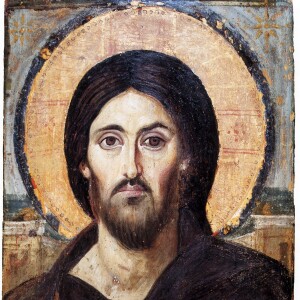
Sunday Jul 13, 2025
Sunday Jul 13, 2025
Links provided to the group:
Outline: https://mcusercontent.com/c38acab568d650f7ef65f39df/files/250d23a5-4286-ca11-aa97-511cb2db99e7/Phronema_Outline_2025.pdf
Phronema in the Teachings of Archimandrite Zacharias Zacharou: https://mcusercontent.com/c38acab568d650f7ef65f39df/files/bcb1bdd1-e77a-1f58-b90d-8070e0f7f9d5/Phronema_in_Teachings_of_Zacharias_Zacharou.pdf
Quotes: https://mcusercontent.com/c38acab568d650f7ef65f39df/files/e2d2937f-cb54-e3d1-e164-4fffc0d409da/Collection_of_Quotes_on_Phronema_2025.pdf
Sunday Jul 13, 2025
Sunday Jul 13, 2025
Perhaps there has been no greater or more beautiful exhortation written than Saint Isaac the Syrian’s homily on temptation. This may seem to be a rather bold statement, but Isaac’s words draw us into the very heart of a reality that even many men and women of faith do not see; that is, we are engaged in a spiritual warfare against the Evil One. Evil is not an abstraction or a story meant to instill fear as a means of control. Isaac speaks of it from the perspective of experience and like the other desert fathers, he stands before us as a living and breathing icon, encouraging us to run the course with courage and fidelity. In the spiritual battle, there is no Sabbath day rest; in other words, we must be ever vigilant in regards to temptation that comes to us in many forms. The only one that we must be concerned about is the temptation to which we freely give ourselves over through neglect or laziness or our attachment to particular sins. Rather, we are to take heart from and acquire zeal in our soul against the devil through the example and the histories of those who proved “allies of the divine laws and commandments of the Spirit in fearful places, and amid most grievous tribulation.”
The one in essential thing that this requires of us is that we have in our mind God‘s providence, and always to remember that he is ever faithful, and will not abandon those who trust him. This is our hope - that God is ever present to us in the spiritual battle, strengthening us, and surrounding us with a host of angels and Saints. We have a God who is set upon our salvation and who provides everything that is needed in order that we might be raised even above the ranks of angels. Our Lord has humbled himself, taken our poor humanity and its poverty, embraced it in all of its fullness and weakness in order to raise us up to share in the fullness of the life of God. Deification is the fruit of the spiritual battle and the promise of our loving Lord!
---
Text of chat during the group:
00:03:18 Fr. Charbel Abernethy: Page 138 paragraph number 33
00:12:58 Bob Čihák, AZ: P. 138, first full paragraph
00:14:35 Janine: Happy birthday Fr. Charbel…60 is nothing…just wait til 70! You are still very young!
00:15:18 Bob Čihák, AZ: ..or 84...
00:19:24 Catherine Opie: Happy Birthday Fr. May your next circle around the sun be full of Gods graces and blessings🎂
00:21:17 Rebecca Thérèse: Happy birthday it's the 10th already in the UK as well🎂☺️00:22:22 Gwen’s iPhone: Smile you could be turning 79
00:32:42 Erick Chastain: It is interesting that he emphasizes the role of the guardian angel in defending against the temptations. My oblate master says one should pray to the guardian angel to prevent sins. \
00:36:12 Ryan Ngeve: Father it is easy for us who live in the world to tend to forget of spiritual realities in our daily life. How does one change this ?
00:36:27 David: St. Moses the Black/Strong episode of 'Martin Scorsese Presents: The Saints' is streaming now on Fox Nation. I believe this is also on youtube but likely violating copyright.
00:42:15 Anthony: To become prayer is like the lesson on computation on Monday.
00:43:38 paul g.: Reacted to " St. Moses the Black…" with ✔️
00:59:15 Anthony: I think it's important to note they recognized perils, even perils of devils, but did not seek to indulge curiosity about the demons. The focus was God, without craven feeling toward devils or to God. They shone like simple, confident icons.
00:59:37 Ryan Ngeve: Father, could the very realization of one’s own wretchedness/ poverty/ powerlessness or need for some external mercy lead to tears or even despair?
01:02:11 Elizabeth Richards: Yes!
01:17:13 Catherine Opie: ❤️
01:19:03 David: I heard an interesting podcast with Fr. Josh Johnson who said if the Devil can't make you bad he will make you busy. Apparently a parishioner doubted the devil existed he told her to set a time to sit in adoration or prayer and you will see tons of things will come up to interfere and often not bad things. 2 weeks later she came back and said- ok I believe in the devil. This also has been my experience.
01:21:44 Eleana: And temptations. I usually tell my patients you are often desperate for a "fix" and miserable but when you are trying to be sober and clean, you encounter friends that will invite you and even FIND everywhere what you avoid the most.
01:26:11 Maureen Cunningham: Thank You Father Blessing
01:26:49 Elizabeth Richards: 🥳 Happy Birthday! 🎉 Looking forward to Saturday!
01:26:53 Rebecca Thérèse: Thank you☺️
01:26:53 Bob Čihák, AZ: Thank you and Bless you, Father.
01:26:54 Art: Have a happy birthday!!
01:26:59 Jeffrey Ott: Thank you! Happy Birthday!
01:27:10 David: Thank you father and may you have a joyful Birthday. I turn 60 next year tell me how it goes
Tuesday Jul 08, 2025
Tuesday Jul 08, 2025
The beauty of the writings of the fathers and in particular the lived experiences of the monks as described in the Evergetinos brings to life the spiritual life in an unparalleled fashion. They show us that there is no part of the spiritual life that can be seen outside the context of our relationship with God. In other words, there is no spiritual practice or discipline, no spiritual fruit or experience that does not begin and end with God and his grace.
Contrition is love! It is rooted in the growing experience of loss that one has by turning away from God because of one’s attachment to the things of this world or to one’s own judgment. When contrition emerges within the human heart, when the sword of sorrow that pierced through our Lord‘s heart allows us to taste its metal, and when tears begin to flow without measure, one does not distract oneself from the experience. To do so would be to turn away from God.
So often we want to control or manage, not only circumstances, but our experience of what is going on internally and in our relationship with God. It is difficult for us to allow ourselves to be taken by the hand and guided by Christ along the path that leads to our sanctification and intimacy with him. Strangely enough, we often become the focus of our own spiritual life; how well we are doing things, the disciplines that we keep, the sins that we avoid, the regularity of our prayer. However, we are shown that God can bestow upon a soul the gift of contrition and tears in a moment of domestic work. God does this in order that we might have no illusion about where this gift comes from. Whenever we tie contrition to what it is that we are doing, we either take hold of it as if it were our own or we seek to distract ourselves from it. Often it is emotionally hard for us to linger long in such sorrow and humility. Yet the fathers show us that this gift is precious, not to be turned away from quickly, but rather fostered.
Such teaching becomes a stark reminder that our faith is rooted in a relationship with a God who has come to us to heal us; that humble sorrow and that flood of tears become the very means by which He lifts us up.
---
Text of chat during the group:
00:10:54 Bob Čihák, AZ: P. 254, 2nd paragraph of # 18
00:11:15 Adam Paige: Reacted to "515714551_18143336329396209_7085918453142515818_n.jpg" with ☦️
00:15:36 Bob Čihák, AZ: P. 254, 2nd paragraph of # 18
00:26:16 Una: So don't stop weaving the baskets?
00:31:18 Kathleen: God have mercy on our lack of awareness.
00:38:57 Anthony: When I try to pray the "right" way, my mind usually trips me up. Prayer is easier when walking, not paying attention to "I have to do this right....oh no, bad thought, distraction.....I have to do this right.....pay attention, why did you have that distraction....." etc.
00:40:17 Forrest Cavalier: Reacted to "When I try to pray t..." with 👍
00:45:40 Anthony: Legalism can turn into "magic."
00:46:00 Myles Davidson: Reacted to "Legalism can turn in..." with 👍
00:46:34 Myles Davidson: Replying to "Legalism can turn in..."
Magical thinking yes
00:48:00 Forrest Cavalier: My dad got back in the church 2 years before he died. He wondered why it was so much easier for him to cry. I wondered too. From these paragraphs, now I know.
00:56:54 Andrew Zakhari: Psalm 56:8 "You have kept count of my tossings; put my tears in your bottle." God lingers over our tears long enough to collect them. I don't think we sit with them long enough to even recognize what they are about.
01:03:41 Anthony: India ink or Chinese ink
01:04:55 Forrest Cavalier: Greek is "hot iron"
01:05:09 Forrest Cavalier: πυρωμένον σίδηρον
01:06:30 Anthony: Replying to "πυρωμένον σίδηρον"
I apologize for interrupting you Forrest
01:11:23 Maureen Cunningham: Thank You Father Blessing
01:11:33 Forrest Cavalier: Replying to "πυρωμένον σίδηρον"
My fault.
01:11:35 Rebecca Thérèse: Thank you☺️
01:11:46 Troy Amaro: Thank You Father
01:11:49 Catherine Opie: Thank you Fr. God bless
Thursday Jul 03, 2025
Thursday Jul 03, 2025
Knowledge of God comes through the experience of God. When faith remains an abstraction, an idea, it is destined to remain lifeless and loses its capacity to transform and heal. It is the Lord Himself - He who is the Way, the Truth, and the Life - who must teach us.
Outside this path, we will lack all understanding. What we are called to contemplate is not simply what we can see with our eyes, perceive through our senses or conceive through our intellect. It is the mind of God, the mind of Christ, that we are called to put on. Furthermore, what we are given to understand is not worldly realities but the very mysteries of the Kingdom and the nature of divine Love.
Such is true in our understanding of the presence of temptation and affliction in our lives. We are told to pray not to enter in the temptation and yet the path the Christ calls us to walk leads us directly into them. The temptations that we are not to give ourselves over to are the ones that come through our own negligence and attachment to the things of this world and the self. We are not to put ourselves to the test by exposing ourselves to things that enliven the passions. Yet, in the gospel we are called by Christ to enter into the tribulation and the trials that we experience in this world and to do so with patience and hope in Him. The temptation that we are to fear is the one that comes through the mind’s self-esteem which opens us up to the demon of blasphemy and pride. It is then that we make ourselves judge of God and become blind to the poverty of our own sin.
The temptation, the trial we are called to enter into and embrace is the cross. With firm hope we are to take it up daily and in doing so God will reveal the truth to us. Isaac writes: “For without trials, God‘s Providence is not seen and you cannot obtain boldness before God, nor learn the wisdom of the spirit, nor can divine longing be established within you.” Knowledge of the cross, only comes through the experience of the cross, and our willingness to embrace it. This reality allows us to become bold in our hope and trust in the Lord‘s love. Unless we enter into hell, we will never know through experience that that we need not fear it – for Christ has already descended there. Our virtue, our strength is to be the virtue and strength of Christ. This comes only through living in Him and embodying that same love and hope that was made present on Calvary.
These mysteries even made Saint Isaac cry out: “O the subtlety of the path of the Thy teachings, O Lord!“ We must humbly allow Him to take us by the hand and guide us to the truth.
---
Text of chat during the group:
00:09:50 Bob Čihák, AZ: P. 136, last paragraph, last line, bottom of page
00:12:16 Bob Čihák, AZ: We started on p. 113
00:17:23 Bob Čihák, AZ: P. 136, last paragraph, last line, bottom of page
00:19:22 Thomas: Where do I find the raise hand button
00:20:03 Myles Davidson: Replying to "Where do I find the ..."
At the React button
00:20:54 Thomas: Replying to "Where do I find the …"Thanks
00:27:21 Anthony: We also need to be perceptive while simple so we don't let liars beguile us.
00:29:33 Myles Davidson: Replying to "We also need to be p..."
Wise as serpents while innocent as doves
00:31:56 Thomas: Would it be imprudent or untrusting, or something like that to want to suffer more?
00:39:00 Ryan N: Father how does one endure when the pains of the cross become overwhelming
00:39:06 Ryan N: Or even less to a loss of faith
00:39:11 Ryan N: Lead*
01:02:44 Eleana: The father of lies with the daily illusion that freedom is instant gratification is in itself the battle that leads to sanctity. Where sin is abundant so is grace.
01:07:36 Ryan N: Father how do temptations of lusts differ from temptations of affliction
01:14:24 Anthony: That's the spirit of Enlightenment so-called. We are told by our government even, that doubt and blasphemy are freedom.
01:20:53 Jeffrey Ott: I was just there two weeks ago. It was hot then 😆
01:23:49 Catherine Opie: Thank you Fr. once again. God bless.
01:23:52 Rebecca Thérèse: Thank you☺️
01:23:57 Jeffrey Ott: Thank you Father!
Tuesday Jul 01, 2025
Tuesday Jul 01, 2025
When reading the fathers, it is as if we are swimming in the living waters of their faith and love for God. In this sense we are in a privileged position: we are able to catch a glimpse of what might otherwise be completely incomprehensible to us. Yet the warmth of the light of their faith is undeniable; for contrition is often understood and experienced as the coldest of realities, expressing only the poverty of our sin and the distance from God that it creates. When reading the fathers, however, we begin to see that contrition is love and rooted, most importantly, in a relationship of love with merciful God.
God has come among us and take our flesh upon himself and so there is nothing foreign to Him about our experience or the poverty of our sin. He has entered into it all, embracing it, carrying it, and experiencing every subtle impact that it has upon our hearts. Contrition and the tears that often flow because of it is part of God‘s providential care for us. There are many reasons why we might have a punitive vision of God and how he engages us. If we focus only on our sin or if we simply over analyze on an intellectual level who God is and the nature of sin then we are destined for despondency. A faith that is solely moralistic and legalistic can crush the spirit, sometimes permanently.
Once we experienced true contrition, we must allow it to reveal the meaning and the purpose of our tears; or better yet, we must simply allow ourselves to experience the impact of this reality on our hearts and how it can open us up to an unparalleled experience of the love and mercy of God. One period of tears shed for love can preserve virtues that have been hard won over the course of years. These tears are shaped not only by emotion or sorrow but by the grace of God.
---
Text of chat during the group:
00:15:15 Bob Čihák, AZ: P. 253, # 12
00:32:45 Kate : If someone has had a very legalistic experience within the Church, does it take a leap of faith to make the shift to even believe in the love of God? In other words, does one have to bow down in humility and accept the love of God as a matter of faith?
00:52:15 Myles Davidson: More than one Catholic exorcist have said that Nefarious is the best portrayal of demonic possession on film they’ve seen. Great film!
01:05:58 Myles Davidson: That’s just about my favourite desert father teaching thus far. Beautiful image!
01:06:17 Vanessa: Love it too.
01:06:26 Vanessa: Reacted to "That’s just about my..." with ❤️
01:17:09 Maureen Cunningham: Thank You Blessing
01:17:37 Andrew Adams: Thanks be to God! Thank you, Father!
01:17:40 Rebecca Thérèse: Thank you☺️
01:18:00 Bob Čihák, AZ: Bless you!!