Tuesday May 12, 2026
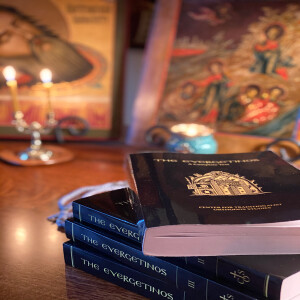
The Evergetinos: Book Three - Chapter II, Part III
There is a fierce honesty in the fathers that modern Christians often find difficult to endure. They do not allow us the comfort of remaining spectators to the Fall. We prefer to think of Adam’s transgression as history, tragedy, doctrine, or inherited condition. But the fathers insist upon something far more painful: Adam’s sin is repeated in us daily.
Not first through sensuality.
Not first through disobedience.
But through judgment.
Abba Mark says something astonishing: the tree of the knowledge of good and evil is our constant distinction between “good” brethren and “bad” brethren. The Fall occurs whenever we separate ourselves inwardly from another human being through contempt, condemnation, suspicion, derision, or hidden hatred. We imagine ourselves discerning spiritually, morally, psychologically, or ecclesially, while in reality we are tasting again the forbidden fruit.
This is why the fathers fear judgment more than humiliation.
The modern mind often reduces sin to the violation of rules. But the fathers understand sin as the darkening of vision. The moment we begin to look upon another person without mercy, without reverence, without grief for our own condition, our sight becomes corrupted. We no longer behold the image of God. We behold instead the projection of our own passions.
And this is why Abba Mark says:
“In the eyes of one whose heart is possessed by the passions, no man is sanctified.”
The impure heart cannot see purely.
A man filled with anger sees enemies everywhere.
A vain man sees inferiors.
A lustful man sees objects.
A fearful man sees threats.
A proud man sees fools.
The world slowly takes on the shape of our inner disorder.
How terrifying this is for our age.
We live in a culture built almost entirely upon commentary, denunciation, suspicion, exposure, ridicule, factionalism, and perpetual judgment. Men and women sit before glowing screens daily eating the fruit of the knowledge of good and evil, deciding endlessly who is worthy and who is contemptible. Entire identities are now constructed around outrage. Even religious discourse often becomes little more than sanctified accusation.
One no longer needs to enter a battlefield to lose one’s soul.
One need only remain online.
The fathers would tremble at the atmosphere we inhabit.
Not because they were naïve about evil, but because they understood something we do not: judgment wounds first the one who judges. The punishment is already contained within the act itself. The moment brotherly love dies, spiritual perception begins to die with it.
Abba Mark says that once the mind tastes this fruit, it falls into the very sins it condemned. This is one of the great spiritual laws confirmed by centuries of ascetical experience. The one who delights in exposing others becomes inwardly exposed himself. The one obsessed with impurity becomes inwardly contaminated by the images he condemns. The one who cannot forgive slowly becomes incapable of receiving mercy.
And yet the fathers do not say these things to crush us.
They speak this way because they have seen Christ.
This is what modern readers often miss. The fierce severity of the desert fathers is born from the overwhelming revelation of divine mercy. They have seen the humility of God in Christ. They have seen the Innocent One forgive His murderers, descend into our corruption, bear our nakedness, and unite Himself even to those who abandoned Him. Therefore every movement of contempt within themselves becomes unbearable to them.
Their tears are not moralism.
They are astonishment before mercy.
The fathers know that no man truly sees his own sins and continues comfortably condemning others. When Isaiah saw the glory of God, he did not cry:
“Those people are unclean.”
He cried:
“I am a man of unclean lips.”
This is why humility and compassion always deepen together.
The modern world confuses humility with low self-esteem or emotional softness. But the fathers understand humility as truthfulness before God. The humble man no longer needs enemies in order to preserve himself psychologically. He no longer builds identity through comparison. He no longer secures righteousness through accusation. He knows too much about the abyss within his own heart.
And strangely, this knowledge makes him gentler.
Not permissive.
Not morally indifferent.
But merciful.
The fathers never deny evil. They simply refuse to stand outside the human condition while speaking about it.
This is especially important today because modern Christians are tempted toward two opposite distortions.
One side abandons discernment entirely in the name of compassion. The other weaponizes discernment in the service of hidden hatred. The fathers accept neither path. They see clearly. Fiercely clearly. Yet they weep over what they see.
The true ascetic is not shocked by human weakness because he has descended into his own heart and found there every seed of corruption. He knows that apart from grace he is capable of every sin. Therefore he approaches others not from superiority but from shared poverty.
This is why the fathers continually command:
“Busy yourself with your own faults.”
Not because the sins of others are unreal.
But because self-knowledge is salvific while judgment is intoxicating.
And this teaching becomes even more radical in the light of Christ’s revelation that the true battlefield lies within the hidden man of the heart. The spiritual law judges not only external acts but secret thoughts, inward movements, concealed fantasies, silent condemnations, and hidden resentments. A man may appear peaceful outwardly while inwardly conducting trials against the entire world.
Modern life makes this almost constant.
We judge politically.
Ecclesially.
Morally.
Psychologically.
Liturgically.
Socially.
Intellectually.
And often we do so while imagining ourselves defenders of truth.
But the fathers ask a far more frightening question:
“What has happened to your heart while you were defending truth?”
Abba Mark says there is only one true goal:
to rejoice when wronged because we are thereby given opportunity to forgive.
This sounds almost impossible to modern ears because our entire culture is organized around self-protection, self-assertion, self-expression, and vindication. Yet the fathers understand that every injury endured without hatred enlarges the heart’s capacity for God.
This does not mean enabling abuse or denying justice. The fathers are not preaching psychological passivity. Rather, they are revealing that the deepest freedom is freedom from hatred.
And this freedom is impossible without grace.
That is why Abba Mark says that Christ Himself fights within us after Baptism. The battle is interior. The warfare is largely invisible. Pride, vainglory, pleasure, resentment, self-justification, condemnation, fantasy, and rage move continually through the thoughts. No merely human technique can heal this fragmentation.
Only Christ hidden within the heart can do battle there.
The fathers therefore call us not to moral performance but to radical cooperation with grace:
through prayer,
through repentance,
through patience,
through forgiveness,
through refusal of judgment,
through bearing humiliation,
through hidden struggle,
through learning slowly to love.
And perhaps nowhere is this teaching more needed than now, in an age where almost every system around us profits from outrage, comparison, suspicion, and exposure.
The fathers remind us that the soul does not become luminous through winning arguments or exposing others. It becomes luminous through mercy.
For in the end, purity of heart is nothing other than learning to see others as Christ sees them:
not sentimentally,
not blindly,
but through the terrible and beautiful light of compassion.
---
Text of chat during the group:
00:03:31 Fr. Charbel Abernethy: Page 13 Hypothesis II number 3
00:03:46 Bob Čihák, AZ: Vol. 3, p. 13, #3
00:08:55 Lorraine: Here is a link to the book you mentioned last week, Father
00:09:04 Lorraine: https://archive.org/details/orthodoxpsychoth0000vlac
00:13:29 Bob Čihák, AZ: Vol. 3, p. 13, #3
00:24:30 Julie: He said to them: Acts 10:28 “You are well aware that it is against our law for a Jew to associate with or visit a Gentile. But God has shown me that I should not call anyone impure or unclean.'"
00:31:50 Joan Chakonas: Interesting in Sundays homily the pastor said that God speaks to us through people around us. He told us to do as asked by our spouses etc. My husband is outside the faith and it had really never occurred to me that God might be speaking to me through my faithless spouse- believe it or not I am that thick. Anyway tying this back to todays hypotheses- our judgment is blocking our reception of God- when we are not even considering this possibility. Sorry if I sound dense. These readings are amazing to me.
00:34:36 Nypaver Clan: Reacted to "Interesting in Sunda..." with 👍
00:42:41 Bob Čihák, AZ: Vol. 3, p. 15, 4
00:49:38 Joan Chakonas: I can’t imagine any day passing when in the company or presence of others the inclination toward negativity is completely absent. Our fallen nature. Listening to these writings presents us with a how to manual for entering the door of paradise. I just love these podcasts. Thank you thank you thank you.
00:51:28 Joan Chakonas: Yes revelation!!!!
00:59:49 Nypaver Clan: St. John Henry Newman is recognized as “Doctor of the Church” to emphasize “heart speaking to heart.” Like you said, “Doctor of conscience.”
01:04:46 Fr Martin, Arizona: Do you think there's anything to the following thought that i had? In regard to wanting someone to act differently so that my own discomfort would be relieved, the thought came to me, that at the foot of the cross, Mary never said to Jesus, "Come off the cross, and "make ME" feel better, so that I can feel better and not so pierced by seeing you suffer."
01:05:30 Joan Chakonas: Reacted to "Do you think there's anything to the following thought that i had? In regard to wanting someone to act differently so that my own discomfort would be relieved, the thought came to me, that at the foot of the cross, Mary never said to Jesus, "Come off the cross, and "make ME" feel better, so that I can feel better and not so pierced by seeing you suffer."" with ❤️
01:07:31 forrest: Sorry, Father. In fact, Jesus did not cause his mother to suffer, ever.
01:11:23 Bob Čihák, AZ: Exhausting, but beautiful. Bless you, Father.
01:11:27 Rebecca Thérèse: Thank you☺️
01:11:28 Catherine Opie: Thank you Fr. I am so glad to be back in this study group. Every one I attend is entirely relevant to my life every time
01:11:30 Andrew Adams: Thanks be to God! Thank you, Father!
01:11:35 Jessica McHale: Thank you! Prayers!
01:11:37 Joan Chakonas: Thank you!!!!
01:11:40 Janine: Yes
01:12:41 Joan Chakonas: Saturdays are giid
01:12:48 Joan Chakonas: Goid
No comments yet. Be the first to say something!