Philokalia Ministries
Episodes

Aug 4, 2026
Aug 4, 2026
1hr 46 min
The Name Above Every Name
Conference Four
Becoming Prayer
When the Name Becomes Our Life
“It is no longer I who live, but Christ who lives in me.”
— Galatians 2:20
Over these past conferences we have spoken of receiving the holy Name, guarding the heart, and learning to stand before God with a broken spirit.
All of these are necessary.
Yet none of them is the destination.
The Jesus Prayer is not an achievement.
It is not even the highest form of prayer.
It is a road.
It leads somewhere.
Or rather, it leads to Someone.
Its purpose is not that we should become occupied with prayer.
Its purpose is that we should become occupied with Christ.
Everything else is secondary.
⸻⸻⸻
When the Fathers speak of unceasing prayer, they do not imagine a person anxiously repeating words every moment of the day.
Such an understanding would quickly become exhausting.Rather, they speak of a heart that has learned never to depart from Christ.
The words remain precious.They accompany us throughout our life.
Yet gradually the relationship they express becomes more important than the words themselves.
The prayer begins on our lips.It descends into the mind.It finds rest in the heart.Finally, it becomes the atmosphere in which we live. Not because we are continually conscious of it.
But because Christ has quietly become the center of everything. ⸻⸻⸻
This is why Archimandrite Zacharias insists that the measure of prayer is not extraordinary experiences.
The measure is love.Has the heart become more patient?More forgiving?More merciful?More truthful?More humble?If not, then no matter how many prayers have been recited, the purpose has been missed. The true miracle of the Jesus Prayer is not mystical phenomena.It is the slow transformation of a human being into the likeness of Christ.⸻⸻⸻
2
There is a temptation that comes even in the spiritual life. We begin to love prayer more than we love God.We become attached to certain feelings.Certain consolations.
Certain moments of peace.When they disappear, we imagine we have lost everything.
The Fathers quietly remind us that God sometimes removes sensible consolation so that we may seek Him alone.
The Bride must learn to love the Bridegroom more than His gifts. Only then does love become pure.⸻⸻⸻
One of the most beautiful teachings of St. Silouan, so often repeated by Elder Sophrony and Archimandrite Zacharias, is that the heart gradually becomes capable of embracing the whole Adam.
At first we pray for ourselves.Then for those closest to us.Then for those we love.Eventually, grace begins to enlarge the heart. We discover ourselves praying for strangers. For enemies.
For those who have forgotten God. For those who have wounded us.For those who have never known love.
3
The circle widens until there are no longer any outsiders. This is not something we accomplish.It is something Christ accomplishes within us.His own love begins to beat within the human heart. ⸻⸻⸻
The Jesus Prayer therefore has a profoundly priestly character.Every baptized Christian is called to stand before God on behalf of the world. We bring before Him those who cannot pray.Those who no longer believe.Those crushed by despair.Those trapped in addiction.Those overwhelmed by grief.Those who have forgotten even their own dignity.We carry them quietly within our hearts.Not because we are strong enough.But because Christ carries them within His.Prayer becomes participation in His own intercession before the Father. ⸻⸻⸻There is another fruit that often goes unnoticed.The heart becomes grateful.Not merely thankful when life is pleasant.
4
Grateful always.The one who continually invokes the Name slowly discovers that every breath is gift. Every sunrise.Every meal.Every encounter.Every sorrow.Even suffering becomes a place where Christ may be found.Thanksgiving begins to permeate ordinary life.The Eucharist extends into every hour of the day.⸻⸻⸻The Fathers speak often of stillness.Many misunderstand this word.Stillness is not merely external silence.Nor is it freedom from activity.Stillness is the quiet confidence that Christ is present.A person may live in a monastery or in a crowded city.He may spend his days alone or surrounded by people.Stillness is possible wherever the heart has learned to remain with Christ.The Jesus Prayer becomes the guardian of this hidden peace.⸻⸻⸻As years pass, the prayer itself often becomes simpler.Sometimes the full prayer is spoken.
5
Sometimes only the holy Name.Sometimes no words at all.Only the silent awareness of His presence.The Fathers do not prescribe these movements.Grace teaches each soul according to its need.The important thing is never to abandon humility.The closer we draw to Christ, the more clearly we perceive that everything is gift. Nothing has been earned.Everything has been received.⸻⸻⸻Perhaps this explains why the greatest saints seem so ordinary.They do not appear remarkable.They seldom speak about themselves.They rarely attract attention.Having forgotten themselves, they have become transparent to Christ.People leave their presence remembering Him rather than them.This is the hidden victory of the Jesus Prayer.Not that we become known as holy.But that Christ alone becomes visible.⸻⸻⸻When we first began this retreat, we asked a simple question.
6
Why this Name?Now perhaps we may answer it.Because within this Name dwells the whole mystery of our salvation. The humility of Bethlehem.The obedience of Nazareth.The compassion shown to sinners.The tears shed over Jerusalem.The Cross.The silence of Holy Saturday.The glory of the Resurrection.The fire of Pentecost.Everything is contained within the Person whose Name we invoke. Each time we whisper,“Lord Jesus Christ, Son of God, have mercy on me,”we stand before the whole mystery of the Gospel.Nothing essential is absent.⸻⸻⸻Soon this retreat will end.We shall return to our homes.To our families.To our work.To our responsibilities.
7
The hidden battle will continue. Distractions will return.Weakness will remain.But now the holy Name goes with us. It accompanies every step.
It enters every conversation.
It sanctifies every sorrow.
It illumines every joy.
Little by little, almost unnoticed, Christ Himself begins to gather the scattered fragments of our lives into a single offering to the Father.
This is the true work of the Jesus Prayer.Not escape from the world.But the transfiguration of the heart within the world.⸻⸻⸻Let us therefore ask for no extraordinary gifts.Let us ask only for faithfulness.May the Name of Jesus remain upon our lips in times of joy and in times of grief. May it guard us in temptation.Strengthen us in weakness.Console us in loneliness.Humble us in success.Sustain us in suffering.
8
And at the hour of our death, when every earthly support has fallen away, may the holy Name still be found within our hearts—not as a formula we have mastered, but as the living presence of the Friend who has walked beside us all our lives.
For in the end, the greatest fruit of the Jesus Prayer is not that we have learned to repeat the Name of Christ.
It is that, through His infinite mercy, the Name of Christ has slowly written itself upon our hearts.
And when that has happened, prayer has become life, and life itself has become an unending hymn of love to the Father, through the Son, in the Holy Spirit.
Amen.
9
Jul 30, 2026
Jul 30, 2026
1hr 35 min
The Name Above Every NameConference ThreeThe Broken Heart and the Descent into the Heart Learning to Stand Before God
“The sacrifice acceptable to God is a broken spirit; a broken and contrite heart, O God, Thou wilt not despise.”— Psalm 51:17
There comes a moment in every authentic spiritual life when we discover that we cannot pray as we imagined we would.
We begin with generous resolutions. We set aside time.We struggle to be faithful.We seek recollection.
Yet gradually another discovery is made.The deepest obstacle to prayer is not distraction. It is ourselves.Not because we are evil.But because our hearts have become divided. Part of us longs for God.Another part clings to the world.Part of us desires silence.Another part fears it.Part of us seeks Christ.
Another part still wishes to preserve itself. Prayer slowly uncovers this division.Not to discourage us.But to heal us.
⸻⸻⸻
Archimandrite Zacharias often says that the purpose of the spiritual life is not simply to become moral.
It is to acquire a heart capable of standing before the living God. That is a very different thing.Many people imagine holiness as flawless behavior.The saints speak instead of relationship.
A man may appear outwardly blameless while never allowing God near his heart.
Another may come before God in tears, unable even to lift up his eyes, and return home justified.
The difference is not perfection.It is truth.God can only fill the heart that has ceased pretending.⸻⸻⸻This is why repentance occupies such a central place in the Jesus Prayer. “Have mercy on me.”These words are not born of self-hatred.Nor are they the cry of someone obsessed with guilt.They are the language of love.
2
Only someone who has glimpsed the beauty of Christ can grieve over the ways he has turned from Him.
Repentance is therefore not primarily looking at ourselves. It is looking at Christ.His light reveals everything.Not harshly.
Tenderly.Like the rising sun that slowly illumines a valley still covered in morning mist. Nothing is forced.Everything is revealed in love.⸻⸻⸻The Fathers distinguish between remorse and repentance.Remorse circles endlessly around itself.Repentance turns toward God.Remorse says,“I have failed.”Repentance says,“Lord, have mercy.”Remorse ends in discouragement.Repentance opens the door to hope.This distinction is essential.Many sincere Christians carry burdens Christ never asked them to carry.
3
They believe continual self-accusation is humility.It is not.True humility forgets itself because it has become absorbed in Christ. The humble man knows his poverty.But he knows God’s mercy even more.⸻⸻⸻Archimandrite Zacharias writes often about standing before God. This expression appears again and again.It is wonderfully simple.Prayer is not first speaking.Nor thinking.Nor even feeling.Prayer is standing.Standing before the Face of Christ.Standing in truth.Standing in poverty.Standing in hope.Everything else gradually unfolds from this.Sometimes words disappear.Sometimes thoughts become quiet.Sometimes only tears remain.
4
The Fathers are not disturbed by this.The heart has begun to speak.⸻⸻⸻One of the greatest gifts God grants us is the knowledge of our own weakness. Strangely, we usually resist this gift.
We prefer strength.Competence.Success.Spiritual progress.God often gives something different. He allows us to encounter ourselves. Not to humiliate us.
But to make us truthful.Without this knowledge, compassion remains shallow.We judge others because we have never seen ourselves.Once we have stood honestly before God, judgment becomes almost impossible. We recognize the same poverty within ourselves.And mercy begins to flow naturally.⸻⸻⸻The publican in the Temple becomes the icon of this prayer.He possesses nothing.No arguments.
5
No achievements.No excuses.He simply stands.“God, be merciful to me.” Nothing more.
The Fathers never tire of returning to this image because it reveals the true posture of prayer.
The Kingdom belongs to those who have nothing left except God. ⸻⸻⸻There is another mystery hidden here.As repentance deepens, the heart begins to enlarge.
This seems impossible.One might imagine continual repentance making a person smaller.The opposite occurs.Pride narrows the heart.Humility expands it.The more we stand honestly before Christ, the more room He creates within us. We begin to carry others.Their grief no longer feels foreign.Their wounds become our concern.Prayer quietly widens until it embraces the whole Adam.This is why the saints wept.
6
Not because they despaired.But because their hearts had become vast.⸻⸻⸻Archimandrite Zacharias frequently speaks of bearing shame.This language can trouble modern ears.Yet he uses it with profound care.The shame he describes is not humiliation inflicted by others.Nor is it psychological self-contempt.It is the willingness to stand before God without hiding.Adam covered himself.The saints uncover themselves before Christ.Nothing remains concealed.Nothing defended.Nothing explained away.And because everything is brought into the light, everything becomes capable of healing. The heart finally stops fleeing.It remains.⸻⸻⸻This is perhaps the deepest work of the Jesus Prayer.Not continual repetition.Continual return.
7
Every invocation is another act of trust.Another refusal to hide.Another opening of the heart.The prayer slowly becomes the place where Christ and the soul meet. No visions are required.
No extraordinary experiences. Only faithfulness.Day after day.Year after year.
Until standing before Christ becomes more natural than standing before ourselves. ⸻⸻⸻There comes a point when prayer grows wonderfully simple.The words become fewer.
The heart quieter.Silence itself begins to speak.This is not emptiness.It is fullness.The Presence for which words were preparing us has quietly arrived. The Fathers never encourage us to seek such moments.They teach us simply to remain faithful.Grace knows its own time.The flower does not open because we command it.
8
It opens because spring has come.So too the heart.⸻⸻⸻Perhaps this is the greatest lesson Archimandrite Zacharias offers us. The Jesus Prayer is not given so that we may become experts in prayer. It is given so that we may become truthful before God.
The heart that continually cries,
“Lord Jesus Christ, Son of God, have mercy on me,”
gradually loses the need to defend itself.
It no longer fears weakness.
It no longer hides failure.
It no longer seeks admiration.
It desires only to remain before Christ.
And this is already the beginning of heaven.
For heaven is nothing other than the soul standing unveiled before the Face of the One who has loved it from all eternity.
As we leave this conference, let us ask for only one grace. Not extraordinary prayer.Not lofty experiences.Simply the courage to remain before Christ without masks. To allow His light to reveal us.
To allow His mercy to heal us.
9
To allow His love to enlarge our hearts until they become capable of bearing both our own poverty and the suffering of the whole world.
For this is the hidden work of the holy Name.
It leads us, not away from ourselves, but through the truth of ourselves into the inexhaustible mercy of God.
10
Jul 21, 2026
Jul 21, 2026
2hr 1 min
The Name Above Every Name
Conference Two
Guarding the Heart with the Name
The Jesus Prayer and the Hidden Battle
“Keep your heart with all vigilance, for from it flow the springs of life.”
— Proverbs 4:23
When we begin to pray the Jesus Prayer with any measure of faithfulness, we often encounter something unexpected.
Rather than becoming peaceful, we become distracted.Rather than discovering silence, we discover noise.Rather than finding purity, we become painfully aware of the confusion within us. Many become discouraged at this point.They imagine they are failing.The Fathers tell us something very different.For the first time, we are beginning to see.The purpose of the Jesus Prayer is not merely to console us.It is to bring us into the light of Christ.And whenever light enters a darkened room, it reveals what has long been hidden. The heart is no different.The Jesus Prayer does not create our distractions.It uncovers them.It does not produce our passions.It reveals how deeply they have already taken root.
This is why the beginning of prayer can feel more difficult than life before prayer.
Grace has begun its work.
⸻⸻⸻
Archimandrite Zacharias often reminds us that God grants us His light gradually because He knows our weakness.
If He were to reveal our heart all at once, we could not bear the sight. Instead, He teaches us gently.He uncovers one attachment.Then another.
He exposes one fear.
Then another.
He reveals one hidden wound.
Then another.
Not to condemn us.
But to heal us.
This is the great difference between the accusation of the enemy and the illumination of the Holy Spirit.
The enemy exposes in order to produce despair. Christ reveals in order to restore communion. The one drives us inward.The other draws us toward repentance.
This distinction must never be forgotten.
2
⸻⸻⸻The Fathers speak constantly of watchfulness.This is not suspicion.It is not anxiety.It is not becoming preoccupied with ourselves.Watchfulness is simply the refusal to live asleep.Most of us spend our lives reacting.A word is spoken.A memory arises.An anxiety appears.A desire awakens.Without reflection we follow it.The Fathers ask us to pause.Not to analyze.Not to condemn.But to stand before Christ.The Jesus Prayer gradually creates this holy pause.Instead of immediately following every thought, we return to the Name. Again and again.Not violently.Not anxiously.Simply and quietly.
3
Like a child returning home.
The Name becomes the place where the heart learns to remain.
⸻⸻⸻
One of the greatest misunderstandings of the Philokalia is the belief that thoughts themselves are the enemy.
The Fathers never teach this. Thoughts come and go.Many arise without our consent. Temptation is not sin. Memories are not sin.
Emotions are not sin.Even powerful images may arise without our choosing them.The hidden battle begins only when the heart gives consent.This is why the Fathers devote so much attention to freedom.Between the arising of a thought and our agreement with it there exists a sacred space. The Jesus Prayer enlarges that space.It restores our freedom.We are no longer carried wherever every thought wishes to lead us.We become capable of remaining with Christ.This is one of the greatest miracles of grace.⸻⸻⸻The enemy has always sought to scatter the human heart.
4
Our age makes this easier than ever.
Never before have so many voices demanded our attention.
Never before have we carried so much noise in our pockets.
Never before have we been so easily distracted from the one thing necessary.
The tragedy is not merely that we become distracted.
It is that we gradually lose the capacity for recollection.
We become strangers to our own hearts.
The Jesus Prayer quietly gathers what has been scattered.
Like a shepherd calling sheep from every hillside, the Name summons the fragments of our life back into unity.
Thought by thought.Breath by breath.Day by day.The heart slowly becomes one. ⸻⸻⸻
This battle cannot be won by force.Many begin the spiritual life with enormous determination. They resolve to conquer every passion.To eliminate every distraction.To achieve uninterrupted prayer.Such zeal often ends in exhaustion.The Fathers counsel another way.
5
Humility.When distractions arise, we do not become angry.When thoughts return a hundred times, we return to Christ a hundred and one times. The victory lies less in never wandering than in always returning.The prayer itself teaches us this rhythm.Return.Remain.Return again.Eventually we discover that perseverance is stronger than intensity.⸻⸻⸻Archimandrite Zacharias repeatedly insists that humility attracts grace.This is why every sincere invocation of the Name weakens the dominion of pride. “Have mercy on me.”These words leave little room for self-sufficiency.They are the language of one who knows he cannot save himself.Strangely, this becomes the beginning of true freedom.Only the humble can receive help.Only the poor can receive riches.Only the empty can be filled.The Jesus Prayer continually places us in this blessed poverty.⸻⸻⸻
6
The hidden battle is therefore not primarily against demons. Nor is it first against thoughts.It is against forgetfulness.Adam forgot God.
Israel forgot God.We forget God.Everything else follows from this forgetting.The Jesus Prayer becomes an act of remembrance.Not merely remembering a doctrine.But remembering a Person.The heart learns to live in His presence.As remembrance deepens, many passions lose their strength.Not because we have crushed them.But because Christ has become more beautiful than the things that once captivated us. Love quietly accomplishes what fear never could.⸻⸻⸻The Fathers speak of purity of heart.Our world often misunderstands this expression.Purity is not emotional perfection.Nor is it psychological simplicity.It is singleness.One heart.
7
One desire.
One Lord.
This is why Christ says,
“Blessed are the pure in heart, for they shall see God.”
Only a unified heart can truly behold Him.
The Jesus Prayer slowly gathers every divided affection into this one desire.
Christ Himself becomes the center around which every thought, memory, sorrow, and joy begins to find its proper place.
⸻⸻⸻Perhaps the greatest surprise of the spiritual life is that victory often feels like weakness. The proud imagine victory as mastery.The saints experience it as dependence.They become less confident in themselves.More confident in Christ.Less interested in their own progress.More attentive to His mercy.The Name accomplishes this quietly over many years.Not dramatically.Almost imperceptibly.Until one day we discover that we no longer rely upon our own strength.We instinctively turn toward Christ in every circumstance.The prayer has become the movement of the heart.
8
⸻⸻⸻As we continue this retreat, let us not become discouraged by the hidden battle. The very struggle is already a sign that grace is at work.If we now see distractions that once escaped our notice, give thanks.If we recognize passions that once ruled us unnoticed, give thanks.If we discover our weakness, give thanks.For Christ has not come to condemn what He reveals.He has come to heal it.Let us therefore guard the heart—not with fear, but with hope.Let us return again and again to the holy Name.For every sincere return, however small, is already a victory of grace.
And slowly, often without our noticing, the heart that was once scattered among a thousand desires begins to rest in the One whose Name is above every name.
9
Jul 13, 2026
Jul 13, 2026
1hr 39 min
The Name Above Every Name Conference OneReceiving the NameThe Gift Before the Method
“At the name of Jesus every knee should bow, in heaven and on earth and under the earth.”— Philippians 2:10
There is perhaps no prayer more beloved in the Christian East than the Jesus Prayer. “Lord Jesus Christ, Son of God, have mercy on me.”
It is spoken by monks in their cells, by hermits in the desert, by laborers at their work, by the elderly in nursing homes, by the sick in their hospital beds, and by countless hidden souls who have learned to carry the Name of Christ as their constant companion.
Yet before we speak of the prayer itself, we must ask a more fundamental question. Why this Name?Not simply why this prayer, but why this Name?
Our age has become fascinated with methods. We search for techniques that promise peace, concentration, or spiritual experience. We want to know how many repetitions to make, how to regulate our breathing, how to quiet the mind, how to pray without distraction.
These questions are not unimportant. The Fathers address them with great sobriety. But they are never their starting point.The Christian life does not begin with a method. It begins with a Person.The Apostles did not first receive a prayer rule.
They encountered Christ.Everything else followed from that encounter.
This is the first lesson that Archimandrite Zacharias never tires of repeating. The Name of Jesus is not a sacred formula. It is not a mantra. It possesses no power apart from the living Person whom it reveals.
When we invoke the Name, we are not repeating syllables. We are standing before the living God who has become man for our salvation.
This changes everything.Prayer is no longer something we accomplish.It becomes Someone whom we meet.The whole mystery of Christianity is contained within this movement.We do not ascend toward God through our own efforts.God has descended to us.The eternal Word has taken flesh.The invisible God has received a human face.The unknowable One has given us His Name.The Name is therefore a gift before it is a practice.Christ Himself places it upon our lips.He gives us His own Name because He desires communion with us.The initiative always belongs to Him.This is why every genuine spiritual life begins with gratitude rather than achievement. We do not earn the Name.We receive it.⸻⸻⸻The Scriptures reveal something astonishing about the Name of God.
2
Throughout the Old Testament the divine Name remains veiled in mystery. Moses encounters the burning bush and asks, “What is your Name?”The answer is both revelation and concealment.“I AM WHO I AM.”
God makes Himself known while remaining infinitely beyond comprehension. Then, in the fullness of time, something utterly new occurs.The Angel commands Joseph:“You shall call His Name Jesus.”
The infinite God now bears a human Name.
The One whom no man could behold enters history as an infant carried in His mother’s arms.
The Name Jesus is not merely a title.It is the revelation of the humility of God.The Almighty has made Himself accessible.He has entered our weakness.He has become One whom we may call upon in every circumstance of life.The Name itself proclaims the Gospel.Every time we whisper it, we confess that God has come near.⸻⸻⸻The Fathers teach us that there is an inseparable bond between the Name and the Person. To invoke the Name with faith is already to stand before Christ.This is why the Church surrounds His Name with such reverence.
3
The Apostle tells us that God has bestowed upon Christ “the Name which is above every name.”
Not because the sound of the word possesses magical power, but because the Person who bears that Name is the eternal Son of God.
When we pray,
“Lord Jesus Christ...”
we are already making a confession of faith.
“Lord.”
He is God.
“Jesus.”
He is the Savior who entered history.
“Christ.”
He is the Anointed One promised by the prophets.
“Son of God.”
He shares eternally in the Father’s divine life.
Everything is already contained within these few words.
The prayer is theology condensed into love.
⸻⸻⸻
Archimandrite Zacharias repeatedly reminds us that the Jesus Prayer is fundamentally relational.
This may sound obvious, but it is easily forgotten.We often reduce prayer to something we do.The Fathers speak instead of Someone before whom we stand.
4
The heart of prayer is presence.Not first our awareness of God.But God’s faithful presence before us.Long before we began seeking Him, He sought us.Long before we learned His Name, He knew ours.Long before we loved Him, He loved us.Prayer is our answer to a love that has already preceded us.This protects us from one of the greatest temptations in the spiritual life.We begin to measure prayer by our experience.Was it peaceful?Was it distracted?Did I feel anything?Did grace seem close?The Fathers ask another question.Did you remain before Christ?If so, then prayer has already begun.Faithfulness is greater than consolation.Love is greater than feelings.Presence is greater than success.⸻⸻⸻This understanding also transforms repentance.Many people imagine repentance as a movement away from themselves toward God.
5
The Gospel reveals the opposite.
Repentance is the discovery that Christ has already come searching for us.
Adam hid.
God sought him.
The prodigal wandered.
The Father watched the road.
Peter denied Christ.
Christ looked upon Peter.
Everything begins with God’s movement toward us.
When we whisper,
“Have mercy on me,”
we are not persuading Christ to become merciful.
We are awakening to the mercy that has already embraced us.
The prayer does not change God’s heart.
It gradually changes ours.
⸻⸻⸻
Because the Name is a gift, it must be received with reverence.
The Fathers never speak of the Jesus Prayer casually.
It is entrusted to the humble.
Not because God withholds Himself from others, but because pride cannot receive what humility gladly welcomes.
A proud heart uses prayer.
6
A humble heart receives it.
There is all the difference in the world.
Perhaps this is why the prayer becomes simpler as one matures.
At first we seek to master it.
Later we discover that it is slowly mastering us.
At first we imagine we are carrying the Name.
Eventually we discover that the Name has been carrying us all along.
⸻⸻⸻
As we begin this retreat, let us lay aside every desire for extraordinary experiences.
Let us not seek methods before seeking Christ.
Let us not become preoccupied with progress.
The greatest grace would simply be this:
To receive the Name once again as though hearing it for the first time.
To whisper it with reverence.
To hold it gently within the heart.
To allow it to accompany every joy and every sorrow.
To believe that every sincere invocation of the Name is already an encounter with the living Christ.
The whole Christian life begins here.Not with our search for God.But with God’s immeasurable gift of Himself.And because He has given us His Name, we need never fear that He is far away.
7
The Name upon our lips is already the sign that Christ stands at the door of the heart and knocks.
May we open to Him with humility, faith, and love.
8

Jun 30, 2026
Jun 30, 2026
1hr 53 min
Nazareth and the Hidden Life
Retreat Reflection IV
The Hidden Life and the Healing of Desire
Epigraph
“Blessed are the pure in heart, for they shall see God.” — St. Matthew 5:8
“Paradise is the love of God.” — Saint Isaac the Syrian
⸻
At the center of every human life there is desire.
Not simply desire for pleasure, though pleasure is part of it.Not simply desire for comfort, recognition, intimacy, or meaning.
Deeper still there is a longing for communion.
The human person was created not merely to exist, but to participate in divine life. We are beings fashioned for relationship, for love, for beauty, for self- offering, for union with God. The fathers understand this with tremendous seriousness. Human desire is not treated by them as something shameful in itself. Desire belongs to our creation in the image of God.
The tragedy is not that we desire.The tragedy is that desire has become fragmented.
This fragmentation lies beneath so much of modern suffering.
People hunger endlessly yet do not know for what they hunger. They seek intimacy yet fear vulnerability.They seek pleasure yet remain restless afterward.They seek visibility yet feel unseen.
They seek stimulation yet become emotionally numb. They seek escape yet remain inwardly trapped.
1
The modern world intensifies this confusion constantly because it trains desire outward continually. We are surrounded by invitations to consume:images,experiences,
identities, bodies, possessions, attention, recognition.
The soul gradually becomes dispersed among countless impulses and fantasies. Desire loses depth because it no longer knows how to remain still long enough to encounter its true object.
And thus many people experience life as a continual cycle of longing and disappointment.
The fathers would say that the heart has forgotten where it belongs.
This is why purity of heart is so important in the Christian tradition. Purity does not mean emotional sterility or repression. It means the gradual healing and reunification of desire. The pure heart becomes capable once more of seeing rightly because it is no longer divided continually among competing passions.
Christ reveals this purity perfectly.
And astonishingly, He reveals it first not through miracles or preaching, but through the hidden life of Nazareth.
This matters deeply.
The hidden years reveal desire completely at rest within the will of the Father. Christ does not grasp at visibility. He does not seek identity through recognition. He does not consume experience in order to feel alive. He remains rooted entirely within communion.
This is why the silence of Nazareth possesses such healing power.
Modern humanity suffers from exhaustion partly because desire has become detached from communion. We seek endlessly yet remain inwardly unsatisfied because the heart cannot be nourished by consumption alone. Human beings were created not for endless stimulation but for participation in divine love.
2
And yet the modern person often no longer knows how to receive love except through fantasy, control, performance, or emotional intensity.
This distortion affects every dimension of life: relationships,sexuality,prayer,
work,friendship,even the way we imagine God.
Many people secretly approach God Himself through the logic of performance. We imagine we must construct a spiritual identity worthy of love. We attempt to secure ourselves through achievement, moral success, productivity, usefulness, or emotional experiences. Even repentance can become subtly performative.
But Nazareth dismantles these illusions slowly.
The hidden Christ reveals a form of existence rooted not in self-construction but in communion. He does not need to prove Himself continually because His identity rests entirely in the Father. And this freedom allows Him to remain hidden peacefully.
This exposes something painful within ourselves.
Much of our restlessness comes from trying continually to establish ourselves apart from communion with God. The ego seeks to secure existence through: recognition,desire,
admiration,sexual validation,success,spiritual intensity,or being needed by others.
But none of these finally heal the heart because the deepest human longing is not for self-expansion but for union.
This is why the saints become increasingly peaceful.
Not because desire disappears.But because desire becomes purified.
3
The fragmented heart slowly becomes whole.
This purification usually unfolds through hidden struggle rather than dramatic experiences. The fathers speak continually about watchfulness because they understand that the battle occurs largely within attention and desire itself. Thoughts arise. Fantasies emerge. Memories awaken passions. The imagination drifts continually toward self-protection, possession, resentment, vanity, lust, and fear.
And the person slowly learns: not hatred of desire,but discernment.
The ascetical life is therefore not rejection of humanity. It is the healing of humanity.
Fasting teaches desire not to rule tyrannically.Silence teaches desire to listen.Prayer teaches desire to remain before God. Hiddenness weakens the craving for recognition. Repentance heals the fragmentation caused by shame. Love slowly restores communion.
All of this unfolds gradually.
Modern people often become discouraged because they expect immediate transformation. We want healing quickly. We want prayer to become easy. We want temptation to disappear. We want certainty. But the fathers describe purification as long, hidden, patient work.
And much of this work occurs precisely within ordinary life. This is another revelation of Nazareth.
Christ heals human existence not only through dramatic moments but through daily hidden fidelity. The years of ordinary labor are not spiritually empty. The hidden life itself becomes salvific because Christ fills ordinary existence with divine presence.
And perhaps this is where many souls begin finally to breathe again.
When they realize that holiness is not primarily the construction of an extraordinary spiritual identity.
4
It is communion.
The mother caring for an aging parent.The monk remaining faithfully in dryness.The husband learning patience slowly.The woman enduring hidden loneliness without bitterness.The person returning quietly to prayer after failure.The exhausted soul continuing simply to offer small acts of love.
All of this belongs to the hidden life of Christ.
This does not romanticize suffering or ordinary life. Nazareth was not sentimental. Hiddenness can feel humiliating. Repetition can feel empty. Desire does not become purified without struggle. The false self resists relinquishment continually.
And yet beneath this struggle something beautiful slowly emerges: the heart begins to simplify.
One no longer needs constant stimulation.One no longer seeks identity through performance so desperately. One becomes more capable of silence,presence,attention,gratitude,and tenderness.
The soul begins slowly to recover the capacity to behold.
This is profoundly important because modern life trains us primarily to consume. We look quickly, use quickly, discard quickly. The gaze itself becomes restless and acquisitive. But the pure heart learns another way of seeing:reverently,
patiently, eucharistically.
Persons cease to become objects.Ordinary moments cease to feel disposable. Even suffering becomes capable of communion.
And perhaps this is ultimately what Nazareth reveals:
5
that salvation is not escape from human life but the transfiguration of human life from within.
Christ enters ordinary existence fully in order to heal desire at its roots.
Not by destroying longing, but by leading longing home.
For the deepest hunger of the human heart is not finally for pleasure, recognition, intensity, or even relief from suffering.
It is for God.
And every fragmented desire is ultimately healed only when the soul begins once more to rest in Him.
Jun 30, 2026
Jun 30, 2026
1hr 41 min
Nazareth and the Hidden Life
Retreat Reflection III
The Silence of Nazareth and the False Self
Epigraph
“He shall not cry, nor lift up, nor cause His voice to be heard in the street.” — Isaiah 42:2
“Go, sit in your cell, and your cell will teach you everything.” — Abba Moses the Black
⸻
One of the most frightening things about silence is that eventually it begins to tell the truth.
At first silence feels peaceful to us because we imagine it as relief from noise, pressure, and obligation. We dream of quiet places, slower days, hidden monasteries, cabins in the woods, empty churches, long evenings without interruption. We imagine silence as rest.
And sometimes it is.
But if a person remains within silence long enough, another dimension begins to emerge. The distractions weaken. The constant stimulation subsides. The usual methods of self-maintenance no longer function in the same way. And gradually hidden things begin to surface:
anxiety,fantasy,anger,loneliness,grief,resentment,compulsions,memories,self-hatred,and the deep fear of being nobody.
This is why so many people flee silence almost immediately.
1
Not because they hate peace.But because silence exposes the instability of the self we have constructed.
The fathers understood this profoundly.
When the Desert Fathers speak about entering the cell, they are not romanticizing solitude. The cell is not merely a room. It is the place where illusions begin to collapse. A man enters silence expecting holiness and instead encounters himself. The hidden passions rise into consciousness. The noise within becomes audible. One begins to discover how fragmented the heart truly is.
And yet the fathers insist: remain there.
Do not flee.Do not panic.Do not construct a new image of yourself. Do not despair.
Remain.
Modern humanity finds this extraordinarily difficult because we live in an age almost entirely organized around avoiding interior exposure. Noise surrounds us constantly. Even solitude has become saturated with stimulation. A person can sit alone for hours without ever truly entering silence because the mind remains flooded with images, conversations, music, scrolling, distraction, fantasy, and self-construction.
The modern self is rarely still enough to encounter itself honestly.
And this has profound spiritual consequences because much of what we call “identity” is actually performance.
We learn gradually to create versions of ourselves for different audiences: competent selves,religious selves,intellectual selves,
desirable selves, successful selves, helpful selves, wounded selves,
2
special selves.
Some of these identities become so deeply ingrained that we no longer recognize them as constructions. We experience them instead as who we are.
But silence threatens these structures.
This is one reason hidden life feels so unsettling. The ego survives partly through reflection from others. We know ourselves through response, recognition, affirmation, usefulness, accomplishment, attention, and comparison. Hiddenness interrupts these reinforcements. The false self begins to weaken because fewer mirrors remain available to sustain it.
And this weakening often feels initially like death.
A person may enter a quieter life expecting peace and instead encounter profound restlessness:the urge continually to check,to speak,
to explain oneself, to seek affirmation, to fantasize,to escape,
to become visible again somehow.The fathers would not be surprised by this.
They knew that much human activity functions defensively. We remain busy not only because life requires labor, but because movement protects us from encountering our deeper poverty. Constant activity allows the ego to preserve itself through usefulness and distraction.
Nazareth dismantles this slowly.
The hidden Christ remains almost entirely outside visibility. He does not announce Himself continually. He does not seek recognition. He does not construct identity through public affirmation. The silence of Nazareth becomes a revelation of divine humility itself.
This is deeply threatening to the ego because the ego wants to secure existence through visibility.
To be unseen feels almost like annihilation.
3
This is especially true in modern technological culture where visibility itself has become a form of psychological survival. Many people now experience themselves largely through presentation. Identity becomes increasingly externalized:
how one appears, how one is perceived, how one performs, how one is received.
And thus silence becomes terrifying because it removes the external reinforcement through which the self remains stabilized.
The fathers call us into something radically different.
Not the destruction of personality. Not emotional emptiness.Not passivity.
But the gradual surrender of the false self built upon performance, fantasy, comparison, and self-construction.
This surrender is painful because the false self often develops precisely to protect vulnerability. Human beings construct identities partly to avoid shame, helplessness, rejection, and dependency. The ego creates structures through which the person feels more secure, more admirable, more protected from exposure.
But these structures also isolate us.One cannot truly love while continually performing.
Nor can one encounter God deeply while remaining hidden behind spiritual self- constructions.
This is why the saints become so simple.
Not simplistic. Simple.
The fragmentation gradually diminishes. The inner divisions weaken. One no longer needs continually to present oneself, justify oneself, or maintain identity
4
through performance. There emerges instead a quieter, poorer, more transparent way of existing before God.
The path toward this simplicity is rarely dramatic.
Usually it unfolds through hidden humiliations.
The failure that exposes our weakness. The years that dismantle our fantasies. The obscurity that wounds vanity.The prayer that feels empty.
The relationships that reveal our selfishness.The repetitive duties that strip away grandiosity.The hidden life that slowly confronts us with ourselves.
This is why Nazareth matters so profoundly.
Christ enters fully into hidden existence without resistance. He consents to ordinariness. He consents to gradualness. He consents to years that appear outwardly uneventful. The eternal Logos lives within silence, labor, family life, repetition, and obscurity.
And in doing so, He sanctifies the very places where the ego most resists dying.
Many people secretly believe holiness should feel emotionally elevated or spiritually impressive. But often the deeper work of God feels instead like simplification. One becomes less dramatic internally. Less fascinated with oneself. Less dependent upon emotional intensity. Less driven by comparison. Less hungry to secure identity through being exceptional.
This can feel disappointing initially because the ego experiences simplification as diminishment.
But in reality it is liberation.
The soul slowly discovers the freedom of no longer needing to construct itself continually before others.
This is why the fathers speak so highly of hiddenness.
Not because hiddenness itself is magical, but because hiddenness deprives the ego of many of its usual methods of self-preservation. The soul gradually learns to exist more directly before God rather than through performance.
5
And perhaps this is one reason modern people find ordinary hidden life so difficult:it confronts us with the terrifying possibility that we are loved not because we are impressive, visible, productive, or extraordinary, but simply because God is merciful.
That kind of love dismantles the false self completely.
For if I do not need to earn existence through performance,if I do not need to secure myself continually through recognition, if I do not need to become extraordinary in order to matter,then I can begin at last simply to remain before God truthfully.
This is the silence of Nazareth.
Not emptiness. Not absence.
Communion without spectacle.
And perhaps the hidden years of Christ reveal that the deepest transformation often occurs not when we become extraordinary, but when we finally stop trying to save ourselves through the images we construct.
Jun 19, 2026
Jun 19, 2026
1hr 38 min
Nazareth and the Hidden Life Retreat
Reflection II
Remaining in Nazareth Epigraph
“And He was subject unto them.” — St. Luke 2:51
“Acquire the spirit of peace, and thousands around you will be saved.” — Saint Seraphim of Sarov
⸻
One of the most difficult words in the spiritual life is: remain.
Modern people know how to begin things. We know how to pursue intensity.We know how to search,reinvent,
escape, construct, perform,and anticipate.
But very few of us know how to remain.This is partly because remaining exposes us.
When we remain somewhere long enough—within marriage, monastic life, caregiving, prayer, ordinary labor, solitude, aging, or even our own interior life— the illusions begin to weaken. The fantasies that once sustained us no longer protect us in the same way. We begin to encounter not the imagined self, but the actual self.
This is why so much of modern life is organized around movement.
Not only physical movement, but psychological movement: constant distraction,
1
constant novelty, constant stimulation, constant self-reinvention.
The ego survives partly through motion. But Nazareth is profoundly still.
The hidden years of Christ reveal not simply obscurity, but stability. Christ remains in ordinary life for decades. He does not hurry toward visibility. He does not seek intensity. He does not construct significance through spectacle. He consents fully to the slow unfolding of hidden existence within the will of the Father.
This is extraordinarily difficult for modern humanity to understand.
Many people secretly endure ordinary life as though it were something standing between themselves and their “real” life. The present moment becomes merely transitional. We live psychologically elsewhere:in imagined futures,
in fantasies of escape, in memories,in regret,in comparison,
in endless internal narratives about what should have been.And thus we fail almost entirely to inhabit the life actually given to us. This interior refusal creates profound suffering.
A person may outwardly remain faithful while inwardly resisting reality continually. One performs obligations externally while inwardly living in fantasy, resentment, disappointment, or hidden self-construction. The heart becomes divided between the actual and the imagined.
The fathers understood this division deeply.
They knew that the passions often sustain themselves through fantasy. A man imagines another life, another recognition, another identity, another emotional state, another spiritual condition. The mind drifts continually away from the concrete reality in which grace is actually being offered.
This is one reason silence becomes painful.
2
When external stimulation diminishes, we begin to notice how rarely we are truly present. We discover how much of our inner life is spent elsewhere:rehearsing conversations,imagining futures,
reliving injuries, constructing identities, seeking vindication, dreaming of escape.
The modern technological world intensifies this instability constantly. The imagination becomes overstimulated through continual exposure to images of other lives, other possibilities, other identities, other pleasures. Comparison becomes ambient. Dissatisfaction deepens almost automatically.
Nazareth stands against all of this.The hidden Christ remains fully within ordinary reality.
This does not mean His life lacked inward depth. Quite the opposite. The silence of Nazareth is not emptiness but communion. Christ remains rooted entirely within the life of the Father. He does not need spectacle because His identity does not depend upon visibility. He does not need continual stimulation because He lives in unbroken communion.
This reveals something crucial about the spiritual life:the capacity to remain peacefully within ordinary existence depends largely upon whether one’s identity rests in God or in self-construction.
The ego constantly seeks reinforcement: through recognition,through achievement,through intensity,
through emotional experiences, through being seen,through control.
But the soul gradually healed by grace becomes quieter. Simpler.Less divided.Less hungry for continual confirmation.
This healing usually occurs slowly and often painfully.
3
Many people initially approach prayer hoping for spiritual experiences. But over time prayer often becomes something much humbler and more difficult: remaining before God honestly.
Not dramatically. Not emotionally. Not heroically.
Simply remaining.
Remaining distracted yet returning. Remaining dry yet faithful. Remaining wounded yet open. Remaining ordinary.
Remaining poor in spirit.Remaining within the limitations of one’s actual life.
This hidden fidelity gradually purifies the heart because it weakens the ego’s dependence upon fantasy and self-construction.
The fathers frequently speak about patience not merely as endurance of external difficulties but as the willingness to bear oneself truthfully before God. This is profoundly important. Much human restlessness arises from the inability to tolerate our own incompleteness. We seek escape because remaining confronts us with weakness, loneliness, unresolved grief, and hidden desires we would rather avoid.
And yet healing often begins precisely there.
A person who continually flees inwardly cannot become integrated. The fragmented self remains fragmented because it never consents fully to reality. The soul remains divided between longing for God and preserving fantasies of selfhood.
Nazareth slowly dismantles this division.
The hidden life of Christ reveals that holiness unfolds not through dramatic self- creation but through consent:consent to time,consent to limitation,
consent to hiddenness, consent to ordinary existence,
4
consent to the will of the Father.
This is why the hidden years possess such immense spiritual significance.
Christ saves not only through the Cross publicly but through hidden obedience privately. The years no one notices are not spiritually empty. They become filled with communion precisely through fidelity.
Modern culture rarely believes this.
We imagine transformation occurring through breakthrough moments, major decisions, visible accomplishments, or emotional intensity. But most sanctification occurs almost imperceptibly through repeated acts of quiet fidelity:
daily prayer,forgiveness,caregiving,showing up,remaining truthful,enduring weakness without despair, returning again after failure.
The ego often despises this hidden gradualness.
We want clarity quickly.We want holiness to feel dramatic.We want meaning to become obvious.
But God frequently works below visibility.
This is why so many people become discouraged in the spiritual life. They measure themselves according to emotional states or visible progress rather than faithfulness. When consolation fades, they assume God has withdrawn. When ordinary life continues unchanged, they imagine nothing spiritual is occurring.
Nazareth contradicts this entirely.
The Son of God spent decades within hidden ordinary existence, and not one moment of it was wasted.
This is important especially for those carrying hidden disappointment.
5
Many souls quietly mourn the lives they imagined they would have: the vocation that never unfolded,the marriage that became difficult,the ministry that diminished,
the monastery left behind,the recognition never received,the family wounds never fully healed, the years now vanished.
And often beneath this grief lies another fear:that ordinary hidden life has somehow less value before God.
Nazareth reveals the opposite.Indeed, Christ entered hiddenness willingly.
And perhaps one of the great spiritual tasks is learning to stop resisting the life actually given to us.
Not passively. Not fatalistically. But prayerfully.
To stop standing continually outside our lives judging them against fantasies. To stop imagining salvation elsewhere.To stop seeking ourselves through comparison and performance.
And instead to begin discovering Christ precisely here: within ordinary labor,within hidden prayer,within caregiving,
within weakness,within repetition,within the quiet daily offering of oneself to God.
This is not resignation. It is communion.
And perhaps the beginning of peace lies not in escaping the ordinary, but in consenting at last to encounter God within it.
6
Jun 19, 2026
Jun 19, 2026
1hr 52 min
Nazareth and the Hidden LifeRetreat Reflection INazareth and the Sanctification of the Ordinary Epigraph
“And He went down with them, and came to Nazareth, and was subject unto them.”— St. Luke 2:51
“The Lord loves the humble soul that has surrendered herself to the will of God.” — Saint Silouan the Athonite
⸻
There is something deeply unsettling about Nazareth. Not because it is dramatic, but because it is not.
The Gospels pass over nearly thirty years of Christ’s earthly life in almost complete silence. We are told of His birth, the flight into Egypt, the finding in the Temple, and then suddenly He is standing in the Jordan before John. Between those moments lies an immense hiddenness. Decades vanish into silence.
And yet the Church has always understood that nothing in the life of Christ is accidental.
The hidden years are revelation.
This is difficult for us because we are formed by a world that equates meaning with visibility. We instinctively imagine that what matters must be seen, accomplished, recognized, effective, influential, or extraordinary. Even our spiritual life often becomes infected with this mentality. We want transformation to be dramatic. We want clarity quickly. We want our lives to feel significant.
But Christ spends the overwhelming majority of His earthly existence in obscurity.
Not preaching.Not healing publicly.
1
Not raising the dead. Not confronting empires.
Working.Praying.Eating meals.Walking dusty roads.Living within the repetition and hiddenness of ordinary life.
The Son of God sanctified not only suffering and death. He sanctified ordinary existence itself.
This is one of the great forgotten truths of Christianity.
Many people secretly endure their lives as though the “real” spiritual life were elsewhere. They imagine holiness occurring in monasteries, missions, dramatic sacrifices, or extraordinary mystical experiences, while their own existence feels painfully repetitive:
the dishes,the caregiving,the exhaustion,the office,the commute,the sleepless nights,the aging body,the hidden grief,the years that seem to pass without visible transformation.
But Nazareth stands before the world as a contradiction to all such thinking. God chose hiddenness.
Not as punishment. Not as delay.But as revelation.
The hidden years reveal something about the very manner in which God acts. Divine life does not move according to the logic of spectacle. God works silently, patiently, gradually, often beneath visibility itself. Seeds germinate underground. The child grows in the womb unseen. Bread rises quietly. Prayer deepens imperceptibly. The kingdom of God arrives almost secretly.
2
And so much of the spiritual life unfolds precisely where the ego feels most deprived:in repetition,in obscurity,
in waiting,in relinquishment,in the slow erosion of self-importance.
This is why Nazareth becomes painful for us.
Not because it lacks God.But because it threatens the fantasies through which we preserve ourselves psychologically.
Most human beings carry within themselves an imagined life. We construct inward narratives about who we will become, what our lives will look like, how others will perceive us, what spiritual maturity will feel like, how our vocation will unfold. Often we do this unconsciously. The ego survives partly through anticipation and self-construction.
But ordinary life slowly dismantles these fantasies.
The years pass.Weaknesses remain. Relationships become difficult. Bodies age.Opportunities disappear. Recognition fades.The extraordinary fails to arrive.
And many people quietly become resentful at precisely this point.
Not necessarily resentful toward God explicitly. More often there emerges a subtle disappointment with reality itself. The ordinary begins to feel like failure. Hiddenness feels like abandonment. Repetition feels meaningless. The soul becomes restless, searching continually for intensity, novelty, affirmation, or escape.
But the hidden years of Christ reveal something radically different: salvation unfolds within ordinary time.
This is profoundly important because modern culture has become nearly incapable of remaining within ordinary life. We seek constant stimulation
3
because silence exposes our inner poverty. We seek visibility because hiddenness feels like nonexistence. We seek intensity because ordinary faithfulness feels insufficient to the ego.
And yet the saints repeatedly tell us that God is found precisely in this hidden endurance.
Saint Isaac the Syrian says that the man who has learned to endure himself has already approached the borders of humility. That phrase is extraordinarily deep because one of the great difficulties of ordinary life is that we cannot escape ourselves within it. The repetitions of daily existence expose our impatience, vanity, fantasies, irritability, loneliness, and hidden hunger for recognition.
The monastery reveals this. Marriage reveals this. Caregiving reveals this. Aging reveals this.
Silence reveals this.
And modern people often flee immediately from such revelation.
This is one reason our culture is saturated with distraction. Endless stimulation protects us temporarily from encountering the deeper movements of the heart. Noise allows us to avoid self-knowledge. Busyness protects us from stillness. Constant comparison protects us from accepting our actual lives.
Nazareth dismantles all of this.
The Son of God accepts limitation. He accepts hiddenness.He accepts gradualness.He accepts ordinary labor.
He accepts being unknown.And perhaps most astonishingly, He remains.This may be one of the hardest spiritual acts for modern people. To remain.
To remain in prayer when prayer feels dry.To remain in marriage when emotional intensity fades. To remain in caregiving when exhaustion deepens.
4
To remain faithful within obscurity.To remain present within ordinary life without fleeing continually toward fantasy or self-construction.
The hidden years reveal that salvation often unfolds precisely through such remaining.
Not glamorous remaining.Not emotionally triumphant remaining.
Simply the quiet fidelity of continuing to offer oneself to God within the actual conditions of one’s life.
This does not mean passivity or fatalism. Nazareth is not an excuse for fear or avoidance. Christ eventually leaves Nazareth and enters public ministry. But He does so only after decades hidden within ordinary existence. The hidden life was not wasted time before the “real mission.” It was itself part of the revelation.
And perhaps this is what many souls most need to hear today: your hidden life is not invisible to God.
The years that seem uneventful.The labor no one notices.The prayers said distractedly but faithfully.The meals prepared.The tears shed privately.The humiliations endured quietly.The long stretches where nothing seems to happen spiritually.
None of this is outside salvation.Christ has entered all of it.Indeed, He chose to spend most of His earthly life there.
The fathers understood this more deeply than we often realize. The desert was never merely geographical. It was existential. The monk enters hiddenness not to become extraordinary, but to become truthful. Gradually the false self built upon recognition, performance, fantasy, and comparison begins to weaken. A different kind of life slowly emerges:
simpler, poorer, more real,
5
less dependent upon being seen.This is why hiddenness feels simultaneously painful and liberating.
Painful because the ego experiences obscurity as diminishment.Liberating because the soul gradually discovers it no longer needs to construct itself continually before others.
Nazareth teaches us this freedom.
The hidden Christ reveals the holiness of ordinary existence lived in communion with the Father.
And perhaps holiness itself is far quieter than we imagine.
Perhaps sanctity often looks less like dramatic accomplishment and more like: patience,presence,forgiveness,
hidden prayer,remaining,and consenting slowly to the life actually given to us.
Nazareth teaches us that salvation enters the world silently.
And it teaches us that the ordinary moments we are most tempted to overlook may become precisely the places where Christ is forming His life within us.
6

May 4, 2026
May 4, 2026
1hr 47 min
The Fire That RemainsLife in the Spirit After the Collapse of the Religious Self
Week IV — The Heart That Bears the World
Love, Intercession, and the Hidden Life in the Spirit
⸻
Opening Invocation
O Heavenly King, Comforter, Spirit of Truth,Who art everywhere present and fillest all things, Treasury of blessings and Giver of life,Come and dwell in us,Cleanse us from every impurity,And save our souls, O Good One.
⸻
I. The Return — But Nothing Is the Same
At the beginning, the Spirit leads a man inward.
Into exposure. Into poverty. Into silence.
And it can seem as though the path is one of withdrawal. A leaving behind.A diminishing.But this is not the end.
Because the same Spiritwho leads a man into the desert of his own heart leads him back again.
1
Not outward in the old way.Not into activity rooted in self.But into a different kind of presence.The man returns to the world.But he does not return as he was.⸻II. The End of Living for OneselfSomething has been broken.Quietly.Deeply.The constant reference to self.The need to interpret everything in relation to oneself. The subtle movement of:
How does this affect me? What does this mean for me? Where do I stand?
These begin to loosen.
And with thisa space opens.
A freedom.
Where others can begin to exist without being filtered through the self.
This is the beginning of love. Not as an emotion.
2
Not as an effort.
But as a way of being.
“Love seeketh not her own.” (1 Corinthians 13:5)
And for the first time this is not an ideal.
It is something that begins to happen.
⸻
III. The Heart Enlarged by the Spirit
The heart changes. Not outwardly.Not visibly.But in capacity.
It begins to hold more. Not by effort.But by grace.You begin to feel:
The weight of others. The pain of others.The confusion of others.
Not in a way that overwhelms.But in a way that includes.The boundaries of the self soften. And the heart becomes... spacious.
3
“My heart is enlarged.” (Psalm 118/119) This is not sentimentality.It is not emotionalism.It is participation.
A sharing in something greater than yourself.
⸻
IV. Intercession That Is Not Chosen
Prayer changes again.Not in method.But in direction.Before, you struggled to pray.Then prayer began to live within you. Now something else happens:Others begin to appear in your prayer. Not because you decide to pray for them. But because they are given to you.
A face.A name. A burden.
And it remains. Quietly. Persistently.
4
You carry them.
Sometimes without words.
Sometimes without understanding.
And this is intercession.
Not as an activity.
But as a participation in the love of Christ.
“I could wish that myself were accursed for my brethren...” (Romans 9:3) A love that does not calculate.A love that bears.⸻
V. The Hidden Nature of This Life
And yet, outwardly, very little may change.
You may still live in the same place. Do the same tasks.Speak with the same people.
There is no need to appear different. No need to manifest anything. Because this life is hidden.Deep within.
And this hiddenness is essential.
Because the moment it becomes something seen something recognizedsomething affirmed
5
the old self begins to stir.
So the Spirit preserves this life in obscurity.
In simplicity.
In what appears to be ordinariness.
“Your life is hid with Christ in God.” (Colossians 3:3)
And this hiddenness is protection.
⸻
VI. Love Without Self-Consciousness
There is a further purification. Even love becomes purified.
Because at firstwe can become aware of loving.
We notice it.
We reflect on it.
We take some subtle satisfaction in it.
But here, even this begins to fall away.
Love becomes unselfconscious.
It actswithout referring back to itself.
It giveswithout knowing that it gives.
It respondswithout constructing meaning.
6
And this is freedom.
Because the self is no longer at the center even of what is good.
⸻
VII. The Bearing of Suffering
As the heart expandsso does its capacity to suffer.
Not in a destructive way. But in a participatory way. You begin to feel more. To see more.
To carry more.
And yetthere is no resistance.
Because this suffering is no longer meaningless. It is no longer isolated.It is held within something greater.Within the life of Christ.
“Bear ye one another’s burdens, and so fulfil the law of Christ.” (Galatians 6:2) This is not something you choose.It is something you are drawn into.⸻
7
VIII. The Absence of Claims
At this pointsomething remarkable appears.
Or rathersomething disappears.
The need to claim anything.
You no longer need to:
Define your state. Explain your path. Assert your identity.
Even inwardly.
You do not need to know where you are.
You do not need to measure.
You do not need to conclude.
You simply live.
Before God.
With others.
And this simplicity is a great freedom.
⸻
IX. The Life That Becomes Prayer
Everything begins to unify.Prayer is no longer separate from life. Life is no longer separate from prayer.
8
Silence speaks.Speech can remain rooted in silence. Action flows from stillness.
There is less division.Less fragmentation.More wholeness.And this is not something you maintain. It is something given.
Sustained quietly.
By the Spirit.
“It is no longer I who live, but Christ lives in me.” (Galatians 2:20)
Not as an idea.
But as a mystery slowly becoming real.
⸻
X. Closing Exhortation
Do not seek this.
Do not attempt to become this.
Do not imitate what has been described.
Remain faithfulto what has been given to you.
Remain in poverty. Remain in prayer. Remain in truth.
And the Spirit will do His work.
9
Quietly.
Hidden.
Beyond your understanding.
And what will emergewill not be something you have made.
But a life.
A heart.
Capable of bearing others.
Because it is held within Christ.
⸻
Closing Prayer
Lord Jesus Christ, Son of God,Thou who didst bear the sins of the world in Thy Body, grant us the graceto bear one another in love.
Enlarge our hearts.Purify our love.Deliver us from ourselves.
And grant that, hidden in Thee, we may become a place where others are heldin Thy mercy.
For Thou art the Lover of mankind. Amen.
10
May 1, 2026
May 1, 2026
1hr 39 min
The Fire That RemainsLife in the Spirit After the Collapse of the Religious Self
Week III — When Prayer Begins to Live Itself
The Emergence of the Heart in the Life of the Spirit
⸻
Opening Invocation
O Heavenly King, Comforter, Spirit of Truth,Who art everywhere present and fillest all things, Treasury of blessings and Giver of life,Come and dwell in us,Cleanse us from every impurity,And save our souls, O Good One.
⸻
I. After Endurance — Something Begins That You Did Not Initiate
There comes a pointafter long enduranceafter remaining without clarity after refusing to rebuild
when something begins.
Not suddenly. Not dramatically.
But unmistakably.And the first thing you realize is this: It is not coming from you.You did not produce it.
1
You did not initiate it. You cannot sustain it.
It appears. Quietly.
Like water beneath the surface beginning to move.
This is the beginningof prayer that is no longer merely your effort.
But something alive.
⸻
II. The Shift From Doing to Being Drawn
Up until now, prayer has largely been something you have done.
Even when it was poor.Even when it was dry.Even when it was stripped of feeling.
You remained. You turned. You endured.
But now something shifts.
You begin to sense that prayer is no longer something you initiate.
You are being drawn into it.
There is a movement within.
Gentle. Persistent.
Not forcing.Not demanding.
2
But calling.
And if you are attentive you will notice:
You are not holding prayer.
Prayer is beginning to hold you.
“No one can say ‘Jesus is Lord’ except by the Holy Spirit.” (1 Corinthians 12:3)
Even the simplest turning of the heart is not your own.
It is given.
⸻
III. The Warming of the Heart
There may come a warmth.But it is not like the warmth you knew before. It is not emotional.It is not something you generate.It is subtle.Steady.Quiet.A sense of life within the heart.A softening.A gathering.
Where before the heart was scattered pulled in many directionsrestless
3
now it begins to collect.To come together.To become one.“Humility collects the soul.” — St. Isaac the Syrian And with this gathering
comes a new kind of attention. Not forced.Not strained.But natural.
As though the heart has found its place.
⸻
IV. The Prayer That Continues Beneath the Surface
You begin to notice something else.
Prayer does not end when you stop speaking.
It continues.
Beneath thought. Beneath activity. Beneath distraction.
There is a quiet remembrance. A presence.
A turning toward Godthat does not require constant effort.
And this can be confusing at first.
4
Because you are used to measuring prayer by what you do.
By words. By attention. By duration.
But now prayer is no longer confined to those moments.
It begins to permeate.
To underlie.
To become something like breath.
“Pray without ceasing.” (1 Thessalonians 5:17)
Not as a command to strive.
But as a descriptionof something that begins to happen.
⸻
V. The Guarding of the Heart
But this is fragile.Very fragile.Because the old patterns are not gone.
The mind still wanders.The ego still seeks to reassert itself. The world still presses in.
And so a new kind of vigilance is needed. Not harsh.Not anxious.
5
But attentive.
You begin to guard the heart not out of fearbut out of love.
You begin to notice:
What disturbs this quiet?What scatters the heart again?What pulls attention outward in a way that dissipates this life?
And slowlywithout rigidityyou begin to choose differently.
Not because you must.But because you do not want to lose this.
“Keep thy heart with all diligence; for out of it are the issues of life.” (Proverbs 4:23)
This is the beginning of watchfulness.
⸻
VI. The Subtle Temptation to Possess Grace
And here again a danger arises.
Very subtle.You begin to recognize what is happening. You begin to value it.You begin to desire its continuation.
And without realizing ityou begin to try to preserve it.
6
To hold onto it.
To repeat it.
To secure it.
And in doing so you begin to lose it.
Because grace cannot be possessed. It can only be received.And received again.And again.
The moment you try to make it yours it withdraws.
Not as punishment.
But because its nature is gift.
⸻
VII. The Deepening of Humility
If you remain faithful here something deepens.
Not dramatically.But steadily.A humility that is no longer forced. No longer constructed.No longer spoken about.
7
It simply is.
You begin to know not as an ideabut as a reality:
That everything is given.That you cannot produce even the smallest movement toward God.
That without Himyou return immediately to dispersion.
And this does not lead to despair.It leads to gratitude.And a kind of quiet reverence.“Keep thy mind in hell and despair not.” — St. Silouan the Athonite You see your poverty.
And yet you are not crushed by it.Because something else is present.⸻VIII. The Emergence of the Heart as Person There is a further shift.
Difficult to describe.
But unmistakable.
You begin to existnot as a collection of thoughts or reactionsor roles
but as a presence.
8
A person.Not defined by activity.Not defined by identity.But simply present before God.And this presence begins to extend.
Into your interactions. Into your speech. Into your silence.
You become less reactive. Less driven.
More able to be with others without needing to assert yourself.
This is not something you achieve. It is something that emerges.As the heart becomes unified. ⸻
IX. The Quiet Joy That Has No Object
And there may come a joy.But it is unlike the joys you have known. It is not tied to circumstances.Not dependent on outcomes.Not even dependent on consolation.It is quiet.
9
Almost hidden.A sense of rightness.Of being where you are meant to be. Even if outwardly nothing has changed. Even if difficulties remain.Even if suffering continues.This joy does not remove suffering.It coexists with it.And transforms it from within.⸻X. Closing ExhortationDo not grasp at this.Do not analyze it.Do not try to secure it.Remain as you have been taught:
Poor. Attentive. Open.
Receive what is given.
Let it come. Let it go. Let it return.
Do not make it into something.
10
Do not make it into yourself.
Because what is being formed here is not an experience.
It is a heart.Alive in the Spirit. ⸻Closing Prayer
Lord Jesus Christ, Son of God,Thou who hast kindled the fire of Thy Spirit in our hearts, grant that we may not extinguish itthrough our grasping and our fear.
Teach us to receive what Thou givest.
To remainwhere Thou placest us.
And to becomewhat Thou art forming within us.
That our hearts may live in Thee and Thou in us.
Amen.
11
Apr 21, 2026
Apr 21, 2026
1hr 45 min
The Fire That RemainsLife in the Spirit After the Collapse of the Religious Self
Week II — Remaining in the Fire Without Rebuilding the Self
The Spirit as the One Who Teaches Us to Endure
⸻
Opening Invocation
O Heavenly King, Comforter, Spirit of Truth,Who art everywhere present and fillest all things, Treasury of blessings and Giver of life,Come and dwell in us,Cleanse us from every impurity,And save our souls, O Good One.
⸻
I. After the Collapse — The More Dangerous Work Begins
Last week we spoke of the fire.
Of illumination.Of exposure.Of the collapse of the false life.
But there is something more dangerous than never entering this fire.
It is entering itand then leaving too soon.
Because once a man has begun to see once the structures begin to loosen once the illusions begin to fall
there arises an almost irresistible need:
1
To stabilize.To regain footing.To become something again.
Even if that “something” is humbler.Even if it is quieter.Even if it uses the language of repentance.
The self does not disappear easily. It adapts.It reforms.It survives
even inside what appears to be its own death.And so the second work of the Spirit is not simply to expose. It is to keep a man in the place where exposure continues. ⸻II. The Subtle Rebuilding of the Religious SelfYou will begin to notice this almost immediately.A thought arises:“I understand now.”“I see more clearly.”“I am different than I was.”And these thoughts feel true.They feel justified.They feel like the fruit of grace.
2
But hidden within themis the beginning of reconstruction.
Because the ego does not need grand illusions.
It can build itselfout of something very small.
Even the awareness of one’s own brokenness. Even the language of humility.You begin to identify yourself as:
The one who seesThe one who has sufferedThe one who is being purifiedThe one who understands the deeper life
And without realizing ityou have become something again.
Subtler.More refined.But still centered in yourself.“Do not trust in your own righteousness.” — cf. Luke 18:9The Pharisee was not condemned for sin.He was condemned because he became something in his own eyes. And this is the danger now.⸻III. The Spirit Leads Into a Place With No GroundThe Spirit does something that feels unbearable.
3
He removes not only falsehoodbut also the ground beneath your feet.
You cannot rely on what you once knew.
You cannot return to previous ways of praying.
You cannot even take comfort in what seems like progress.
Everything becomes unstable.
And this is not confusion.
It is purification.
Because as long as a man has ground he stands on himself.
Even if that ground is spiritual.
Even if it is noble.
Even if it is built on real experiences.
The Spirit removes this.
So that a man learns something new:
To standwithout standing.
To remainwithout possessing.
To livewithout securing himself.
⸻
IV. The Poverty of Not Knowing
There is a kind of darkness here.
4
Not the darkness of sin.But the darkness of not knowing. You no longer know:
Where you are.What is happening. Who you are becoming.
You cannot interpret your life.
You cannot explain your interior state.
And the mind resists this violently.
Because the mind wants clarity.
It wants to define.
It wants to grasp.
But the Spirit teaches a man to let go of knowing.
“Be still, and know that I am God.” (Psalm 45/46) Not:
Understand and know. Explain and know. Analyze and know.
Be still.And this stillness feels like death to the mind. Because the mind loses its authority.⸻
5
V. The Prayer That Remains When Everything Else Falls
At this stage, prayer changes. It becomes poorer.Simpler.More fragile.
You may find that you cannot pray as before.
Words feel empty.Thoughts feel forced.Even spiritual reading feels distant.
And what remains? Often only this:A cry.Or even less than a cry. A turning.
A presence.
The Jesus Prayer begins to take on a different character.
Not as something you do.
But as something you cling towhen everything else has fallen away.
“Prayer is the refuge of help... a haven that rescues from the tempest.” — St. Isaac the Syrian
Not a method. Not a discipline. But a lifeline.
6
And even this may feel dry.
And still you remain.
⸻
VI. The Temptation to Interpret the Process
One of the greatest dangers hereis the need to interpret what is happening.
To name it.To define it.To place it within a framework. You begin to say:
“This is purification.” “This is the dark night.” “This is growth.”
And while these things may not be false they become a way of regaining control.
Because once something is named it is contained.
And the Spirit resists this containment.He leads a man into something that cannot be mastered. Cannot be reduced.Cannot be explained.Because the goal is not understanding.It is transformation.
7
And transformation often happensin a way that the mind cannot follow.
⸻
VII. The Hidden Work of Endurance
What, then, is required?Very little.And everything.Not effort in the way we understand it. But endurance.
To remain in prayereven when it feels empty.
To remain turned toward God even when nothing is felt.
To remain in trutheven when it exposes you again and again.
This is not passive.It is a quiet, fierce consent.A willingness to be worked upon.A refusal to flee.“In your patience possess your souls.” (Luke 21:19) The fathers speak of this as long-suffering.But we often misunderstand this.It is not merely enduring hardship.It is enduring the work of God within us.
8
⸻
VIII. The Fear of Losing Everything
At some point, a deeper fear emerges. Not just the fear of being seen.But the fear of losing everything.
Your sense of self.Your sense of direction. Even your sense of God.
Because God Himself may seem hidden. Silent.Distant.And this is where many turn back.
Not into sin.But into something safer.Something more defined.Something more manageable.But the Spirit leads further.Into a place where even God is not grasped.But only trusted.“Lord, to whom shall we go? Thou hast the words of eternal life.” (John 6:68) Not:
Lord, I understand. Lord, I feel.Lord, I possess.
9
But:
To whom shall we go?
There is nowhere else.
So we remain.
⸻
IX. The Beginning of True Freedom
And slowly, something begins to change.
Not dramatically.
Not in a way that can be grasped.
But subtly.
The need to define begins to loosen.
The need to possess begins to fade.
The need to be something begins to weaken.
And a different kind of freedom appears.
Not the freedom to act.
But the freedom not to construct yourself.
A quietness.
A simplicity.
A lightness.
You begin to existwithout constantly referring back to yourself.
And this is the beginning of life in the Spirit.
10
Not power.
Not experience.
But freedom from the tyranny of self.
⸻
X. Closing Exhortation
Do not flee this place.
Do not rush to understand.
Do not rebuild what is being taken from you.
Remain.
Even when you do not know how to remain.
Even when prayer feels empty.
Even when God feels distant.
Remain.
Because the Spirit is not absent.
He is working more deeply than you can perceive.
And what He is forming in you cannot be formed in any other way.
⸻
11
Closing Prayer
Lord Jesus Christ, Son of God,Thou who didst endure the silence of the Cross, grant us the grace to endurethe silence within our own hearts.
Teach us to remain when all else falls away.
Deliver us from the need to grasp, to define,to become something.
And grant that, in losing ourselves, we may find our life hidden in Thee.
Amen.
12
Apr 14, 2026
Apr 14, 2026
1hr 48 min
The Fire That RemainsLife in the Spirit After the Collapse of the Religious Self
Week I — The Fire That Reveals the False Life
Pentecost and the Beginning of the Dismantling in the Spirit
⸻
Opening Invocation
O Heavenly King, Comforter, Spirit of Truth,Who art everywhere present and fillest all things, Treasury of blessings and Giver of life,Come and dwell in us,Cleanse us from every impurity,And save our souls, O Good One.
⸻
I. The Fire Has Come — And Nothing Remains Hidden
Pentecost is not comfort. It is fire.
And the tragedy is that most Christians have learned to speak of the Spirit as though He were gentle in a way that leaves us intact. As though He were a consolation that confirms what we already are.
But the Spirit who descends at Pentecost is the same Spirit who drove Christ into the wilderness.
The same Spirit who descends as tongues of fire rests upon menand begins to undo them.
Not improve them. Not refine them.
1
Undo them.
Because what we call “the spiritual life” is often nothing more than a refined version of the same self we have always been.
Religious. Structured. Disciplined. Even devout.
But still centered in itself.Still subtly seeking itself.Still preserving itself.And the Spirit does not come to decorate that life. He comes to expose it.
⸻
II. The First Work of the Spirit — Illumination That Wounds
When the Spirit comes, He brings light. But this light is not what we expect.
It is not merely the light of understanding. It is not simply insight or clarity.
It is the light that shows you what you are.
And this is why so many turn away from it.Because the first gift of the Spirit is not consolation. It is truth.
“For everyone who does evil hates the light... lest his deeds should be exposed.” (John 3:20)
2
And the truth is unbearableto a heart that has built itself on illusion.
You begin to see:
That much of your prayer was self-seeking.That your devotion was mixed with vanity.That your desire for God was entangled with a desire to feel something, to be something, to be seen as something.
You begin to see how deeply rooted the self is even in your most sacred actions.
And this is the moment where everything is decided. Because at this point, a man either:
Steps back into illusionand begins again to construct a spiritual identity
OrHe remains.He allows himself to be seen.And wounded.⸻III. The Religious Self Cannot Survive the Spirit The Lenten work began the dismantling.But Pentecost intensifies it.Because now the dismantling is no longer external. It is interior.
The Spirit enters the heartand begins to uncover the hidden foundations of the self.
3
Not the obvious sins. Those are easy.But the deeper things:
The need to be right.The need to be secure.The need to be recognized.The need to feel that one’s life has coherence and meaning.
Even the need to feel that one is progressing spiritually.All of this is brought into the light.And slowly, painfully, it begins to collapse.This is why the fathers speak so rarely of “experiences.”Because the true work of the Spirit is not the giving of experiences. It is the removal of illusions.
“The Holy Spirit... shows man his sins.” — St. Silouan the Athonite And this feels like death.Because it is death.⸻
IV. The Terror of Seeing Without Defenses
There comes a momentwhen the usual defenses no longer work.
You cannot console yourself with prayer in the same way. You cannot rely on your thoughts.Even spiritual thoughts begin to feel empty.The structures that once held your life together
4
begin to loosen.And you are left with something you did not expect: Yourself.Not the self you imagined.But the self stripped of its justifications.The self without its narrative.
The self that cannot explain itself or defend itselfor present itself.
And this is terrifying.Because the ego does not fear sin as much as it fears exposure.
It would rather remain sick than be seen as it is.
But the Spirit does not allow this.He brings a man to the place where he can no longer hide from himself. And this is the beginning of true repentance.⸻V. Repentance as Ontological CollapseRepentance is often misunderstood.It is not simply sorrow for sin.It is not even a change of behavior.It is a change in being.A collapse.
5
A realization that what I have called “myself”is not stable, not whole, not real in the way I thought.
That it has been constructedthrough fear, through desire, through imagination.
And that it cannot stand in the presence of God.This is why repentance feels like dying.Because something is dying.“A heart that is broken and humbled God will not despise.” (Psalm 50/51)
The illusion of self-sufficiency.The illusion of spiritual competence.The illusion that I can come to God as something.
The Spirit dismantles all of this. And leaves a man empty.⸻VI. The Poverty the Spirit Creates And here is the paradox:
This emptinessis not abandonment.
It is the first true gift.
Because only a poor heart can receive God.
As long as a man is full of himself even in subtle wayshe cannot receive the Spirit.
He can speak about Him.He can think about Him.He can even feel things that he attributes to Him.
6
But he cannot receive Him.
Because the Spirit does not dwell in a heart that is occupied.
“Blessed are the poor in spirit, for theirs is the Kingdom of Heaven.” (Matthew 5:3)
So the Spirit empties.
Gently at times. Violently at others.
But always with precision.
Until a man stands before God without pretense.
Without claims. Without identity. Simply present. ⸻
VII. The Refusal to Escape
At this stage, the greatest temptation is escape. Not into obvious sin.But into something far more subtle: Reconstruction.
You begin to rebuild.
A slightly humbler version of yourself.A more “spiritual” identity.A narrative that explains your suffering and gives it meaning.
7
And this is where the process is lost.
Because the ego can rebuild itself even out of its own dismantling.
“He who trusts in himself is a fool.” (Proverbs 28:26)
It can take the language of humility and turn it into a new identity.
It can take the experience of emptiness and make it into something to possess.
And so the call here is severe: Do not rebuild.Remain in the poverty. Remain in the not-knowing. Remain in the exposure.
This is where the Spirit works.
⸻
VIII. The Spirit Does Not Hurry
We want resolution.We want clarity.We want to arrive.But the Spirit does not work according to our timelines. He is patient.
Because He is not forming an experience. He is forming a person.
8
And this cannot be rushed.
So there are long periodswhere nothing seems to happen.
Where prayer feels dry.Where understanding does not increase. Where the heart feels empty.
But something is happening.
Deep beneath the surface.
The roots of the self are being loosened.
Attachments are being severed.
The ground is being prepared.
“Without temptations no one can be saved.” — St. Isaac the Syrian
And this hidden workis more real than anything we can perceive.
⸻
IX. The Beginning of Life in the Spirit
This is where life in the Spirit begins. Not in power.Not in clarity.But in poverty.
A heart that no longer trusts itself.A mind that no longer clings to its own thoughts. A will that begins to soften.
This is the beginning. And it is fragile.
9
Because everything in us wants to return to something more solid.
Something more definable.
But the Spirit leads us into a different kind of life.
A life that is not built on possession but on dependence.
Not on certainty but on trust.
Not on identitybut on relationship.
⸻
X. Closing Exhortation
Do not be afraid of what the Spirit reveals.
Do not turn awaywhen you begin to see yourself.
Do not rush to rebuild what He is dismantling.
Remain.Even if it feels like death. Especially then.Because this is not destruction.It is purification.It is the beginning of truth.And the heart that endures this fire
10
will come to know something that cannot be taken away: Not a constructed self.
But a lifehidden in Christ.
⸻
Closing Prayer
Lord Jesus Christ, Son of God, send down Thy Holy Spirit upon us.
Burn away every illusion.Expose every falsehood.Strip us of everything that is not of Thee.
Grant us the courage to remain in the poverty Thou givest.
That, emptied of ourselves, we may be filled with Thy life.
Amen.
⸻
11

Mar 16, 2026
Mar 16, 2026
1hr 49 min
Lenten Retreat 2026 Fourth Reflection The Man Who Has Nothing Left But God
On the Life That Appears When the Self That Lived Has Died “I live, yet not I, but Christ lives in me.”
Galatians 2:20
There comes a moment that the man cannot perceive directly, because the one who would perceive it is no longer there.
He has passed through the loss of support. He has passed through the disappearance of certainty. He has passed through the collapse of identity. He has passed through the experience of abandonment in which he could no longer locate himself in relation to God or even in relation to himself.
He has stood where nothing remained to sustain the sense that he existed.
He did not cross this threshold through effort. He did not achieve it through discipline. He did not arrive there through understanding.
He arrived there because everything he used to sustain himself had been taken. And he did not die.This is the first revelation.He did not die.
The self he knew has disappeared. The structure that allowed him to experience continuity has dissolved. The identity he inhabited cannot be recovered.
And yet he remains.But he does not remain as he was.
Before this, he experienced himself as existing from himself. Even in humility. Even in repentance. Even in dependence on God, he remained the one who depended. He remained the center from which his life was lived.
Now this center cannot be found.
1
He cannot locate himself as the source of his own existence. He cannot experience himself as self originating.He exists.But not from himself.
The Psalmist speaks from within this mystery when he says, “My soul clings to You; Your right hand upholds me.” Psalm 62:8
Before this, the man believed he clung to God. He believed his faith held him in relation to God. He believed his perseverance sustained his life.
Now he sees that even his clinging was sustained.
He sees that he has never lived by his own strength.
He sees that he has never possessed life in himself.
St. Symeon the New Theologian writes that when grace reveals itself fully, the soul sees that it has always existed by borrowed life.
Not poetic life.
Actual life.
The man now experiences himself as upheld.
Not helped.
Upheld.
This produces a peace that cannot be explained to the man who still lives from himself.
Because the man who lives from himself must constantly preserve himself. He must maintain continuity.He must protect identity.
2
He must secure stability.
He must ensure that he continues.
Fear is inseparable from this condition.
Fear of loss.
Fear of failure.
Fear of death.
Fear of disappearance.
But the man who no longer lives from himself cannot preserve himself.
Because he no longer possesses himself.
Christ says, “Whoever loses his life for My sake will find it.” Matthew 16:25
This finding is not recovery.
It is discovery.
The discovery that life was never his.
The discovery that existence belongs to God.
St. Isaac the Syrian writes that the man who has come to know his nothingness has come to know the truth of his existence.
Nothingness does not mean nonexistence.It means the absence of autonomous existence.The man exists entirely in God.St. Paul says, “In Him we live and move and have our being.” Acts 17:28 Before this, these words were believed.Now they are known.
3
Not as thought.
As being.
The man no longer moves toward God.
He moves in Him.
He no longer depends on God as one thing depends on another.
He exists as one upheld from within.
Christ says, “Abide in Me, and I in you.” John 15:4
This abiding is not effort.
It is the end of resistance.
The man no longer attempts to ground himself.
He no longer attempts to preserve himself.
He no longer attempts to exist from himself.
These movements have ended.
Because the one who performed them has died.
St. Silouan the Athonite writes that the soul that has come to know God through the Holy Spirit no longer fears anything.
This fearlessness does not arise from strength. It arises from dispossession.Nothing remains to be protected.Nothing remains to be preserved.
Nothing remains to be secured. The man exists.
4
But he does not belong to himself.
St. Sophrony writes that the human person becomes fully real only when he ceases to exist as an autonomous center.
Autonomy is the consequence of separation from God. Communion is the restoration of life.
The man who lives in communion no longer experiences himself as isolated existence.
He experiences himself as relation.Relation becomes the ground of his being.This does not remove suffering.It removes separation.The man still suffers.He still experiences uncertainty.He still experiences weakness.But these no longer threaten his existence.Because his existence is no longer located where suffering occurs.Christ says, “Blessed are the poor in spirit, for theirs is the Kingdom of Heaven.” The Kingdom belongs to those who possess nothing.Because possession creates separation.The man who possesses nothing exists without separation.St. John the Baptist expresses this final truth with terrifying clarity.“He must increase, but I must decrease.” John 3:30This decrease is not moral humility.
5
It is ontological disappearance.
The self that lived apart from God has ended.
What remains is life.
Not his life.
God’s life.
St. Paul writes, “For you have died, and your life is hidden with Christ in God.” Colossians 3:3
Hidden.Not visible.Not possessed.Hidden.The man no longer experiences himself as possessing life.He experiences life as possessing him.This is resurrection.Not after death.Now.The man who has nothing left but God discovers that he has lost nothing. Because nothing he lost was life.And what remains cannot be lost.Because it is God Himself.And there is no one left to live apart from Him.⸻
6
This life does not appear as triumph.It appears as quiet.It appears as simplicity.It appears as the absence of self concern.Because the one who was concerned for himself has died. Christ says, “Do not be anxious about your life.” Matthew 6:25 This command is impossible for the man who lives from himself. Because he must preserve himself.
He must anticipate loss.
He must guard against death.
But the man who no longer lives from himself has nothing to guard.
Nothing to preserve.
Nothing to secure.
His life is no longer his responsibility.
It is God’s.
St. Peter speaks this truth plainly, “Cast all your care upon Him, for He cares for you.” 1 Peter 5:7
Not as comfort.As ontology.The man no longer carries himself. He is carried.
7
St. Silouan writes that when the soul comes to know this life, it desires nothing else. Even suffering cannot remove its peace, because its life is no longer located in what suffers.
The body may weaken.The mind may grow silent.The world may collapse.But the life remains.Because it is not created life.It is participation in uncreated life.Christ says, “Because I live, you will live also.” John 14:19 Not because you are strong.Not because you are faithful.Because I live.
Archimandrite Sophrony writes that at this stage, man begins to live hypostatically. He exists no longer as an isolated psychological individual, but as a person whose being is rooted in the divine Person of Christ.
This life is hidden even from the man himself. He cannot grasp it.He cannot analyze it.He cannot possess it.
He can only live it.This is why the saints appear ordinary.They do not experience themselves as extraordinary. They experience themselves as nothing.
8
And precisely in this nothingness, God becomes everything.
Abba Macarius said, “The man who has truly come to know himself sees himself as beneath all creation.”
Not as metaphor.As reality.Because he no longer lives from himself. God alone lives in him.
Archimandrite Zacharias writes that when this life appears, prayer becomes self acting. The heart continues in God without effort. The man no longer generates prayer. Prayer becomes the life of God within him.
St. Paul speaks of this mystery, “The Spirit Himself intercedes for us with groanings too deep for words.” Romans 8:26
Not we pray.
The Spirit prays.
The man has become the place where God lives.
This is why fear disappears.
Not because suffering ends.
But because death has already occurred.
The man has already lost himself.
There is nothing left to lose.
Christ says, “He who believes in Me, though he die, yet shall he live.” John 11:25
This is not only future. It is present.
9
The man has died.And now lives.This life cannot be destroyed. Because it is not his.It is Christ.
St. Ignatius of Antioch, walking toward martyrdom, said, “It is no longer I who live, but there is within me a living water that speaks and says, Come to the Father.”
This is the voice of the life that remains.The life that appears when the self that lived has died.This is the final dismantling.The end of autonomy.The end of separation.The end of the illusion of self existence.And the beginning of life.The man who has nothing left but God discovers that God is everything. And that this is enough.And that it has always been enough.And that there is no one left to live apart from Him.
10
---
Text of chat during the group:
00:02:25 Fr. Charbel Abernethy: From the dismantling of the religious ego there emerges first a profound poverty of heart. The man who once relied upon his virtues, his understanding, or his religious identity discovers that none of these can sustain him before God. What comes into being in this poverty is humility—not as an idea about oneself, but as a quiet truthfulness. The soul no longer needs to defend itself, justify itself, or measure its progress. Having seen its own weakness and the mercy of God, the heart becomes simple and soft. Compassion begins to arise almost without effort, because the man now recognizes in others the same frailty he has discovered within himself. Prayer also changes in character. It is no longer the activity of someone seeking spiritual achievement, but the cry of a heart that knows its need for God and rests in His mercy.
00:02:40 Fr. Charbel Abernethy: From this humility something deeper is gradually born: a new way of existing before God and others. The person who once lived within the tight circle of self-concern begins to expand inwardly. Peace appears—not the fragile peace that depends on circumstances or success, but a deeper stillness that comes from having nothing left to protect or prove. The heart becomes capable of bearing others, interceding for them, and loving without calculation. In the language of the fathers and the modern elders, this is the beginning of true personhood: the birth of a man whose life is no longer organized around the maintenance of the self, but around communion with God. What emerges from the dismantling of the religious ego, therefore, is not spiritual ruin but a hidden new life—humble, spacious, and quietly alive with the presence of God.00:31:43 Bob Čihák, AZ: These paradoxes remind me of Chesterton's.
00:39:44 Adam Paige: Reacted to "These paradoxes remi…" with 👍
00:53:43 Eleana Urrego: Virgen Mary was not a powerful woman
01:02:32 Francisco Ingham: “What remains is Life”
So beautiful Father, life giving words
01:03:23 Maureen Cunningham: It Beautiful
01:05:01 David Swiderski, WI: Some of the holiest people who seem to carry an aura or sense of peace have often had very traumatic and bad experiences and most not priest or monks but ordinary people. Others when confronted with the same become narcissists and hold the illusion of being successful. There is a sense of joy felt being around them and sadness in leaving them. It seems that tearing down of anything tying us to things of this world is often a blessing. When you have nothing left to depend on there is only faith then the smallest things and kindnesses become treasures that were invisible in the past. That point seems an invitation for us unencumbered by things of this world to draw closer to the source of all that is good. I think all of us can look at a younger version of ourselves not recognizing that person as us but almost as a stranger with the thought- what was I (that person) thinking. Humility, loss, repentance seem to lead us to see not with our eyes but a glimpse of what He sees.
01:07:57 Francisco Ingham: Reacted to "Some of the holiest …" with ❤️
01:36:53 Danny Moulton: I couldn’t help but think of Aquinas and his sudden awareness that his work was “straw.” I wonder if he experienced the transformation you mention. In other words, a shedding of himself to live fully in God.
01:37:50 Maureen Cunningham: When you say become prayer does that mean you are no longer requesting
01:38:31 ROBERT IAROPOLI: Reacted to "Some of the holies..." with ❤️
01:38:35 Fr Martin, Arizona: Certainly, as you spoke today, I felt myself drawn into this desire to live in the breath of love, that God is enough, upheld in love. It seems to make sense somewhere within me. Will I still maintain this sense or thought when my pastoral counsel tells me what it wants in the parish at our meeting tomorrow? I’m sad that I too often find myself in myself again.
01:38:42 Danny Moulton: Reacted to "Some of the holiest ..." with ❤️
01:40:09 Ben: Anna; That anecdote of St. Philip Neri bursting into tears at the party and the teaching that we will no longer see the sins and faults of our neighbour seem to contradict each other.
01:45:00 iPhone: As one makes spiritual progress is some of the fear rooted more in entering the unknown? I think a big part of identity is centered on social relationships. How might this be an impediment in one’s spiritual journey? Is it a spiritual mourning to lose those aspects/sources of one’s identity?
01:53:20 Parnak K.: He went through severe trauma as a child then again in his late adolescence, when he had nothing to live for, and wanted to die. He somehow held on, after “surviving” on alcohol and another addiction. Finally, after managing to achieve a false appearance of being successful, a deep sense of emptiness and loss finally hit him. He surrendered to God and asked Him to come back in his life. His life changed. He received the sacraments once more, only now with real meaning. But still, he did not receive the total transformation described here, even though he was thoroughly dismantled and God restored him to life.
01:53:25 Jared: I struggle to harmonize God's command to provide and care for my family with his command to not be anxious for anything. I know that in myself I do not have the ability to care for them as I should, yet I often live as though everything depends on me. I don't trust God enough to make up for my deficiencies. Also, I worry about bad things happening to my family because I know it will also bring me deep pain. My identity is bound up with them. Sometimes, I wonder if God is calling me to make difficult decisions, but I hesitate to make them because I wonder how those decisions will affect my family's security. God cares for me and my family more than I do, more than I can ever imagine. Why can't I trust him whole-heartedly and without reserve? Why can't I let go and stop holding on so tightly to my both my family and my sense of responsibility for them?
01:57:01 ROBERT IAROPOLI: Reacted to "I struggle to harm..." with 👍
02:00:27 Jessica McHale: This retreat has clarified something I’ve struggled with for eight years and thought six relocations. I’ve been searching for 'community' as a way to find a home, but I realize now that God has been stripping away that desire to show me something greater. I am not going to find Him in a parish, a group, or an identity with a community; I will only find Him in Himself. This isn't a punishment, but a beautiful reality: He is enough. While community is a gift, it is not my 'destination.' Thank you for helping me confirm that He is all I truly need and to focus on that union.
02:01:00 ROBERT IAROPOLI: Reacted to "This retreat has c..." with ❤️
02:01:38 Sophia Bomba: Reacted to "This retreat has c..." with ❤️
02:01:47 David Swiderski, WI: Reacted to "This retreat has cla..." with 👍
02:02:01 Danny Moulton: Reacted to "This retreat has cla..." with ❤️
02:06:16 David Swiderski, WI: Thank you Father may God bless you, your mother and this group. Where 75 gather on Zoom He is present :)
02:06:26 Julie: Thankyou Father🙏
02:06:38 Rita’s iPhone: Thank you!
02:06:43 Jesssica Imanaka: Reacted to "Thank you Father may..." with ❤️
02:06:44 ROBERT IAROPOLI: Thank you, Father. This was wonderful. God bless you.
02:06:44 Jared: Thank you very much for these talks Father! They've made me think a lot.
02:06:45 Janine: So wonderful! And you explained it clearly! Thank you!
02:06:48 Gwen’s iPhone: Thank you. Prayers.
02:07:00 kristy: Thank you!
02:07:03 Jessica McHale: Hallelujah! Thank you, Father and God bless you and your mother. Many prayers!!!
02:07:04 Ivan: Thank you!
02:07:07 Bob Čihák, AZ: I pray for you every day, Father
02:07:44 Sophia Bomba: Thank you Fr. This was a wonderful retreat.
02:07:44 Andrew Adams: Thanks be to God! Thank you, Father, for the amazing retreat!
02:07:47 Rebecca Thérèse: Thank you☺️
02:07:59 Jesssica Imanaka: Thank you, Father!
02:08:12 Erick Chastain: Thank you fr
Mar 10, 2026
Mar 10, 2026
1hr 53 min
Third Reflection Lenten Retreat 2026 When God Begins to Take Everything
On the Delusion of Belonging to God While Still Belonging to Oneself “My God, My God, why have You forsaken Me?”
Matthew 27:46
There comes a point in the spiritual life when the man can no longer recognize himself.
Until this point, he has struggled with visible things. With sins. With distractions. With passions that moved through his body and mind. He struggled to restrain them. He struggled to purify himself. He struggled to become faithful.
This struggle had structure. It had direction. It had meaning. He could see what he was fighting.He could measure progress.He could recognize failure and repentance.
He lived with the sense that he was moving toward God. Even when he failed, he knew where he stood.Even when he fell, he knew he could rise.His existence had continuity.
His identity had stability.He was a man seeking God.He knew himself as such.Then something begins to happen that he cannot understand. God removes not sin, but support.Not temptation, but stability.Not rebellion, but ground.
1
Prayer continues, but something within it has disappeared. The words remain. The effort remains. The intention remains. But life has receded.He speaks to God, but he does not experience being heard. He calls, but nothing answers.
He remembers when prayer gave him warmth, when the name of Christ carried sweetness, when he felt himself held in a presence greater than himself.
Now that presence cannot be found.He does not know whether it has left or whether he has.
St. Isaac the Syrian writes that there is a stage in which God withdraws the perceptible operation of grace so that the soul may be taught that it does not possess Him.
This withdrawal is not punishment.It is revelation.Until this point, the man believed he depended on God. Now he sees that he depended on his experience of God. He depended on the stability that experience gave him. He depended on the sense that he knew where he stood. This sense has now been taken.He no longer knows where he stands.He no longer knows what he is.He no longer knows how to locate himself before God.
Evagrios says that when grace withdraws, the soul is handed over to knowledge of its own powerlessness.
2
Not intellectual knowledge. Existential knowledge.
The man discovers that he cannot produce even the smallest movement toward God by his own strength.
He cannot restore what has been taken. He cannot recover the life he once knew. He cannot make himself alive again. This knowledge terrifies him.
Because until now, he has lived with the assumption that he existed. That he endured.That he remained himself across time.That his relationship with God was something he inhabited.
Now even this has dissolved.
He experiences groundlessness.
Not emotional instability.
Ontological groundlessness.
He cannot find the place within himself from which he once lived.
St. Macarius the Great says that until the soul passes through abandonment, it cannot be freed from the illusion that it possesses life.
This illusion is so subtle that even humility cannot destroy it. The man may believe he is nothing.He may confess his weakness.He may acknowledge his dependence.
And still exist as the center of his own life.
3
God removes this center.Not suddenly.But completely.The man cannot stop this process. He cannot preserve himself.
He cannot secure himself.Everything he relied on to know himself has been taken.This produces the deepest temptation.Not the temptation to sin.The temptation to restore himself.To rebuild identity.To recover stability.To become again the one he was.Many do this unconsciously.They reconstruct their religious self.They recover certainty.They regain structure.They resume existing as before.And they lose something they do not understand.They lose the possibility of union.Because union requires the disappearance of the one who lives apart from God.
St. Paul writes with terrifying clarity, “For you have died, and your life is hidden with Christ in God.” Colossians 3:3
4
Hidden.Not strengthened.Not improved.Hidden.The man can no longer find himself.Because he no longer exists where he once lived.Christ entered this darkness fully.“My God, My God, why have You forsaken Me?”He entered the experience of abandonment.Not because He had lost the Father.But because He had surrendered every human ground.He stood where man stands when nothing remains.So that man could stand there and live.St. Silouan says, “Keep thy mind in hell and despair not.”Hell is the place where every support has been removed.Where the self cannot preserve itself.Where existence depends entirely on God.The ego cannot survive here.This is its death.The man who remains here without turning back passes beyond himself. But he does not yet know this.He knows only loss.
5
Only absence.
Only the disappearance of the one he believed himself to be.
This is the threshold of resurrection.
But resurrection cannot yet be seen.
Only death can be seen.
And the man must remain.
⸻
This is the most terrible mercy God gives to those He draws near.
Because as long as the man can still find himself, he still lives from himself.
As long as he can still locate stability within his own experience, he has not yet been born of God.
Christ said, “Unless a grain of wheat falls into the earth and dies, it remains alone; but if it dies, it bears much fruit.” John 12:24
Remains alone.Even if it is righteous.Even if it is faithful.Even if it believes itself to belong to God.As long as it remains intact, it remains alone.
St. Sophrony writes that God allows the soul to descend into this darkness so that it may learn to exist from Him alone and not from any created support, including its own experience of grace.
This descent feels like death because it is death.The death of psychological continuity.The death of spiritual self recognition.The death of the one who could say, I am the one who prays.
6
Now prayer continues.
But the one who prayed cannot be found.
The Jesus Prayer may still be spoken.
The lips may still move.
The mind may still form the words.
But the center from which it once came has been shattered.
The man stands before God without himself.
This is why the psalmist cries, “I am forgotten like one dead, out of mind; I am like a broken vessel.” Psalm 30:12 LXX
Forgotten.
Broken.
Without place.
Without continuity.
Without self possession.
St. Isaac says that when the soul enters this stage, it feels itself suspended between existence and non existence.
It cannot return to what it was.It cannot yet see what it will become. It cannot move forward.It cannot move back.It can only remain.This remaining is crucifixion.Christ did not descend from the Cross.
7
He remained.He did not preserve Himself.He entrusted Himself.“Father, into Your hands I commend My spirit.” Luke 23:46 This is the final act of abandonment.Not abandonment by God.Abandonment of oneself into God.
Archimandrite Zacharias writes that at this stage, man learns true obedience. Not obedience of action, but obedience of being. He no longer acts from himself. He no longer preserves himself. He exists in radical dependence.
This dependence feels like non existence. Because the ego cannot live this way. The ego requires ground.Continuity.
Self possession.Identity.God removes all of it.Not to destroy the person.But to reveal the person.Because the person does not exist in himself.The person exists in God.St. Paul writes, “For in Him we live and move and have our being.” Acts 17:28 Not alongside Him.Not with assistance from Him.
8
In Him.
When this is seen, the man understands that his previous life, even his spiritual life, was sustained by illusion.
He believed he lived.
He believed he endured.
He believed he remained.
Now he sees that he does not possess existence.
Existence is given.
Moment by moment.
Breath by breath.
“God withdraws His breath, and they perish and return to their dust.” Psalm 103:29 LXX
The man feels this.Not as theology.As reality.He feels that if God does not sustain him, he will cease. Not morally.
Ontologically.
This is why fear arises.
Not fear of punishment.
Fear of non being.
But if the man remains, something begins to happen that he cannot yet perceive.
A new center begins to emerge.
9
Not located within himself.
Located in God.
Christ begins to live where the ego once lived.
This is why St. Paul says, “It is no longer I who live, but Christ who lives in me.” Galatians 2:20
Not metaphor.
Ontological fact.
The old center has died.
A new center has been given.
St. Silouan writes that when man descends into this hell and remains with faith, the Lord Himself becomes his life.
Not as comfort.As existence.The man no longer lives toward God.He lives from God.But before this becomes clear, there is only darkness. Only abandonment.Only the terrible silence of God.
St. Sophrony says that this silence is not absence, but the deepest form of presence. God is acting beyond perception, dismantling the final illusion that man possesses himself.
The man feels forsaken. But he is being carried. He feels abandoned.
10
But he is being born.
This is the third dismantling.
Not the destruction of sin.
Not the destruction of righteousness.
The destruction of the illusion that one belongs to God while still belonging to oneself.
God takes everything.Even the man’s experience of belonging to Him.So that the man may finally belong to Him completely.And the man must remain.Without returning.Without rebuilding.Without preserving anything.He must remain in the darkness where Christ Himself stood. “My God, My God, why have You forsaken Me?”And wait for the life that only God can give.
11
Mar 2, 2026
Mar 2, 2026
1hr 41 min
The Dismantling of the Religious Self
Four Lenten Reflections on Delusion, Abandonment, and the Life That Remains in God
“Unless a grain of wheat falls into the earth and dies, it remains alone; but if it dies, it bears much fruit.”John 12:24
Second Reflection The Violence We Call Righteousness
On the Ego That Survives Inside Virtue
“They being ignorant of God’s righteousness, and seeking to establish their own righteousness, have not submitted themselves unto the righteousness of God.”Romans 10:3
When the man sees that fulfillment cannot be found in religious life itself, he turns toward righteousness.
He disciplines himself. He purifies his conduct. He restrains his passions. He orders his thoughts. He seeks purity.
Outwardly, transformation occurs.
Inwardly, something remains untouched.
The ego survives.
It survives inside virtue.
St. John Climacus writes that vainglory completes every virtue the man performs.
It attaches itself to fasting.It attaches itself to prayer.It attaches itself to obedience.
It whispers: This is yours.Virtue becomes possession.The man begins to live from righteousness.He experiences himself as stable because he is righteous.He trusts his righteousness.This trust separates him from God.Because union with God requires the loss of trust in oneself as source of life. The Pharisee stands before God and speaks truth.He fasts.He obeys.He lives faithfully.And remains separate.Because he still exists as the center of his own existence.The tax collector possesses nothing.He cannot lift his eyes.He does not trust himself.Christ says he goes home justified.Because justification belongs to the man who has nothing left to preserve. St. Isaac says that until the soul despairs of itself, it cannot rest in God.Not emotional despair.Ontological despair.
The knowledge that one does not possess life. Righteousness that preserves the ego prevents union. Because union requires death.Not moral improvement.
Death.The man must lose the self that lives apart from God. Virtue cannot substitute for this death.Virtue can conceal it.The ego can survive indefinitely inside righteousness. And remain alone.⸻This is the most dangerous stage of the spiritual life. Because sin is obvious.But righteousness can conceal separation.The sinful man knows he is sick.The righteous man believes he is alive.
Christ said to the church of Laodicea, “You say, I am rich, I have prospered, and I need nothing, not knowing that you are wretched, pitiable, poor, blind, and naked.” Revelation 3:17
This is not addressed to pagans.This is addressed to believers.To those who have acquired religious identity.To those who possess righteousness and draw life from it.
They do not feel their need.
They do not cry out.
They do not seek life because they believe they possess it.
This is why Christ says, “I came not to call the righteous, but sinners to repentance.” Luke 5:32
Not because the righteous do not need Him.But because those who believe themselves righteous cannot receive Him. They are full.And God only fills the empty.
St. Sophrony writes that the greatest tragedy is when man begins to live from himself rather than from God. Even if this life is clothed in virtue, it remains separation. It remains death.
Virtue can purify behavior without destroying autonomy.
It can cleanse the exterior while leaving the center untouched.
Christ speaks with terrifying clarity about this.
“You clean the outside of the cup and the plate, but inside they are full of greed and self indulgence.” Matthew 23:25
The outside can be purified. The inside can remain intact. The ego does not resist virtue. It feeds on virtue.
It incorporates virtue into itself. It expands through virtue.
It becomes righteous.
And this righteousness becomes its shield against God.
Because God does not come to improve the ego.
He comes to crucify it.
St. Paul says, “I have been crucified with Christ. It is no longer I who live, but Christ who lives in me.” Galatians 2:20
This is not metaphor.This is the destruction of the autonomous center of existence.As long as the man lives from himself, even virtuously, he remains separate. Because life belongs only to God.
St. Silouan the Athonite saw this with terrible clarity. He had labored greatly. He had prayed. He had struggled. He had purified himself. And yet the Lord allowed him to descend into hell.
Not because he was sinful.But because righteousness had not yet been shattered.And Christ said to him, “Keep thy mind in hell, and despair not.”Not because hell was his destination.But because only in the destruction of self trust could union be born. As long as the man stands on his own righteousness, he stands alone. Only when this ground collapses does he begin to stand in God.
Archimandrite Zacharias writes that God allows even the virtuous man to see his utter poverty so that he may cease drawing life from himself. This is the blessed despair that gives birth to true life.
This despair is not psychological collapse.
It is ontological revelation.
The revelation that without God, one does not exist.
Christ says, “Apart from Me you can do nothing.” John 15:5
Not less.
Nothing.
Not even righteousness.
When this is seen, virtue loses its power as identity.
It remains.
But it no longer belongs to the man.
It becomes the life of Christ within him.
Before this death, virtue belongs to the ego.
After this death, virtue belongs to God.
This is why the saints do not trust their righteousness.
They fear it.
They flee from it.
Abba Poemen said, “A man may appear to be silent while his heart condemns others. Such a man is talking constantly.”
Outward virtue.
Inward autonomy.
Separation remains.
Another elder said that even if a man raises the dead but trusts himself, he has lost everything.
Because union is not achieved by virtue.
It is achieved by death.
This is why the saints see themselves as sinners even when they are purified.
Not because they deny reality.
But because they do not live from themselves.
They live from God.
St. Isaac writes that the man who has truly seen himself is greater than the man who raises the dead.
Because he has seen the truth.
He has seen that he does not possess life.
He has seen that all righteousness belongs to God.
This vision destroys the ego at its root.
And only when the ego dies can God become life.
Until then, righteousness remains violence.
Violence against truth.
Violence against union.
Violence against love.
Because it preserves the illusion of existence apart from God.
The elder Sophrony says that as long as man attributes righteousness to himself, he remains enclosed within the prison of his own being.
He cannot escape. He cannot breathe. He cannot live.
Only when righteousness is lost as possession does it become life.Only when the man ceases to exist as source does God become his existence.
This is why Christ says, “Whoever loses his life for My sake will find it.” Matthew 16:25
Not improves it.Finds it.Because it did not belong to him before. This is the second dismantling.Not the destruction of sinful identity.The destruction of righteous identity. Not the loss of vice.The loss of ownership of virtue.The loss of oneself as the one who lives. Until this death occurs, the ego survives. It survives inside prayer.It survives inside obedience.It survives inside humility itself.It survives inside righteousness.And remains forever alone.
---
Text of chat during the group:
01:28:35 Danny Moulton (Lakeside, Ohio): I’m wondering how fear and ego interplay in producing unhealthy religiosity. It seems to me ego and fear are two sides of the same coin. Ego is fed when we think we are righteous and doing religion right, but fear calls the shots when we think we are unrighteous and doing religion wrong. It seems both can lead to obsession with something other than Divine love. The Apostle John says that perfect love drives out fear. I believe this is absolutely true, but fear sure can put up a good fight at times.
01:32:27 Fr Martin, Arizona: What do you think of this? Shortly after arriving at my first parish, I told my spiritual father about all the things I would change. He said, “Check with God. He didn’t give you the football and tell you to run with it. What if God send you there to fail?”
01:33:46 Jaden Abrams: Father, bless! I was really impacted by these last two talks, thank you very much. What change can I make today to die to myself and stop sitting next to the vine.
01:35:31 Kate: When you speak about the death of the ego, is it more like a process of dying rather than something that is accomplished once and for all? And I find my self asking how, how does the ego die? Is it a simultaneous process of the dying of the ego and the soul growing in union with Christ?
01:40:29 Una: I was a complulsive A-getter in college, too. Thank you for sharing.
01:41:05 Angela Bellamy: Reacted to "Father, bless! I was..." with ❤️
01:42:47 Shannon: It feels must bleed out our ego and diappear into the darkness in order for God to turn light. Not knowing where the next step, but trusting in God. We disappear into prayer/ looking through window with lamps lite hearts
01:44:16 Fr Martin, Arizona: Today’s retreat convicted me. I’m not sure where to begin poking at my sense of self-identity and autonomy. My anxiety reveals to me that I harbor some delusions about myself. I used to visit a Romanian monk who was imprisoned and tortured by communists. Surprisingly, he never complained about that. Rather he said to me once, “Before I was imprisoned, I knew God in my books. After I was alone in prison, I found God in my heart.”
01:45:02 Jaden Abrams: How do I go about finding a spiritual Father? Am I supposed to choose, discern, let him "come to me", combination of all? I have fallen in love with the east in general and am immersing myself as much as possible please pray for me.
01:47:13 Julie: Reacted to "How do I go about fi…" with 🙏
01:48:13 Jaden Abrams: Replying to "Today’s retreat conv..."
Father, bless! Thank you for sharing that. Very powerful.
01:48:49 Jessica McHale: Reacted to "How do I go about ..." with 🙏
01:49:13 mstef: Sounds like passive purgation.
01:49:23 IVAN: Reacted to "How do I go about ..." with 🙏
01:52:24 Eddy: 45 minutes south of HTM and guided by Fr Agapatos from HTM
01:52:51 Julie: Reacted to "45 minutes south of …" with 🙏
01:52:55 Jessica McHale: Finding Philokalia Ministries changed my life--praise God.
01:53:20 Jesssica Imanaka: Replying to "Finding Philokalia M..."
Same!
01:53:26 Jaden Abrams: Thank you!
01:53:30 Art: Reacted to "Finding Philokalia M..." with 👌
01:53:33 Danny Moulton (Lakeside, Ohio): Ditto!
01:53:43 Julie: Reacted to "Finding Philokalia M…" with 👌
01:53:45 Jaden Abrams: Reacted to "{BAA35089-E138-45DD-AC25-095FB0D603EF}.png" with ❤️
01:53:49 Jaden Abrams: Reacted to "45 minutes south of ..." with ❤️
01:54:04 Joan Chakonas: Yes hearing you read is everything.
01:54:09 Fr Martin, Arizona: Replying to "Today’s retreat conv..."
Thanks
01:54:11 Kevin Burke: Reacted to "Finding Philokalia M…" with 👌
01:54:32 Art: Thank you Father!
01:56:08 Kevin Burke: Thank you Father, this has really awakened my soul!
01:56:42 Maureen Cunningham: Thank You Father Thank You everyone. This is so important We get to step out of World And be with Christ, so we can grow into disciples
01:56:48 Andrew Adams: Thanks be to God! Thank you, Father!
01:56:51 Rebecca Thérèse: Thank you☺️
01:56:53 Bob Čihák, AZ: Bless you and thank you, Father!!
01:57:10 David Swiderski, WI: Thank you Father may God bless you, your mother and this group.
01:57:14 Janine: Thank you Father…great beautiful retreat!
01:57:16 Lorraine Green: Thank you
01:57:57 Jessica McHale: Amen! Thank you! Many prayers for you (and your mother)!
01:58:01 Kevin Burke: 🙏
01:58:04 Elizabeth Richards: Blessings- thank you for sharing your heart
Feb 27, 2026
Feb 27, 2026
2hr 6 min
The Dismantling of the Religious Self
Four Lenten Reflections on Delusion, Abandonment, and the Life That Remains in God
“Unless a grain of wheat falls into the earth and dies, it remains alone; but if it dies, it bears much fruit.”John 12:24
The fathers speak very little about religious success. They speak constantly about religious delusion.
Not because religion is false, but because the ego can survive inside it indefinitely. It can pray. It can fast. It can obey. It can sacrifice. It can appear humble. It can appear faithful. It can appear entirely given to God.
And yet never cease to exist as the center of its own life.
The religious self is the final refuge of autonomy.
It is the last structure to collapse.
Christ did not come merely to forgive sin. He came to destroy the self that lives apart from Him and to raise the person into a life that is no longer his own.
This destruction does not occur all at once.
It occurs in stages.
First, the destruction of false fulfillment.
Then, the destruction of false righteousness.
Then, the destruction of the self that believed it belonged to God.
And finally, the revelation of the life that remains when the self that lived has died.
This is not metaphor. It is the path.
First Reflection The False Light That Feeds on Devotion
On Seeking Fulfillment in Religious Things Instead of God
“My soul thirsts for God, for the living God. When shall I come and behold the face of God?”Psalm 41:3 (42:2)
Evagrios of Pontus returns again and again to the command of the Lord because he knows the tragedy of the human heart. The command is heard. It is repeated. It is admired. But it is not yet obeyed.
“Seek first the Kingdom of God and His righteousness.” Matthew 6:33
This is not because the man refuses God. It is because he does not yet know how to live from Him.
The soul seeks life with a desperation deeper than thought. It cannot endure emptiness. It cannot endure groundlessness. It must drink from something. And until it drinks from God Himself, it will drink from what surrounds Him.
This is the beginning of the spiritual life for nearly every man.
He turns away from obvious sin. He enters the life of prayer. He begins to fast. He reads the Scriptures. He studies the Fathers. He orders his days toward obedience and repentance. He removes himself from the chaos of the world and places himself among holy things.
Everything outwardly moves toward God.But inwardly, something subtle and terrible begins to form.The man begins to live not from God, but from religious life itself. He begins to draw life from proximity.
From belonging to the Church. From serving others. From participating in sacred rhythms. From being known as faithful. From being recognized as someone who has given his life to God.
These things give him structure. They give him identity. They give him continuity. They give him the sense that his life has weight and meaning.
And this feels like life.But it is not yet life in God.
Christ did not say blessed are those who surround themselves with religious things. He said, “Abide in Me, and I in you. As the branch cannot bear fruit of itself unless it abides in the vine, neither can you unless you abide in Me.” John 15:4
The branch may rest against the vine. It may touch the vine. It may appear connected to the vine.
But unless the life of the vine flows into it, it remains dead.
St. Isaac the Syrian speaks with terrifying clarity about this condition. He writes that the soul seeks rest relentlessly, but until it rests in God, it will rest in created things. Even in holy things. Even in prayer itself.
Because prayer can become a place where the ego hides.
St. John Climacus warns of this when he writes that vainglory attaches itself to every virtue like a parasite. It feeds on fasting. It feeds on prayer. It feeds on silence. It feeds on obedience. It feeds on tears.
It feeds on devotion itself.
It is possible to pray constantly and remain centered in oneself.
It is possible to serve constantly and remain untouched by God.
It is possible to build an entire life around God and never yet have surrendered one’s life to Him.
Christ speaks of this with devastating simplicity.
“Many will say to Me in that day, Lord, Lord, did we not prophesy in Your name, cast out demons in Your name, and do many mighty works in Your name? And then I will declare to them, I never knew you.” Matthew 7:22–23
He does not deny their works. He denies their communion.
They lived around Him. They acted in His name. They built their lives in His presence.
But they did not live from Him.This is the great danger of religious life. It offers proximity without union.
The ego adapts itself to religious structure because religious structure can sustain its existence indefinitely. The ego does not resist religion. It colonizes it.
Abba Macarius the Great said, “The heart itself is but a small vessel, yet dragons are there, and lions are there, and poisonous beasts are there, and all the treasures of wickedness are there. But there too is God.”
Both realities coexist for a long time.
The man prays, and the ego remains.
The man fasts, and the ego remains.
The man serves, and the ego remains.
The ego does not fear religious activity. It fears death.
Because Christ did not come merely to improve the ego. He came to crucify it.
“I have been crucified with Christ. It is no longer I who live, but Christ lives in me.” Galatians 2:20
This is not metaphor. It is ontological violence.
The ego can survive prayer. It cannot survive crucifixion.
This is why the ego draws life from religious participation rather than from God Himself. Because participation strengthens its continuity. Communion destroys its autonomy.
Archimandrite Zacharias Zacharou writes that God allows the man to labor in the life of the Church for years while this hidden foundation remains intact. Not
because God is absent, but because the man is not yet capable of bearing the loss of himself.
So God permits him to live from secondary things. From belonging.From service.From stability.
From identity.
These things are not evil. They are merciful accommodations to weakness.
But they cannot give life.
The prophet Jeremiah speaks with words that cut through every illusion.
“They have forsaken Me, the fountain of living water, and hewed out cisterns for themselves, broken cisterns that can hold no water.” Jeremiah 2:13
The tragedy is not that the cisterns are wicked. It is that they cannot sustain life. They leak.They empty.They must constantly be refilled.
The man must constantly reaffirm himself.
He must remain useful. He must remain faithful. He must remain visible. He must remain necessary.
Because his life depends on these conditions. But life in God does not depend on conditions. Life in God survives abandonment.It survives obscurity.
It survives uselessness.It survives the loss of identity itself.This is why God begins, at a certain point, to remove the cisterns.Not as punishment.As mercy.He allows the man to lose what sustained his sense of himself.He allows him to lose position.He allows him to lose recognition.He allows him to lose certainty.He allows him to lose the emotional consolations that once accompanied prayer. Prayer becomes dry.Service becomes empty.The structures that once gave life now give nothing.This is the beginning of truth.
St. Silouan the Athonite describes this moment as the withdrawal of grace that reveals to the man the true poverty of his soul. He writes that when grace withdraws, the soul sees its own weakness and learns that it cannot live without God.
Not without religious life.Without God.The distinction becomes absolute.The man discovers that he does not yet know how to live from God Himself. He only knows how to live from what surrounds Him.
This revelation feels like death. Because something is dying. The false center.The imagined continuity.
The self that lived from participation instead of communion.
Christ spoke of this death when He said, “Whoever loses his life for My sake will find it.” Matthew 16:25
This loss is not symbolic. It is experiential. It is terrifying.Because the ego experiences the loss of its foundations as annihilation.Abba Moses said, “Go, sit in your cell, and your cell will teach you everything.” What does the cell teach?It teaches the man that he does not yet live from God.It removes distraction. It removes affirmation. It removes reinforcement.And what remains is his poverty.His inability to give himself life.His inability to sustain himself.His inability to exist without drinking from God.This is the beginning of real prayer.Not prayer that expresses devotion.Prayer that expresses need.Not prayer that affirms identity.Prayer that arises from groundlessness.
The publican understood this when he stood at a distance and said, “God, be merciful to me, a sinner.” Luke 18:13
He had nothing left to sustain himself.
And Christ says he went home justified.
Because justification begins when illusion ends.
God does not remove the false light to harm the man.
He removes it to save him.
Because whatever the man cannot lose without losing himself has become his god.
God removes every false god.
Even the religious ones.
Until only God remains.
St. Isaac the Syrian writes that the man who has learned to live from God alone becomes free from all fear. He can lose everything and remain alive.
Because his life no longer depends on created things. It depends on the uncreated God.This is the passage from religious life into real life. The passage from devotion into communion.
The passage from illusion into truth. It begins in loss.It ends in God.
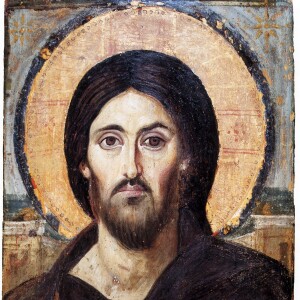
Jul 13, 2025
Jul 13, 2025
1hr 57 min
Links provided to the group:
Outline: https://mcusercontent.com/c38acab568d650f7ef65f39df/files/250d23a5-4286-ca11-aa97-511cb2db99e7/Phronema_Outline_2025.pdf
Phronema in the Teachings of Archimandrite Zacharias Zacharou: https://mcusercontent.com/c38acab568d650f7ef65f39df/files/bcb1bdd1-e77a-1f58-b90d-8070e0f7f9d5/Phronema_in_Teachings_of_Zacharias_Zacharou.pdf
Quotes: https://mcusercontent.com/c38acab568d650f7ef65f39df/files/e2d2937f-cb54-e3d1-e164-4fffc0d409da/Collection_of_Quotes_on_Phronema_2025.pdf
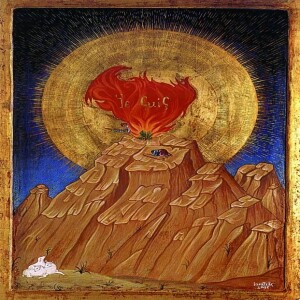
Jun 26, 2025
Jun 26, 2025
1hr 27 min
Text of chat during the group:
00:15:43 Fr. Charbel Abernethy: https://mcusercontent.com/c38acab568d650f7ef65f39df/files/7dc24fb1-6e46-0667-4ec1-01790064a60b/Thirst_for_God_Zacharou.pdf
00:16:31 Fr. Charbel Abernethy: https://mcusercontent.com/c38acab568d650f7ef65f39df/files/7dc24fb1-6e46-0667-4ec1-01790064a60b/Thirst_for_God_Zacharou.pdf
00:16:48 Fr. Charbel Abernethy: https://mcusercontent.com/c38acab568d650f7ef65f39df/files/506f6085-0052-3e6d-7e04-806ca4478091/Thirst_for_God_handout_of_quotes.pdf
00:17:35 Lou Judd: Thank you so much for offering this talk, Father. Gd bless you!
01:19:17 Suzanne Romano: Does not this thirst presuppose a willingness to suffer?
01:21:45 Michael Rosteet: A Willingness to Sacrifice in order to satisfy thirst
01:21:50 Mark Kelly: Reacted to "A Willingness to Sac..." with 👍
01:28:39 Anne: Reacted to A Willingness to Sac... with "👍"
01:32:34 Suzanne Romano: I just heard that St. Francis de Sales said that suffering is the 8th Sacrament!
01:34:08 Mark Kelly: "To them that long for the presence of the living God, the thought of Him is sweetest itself: but there is no satiety, rather an ever-increasing appetite...” ― Bernard of Clairvaux, On Loving God
01:40:09 Naina: Thank you so much Father🙏☦️❤️ Needed this 🙏
01:40:51 Jade: Reacted to "Thank you so much Fa…" with ❤️
01:41:55 Suzanne Romano: Great topic!
01:42:09 Una: Profound! Thank you!
01:42:15 paulmccloskey: Thank you. Yes, this has been very helpful.
01:42:23 Julie: Beautiful
01:42:42 John Sullivan: Excellent, will there access to the recording afterwards?
01:42:50 Art: This was wonderful! Thank you!
01:43:15 Lou Judd: I still don’t understand replace satisfaction with expectation
01:43:37 Karine: Very helpful Father, God bless you
01:43:45 Craig Klampe: Thank you. Yes. Will this be a podcast?
01:43:59 Eric Ewanco: Will this recording be posted?
01:44:03 Jade: Thank you Father, Beautiful!
I have felt the closest to God in my suffering.
I can’t remember who said this maybe Saint Anthony the great, but it was something along the lines of “The devil taught me how to pray, The demons would tempt me and I would run to God in prayer, the further they would tempt me the more I would run to prayer, therefore the devil taught me how to pray”. I’ve never related so deeply to something.
01:44:12 Andrew Adams: Thanks be to God! Thank you, father!
01:44:15 cameron: Thank you.
01:44:17 Rebecca Thérèse: Thank you, have a good retreat🙂
01:44:20 Una: Where is this library?
01:44:22 Adam Paige: Thank you so much Father !!!!
01:45:27 Una: Thank you
Nov 4, 2023
Nov 4, 2023
1hr 37 sec
A lecture presented at Duquesne University, in Pittsburgh, Pennsylvania, on Tuesday, October 24, 2023. Sponsored by the Department of Catholic Studies.
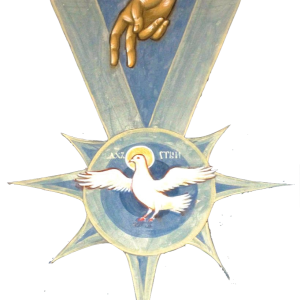
May 27, 2023
May 27, 2023
May 26, 2023
Apr 5, 2023
Apr 5, 2023
1hr 30 min
As a special reflection for this Holy Week, we chose a reading from Fr., Thomas Acklin‘s book “The Passion of the Lamb.” In particular we reflected on the chapter entitled “Behold His Face.” As one participant in tonight‘s group stated: “This reflection is a gem!” I agree. It is a rarest of gems and I’m grateful to Fr. Tom for writing it and the entire book. While small, it has had an incalculable effect upon me and I hope for all who listen to this podcast.
What Fr. Tom seeks to do is to open our minds and our hearts to the truth revealed in the Passion of Christ. So often we approach this mystery bound by the limits of our reason and our sin. Fr. Tom challenges us to allow ourselves to be guided and drawn into the mystery by faith; to comprehend what God has revealed to us and what is beyond the measure of man’s mind.
Many Christians throughout the centuries have struggled with the mystery of the Cross and the reality of our Lord’s suffering. Theologically, the human mind, almost in a form of resistance, intellectually and spiritually, tries to hold on to the notion of God being impassible. We are comfortable with notions of God being all powerful and all knowing. What we have trouble understanding and what we are often unwilling to embrace is the reality of a God who is Omni-kenotic and Omni-vulnerable. What Fr. Tom wants us to reflect upon is a God in whom we see and attribute not human deficiencies and sinfulness, hatred, ignorance, or illness. Rather, he wants us to contemplate and attribute to God in an infinite and perfect way the good qualities that we have in a finite and even deficient way. Thus, Fr. Tom says, rather than being impassible, incapable of feeling or having passion as we do as human beings, it would be more accurate to say that not only Christ but all three persons of the Trinity are infinitely caring, infinitely affected by us; Omni-passible. To believe such a thing is to understand that “at the height of his agony, he could see, not only the people who stood before him, jeering or weeping, but all the people of all time. He saw us in our loving and in our refusing to love, our sinning and our repenting. At the same eternal moment, he took on all the moments of every life and death. He could be the infinite love of God in person to each human being who ever lived, and who will ever live.”
May God bless us this Holy Week with the gift of faith to see this love, this perfect vulnerability, even in the smallest measure.
---
Text of chat during the group:
00:05:42 FrDavid Abernethy: https://mcusercontent.com/c38acab568d650f7ef65f39df/files/679d1720-7a17-e9b4-7355-2bd4ae5431fd/Behold_His_Face_Booklet.pdf
00:14:52 Cath Lamb: I don't have microphone or camera 😊
00:18:31 Rebecca Thérèse: England
00:18:36 CathyQ: Canadian too!
00:18:41 Kristen's I Phone: Alberta Canada!
00:18:59 Michael: Pittsburgh!
00:19:07 michele: Buffalo ny
00:19:09 Cath Lamb: Colorado USA
00:19:10 kevin: BOSTON
00:19:16 James Moran: Appleton WI
00:39:47 Michael: Shroud of Turin video
https://www.youtube.com/live/HAbuG-oVq1Q?feature=share
00:43:25 CathyQ: Reacted to "Shroud of Turin vide..." with ❤️
01:44:49 Sean: Hi Father, I think (from what I have seen) that a problem might be people seeing heaven in the future rather than deification as a reality we can begin to participate in here and now. ☦️
01:44:49 Rebecca Thérèse: Thank you🙂
01:45:53 Kristen's I Phone: Reacted to "Shroud of Turin vide…" with ❤️
01:47:30 sheri: Thank you. Good night.
01:47:40 Patricia: Thank You!
01:47:46 Michael: Thank you Fr
01:48:04 Kristen's I Phone: Thank you!
01:48:12 michele: Thank you
01:48:53 kevin: beautiful talk excellent , thank you for sharing Father
01:49:08 David Fraley: Thank you, Father David.
01:49:09 Sr Barbara Jean Mihalchick: Fr. Tom needs our +prayers.. He's sick.
01:49:28 Sr Barbara Jean Mihalchick: Long term problem
01:49:34 Patricia: Do you know Fr. Justin?
Mar 23, 2023
Mar 16, 2023
Mar 16, 2023
1hr 38 min
INTERIORIZED MONASTICISM PART II FUNDAMENTAL ELEMENTS
• Prayer• Eschatological Maximalism• Evangelical Counsels as Seen through Three Temptations of Christ in the Desert:
1. Poverty
Next Week:
Chastity: the Sacredness of Creation and the Virginity of Heart that Should Belong to All
Obedience to God: Receptivity to the Spirit of Truth and the Creative Freedom of the Life of Grace.
Mar 12, 2023
Mar 12, 2023
1hr 29 min
I have one word for tonight‘s group: Beautiful! Repentance “brings to us the power of the living God, revealing once again, the true Christ Jesus who dwells in us.” As with so many aspects of the faith, we have a tendency to compartmentalize not only the practice of virtue or of prayer but of our relationship with God as a whole. Yet our faith and our relationship with God should touch the very fabric of our beings and shape the essence of every relationship and every work that we engage in throughout the course of our lives. It should shape also our experience of death and our realization of our own mortality. Repentance is not an episodic reality but a continual effort, the continual straining of the heart - reaching out to God to experience his love and mercy. In this sense it is the most important of things.
---
Text of chat during the group:
00:06:18 sue and mark: microphone is not working
00:08:33 Ren Witter: PDF Handout: https://mcusercontent.com/c38acab568d650f7ef65f39df/files/34558acb-864f-f9f8-1546-e7decdc9605b/Repentance.pdf
00:34:44 charlesevers: What gets us (causes) trapped into thinking of past sins?
00:34:55 Irene Bridget Hutchinson: Fr, how would a scrupulous person go about being constantly repentant with peace of soul?
00:44:00 David: The past few years I have also focused on taking time in prayer and adoration to express gratitude and thanksgiving. Isn't it equality important to give thanks as to deepen repentance. No amount of regret changes the past, no amount of worry will change the future but any gratitude will change the present.
00:50:52 charlesevers: Very good. Thank you Father. Excellent explanation.
00:55:37 charlesevers: St. Bonaventure wrote a colloquay
01:12:54 Rachel : Yes. Only true Beauty. Most,. I include myself, can tend to misuse t|
01:21:53 Missi White: That's a tough pill to swallow, especially in what has become such a narcissistic culture. How I needed this conference, thank you!
01:24:26 Art: Helpful reminder for me at times: But to all who received him, who believed in his name, he gave power to become children of God; who were born, not of blood nor of the will of the flesh nor of the will of man, but of God. (Jn 1:12-13)
01:25:21 Bonnie Lewis: I have found that when I pray for someone who is causing me to harbor a resentment toward them, I am the one who changes internally. The other person may remain exactly how they were, yet I have received a peace of mind and thought toward them. This doesn't happen overnight. sometimes it takes some time.
01:36:29 Rachel : Who wrote the book? A continual effort. With no temptation or battle a soldier is not made stronger through resisting. St. Faustina, and St Therese had clear experiences of people who tried their patience. They felt the irritation. Its not like the new lens that Father is speaking of will mean that somone will not need to actively practice patience but that the life of repentence, living constantly in the presence of God, in Truth, the person "drunk with compunction" just simply cannot not forgive when they see who they really are in Christ and the dignity of others as well. All mankind seen through the lens of love
01:37:12 Rachel : This book should be gone through very slowly.
01:41:33 Rachel : I think Ren mentioned that this past year in a group! I need to get that book.
01:44:13 Bonnie Lewis: Thank you Father David. This was beautiful.
01:44:15 David: Thank you Father!
01:44:27 charlesevers: Thank you Father. This was wonderful
01:44:30 Lori Hatala: so very helpful.
01:44:31 Rachel : lol
01:44:31 Rebecca Thérèse: Thank you 🙂
01:44:32 Melissa Kummerow: Yes thank you! I like the occasional "bonus" groups :)
01:44:34 Rachel : Thank you
01:45:17 Rachel : Thank you
01:45:18 Lorraine Green: Thank you
01:45:26 Cindy Moran: I hope Father's talj will be available for what I missed.
01:45:27 Rachel : Praying for you
01:45:31 Mary Jo: Thank you !!
01:45:31 Mitch: Very profound. Thankyou Father take care
Mar 9, 2023
Mar 9, 2023
1hr 26 min
INTRODUCTION TO INTERIORIZED MONASTICISM
Interiorized Monasticism and Ascetic Ideal:• Obscured: Out of reach to majority.• Revealed: Fundamental principle of life in Christ.
Eschatological Dimensions:
Obscured: Life cut off from the world or world cut off
from life of the kingdom.
Revealed: Incarnation and kingdom of God present;
Kingdom within through gift of the Spirit (active eschatology, touching every aspect of the world; living now in light of the End).
Beauty Saves the World:
Obscured: Culture as cult, autonomous from God and
guided by sensibilities of the age.
Revealed: Rediscovery of culture through the beauty
of holiness. Jesus is the Holy One - the most beautiful of the sons of men. He is the perfect icon, manifesting God unveiled.
The Monastic Ideal:
Obscured: Return to the ancient forms of monastic
ascesis.
Revealed: Internalized. The human psyche is renewed
from within.
Five Fundamental Elements of Interiorized Monasticism (Upcoming Lectures):
• Prayer• Eschatological Maximalism • Poverty• Chastity• Obedience
Mar 3, 2023
Mar 3, 2023
1hr 56 min
Tonight we explored an often neglected aspect of the spiritual life; or one might better say an essential part of the spiritual life – Fasting. Throughout the spiritual tradition, we have heard the Saints tell us that “prayer without fasting is weak” or that “where there is no prayer and fasting there are demons.”
With the coming of Christ, however, we see a unique and distinctive meaning of fasting emerge. It is not only a discipline to help order the appetites or a form of penitence. It is tied directly to Christ: what we see in His practice and in what He teaches us about it. His own fasting is guided by the Holy Spirit in preparation for embracing the Father’s will, and His desire that it might be accomplished. Beyond this, Christ teaches us that our practice of fasting is forever tied to our desire for Him. He is the Heavenly Bridegroom and each soul the Bride. We see and experience in Him the One alone who can satisfy the deepest desires of the human heart. He is the Bread of Life.
The focus of our discussion this night was on recapturing not only the practice of fasting, but seeing it as something that is to be “loved”, precisely because it draws us to Christ. It is not a discipline but a path to draw nearer to the Beloved.
---
Text of chat during the group:
00:25:01 Stephen McCane: I have doing this “Exodus 90” and it is like a warm up to Lent.
00:25:51 Stephen McCane: For women it is called “Fiat 90”.
00:45:48 Adam Paige: Hi Father, should laypeople share their Lenten fasting plans with their spiritual director in the same way Saint Benedict instructs his monks to do with their spiritual father in his rule ?
01:14:51 Victoria: here is the book pdf: https://ia902908.us.archive.org/6/items/tolovefasting/To%20Love%20Fasting.pdf
01:15:41 Victoria: Free on Internet Archive :)
01:16:14 Adam Paige: Original version in French: https://folleautonomie.com/wp-content/uploads/2019/06/adalbert-de-Vogue-Aimer-Le-Jeune.pdf
01:21:00 Adam Paige: Reacted to "here is the book pdf…" with 👍
01:33:07 angelo: Reacted to "here is the book pdf..." with ❤️
01:33:20 angelo: Replying to "here is the book pdf..."
thank you
01:33:53 Matt Mondorff: I’ve found that our physical bodies don’t require much food, it’s mainly our mind and habits that convince us that we’re hungry. So to realize that and push through the initial hunger, knowing it’s coming but we’ll be ok has helped me a lot. Then, little by little it gets easier to go longer and longer. Eating healthy and moderately helps also…it seems to my anyway
01:47:52 Lori Hatala: you can saute in broth.
01:48:12 Fr. Michael Winn: A former monk of Mt. Athos once told me that in North America it would be inadvisable to stop all use of oil during the winter seasons - reduce, but do not eliminate.
01:57:15 Kathy: My experience of fasting is that it is a type of prayer in and of itself.
01:59:22 angelo: Thank you for that short clarification of the centering prayer and the danger of falling into delusion.
02:06:09 angelo: Thank you so much Fr.
02:06:29 Lori Hatala: thank you so much Father.
02:06:31 Stephen McCane: Thank you Father.
02:06:33 Ryan McMann: Thank you!
02:06:40 Monk Maximos: Thank you Father
02:07:18 kevin: thanks father that was great!!
02:07:21 Rebecca Thérèse: Thank you🙂
02:07:22 Fr. Michael Winn: Thanks, Father!
02:07:25 Rachel Pineda: Thank you father Abernethy!!
02:07:31 Siggy Evers: Thank you Fr.
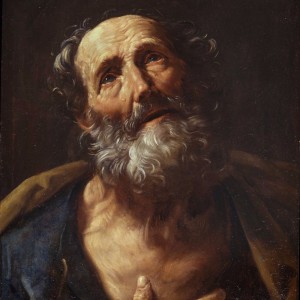
Mar 28, 2022
Mar 28, 2022
1hr 51 min
Lecture given by Father David S. Abernethy, C.O. on Saturday, March 26.
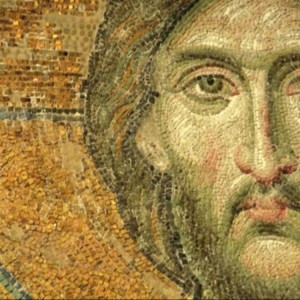
Feb 28, 2022
Feb 28, 2022
1hr 59 min
Tonight we had the opportunity to discuss asceticism as a preparation for the holy season of Lent. We find in the spiritual tradition a clear call to enter into a struggle to live the life of faith to its fullest. We are to strive to enter by the narrow gate.
When we look to the Scriptures and the writings of the Saints we see very clearly that they took no passive approach to the embrace of the faith. They knew that it must be lived and that their life must undergo a revolution. To live in accord with the beatitudes or the sermon on the mount means that one will not fit into the norms of this world. Just the opposite. In so far as we experience ease within this world, or experience success and the favors of this world we may be living a life at enmity with God.
Our life should be about seeking to love God above all things and seeking to please him. Our exercise of the faith, our asceticism, means nothing if it is merely an exercise of endurance. It must be rooted in our desire for God and the things of God. It must be rooted in love.
Seen in this light, Lent should not be simply a 40 day period that comes and goes; but rather a springboard into a more committed life in Christ. Lent is about repentance; turning toward God and away from self and sin. May we take this truth to heart and so know the healing of God‘s grace in all of its fullness.
---
Text of chat during the group:
00:03:14 Jean-Paul: in a vow of digital simplicity no camera and no mic
00:20:12 Jean-Paul: Could you please re-state the name of that journal
00:47:16 Andrew musano: “Do that which is good, and no evil shall touch you. Prayer is good with fasting and alms and righteousness. A little with righteousness is better than much with unrighteousness. It is better to give alms than to lay up gold: For alms doth deliver from death, and shall purge away all sin. Those that exercise alms and righteousness shall be filled with life: But they that sin are enemies to their own life.”
+ St. Raphael the Archangel, Tobit 12:7-10
00:50:41 Anthony: Contendire in Latin. Contend. Not just "you signed an intellectual contract to get to Heaven."
00:51:30 Jean-Paul: The Great Fast begins with the Exultation of the Cross Sept.14
00:53:00 Louise A: My dear Father always practiced Ember day fasting....if I remember they were originally associated with the great feasts Christmas,Easter, Pentecost.
00:56:30 Andrew musano: Listed below is dates for Fasting in the East. I hope this helps.
https://secureservercdn.net/166.62.112.219/1a3.c9d.myftpupload.com/wp-content/uploads/2009/02/the-fasts-of-the-orthodox-church.pdf
01:04:13 Jean-Paul: Carthusian guidance on fasting http://www.quies.org/quies_fasting.php
01:05:30 Jean-Paul: Carthusian fasting for the Fathers is usually on Fridays and consists of eating solely bread and water
01:10:47 Andrew musano: Let all involuntary suffering teach you to remember God, and you will not lack occasion for repentance.
+ St. Mark the Ascetic, “On the Spiritual Law: Two Hundred Texts” No. 57, The Philokalia: The Complete Text (Vol. 1)
01:18:56 Andrew musano: Ash Wednesday Is a beautiful tradition.
01:28:21 Andrew musano: A foretaste of Heaven on Earth
01:36:09 Ren: The adults are the real annoyance. Lets get rid of all of them :-D ;-)
01:48:59 Jean-Paul: Can anyone tell how long tonights gather will be
01:50:56 Jean-Paul: We are on page 4 will we complete the PDF tonight?
01:52:26 Andrew musano: “It is necessary for a Christian to fast, in order to clear his mind, to rouse and develop his feelings, and to stimulate his will to useful activity. These three human capabilities we darken and stifle above all by ‘surfeiting, and drunkenness, and cares of this life’ (Lk. 21:34).”
— St. John of Kronstadt, My Life in Christ
02:10:22 Jean-Paul: More than 40% of the women over 75 live alone -- perhaps there are more hermits and monks than one knows.
02:11:11 Bonnie: This has given me an entirely new way to prepare for Lent. Much deeper, more meaningful, and hopefully long lasting. Thank you Father!
02:11:17 Miron Kerul Kmec: thank you
02:11:24 ellice: Thank you! This was beautiful
02:11:28 Jean-Paul: Peace and all good
02:11:29 Andrew musano: Thank you Fr.
02:11:40 Anthony: Thank you :)
02:11:50 Larisa Cowell: Thank you Father I loved it.
02:12:04 Louise A: many thanks Father