3 days ago
The Evergetinos: Book Three - Chapter II, Part VI
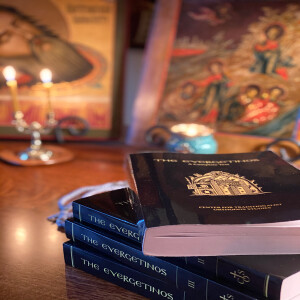
The Desert Fathers knew something that many of us have forgotten.
The greatest danger to the spiritual life is not always the obvious sins we can name. Often it is the secret satisfaction we feel when we discover the weakness of another.
There is something in the fallen heart that delights in comparison. The moment another stumbles, we instinctively move ourselves a little higher. We become observers, commentators, judges, analysts. We speak about “discernment” while quietly nourishing condemnation. We discuss another’s failures while remaining remarkably blind to our own.
Abba Poimen cuts through all of this with terrifying simplicity:
“Who am I? And judge no one.”
That is the beginning of monasticism. It is also the beginning of Christianity.
Notice how often the Fathers return to the same theme. A brother falls. Another brother is tempted. Someone has a concubine. Someone frequents the baths. Someone neglects his duties.
Yet the holy elders are almost never interested in discussing the sin itself.
They are interested in the response of those who witness it.
The real question is not, “What did he do?”
The real question is, “What happened in your heart when you saw it?”
The Presbyter of Pelousion stripped eleven brothers of the schema because of their failures. Later his conscience tormented him. Why? Because he discovered something humiliating: the same old man lived in him. The same fallen nature. The same capacity for sin.
The Fathers never deny the existence of sin.
They deny our right to stand above sinners.
That is an entirely different thing.
Again and again the Fathers teach that when we expose another’s wound, we expose our own. When we delight in uncovering another’s failure, God permits us to see the sickness hidden within ourselves. Timothy advised that a tempted brother be expelled, and shortly afterward the very temptation he condemned descended upon him.
Why?
Because God wanted to punish him?
No.
Because God wanted to heal him.
Nothing teaches compassion like discovering that the line between saint and sinner runs directly through one’s own heart.
The most moving story in this collection may be the one about the brother abandoned in the ravine.
The anchorite’s solution was simple:
“Expel him.”
Abba Poimen’s solution was different.
He sought him.
He called him.
He embraced him.
He fed him.
He restored hope to him.
The brother had already condemned himself. He did not need another judge. He needed a father.
The Church has never lacked judges.
What she continually lacks are fathers.
A father sees the wound beneath the sin.
A father sees the despair beneath the failure.
A father sees the battle that nobody else sees.
And because he sees it, he goes after the lost sheep.
The Fathers teach us something even more demanding than refusing to judge. They teach us to actively support the struggling brother.
One brother tells Abba Poimen that he enjoys the company of virtuous men but avoids those with bad reputations.
The Elder’s answer is astonishing:
“If you do a little good to the good one, you ought to do twice as much good to the one about whose sin you have heard.”
Twice as much.
Not less.
Not avoidance.
Not suspicion.
Not gossip disguised as concern.
Twice as much.
Because he is sick.
When someone is physically ill, we do not withdraw our care until they recover. We increase it. We visit them. We pray for them. We encourage them. We sit beside them.
Why then do we often do the opposite when a brother becomes spiritually ill?
The Fathers understood that perseverance is often sustained by hidden acts of mercy.
A word of encouragement.
A meal.
A visit.
A refusal to repeat a rumor.
A willingness to believe that grace is still at work.
A determination to remember the brother’s dignity even while he struggles.
Many vocations have been saved by such acts.
Many have also been lost through their absence.
St. Ephraim says elsewhere that we must never become the occasion for another’s withdrawal from the brotherhood. Those words should terrify every monastery, every parish, every Christian community.
Whenever someone leaves wounded, discouraged, or broken, the question should not merely be what happened to them.
The question should also be what happened to us.
Did we strengthen them?
Did we encourage them?
Did we bear their burden?
Did we pray for them?
Did we conceal their weakness and protect their dignity?
Did we seek them when they wandered?
Or did we stand at a safe distance discussing their failures?
The saints are not those who never see sin.
They are those who see it and respond with tears rather than judgment.
They see a fallen brother and remember their own weakness.
They see a wound and cover it.
They see a sinner and move closer rather than farther away.
In the end, this is exactly how Christ has treated us.
Every one of us has been the brother in the ravine.
Every one of us has been the sinner whose shame was visible to Heaven.
And Christ did not expose us.
He sought us.
He embraced us.
He fed us.
He covered us.
The closer a man comes to God, the less interested he becomes in revealing the wounds of others and the more eager he becomes to bind them up.
That is the way of the Desert Fathers.
It is also the way of Christ.
---
Text of chat during the group:
00:14:24 Anna: My daughter is asking for an understanding on judging based on Desert Fathers
00:36:42 Maureen Cunningham: What if the person is abusive to you ?
00:37:01 Maureen Cunningham: Like an alcholic
00:39:41 Julie: Like instead of assuming the sleeping monk is lazy or spiritually weak, but really is he exhausted from spiritual struggles, fasts, etc…
00:42:40 forrest: Sorry for a late comment for #15: the Greek word for "cover up" is the same used in the Septuagint Exodus 12:13 for the Angel of God "passing by" the houses marked with blood.
01:04:05 Julie: The wanting to be loved and needed by others.
Our passions are hard to cut
01:10:57 una: Wait, what about the baby?
01:17:03 Rebecca Thérèse: Thank you☺️
01:17:19 Janine: Thank you
No comments yet. Be the first to say something!