Philokalia Ministries
Philokalia Ministries is the fruit of 30 years spent at the feet of the Fathers of the Church. Led by Father David Abernethy, Philokalia (Philo: Love of the Kalia: Beautiful) Ministries exists to re-form hearts and minds according to the mold of the Desert Fathers through the ascetic life, the example of the early Saints, the way of stillness, prayer, and purity of heart, the practice of the Jesus Prayer, and spiritual reading. Those who are involved in Philokalia Ministries - the podcasts, videos, social media posts, spiritual direction and online groups - are exposed to writings that make up the ancient, shared spiritual heritage of East and West: The Ladder of Divine Ascent, Saint Augustine, the Philokalia, the Conferences of Saint John Cassian, the Ascetical Homilies of Saint Isaac the Syrian, and the Evergetinos. In addition to these, more recent authors and writings, which draw deeply from the well of the desert, are read and discussed: Lorenzo Scupoli, Saint Theophan the Recluse, anonymous writings from Mount Athos, the Cloud of Unknowing, Saint John of the Cross, Thomas a Kempis, and many more. Philokalia Ministries is offered to all, free of charge. However, there are real and immediate needs associated with it. You can support Philokalia Ministries with one-time, or recurring monthly donations, which are most appreciated. Your support truly makes this ministry possible. May Almighty God, who created you and fashioned you in His own Divine Image, restore you through His grace and make of you a true icon of our Lord and Savior Jesus Christ.
Listen on:



Episodes
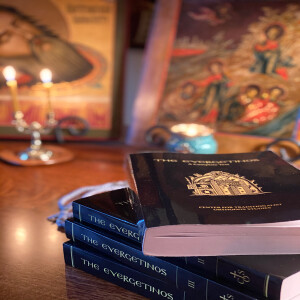
Tuesday May 04, 2021
Tuesday May 04, 2021
There are times that it becomes perfectly clear that one is being fed on solid food. Tonight was such a moment. We picked up with Hypothesis Three on “how we should repent”. We heard from St. Isaac the Syrian with whom we are familiar. St. Isaac begins by teaching us that for every illness, whether of the soul or body the appropriate medicine must be applied. Only then will one be cured. We must apply the appropriate remedy to the passion that afflicts us the most.
St. Isaac gives us two examples this evening of men pierced to the heart with contrition. Both impose upon themselves penances that seem disturbingly severe to modern sensibilities. But it is precisely here that we must suspend judgment and allow ourselves to consider the deeper action at work in the hearts of these men. We must ask the question: Could they ever know the joy of the hand of mercy reaching out to them and lifting them up out of their sin and offering them forgiveness if they first did not experience the depth of sorrow for their sin against love? Having been so cut off from the spiritual tradition and developing such a truncated view of the human person that is often either overly intellectual or psychological, we tend not grasp the wound of sin and the effect that it has upon our relationship with God. We do not see what we have become in Christ; that we are God-bearers and that we have been imbued with His own Spirit that searches the depths of our souls. We have become so isolated from one another that we no longer see the radical solidarity that exists between ourselves and each other in our sin. How can we know anything about either the depth of compunction that arises from a heart that mourns the loss of love and will do anything to regain it or of the beauty and tenderness of the mercy of God that reaches out to touch us and raise us up?
----
Text of chat during the group:
00:22:16 Tyler Woloshyn: This reminds me in many way of the many saints of the east who bore the title, "Fools for Christ" who took on those self-imposed penance to maximize their humility as a witness to those who are indifferent otherwise to the gospel.
00:23:12 carolnypaver: Why does he say “the rule” put him in chains?
00:24:42 Joseph Muir: What page are we on?😀
00:24:58 carolnypaver: 31
00:25:02 Tyler Woloshyn: 30
00:25:04 Tyler Woloshyn: 31
00:25:05 Joseph Muir: Much thanks!
00:30:10 Tyler Woloshyn: When I think of red hot piercing contrition it reminds me of The Great Canon of Saint Andrew of Crete during Great Lent. Prayerful and very catechetical.
00:53:43 renwitter: Most. Beautiful. Story. Yet. *heart*
01:03:08 Lilly Crystal: Amen!
01:14:34 Lilly Crystal: Yes! It’s so sad here in Toronto!
Thursday Apr 29, 2021
Thursday Apr 29, 2021
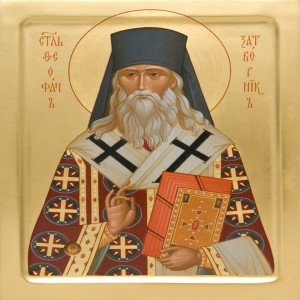
The simplicity and the clarity of St. Theophan‘s thought often keeps us perhaps from seeing the holy genius and the beauty that is expressed in these letters. This was particularly evident tonight as we concluded letter 49 and began letter 50. St. Theophan begins by talking to Anastasia about a particular infirmity that we all struggle with as human beings - worry. Anxiety is a disease that is rooted in our separation from God. We experience within our very depths a kind of disintegration; sometimes a very specific form of anxiety and sometimes a very diffuse kind of uneasiness about life, love, and work. Theophan’s simple advice is that she should not to let it take root in her heart. She must engage in her work with enthusiasm and clarity and her focus must be upon God and remembrance of him.
In letter 50 he returns to this very subject with Anastasia. The remembrance of God is necessary. Indeed, it is to be the labor of our life. If we do not achieve it we will come to nothing. We will have no success in the spiritual life and in fact we will have no spiritual life at all. The remembrance of God is the very essence of the spiritual life. It is vitally important! In this sense he tells her that the remembrance of God cannot even be treated as ordinary thought. Every concept of God, every attribute of God, everything that he has revealed of himself to us, all of his redemptive work is to be caught up in and permeate our remembrance of him. It is this that energizes the heart and the spirit. Furthermore she must remember the mercies of God and thank Him for them. All the good things that God has given her - her family, her piety, her recent conversion and desire for God - all of these things she must hold in her mind. Above all she must remember all of the secret mercies the God has shown her, all the many ways that he has protected her in unseen and hidden ways.
Love ignites love he tells her. She must hold to her heart the knowledge of God‘s love for her at every single moment. This must be the source of her resolve. Soon the flame of that love will burn so hotly that she will not have to labor to pray or to remember God - her heart will take her there with the urgent longings.
----
Text of chat during the group:
00:34:16 Lilly Crystal: I am totally anxious if I don't have a daily prayer routine! “Those who are well have no need of a physician, but those who are sick. I came not to call the righteous, but sinners.”Mark 2:17
00:37:57 Eric Ash: The psalms weren't written by someone who was a stranger to anxiety and feelings of hopelessness.
00:42:29 Lilly Crystal: “Cast all your anxiety on Him because He cares for you”Peter 5:7
00:45:47 Eric Williams: Scientist solidarity, Erick. Balancing intellect and faith is very challenging.
00:46:04 Erick Chastain: yeah for sure
00:47:37 Eric Ash: Must be an Eric/k thing
00:48:29 Eric Williams: Yeah, we're a bunch of troublemakers. ;)
00:48:52 Erick Chastain: LOL
01:03:25 Eric Williams: Already sent it to my oldest godchild. :)
01:10:59 Art: No mind
01:24:35 Lilly Crystal: Thank you Father. God bless
01:24:38 Nicole’s iPhone: Thank you!
01:26:51 Lilly Crystal: I would come all the way from Canada 🙂
01:26:56 Nicole’s iPhone: Love the idea of conferences!
01:28:26 Lilly Crystal: 'philokalia familia' 😂
01:30:53 Erick Chastain: Dr jean-claude larchet "Therapy of Spiritual Illnesses"
01:31:08 Wayne Mackenzie: thanks
Tuesday Apr 27, 2021
Tuesday Apr 27, 2021
This evening we concluded the Hypothesis II of the Evergetinos. The focus is on the remembrance of death. Our mortality is a very powerful lens through which to view our life, our actions and most importantly our relationship with God. God and His love alone endures and it is to this love alone that we must cling. If we sin and turn away from that love then repentance must be our constant companion. In fact, we are told that even our virtue can lead us into sin without repentance. We can begin to imagine that such a virtue has its origin in our asceticism. Such a view of life will not lead us to love God above all things and so hate sin. It is not enough simply for us to avoid certain behaviors we must develop an aversion to anything that is not God and that does not lead to Him.
In Hypothesis II, the Fathers begin to speak to us about how we should repent. We should grieve in measure with the wrong which we have committed. Otherwise, we will usually fall again into the same net. There is a kind of guile that exist in the human heart when there is an expectation of being able to repent later after having committed a sin a second time.
Finally, discussion ensued about how we are to understand sin. We must be very careful in the distinctions that we make and by which we judge our lives and our behavior. It must not be simply in accord with our own reason and intellect but rather in accord with a standard that has been revealed to us that this judgment is made - the cross of Christ and the self-emptying love that we witnessed there.
---
Text of chat during the group:
00:24:42 renwitter: Hi Eric’s baby! (The wave just killed me)
00:25:48 Eric Williams: His name is Peter Damian. :)
00:31:02 Joseph Muir: Hello, Godson Peter😀❤
00:59:55 Lilly Crystal: You're fine Erick! I'm just as confused lol
01:02:26 Tyler Woloshyn: That whole part of self-emptying brings the term kenosis to mind, where it is always at work with Christ always pouring out His love and graces to us.
01:04:52 renwitter: Maybe the first Eastern Canadian voice ;-) You are not forgotten Wayne :-)
01:07:08 Wayne Mackenzie: Thanks
01:08:43 renwitter: The form the Fathers of the Oratory use is: “God, the Father of mercies,through the death and resurrection of his Sonhas reconciled the world to himselfand sent the Holy Spirit among us for the forgiveness of sins;through the ministry of the Church may God give you pardon and peace,and I absolve you from your sinsin the name of the Father, + and of the Son,and of the Holy Spirit.”
01:09:11 Joseph Muir: ❤
01:14:05 Lilly Crystal: Amen! Thank you all so much❤️
01:15:09 carolnypaver: God bless you, Lilly! So glad you’re here!
01:17:39 Tyler Woloshyn: God bless you Father! Have a blessed evening everyone!
Thursday Apr 22, 2021
Thursday Apr 22, 2021
Tonight we began letter 49 on facing the burdens and responsibilities of life. These realities, St. Theophan tells Anastasia, are not to be seen as obstacles to a holy life or doing God’s will. In fact, it is by God’s providence that we are presented with the work and station in life that we have embraced. It is the disposition of the mind and heart that is most important. The meanest and smallest of tasks of life or the most demanding of duties must be done as if received from God’s hand and with the constant remembrance of Him. We cannot allow what we do become abstracted from that relationship as if it could exists independently from God and outside of the action of His grace. God is everywhere and in every occupation. It is He that we should be looking for in ever set of circumstances and we must receive every person as if we were receiving Him. Worldly standards must not direct our actions. Rather we must put on the mind of Christ in order that we might approach all things with a selfless love and absolute desire to do the Father’s will. Any occupation that makes that impossible or threatens it in some fashion should be avoided.
----
Text of chat during the group:
00:16:29 carolnypaver: Different translation from the one we did before?
00:16:38 renwitter: Yes
00:17:11 carolnypaver: Will you let us know when we can pick up?
00:17:26 renwitter: Yep! Absolutely
00:17:53 carolnypaver: Awesome!
00:42:31 Miron: “Be careful that when you say ‘I’m too busy’ that you don’t really mean that ‘I don’t believe in the possibility of my own transformation’ (in Christ)” Archimandrite Maximos
00:54:13 Eric Williams: “Life is what happens to you while you’re busy making other plans.”
00:55:21 Erick Chastain: I think the mic should work now if there's time
01:06:16 renwitter: The beautiful thing about accepting our work as something given to us by the Lord, and done for his sake, is that that reality is not dependent on the nature of the work, right? The Politician’s job is as much God-given as that of the Father in the home.
01:15:20 Fr. John (Ivan) Chirovsky: It is also liberating to realize that the Lord is the one who will appreciate, thank or reward us; and this, in a way that ia always perfectly sinless and just.
01:15:53 Eric Williams: I found the proper attribution for what I said earlier. Greek lyric poet Archilocus (c. 680–645 BC) wrote, “We don't rise to the level of our expectations, we fall to the level of our training.” It seems to have gained modern attention after being partially misquoted by a Navy SEAL.
01:28:47 renwitter: Down with cell phones!! (But seriously, can texting be obliterated from the face of the earth. Those little dings. . . . its like audio water torture)
01:29:18 Daniel Allen: agreed haha
01:29:22 Joseph Muir: Turn off the sound-effects😂
01:32:02 Daniel Allen: what’s the next book?
Tuesday Apr 20, 2021
Tuesday Apr 20, 2021
Tonight we concluded Hypothesis I with a story of a bishop who fell into grave sin and scandal. Broken in spirit, he embraces a life of repentance in a monastery, while also seeking to hide his the dignity of his office. However, God reveals to the Abbot of the monastery that the bishop is coming to him. The abbot recognizes him and tells him that he will follow him wherever he goes to reveal that he is a bishop. The abbot does this not with a morbid delight but rather that the bishop might be fully healed. The very scandal of having fallen from such a lofty position as bishop into grave sin must not be something that he hides. The fullness of healing can only take place when the fullness of the sin is exposed. He who humbles himself will be exalted. Humbling himself completely, the bishop will not regain the dignity of his office but rather regain something greater - his dignity as a son of God. Again, we see that such repentance is not embraced in isolation from others. The fruit of the bishop’s repentance and its perfection is passed on to others after he dies. Many miracles surrounded his death demonstrating to all the genuineness and the sincerity of us repentance.
Turning then to Hypothesis II, we began considering the importance of keeping before our minds the reality of death. We must do good here and now and not delay until the future. This is not meant to instill fear in the hearts of men but rather to liberate them from the illusion that our life in this world is endless or that we are guaranteed a tomorrow. Grace is to be embraced in the moment. God is to be embraced in the moment. To do so is to experience freedom from the fear and anxiety that so often holds the human heart and in its grip.
---
Text of chat during the group:
00:11:53 Tyler JVW: Holy Transfiguration Monastery has a wonderful Psalter
00:39:02 Eric Williams: I never felt invincible. I was a very odd child. ;)
00:40:14 Joseph Muir: You’re a very odd adult, Eric😉😂
00:42:27 Lilly Vasconcelos: Be nice to Eric, Mr. Muir😂
00:43:40 Lilly Vasconcelos: Yes I feel the same Father🙂
00:45:52 Lilly Vasconcelos: Humans were not made for long periods of solitude, there is so many negative pschological effects if one doesn't have God as the centre of their lives
00:48:52 Tyler JVW: The definite spiritual high after any retreat or catechetical talk in some experiences.
00:52:59 Lilly Vasconcelos: Praying the Divine Office throughout the day helps me feel like Jesus shares my day with me, so that at night it's kinda exciting if we might depart to him❤️ I don't know if that helps, Ren💕
00:55:55 Tyler JVW: The whole Passion Week Troparia, "Behold the Bridegroom comes in the middle of the night" comes to mind.
00:57:57 Eric Williams: Sort of like showing up for the heavenly banquet without the proper garment?
00:58:00 renwitter: Don’t forget your unblemished white wedding garment bathing suit ;-)
00:58:06 renwitter: Ha! Eric get there before me
01:00:28 Joseph Muir: Behold, the Bridegroom is coming in the middle of the night. Blessed is the servant that He shall find awake. But, the one that He shall find neglectful will not be worthy of Him. Beware, therefore, O my soul! Do not fall into a deep slumber, lest you be delivered to death, and the door of the Kingdom be closed on you. Watch, instead, and cry out: Holy, holy, Holy are You, O our God! Through the Theotokos, have mercy on us!
—from bridegroom matins during Holy Week in the Byzantine churches, both Catholic and Orthodox; and also in the mesonyktikon, the liturgical midnight hour
01:01:20 Joseph Muir: Or they get a passing grade, but only after needlessly inducing a panic attack🤣
01:03:31 Lisa Weidner: In response to Ren’s comment on what to do
01:03:36 Joseph Muir: At the risk of spamming these comments, I once broke up with a girl after she told me that she was a diehard fan of the Saw movie franchise
01:03:37 Lilly Vasconcelos: Theotokion from Orthros:You are truly most blessed, O Virgin Mother of God: through the One who was incarnated of You, Hades was chained, Adam revived, the curse wiped out, Eve set free, Death put to death, and we ourselves were brought back to life...
01:03:50 Tyler JVW: It also reminds me of the Byzantine Prayer before bed time: O Eternal God, King of every creature, Who hast enabled me to attain to this hour, forgive me the sins which I have committed this day by thought, word and deed. Cleanse my humble soul, O Lord, from every defilement of flesh and spirit. Grant me, O Lord, to pass through the sleep of this night in peace, that I may rise from my humble bed and please Thy most Holy Name all the days of my life, vanquishing the enemies both fleshly and bodiless that contend against me. Deliver me from vain thoughts that defile me, O Lord, and from evil desires. For Thine is the Kingdom, and the power, and the glory: of the Father, and of the Son, and of the Holy Spirit, now and ever and unto ages of ages. Amen.
01:05:39 Lisa Weidner: prior to going to bed, Sister Theresa Althea Noble speaks of a practice of Memento More- remembering one’s death as part of one’s examination conscience prior to bed- with the gratitude of the day that Fr David mentioned with a review of the day in reference to our judgement with God- how the day would be reflected in that judgement- so living with an awareness of one’s death/ judgement prior to God.
01:08:43 Tyler JVW: Prayer before retiring before bed by St, John of Damascus: Upon retiring, say this prayer: O Master, Lover of mankind, is this bed to be my coffin, or wilt Thou enlighten my wretched soul with another day? Behold, the coffin lieth before me; behold, death confronteth me. I fear, O Lord, Thy judgment and the endless torments, yet I cease not to do evil. My Lord God, I continually anger Thee, and Thy most pure Mother, and all the Heavenly Hosts, and my Holy Guardian Angel. I know, O Lord, that I am unworthy of Thy love for mankind, but am worthy of every condemnation and torment. But, O Lord, whether I will it or not, save me. For to save a righteous man is no great thing, and to have mercy on the pure is nothing wonderful, for they are worthy of Thy mercy. But on me a sinner, show the wonder of Thy mercy; in this reveal Thy love for mankind, lest my wickedness prevail over Thine ineffable goodness and merciful kindness; and order my life as Thou wilt.
01:10:21 Lilly Vasconcelos: Thanks Father! God bless and good night
01:11:21 Nicole: THANK YOU!!
Thursday Apr 15, 2021
Thursday Apr 15, 2021
Tonight we picked up with Letter 48. St. Theophan begins to instruct Anastasia about how to attain Undistracted Prayer. One of the most difficult labors in the spiritual life is to settle one’s thoughts. As we seek to take every thought captive and make it obedient to Christ we are confronted with the multiplicity of our thoughts and their unruliness. Theophan tells Anastasia that she must have firm resolve and hold on to her anxiety about this and intensify her efforts in correcting the fault of allowing her mind to wander. To pacify one’s thoughts is a gift of God but nonetheless we must labor with our whole being. We must force ourselves in every good thing but especially in prayer. Theophan is very stark in his language. He does not hesitate to tell Anastasia that prayer is the most important thing in our life as human beings. In fact our whole being must become Prayer; we must be directed toward God in all that we do say and especially in how we pray. Therefore we cannot enter into prayer as a by-the-way activity or in a haphazard fashion. To do so, Theophan tells Anastasia, is a criminal offense. This language seems harsh but what he’s trying to communicate to her is that prayer is fundamentally an act of justice toward God, giving Him what is His do. We have been created for Him and to share in the fullness of eternal life. There is nothing more important in this world than to live for God.
----
Text of chat during the group
00:37:24 Eric Williams: Sometimes maintaining a prayer rule feels more like a sysyphean task than herculean. ;)
00:39:28 Sheila Applegate: Add Cerbwrys
00:39:35 Sheila Applegate: Adce
00:39:57 Sheila Applegate: Cereberus spitting fire from the base.
00:40:24 Sheila Applegate: My phone is glitchy, sorry.
00:42:15 Miron: metropolitan
00:47:38 Mark Cummings: It is my dream to live next door to church
00:48:10 Eric Williams: Often it’s not just a matter of how close a church is, but more whether/when it’s open for prayer. :(
00:49:11 Wayne Mackenzie: There was a time when the churches were open all day
00:50:56 Mark Cummings: Not long ago I could go to adoration any time 24/7
00:51:02 Mark Cummings: pre-covid
00:51:15 Mark Cummings: I miss that
00:51:41 Wayne Mackenzie: I am talking about the 60s
00:52:26 Mark Cummings: lol- it is not often that I get to say that was before my time
00:53:07 Wayne Mackenzie: yes I am giving my age away
00:58:15 Eric Williams: “Grasp” is an interesting choice of word. The origin of the modern “comprehend”, meaning “understand”, is from Latin for “grasp”. It’s as though we wrap our minds around an idea, enveloping and seizing it. It’s very material, “earthy”.
01:13:45 Eric Williams: Isn’t hyperbole a prominent part of ancient rabbinic teaching styles?
01:28:06 Nicole: Thank you!
01:28:12 Scott: What if we end with the Sienfeld bass instead? More positive!
01:28:59 Eric Williams: Instead of the Law and Order “bong”, just say “Pray, criminal!” for an appropriate level of jarring. ;)
Tuesday Apr 13, 2021
Tuesday Apr 13, 2021
We picked up this evening with Hypothesis I which we have been considering over the past month or so. Again the theme is repentance and the avoidance of despair. We have been presented with stories from the Gerontikon which is a collection of the saying of the elders. The focus of the first story we considered tonight was a monk who fell in love with an Egyptian woman. Her father went to a pagan priest and was instructed by a demon through that priest to tell the monk that if he denied God, denied his holy baptism, and rejected his monastic vows then he could marry his daughter. Yet despite doing all of these things, God did not abandon him. The demon acting through the pagan priest understood this and so told the father to refuse the monk’s request to give his daughter in marriage. At that moment, the monk came to the realization of what he had done and repented with deep sorrow. Turning back to his elder, he was instructed to engage rigorously in a fast for weeks and to ask God for his mercy. Eventually the monk was given a vision of a dove entering into his mouth. At this the elder understood that God had received the monk’s penance and restored him to the life of grace. This tells us something very important about the nature of repentance and far reaching it must be. Our penance cannot be something that has no meaning or value but must be a remedy that heals the wound hat led to the fall in the fall in the first place. We must also seek out the guidance of an elder, like this young monk, who not only can instruct us but also intercede on our behalf before God.
Following this, an elder teaches us that when a person is experienced in asceticism and has built his life on the very things to draw him closer to God, falls from grace, he can return more quickly along the path to holiness because even though his house, as it were, may have been demolished he still has readily available all the materials from which constructed it. A person newly initiated into the spiritual life, however, will not only have to build the house but search for the materials. Both suffered the demolition and distraction brought about by their sin, but the one whose life had long been directed toward God can return with a greater swiftness.
Discussion then ensued about how we understand affliction in light of all the things that we have been talking about in regards to repentance. How does one not fall into despair when afflicted again and again? It is only when our knowledge of God is no carried tale and no abstract notion but rather the fruit of a relationship of love that we are able to see through the tears in the darkness and find our way into the embrace of the loving God. This is what we must seek to possess ourselves and to which we must guide others.
---
Text of chat during the group:
00:37:59 Tyler Woloshyn: This reminds me of St. Mary of Egypt's retreat into the wilderness to overcome the passions that surrounded her, yet in that long suffering she overcame it with the greatest ascetism and prayer.
00:38:13 Lilly Vasconcelos: Sin is sin. I dislike the idea of venial vs mortal, just my opinion. We should strive for holiness :)
00:39:33 Tyler Woloshyn: Very Byzantine focus there Lilly. Categorizations can sometimes complicate the examination of conscience.
00:45:36 Tyler Woloshyn: St. Pachomius of Egypt?
00:46:25 Erick Chastain: Modern-day Egypt, back then it was Thebes
00:47:47 Wayne Mackenzie: It's the rule of Pachomis
00:49:51 Tyler Woloshyn: The Prayer of St. Pachomius at least for the Jesus Prayer sure sets a wonderful template for building a crescendo for praying the Jesus Prayer.
00:50:12 Wayne Mackenzie: yes
00:50:50 Eric Williams: Rule of St. Pachomius: http://www.saintjonah.org/services/stpachomius.htm
00:51:04 Joseph Muir: Thank you, Eric!
00:56:56 carolediclaudio: I’m late- what page are we on? :)
00:58:18 carolnypaver: 25
00:58:26 Wayne Mackenzie: p 25
00:58:28 Tyler Woloshyn: Acedia, which Evagarios of Pontus talks about those 8 passions. Despair being grave.
00:58:28 carolnypaver: bottom
00:58:39 carolediclaudio: Thank you!
01:09:45 Lilly Vasconcelos: Thank you Father David :)
01:10:20 Tyler Woloshyn: Christ is Risen! Thank you for the wonderful explanations and being very welcoming Fr. David.
01:10:24 carolediclaudio: Yes, very beautiful. So sorry was late.
01:11:38 Lilly Vasconcelos: I brought 2 more Canadians
01:11:43 Lilly Vasconcelos: Hahaha
01:11:49 Katharine M: :D
01:11:59 carolediclaudio: Good :)
01:13:45 Sue and Mark: YES!!!!!!
01:13:58 Erick Chastain: That would be great!
01:14:16 Eric Williams: Maybe “The Way of a Pilgrim”?
01:14:17 Daniel Allen: perfect i won’t have to buy another copy
Thursday Apr 08, 2021
Thursday Apr 08, 2021
Tonight we came to the conclusion of Letter 47 on developing a prayer rule. St. Theophan begins by warning Anastasia that she must be even more diligent and concentrated in the evening. It is then that we often become sluggish and inattentive as we become more and more fatigued or after we have had the evening meal. It is at times like this that we can be subject to particular temptations. Therefore, Theophan tells Anastasia that she should increase her prostrations and petitions to God and that she should even seek to fall asleep with the Jesus prayer on her lips or reciting some psalm.
Along these lines Theophan encourages her to memorize a certain number of the psalms; in particular those that speak to her heart. She should allow herself to read through the Psalter and then select those that mean the most to her. And this way she will be fully armed for the spiritual battle. Most important of all, however, is that Anastasia sees herself standing before God with her “mind in the heart with devotion and heartfelt prostration to him.” All of his other suggestions are mere aids in the practice. What is going on in the heart is most important.
He then tells her that in her prayer rule she should set a distinct number of short prayers that she says as well as a set number of prostrations that are done. This will keep her from falling into laziness and help her to stretch herself in the development of her prayer. She should not speed through these and if she does she should add additional prostrations to her practice. Thus, she must have a certain spiritual maturity; not trying to cheat God.
As a brief conclusion Theophan tells her that he is sending her a prayer rope that he wants her to use. This is not a monastic thing, he emphasizes. In fact, Theophan received and heard about the prayer rope from a lay person. It is simply an aid to allow one’s love and devotion to be directed to God; one that adds a bodily element to that effort. For this reason it is invaluable.
----
Text of chat during the group:
00:28:58 Eric Ash: I'm reminded of a study that showed artist renditions of the last supper have been showing an increased portion size over the centuries as society's view of what a modest portion is has grown.
00:37:14 Scott: https://www.amazon.com/Psalms-New-Translation-Singing-Version/dp/0809116693/ref=sr_1_5
This Psalter is the same translation as the breviary commonly used in the US, which is a pleasant translation.
01:00:50 renwitter: Hey folks! Sorry this is off topic, but since you are here :-) If you are not already, but would like to be on the mailing list for Philokalia Ministries, please fill out this form! Thank you! https://l.facebook.com/l.php?u=https%3A%2F%2Fapp.etapestry.com%2Fonlineforms%2FThePittsburghOratory%2Fphilokaliacontact.html%3Ffbclid%3DIwAR0_S8CqCO7SYILbW8mLPQfACza8728Y7UDGDMFZopqoZ-ytgi0GumyQoRA&h=AT0XPibbprPPvay0ZxKcKhkPmFtot0lrrjJjmurma0VgE9HNjqGO9WQ5tD-pVT2rRAEZiQF-1Nvf03RY3uXkfVIIFbB8OlI_WFtjktNqJ_-zQFRX6DyT8QLToXEV9qquNMQfnG7e6w&__tn__=-UK-R&c[0]=AT3qqUcjHbbsDV6cRbNPgatZ405PY07aOV1kg-XwstnyFNKsYKofNczkMTzIAH5VjlLdTDbZHPu75Rani-bux_zi0Nm6eOSUhEw5e1CmF1nQFyuHskX2YVkRjsdulqrZ5WtJ4N8b1s4F-oVpMEWATX-FSxCWDmVvjvPHjtqECCOCA1bsALdKdM-yeDfeJJq1du-jI4Ne
Tuesday Apr 06, 2021
Tuesday Apr 06, 2021
We continued with our reading of Hypothesis I on “repentance in the avoidance of despair.” After giving us a foundation of many stories of God‘s infinite and boundless mercy, the focus of attention this evening is on the human response to this mercy. Repentance is not a static reality. Rather, it is a source of protection, a cloak that one wears. We are not meant to simply remain in the sadness of having committed sins, but rather we are to rise and engage in the spiritual warfare that God’s mercy and grace gives us the strength to enter. We are to be combatants. Our weapons are not worldly nor are they rooted in ourselves but rather arise first from the grace of God and manifest themselves in our hearts as humility, obedience, self-sacrificing love, contrition. We are also shown that the impact of repentance is not limited to one person. Repentance when it is deep and true brings about miracles not only in one’s own life but in the lives of those around us. God’s grace and mercy overflows in response to the abundance of tears that an individual sheds on behalf of his sins and the sins of the world. The presence of penitents in the Church strengthens it and gives others who have fallen into sin hope of salvation and conversion of life.
----
Text of chat during the group
00:31:48 Eric Williams: PEWSLAG
00:56:07 Eric Williams: The ass saved the ass from himself!
00:58:25 Eric Williams: “Finally, draw your strength from the Lord and from his mighty power. Put on the armor of God so that you may be able to stand firm against the tactics of the devil. For our struggle is not with flesh and blood but with the principalities, with the powers, with the world rulers of this present darkness, with the evil spirits in the heavens. Therefore, put on the armor of God, that you may be able to resist on the evil day and, having done everything, to hold your ground. So stand fast with your loins girded in truth, clothed with righteousness as a breastplate, and your feet shod in readiness for the gospel of peace. In all circumstances, hold faith as a shield, to quench all [the] flaming arrows of the evil one. And take the helmet of salvation and the sword of the Spirit, which is the word of God.” - Ephesians 6:10-17
01:03:47 The Pittsburgh Oratory: Erick we lost you.
01:16:38 Eric Williams: “Say: woe is me, alas, O soul, and weep; for thou hast been left and orphan so young by the blameless fathers and righteous ascetics. Where are our fathers? Where are the saints? Where are the vigilant? Where are the sober? Where are the humble? Where are the meek? Where are those who vow silence? Where are the abstinent? Where are those who with a contrite heart stood before the Lord in perfect prayer, like angels of God? They have left here to join our holy God with their lamps brightly burning. Woe is us! What times are these in which we live? Into what sea of evil have we sailed? Our fathers have entered the harbor of life, that they might not see the sorrows and seductions that overcome us because of our sins. They are crowned, yet we slumber; we sleep and indulge in selfish pleasures.” - St Ephraim the Syrian
Thursday Apr 01, 2021
Thursday Apr 01, 2021
Tonight we picked up with Letter 46 to Anastasia including general rules about staying on the spiritual path. St. Theophan’s guidance is very sensible. He begins by encouraging her to pray, read and meditate in order to engage her mind, body and memory in every aspect of her prayer. He does not want it simply to be a discipline for her but rather a relationship. She must labor with all of her strength trusting in God and that He will provide things in His own time and in accord with His Providence.
In Letter 47 St. Theophan begins to lay out for her the foundations of a prayer rule. He begins by telling her that this has been the practice of great practitioners of prayer from the beginning. It helps us to avoid laziness but it also helps us to restrain our enthusiasm so that it is always measured. She must not be overly concerned about the number of prayers she is doing but rather the manner in which she is engaging God. One of the great pieces of advice that he offers her goes back to the earliest of the Fathers. He wants her to begin to memorize her prayers and not always be reading from a book. He wants her to have access from her own heart the longings and desires expressed in the prayers that she has memorized. In particular, he encourages her to memorize the Psalms that speak to her soul in a particular way. We will pick up there next time.
Tuesday Mar 30, 2021
Tuesday Mar 30, 2021
Such beauty! Not only were tonight‘s passages from the Evergetinos memorable - one is compelled to memorize them due to their profundity. They speak to us of the sweetness and the joy that comes to us through repentance and that God desires to give to us. At every turn we are encouraged to be confident and not to be duped by the temptations of the Evil One to ruminate on past sins or to doubt for a moment the God desire to forgive.
We are to be fearless in the face of our own sins and the thoughts from which they arise. To acknowledge them openly is to make them powerless and without weight. To bring them before God and the light of His love is to bring ourselves healing and hope. Immediately, like the father in the story of the prodigal son, God desires to robe us with innocence and restore to us the promise of adoption which the Holy Spirit bestows upon us. God desires to make us partakers of eternal life. In fact, repentance is to be seen as a rebirth from holy mother church who will supply us with nourishment and bring us to a mature faith. With tenderness we are embraced by God who draws us to the maternal breast. As Father he does not desire to punish but rather understands our weakness and likewise seeks to carries us and support us until we are capable of understanding the Evil One’s ways and fighting against them fully.
If we know sorrow because of our sin it should always be paired with the joy; the joy that comes from turning toward God and being restored to that relationship. Despair is the great enemy and we should not wait a moment to return to God.
---
Text of chat during the group:
00:48:42 Eric Williams: We’re shy about sharing all our thoughts with a wide elder or confessor, but we broadcast them loudly and proudly on social media.
00:49:37 Mary Schott: Lol, true that.
01:05:11 Eric Williams: Just go up to the pulpit and stare ominously in silence. After an uncomfortable period, announce, “Thus ends the lesson” and step down. ;)
01:23:02 D Fraley: Thank you Father.
Thursday Mar 25, 2021
Thursday Mar 25, 2021
Tonight we began Letter 46 wherein Saint Theophan gives Anastasia general rules for staying on the true path. He begins by praising her for her great love of the Lord and her zeal in the spiritual life. Yet, he wants to give her a number of rules to help her persevere. The first is to fear doubt and to see it as the primary enemy. The demons will instill in us a false sense of security or a prideful view of our spiritual gains. When we fall into sin they then drag us down into doubt and make us question our commitment. Secondly, Theophan tells her that fear and apprehension will not abandon her. In fact, she must hold onto them because they will make her vigilant in avoiding the snares of the evil one. No matter how proficient she becomes in the spiritual life she must remain ever vigilant. Thirdly, she must always hold on to the fear of death and judgment. This is not meant to lead Anastasia into anxiety but rather to open her eyes to the brevity of her life and to see that every action and deed is freighted with destiny. It is meant simply to make her take her life seriously. Fourthly, she is to avoid undesirable company. While not distancing herself completely from the world she must understand that as human beings we are in a constant state of receptivity. Because of our sin we must then guard our hearts and be discerning about what we receive into them. Finally, Theophan tells Anastasia not to avoid people or become gloomy. In her spiritual struggles she must not make herself an oddity in the eyes of others nor should she put on a gloomy appearance which betrays a lack of hope and trust in the grace of God. She must rather practice the asceticism of joy and always bear witness to her hope in Christ.
----
Text of chat during group
00:18:05 Fr. John (Ivan) Chirovsky: In case anyone needs it, to understand St Theophan better, my brother wrote a three page summary: A Brief Primer on Patristic Greek Anthropology with an Emphasis on the Process of Contemplation and Obstacles to It
Very Rev. Andriy Chirovsky, SThD
September, 2003
http://tho3306.sheptytskyinstitute.ca/2013/11/27/a-chirovsky-brief-primer-in-theological-anthropology/
00:36:40 Fr. John (Ivan) Chirovsky: Great Vespers in UGCC http://archeparchy.ca/wcm-docs/docs/order_of_great_vespers_pdf.pdf
Daily Vespers
http://archeparchy.ca/wcm-docs/docs/order_of_dailyt_vespers_pdf.pdf
Propers for Saturday and Feastday evenings https://lit.royaldoors.net/
I also email texts for Matins and Divine Liturgy to anyone who ask for it.
00:59:42 Eric Williams: “Acquire a peaceful spirit and then thousands of others around you will be saved.” - St. Seraphim of Sarov
01:04:56 Eric Williams: It seems to me that data are plentiful, actual information is uncommmon, edifying information that increases knowledge is rare, and finding knowledge that leads to wisdom is like being struck by lightning or winning the lottery.
01:05:42 Fr. John (Ivan) Chirovsky: Amen, Eric.
01:16:01 Eric Williams: I was thinking that, Father, so I’m glad you said it! ;)
01:23:02 Mark Cummings: Thank you!
Wednesday Mar 24, 2021
Wednesday Mar 24, 2021
Another beautiful group tonight! We picked up with Hypothesis I, page 13. Again we are given multiple stories of individuals repenting from sin and turning back to God from states of depravity. The very movement of the mind and the heart brings down upon them a flood of God’s grace and mercy.
What is different in the stories we read tonight is the radical solidarity and empathy that we see in the minds and the hearts of the elders. They approach those in their charge not as masters but as servants; not condescending to them but rather seeing themselves sharing intimately in the sorrows and the woundedness of their sin. The responsibility was theirs’ to weep over these sins and seek to help others overcome them if possible. There is no such thing as an individual Christian; that is, a Christian separated from the body of Christ and from one another. Our own repentance should help to elevate and lift up the Church and the repentance of others can also help raise us up and strengthen us as well. God‘s desire is to heal us, not to punish us. We have lost this sense of the need for healing and understanding that the Church is a hospital and have instead turned the acknowledgment of one sins into a legalistic practice or rather a psychological and emotional release. Consciences can be so hardened - not only among individuals but among whole groups of people - that we can completely lose our way unless God and his great mercy and Providence does something to up-end the illusion. He will do anything to help us overcome what affects and afflicts us. Blessed be God forever.
----
Text of chat during the group:
00:17:02 Fr. John (Ivan) Chirovsky: in case anyone needs it my brother wrote A Brief Primer on Patristic Greek Anthropology with an Emphasis on the Process of Contemplation and Obstacles to It Very Rev. Andriy Chirovsky, SThD September, 2003 http://tho3306.sheptytskyinstitute.ca/2013/11/27/a-chirovsky-brief-primer-in-theological-anthropology/
00:17:36 carolnypaver: Thank you, Fr. Ivan!
00:18:11 Wayne Mackenzie: I have a copy of this. A good read.
00:51:30 Katharine M: Sorry I forgot to raise my hand, :)
01:07:00 Eric Williams: “Each generation is converted by the saint who contradicts it most.” - GK Chesterton
01:08:53 Lilly Vasconcelos: Russia is definitely spreading Her errors across the world, as Our Blessed Theotokos warned us in Fatima, Portugal
Friday Mar 19, 2021
Friday Mar 19, 2021
It is often a few paragraphs that turn into a beautiful blessing; suddenly one’s vision is cleared and our understanding of the spiritual life opens up. This is exactly what St. Theophan does for Anastasia in letter 45. He speaks to her once again about not allowing her thoughts to wander. In fact he speaks very sternly with her here not out of anger but rather as a matter of emphasis. This is at the very heart of the spiritual life - the remembrance of God. And so, he offers her a number of conditions for success. 1). uninterrupted continuity and persistence. Anastasia must not let off of the prayer rule that he will provide her or in this exercise of taking her thoughts captive. 2). To practice patience and self-discipline. Anastasia will inevitably experience doubt and a weakening of her desire and will. All of these she must drive away and continue in her labors. 3). To be inspired with hope in the Lord. When God sees her labor and her commitment he will add grace to grace until she begins to experience the fruitfulness of her labors. One of these fruits is calmness of heart. The more one lives within the depths, even when the waters on the surface are choppy and life seems chaotic, one can still experience the peace of the kingdom.
Theophan‘s final reminder to Anastasia is that this work of the spirit within her is what she set out to embrace. If she follows it faithfully, she will become a real person; a daughter of God created in His image and likeness and living in constant communion with Him.
---
00:27:30 Eric Williams: *idle* curiosity
00:28:18 Eric Williams: clickbait!
00:43:38 Eric Williams: We got distracted and our thoughts wandered. ;) *rimshot*
00:47:41 Eric Williams: Getting up at 3 AM to pray was even harder than the silence!
01:00:26 renwitter: I am quitting tomorrow!!!
01:00:41 Erick Chastain: lol yeah me too
01:02:47 renwitter: Yay!! No work, no work. You guys want to form a commune? Saint Theophan’s Skete?
01:10:01 carolnypaver: My husband has a computer-intensive job. He sets an alarm on his computer to go off every hour to redirect/consecrate his work to God.
Tuesday Mar 16, 2021
Tuesday Mar 16, 2021
Tonight we continued our study of Hypothesis I on repentance and the avoidance of despair. Again, we are presented with a number of stories that emphasize the importance of the simple movement of the mind and heart toward God through acknowledging one’s sin. This immediately brings down upon the individual the mercy and the grace of God - no matter when or where it takes place. God who sees the mind and the heart knows the person’s motivation and the depth of the repentance.
One of the things we are warned about is the kind of sorrow that the demons often will place within the human heart to cast us into despair and make us call into question the mercy of God. Again and again the demons put forward the doubt that one has lived too long in sin in order to receive the mercy of God, that they belong to the demons and hell due to the amount of time they spent in their sin. Yet, repeatedly we hear the angels say that God is the true master of heaven and earth and in his omniscience sees to the depths of a person’s soul. He alone has the right and the capacity to judge.
We may find ourselves particularly challenged by the fathers’ emphasis upon how our conscience should immediately cease to be troubled the moment that we acknowledge and confess our sins to God. So often it is fear and doubt that allows our sin to cling to us; that it gradually undermines the unconditional love and mercy that God wants to fill us with in order that we might engage others with that same perfect love. It is often one of the great stumbling blocks for us even as men and women of faith to enter into this profound mystery, to let ourselves to be guided by the grace of God to imagine the unimaginable – that His love could so transform us and so free us from the shackles of sin. The darkness that sin brings to the mind and the heart often clouds our vision just enough to throw that all into doubt; making us want to qualify it in one way or another. All the “reasonable” objections immediately come to our hearts and minds and we stumble. The mercy that we are given is meant to free us in every way, from our sin and from every limitation on our capacity to love and give ourselves in love.
Thursday Mar 11, 2021
Thursday Mar 11, 2021
St. Theophan continued to talk with Anastasia about the dangers that arise as one draws to the end of Lent and the beginning of Spring. Both have particular and subtle dangers tied to them. The first is seeing Lent as an end in itself. Rather, Lent is a springboard into greater intimacy with the Lord and commitment to him in the life of prayer. If we see it as a period of endurance for 40 days then we are gradually going to slide back into past behaviors and ways of thought. Similarly springtime brings new life and birth and the excitement of all that is going on around us and stimulating the senses. There is nothing, of course, that is evil about this; but if we do not see it within the context of God who is our creator and who has made all these things, our attention can be directed in a disordered way toward them and away from God and from the spiritual life. That which is good, then, can be used as a temptation to pull us away from our discipline. Theophan warns her about suspicious thoughts that seek to interject themselves into the mind; in particular, the thought “why did I begin“. We will often question ourselves as to why we started along the path that we were on and in the process we question God and the movement of His grace. This Anastasia must fight against and pray that God would preserve her from its effects.
In letter 45, St. Theophan emphasizes for her again the importance of undistracted prayer. It is the barometer of the spiritual life and reveals to her how high or low or spirit has gone in seeking God. He reminds her that in essence prayer is the remembrance of God and the raising of the heart and mind to Him in love. This she already sees and understands and must simply hold onto it as the greatest truth of life.
----
00:17:47 Mary McLeod: we’re both here :)
00:31:25 Mark Cummings: Hello- several weeks ago someone referenced a good youtube video of the Jesus Prayer chant. Do you happen to know what the youtube video was?
00:37:26 Sheila Applegate: Well said, Andreea.
00:56:16 Mark Cummings: Doing vs Being, lol
00:56:20 Eric Williams: Telling people I’m a stay-at-home dad has led to a lot of awkward conversations. According to some, I’m perverting God’s created order! To others, a man is somehow worth less if he does not materially provide for his family.
01:02:27 Mark Cummings: Sorry to hear that Eric.
01:18:41 Mark Cummings: Thank you!
Tuesday Mar 09, 2021
Tuesday Mar 09, 2021
We continued our study tonight by reflecting upon the Fathers’ encouragement to reach out to God in the spirit of repentance. More than anything, the examples that are given, the stories that are told, are meant to help us to avoid despair. We have a God who is set upon our salvation. The mere movement of the mind and the heart towards Him with contrition brings with it a flood of mercy and grace. We are meant to be valiant strugglers; taking hold of the grace that God has given us and the mercy and the forgiveness He has bestowed upon us in order that we might come to experience the full freedom of those have been made sons and daughters of God. The Ascetical life is not simply about self- discipline: it is about love and the fullness of life. Christ is the most beautiful person. In Him we see the fullness of God and the depth of His love. It is to this beauty that we are called and it is this beauty that we cultivate through the Ascetical life. It is better for us to struggle with our own poverty and sin and experience it truly than to remain in the fearful enslavement of Egypt; that is, bound to the emptiness of sin.
---
Text of chat during the group:
00:23:38 renwitter: Everything he writes is amazing. 100% recommend “Woman and the Salvation of the World.”
00:24:46 Joseph Muir: Is that by the “more contemporary elder” whom Fr David mentioned, Ren?
00:25:10 renwitter: Yep! Evdokimov
00:25:23 Sue mcmillen: was the name?
00:25:41 renwitter: Paul Evdokimov
00:30:48 Joseph Muir: Fr Jeremiah Shyrock, CFR, is his name, if anyone wants to look him up
00:43:05 Anthony Gallagher: my raise hand button is not working :-( trying to raise hand.
00:56:28 Eric Williams: Kids fought over something sharp and the 6yo’s finger got cut badly enough that she’s off to the ER to maybe get stitches (hence my sudden disappearance). What page are we on now?
00:56:54 renwitter: Same one Eric :-D
00:57:09 Eric Williams: 11?!
00:57:16 renwitter: Yepperz
00:57:25 carolnypaver: 11
00:57:49 Michael Liccione: Prayers for your daughter
00:58:30 Eric Williams: Thank you :)
01:14:12 Eric Williams: “All your life you live so close to truth, it becomes a permanent blur in the corner of your eye, and when something nudges it into outline it is like being ambushed by a grotesque.”
― Tom Stoppard, Rosencrantz and Guildenstern Are Dead
01:15:49 James Ellis: Thank you Father!
Thursday Mar 04, 2021
Thursday Mar 04, 2021
Once again St. Theophan expresses a kind of a holy genius as he speaks to Anastasia. We began the evening by discussing his final simple rule to follow in order to progress in the spiritual life. Patience, he tells Anastasia, will help her to endure and see through the trials and tribulations of life. It will allow her to remain steadfast her discipline. She is not always going to see the fruit of her labor and perhaps not for many years. So she must hold on to the wisdom of the fathers and of the Church; trusting that God will make all things work for the good of those who seek Him.
In Letter 44, St. Theophan offers Anastasia three precautions to take so that she might avoid some of the pitfalls involved in walking along the spiritual path. The first is never to think that you’ve already succeeded in doing something. The thought that “I’ve done it!” easily slips into our mind in such a way that we lose our energy in the pursuit of the spiritual life.
Secondly we must not allow ourselves to relax under any condition. By this, he does not mean that we do not allow ourselves time to rest and to be restored physically. What is warning against is that the Evil One can tell us that we’ve been working very hard and that we should ease up on self-constraint and self-observation. When this happens we begin to indulge ourselves indiscriminately. It is like a hole in a dam; it eventually wears away the earth until the water floods through. The evil enemy will speak these words of sweetness to us to give us false encouragement.
And finally, Theophan begins to offer a word a special caution that is tied to the celebration of Easter as well as the coming of spring. As we come to the end of the penitential season and as we see new life emerge in our world and its beauty, we can find ourselves overcome by the senses. Simply put, the new life that emerges in spring time can be enough to arouse all the senses and unless we are vigilant as to what’s going on within we can be led astray even by what is good. The devil often takes the form of an angel of light or uses that which is good in order to distract us - ultimately leading to our fall.
Tuesday Mar 02, 2021
Tuesday Mar 02, 2021
We continued our reading of Hypothesis I of the Evergetinos regarding “Repentance and the Avoidance of Despair.” We are presented with one story after another of someone who finds himself or herself in grave sin; sometimes struggling year after year and yet returning to God with a repentant heart.
Monk Paul, who compiled the text, begins by giving us stories that at first are a reflection upon the nature of repentance itself; from the perspective of those who receive mercy in order to foster confidence in God. But there’s a gradual and extraordinary progression that takes place in the stories themselves. They take us deeper and deeper into the very heart of God who is set upon the salvation of all and who looks for the smallest movement of repentance in the human heart in order to draw a person back to Him.
We tend to look upon ourselves and our own sin and the sins of others through the lens of our own intellect and judgment or our malformed consciences. Ultimately the fathers tell us it is only when we begin to look at the mercy of God in light of the Cross and the precious blood of Christ that was shed on our behalf that we begin to understand. God’s generosity cannot be called into question. Rather, we must humbly allow ourselves to be drawn into the mystery. We must allow God to show us the nature of love and receive it ourselves before we can truly show it to others. May God bless it and make it so!
----
Text of chat during group:
00:15:41 Joseph Muir: please pray for my friend Lilly in Toronto, who joined us for the past two meetings. She is dealing with some pretty severe health issue (not Covid-related), and isn’t able to join us tonight, unfortunately
00:16:33 Katharine M: Prayers for Lilly
00:19:01 Eric Williams: I was taught “Use it up, wear it out, make it do, or do without”
00:57:27 Eric Williams: The penitent who sins every day and repents every day reminds me of St. Mark Ji Tianxiang, who was an opium addict who didn’t receive the Eucharist for the last 30 years of his life and died a martyr.
01:17:08 Erick Chastain: strangely enough it was a favorite feast day of Pope John XXIII who convened the 2nd Vatican council
01:28:25 Sharon: I realize we need to wrap up, but the themes of toleration and boundaries keep coming up within my circle. The devil uses the word “tolerate” instead of “love.” And more and more people are encouraged to create boundaries. I just wonder how we can be truly seeking conversion of heart and unity with God if we are spending our time and energy just tolerating people and building boundaries.
Thursday Feb 25, 2021
Thursday Feb 25, 2021
This evening we moved on to letter 43. St. Theophan had been teaching Anastasia about reining in the thoughts; in particular, through the use of the Jesus prayer. We are not simply to allow our thoughts to draw us where they will but rather redirect them toward God. Here Theophan becomes more specific in his teaching and gives Anastasia three rules to follow. However, before this he begins by describing for her the inner movements of the thoughts, the heart, and the desires. Thoughts multiply and they hang within the mind like fog. But more than that - they swarm like mosquitoes. Thus, there is a constant movement among the thoughts. Beneath this is the heart and within the heart the thoughts constantly strike the heart and afflicted it. The passions are stirred and there is no order to be found. Emotions shake the heart like a leaf blowing in the wind. Emotion always engenders desire. And with this comes inner confusion and uncertainty. We can have contradictory desires at the same time. Out of this confusion grows kind of gloom and in the gloom the demons will enter to afflict us and whip up things even more. Anastasia then must recommit herself to work for the Lord and belong to Him alone. She must seek with all of her strength to destroy this inner disorder. The first rule is to engender that unceasing remembrance of God. The constant thought of God decreases the confusion and embracing this habit conscientiously within a few months time will help still things in great measure. The second rule is always to obey the conscience which must be well formed. When obedient to it we will seek the things of God and seek to please Him.
As one would expect much discussion ensued about the spiritual life. Theophan draws Anastasia forward and in doing so he takes us with her and shows us the path into the depths of the heart where God dwells - and where peace alone is found.
Tuesday Feb 23, 2021
Tuesday Feb 23, 2021
What an extraordinary reading! We’ve been considering Hypothesis I about repentance and not falling into despair. Tonight we began with the writing from the life of St. Synkletike. She’s one of the Desert Mothers and considered by many as equal to Saint Anthony the Great. The counsel she offers is psychologically subtle and spiritually beautiful. She encourages us always to support others, especially neophytes, and encourage them in the struggle for the good. No matter how small their virtues deeds might seem we must lift them up and praise them in order to encourage them in the spiritual battle. Likewise, no matter how great a fault may be we must, in front of them, treat it as though it is the least an on worthy of note. The evil one wishes to destroy their efforts and so we must in every way lift them up and encourage them to continue. God‘s compassion and mercy is unlimited and she gives us multiple examples from the Scriptures to remind us: Saint Paul Rahab the prostitute from the Old Testament, and St. Matthew the tax collector. In all of these we see the worth of repentance and the compassion of God towards the repentant man.
Those who struggle with pride God himself will prune so they do not begin to attribute their growth and virtue to themselves. He will humble them in order that they might continue to cling to Him and to His grace.
Next, the holy Palladios recounts for us the story of Saint Moses the Ethiopian. We see in him how the passion of anger unchecked and murderous in its nature and conduct can be transformed by the gift of repentance. After a violent existence, Moses was moved to contrition and the incensive faculty within him redirected the anger towards sin and drove him in the ascetical life to war against the demons. He became so virtuous that he rivaled even those elders of Skete. By the time he died, there were 70 disciples who joined him, many of whom were his fellow former criminals.
All of this is meant to lead us to set aside the judgments of our own reason when it comes to love, compassion, and mercy. We are called to imitate God who, while we were still enemies, had mercy upon us and gave us His only begotten Son.
----
00:21:02 Fr. John (Ivan) Chirovsky: https://www.oca.org/saints/lives/2017/01/05/100099-venerable-syncletica-of-alexandria
00:22:25 Eric Williams: sin-kle-ti-kee (not sure which syllable gets emphasis; Fr Ivan?)
00:23:00 Fr. John (Ivan) Chirovsky: St Nikolai Velimirovich's Prologue of Ohrid: Syncletica was of Macedonian descent. She was educated in Alexandria. As a wealthy and distinguished maiden she had many suitors, but she rejected them all and fled from her parents' home to a convent. In great self-restraint, vigil and prayer, Syncletica lived to her eightieth year. Her counsels to the nuns have always been considered true spiritual pearls, for this righteous one did not attain the heights of wisdom through books but through sufferings, pains, daily and nightly contemplation, and spiritual communication with the higher world of the Divine. Her soul took up its habitation in that higher world in the year 350 A.D. Among other things, St. Syncletica was known to say: "If it is the season for fasting, do not dismiss fasting, claiming illness, for behold, even those who do not fast succumb to the same illness." She further said: "As a treasure, when uncovered, is quickly seized, ….
00:23:03 Fr. John (Ivan) Chirovsky: so it is with virtue: when it is made public it becomes eclipsed and is lost."
00:23:55 Fr. John (Ivan) Chirovsky: her feast is Jan 5 in the Byzantine calendar
00:26:16 Fr. John (Ivan) Chirovsky: The Life and Conduct of the HOLY AND BLESSED TEACHER SYNKLETIKE by St. Athanasios the Great was published in English in 2015.
00:29:29 Fr. John (Ivan) Chirovsky: Σύγκλητος means “senate” or “assembly”; hence, the name Συγκλητική denotes what is “senatorial” or “noble”; in this instance, a noble in the “heavenly assembly” of Saints. The accent is on the last syllable in Greek: syn-klee-ti-KEE. In English it is "Syncletica".
00:43:21 Joseph Muir: tax collectors are still hated today😂
00:49:23 Ren Witter: I would stay on video and be social, but I am eating dinner and I’m a slob :-D
00:49:29 Katharine: :D
00:50:01 carolediclaudio: :):)
00:58:51 Fr. John (Ivan) Chirovsky: skete or sketis is defined on pg. 425 in glossary
01:09:10 Andres Mason: he is pretty cool
01:09:14 Andres Mason: straightforward
01:14:28 Joseph Muir: I emphatically recommend backpacking, particularly of a long-distance variety😀
01:21:31 Eric Williams: “Therefore it is the paradox of history that each generation is converted by the saint who contradicts it most.” - GK Chesterton
01:21:48 Joseph Muir: ❤
01:24:16 Lilly Vasconcelos: @Joseph When the US/CA border opens, sign me up for hiking retreat with Franciscans 🙏
01:29:57 Lilly Vasconcelos: Bon nuit, merci
01:30:11 Micah Valine: Thank you
Thursday Feb 18, 2021
Thursday Feb 18, 2021
Now that Anastasia has gone to confession and received holy communion, St. Theophan begins to guide her along the path of salvation in order that her joy might be complete. He begins by clarifying for her that our hope for life and for love and for salvation is to be found in Christ alone. No earthly power or reality can save us. Her confidence should come from the fact that it is this God who dwells within the very depths of her being. It is He who lifts her up and allows her to say, “Though I should walk in the midst of the shadow of death, I will fear no evil.“
At this point he introduces Anastasia to what is at heart of the spiritual life- prayer. He describes it as the unknown “unceasing remembrance of God.” We are never to allow God to slip out to the margins of our minds and hearts, never allow him to be overshadowed by anxieties and fears. Rather, we are to call upon him and bring Him to mind habitually, until we begin to experience this as God looking at us and we looking at Him. It is the gaze of Divine Love. To this purpose he begins to teach her the Jesus prayer. “Lord Jesus Christ have mercy on me a sinner” or “Lord have mercy.” To cry out these two or three words with devotion and reverence allows us to take hold of the Spirit of Love that groans within us - love that is eternal and beyond words. Therefore, if she has never heard of this then she must listen and if she has never done it, he tells her, she must begin doing it from this moment on. Whether she is walking or working or eating or going to bed these words must be repeated within the mind and the heart. With reverence and love one must be constantly reaching out toward God. This is her genuine service to the Lord - giving Him the love, praise and worship He deserves.
Tuesday Feb 16, 2021
Tuesday Feb 16, 2021
With great joy we began our study of the Evergetinos after years of waiting and preparation. This collection of the writings and the lives of the desert monks has been a rich source of spiritual nourishment for Eastern Christians for centuries - and is meant for all who pursue the life of Orthodoxy - who pursue “right glory”. Providentially, we live in a time when this work has become available to us in English and so accessible as never before. In an age that knows very few spiritual elders it offers great comfort to be able to sit at the feet of those who were icons and remain icons of Christ and the life of the gospel in its fullness. We began with Hypothesis number 1. Our study begins with Repentance, as does the spiritual life. We are presented with the image of a young man who had lived a dissolute life. When he comes to recognize the horror of it in the light of truth, his heart is filled with compunction and he groans from his depths. He leaves the world and begins to live in the tombs where he can embrace the life of repentance unceasingly. As he embraces this movement of grace within him, he is immediately attacked by demons who seek to dissuade him from taking this path. When unable to do so, they physically assault him and encourage his family members to come and to try to take him home. He will not be moved and so the demons eventually acknowledge that they have been conquered and that his repentance and heart are true. We are told that he remains in the tomb and makes it his hermitage for the rest of his life. Repentance is an unending reality for us and the greater our sin the greater our desire for it and protection of it must become. As we enter into the holy season of Lent we are called to imitate this young man by being single-hearted in our purpose. Lent is not simply for 40 days but rather the beginning of greater conversion and abandoning our life to Christ.
----
Text of chat during the group:
00:16:41 Fr. John (Ivan) Chirovsky: LOL
00:40:30 Fr. John (Ivan) Chirovsky: John 17:24 24 Father, I desire that they also, whom thou hast given me, may be with me where I am, to behold my glory which thou hast given me in thy love for me before the foundation of the world. In biblical Greek the meaning of the word "doxa" was "glory". Only quite a few centuries later did the word acquire additional meaning of "doctrine/faith" or "worship". That meaning did not exist when the holy apostle and evangelist John wrote his Gospel.
00:41:43 Eric Williams: Someone created a filter for Facebook, so you can virtually put an ash cross on your profile picture’s forehead. #AshTag2021 *sigh*
00:41:48 Ren Witter: I’m actually anticipating that the lines will be a lot shorter since the ashes will not be visible.
00:42:14 Ren Witter: Why do something if you can’t post about it? ;-)
00:42:19 Joseph Muir: #ashwednesdayselfie🙄 a trend amongst many in the western church that I would love to see fizzle out and die
00:46:05 Fr. John (Ivan) Chirovsky: The wages of repentance are mercy and forgiveness unto everlasting life and so Byzantines (on the Gregorian calendar) "distributed" forgiveness upon one another, on the eve of beginning the Great Fast of Lent (yesterday evening).
00:54:20 Fr. John (Ivan) Chirovsky: Jesus: "In the world you have tribulation; but be of good cheer, I have overcome the world" (Jn. 16:33). Holy chief apostle Paul: to the Romans: "we rejoice in our sufferings, knowing that suffering produces endurance, and endurance produces character, and character produces hope, and hope does not disappoint us, because God's love has been poured into our hearts through the Holy Spirit who has been given to us" (Rom. 5: 3-5). Therefore, since we are surrounded by so great a cloud of witnesses, let us also lay aside every weight, and sin which clings so closely, and let us run with perseverance the race that is set before us, looking to Jesus the pioneer and perfecter of our faith, who for the joy that was set before Him endured the cross, despising the shame, and is seated at the right hand of the throne of God. (Heb. 12:1-2)
00:55:03 Fr. John (Ivan) Chirovsky: "This is the great work of a man: always to take the blame for his own sins before God and to expect temptation to his last breath." … "Whoever has not experienced temptation cannot enter into the Kingdom of heaven," adding the words often quoted in the Christian spiritual tradition, "without temptations no one can be saved.“ (St. Antony the Great in a letter to St. Peomen)
00:55:13 Lilly: Matthew 16:24-26
00:55:29 Fr. John (Ivan) Chirovsky: As often as you find your way to be peaceful, without variations, be suspicious. For you are deviating from the divine ways trodden by the weary footsteps of the saints. The more you proceed on the way towards the city of the kingdom and approach its neighborhood, this will be the sign: you will meet hard temptations. And the nearer you approach, the more difficulties you will find. The hard temptations into which God brings the soul are in accordance with the greatness of His gifts. If there is a weak soul which is not able to bear a very hard temptation and God deals meekly with it, then know that it is not capable of bearing a hard temptation and so is not worthy either of a great gift. (St. Isaac the Syrian)
00:56:58 Lilly: Amen
00:59:10 Ren Witter: My favorite response to the demon’s questions comes from Saint Ephraim: “Do not lose heart, O soul, do not grieve; pronounce not over thyself a final judgement for the multitude of thy sins; do not commit thyself to fire; do not say: the Lord has cast me from His face. Such words are not pleasing to God. Can it be that he who has fallen cannot get up? Can it be that he who has turned away cannot turn back again? Dost thou not hear how kind the Father is to a prodigal? Do not be ashamed to turn back and say boldly: I will arise and go to my Father. Arise and go!. . .
00:59:19 Ren Witter: . . . He will accept thee and will not reproach thee, but rather rejoice at thy return. He awaits thee; just do not be ashamed and do not hide from the face of God as did Adam. It was for thy sake that Christ was crucified; so will He cast thee aside? He knows who oppresses us. He knows that we have no other help but Him alone. Christ knows that man is miserable. Do not give thyself up to despair and apathy, assuming that thou hast been prepared fro the fire. Christ derives no consolation from thrusting us into the fire; He gains nothing if He sends us into the abyss to be tormented. Imitate the prodigal son: heave the city that starves thee. Come and beseech Him and thou shalt behold the glory of God. Thy face shall be enlightened and thou wilt rejoice in the sweetness of paradise. Glory to the Lord and Lover of mankind Who saves us! “
01:06:24 Fr. John (Ivan) Chirovsky: sorry, I forgot to finish the St Isaac quote. here is the rest.... “God never gives a large gift and small temptations. So temptations are to be classed in accordance with gifts. Thus from the hardships you are called to endure you may understand the measure of the greatness which your soul has reached. And your comfort will be in proportion to your endurance. .” “In accordance with your humility you will be given endurance in your distress. And in accordance with your endurance its weight will be lifted from your soul and you will be comforted in your troubles. And in accordance with your comfort, your love of God will increase. And in accordance with your love, your spiritual joy will increase.” “When our compassionate Father is of the will to relieve those who are real children in their temptations, He does not take their temptations away from them, but He imparts to them endurance under temptations, and all that good which they receive through it, to the perfection of their souls.
01:06:28 Fr. John (Ivan) Chirovsky: May Christ in His grace make us worthy of bearing evils for the sake of His love, with thanksgivings in the heart. Amen.”
01:15:50 Fr. John (Ivan) Chirovsky: Recently Ukrainian biblical scholar Taras Tymo has been posting videos on youtube explaining the psalms. in his commentary on Ps. 50 he reminds his viewers that In Ps 50, "blot out" is the same Greek word as the one used for cleaning old text off of lambskin to make it ready for new text to be written on it, a somewhat brutal process; and, "wash me" means to clean by beating with or against stones. So repentance is not "ouchless".
01:18:28 Andres Mason: I thought more of a "never left the state of repentance"
01:18:43 Lilly: Does the tomb represent the Sacrament of Confession?
01:20:21 Andres Mason: eventually he will come out of the tomb our resurrection is just delayed
01:21:48 Ren Witter: It actually reminds me of Saint Isaac: “In this life there is no Sabbath.” No rest from repentance.
01:22:28 Andres Mason: The tomb is not negative
01:22:34 Andres Mason: anymore*
01:26:28 Lilly: Gracias hermanos
01:27:30 Micah Valine: Thank you
01:27:55 carolnypaver: Thank you, Father!
01:28:14 Joseph Muir: shookran, Abouna!
Thursday Feb 11, 2021
Thursday Feb 11, 2021
Tonight we concluded letter 41 where St. Theophan is discussing with Anastasia the practice of confession. First and foremost she must let go of all childish fear and anxiety and remember that it is God himself who provides the grace of repentance and like the father in the story of the prodigal son, God draws close to her with arms outstretched in order to embrace her. The more her conscience is sensitized and the more frequently she practices Confession the anguish of heart that she will experience will be transformed into compunction - a mourning over love lost and the desire to see it restored. She will become more cognizant of the ways that she is incorrigible and so will begin to struggle more fully with the sins that often remain hidden. The most important thing that he would have her remember is that she establish a true intention and the decide to be diligent about everything before God. She must not complicate things but rather allow her approach to God be simple and humble.
It is best to confess the evening before communion in order that the next morning should be filled only with the thought of receiving her Lord. And when she prepares herself to receive that day she should come with a simple desire that the Lord provide her through the his grace with the strength that she needs for every kind of good so that her life will be acceptable to him. That is all!
---
Text of the chat during the group:
00:30:16 Anthony Joyce: similarly we’d never tell our spouses to only say sorry for non-venial sins against us
00:42:17 Fr. John (Ivan) Chirovsky: One must remember that the distinction (philosophically speaking) between venial and mortal sins belongs to western spirituality which is not used in the Christian East. The East is more sensitive to Semitic ways of thinking about sin as "missing the mark" in the way that a marksman would miss the bull's eye of a target. This is what St Paul means when he says in Romans that all have sinned. From this flow the idea that our Lord is the New Adam or the perfect Adam because he does not miss the mark of what it means to be human. Discussions about mortal and venial are superfluous here since it makes no difference whether you miss the mark by a few inches or by many feet. When we speak of venial and mortal we are talking in the realm of relationship, rather than being human. Here of course one can sin in such a way that the relationship may be disturbed but not destroyed. to use the spousal example, sometimes "I'm sorry" is enough but other times a card, a box of chocolates, etc.
00:44:11 Sheila Applegate: Great point. I like this way of thinking about sin better.
00:45:46 Eric Williams: I’ve been wondering about this ever since becoming Byzantine. How does the East distinguish sins that *must* be confessed before receiving the Eucharist from those that are not necessary but still helpful to confess?
00:45:49 Fr. John (Ivan) Chirovsky: I simply point this out because St Theophan's advice is steeped in Eastern Christian spirituality, so that is how he needs to be read.
00:46:36 carolnypaver: Thank you so much, Fr. Ivan.
00:47:46 Sheila Applegate: Of course. In this context. But it still brings out the point you said of, what does it matter if you miss the mark by an inch or a mile. Interesting.
00:48:13 Fr. John (Ivan) Chirovsky: The way you phrase the question is western since it is asking for a system. In the East, all sins are confessed as soon as they are unmasked... Ephesians 5:8-14
00:50:30 Fr. John (Ivan) Chirovsky: so you confess everything even if it mean repeating from the last confession; see also Ephesians 4:13-17
00:52:52 Fr. John (Ivan) Chirovsky: in the East, we prefer to confess attitudes and directions of the soul (feelings-willings, thoughts, desires) which underly any particular breakings of the laws....
01:27:33 Sharon: Thank you, Fr. David
Thursday Feb 04, 2021
Thursday Feb 04, 2021
Tonight we picked up with Letter 40 - considering again the various causes of spiritual cooling. Theophan begins by discussing a rather chilling thought - the willful falling away from the divine will, in full consciousness and in defiance. We can be overcome by anger, frustration and disappointment in our life to such a degree that we begin to turn away from God; perhaps subtly at first but then in greater measure. If we are not careful we can fall under complete darkness. Therefore, Theophan tells her to avoid this at all cost. She must fear it like fire, like death. He instructs her instead to hold on to her zeal and keep fast to her rule of prayer. She may need to alter it given the circumstances, such as illness. But she is never to let go of her routine even if she receives no consolation.
In letter 41, Theophan begins to discuss with her some final considerations before she goes to confession. He begins by dealing with the most familiar of problems - fear. It is this that she must let go of and trusts above all in the mercy in the gentleness of God who waits for her with open arms. The priest is but the witness and the vehicle for healing and forgiveness. Thus, Theophan tells Anastasia to confess more frequently. With this anxiety will diminish. To aid in this process she should write down every one of her sins in order that she is truly confessing what is in her heart and on her conscience. “Don’t make the priest ask you”, he tells her. He wants her confession to be as genuine as possible - a reflection of what’s going on within her and not prompted by the questions of the priest. Over time she will come to see the deep and grand beauty of the sacrament.
---
Text of chat during the group:
00:22:28 Mark Cummings: Not related but Divine Office 2nd reading today is awesome...from On Spiritual Perfection by Diadochus
00:39:55 Mark Cummings: From today's 2nd reading in office of readings...Therefore, we must maintain great stillness of mind, even in the midst of our struggles. We shall then be able to distinguish between the different types of thoughts that come to us: those that are good, those sent by God, we will treasure in memory; those that are evil and inspired by the devil we will reject...
00:45:05 Eric Ash: I also see a greater emphasis in the east on having a spiritual director. It doesn't just fall on an individual's discernment to decide if they are altering their prayer routine to benefit or delude themselves. They take it to their spiritual father that knows their strengths/weaknesses/problems/potential.
00:49:27 Eric Williams: I think St. Philip Neri and others like him in the West would wish that we all would make such faithful, consistent, and humble use of a spiritual director and regular confessor.
01:07:14 Ren Witter: I find that if I do not write things down I am so anxious about remembering everything that I am not really present. Writing it down also allows for much more extensive reflection.
01:16:39 Eric Williams: Who’s on first?!
01:17:19 Eric Williams: Talk about being slain in the Spirit!
01:31:03 carolnypaver: At certain times (Jubilee Year) there is a plenary indulgence attached to making a general confession.
01:34:13 Eric Williams: Perhaps scrupulosity was more common when Jansenism was a serious problem.
01:36:29 Eric Williams: Sometimes priests imply or suggest scrupulosity by giving overly simplistic penances.
01:41:40 Mark Cummings: Thank you!
Thursday Jan 28, 2021
Thursday Jan 28, 2021
We continued reading Letter 40 on the various causes of spiritual cooling. St. Theophan tells Anastasia that above all she must have an anguished prostration before God acknowledging her weakness of will and her lack of zeal. In fact, she must make this persistent and it will help her walk the straight path in the spiritual life. She should strive never to let her desire for God weaken. Theophan tells her that she must never even let that become an option for her. Rather, Anastasia must hold on to her diligence in the spiritual life and she must come to see prayer as the beating of the heart and breathing keep a person alive. Lacking prayer, the spiritual life ceases to exist. The spirit either dies or it comes to a standstill. This, she must maintain and kind in every possible way - willingness, zeal and diligence. This is the foundation of the spiritual life and it protects it and is its bulwark. The cooling of the spirit is the most bitter of things!
----
Text of chat during the group:
00:48:04 Lisa Weidner: Sister Theres Aletheia Noble00:48:44 Lisa Weidner: speaks of the precise of remembering one’s death- Momento Mori - her web site is https://pursuedbytruth.com/01:22:13 Eric Williams: AWESOME book!
Tuesday Jan 19, 2021
Tuesday Jan 19, 2021
We picked up this evening in our final session of St. Isaac with the last part of homily 76. Isaac makes it very clear that those who are given over fully to God in prayer and solitude begin to live in the perfect love of God and thus also fulfill the commandment to love one’s neighbor. In God, nothing is lacking. Yet, this is a rarity. Few and far between our called to this way of life and only when it is lived fully and withholding nothing of the self is love complete. In so far as one cultivates solitude and stillness and yet engages with other men and receives their aid - so too is he obligated to tend to the sick and lift up and serve his fallen brothers. One must avoid the illusion of perfect stillness as an escape from one’s obligation to care for one’s neighbor.
In the last of St. Isaacs’s homilies, Homily 77, he presents us with the perfect and most important of virtues – humility. All the other virtues must be perfected in order that a person is capable of receiving this gift of God‘s grace. It is to clothe oneself with the very raiment of God. God revealed Himself to us in His Son – emptying Himself, taking upon our flesh and embracing the form of a servant, becoming obedient even unto death. Isaac tells us that we cannot look upon the spiritual life as if we are progressing up a ladder by her own power to achieve some natural goal constructed by her own minds or spiritual sensibilities. One is clothes in humility by God the more the self is set aside. We are to put on the mind of Christ and imitate his humility.
Thursday Jan 14, 2021
Thursday Jan 14, 2021
We continued our reading of Letter 39. St. Theophan wants to prepare his beloved Anastasia for the spiritual battle that lies ahead. He begins by telling her that the adversary never sleeps. This thought alone could be the object of our meditation endlessly. The evil one is relentless in his desire to disrupt our relationship with God. Anastasia must not fear this reality but forever hold it in mind and let it help her understand that she must relentlessly call to God and rely upon his grace and his help. The devil will either withdraw and allow for the illusion of spiritual strength to grow and then attack the person all at once to pull them down. Or he will afflict them right from the beginning so as to discourage them. Attack after attack will come until the individual gives up. Thus, she must be steadfast; and as Theophan has told her she must be courageous and a plucky fighter. She must fight as one who has placed all of her hope in God.
In Letter 40, St. Theophan continues along this line of thought. He begins to discuss with Anastasia the various causes of spiritual cooling. Anastasia fears her own lack of diligence. Wisely, Theophan tells her not to let go of that fear but let it kindle within her a greater enthusiasm to drive her forward in the face of her own weaknesses. Eventually hope for salvation will emerge as one comes to experience the depth of God‘s grace and his constant help. Until then, she must cry out to God with an anguished heart; and anxiety that flows more from the urgent longings of the heart for love than it does from fear of punishment. She must strive to enter by the narrow door and so unite her prayers to the Spirit that calls out to God from the very depths of her being.
----
Text of chat during the group:
00:48:29 Fr. John (Ivan) Chirovsky: Oh, I can relate to that.....
00:53:59 Eric Williams: I love that bit. Instead of being annoyed and disappointed that their fellow close disciples are pridefully seeking honors in Christ’s royal court, they get jealous! They make the problem worse!
00:59:18 Anthony Joyce: Vicki beckons..thank you, good sir, for your time for us. Til next time!
01:01:08 Eric Williams: Psalm 39 (38) seems relevant here.
01:20:35 Eric Williams: “Ask, and it will be given you; seek, and you will find; knock, and it will be opened to you. For every one who asks receives, and he who seeks finds, and to him who knocks it will be opened. Or what man of you, if his son asks him for bread, will give him a stone? Or if he asks for a fish, will give him a serpent? If you then, who are evil, know how to give good gifts to your children, how much more will your Father who is in heaven give good things to those who ask him! So whatever you wish that men would do to you, do so to them; for this is the law and the prophets.”
01:26:57 Ren Witter: Or that weird “Man makes plan and God laughs” one. Does not, as you said, reflect the real, deep love of God.
01:32:55 Fr. John (Ivan) Chirovsky: Before we end today, a little taste of Byzantine-Ukrainian spirituality: To the servant of God, Father David, with the upcoming 27th anniversary of his presbyteral ordination on January 15, grant, O Lord, a blessed and peaceful life, health, salvation, success in every endeavor, and preserve him and his loved ones, for many happy and blessed years! God grant you many years! Many happy years! God grant you many years! Many happy years! May you be blessed with health and salvation! God grant you many happy years!
Thursday Jan 07, 2021
Thursday Jan 07, 2021
*Please note that there were some technical difficulties which caused the audio to drop a few times between the 40-45min mark.
We began this evening with Letter 38. St. Theophan shows Anastasia where she should take up for her Lenten disciplines. It may be surprising for some of us when we hear it. He tells her that she should begin with the renewal of her baptismal vows; vows that were made on her behalf when she was a child. At the very beginning of Lent she must in a clear and decisive fashion commit herself to Christ and her renunciation of everything that is contrary to His will. How different this is from our day when we typically renew our baptismal vows at Easter. St. Theophan would have her see them as the lens through which she views all of her disciplines and takes them up. They mean nothing if they do not lead to Christ and they must be shaped and embraced with the fulfillment of these vows in mind.
In Letter 39, St. Theophan becomes more specific: he begins to tell her about the battle that lies ahead. She must be ready and prepared to engage in the fiercest kind of struggle with the most hostile opponent. The evil one will do everything he can to destroy her hope in the Lord or to distort her vision of the discipline she now embraces. Therefore, she must be humble in the battle and remain constant even in the midst of affliction. She must have strong courage and remain steadfast even when she seems to fail repeatedly. Such failure, in fact, will always be present; but it will not be absent the providence of God. Everything is from him and he shapes all things in secret. Anastasia’s prayer must simply be: “Save me by the way Thou knowest” And in the end, through these words she must give herself over entirely and irrevocably to God.
---
Text of chat during the group:
00:42:05 Mary McLeod: I read somewhere that fasting without prayer is just dieting :)
01:00:49 Fr. John (Ivan) Chirovsky: From the Third Hour: Prayer of Saint Mardarios O God and Master, Father almighty, Lord, only-begotten Son, Jesus Christ and Holy Spirit, one Godhead, and one power, have mercy on me a sinner; and by the judgements which You know, save me Your unworthy servant; for You are blessed for ever and ever. Amen.
01:01:53 Fr. John (Ivan) Chirovsky: General Prayer of the Hours: In every season and at every hour, in heaven and on earth You are worshipped and glorified, O good God, longsuffering, rich in mercy, loving the just and compassionate to sinners, calling all to salvation by the promise of the blessings to come; now at this very hour, Lord, accept our prayers, and direct our lives in the ways of Your commandments. Sanctify our souls, purify our bodies, correct our thoughts, and make our knowledge whole and sober. Deliver us from every distress, evil, and pain. Surround us with Your holy angels as with a rampart so that protected and guided by their host we may reach the unity of the faith and the knowledge of Your unapproachable glory; for You are blessed for ever and ever. Amen.
01:15:27 Fr. John (Ivan) Chirovsky: the Russian or old church Slavonic govenie, with its Ukrainian counterpart, hoveennia, when it is used in the Divine Liturgy of St John Chrysostom petition when we pray for everyone who enters the temple in order to pray in the spirit of “blahohoviynist’”, means more than just reverence or respect, for it is the kind of attitude that creates worship which is “full of the most sincere homage, respect and devotion as an expression of his own underlying measureless surrender to God”. This aspect of surrender is also the ability to perceive everything as coming from God, and not just perceiving it in any old way but with gratitude. This is why as he was dying almost literally on the road on the way to his place of exile, St John Chrysostom's last words were "Glory to God for all things!"
01:16:35 Fr. John (Ivan) Chirovsky: https://janotec.typepad.com/terrace/2007/10/the-last-words-.html
John remembered all these things, and he knew that his time was ending. He was not afraid. Even as a young monk he was never afraid of the night, because for him it was never dark. In one of his many sermons on the Psalms, he said that “… it is during the night that all the plants respire, and it is then also that the soul of man is more penetrated with the dews falling from Heaven … night heals the wounds of our soul and calms our griefs.” He was exhausted, and his body was broken by exposure to the wind and rain, the rocks and thorns, strong enemies and a weak body. But he wasn’t brokenhearted, and he was not bitter. He was not depressed or hopeless. He remembered all these things: his enemies, his disappointments and defeats, his last long journey into the wild lands, and the beatings and lashings of his two imperial guards. He forgave them, every one, for each and every hurt and trespass. In this world, you can forgive, but you
01:16:53 Fr. John (Ivan) Chirovsky: He forgave them, every one, for each and every hurt and trespass. In this world, you can forgive, but you don't forget. But every time you remember is one more instance in the infinite count of seventy times seven. John remembered and forgave them all, just as his own Lord forgave his every sin on the Cross. His body was fading, but he was still on fire for the Lord. His soul was even brighter with the flame of Divine Love, and the glory of God’s grace. On fire and not in darkness, in strength and not weakness, and in the greatest sermon of his lifetime, St. John Chrysostom the Golden-Mouthed, whispered out his last words: “Glory to God for all things!” Only a man who had given his heart solely to the Lord Jesus, who had sacrificed his everything to the Holy Trinity, who had soared to the heights of the Church and earthly power, who had it all taken away and spent his last years on dusty, forgotten roads … only such a man could say such things, giving God all the glory, Who gave this last sermon such
01:17:00 Fr. John (Ivan) Chirovsky: golden eternal wings."
01:18:30 Sheila Applegate: That is really beautiful. Thanks. I love his words on the night.
Tuesday Jan 05, 2021
Tuesday Jan 05, 2021
Tonight we began Homily 76 which focuses on the virtue of mercy and compassion. Isaac addresses the question of how one who lives in seclusion and stillness can fulfill the command of the gospel to love one’s neighbor. Isaac beautifully describes for us that only the rarest of individuals is called to a life that is completely wrapped in God and in prayer. And in so far is this is true, they embrace all of creation as God Himself due to the radical communion that they share with Him. Beyond this, their life of radical seclusion from men may prevent them from actively showing mercy and compassion. The mercy and compassion is all embracing but one cannot tangibly reach out to others because of the life they’ve been called to by God.
However, those who live among others, no matter how few, must respond with mercy in the face of tangible needs. One must “leave God for God” as it were. When a neighbor is sick or starving one must attend to their needs without counting the costs. One’s religious life cannot become a form of resistance that blinds a person to the needs of others. We cannot use our religious practices as a bubble to shield us from others or any contact with them. To aid us in our understanding Isaac gives us a number of examples of those holy souls who despite the rigors of their solitude went the extra mile in attending the needs of others.
Thursday Dec 31, 2020
Thursday Dec 31, 2020
We picked up this evening with letter 37. St. Theophan begins by reminding Anastasia that she does not want to belong to the category of one who is neither hot nor cold but lukewarm; having no real desire to please God and no desire for salvation. He doesn’t know if she falls into that category but it is possible that she is simply following along with everyone else in the group; doing what they do. However, she is called to something far greater; She is to do all things in good conscience and it (conscience) is to become for her a kind of new garment. If she seeks to please God and to do his will in all things she will begin to experience something of the peace of the kingdom. Before this happens, however, Anastasia must see and feel the depravity of life outside of God. She must acknowledge the many ways that she has lived her life vainly, letting time simply pass by. Out of this alone will emerge a contrite heart that fosters a deep repentance and desire for the life of God. “Do not let your life pass in vain,” he tells her. “Embrace this path now!”
St. Theophan begins letter 38 by calling Anastasia to consciously renew the vows that were made at her baptism. She simply needs to begin gradually and to do what she is able to do, trusting in the grace and love of God. She must do this, however, with a firm resolve and a belief in the depths of God‘s love. If she does this, all will be well.
Tuesday Dec 29, 2020
Tuesday Dec 29, 2020
Tonight we came to the conclusion of homily 75. Saint Isaac continued to explain to us the blessings of Night Vigils. They give light to the thinking; having purified the mind and the heart through limiting sleep, one begins to discern the things of the kingdom through prolonged prayer and watchfulness. The Light shines upon the mind and one begins to perceive that which is Divine.
To help us understand this Isaac gives us a number of examples of those who are exemplars of holiness and lifetime practitioners of night vigils. In them we see not only the discipline that is needed but also the fruit of the practice; unyielding fortitude to produces transfiguration of the body. The Fathers came to acknowledge this as a sweet labor.
However, Isaac does not want us to have any illusions about the practice or its difficulties. One must ask oneself honestly if there is a desire not only to practice Vigils, but to foster constant stillness and a willingness to endure the afflictions that these practices bring. Are we willing to make the necessary sacrifices to live a holy and undistracted life? Without this desire, the attempt to practice Vigils would be foolhardy.
St. Isaac closes with a comforting word as one who understands the weakness and the fragility of human nature. We may struggle throughout our whole life to engage in the practice of stillness. But we will undoubtedly experience losses and gains, victories and defeats. In all of this we must never lose patience and, most importantly, we must not lose our joy in the Lord and our trust in His grace.
Thursday Dec 24, 2020
Thursday Dec 24, 2020
In Letter 37, St. Theophan begins to feed Anastasia with solid food. He draws her from simply resolving to amend her life to yearning to act in accord with and in harmony with the will of God. It is this that she must be most diligent in seeking in her life. Anastasia must begin to examine her life in light of this general rule: everything she does should be done in accord with his divine will and for the sake of pleasing God. The person who does this, he tells her, even though they might have no talent, no riches, no special ability, will come to experience the joy of the kingdom and know themselves as seen by God as pleasing in His eyes. There is no greater gift. Most of the world, however, lives carelessly. People’s acts are done haphazardly - they act not because they desire to do the will of God but rather because they are drawn along by the ways of the world. The majority of the people in this world are driven by the spirit of lukewarmness. They have nothing against God but they have no deliberate desire to please him either. They are not egoists but yet they preserve their own self interest at every turn, avoiding every self-sacrifice. They are not blatantly vain, but they have no objection to amusing themselves in worldly matters. They want to be seen as part of the world and sharing in its delights rather than seeking to see God.
-----
Text of chat during the group:
00:55:37 Fr. John (Ivan) Chirovsky: Eastern Canon law often legislates the bare minimum, but in the UGCC, spiritually the general goal for everyone is: all Wednesdays and Fridays of the year are fasting days except for when a feast of the Lord or of the Theotokos occurs on that day; Four penitential seasons: the Great Fast (aka Lent), dairyless and meatless at least forty days before Pascha, (abstaining from meat seven days earlier actually), the St Philip's Fast, forty days before Christmas, Sts Peter and Paul Fast (aka Apostles' Fast) from the Second Monday after Pentecost until June 29, and the Savior's Fast (aka Dormition Fast) from August 1-14. Granted there is no fasting even on Wednesdays and Fridays between Pascha and Ascension Thursday and between Dec. 26 and Jan. 4. Byzantines also never fast, although we do abstain, on Saturdays and Sundays even during the penitential seasons.
00:56:09 Fr. John (Ivan) Chirovsky: UGCC = Ukrainian Greco-Catholic Church
01:00:49 Eric Williams: Orthodoxy/Byzantine Catholicism: Hard disciplines, mercifully taught ;)
01:01:19 Fr. John (Ivan) Chirovsky: yes....
01:10:02 Eric Williams: “Cheap grace is the grace we bestow on ourselves. Cheap grace is the preaching of forgiveness without requiring repentance, baptism without church discipline, Communion without confession...Cheap grace is grace without discipleship, grace without the cross, grace without Jesus Christ, living and incarnate.” ― Dietrich Bonhoeffer
01:19:54 Mary McLeod: Thank you, Merry Christmas!
Tuesday Dec 22, 2020
Tuesday Dec 22, 2020
Homily 75 continues to be St. Isaac‘s most exceptional and powerful reflection. He speaks about the oft neglected practice of night vigils. This, he tells us, is the most powerful form of prayer, more powerful than praying during the daytime. Isaac tells us that this is not because there is something magical about praying at night. He is not fostering a kind of superstition here. He is quite simply telling us the praying at night offers a person the opportunity to come before God without any distraction or impediment; humbling the mind and body by disciplining oneself through fasting not only from food but also from sleep. Unencumbered, the soul searches for God with an urgent longing. Having nothing weighing it down, it swiftly runs to the Beloved and seeks to remain in His embrace unceasingly. It is for this reason that the devil envies vigils above other all other forms of prayer. For, Isaac tells us, even when it is practiced poorly and in an undisciplined fashion, God produces great fruit in the soul.
Thursday Dec 17, 2020
Thursday Dec 17, 2020
Tonight we began with letter 35. St. Theophan begins to discuss with Anastasia the importance of identifying one’s inner disposition; whether one is focused on God and pursuing the life of virtue or driven by one’s passions or certain kinds depravity. It becomes very important to identify clearly the primary passion and those intertwined with it. It is the strongest one that we must overcome first in order to weaken all the others. Strike it down and one gains a great measure of freedom. We need also to identify that to which we are most dedicated and the one to whom we are most dedicated in this life. Are we driven by the spirit of our own ego and satisfying its needs or have we set aside the ego in order to live for God alone? Theophan like so many of the Fathers before him emphasizes the desire for God. It is this that drives us on to engage in the spiritual battle and to be willing to make all the necessary sacrifices.
Tuesday Dec 15, 2020
Tuesday Dec 15, 2020
We continued our discussion of homily 75. Isaac draws us into the beauty of the practice of vigils. He speaks to us of the freedom from despondency and the onrush of joy the monks who immerse themselves in prayer at night experience. With the mind and heart filled with the things of God and of His word, no foreign thought has room to enter. All they know is God and they speak to him in the secrecy of their heart.
Isaac makes it clear that there is great room for variation, depending upon the monk and the strength of his constitution and will. Adjustments might have to be made, he acknowledges, but one always seeks to keep his mind and heart fixed upon God or upon the example of the saints who lived in this discipline in all of its fullness.
Isaac then begins to lay out for us how it is that these monks were able to sustain themselves in such a life; not only the discipline of it but how they could maintain themselves physically and emotionally in such isolation. As always, Isaac‘s writing is beautiful; no matter what he touches upon, it speaks directly to the heart.
Monday Nov 30, 2020
Monday Nov 30, 2020
What a wonderful discussion and a wonderful group of people! This one hour makes Wednesday the best day of the week and something that deeply nourishes and gives joy to the soul.
St. Theophan offers Anastasia an exceptional and clear vision of how to prepare oneself for confession. He lays out for her simply how to examine her acts and the circumstances in which they were carried out, her interior disposition, and her general approach to life as a whole. In the few short paragraphs we read and discussed this evening, we began to understand the primacy of conscience in the examination of one’s life. St. Theophan describes it as the “unsleeping guard”. It lets nothing slip by and lets us justify nothing that is sinful. However, conscience is not infallible. Either age, confusion, or ignorance can distort its vision vision and allow things to go unnoticed about our lives and how they can be touched by sin. The Word of God must become the mirror for us in which we examine ourselves and through which we correct ourselves in light of the Commandments. Beyond this we must look to see if we carry out those commandments fully or if there are subtle ways that we commit sins against charity, against purity of heart, etc. Has our conscience been formed by the world or by the things of God or have we given up responsibility for the formation of that conscience altogether and live faux obedience?
----
Text of chat during the group:
00:32:29 Fr. John (Ivan) Chirovsky: Govenie (pronounced go-vye-knee-eh) is the practice of intense fasting and prayer ranging from one day to a week prior to receiving communion, often for one of the four feasts culminating a fasting period. it included not only fasting, but also attending Divine Services, reading prayers (including canons, akathists, etc.), doing prostrations and engaging in other spiritual activities, instead of going to work. For a brief overview of govenie, see Saint Theophan the Recluse, The Path to Salvation: A Manual of Spiritual Transformation, trans. Seraphim Rose and the St. Herman of Alaska Brotherhood (Platina, CA: St. Herman of Alaska Brotherhood, 1996), 269–73. See also Nadieszda Kizenko, “Sacramental Confession in Modern Russia and Ukraine,” in State Secularism and Lived Religion in Soviet Russia and Ukraine, ed. Catherine Wanner (Oxford: Oxford University Press, 2012), 190–217.
00:34:03 Fr. John (Ivan) Chirovsky: https://stmaximus.org/files/ConfTong/200517SamaritanCT.pdf
00:53:08 Eric Williams: Didn't the author of The Cloud of Unknowing warn very strongly against speaking too openly about personal spiritual experiences?
01:16:32 Eric Williams: You have an intimidating visage. ;)
Monday Nov 23, 2020
Monday Nov 23, 2020
Isaac certainly presents us with solid food. We’ve come to the end of homily 74. Isaac begins to describe for us the image of a heart that is truly dead to the world and how it perceives the mode of life of the new man. In other words, a life free from the ego and from the drive of the passions takes on the New Adam and begins to share in the fullness of the life of resurrection. One begin to contemplate the revelation of the Divine. In this sense of the desert Fathers become for us a mirror; in it we see whether or not we have died to the things of this world and our attachments to the world and perceive the true beauty of the life that is held before us. If we stop for a moment and think about spending the day in silence, we see that our heart and our thoughts flit about as moths around a light. We are easily distracted.
In homily 75, Isaac lays out before us a practice of prayer that may be unfamiliar to most - keeping vigil in prayer during the night. Isaac begins by offering us a prayer to be said at the beginning of such a time. We are to call out to God to shelter us from our common enemy, to free us from the distractions of our passions in order that we might enter into the sacred Liturgy with strength and clarity. Filled with grace, one sheds tears that purify the mind and the heart and allow us to love with tranquility and with the true freedom of chastity. One begins the liturgy without turmoil and filled with joy.
Issac speaks of the freedom that exists even within the prescribed practices. One might stand praying the psalms and yet the Spirit might lift the individual into a deep silence where time passes swiftly. It is then that one must give way to the guidance of the Spirit to be led in accord with the will of God and drawn swiftly to His Heart as He desires.
Thursday Nov 19, 2020
Thursday Nov 19, 2020
We continued our reading of St. Theophan’s discussion with the young Anastasia about to Govenie; the entrance into the holy season of Lent - when men and women would often take off an entire week of work so as to enter into their spiritual disciplines with zeal and focus.
Tonight, he began by asking her “how does one pray at home after having returned from church?” It is necessary, he tells her, to prolong the attitude and spirit of prayer. One must not be given over to distractions but immediately enter into solitude in one’s room where one can continue to read prayers, pray for one’s own most vital needs to God, as well as making physical prostrations to humble oneself before Him.
Essentially St. Theophan is telling Anastasia not to take her mind off of God at all. Even when she becomes physically tired she should take up some physical handicraft so that her mind does not drift into daydreaming. She is to read devotional books by herself or with others. She is to avoid idle conversation so as not to become dissipated. She is to remind the body that it is the source of the need for repentance. Thus, she is to discipline herself in regards to food and sleep. Anastasia must accustom herself to and find the right measure of discipline in order that she may maintain this zeal throughout the entire course of the Lenten season.
----
Text of chat during the group:
00:45:05 Fr. John (Ivan) Chirovsky: re: pg. 141: in the Russian practice of the Byzantine Rite, the "All-Night Vigil" is a technical term, translating the Old Church Slavonic term Vsenochnoye, and referring to Vespers and Matins being served together as one long about four hours liturgical worship service, mostly on Saturday evenings or the eve of a Feast. If one does not go to church to "hear" it one would pray it in one's home, provided you had the books and could read Old Church Slavonic. And so St. Theophan says that Matins is "heard" in the evening. In the USA, among Ukrainians and Greeks (Melkite Catholics as well as Greek Orthodox and Antiochene Orthodox) and Ruthenian Catholics, I think as well, Matins (if it is served) would occur in the morning, while Vespers would occur on the previous evening.
00:45:06 Scott: The group I knew turned in at around 8, i think?. So it's 8-2:30 sleep (6.5 hours?)?
00:45:39 Scott: (My comment is about some Romans, not Fr's comment)
00:58:02 Eric Ash: My understanding is before the widespread use of electric lightbulbs many people's natural sleep cycles included sleeping a bit earlier and waking for an hour to two in the middle of the night. Sometimes it was referred to as second sleep
01:02:42 Fr. John (Ivan) Chirovsky: St Theophan is well known for describing the third and highest degree of prayer as "the mind resting in the heart" and so his advice on pg. 141 that "one must read a little, but each item that is read must be brought to conscious feeling by devoting lengthy attention to it" is a more common way of stating the same principle
01:23:04 Fr. John (Ivan) Chirovsky: Govenie as used on pg. 142 can also be translated as a "retreat", esp. as it refers to the use of govenie in the first week of the Great Fast (Lent)
Tuesday Nov 17, 2020
Tuesday Nov 17, 2020
Tonight we lingered long over a mere four paragraphs from homily 74. Their beauty and their depth allowed no other option.
Isaac began by speaking to us of the beauty as well as the fragility of chastity. This virtue, which gives us the capacity to love freely, is to be treasured and protected; for it can be lost even in old age when one might think it has become deeply rooted. Isaac’s vision of life is one of repentance; of continuously turning the mind in the heart to God and letting go of all obstacles that would prevent us from experiencing the deepest intimacy with him.
The path to that intimacy, Isaac tells us, is the Cross. This is the door through which we enter into the heavenly Mysteries. When we experience the affliction of the cross we also experience the consolation of the vision of God‘s love and presence. We never suffer in isolation. The cross both reveals the love of God to us but also transforms us and draws us into the depth of that Love.
Thursday Nov 12, 2020
Thursday Nov 12, 2020
This evening we continued to discuss the path of a virtuous life. Saint Theophan begins to instruct the young Anastasia and us about how we are to prepare ourselves to receive the Holy Eucharist: the period of time set aside for fasting, the confession of our sins, and the reception of holy communion. It becomes very clear that Saint Theophan is speaking about something that shapes the whole of our life. We are not to fast haphazardly, allowing our thoughts to stray or to linger in daydreams. Our attention is to be kept upon God especially when we are in Church. To let the thoughts stray is to lose sight of Who it is that we stand before. We must always remember that we come before God Our fear and love of Him should shape our actions. We are to do all in our power to warm our hearts with devotion. When necessary we must force ourselves to do everything that we can to make ourselves ready.
In letter 33 he begins to speak to Anastasia about her conduct at home. When she returns from church it is not to dive back into distractions. Rather, she is to rush to her room, the place of solitude and silence and linger in the communion of love that she has just entered. Overwhelmed with the great Mystery in which God has privileged us to participate, we can only cry out “Lord have mercy.”
---
Text of chat during the group:
00:12:32 Margie: Greetings
00:18:58 Fr. David: http://traditionalorthodoxy.blogspot.com/2010/06/approaching-constant-govenie.html
00:23:01 Mark Cummings: https://www.howtopronounce.com/russian/govenie
00:25:29 Eric Williams: I think it's Old Church Slavonic and pronounced approximately go-vyeh-nyee-eh.
00:35:02 Fr. John (Ivan) Chirovsky: This Old Church Slavonic word govenie is still used today in modern Ukrainian as hoveennia-говіння. Russian uses it without any changes to the spelling but they pronounce in Russian as govyenyeeeh. It is integral to a petition in the Great Litany or Ektenia of Peace used in the Divine Liturgy of St John Chrysostom as well as services like Matins and Vespers. "For this holy church and for all who enter it with faith, reverence (blaho-hoveennia) and fear of God, let us pray to the Lord. So blaho means good, suggesting that it is possible to have bad or improper hoveennia as well as good. It is trying to capture a unified attitude of spirit, soul (feelings-willing, thoughts, desires), and body. Of course sin disintegrates where the incensive, appetitive and intellective powers of the soul as well as the proper relationship of body, soul and spirit are disordered. And so this attitude is really about an entire holistic as well as holy lifestyle rather just a singular feeling or thought or desire.
00:35:46 Eric Williams: Thank you, Fr Ivan! I knew you'd come through with correct pronunciation. :)
00:40:38 Fr. John (Ivan) Chirovsky: The verb form in Ukrainian is hoveety-говіти. This is trying to capture the way in which one participates in worship services as an extension or being interwoven or integrated with the way one lives. It makes sense that the way you "are", or "is" in front of God doesn't change because you walk into or out of a church building. Existence is integrated. This is why some church fathers speak of the liturgy after the liturgy. If one's mode of living is good hoveennia, this permeates all your time, in all places, whether in church or not. But of course the eucharist is the source of this mode of living.
00:42:27 Eric Williams: If you build it (public vespers and other hours), they will come. The Oratory proved that with expanded hours for confession.
00:46:33 Eric Ash: The Cherubikon is sung markedly slower as well which also really helps to slow the mind down and remind us to refocus our often distracted minds towards prayer
00:52:40 Mark Cummings: I feel like when I daydream during mass and prayer, I am not allowing myself to go to as great of depth in my relationship with Jesus. My overall spiritual experience is lacking.
00:54:15 Fr. John (Ivan) Chirovsky: Eric Ash. yes... thank you for pointing this out. it's not just because the priest is doing or saying something in secret and we need to drag out the singing to fill the space. Believe it or not, I've actually heard some people try to explain the Cherubikon in this way. One does not easily lay aside earthborn cares or replace them with heavenborn ones in order that the King of all may be accepted wholeheartedly. The body and soul are unruly even in the midst of a good spirit. And so the majestic and slow singing is meant to help the easily distracted soul (thoughts feelings desires willpower) and unruly body (ever seeking entertainment of self rather than worship of the "Other") submit to the spirit and restore the integrity needed for holistic and healthy worship. The passions are real and because of them we can so easily miss the Lord Who is ever bending over backwards to be present to us.
00:54:23 Eric Williams: I'm highly distractible, but the Jesus Prayer is great for bringing my attention back.
00:55:57 Mark Cummings: Is adoration still happening or is it disallowed with COVID restrictions?
00:58:03 The Pittsburgh Oratory: It is still happening.
00:58:39 Fr. John (Ivan) Chirovsky: The Jesus Prayer for me as well helps to focus and pay attention. On the outside it looks as if I'm disrespectful, doing something else, when someone is giving a talk or liturgizing, but in reality, the Jesus Prayer hones and guides my listening skills. Again this is about listening with heart not just mind or ears.
00:59:14 Eric Williams: Pews really make prostrations difficult. :(
01:00:04 Fr. John (Ivan) Chirovsky: Kneeling in the East is a sign of alienation from God and the desire to repent because of it.
01:02:13 Fr. John (Ivan) Chirovsky: In the East adoration is expressed either by prostrating to the ground with head touching the ground or by standing straight and head erect, almost like at attention in the military, acknowledging that through his resurrection Jesus has trampled our death by his death and we can now stand restored to life.
01:02:33 Eric Williams: Nothing reminds me of the countless angels and saints at liturgy with me like walls covered in wonderful icons!
01:20:21 Fr. John (Ivan) Chirovsky: it would appear that govenie in Russia in St Theophan's time also has another meaning. Sort of like the way people say Kleenex when they want to say tissue paper. In St. Theophan’s time it was a widespread custom in Russia for people to spend the first week of Great Lent preparing to receive Holy Communion on Saturday. This preparation, in Russian was called govenie, and it involved fasting, attending Divine Services, reading prayers (including canons, akathists, etc.), doing prostrations and engaging in other spiritual activities, instead of going to work. On the Friday of the first week of Lent, people would go to confession. Thus, when St. Theophan mentions the “six days of spiritual creation,” he refers to these first six days of Lent which were a preparation for Holy Communion on St. Theodore’s Saturday.
01:22:57 Mark Cummings: It is my dream to live across the street from church!
01:24:30 The Pittsburgh Oratory: Here is that link again for anyone who joined after Fr. David posted it: http://traditionalorthodoxy.blogspot.com/2010/06/approaching-constant-govenie.html
01:24:37 Katharine Memole: I’ve lived places with church on the public square. when there are feast days people walk out of church snd then celebrate with food, games, fireworks right in the square. it’s hard when the onus of making feast days and liturgical seasons part of daily life is completely on individual families instead of communal.
01:24:54 Mark Cummings: Father - Is there any chance that you can stay on for a couple of minutes after the podcast to discuss your icons?
01:25:47 Eric Williams: Amen, Katharine! It's super HARD.
01:25:52 Margie: Thank you and goodnight.
Tuesday Nov 10, 2020
Tuesday Nov 10, 2020
Exceptional! This one word alone describes the essence of the section of homily 74 that we read this evening. Isaac begins to show us the subtle ways that our thoughts lead us astray. We often cannot recognize sin as it manifests itself and its many forms. Nor can we recognize the action of God and how He seeks to help us escape it and to escape our own pride. We are stiffnecked and we would rather look anywhere else than into our own hearts to understand the reason why we suffer so. Isaac shows us how easily we shift the focus on to others and seek to blame them for our state. However, Isaac tells us it is God who holds out in hope, waiting to see if the afflictions that we bear and the cross that manifest itself in our lives will humble us and set us free. If we would but humble ourselves and allow tears to well up from our heart then God would cast our transgressions into oblivion and raise us up to gaze upon His loving countenance.
Thursday Nov 05, 2020
Thursday Nov 05, 2020
Tonight we picked up halfway through letter 31. Saint Theophan begins to lay out more clearly how Anastasia is to give herself over to her yearning for God and to foster it. Above all she must to embrace life prayer. She is to focus on allowing her heart to grow warm in her love and devotion for God. If she is unable to do this by using the prayer books, in an unrestrained way, she is to use her own words and keep them simple. She is to express her basic need for God, thanksgiving for his gifts, and ask for his protection. No more is needed at the moment. She should prepare herself for the time set aside for prayer as well as for the Divine Liturgy by reading the prayers ahead of time and meditating upon them. In this way their meaning will stir up even greater devotion within her heart. She is to memorize prayers to the best of her ability so that they come to her at the moment of need. Likewise, she is to focus on remembering God at every moment while also remembering death. Such a thought will lead her to be careful and to abstain from everything that could possibly poison her life. Pride is to be shunned and she is to make this her primary lesson. Learn this above all, he tells her.
In letter 32 Theophan continues to speak with her about the specifics of the path to a virtuous life. He sets before her the fundamental discipline and asceticism of the fasting periods within the church. He wants her to understand all that is necessary to prepare herself for a worthy reception of the holy Eucharist. She must fast, seclude herself, read and study, repent with all of her heart and with sincere contrition and the desire never to sin again. The Divine Mysteries of Christ are at the heart of our life and Theophan would see her well prepared to receive them.
----
00:18:44 The Pittsburgh Oratory: http://orthodoxwayoflife.blogspot.com/2010/03/ongoing-effort-of-fasting-confession.html
00:19:08 Margie: self mastery
00:40:09 Eric Williams: I grew up in that kind of awkwardly motionless Protestant environment. I call those folks the Frozen Chosen. ;) (I can't take credit for that name, though.)
00:56:39 Margie: If you want JOY then you need to put Jesus first, Others second, and Yourself last.
01:19:42 Eric Williams: If I correctly understand the Church Slavonic guide I found, "govenie" sounds like "goh-vyeh-nyi-eh". I'm sure Fr. Ivan would do a far better job. ;)
Wednesday Nov 04, 2020
Tuesday Nov 03, 2020
Tuesday Nov 03, 2020
Once again we are presented with a beauty untold; that is, until recently when it has become accessible to us in the writings of St. Isaac.
We started this evening with Homily 73. Isaac, in a very brief and focused manner, speaks to us about the reason for embracing the exile of the desert. In doing so, one avoids close proximity to those things that could be a source of temptation and sin. Even being around worldly things can arouse the turbulence of warfare against a soul and allow her to voluntarily be led away into captivity even though no warfare has assaulted her from without. In other words, by living in a world that has become comfortable with sin we can find ourselves with dulled consciences. We may no longer live with a heightened sense of vigilance but give the evil one the advantage of seeing every manner of drawing us away from God. The poverty of the desert, the exile from the things of this world, extricated the monks from transgressions; it freed them from the passions. In a sense, it gave them the ability to run without impediment, to gird their loins and to seek the Lord without hesitation and without condition or limit.
Moving on to homily 74, Isaac gives us a more studied approach of how we deal with hidden thoughts and the actions and behaviors that can help us. We must begin with the study of the afterlife. We must acknowledge the fact that our life in this world is very brief. Having done so we find within ourselves courage and freedom from fear, every danger, and our impending death; for death we know only brings us closer to God. Such a vision of life helps us to patiently endure afflictions. Of course there is always the temptation put before us to return to our fears, to place ourselves once more in the shackles that once bound us. Cowardice can overcome our minds and we can begin to focus upon the body and its health. We become prey to the fear of losing all that the world can offer us. As always, Isaac’s writing is penetrating and it holds up an image of the desire for God that we might not recognize in ourselves. To read Isaac is to be humbled.
Thursday Oct 29, 2020
Thursday Oct 29, 2020
Tonight we began reading letter 31. Theophan begins to speak to Anastasia about ways of increasing and encouraging her sense of desire for God and her urgency about the practice of the spiritual life. He could already see that there were those around her who were calling into question her practices. So he begins to speak with her about means of keeping herself focused upon God. She must take hold of the fact that we are not long for this world and we will have to give an account for our life. All of this must heighten the sense of urgency she must have and the weight of her actions. He encourages her to engage in spiritual reading and prayer every morning as a means of nourishing herself for the day; just as a person nourishes herself with food. Such reading does not have to be extensive but just enough to hold within the mind and the heart; to act as a spiritual balm that not only brings healing but also protection. Finally, Theophan speaks to her about keeping watch over all of her thoughts. Fundamentally this is where the ascetical life rests and where spiritual battles are fought. Many thoughts come to us throughout the course of the day. We must be attentive to them and how they affect us; if they do not lead us to God they must be set aside or redirected. He also gives her a simple counsel about keeping a notebook. In this way she will be able to mark down the things that inspire her in order that they might later encourage her when she is struggling. Such a practice also allows one to gauge where the struggle is the greatest and also to see where there has been growth.
---
Test of chat during the group:
00:25:21 Eric Williams: When you mentioned watching news first thing in the morning, I was reminded of these wise words: "Let listening to worldly news be bitter food for you, and let the words of saintly men be as combs filled with honey." - St. Basil
00:28:12 Eric Williams: There is solid psychological and neurological research supporting the superiority of handwriting over typing for long-term retention of information.
00:28:23 Wayne Mackenzie: In the Eastern Tradition you are encouraged to have a morning and evening Prayer Rule."
00:29:20 Fr. John (Ivan) Chirovsky: … handwriting over typing …. Hmmm very interesting
00:29:58 Jennifer Parisi: Eric, do you have a link to that research? I would like to share it with someone I know.
00:35:47 Eric Williams: A quick search dug this up: "Handwriting shown to be better for memory than typing, at any age" https://bigthink.com/surprising-science/handwriting-memory
00:38:24 Eric Ash: Witness is often better than teaching and always better than arguing
00:38:37 Jennifer Parisi: Thank you 😊
00:52:08 Mark Cummings: I have closer to the 4 thoughts than the 50,000 thoughts
01:03:27 Eric Williams: I find the Jesus Prayer tremendously helpful for diverting my mind from unworthy subjects.
01:04:16 Margie: How about some Gregorian chat?
01:04:18 Mark Cummings: Can we have some specific recommendations on the Russian music
01:04:28 Mary McLeod: Chants from Valaam!
01:04:40 Wayne Mackenzie: When the thoughts are out of control recite the Jesus prayer..
01:06:53 Fr. John (Ivan) Chirovsky: YouTube has the Jesus prayer sung by monks in the round I use it in the car on the phone on the desktop etc https://www.youtube.com/watch?v=zXmfvcOU340&list=PLpDitifO6zD8UBi0qUZ5fKYn9HYAzzxWC&index=1
01:08:38 Mark Cummings: Thank you!
01:08:56 Fr. John (Ivan) Chirovsky: the byzantine "angelic greeting" known in the west as "Hail Mary" 100 times https://www.youtube.com/watch?v=-5EaKrnn3_A&list=PLpDitifO6zD8gNGJ0XvCawWSfCk7jGfCF&index=2&t=659s
01:09:37 Wayne Mackenzie: yes I often will recite the Jesus prayer on you tube as I am involved in different acitvites
01:09:58 Consuelo Haynes: Wow those recommendations are wonderful, thank you
01:13:44 Eric Ash: I remember an anecdote I think from Theresa of Calcutta when asked what she prays for said "I don't pray for anything I listen." and when asked what God tells her in prayer said "He doesn't say anything, he listens." That really helped silence in prayer click for me.
01:13:59 Fr. John (Ivan) Chirovsky: these two links which I gave are sung in Old Church Slavonic albeit in Russian pronunciation. For Ukrainians like me this is an act of double asceticism: to pray and to hear it "mispronounced" by Ukraine's northern neighbor who is constantly telling us - and the rest of the world - that Ukrainians are nothing more than "Little Russians"..
01:14:56 carolnypaver: Awesome, Fr. Ivan!
01:15:47 Mark Cummings: Love the quote plus the anecdotes
01:16:37 Fr. John (Ivan) Chirovsky: Thank you, Eric
01:19:07 Eric Williams: The prompting questions help A LOT.
01:20:25 Fr. John (Ivan) Chirovsky: thank you both Erics
01:20:37 Margie: Thank you! Have a wonderful week!
01:20:42 Cathy Y.: thank you!!!
Tuesday Oct 27, 2020
Tuesday Oct 27, 2020
Tonight we concluded the final paragraphs of homily 72. It is as if Isaac is a bell, constantly ringing out to guide us through the darkness of this world and more importantly to draw us away from the wiles of the evil one. We are often oblivious to the subtle ways that the devil will hunt us down; in things concealed, or contingencies lying hidden in certain affairs, or in places.
In the face of this Isaac, the voice in the desert, cries out that there should be no limit to our willingness to toil for the things of the kingdom. We must start off the journey well and with clarity of purpose. We must ever be using our energy in the time given to us to pursue the life of virtue and to traverse the path of the Cross to its end. We must actively drive away from ourselves any kind of thinking that impels us toward repose. Zeal and eagerness must be fostered not in an equal but greater measure than that which we see given to the pursuit worldly glories or even to mere distractions.
Thursday Oct 22, 2020
Thursday Oct 22, 2020
We continued our reading of letter 30. Once again St. Theophan seems to impress upon Anastasia the need for decisiveness in regard to her choice to live her life for God. Prayer and the pursuit of holiness must become for her an inviolable law. Despite the fact that she has been raised in a pious and faithful family, there are simply far too many things in this world that hold out the promise of comfort and false hope; let alone the temptation that comes to us daily to make ourselves the center of reality.
In order to free her from the grip of such thinking, St. Theophan emphasizes the importance of the remembrance of death and impending judgment. Such things foster the fear of God. This divine fear that inflames our desire for salvation and our desire for God, is the only thing that frees us from the fears and anxieties of this world. This is not an easy thing to embrace. The traumas of life and the servile fear that form in us a false image of God make us reticent to “enkindle misfortune around ourselves” and rather leads us on a desperate search for worldly, albeit, temporary consolation.
----
Text of chat during the group:
00:39:19 Margie: So true about losing sight.
00:49:08 Margie: Sad but true Father David.
00:49:24 Fr. John (Ivan) Chirovsky: agreed
00:56:48 Carol: Is it really “fear?” Or is it “urgency?”
01:11:25 Fr. John (Ivan) Chirovsky: the fear of the Lord is born from love of the Lord. if I truly love Him I am afraid of thinking, saying or doing anything that would hurt or diminish my love for Him, damage my relationship with Him. And so this is not abject or servile fear of God, as in fear of spiders or some such thing. the Hebrew has two different words one for fear and one for fear of God. I believe the greek does also.
01:11:33 Fr. John (Ivan) Chirovsky: Proverbs 1:7 The fear of the Lord is the beginning of knowledge; fools despise wisdom and instruction.
01:12:05 Fr. John (Ivan) Chirovsky: Proverbs 2:4-6 Revised Standard Version Catholic Edition (RSVCE)
4 if you seek it like silver and search for it as for hidden treasures;
5 then you will understand the fear of the Lord and find the knowledge of God.
6 For the Lord gives wisdom; from his mouth come knowledge and understanding;
01:20:53 Margie: I'm having trouble finding the book
01:22:06 Margie: Thank you!
Tuesday Oct 20, 2020
Tuesday Oct 20, 2020
We continued our reading of homily 72. Isaac presents us with a vision of life and the action of grace that is fierce and beautiful at the same time. The grace of God is constantly present to us and she teaches us and allows us to gain experience through the temptations and trials that we face. She protects us and strengthens us in perfect measure while also letting us know and learn from our own weaknesses. Temptations and trials lead us to cling to God and seek his strength. Weakness comes upon us when self-esteem leads us to think that we are the source of great things in our own lives. We must be taught by hardship, Isaac tells us. It is tribulation and affliction that reveal the most to us in life, that draw us into the mystery of the cross and reveal to us the true nature of selfless love. Like Christ, through our suffering we are made perfect. Gradually we come to desire what God desires and will what He wills.
Ironically, it is desperation that reveals to us true hope. Only when we find no hope in the things of this world and we see its empty promises do we come to embrace the hope that comes to us from the hand of God. It is this alone that offers us comfort and it is this that drives us on to seek the Lord above all things.
Thursday Oct 15, 2020
Thursday Oct 15, 2020
Tonight we concluded letter 29 and began letter 30. St. Theophan continues to emphasize for Anastasia how one must prepare oneself to act in the embrace of God‘s grace. One must count the costs, as it were, and be decisive; making an irrevocable choice to pursue the divine flame that offers nothing less than transformation or, more specifically, deification. It is only after this long period of preparation and the casting off of the passions that one is prepared to step forward. But once one has embraced the grace of God, holding nothing back, then one is propelled forward. Grace builds upon grace and one moves from glory to glory.
In letter 30, St. Theophan begins to describe for Anastasia the manifestation of this grace externally and internally. What does it look like when a person follows that desire for God to its end and holds nothing back? Theophan chooses not to write about this himself but rather makes use of Saint Marcarius the Great and his Homilies. God raises the soul up to experience something of His own nature, to taste something of the perfection of Love and the desire to draw others, good and bad, into it. It is the fulfillment of Christ’s call to be perfect as our Heavenly Father is perfect. This is not only a command that has been given to us but a gift that we have received. And this gift is not far away and does not belong to an exclusive few but has been offered to everyone and has been received through the gift of baptism. The hidden treasure that is beyond all value lies within the human heart and we we only need to strike the shovel to immediately begin to see gold and silver of the glories and joys of heaven.
-----
Text of chat during the group:
00:45:15 Eric Williams: Free food suckered me into the Oratory. Little did I know my soul was going to be fed along with my stomach. ;)
00:47:25 Mark Cummings: What kind of free food are we talking?
00:48:54 Fr. John (Ivan) Chirovsky: Ezekiel 3
00:49:05 Fr. John (Ivan) Chirovsky: 16 And at the end of seven days, the word of the Lord came to me: 17 “Son of man, I have made you a watchman for the house of Israel; whenever you hear a word from my mouth, you shall give them warning from me. 18 If I say to the wicked, ‘You shall surely die,’ and you give him no warning, nor speak to warn the wicked from his wicked way, in order to save his life, that wicked man shall die in his iniquity; but his blood I will require at your hand. 19 But if you warn the wicked, and he does not turn from his wickedness, or from his wicked way, he shall die in his iniquity; but you will have saved your life. 20 Again, if a righteous man turns from his righteousness and commits iniquity, and I lay a stumbling block before him, he shall die; because you have not warned him, he shall die for his sin, and his righteous deeds which he has done shall not be remembered; but his blood I will require at your hand. 21 Nevertheless if you warn the righteous man not to sin, and he does not sin, he shall surely live,
00:49:34 Fr. John (Ivan) Chirovsky: because he took warning; and you will have saved your life.”
00:57:10 Eric Ash: I think C.S. Lewis had a quote... something involving a bottle of port
00:57:56 Eric Williams: “I didn’t go to religion to make me happy. I always knew a bottle of Port would do that. If you want a religion to make you feel really comfortable, I certainly don’t recommend Christianity.” ― C. S. Lewis
00:58:39 Mark Cummings: Love it
00:58:57 Eric Ash: I knew the other Eric would dig it up
01:13:58 Eric Williams: The commodification and marketing of Christianity brings to mind "The Sacred Canopy: Elements of a Sociological Theory of Religion" by Peter L Berger
01:21:00 Natalie Morrill: Geez, same!
01:22:28 Natalie Morrill: Thank you, Fr. David!
Tuesday Oct 13, 2020
Tuesday Oct 13, 2020
After a long hiatus we returned to our reading of the Ascetical Homilies of Saint Isaac the Syrian. We picked up on page 501, about halfway through Homily 72. Isaac has been speaking about the nature of faith and humility, and how, when they are perfected by the grace of God, they bring us to a place where we are prepared for the experience of contemplation. Let it be noted that it is preparation; it is only by the grace of God that one is elevated to contemplate God as He is in Himself. As we move from the multiplicity of deliberations and thoughts, God brings us to a state of simplicity of mind. We must become like little children, letting go of the limitations of intellect and merely clinging to He who is the Lord of life. It is then that His grace begins to act upon us and reveal to us things both in a manifest fashion and in more hidden ways. We begin to see how God‘s grace instructs us but also protects us from so many evils and dangers. The more that we begin to see this grace active in our lives, the more she reveals to us the hidden things in the ambush of the demons; how they manipulate our thoughts and guide us into a state of agitation and anxiety. We must see this as a temptation not simply as a result of the natural state of our existence in this world. Surrounded by chaos we must keep our eyes fixed upon the Provider of all things. When we do so, all anxiety and fear drifts away and we find ourselves resting in the ever present arms of God.
This is such a timely teaching in an age of upheaval, where men and women have lost a sense of what to hold onto or what offers security and stability. Isaac reminds us with a clear and bold voice that it is God alone that we must trust.
Thursday Oct 08, 2020
Thursday Oct 08, 2020
In our discussion of letter 28 and 29 with St. Theophan, we learn that the embrace of the life of Grace is not something that is done by impulse or passively but involves an unyielding decision to give oneself over to the pursuit of it, enkindling the desire for it, laboring to maintain it and helping it bear fruit. We must see Grace as the most treasured thing and most valuable thing we could possibly possess. This involves acknowledging its presence within us, comprehending the value of grace, desiring with all of our strength to adapt our lives to it, resolving to achieve whatever God desires to accomplish through it, and carrying our decision to reality. We must forget the self and have God and his will as our sole desire. This, St. Theophan tells Anastasia, is only the beginning of the spiritual life. Great patience and constancy are needed; for we are involved in a spiritual warfare that extends to the end of our life. We must have the courage to wage the battle at every moment.
Monday Oct 05, 2020
Monday Oct 05, 2020
Tonight we began by reading the remainder of letter 27. St. Theophan continues to describe the effects of God’s grace upon a person both spiritually and materially. One is transfigured by the grace of God much as Christ was transfigured on Mount Tabor. Theophan gives examples of saints whose visage was transformed when speaking about God or when praying.
At the end of the letter and in letter 28 Theophan moves to consider the effects of our negligence. Our failure to embrace the gift of God cannot be equated to our setting aside worldly gifts. To fail to embrace the grace of God is tantamount to sacrilege. We are abusing the gift of God and rejecting God himself. Too often we allow ourselves to marginalize the life of faith, to treat it with the lack of desire and interest and not consider the consequence. This is something Theophan is unwilling to do. He’s very clear with Anastasia that our eternal destiny is in question. Like the five foolish virgins in the parable we can neglect to stir the grace of God into flame and keep it alight. The bitterness that we will experience when we see that which is most precious and that which has eternal value slip through our fingers cannot be calculated. The voice of the Bridegroom will pierce our hearts with sorrow when we realize his words of greeting are not for us. As a good spiritual father Saint Theophan does everything in his power to speak to Anastasia about the value of this grace - a value that stands above all other things.
Thursday Sep 24, 2020
Thursday Sep 24, 2020
Tonight we began reading letter 27. It has already proven to be thrilling in the sense that we begin to see the promise and the action of God’s grace in our life. St. Theophan makes it clear that we must make a conscious and deliberate choice to embrace this grace of God fully in our lives. There is no static position. We embrace grace in its fullness or we fall into lukewarmness and lose this great gift.
What grace promises is truly beautiful - perfect harmony and a share in the invincible peace of the kingdom. In a few short paragraphs St. Theophan shows us exactly what the pearl of great price is - - it is the grace of God and the transformation that it brings to our lives and that endures unto eternity.
---
Text of chat during the group:
00:50:01 Fr. John (Ivan) Chirovsky: https://blogs.ancientfaith.com/glory2godforallthings/2020/09/15/a-cruciform-providence-3/
00:58:40 Eric Williams: "All your life, you live so close to truth, it becomes a permanent blur in the corner of your eye. And when something nudges it into outline, it is like being ambushed by a grotesque." - Tom Stoppard (Rosencrantz and Guildenstern Are Dead)
01:23:54 Eric Williams: Nothing has helped me understand the amazing patience, love, and mercy of God like becoming a parent. As frustrated as I get when my kids don't choose what's in their best interest or in the interest of right or righteousness, imagine how much more frustrated God must be with us and our rebellions! ;)
01:28:06 Mark Cummings: Thank you!
Thursday Sep 17, 2020
Thursday Sep 17, 2020
Tonight we concluded letter 26. St. Theophan continues to drive home for Anastasia the importance of actively embracing the grace of God. The more independent she becomes from the pious setting in which she was raised, Anastasia must be ever more cognizant of the need to embrace the grace of God fully.
Our tendency is to live with one foot in the world and one foot in the spiritual life; that is, to be neither pagan and Christian. Our desire for God and for the grace that He gives us can grow cool as we give ourselves over and become sympathetic to what is worldly and secular. In the face of this, St. Theophan warns Anastasia that she is capable of becoming as vain and passionate as anyone who has no faith. What has been given by God must be guarded and protected as the most precious thing of all and our life and work must be subordinated to it.
------
Text of chat during group
00:40:27 Eric Ash: Sometimes when I talk to people who have left the church it is often because of the "witness" of those lukewarm habitual Christians who follow the rituals but don't seem to Love Christ or find freedom in God but just see a task master. This is such a good reminder to be aware of our drift towards the world and our own witness.
00:53:17 Mark Cummings: My grandmother had the same "washing machine"
00:53:34 carolnypaver: I wonder if the advent of the washing machine coincided with Soap Operas on TV.
00:55:08 Edward Kleinguetl: "Soap" referred to the washing detergent
00:55:40 carolnypaver: Wow!
00:56:40 Edward Kleinguetl: Washing detergent was advertised during soap operas and, as you can imagine, why. Housewives would be washing ...
00:57:00 carolnypaver: Very interesting…..
00:58:32 Edward Kleinguetl: "Individualism is the greatest weakness in American culture" (Archbishop Charles J. Chaput).
01:04:03 Wayne Mackenzie: We have identity politics in Noth America in part due to individualism and break down of the family.
01:08:21 Eric Williams: Fascinating essay: "Saint Benedict and family life: An original reading of the Rule of St Benedict" by Don Massimo Lapponi OSB (translated by Liam Kelly) A PDF is available for free online.
01:09:36 Scott: https://newsinteractive.post-gazette.com/thedigs/2013/03/18/eucharistic-rally-at-pitt-stadium-attracts-90000/
Photos of the adoration he mentioned.
01:09:57 Scott: And yes, that's Rocco. The Mercedarians do that in Cleveland still.
01:11:05 Sheila Applegate: The processions of Saints is something I love when I visit other countries. I have vivid memories from Nicaragua and Brazil in particular.
01:12:05 Eric Ash: My mother in law lived near an eastern orthodox church which has holy days that the entire congregation leaves the church and processes around it outside during parts of the liturgy. Easter 2019 she participated in an Easter divine liturgy. It was amazing to see her as she connected that this thing she watched the congregation do as an outsider and never dreamed she would be a part, became something she actually participated in.
01:13:02 Edward Kleinguetl: I believe Resurrection Matins and Easter Sunday Divine Liturgy is the most beautiful of all celebrations.
01:13:17 Edward Kleinguetl: Easter Vigil comes the closest in the Roman Church.
01:13:20 Wayne Mackenzie: The Christian message has to compete with many voices
01:18:01 Michael Liccione: St. Peter's in Steubenville is regularly packed to the point where people are turned away every Sunday. That happened to me last Sunday.
01:19:03 carolnypaver: The pastor there told me NO one would be turned away???
01:19:29 Mark Cummings: Saint John Cantius in Chicago had to add masses
01:23:35 Edward Kleinguetl: Which is exactly why the great spiritual fathers say to NEVER trust one's own thoughts.
01:24:15 Eric Williams: The Quakers started out as a Christian sect, but because they have no creed and no definitive canon of scripture, they've demonstrated very well that if you don't stand for something you'll fall for anything. At this point they're barely distinguishable from Unitarian Universalists.
01:25:33 Edward Kleinguetl: Why Cardinal Sarah keeps talking about how we are trying to form God into our own image.
01:25:42 Wayne Mackenzie: Byzantine liturgy is very incarnational
01:27:34 Natalie Morrill: Thank you, Father!
01:27:35 Mark Cummings: Thank you!
Thursday Sep 10, 2020
Thursday Sep 10, 2020
Tonight we finished letter 25 and began letter 26. Both begin to describe for us the gift of Baptism and the action of God’s grace in our life. At our baptism the action of that Grace remains hidden. But nonetheless God in His providence acts within us to form and shape the mind and heart according to His will. We are strengthened by the support and prayers of our parents and godparents who continue to form and educate us as we grow.
However, St. Theophan warns Anastasia not to become conceited. She indeed has received the greatest of all gifts and for this she should be forever thankful. Yet it is exactly that - - a gift that is to be embraced and fostered. She must seek to set the spark and the flame of God‘s love ablaze. She must not pity herself but strive to cut away all that would prevent growth and transformation.
In letter 26, St. Theophan uses examples from life such as leaven and dough to describe the character and action of grace in our lives. God‘s grace makes all of our actions grow beautiful and sweet in his eyes. The actions of a baptized person may be exactly the same as one living in the world in terms of externals, but they are animated by the perfect love of God that now dwells within them. The simplest act performed by the grace of God takes on eternal value. Anastasia’s present task, then, must be to strive with her while being to embrace this grace in her life and help it to bear fruit that is acceptable to God. She must increase it and multiply it!
----
Text of chat during the group:
00:37:38 Edward Kleinguetl: • Abba Lot went to see Abba Joseph and said to him, “Abba, as far as I can I say my little office, I fast a little, I pray and meditate, I live in peace and as far as I can, I purify my thoughts. What else can I do?” Then the old man stood up and stretched his hands towards heaven. His fingers became like ten lamps of fire and he said to him, “If you will, you can become all flame.”
00:46:19 Mark Cummings: We all should celebrate our baptismal day rather than our birthday...even a worm has a birthday!
00:54:52 Fr. John (Ivan) Chirovsky: In the East, since one used to receive one's name from the saint being celebrated on the day on which you were born, there arose the custom of celebrating one's "Name's Day" but the emphasis was on one's patron saint not on one's birthday. Since, in the Byzantine tradition, there's a pre-baptismal prayer by which a guardian angel is assigned to the catechumen, that day was called the "Day of One's Angel". Often the two days coincided and so, today, in post Soviet societies, they often forget the "Name's Day" aspect and remember only the "Angel's Day", a rather sad reduction from the original connection to baptism....
01:19:32 Mark Cummings: Thank you!
01:19:39 Fr. John (Ivan) Chirovsky: Pope John XXIII: Do what you do....
Thursday Sep 10, 2020
Thursday Sep 10, 2020
I think most would agree that tonight‘s reading was both beautiful and jarring. St. Theophan makes it very clear to the young Anastasia that to put on the new life that Christ won for us means to engage in a spiritual battle. Our zeal for the Lord and our desire to overcome vanity and the passions will mean that we must be ruthless in cutting those things out of our life that lessen our zeal for God or potentially lead us into sin. From this Anastasia is meant to understand that there is nothing more important than our relationship with God.
Theophan emphasizes this further in letter 25 and begins to speak to Anastasia about the dignity of the one who is baptized. The gift that we receive in baptism changes everything about us and the quality of all that we do. Every action, every word, every thought, becomes freighted with destiny because every thing now is a reflection of our unity with God and His Spirit dwelling within us. Nothing we do is insignificant. Even the smallest chore done with love and in union with the Spirit endures unto eternity.
---
Text of chat during the group:
00:11:52 Mark Cummings: Hello
00:13:48 Davrey Jore: Hi Fr. David... Hi Everyone
00:33:29 Fr. John (Ivan) Chirovsky: Matthew 10:36 and a man’s foes will be those of his own household. 37 He who loves father or mother more than me is not worthy of me; and he who loves son or daughter more than me is not worthy of me; 38 and he who does not take his cross and follow me is not worthy of me.
00:36:55 Fr. John (Ivan) Chirovsky: Luke 14:25 Now great multitudes accompanied him; and he turned and said to them, 26 “If any one comes to me and does not hate his own father and mother and wife and children and brothers and sisters, yes, and even his own life, he cannot be my disciple.[a] 27 Whoever does not bear his own cross and come after me, cannot be my disciple
00:37:37 Eric Williams: When I was confirmed as a Lutheran, there was a lot of emphasis on "down religion" (God coming down to us), which was contrasted with "up religion" (us trying to approach God). Asceticism would probably be regarded by my former fellow Lutherans as "up religion", possibly as a sort of heretical "salvation by works".
00:49:41 carolnypaver: “….that we might not despair, nor become despondent, but with great confidence submit ourselves to Your Holy Will which is love and mercy itself.” ~ St. Faustina
00:54:16 Edward Kleinguetl: That and St. John Chrysostom's treatise "On the Priesthood."
01:01:08 Edward Kleinguetl: I thought it was the Rubicon?
01:07:38 Eric Williams: There was mention of prayers before receiving the Eucharist. This one, by St. Thomas Aquinas, is very good: Almighty and Eternal God, behold I come to the sacrament of Your only-begotten Son, our Lord Jesus Christ. As one sick I come to the Physician of life; unclean, to the Fountain of mercy; blind, to the Light of eternal splendor; poor and needy to the Lord of heaven and earth. Therefore, I beg of You, through Your infinite mercy and generosity, heal my weakness, wash my uncleanness, give light to my blindness, enrich my poverty, and clothe my nakedness. May I thus receive the Bread of Angels, the King of Kings, the Lord of Lords, with such reverence and humility, contrition and devotion, purity and faith, purpose and intention, as shall aid my soul’s salvation.
01:07:41 Eric Williams: Grant, I beg of You, that I may receive not only the Sacrament of the Body and Blood of our Lord, but also its full grace and power. Give me the grace, most merciful God, to receive the Body of your only Son, our Lord Jesus Christ, born of the Virgin Mary, in such a manner that I may deserve to be intimately united with His mystical Body and to be numbered among His members. Most loving Father, grant that I may behold for all eternity face to face Your beloved Son, whom now, on my pilgrimage, I am about to receive under the sacramental veil, who lives and reigns with You, in the unity of the Holy Spirit, God, world without end. Amen.
01:10:35 Fr. John (Ivan) Chirovsky: Chrysostom's Liturgy: Prayer of priest during Cherubimic Hymn: "No one bound by carnal desires and pleasures is worthy to approach or to draw near You, or minister to You, King of glory. For to serve You is great and awesome, even to the heavenly powers. And yet, because of Your love for mankind - a love which cannot be expressed or measured - You became man, unchanged and unchanging, You were appointed our High Priest and as Master of all, handed down the priestly ministry of this liturgical and unbloody sacrifice. ...
01:10:56 Fr. John (Ivan) Chirovsky: … You alone, O Lord, our God, have dominion over heaven and earth. You are borne on the throne of the Cherubim; You are Lord of the Seraphim and King of Israel. You alone are holy and rest in the holies. I implore You, therefore, Who alone are good and ready to listen: look upon me, Your sinful and useless servant; cleanse my heart and soul of the evil that lies on my conscience. By the power of your Holy Spirit enable me, who am clothed with the grace of the priesthood, to stand before this, Your holy table and offer the sacrifice of Your holy and most pure Body and precious Blood....
01:11:41 Fr. John (Ivan) Chirovsky: ... Bending my neck, I approach and I petition You: turn not Your face from me nor reject me from among Your children, but allow these gifts to be offered to You by me, Your sinful and unworthy servant. For it is You Who offer and You Who are offered; it is You Who receive and You Who are given, oh Christ our God; and we give glory to you, together with your eternal Father, and your most holy, good, and life-giving Spirit, now and ever and unto the ages of ages. Amen."
01:21:17 Sheila Applegate: One of my least favorite lines!
01:22:19 Fr. John (Ivan) Chirovsky: Litany of Humility O Jesus, meek and humble of heart, Hear me. From the desire of being esteemed, Deliver me, O Jesus. From the desire of being loved, Deliver me, O Jesus. From the desire of being extolled, Deliver me, O Jesus. From the desire of being honored, Deliver me, O Jesus. From the desire of being praised, Deliver me, O Jesus. From the desire of being preferred to others, Deliver me, O Jesus. From the desire of being consulted, Deliver me, O Jesus. From the desire of being approved, Deliver me, O Jesus. From the fear of being humiliated, Deliver me, O Jesus. From the fear of being despised, Deliver me, O Jesus. From the fear of suffering rebukes, Deliver me, O Jesus. From the fear of being calumniated, Deliver me, O Jesus. From the fear of being forgotten, Deliver me, O Jesus. From the fear of being ridiculed, Deliver me, O Jesus. From the fear of being wronged, Deliver me, O Jesus. From the fear of being suspected, Deliver me, O Jesus. That others may be loved more than I, Jesus, grant me the grace
01:23:21 Fr. John (Ivan) Chirovsky: That others may be loved more than I, Jesus, grant me the grace to desire it. That others may be esteemed more than I, Jesus, grant me the grace to desire it. That, in the opinion of the world, others may increase and I may decrease, Jesus, grant me the grace to desire it. That others may be chosen and I set aside, Jesus, grant me the grace to desire it. That others may be praised and I go unnoticed, Jesus, grant me the grace to desire it. That others may be preferred to me in everything, Jesus, grant me the grace to desire it. That others may become holier than I, provided that I may become as holy as I should, Jesus, grant me the grace to desire it. by Merry Cardinal del Val, secretary of state to Pope Saint Pius X from the prayer book for Jesuits, 1963
01:27:05 Natalie Morrill: Thank you Fr.!
Thursday Aug 27, 2020
Thursday Aug 27, 2020
What a beautiful group it was tonight. We finished letter 23 and began letter 24. St. Theophan continues to discuss with Anastasia the nature of spiritual zeal and its impact upon our souls. It is the fire that purifies us and it also gives us perseverance and diligence in the pursuit of the things of God.
This zeal leads to a renewal of the mind and a renewal of the spirit by grace. It leads us to renounce our sins and the affairs of the world; encouraging us to seek to make our lives a living sacrifice - holy and acceptable to God.
In letter 24, St. Theophan begins to lead Anastasia into a vision of what setting aside the old person and putting on Christ looks like. It involves a willingness, in love, to give ourselves over to the workings of grace and also to labor for it ourselves. We have been given all that we need to perform the surgery necessary to remove all vanity and passions in the soul. In this we must have the greatest courage and not pity ourselves. God will not force us to take this path but invites us to willingly give ourselves over in love.
This link will take you to a PDF of the text referenced (and written) by Fr. Chirovsky during the group.
----
Text of chat during the group:
00:44:49 Eric Williams: Also, the Campus Crusade for Christ organization rebranded and now goes by Cru. They might still be around, but under that new name.00:46:10 Adrienne DiCicco: My sister's in Cru on her campus. I'm a little skeptical, but it seems like it may just be a step in her faith journey.01:00:23 Wayne Mackenzie: If you have a copy of the Orthodox study bible, the footnote expands on the comments made by Fr, Ivan. Romans 12: 1-201:17:50 Daniel Allen: i over analyze everything01:21:29 Ren's Kingdom of Neatness and Organization: Bless you prison, bless you for being in my life. For there, lying upon the rotting prison straw, I came to realize that the object of life is not prosperity as we are made to believe, but the maturity of the human soul.”01:25:07 Edward Kleinguetl: Thank you, Ren01:26:23 Fr. John (Ivan) Chirovsky: i have sent the article which I wrote on Romans 12:1 to Fr David.
Thursday Aug 20, 2020
Thursday Aug 20, 2020
Tonight we started letter 23. Saint Theophan had just spoken to Anastasia about what it is to rise from the fallen state of sin and what has been revealed to us in Christ. It is for this that we must have a strong zeal and embrace it with true joy.
In this letter St. Theophan maps out for Anastasia the different kinds of zeal. Spiritual zeal is focused on pleasing God and the pursuit of salvation. Intellectual zeal is the pursuit of any number of temporal goods and works. These are not evil but rather a part of life. Yet we can give them disordered attention and energy that takes away from our relationship with God. More dangerous still is the zeal for Vanity and for Evil itself. These must be rejected altogether for they entrench a person in sin and darken the conscience. Zeal is not simply an emotion but rather the fervor of the Saints driven by the grace of God which is the fruit of their baptism. So it must be for us.
----
Text of chat during the group:
00:44:24 Fr. John (Ivan) Chirovsky: The biblical account calls Barnabas “a good man, full of the Holy Spirit and of faith” (Acts 11:24). In the Byzantine tradition when the priest reunites the Body of Christ with the Blood of Christ in the chalice as a sign of the Resurrection, he says "Fullness of the Holy Spirit" as he drops a portion of the Lamb-the Body into the Blood. And then the priest blesses hot water (which the deacon will pour into the chalice) with the words which are intentionally of a double meaning in Greek or Old Slavonic but in English it's either "Blessed is the warmth/zeal/fervor of your "holies" (saints)." and then when the deacon pours it the priest says, "the warmth/zeal/fervor of faith, full of the Holy Spirit." And so the Holy Spirit restores life where there is death, and our risen Lord Himself is the source of zeal/fervor in the saints, ie the baptized. "Without me you can do nothing" John 15:5 00:45:57 Carol Nypaver: Thank you for the insight Fr. Ivan!01:23:23 Eric Williams: One of the hardest things for me, with respect to maintaining zeal, is separation from fellow faithful, orthodox Christians. Even before COVID-19, it seemed like we were few in number and scattered. I've found this especially challenging as a father. It's hard to raise children in the faith when they're not surrounded by good examples. Those examples, ideally, would be around in every aspect in life, and not just at liturgies.01:24:15 Fr. John (Ivan) Chirovsky: Eric, agreed
Thursday Aug 13, 2020
Thursday Aug 13, 2020
Tonight we concluded letter 22 of Saint Theophan to the young Anastasia. Theophan focuses, in this final section of the letter, on zeal for the Lord. God has acted for our salvation and offers us the fullness of His life and love - His grace. He has given us His Spirit to create within us the right disposition to receive His grace.
That disposition is repentance. We see something of the hopelessness of our sin and in that moment we also become able to see and grasp the depth of God‘s love and mercy. Yet, in the face of all this, God awaits our consent. We must yield ourselves to the Spirit’s action. God does not force Himself upon us; love must be embrace freely. This freedom means acknowledging the efficacy of the form of salvation put before us, desiring to be saved and a complete willingness to do in sincerity whatever is asked of us.
This is the path of salvation. When a person sees and embraces this reality an experience of calm comes to them. Once divine grace is established within us, our response, though weak, suddenly becomes all-powerful and knows no impediment and overcomes everything.
------
Text of chat during the group:
00:42:14 Edward Kleinguetl: For God, all things are possible.00:49:37 Fr. John (Ivan) Chirovsky: Lord, I believe, but help my unbelief. (with a gentle reminder that this is revealed to us in the biblical way, many centuries before rationalism separated that which was meant to be whole. So, belief is not something we do with our cogitating mind, alone. We are to believe holistically with entire being comprised as it is of body, soul (desires, feelings-willpower, emotions and thoughts) and spirit (heart).) This is also how we ought to repent, or surrender to God, etc.00:51:13 Carol Nypaver: Thank you, Fr. Ivan! So many accuse Catholics of “blind faith.”00:51:51 Patrick Kiechlin: The Divine Liturgy is so incredibly beautiful. 00:55:49 Wayne Mackenzie: It appeals to all the senses00:56:53 Patrick Kiechlin: Indeed. It is truly Heaven on Earth.01:18:42 Carol Nypaver: Sorry—I tried to unmute. What about St. Paul’s conversion? It seemed there was no movement of his will toward the Lord, but was totally the work of God. So——when we pray for the conversion of our loved ones, can such a radical conversion occur without their direct “consent?”01:21:10 Carol Nypaver: Awesome! Thank you.01:23:07 Sheila Applegate: A misdirected love that God directed.01:26:14 Fr. John (Ivan) Chirovsky: Paul experienced the Resurrected Lord and not as an intellectual idea but revealed in His Body the Church. Acts tells us Paul was secluded for three years after. I like to think he hits the scrolls to reevaluate his thoughts in light of his experience.01:26:52 Fr. John (Ivan) Chirovsky: a crucifixion of self as it were
Monday Aug 10, 2020
Monday Aug 10, 2020
Tonight we began reading letter 22 of St. Theophan to Anastasia. He begins to speak to her about the redemptive uplifting a fallen man. Yet once again the Saint works very hard to help her understand the fundamental truths behind the life that she has been called to live. Without understanding these things all else will be wanting. In particular he wants her to understand that it is the Holy Trinity that is active in the restoration of man. God has revealed Himself fully to us; He has drawn back the veil and allowed us to see the depths and intimacy of Love.
This restoration is something far greater than the forgiveness of sins; rather it is being drawn into the very life of the Holy Trinity. The Holy Spirit sets things in motion within us and prepares us to be that faithful dwelling place of God. Yet, this gift must be paired with the revelation of the Good News of the mercy and self-emptying love of God; that while we were yet enemies of God, He gave us His only begotten Son in order that we might have life and have it in all of its fullness. A person must be struck with fear and awe at this reality. They must be shaken to their very foundation. Only by seeing our complete unworthiness of this reality and the depth of our sin can we also come to see the preciousness and the value of the gift that we have received. Only then will we give our lives over fully - as God has given Himself to us.
Thursday Jul 23, 2020
Thursday Jul 23, 2020
Tonight we read the 21st letter of the Saint to the young Anastasia. In many ways this is the most touching and beautiful of letters and yet also the most simple in its content. St. Theophan lays out for Anastasia the path that God has opened for us to reunion. He want her to understand that everything has already been set before us. We do not, and must not, seek to fashion a path for ourselves or devise a plan of our own hands. It is His yoke and burden that we must take upon ourselves because it alone is perfectly fit to lift us up and heal us. God has given us all. Better yet, He has given us everything – the perfect love of His only begotten Son and the gift of His own Spirit. We are given something far greater than the original innocence of Adam and Eve. We are given a share in the very life of God and all that He asks is that we receive it with humility and gratitude. Our responsibility is simply to embrace His will and providence and to remove any obstacles that may be an impediment to the work of this grace in our lives. If one were to sum up this letter it would be “All is Grace” - grace that must be received with a childlike faith.
-----
Text of chat during the group
Fr. John (Ivan) Chirovsky: regarding eastern Christian use of the word "passion". In 375 AD, Archdeacon Evagrius of Pontus (c. 346-399) developed a comprehensive list of eight evil assaulting “thoughts” (Greek: logismoi). Through the centuries this was systematized in the East by various saints, mostly St. Maximos the Confessor (590-662). The assaulting “thoughts” act on and overcome people, becoming habits or compulsions of thinking, feeling-willing, and desiring over which we end up having little or no control. At this point, the “thoughts” are said to have become “passions” (Greek: pathеа). A “passion” (from pathos in Greek) is any deadly obsession that seems to be beyond our ability to control, let alone to recognize, in ourselves. Thus, a passion is any spiritual “cancer”, or “death-bearing” and “soul-corrupting” sin. The Greek word “pathos” can also mean - and be translated as - “suffering, desire, energy, zealous activity, craving”, depending on its context.
Fr. John (Ivan) Chirovsky: In the East, the passions are a distortion, deprivation or misdirection of the intellective, appetitive and incensive powers of the soul. See Tables at: http://ocampr.org/wp-content/uploads/2011/03/the-christian-ascetic-tradition-on-dejection-and-despondency-david-holden-2004.pdf. The “passions” enslave us and thereby are the chief cause of our sufferings. In liberating us from sin and the effects of sin, our Lord delivers us from our passions as well as the pain which they cause.
Fr. John (Ivan) Chirovsky: St. Gregory the Dialogist (Pope of Rome from 590-604) would revise Evagrius’ list to form what, in the West, is today more commonly known as “the Seven Deadly Vices”, or Sins. [Also in the West, the current edition of the Catechism of the Catholic Church, for example §1767, uses the word “passion” to indicate something that is morally neutral, merely a strong feeling or emotion, and thus not sinful - unlike the way that the word “passion” is used in the East.] Those Eastern Church Fathers, whose works were written between the 4th and 15th centuries and collected and published in the Philokalia-Добротолюбіє, list “by name a total of 248 passions and 228 virtues” (see English language edition, page 205, Volume 3).
Fr. John (Ivan) Chirovsky: St. John “of the Ladder” (Climacus, 579-649) was of the opinion that although the passions (пристрасті) were not directly created by God, they are still naturally good, except for akedia-listlessness, despondency. In Step 26, 156, of his Ladder of Divine Ascent, he writes: “Nature gives us the seed for childbearing, but we have perverted this into fornication. Nature provides us with the means of showing anger against the serpent, but we have used this against our neighbour. Na¬ture inspires us with zeal to make us compete for the virtues, but we compete in evil. It is natural for the soul to desire glory, but the glory on high. It is natural to be over¬bearing, but against the demons. Joy is also natural to us, but a joy on account of the Lord and the welfare of our neighbour. Nature has also given us resentment, but to be used against the enemies of the soul. We have received a desire for food, but not for profligacy.”
Fr. John (Ivan) Chirovsky: It is when we use our free will to misdirect the passions from the good towards the evil, that we allow the passions to gain control over us. This, in turn, is how the thieves, or demons, are empowered by us to rob us of eternal life. A helpful passage on this latter point regarding what demons do, is to be found in the homily at: https://www.holycross-hermitage.com/blogs/articles-sermons/sermon-for-the-sunday-of-st-john-climacus-2017
Thursday Jul 16, 2020
Thursday Jul 16, 2020
Tonight we concluded letter 20, where the Saint leads the young Anastasia to a deeper understanding of the nature of the Fall and the illness that arises from it. Again St. Theophan reflects with her on the experience of Adam and Eve. They turn away from God in a way that is blasphemous and hostile. They deny His benevolence and seek for themselves self-rule; embracing the illusion that they can become gods. St Theophan tells Anastasia that God will not violate their self-rule but rather allow them to experience the consequence of their own freedom. They become self-absorbed and for the first time the phrase “I myself” is used. The order of life and the order within the soul is perverted. The passions become, as it were, inbred and take over the soul like a horde of approaching enemies. We must have no illusion that this is anything but an illness. Furthermore, we must understand that we’ve been overcome by alien tyrants and we set aside our dignity for the worst kind of slavery. We have set aside hope and joy for what promises only darkness and sorrow.
---
Text of chat during the group:
Fr. John (Ivan) Chirovsky: The Struggle With Passions by I.M. Kontzevich
Fr. John (Ivan) Chirovsky: describes the stages from first being a thought to becoming a passion or vice.
Fr. John (Ivan) Chirovsky: you can access it at http://orthodoxinfo.com/praxis/struggle.aspx
Fr. John (Ivan) Chirovsky: the official catechism of the Ukrainian Catholic Church, Christ Our Pascha identifies five stages but numbers and discusses them slightly differently than I M Kontsevich above. this catechism can be accessed at
http://catechism.royaldoors.net/catechism/ see paragraphs 788 thru 795
Wayne Mackenzie: That we might spend the rest of our life in peace and repentance, let us ask the Lord. from the Divine Liturgy of St John Chrysostom
Mary McLeod: Aquinas also describes the punishment for the fall very similarly (Summa II-II): But inasmuch as through sin man's mind withdrew from subjection to God, the result was that neither were his lower powers wholly subject to his reason, whence there followed so great a rebellion of the carnal appetite against the reason: nor was the body wholly subject to the soul; whence arose death and other bodily defects. For life and soundness of body depend on the body being subject to the soul, as the perfectible is subject to its perfection. Consequently, on the other hand, death, sickness, and all defects of the body are due to the lack of the body's subjection to the soul. It is therefore evident that as the rebellion of the carnal appetite against the spirit is a punishment of our first parents' sin, so also are death and all defects of the body.
Fr. John (Ivan) Chirovsky: in his work On the Incarnation St Athanasius the Great was of the opinion that humanity would devolve figuring out new and better ways of sinning, ways for the body and soul to rebel against the God-intended ascendency of the spirit.
Wayne Mackenzie: Gender Ideology is a good example.
Joe and Larissa: Bl Fr Alexander Schmeman. - life is about how we deal with what we are dealt
Thursday Jul 09, 2020
Thursday Jul 09, 2020
Tonight we read the 19th letter of the Saint to the young Anastasia and the beginning of the 20th. Theophan finally comes to the point of describing for her the seed of inner confusion that we experience as human beings, our ancestral sin. We struggle with a disordered state, a disease, that has become deeply rooted within us and given rise to the worst of destructive forces - the passions. It is not natural! In other words, God has not created us in this fashion. Our forebearers took a path that led them away from God and, as it were, casts the gifts that He had bestowed upon them back in His face. They treated God not as benevolent and loving but as an obstacle to their happiness. The loss was immeasurable. Theophan wants Anastasia to have as her deepest conviction the fact that this disorderliness is not what God intended. She must fight against the view that there is no hope for a cure, that there is no hope for the dignity of the humanity to be restored. This must be our fight as well. The passions destroyed our consciousness of self and freedom. In the face of this we must make our one goal in life to abide in God in every way and to rejoice in Him alone.
---
Text of chat during the group:
00:47:43 Mary Schott: Is it not "natural" because the loss of preternatural gifts?
00:52:24 Eric Williams: If you want to read a saint who doesn't make *anything* sound easy, I highly recommend Ephraim the Syrian. :)
00:59:46 Fr. John (Ivan) Chirovsky: I think that "loss of preternatural gifts" is a western term or concept. Generally speaking Eastern Christian authors speak or write from the point of view that sin makes us sub-natural whereas holiness is natural to the human condition. One has to translate in the back of one's mind ... in the west the term "supernatural" is used where Easterners use "natural", and the western "natural" is "sub-natural" in the East.
01:08:45 Joe and Larissa Tristano: Fr John, agreed, amartyia, Greek for sin means to “miss the mark” - the passions are birth defects of the soul
01:08:53 Fr. John (Ivan) Chirovsky: ...and so, in the East, a "sub-natural" human being is thus "sub-human" or "inhumane", and the holy person is "natural" and "human".
01:09:10 Joe and Larissa Tristano: Yes! Christ being THE Human!
01:09:19 Fr. John (Ivan) Chirovsky: exactly!!!
01:15:09 carolnypaver: Holy gifts to holy people….
01:21:18 Mary McLeod: Thanks everyone!
Thursday Jul 02, 2020
Thursday Jul 02, 2020
Tonight we concluded letter 18 to the young Anastasia. The Saint works very hard to help her understand what the “one thing needful” for us is as Christian men and women. We must subordinate all things to the spiritual and in doing so this brings about a kind of harmony within the person; a harmony of thoughts, feelings, desires, undertakings, relationships, and pleasures. Simply put the St. Theophan tells us, this is “Paradise”. It is to live in the peace and the love of the kingdom. It is this that we must guard and protect and we must learn the ways that such harmony can devolve into disorder. While there can be external influences that disrupt our lives, Saint Theophan warns Anastasia this sympathy for the things of the world already exists within us in a subtle fashion. The disorder and confusion that we experience within is fed by the turbulence of the world and then once again re-enters the human heart. But make no mistake, he states; it begins within and with a predisposition toward sympathy with the things of the world. It is the nature of the interior disposition and its origin that Theophan will discuss in the next letter.
---
Text of chat during the Zoom meeting:
01:04:21 Fr. John (Ivan) Chirovsky: just a reminder: "how to form an orthodox Christian conscience" would help us to understand the things that St Theophan and his contemporaries would have taken for granted as familiar to members of a a devout Christian family.....
http://www.pravmir.com/how-to-form-an-orthodox-conscience/#ixzz3e6KPm2PA
Thursday Jun 25, 2020
Thursday Jun 25, 2020
Tonight we completed letter 17 and began letter 18 of the Saint to the young Anastasia. Once again St. Theophan works very hard to keep the young woman focused, so that she does not lose sight of the simple yet comprehensive view of the Christian life and fidelity to the gospel.
God is served and loved in what is right before us and in those that He has put along our path. There is no station in life, no set of circumstances where God is absent. We must not think in an abstract way about our faith but rather seek to embrace the smallest things with love, seek to receive the grace of God in the smallest actions with gratitude. As the Gospel tells us, God entrusts us with small things and when we have embraced these with love and fidelity only then will He entrust us with greater things. There’s a kind of hubris that we fall into as Christians in imagining ourselves doing great things or extraordinary things as the Saints. We don’t realize that the sanctity is found simply in mortifying our own will, and setting aside our ego. Love begins at home and in caring for those standing before us.
All of us must hold onto the “one thing needful” - to subordinate all things to the spiritual. It is the love of God that orders all loves. It is the desire for God that orders all other desires and brings us to experience the joy of the kingdom.
----
Text of chat during the Zoom meeting:
00:34:10 Eric Williams: Theophan's description of individuals doing what they ought having great effect in aggregate reminds me of Smith's Invisible Hand acting in markets. "By pursuing his own interest [an individual] frequently promotes that of the society more effectually than when he really intends to promote it. I have never known much good done by those who affected to trade for the public good."
00:38:12 Louise Alfer: Some of the greatest saints were porters...St. Andre and Solanus Casey
00:39:59 Eric Ash: I remember also reading of saints in Europe that dreamed of being sent to mission in the New World but were kept to minister in their home countries instead. Seems to have worked out, they became saints after all
00:45:55 Eric Williams: "But seek ye first the kingdom of God, and his righteousness; and all these things shall be added unto you."
00:47:54 Fr. John (Ivan) Chirovsky: Eric, that was the gospel last sunday in the Byzantine lectionary (Third Sunday after Pentecost) with the epistle from Romans helping to define God's righteousness.
00:57:48 Eric Ash: Maybe I'm the only ignorant one that had to look it up but darning a sock is to repair a hole usually by sewing by hand.
00:59:25 Natalia Wohar: On this topic of saints, I recommend a recently released movie called A Hidden Life about Blessed Franz Jagerstatter : )
01:04:20 Ren's Kingdom of Neatness and Organization: Active love is a harsh and fearful thing compared with love in dreams. Love in dreams thirsts for immediate action, quickly performed, and with everyone watching. Indeed, it will go so dar as the giving even of one’s life, provided that it does not take long but is soon over, as on stage, and everyone is looking on and praising. Whereas active love is labor and perseverance, and for some people, perhaps, a whole science. - Father Zosima, The Brothers Karamazov, Fyodor Dostoyevsky
01:04:42 Eric Williams: Who says we don't run out screaming? ;)
01:07:46 Eric Williams: Man, this group really serves as a necessary examination of conscience. Being patient and gentle, loving people who are difficult to love, is a major struggle for me. As anyone who knows me is aware, so is biting my tongue.
01:08:26 carolnypaver: Group Spiritual Direction.
01:17:48 Katharine: P.S. I'm guessing the bookbinder girls were doing pro bono (or very poorly paid) work to manufacture pamphlets or tracts containing progressive ideas/propaganda instead of supporting their mothers.
01:18:52 carolnypaver: Thank you, Katharine!
01:19:54 Mary McLeod: Thanks everyone!
Thursday Jun 18, 2020
Thursday Jun 18, 2020
More than anything, letters 16 and 17 reveal to us the heart of St. Theophan. He wants the young Anastasia to be free and her heart to be filled with the peace, the complete peace of the kingdom. Before he teaches her anything about the life of prayer or establishes any rule for her to follow, he wants her to grasp the fact that God is part of her life at every single moment and everything that she does, no matter how small, so long as it is done in love, is pleasing in the eyes of God. How different our lives would be if we could even live this for a single day and taste the sweetness of this peace! How full our lives would be if we could engage even in the most menial tasks with the freedom of love, eternal love!
Thursday Jun 11, 2020
Thursday Jun 11, 2020
Tonight we started reading letter 16 to the young Anastasia. The Saint works very hard to bring this young woman to clarity about the true goal of life. One might even say that he is stern or sarcastic with her and in his humor. But he wants her to know the precious gift and the freedom of living for God completely and understanding that we do not have to torture ourselves by asking what we should do in this life. It is perfectly clear, our goal is God and living in accord with His will and coming to share in His eternal life. This is so simple and comprehensive that there’s a part of us, I think, that fears it, to have our life guided by one thing, the desire for God.
We tend to live our lives in the abstract, what needs to be done out there, what great thing can I be doing or accomplish, what will give me identity and purpose in this world. When this happens we lose sight of our dignity and destiny in Christ. We are made for the kingdom. We are made to be sons and daughters not of this world but of God.
------
Text of chat during the Zoom meeting:
00:30:27 carolnypaver: When he says someone has opened her eyes, it sounds kind of like Adam and Eve after they sinned. Is that what he is referring to?
00:37:04 Fr. John (Ivan) Chirovsky: I thought it was a little sarcastic. She's saying she's vegetating at home, doing nothing important, whereas in reality she was learning how to practice holiness and the virtues within the home environment and duties of interacting with family, so in saying "only now has someone opened your eyes" St Theophan is sort of like imitating God when God said to Adam and Eve, "O you're naked, but who told you that you were naked?"
00:38:43 carolnypaver: Thank you!
00:43:41 Eric Williams: Perhaps I misheard, but I don't think you have the Latin meaning of "infatuate" right. It means "to make foolish", from the adjective "fatuus", "foolish". If I misheard you, I apologize.
00:44:56 carolnypaver: If I say it enough times it MUST be true!
00:47:01 Chad Whitacre: “Long ago, fatuous meant "illusory," after ignis fatuus, the strange light (literally "foolish fire") that sometimes appears at night over marshy ground. The word's Latin root - the fatuus we see in ingis fatuus - is also behind the word infatuate, which once meant "to make foolish," but which now usually means "to inspire with foolish love or admiration."
00:47:21 Chad Whitacre: https://www.merriam-webster.com/words-at-play/top-10-sophisticated-insults/fatuous
00:48:08 Eric Williams: I was right! :P
00:48:27 Natalia Wohar: To Eric’s credit, the word “foolish” is in the definition haha
00:48:36 Adrienne DiCicco: But not entirely, Eric! :-P
00:48:46 Eric Ash: Than an additional thousand in thanks for being right
00:48:49 Fr. John (Ivan) Chirovsky: Acquire the spirit of peace and thoudans will be saved around you.
00:48:53 Fr. John (Ivan) Chirovsky: http://orthochristian.com/63166.html
00:49:07 Mary Schott: But isn't is considered foolish to follow that foolish/fake light?
00:49:43 Mary Schott: both meanings are not mutually exclusive, but rather jointly exhaustive
00:49:49 Katharine Memole: Fr. David and Eric are both right. :)
00:58:12 Mary McLeod: This reminds me of the part of the Screwtape Letters where the head demon says that the person must always be drawn to think of the future or the past, but never the present, so that they will miss all the grace God gives in the moment.
01:09:39 Eric Ash: There is a widely quoted Saint Teresa of Calcutta saying that goes, “If you want to bring peace to the whole world, go home and love your family.” Which is actually a paraphrase of a quote from her Nobel Peace Price acceptance speech “And so, my prayer for you is that truth will bring prayer in our homes, and from the foot of prayer will be that we believe that in the poor it is Christ. And we will really believe, we will begin to love. And we will love naturally, we will try to do something. First in our own home, next door neighbor in the country we live, in the whole world.”
01:12:32 carolnypaver: Christ has become a “virtual reality.”
01:12:33 Natalia Wohar: We should start meeting outside in the grass at the Oratory or in front of Cathy
01:12:39 Wayne Mackenzie: To make room for God, we need to learn to say no. So much of our businesses is the fear of our own death.
01:14:47 Scott: Everyone just wants Eric doing penance.
Thursday Jun 04, 2020
Thursday Jun 04, 2020
Tonight we read St Theophan’s 15th letter to the young Anastasia. He encourages her to plant the things that he has taught her deep within her heart. She will not only find comfort in these things but encouragement and support for what lies ahead.
St. Theophan begins to introduce Anastasia to the life of prayer. But he does not begin with the discipline itself or specific practices. Rather, he speaks to her of the radical and instantaneous connection that one has with the Angels and the Saints. The moment a prayer is uttered from the heart it is immediately heard and responded to. Again this is supremely encouraging because it reminds us that we do not tread this path alone. We are surrounded by angels and saints that God has willed to give us, that in His providence He has chosen to support us in the spiritual battle and to lift us up if we have fallen. Their presence magnifies the beauty that we seek. In them we see the love and the grace of God with an even greater clarity than if we were to look up these things with our own eyes and hearts that have yet to be purified. In the angels and saints we see the God who is set upon our salvation and who has given us all that we need as human beings to participate in fully in His life.
----
Transcript of chat during the group:
00:26:29 Eric Williams: What page are we on?
00:26:43 Natalia Wohar: 69, Letter 15
00:26:44 Ed Kleinguetl: 69
00:26:44 Eric Ash: 69, start of letter 15 I
00:26:58 Eric Williams: Thank you :)
00:42:43 carolnypaver: I need that Novena to St. Charbel.
00:56:33 Fr. John (Ivan) Chirovsky: Some saints are given a broader mission or extension of their earthly mission to a heavenly mission dimension. We think of the most Holy going from being the Mother of God to Mother of the Church and Mother of Humanity as the most obvious case. Often repeated in Byzantine liturgical texts is the term « derznovennia », which is a specific type of boldness, a specific « access » to God, given by God to those saints who were pleasing to God by their lives and in their ministry on earth, and thus, God gives them an added or intensified capability of interceding for us.
00:59:08 Mary McLeod: In theology school they always repeated that grace perfects nature, not destroys it.
01:07:20 Eric Williams: Fantastic book. Very challenging - not difficult, but he doesn't beat around the bush. ;) I wholeheartedly recommend it to all. As a depressive, one might think his intensity and his distress over sin would bring me down, but I find great comfort in reading the prayers of a holy man who often found himself feeling as lowly as a worm.
01:09:36 Fr. John (Ivan) Chirovsky: one of my favorite prayers to the most holy Theotokos: "Most glorious, ever-virgin Theotokos, receive our prayers and bring them to Your Son and our God, that because of you, He might save our souls." Sometimes I say it on the big beads or knots of the Prayer Rope, in between the Jesus Prayer.
01:16:04 Eric Williams: "Do not imagine that if you meet a really humble man he will be what most people call ‘humble’ nowadays: he will not be a sort of greasy, smarmy person, who is always telling you that, of course, he is nobody. Probably all you will think about him is that he seemed a cheerful, intelligent chap who took a real interest in what you said to him. If you do dislike him it will be because you feel a little envious of anyone who seems to enjoy life so easily. He will not be thinking about humility: he will not be thinking about himself at all. "If anyone would like to acquire humility, I can, I think, tell him the first step. The first step is to realise that one is proud. And a biggish step, too. At least, nothing whatever can be done before it. If you think you are not conceited, it means you are very conceited indeed." C.S. Lewis
01:19:30 Mary McLeod: I remember in the St. Isaac readings a monk was saying he labored without any discernible progress for 25 years!
01:23:04 Eric Williams: It blows me away to contemplate the fact that God gives us so few years to prepare for eternity.
Monday Jun 01, 2020
Monday Jun 01, 2020
Tonight we concluded letter 14. What a beautiful experience and privileged experience to share in the intimate correspondence between a saint and a young woman who desires to be a saint. St. Theophan opens up for her the reality of life in God, what it means to be transformed from glory to glory.
Tonight he began to speak with her about the primacy of conscience, the incorruptible judge that God has given to us, the divine voice in the human spirit. There is nothing more beautiful than a soul with a pure conscience; and nothing will bear witness to the light of God’s glory as one who has been wholly transformed by his grace. It is this reality, this purity of conscience, that we should seek above all. It reveals what we are in fact. The angels and saints see the state of our soul and our guardian angel, in particular, comes to our aid and intercedes on our behalf. The demons are scorched and repulsed by the brightness of the soul with a pure conscience. Whereas one who has neglected the conscience becomes the focus of their attack.
The pure of conscience magnify the glory of God within the world. And so that should be the center of our concern, our energy and attention. It is this that we must be zealous about - not externals. “Examine what lies within!”, Theophan tells her. You must make a decision. Decide just how you’re going to live your life.
----
Chat conversation during the group:
00:33:57 Fr. John (Ivan) Chirovsky: How to from and orthodox conscience00:34:18 Fr. John (Ivan) Chirovsky: by fr Alexey young is available at 00:34:25 Fr. John (Ivan) Chirovsky: http://www.pravmir.com/how-to-form-an-orthodox-conscience/#ixzz3e6KPm2PA00:35:11 Fr. John (Ivan) Chirovsky: sorry, it's "how to form an orthodox conscience"00:41:05 Wayne Mackenzie: the more we become closer to God the more we see our own sins. Its like opening up a darkened room and we open the curtains we see the dust in the air.00:43:40 carolnypaver: I found a prayer that said if we saw ourselves as we are seen by God, we’d die of fright.00:44:27 Wayne Mackenzie: yes if we compare ourselves to God00:46:34 Joe and Larissa Tristano: St. Sophrony ~ bear a little shame00:54:41 Fr. John (Ivan) Chirovsky: We observe saints as very bright or holy because we are comparing them to ourselves, while the saints see themselves as still in darkness or in sin because they are comparing themselves to God, as they rise towards Him. This an interplay of three stages of spiritual growth: illumination and purgation as we grow in theosis/ deification which is our union with God. Along similar lines is the Eastern understanding of purgatory, for which you can read more at: https://www.royaldoors.net/2013/05/purgatory-and-the-christian-east/01:09:45 Eric Williams: "The Eucharist is a fire that inflames us, that like lions breathing fire, we may retire from the altar being made terrible to the devil." -St. John Chrysostom01:16:15 carolediclaudio: I think babushka is old woman :)01:16:28 Fr. John (Ivan) Chirovsky: Regarding St Sophrony - bear a little shame. When we feel shame (noun) it is supposed to carry us over to guilt, to repentance and then to God. In the scriptures and in eastern liturgical texts, "to shame" as in a verb meaning to disgrace or dishonor someone is usually an abuse directed at us by and from the evil one, whereas "guilt" as a feeling which we feel when we do or say or think something wrong is meant to be a blessing from God. If this distinction intrigues anyone, feel free to check out my youtube channel where I tried to show how this can be. I think it was part two: https://www.youtube.com/watch?v=yh8iWZBksTY&t=9s01:18:00 Eric Williams: Babushka or baboushka or babooshka (from Russian: ба́бушка, IPA: [ˈbabʊʂkə], meaning "grandmother" or "elderly woman") :P01:18:34 Fr. John (Ivan) Chirovsky: babushka is affectionate term for elderly married woman because they were the ones who wore the scarf on their hair, which was also worn by young married women. 01:18:40 carolnypaver: Russian/Polish/Ukraine term,” studda bubba”, which means “old woman01:19:17 Joe and Larissa Tristano: Matushka is priests wife
Thursday May 21, 2020
Thursday May 21, 2020
We continued this evening reading letter 13 to the young Anastasia. Theophan again wants her to understand that we do not live our faith out in isolation, but rather in a radical communion with God and with the angels and Saints. Beyond that he wants her to understand that nothing is hidden from the eyes of God or from the eyes of the saints and angels. Our souls take on the quality of the facts of our life. Virtue and love bring brightness to the soul whereas sin brings murkiness or complete darkness. Theophan tells her this not to frighten her but rather that she might understand her true dignity in Christ. By virtue of her baptism she is an heir to the kingdom of heaven and has access to the treasure of God’s grace. It is this reality that is bestowed upon her by virtue of her baptism and it is this reality that must come to bear fruit in her life through seeking God at every moment; seeking above all to embrace his will. Theophan would seek to free us all from what the Fathers call prelest or spiritual delusion. We have an enormous capacity to lie to ourselves and to seek to protect our own sense of dignity and self-esteem independent from God. We must overcome this illusion by humility - by understanding that we are known in truth and seen with the eyes of love eternal.
-------
Chat texts from the group:
01:08:51 Fr. John (Ivan) Chirovsky: The term “prelest” is an Old Church Slavonic word (Greek: πλάνη - plani) which has come into English usage for lack of a precise equivalent, although it is often translated as "spiritual delusion," "spiritual deception" or "illusion," accepting a delusion for reality in contrast to spiritual vigilance and sobriety. Prelest carries a connotation of allurement in the sense that the serpent beguiled Eve by means of the forbidden fruit. Apart from its spiritual context, the word in Old Church Slavonic is often used in a positive sense of something charming, "lovely"; hence, in modern Russian it means: “Beauty”. People often struggle to understand what "prelest" is and how one would know if this is a problem in their life? What to do about it? That's the whole point – one doesn't know. But the Church teaches us practical measures to ward off this state. First, there’s having a good priest/confessor/spiritual director. Second, we practice the virtues: humility, etc.
01:09:23 Fr. John (Ivan) Chirovsky: Third, we practice attentiveness to our own thoughts and feelings that offer temptation, which is called being neptic (sober and vigilant) or practicing nepsis (sobriety, vigilance). We are warned to beware of people who are very keen on directing or teaching others spiritually, as if they consider themselves to be experts. We avoid speaking or acting im-pul¬sively. We stay away from any desires, thoughts or feelings that make us agitated. We are to be¬ware of substituting dog¬ma¬tic certitudes in place of practicing the faith (for example: knowing all about a service or a custom, but never actually participating in it or allowing that participation to challenge our core to repentance: changing our desires, thoughts and be¬ha¬viors to bring them into line with God’s knowledge). We are strongly fore¬warned to be¬ware of anyone who claims to be humble and to beware of the sin of pride, as if thinking that we have found the truth while others around us have yet to arrive at what is called “our level”.
01:09:57 Fr. John (Ivan) Chirovsky: Con¬verse¬ly, we are not to think that we are so bad a sinner that we are beyond forgiveness. The story is often told about a young convert who was so agitated about everyone else being in a state of prelest that it was he himself who became so obnoxious, overbearing, and neurotic, that he failed to notice that in the process he himself had become a liar, cheat and manipulator. So our Byzantine spiritual tradition tells us not to worry if someone else strikes us as being off track. Focusing on the sins of others is a surefire way of succumbing to prelest-self-delusion ourselves.
----
Link to download the "cheat sheet" for understanding St. Theophan's anthropology in Letters 5-11
Thursday May 14, 2020
Thursday May 14, 2020
As we know St. Theophan is writing to Anastasia on the feast of her patron, on her name day. He continues by wishing her well; wishing her health and happiness in this world. But, in his love for her, he wants her to understand that life goes beyond the grave, and that what endures is the love of God and the life of virtue.
It is God and the spiritual life that must be at the center of our existence. All that we do, all that we say, all that we think, is freighted with destiny; because all of these things are opportunities to love and to give ourselves to God.
Having been formed so well in her early life Anastasia must seek to guard and protect what is most precious - the life that God has given her and the virtue that his grace has brought to life. She must understand, as we all do, that God sees all things, as do his saints and angels. We must never think that anything is hidden from the God who loves us and knows every hair on our head.
Finally we see in this short section the tenderness of St. Theophan. He offers her not simply cold direction but a fatherly love; desiring her to have the best of things – the eternal love of God.
----
Chat transcript from the group:
00:48:02 Fr. John (Ivan) Chirovsky: Tenderness and spiritual sweetness: I don't know Russian but in Ukrainian, candy is called tsukorky from the word tsukor - sugar. And all candies and desserts fall under the category of solodoshchee - sweet things.
00:53:40 Fr. John (Ivan) Chirovsky: I believe that St John Chrysostom (+407) may have been the first one to coin the phrase that the Church is a hospital.
01:00:03 Joe and Larissa Tristano: Father, would you also think that the raiment is with regard to the putting on of Christ in baptism?
01:11:57 Edward Kleinguetl: Romans 7
01:13:51 Michael Liccione: "subject to futility" Romans 8:20
01:19:45 Adrienne DiCicco: Couldn't agree more re: Catholic schools!! -Phil DiCicco
01:23:52 Joe and Larissa Tristano: “Pray as you can, not as you think you must” & “Have a keepable rule of prayer” Fr. Thomas Hopko
01:25:55 Fr. John (Ivan) Chirovsky: Most of us are used to speaking of body and soul. St Theophan presumed a tripartite understanding (aka trichotomy) of the human being: body, soul and spirit. If anyone is interested in discerning this a little more, please see: https://en.wikipedia.org/wiki/Tripartite_(theology)
01:26:41 Edward Kleinguetl: As St. Ignatius Brianchaninov advised, “Choose a rule for yourself in accordance within your own strength.” A Rule of Prayer consists of practices to follow daily, such as morning and evening prayer, time for contemplation, liturgy; the rule may identify the time of day for these practices. The purpose of the rule is to help a person grow spiritually. Accordingly, it should not be so burdensome that it is difficult to complete on a daily basis. Nor should it become a heroic effort that later becomes a source of pride that is used to criticize others who may have a lesser rule.
01:26:51 Eric Ash: In some ways I think St. Theophan's ether illustration is more natural to our 21st century imagination than it was to explain in the 19th. The Saint's and Angels can see the whole Earth from Heaven and focus their gaze not just on our earthly bodies but the state of our souls. If he was writing today he might rather compare it that infrared googles can see through the dark and focus on heat, or x-rays see through body to focus on bone. Heavens gaze permeates all, but focuses more on our eternal souls than frail bodies.
Thursday May 07, 2020
Thursday May 07, 2020
Tonight we continued our discussion of letter 12. St. Theophan strives to help this young woman see her dignity and destiny as a person made in the image and likeness of God. He lays a foundation by emphasizing the subordination of all things to the spiritual. The carnal, the intellectual, each have their place within our lives as human beings. St. Theophan, like the fathers before him, does not have a negative anthropology. In fact, just the opposite. He wants this young woman to be fully human, to be a real person. When the spirit no longer guides us our passions bring disorder to our lives and the fleeting happiness that we find in the things of this world quickly disappears.
In letter 13, Theophan begins to address Anastasia about things that initially seem out of context. But in reality he is building up on the foundation laid in the previous letter. He simply asks her what he should wish for her on her name day. He begins by wishing her good health and in doing so establishes this as a natural good for us as human beings. We truly experience the pain of its lack or when our health diminishes overtime.
He then wishes her happiness. He uses it as a prelude to asking and defining what happiness is. Everyone has their differing view. There is a definite happiness that comes through worldly things, from the carnal and the intellectual. However we can get caught up in these things and they can become a kind of opium for us. They offer a happiness that is passing or an illusion the covers the struggle and suffering of heart that we experience in this world. We are made for God and yet we are embattled and struggle with our own passions or temptations from without afflict us. True happiness, he tells her, is to be found in the spiritual life; for it is this life alone that endures beyond the grave. Even now God allows us to taste the sweetness of the invincible hope and joy He alone can offer.
Thursday Apr 30, 2020
Thursday Apr 30, 2020
We continued reading and discussing the 12th letter of St. Theophan the Recluse to the young Anastasia. He works very hard to show her that the illness that we struggle with is universal but it is also something that is willfully contracted. We all act in an unnatural way when we fail to subordinate the intellectual and carnal aspects of our being to the spiritual. Theophan makes it clear to Anastasia that there is nothing inherently sinful or evil about the intellectual or carnal but sin comes into play when they take supremacy over life in the Spirit and so make the self and our desire idols. We become less than human.
When we give ourselves over to the thoughts and desires associated with these aspects of ourselves we are easily drawn into sin and it can quickly drag us down like a whirlpool. Often it is very difficult to overcome such sin when it becomes habitual, or becomes a passion. In fact Theophan tells the young woman that sometimes we can remain fixed in the passion permanently.
However, Theophan assures Anastasia that even the most dedicated individual struggles with irrepressible thoughts. One should not become disheartened or despondent in the struggle. Anastasia has already made the first step in acknowledging the illness and the need for healing. What is most important now is that she guards her virtue and that she remains ever vigilant in subordinating all things to the spiritual life.
--------
Referenced in the recording, the text offered to the group from Fr. John (Ivan) Chirovsky by way of chat during the group is copied below:
Generally speaking, there is the western Christian definition, for example CCC 1773, where “passion” is a morally neutral concept. In reading St Theophan we need to remember his background wherein there is Eastern Christian definition, for example COP 795, where “passion” is always a vice, one of the capital sins - something that is cancerous and death bearing to the spiritual life. St John Climacus was of the opinion that each of the passions was originally something that God made as good and our sin perverted its purpose. Anger was given that we may hate the evil one and sin, but we use it to hate one another. St. John of the Ladder was of the opinion that only akedia had no good origin with God.
COP is Christ Our Pascha the official catechism of the Ukrainian Greco-Catholic Church.
In the East, all sin is missing the mark, and so death-bearing, we do not distinguish between mortal and venial sins.
The link to the English version of COP is available for reading online on the St Josaphat Eparchy's web site. You can also purchase it there.
In the East we also distinguish stages from getting from a thought to a passion. Search the internet for “The Struggle With Passions”, by I.M. Kontzevich. COP has a simplified version in paragraphs 790 and following. These stages of temptation are provocation, conjunction, joining, struggle, habit and finally passion. Technically, sin is born somewhere between conjunction and joining.
Here is a short summary of Kontzevich's description: In “The Struggle With Passions”, by I.M. Kontzevich,Also COP, 790, we read:
1. PROVOCATION (SUGGESTION) прилог, приложитиCOP, 791By impression, memory or imagination a thought, if it is not invited consciously and voluntarily, and if a person is not negligent about it, presents itself to us. This is the touchstone for testing our will, to see whether it will be inclined towards virtue or vice. It is in this choice that the free will manifests itself.
2. CONJUNCTION (sochetanie-поєднання) and 3. JOINING (slozhenie-складання) In COP, 792…2 and 3 are called (internal conversation)In short, the thought is conjoined to the feeling and they in turn are joined to the will.The thought produces a feeling. This determines whether the thought stays or leaves. If our feelings do not “hate” the thought but “like” the thought, the thought then enters into our consciousness. We begin paying attention to it. We begin delighting in it. AT THIS POINT there is a conjunction-поєднання between the thought and me. But sin does not yet exist. In order to cut off the sequence of notions, to remove it from my consciousness, and to terminate the feeling of delight, I need to distract my attention. I must actively and firmly resolve to rebut the images of sin assailing me and not return to them again. But, if I become inclined to act upon what the thought tells me and to get the satisfaction of partaking of it, then the equilibrium of my spiritual life is DESTROYED. My willpower is now cooperating with the thought. This is called: JOINING-складання. “This state is already "approaching the act of sin and is akin to it" (St. Ephraim the Syrian). There comes the willful resolve to attain the realization of the object of the passionate thought by all means available to man. In principle, the decision has already been made to satisfy the passion. Sin has already been committed in intention. It now remains to satisfy the sinful desire, turning it into a concrete act.”
4. STRUGGLE Christ our Pascha: 793: “A thought that has penetrated the heart through conversation is difficult to dismiss. A person cannot be rid of it without struggle and effort. The Word of God and prayer assure victory in this battle” Kontzevich: “Sometimes, however, before man's final decision to proceed to this last moment, or even after such a decision, he experiences a struggle between the sinful desire and the opposite inclination of his nature”.
5. HABIT- звичка, (Assent-згода, зволення)Christ our Pascha: 794: “acceptance of an evil thought, which is equivalent to defeat in battle. By making an evil thought one’s own and deciding to make it a reality, a person has already sinned, even if the evil intention is not [sic: be] acted upon.”Kontzevich: there is still “an unstable vacillation of the will between opposing inclinations” and “a sinful inclination has not yet deeply penetrated man's nature and become a constant feature of his character, a familiar element of his disposition, when his mind is constantly preoccupied with the object of the passionate urge, when the passion itself has not yet been completely formed.”
6. CAPTIVITY (Passion-пристрасть) Christ our Pascha: 795: “The final stage is the actual passion. This is a state of captivity that results from sinful activity. A person given over to passion experiences a constant inclination towards evil. The inclination can become so powerful that a person loses the strength to resist, becomes addicted to evil, and a slave to passion.”Kontzevich: “It is no longer the will that rules over sinful inclinations, but the latter rule over the will, forcibly and wholly enticing the soul, compelling its entire rational and active energy to concentrate on the object of passion. This state is called captivity (plenenie-полон). This is the moment of the complete development of a passion, of the fully established state of the soul, which now manifests all of its energy to the utmost.”
Friday Apr 24, 2020
Friday Apr 24, 2020
*PLEASE NOTE: Due to a poor internet connection that resulted in choppy audio, the first 20 minutes of the recording were edited out.*
In our first group on The Spiritual Life by St. Theophan the Recluse, we began by looking at his 12th letter to the young woman Anastasia. He firmly emphasizes the supremacy of the spiritual in her and our lives. Our life in Christ and the pursuit of holiness must pervade all that we do. We must keep our lives ordered and directed to the eternal. In so far as we subordinate the spiritual to the intellectual and carnal aspects of our nature we cease to be human.
The proper use of freedom and self-consciousness are the two elements of our lives that must be closely guarded. It is our negligence in this regard that makes us stand guilty before God. Furthermore we must not be under the delusion that we move with equal ease up and down the degrees of life. In an instant, the choice for and elevation of the carnal brings a fall from the graced life. However, the pursuit of purity of heart and the fruit of Ascetical discipline takes many years. There is no resting from the spiritual life.
Thursday Mar 12, 2020
Thursday Mar 12, 2020
Tonight we concluded homily 71 and began homily 72. Once again Isaac serves us solid food. He presents us with an image of humility and faith perhaps unlike anything that we have ever considered before and calls us not to allow it to become a dead letter but rather something that raises us up to the fullness of life and love. Can we let go of our worldly knowledge, our natural knowledge that comes through the senses and is shaped by the intellect and rather allow ourselves to comprehend what God reveals through and in faith? For it means allowing ourselves to become fools in the eyes of the world, to become like children, like infants, unable to communicate clearly but able to receive the love and protection that the Father offers us.
In this we are called to be like Christ himself, who in all things says “Thy will be done.” Can we entrust ourselves so radically to the providence of God that we lose all fear and anxiety and become aware of Him and Him alone – trusting that we are in His care and allow, as Isaac says, “Grace to hold us in the palm of her hand”?
Unless we live in this radical humility and faith we will have no inkling of the essence of God. But we will know instead is the distorted image of our own minds and imagination. Are we willing to receive the paltry alms that such a limited faith offers? Do we truly desire and ling for the Heavenly Bridegroom? Do we desire God as He is in Himself?
Thursday Mar 05, 2020
Thursday Mar 05, 2020
Tonight we continue to read homily 71. It is probably the deepest and most beautiful section of the text and in many ways we could not have entered into it or understood it without having read Isaac’s homilies over these past four years. We are nourished here on solid food.
Isaac discusses two things: dispassion, or or the state where the soul does not accept the passions and the mind is fixed upon holy things. The mind becomes subtle, nimble, and keen and swiftly moves away from the attack of the passions and temptations through being wholly wrapped in the things of God. Isaac, in fact, tells us that the memory of the passions is blotted out.
Isaac then moves on to discuss humility. This, he tells us, is a hiddenness from the world and the self. It is not, however, some kind of extreme introversion or antisocial behavior but rather is the fruit of one whose entire being is directed toward God and shaped by love of Him. One no longer seeks out the distractions of the world but rather to collect the senses, the emotions and the desires in order that all might be directed toward God. Isaac describes humility as a kind of “chastity of the senses”, where all things are rightly ordered toward He who is Love, Life and Truth.
Thursday Feb 27, 2020
Thursday Feb 27, 2020
We continued homily 71. Isaac is slowly guiding us through the virtues that bring us to our end point. Tonight we began with his definition of perfection. For Isaac, it is simply to love as Christ loves – a willingness to lay down our lives for others in order that they might come to know the fullness of life and love. Isaac puts forward the examples of Moses and St. Paul who asked God to allow them to be cast off if it would mean that others would be saved. Christ is our teacher in this regard. It is in Him and in His cross that we learn to love and are given the capacity to love.
From this Isaac moves on to speak to us about hope. It is an incredibly moving section of Isaac‘s writing. He elevates hope to its proper position in our life. It is one of the three theological virtues and it is precisely its ability to help us to see beyond the things of this world that allows us to love with the perfection that he describes. With hope we can see the promise of life that Christ holds out to us and so we can run with a swiftness. In fact, Isaac describes it as like running on air. No mountain, no river, no obstacle at all prevents an individual with hope from running swiftly toward the kingdom, with a heart aflame for the love of God. Isaac describes it as a kind of shortcut. Hope and its perfection brings together all the virtues. It leads a person to heedlessly give their lives over completely to Christ and allow Him to take up residence within the heart. Hope allows for a kind of holy madness to guide and direct a person’s life. It allows one to cast off any obstacle to living for Christ and living for Him alone.
Thursday Feb 20, 2020
Thursday Feb 20, 2020
This evening we continued our reading of homily 71. St. Isaac continues to define for us the essential virtues that lead us to the end of our course. Tonight, however, he not only describes for us and defines for us the nature of prayer and of humility as virtues, but he lays out for us the specific Asceticism of prayer and humility; how we exercise ourselves in faith to set God above all things - most of all above our egos. There’s an absolute quality to this response to God that Isaac puts before us. We have to have both feet within the kingdom, otherwise it is like we are unequally yoked in regards to our desires. We cannot desire God and the things of this world. To do so, even in the most subtle of ways, is to diminish our love for God and fall onto a path of mediocrity. God would have us completely and desires to be the object of the full desire of our hearts.
Thursday Feb 13, 2020
Thursday Feb 13, 2020
Isaac continues in homily 70 to instruct us about the nature of temptation and trials. These are not to be something that we fear or avoid. God allows us to be tempted not only to perfect our virtue but in order that we may comprehend something greater. Our participation in the cross through our infirmities or tribulations allows us to experience something of the suffering love of our Lord. If God allows us to experience the rod it is not evidence of punishment or discipline but rather of His desire to draw us closer to Himself. Our souls profit and are made sound through such temptation. Therefore, we are not to allow ourselves to fall into despair. Even if we are afflicted 1000 times we must realize that victory can come in a single moment. God can give us the strength, the courage and heart of a warrior. And so we must not fear or give ourselves over to negligence or sloth.
In homily 71, Isaac begins to define for us three things: repentance, purity and perfection. In each case, the definition that he offers us is not what we might imagine. Isaac seeks to help us measure things in accord with the mind of God. Purity, for example, is the heart’s capacity to show mercy to all creation. Rightly ordered love allows us to see things with the eyes of God and so to see them with compassion and mercy. Repentance is not simply an episodic turning away from or confessing of one’s sin but mourn over it with a heart that understands the wound has been dealt to love. And finally, humility is our willingness to abandon all things visible and invisible. We cling to nothing - not even our thoughts about the things of the world. We cling only to God and seek Him above all things.
Thursday Feb 06, 2020
Thursday Feb 06, 2020
Tonight our discussion focused upon the conclusion of homily 69 and the beginning of homily 70. Both present us with an exquisite description of the nature and action of God‘s grace upon the soul; how we experience an alteration in the mind and indeed a struggle with our passions, with temptations and our falls only to be lifted up by the grace of God again. Isaac presents us with a vision of God who is intimately involved in our lives and seeks to draw us from glory to glory into the depths of his own life. He does that, however, within the context of our humanity and understanding that we must be drawn deeper through our struggles to see and comprehend the truth as he seeks to make known. God does not free us from the spiritual warfare and the struggle with temptation; rather He thrusts us into its depths to bring us to greater repentance and draw us back to himself and makes us steadfast in the faith, hope and love. Our mind must die to the world and to the passions and be transformed by grace. The passions don’t die: we must die to self and sin and put on the mind of Christ. Grace, Isaac tells us, carries us in the palm of her hand. God will never abandon us in the struggle but is ever present to keep us from falling into despair.
Thursday Jan 30, 2020
Thursday Jan 30, 2020
As Isaac guides us through the final part of homily 68, he reminds us that the heart must long for converse with God. In this is found the greatest joy of unbroken stillness. He also reminds us that purity of heart is more valuable than all things and that without it all effort is profitless. If we fall into sin through heedlessness, however, we are not abandoned and can return to this unbroken stillness through unremitting vigils with reading and frequent prostrations. We must let the Fathers renew our fervor and we must humble ourselves in mind and body in order that God might lift us up again. When one has obtained this stillness there is little need for persuasive argument for one has come to experience the Truth.
In Homily 69 Isaac makes it very clear that hourly we experience variations within our soul and repentance is a constant need. Downfalls will occur which are opposed even to the will aim. We must not let our soul become despondent or dejected for this is the very course of growth – spiritual warfare as a movement between the struggle with sin in our weakness and the consolation of God‘s grace. He who thinks that he can ever rise above this spiritual warfare becomes even more vulnerable prey for the wolf. As long as we are in this world we are to enter into the fray and fight the good fight of faith. We must not linger in consolation as if it were an end in itself but must remain humble before God
Thursday Jan 23, 2020
Thursday Jan 23, 2020
We continued with our reading of homily 68 tonight. In a most extraordinary section, Isaac emphasizes the need to take heed of ourselves, to acknowledge the importance of being able to discern the most subtle movements of the mind and heart; to see which passion is dominant and the symptoms of its presence. Isaac like no other holds this out as an important competence, if not the most important competence for us to have as Christian men and women. We must be able to discern the passions that act upon us, their kind, how they manifest themselves, and how we are to remedy them. To be able to do this, Isaac tells us, is greater than the ability to raise somebody from the dead. To be able to see one’s sins and so repent and know the healing grace of God is of inestimable value.
Isaac not only speaks to us the struggle that is necessary but the joy that is ours in gaining purity of heart. Our joy becomes that of the kingdom - that makes all things in this world seem as if they are of no account. We are destined for greater things and, when our eyes are open to this reality, we begin to feel as if we are in heaven itself.
Thursday Jan 16, 2020
Thursday Jan 16, 2020
What is the sensitivity of the human heart and mind? How deeply have we been formed by the grace of God? Can we see the subtle movements of the passions within the stirring of temptations, the rising of pride or vainglory? Do we gauge the strength of these movements within us or the army of demons that rush upon in battle and are we able and competent to discern what needs to be healed within us? Are we willing to stand vulnerable and transparent before God in order that He might heal us, that He might apply the healing balm that perfectly meets the need?
These are some of the questions that Saint Isaac puts before us in the conclusion of homily 67 and the beginning of homily 68. He wants us to look within, to take heed of ourselves in such a way that we can recognize such subtleties. This “truthful living” is at the heart of the ascetical life and breeds intimacy with God. The more we embrace the humble truth about ourselves, the more we find ourselves in the embrace of God. Tears may come; yet not those rooted in coldness of fear but rather those that flow from the heart that has been warmed by the love of God.
Thursday Jan 09, 2020
Thursday Jan 09, 2020
Tonight we began reading homily 67. Isaac lays out for us how it is that we are to labor for stillness fruitfully. He speaks to us of the many pitfalls to be avoided and the signs and proofs that we should seek in order determine if we are on the right path. One of the things that Isaac stresses is the presence of virtue in a person’s life. Stillness and silence can never be abstracted from the pursuit of purity of heart. Stillness without virtue is blameworthy.
Gradually Isaac begins to set forward various signs of growth. One starts to experience oneself being enveloped by the silence of God in the midst of prayer, of being enfolded in silence. Tears will often unexpectedly flow as a fruit of stillness.
But if our minds are distracted and filled with thoughts and if our passions continue to rage within us, we know there has been some heedlessness or negligence that we must address. We must understand that the passions will stand at the door of our hearts and howl for what they have become accustomed to desire. We must not become discouraged but continue to call upon our God and foster the love of stillness.
Thursday Jan 02, 2020
Thursday Jan 02, 2020
Tonight we concluded homily 66. Isaac focuses on the virtue of chastity and its beauty. It is to be prized and fostered through the gift of fasting. We must not give ourselves over to eating to the point of satiety. Rather our discipline must be regular and constant. We must humble the mind and the body so that our desire is ordered and directed toward God. At times it’s hard for us to understand such a longing for virtue and the willingness to go to such great lengths to attain it.
This is the revolution that Isaac calls for – to be completely directed toward God in everything that we do. Asceticism is essential and the relational aspect of it is equally if not more important. Our whole being must be directed toward God - in order that habit and grace may work together to lift us towards God and away from sin swiftly and, as Isaac would say, violently. Our hatred of sin and our love for virtue begin to work together in such a fashion that when we see a movement of the body and its appetites, there is a complete and absolute response that draws us to the Beloved.
Asceticism is essential for the life of the Christian and for the Church as a whole. Its breakdown over time has distorted the vision of what it is to be a Christian and what it is to be transformed into Christ by grace.
Thursday Dec 19, 2019
Thursday Dec 19, 2019
We continued tonight with homily 66. St. Isaac lays out for us the path to prayer and reveals to us its deeper meaning. It involves self-denial; a setting aside of the ego in order that one might be fully attentive to God. And so prayer is essentially self-renunciation shaped and guided by faith and fueled by desire.
In so many ways we have to let go of our limited understanding of prayer and the shape that we typically give it in accord with our own will. Isaac would have us allow God to lead us into the depths of prayer guided by a love that is inestimable.
Our greatest obstacle is our selves – the many ways that we allow ourselves to be pulled towards other things. We seek fulfillment in that which is so much less than God and we lose sight of our hope. We freely give away, without effort, the love God holds out to us.
Isaac exhorts us to order our desire and longing toward God, to let nothing draws away from what He alone can satisfy. We must allow ourselves to hunger for He who is the Bread of Life - - for He who can satisfy us unto eternity.
Thursday Dec 05, 2019
Thursday Dec 05, 2019
We picked up again this week with homily 66. Saint Isaac presents us with perhaps the most formative part of his book. While this might seem to be an overstatement, St. Isaac speaks with such clarity about the key aspect of the eastern Fathers’ understanding of the human person - the nous - the organ of spiritual perception. St. Isaac lays out with striking clarity not only the nature of the nous but how it is to be formed and purified. Only through the ascetical life and the ordering of the appetites and the passions toward God is the nous, the eye of the heart, purified in such a way that it allows for true discernment. Aided by grace, our capacity to perceive the truth the God increases as well as our capacity to embrace it. Isaac is very quick to warn us that this spiritual perception involves the whole person. It is not simply a philosophical or intellectual perception of truth, a mental vision. It is asceticism aided by grace that allows us to contemplate the truth and so develop a greater awareness of God. This awareness of God gives birth then to love and love is strengthened and emboldened by prayer.
Monday Dec 02, 2019
Monday Dec 02, 2019
Tonight we concluded Homily 65. Isaac closes his discussion on the value of silence and the work that surrounds it and allows it to develop and bear fruit. Chief among these is fasting and stillness. External stillness fosters internal stillness and fasting humbles the mind and body and order that prayer may deepen and the mind and the heart become more open to God. The group spoke great deal about fostering a culture that supports the renewal of fasting. Saint Isaac closes the homily by holding up the joy that comes to the individual by living in this holy silence. It is the joy the kingdom itself and that comes through seeing and participating in the mysteries of God.
Homily 66 is Isaac‘s attempt to open up for us an understanding of eastern anthropology and how it shapes the spiritual tradition. Chief among the things that he speaks about is the nous, or the eye of the heart and how it must be purified through asceticism. The passions must be overcome in order that the dullness of the vision of the nous, which is the faculty of spiritual perception, might be overcome. There is no discernment outside of purity of heart. True theology can only be done by one who is experiential knowledge of God and has spent years in prayer, stillness and ascetical practice.
Thursday Nov 21, 2019
Thursday Nov 21, 2019
Tonight we continued our reading of homily 65. Isaac begins to speak with us about the fruit of stillness. One of the primary gifts of stillness is the healing of memory and of predispositions over the course of time. The more that we are faithful to the grace that God extends to us, the greater the fruit that we experience as well as the desire for stillness. Isaac warns us that we must not concern ourselves with what is foreign to God. Our minds and our hearts must be set on freeing ourselves from the senses by being engaged in unceasing prayer. We must have a love in keeping night-vigil for the renewal of them mind that it creates. This is true of every aspect of the ascetical life. We must engage in it with an exactness. Our love for what the Lord has given us and our desire to protect what is precious should lead us with a manly courage to engage in the spiritual battle. Cowardice is often present in the spiritual life and we find many ways to rationalize our negligence and laziness for fear of giving ourselves over to God completely. This we must overcome and strive to enter the kingdom and be willing to sacrifice all to attain it.
Thursday Nov 14, 2019
Thursday Nov 14, 2019
Tonight we continued reading Homily 65. St. Isaac begins to speak about how one prepares oneself to enter into the life of stillness. One must investigate well what one is considering and the discipline necessary to live such a life. One cannot simply seek the name of solitary. Rather, a person must engage in the long work of preparing the mind and the heart to embrace the discipline of stillness. One must have a clear aim and fix one’s gaze upon God completely otherwise despondency will overcome them when faced with trials.
The solitary focuses upon God entirely in the stillness to the point of no longer being engaged in the battle and warfare with the passions. In perhaps one of the most beautiful paragraphs ever written St. Isaac captures for us the nature of the contemplative experience of God and the fruit of stillness. He speaks of the wonder of the life of stillness and its fruits like no other ascetic writer and his words become an exhortation that reaches to the depths of the heart and creates a longing for God.
Thursday Nov 07, 2019
Thursday Nov 07, 2019
Tonight we concluded homily 64 and began homily 65. Isaac, with supreme confidence, speaks to us of the value of the solitary life and its beauty. One who responds to the supernatural grace to embrace absolute silence and solitude responds in much the same way as the apostle Paul who said “woe to me if I do not preach the gospel.” Paul had to be faithful to the grace given to him and likewise the hermit must be faithful to the grace to live in the absolute silence of God. This he must do despite any infirmity. Isaac speaks of those who despite being hobbled by weakness understood the value of their silence and the remoteness of their solitude was greater than participating in the life of the monastery and its daily liturgy of hours. The silence of God is always greater than human words and actions.
Homily 65 begins with Isaac telling us that those who seek to abide in silence must embrace it with discernment and with exacting discipline. They must investigate the life as fully as they can from those who have experience. They must read the writings of the solitary souls in order that their ardor for God might be strengthened as well as their desire for the solitary life.
Thursday Oct 31, 2019
Thursday Oct 31, 2019
Isaac’s thoughts take a turn as we approach the end of Homily 64. He moves from the love of silence to the Remembrance of Death. These are not disconnected thoughts. Rather Issac reveals to us that our remembrance of death and the fading of life in this world leads the heart to repentance. We are not long for this world and so must not remain idle in our pursuit of God and the things of God. Repentance allows us to cross the borderline into the hope of the Kingdom where death loses its sting and the life that is to be ours comes into focus. Death can be then greeted with joy: “Come in peace. I have been waiting for you and preparing for you.” The remembrance of death draws us not into despondency or to cling to the things of this world but rather draws us to the warmth of God’s embrace and fills the heart with hope. One becomes a lover of silence then because it gives birth to repentance and becomes for us also a foretaste of the enveloping communion with God to come.
Thursday Oct 24, 2019
Thursday Oct 24, 2019
After having spoken to us in great detail about the ineffable consolation of faith and the experience of God‘s love in prayer, Isaac begins to teach us how we must be conformed to the mind and heart of Christ. In particular he emphasizes the absolute need for mercy. Be merciful as your heavenly father is merciful comes to light vividly in this passage. Through mercy we become the physician of our own souls. Giving this mercy to others brings us great healing. We are never to be those who seek vengeance but rather those who only desire the conversion and repentance of others so that they might come to experience the healing mercy of God. We are to be the conduits of this mercy in the world.
We closed with a challenging paragraph. Isaac warns us not to think that God fails to see our motives. We cannot be crafty or knavish in our actions or take the love and the mercy of God for granted or hold he cheap. Death comes to us quickly and unexpectedly and so we must live every moment seeking to love God and to love one another.
Thursday Oct 17, 2019
Thursday Oct 17, 2019
Tonight‘s reading of homily 64 was something of a labor of love. Following Isaac’s train of thought was more difficult simply because language fails and more often than not the capacity to grasp the reality spoken of is limited for so many of us. Isaac began to speak of the ineffable hope and joy that belongs to one who has embraced the path of repentance and the renunciation of the things of this world. He begins to describe for us the fulfillment of all desires the frees one from anxiety about this world and the future. To turn from the passions, to be completely focused upon Christ, to see the world through the lens of his promises fills the heart with an indescribable joy. The ascetical life, the battle with demons, the inevitable reality of death, leave no trace of fear within the soul.
Thursday Oct 10, 2019
Thursday Oct 10, 2019
“Love silence above all things”, St. Isaac tells us. However, this is not a mere pious expression but rather one of the deepest truths of human existence. Silence is the place of encounter with God that reveals to us His beauty and our poverty at the same time. Tonight Isaac showed us the path to this Holy Silence. Its starting point is our willingness to force ourselves to remain in it and to pray that God shows some part of what is born of it. It is a discipline that offers us a taste of divine sweetness but also leads to a flood of tears that arises out of the pain of our sin and our perception of the beauty of God that amazes the soul. This silence fosters an internal stillness that begins to transform the mind and the heart. The deeper that one enters into it the more one comes to reflect the divine. Isaac speaks of the holy Elder Arsenius, who having achieved a level of perfect silence, merely through his countenance gladdened the hearts of those who encountered him without ever speaking a word. This encounter inflamed within them the desire for God and the desire for the ascetical life.
Thursday Oct 03, 2019
Thursday Oct 03, 2019
Continuing our reading of Homily 64, a great deal of our attention was directed to how Isaac addresses discerning whether thoughts are from God or from the evil one. We must be ever vigilant, never falling into the snares that the devil sets for us.
Yet some thoughts require deep prayer, night and day, and intense vigils. We can quickly fall into delusion as we imagine ourselves as seeing things clearly and judging things clearly. We must learn rather to humble ourselves before God who alone knows the workings of the human heart. Our consciences must be formed by His grace and our love for Him must lead us to embrace a rigorous ascetical life. Every thought must be taken captive and brought before Christ for His blessing or judgment. This is how much we must love the Lord.
Friday Sep 27, 2019
Friday Sep 27, 2019
We continued our discussion tonight of homily 64. The group only considered two paragraphs over the course of the hour. But the discussion was eminently practical. Isaac challenges us to look at many things that we take for granted and asks us whether or not these things lead us to God or to be mindful of God. Do we understand the value of silence and prolonged silence? What does sleep mean for us and how do we enter it - prayerfully or distractedly? What do we do when we cannot sleep, do we turn our minds and our hearts to God, do we pray or do we distract ourselves with other things, like television or simply our own thoughts. Have we ever thought about breaking the night to pray? Isaac along with the other Fathers show us how this experience of praying at night allows us to be more wakeful during the day, in the sense of being vigilant about our thoughts and mindful of God.
Thursday Sep 19, 2019
Thursday Sep 19, 2019
We continued our journey with Isaac tonight discussing homily 64. While the subject matter seems varied, it is clearly connected in Isaac’s mind. All of these aspects of the spiritual and ascetical life must be understood in order that we might find “right order” in our lives that contributes to stillness and vigilance in the spiritual battle.
This is exactly what Isaac is introducing us to - the reality of the spiritual battle that involves the whole person. The mind and emotions must be engaged by the richness of the psalms to stir our zeal. Sorrow and compunction must constantly lead us back to God after we have fallen. Anger must be directed toward every temptation so as to strike it down before it takes hold of us.
The cravings of the belly must be met with fasting and self restraint. Such restraint lays the foundation for the struggle with lust. Sleep must be moderated in order to foster a taste for the sweetness of prayer.
Thursday Sep 12, 2019
Thursday Sep 12, 2019
Tonight we continued with our reading of homily 64. Isaac begins to open up our understanding of prayer through discussing the practical elements of it. The more he shows us the more we begin to understand that prayer is to be something that is guided and directed by God. It is not simply an activity that we engage in according to our own judgment and will. It must be a radical response to the love of God and the direction of the Spirit. All that we do should make us more attentive to where God is leading us or where we must go in order to foster silence and stillness within wherein we can hear God speak His word to us. Again, prayer involves the response of the whole self. We are to be attentive to our bodily postures, kneeling, prostration, etc. We are to allow ourselves to linger in the state that God has brought us to, whether it is silence or the tears of compunction. We are to struggle to bring ourselves out of distraction by nourishing ourselves upon reading in such a way that it restores our attentiveness. What we read must not be allowed to dissipate us. Rather it must foster within our hearts the purification of the conscience and the concentration of thoughts. Finally, discussions that we have with others must be rooted in the desire for the same end. Conversation must be had with those who have experiential knowledge of He who is the truth and have Him as the object of their heart’s longing.